Q21.P and Q can complete a piece of work in 20 days and 30 days, respectively. They decide to work alternatively; one day P and next day Q, until the job is finished. How many days will it take for the work to be completed, if P starts the work?
P और Q एक कार्य को क्रमशः 20 दिनों और 30 दिनों में पूरा कर सकते हैं। वे एकांतर रूप से कार्य करने का निर्णय लेते हैं; एक दिन P और अगले दिन Q, जब तक कार्य समाप्त न हो जाए। यदि P कार्य शुरू करता है, तो कार्य पूरा होने में कितने दिन लगेंगे?
- A24 days24 दिन
- B18 days18 दिन
- C21 days21 दिन
- D25 days25 दिन
Show answer
Concept: Take total work = LCM of the days; find the work done in one 2-day cycle.
- Total work units; P does /day, Q does /day.
- One cycle (P day + Q day) units in 2 days.
- cycles units exactly days, finishing on Q's day with no remainder.
Trick: Always check whether the total divides exactly by the cycle work – here , so no fractional last day.
Answer: (A) 24 days
अवधारणा: कुल कार्य = दिनों का LCM लें; एक 2-दिन चक्र का कार्य निकालें।
- कुल कार्य इकाई; P /दिन, Q /दिन।
- एक चक्र (P का दिन + Q का दिन) इकाई, 2 दिन में।
- चक्र इकाई ठीक-ठीक दिन, Q के दिन पर काम पूरा, कुछ शेष नहीं।
ट्रिक: हमेशा जाँचें कि कुल कार्य चक्र के कार्य से पूरा विभाजित होता है या नहीं – यहाँ , इसलिए अंतिम दिन भिन्न नहीं।
उत्तर: (A) 24 days
RRB NTPC Graduate CBT 1MathematicsTime and Work – Alternate DaysRRB NTPC Graduate CBT 1 2025 · 27 Mar Shift 3
Q22.Salil’s salary is ₹18000 per month. He spends ₹5500 on house rent, ₹1500 on bills and the rest of the amount is his monthly savings. Find his savings (in ₹) in a year, if in the month of his birthday, he spent his complete monthly saving for birthday
celebration.
सलिल का वेतन ₹18000 प्रति माह है। वह मकान किराए पर ₹5500, बिलों पर ₹1500 खर्च करता है और शेष राशि उसकी मासिक बचत है। एक वर्ष में उसकी बचत (₹ में) ज्ञात कीजिए, यदि अपने जन्मदिन के महीने में उसने अपनी पूरी मासिक बचत जन्मदिन
समारोह पर खर्च कर दी।
- A99000
- B132000
- C110000
- D121000
Show answer
Concept: Monthly saving = salary − expenses; count only the months in which the saving is actually kept.
- Saving per month .
- In the birthday month the whole saving is spent only months of saving.
- Yearly saving .
Trick: Option B () is the trap for those who forget the birthday month.
Answer: (D) 121000
अवधारणा: मासिक बचत = वेतन − खर्च; केवल उन महीनों को गिनें जिनमें बचत सचमुच बचती है।
- प्रति माह बचत ।
- जन्मदिन के महीने में पूरी बचत खर्च केवल महीनों की बचत।
- वार्षिक बचत ।
ट्रिक: विकल्प B () उनके लिए जाल है जो जन्मदिन का महीना भूल जाते हैं।
उत्तर: (D) 121000
RRB NTPC Graduate CBT 1MathematicsIncome and SavingsRRB NTPC Graduate CBT 1 2025 · 27 Mar Shift 3
Q23.Solve the following system of 3 equations in 3 unknowns.
2x + y − 3z = −4
4x − 2y + z = 9
3x + 5y − 2z = 5
3 अज्ञात राशियों वाले निम्नलिखित 3 समीकरणों के निकाय को हल कीजिए।
2x + y − 3z = −4
4x − 2y + z = 9
3x + 5y − 2z = 5
- Ax = 2, y = −1, z = −3
- Bx = 2, y = 1, z = 3
- Cx = −2, y = −1, z = 3
- Dx = −2, y = 1, z = 3
Show answer
Concept: With options given, substitute; or eliminate one variable.
- Add (eq.1) to (eq.2): . Subtract (eq.3) from (eq.1): .
- From , ; substituting gives , .
- Eq.1: . Check eq.2: ✓.
Trick: In the exam just test options in the first equation: only and survive; eq.2 then kills ().
Answer: (B) x = 2, y = 1, z = 3
अवधारणा: विकल्प दिए हों तो प्रतिस्थापन करें; या एक चर हटाएँ।
- (समी.1) + (समी.2): । (समी.1) (समी.3): ।
- से ; रखने पर , ।
- समी.1: । समी.2 जाँच: ✓।
ट्रिक: परीक्षा में विकल्प पहले समीकरण में रखें: केवल और बचते हैं; समी.2 से कट जाता है ()।
उत्तर: (B) x = 2, y = 1, z = 3
RRB NTPC Graduate CBT 1MathematicsLinear Equations – Three VariablesRRB NTPC Graduate CBT 1 2025 · 27 Mar Shift 3
Q24.A solid cone is cut into two pieces (a smaller cone and a frustum) of equal volume by making a cut parallel to its flat surface. The height of the small cone is equal to the diameter of the bigger flat area of the frustum. The radius of the small cone is ____ times its height.
एक ठोस शंकु को उसके समतल पृष्ठ के समांतर काटकर समान आयतन के दो टुकड़ों (एक छोटा शंकु और एक छिन्नक) में काटा जाता है। छोटे शंकु की ऊँचाई छिन्नक के बड़े समतल पृष्ठ के व्यास के बराबर है। छोटे शंकु की त्रिज्या उसकी ऊँचाई की ____ गुनी है।
- A
- B
- C
- D
Show answer
Concept: A cut parallel to the base gives a similar smaller cone: and .
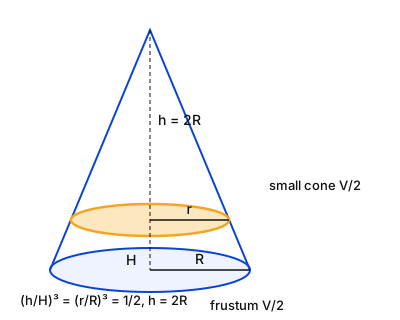
- Equal volumes .
- Given diameter of the frustum's bigger face , so .
- .
Trick: Similar solids – lengths scale by , areas by , volumes by ; "half the volume" means .
Answer: (A)
अवधारणा: आधार के समांतर काटने से समरूप छोटा शंकु बनता है: और ।
- समान आयतन ।
- दिया है छिन्नक के बड़े फलक का व्यास , अतः ।
- ।
ट्रिक: समरूप ठोस – लंबाई गुना, क्षेत्रफल गुना, आयतन गुना; "आधा आयतन" का अर्थ ।
उत्तर: (A)
RRB NTPC Graduate CBT 1MathematicsMensuration – Cone and FrustumRRB NTPC Graduate CBT 1 2025 · 27 Mar Shift 3
Q25.Find the value of , satisfying
का वह मान ज्ञात कीजिए, जो को संतुष्ट करता है।
- A0
- B4
- C-6
- D3
Show answer
Concept: Evaluate the root first, then multiplication/division left to right.
- (since ).
- ; .
- .
Trick: , so without long division.
Answer: (B) 4
अवधारणा: पहले वर्गमूल निकालें, फिर बाएँ से दाएँ गुणा/भाग करें।
- (क्योंकि )।
- ; ।
- ।
ट्रिक: , अतः – लंबे भाग की ज़रूरत नहीं।
उत्तर: (B) 4
RRB NTPC Graduate CBT 1MathematicsSimplification – BODMASRRB NTPC Graduate CBT 1 2025 · 27 Mar Shift 3
Q26.Arjun has ₹1394 with him. He divides this amount between his two sons, Kartik and Ishan, and asks them to invest their respective shares at a compound interest rate of 5% per annum, compounded annually. It is observed that Kartik’s investment amounts to the same value after 17 years as Ishan’s investment does after 18 years. How much (in ₹) did Arjun give to Ishan?
अर्जुन के पास ₹1394 हैं। वह इस राशि को अपने दो पुत्रों, कार्तिक और ईशान, के बीच बाँटता है और उनसे अपने-अपने हिस्से को 5% वार्षिक चक्रवृद्धि ब्याज की दर पर, वार्षिक रूप से संयोजित, निवेश करने के लिए कहता है। यह देखा गया कि कार्तिक का निवेश 17 वर्षों के बाद उतनी ही राशि हो जाता है जितनी ईशान का निवेश 18 वर्षों के बाद होता है। अर्जुन ने ईशान को कितनी राशि (₹ में) दी?
- A530
- B714
- C680
- D814
Show answer
Concept: If , then – one extra year of growth for the smaller share.
- .
- Total parts 1 part .
- Ishan .
Trick: Shares are inversely proportional to the growth factor: the one invested longer gets the smaller share, ratio .
Answer: (C) 680
अवधारणा: यदि , तो – छोटे हिस्से को एक वर्ष अधिक वृद्धि मिलती है।
- ।
- कुल भाग 1 भाग ।
- ईशान ।
ट्रिक: हिस्से वृद्धि-गुणक के व्युत्क्रमानुपाती होते हैं: जो अधिक समय निवेश करता है उसे छोटा हिस्सा, अनुपात ।
उत्तर: (C) 680
RRB NTPC Graduate CBT 1MathematicsCompound Interest – Equal AmountsRRB NTPC Graduate CBT 1 2025 · 27 Mar Shift 3
Q27.Three positive integers, P, Q, and R, are such that the highest common factor of P and Q is 15, the highest common factor of Q and R is 10, and the highest common factor of R and P is 5. If the sum P + Q + R is as small as possible, the value of P × Q × R is:
तीन धनात्मक पूर्णांक P, Q और R इस प्रकार हैं कि P और Q का महत्तम समापवर्तक 15 है, Q और R का महत्तम समापवर्तक 10 है, और R और P का महत्तम समापवर्तक 5 है। यदि योग P + Q + R यथासंभव न्यूनतम है, तो P × Q × R का मान है:
- A4500
- B3000
- C6000
- D1500
Show answer
Concept: Each number must be a multiple of every HCF it is part of; choose the smallest such multiples that keep the HCFs exact.
- Q is a multiple of both 15 and 10 Q .
- P multiple of 15 and 5 P ; R multiple of 10 and 5 R .
- Check: HCF, HCF, HCF ✓.
- .
Trick: The number appearing in two HCF conditions must be at least the LCM of those two HCFs.
Answer: (A) 4500
अवधारणा: हर संख्या उन सभी HCF का गुणज होनी चाहिए जिनमें वह शामिल है; सबसे छोटे ऐसे गुणज चुनें जो HCF सही रखें।
- Q, 15 और 10 दोनों का गुणज Q ।
- P, 15 और 5 का गुणज P ; R, 10 और 5 का गुणज R ।
- जाँच: HCF, HCF, HCF ✓।
- ।
ट्रिक: जो संख्या दो HCF शर्तों में आती है वह उन दोनों HCF के LCM से कम नहीं हो सकती।
उत्तर: (A) 4500
RRB NTPC Graduate CBT 1MathematicsHCF – Minimum SumRRB NTPC Graduate CBT 1 2025 · 27 Mar Shift 3
Q28.A building contractor employs 25 skilled workers and 5 unskilled workers. To a skilled worker he pays ₹30 per hour and to an unskilled worker ₹24 per hour. The average wage per hour (in ₹) paid by the contractor is:
एक भवन ठेकेदार 25 कुशल श्रमिकों और 5 अकुशल श्रमिकों को नियुक्त करता है। वह एक कुशल श्रमिक को ₹30 प्रति घंटा और एक अकुशल श्रमिक को ₹24 प्रति घंटा भुगतान करता है। ठेकेदार द्वारा भुगतान की गई प्रति घंटा औसत मजदूरी (₹ में) है:
- A29
- B32
- C27
- D25
Show answer
Concept: Average wage .
- Total per hour .
- Average .
Trick: Alligation: workers , so the average sits 5 times closer to 30 than to 24: .
Answer: (A) 29
अवधारणा: औसत मजदूरी ।
- प्रति घंटा कुल ।
- औसत ।
ट्रिक: मिश्रण विधि: श्रमिक , अतः औसत 24 की तुलना में 30 के 5 गुना पास: ।
उत्तर: (A) 29
RRB NTPC Graduate CBT 1MathematicsWeighted AverageRRB NTPC Graduate CBT 1 2025 · 27 Mar Shift 3
Q29.The price of each article of type P, Q, and R is ₹280, ₹180 and ₹115, respectively. Ranu buys articles of each type in the ratio 4 : 4 : 3 for ₹6,555. How many articles of type Q did he purchase?
P, Q और R प्रकार की प्रत्येक वस्तु का मूल्य क्रमशः ₹280, ₹180 और ₹115 है। रानू प्रत्येक प्रकार की वस्तुएँ 4 : 4 : 3 के अनुपात में ₹6,555 में खरीदता है। उसने Q प्रकार की कितनी वस्तुएँ खरीदीं?
- A9
- B12
- C20
- D18
Show answer
Concept: Let the numbers bought be ; total cost .
- Cost .
- .
- Articles of type Q .
Trick: : since exactly, spot it by and .
Answer: (B) 12
अवधारणा: खरीदी गई संख्याएँ मानें; कुल लागत ।
- लागत ।
- ।
- Q प्रकार की वस्तुएँ ।
ट्रिक: : ठीक है – और से तुरंत पकड़ें।
उत्तर: (B) 12
RRB NTPC Graduate CBT 1MathematicsRatio – Total CostRRB NTPC Graduate CBT 1 2025 · 27 Mar Shift 3
Q30.20% of a number is more than 20% of 620 by 160. The number is:
एक संख्या का 20%, 620 के 20% से 160 अधिक है। वह संख्या है:
- A1520
- B1270
- C1470
- D1420
Show answer
Concept: Translate the sentence directly into an equation.
- of .
- .
- .
Trick: , so the number is simply . Or: is of , hence .
Answer: (D) 1420
अवधारणा: वाक्य को सीधे समीकरण में बदलें।
- का ।
- ।
- ।
ट्रिक: , अतः संख्या । या: , का है, इसलिए ।
उत्तर: (D) 1420
RRB NTPC Graduate CBT 1MathematicsPercentageRRB NTPC Graduate CBT 1 2025 · 27 Mar Shift 3
Q31.A researcher calculates the final performance score of students based on two components:
Assignments (weight 40%)
Exams (weight 60%)
A student scores:
75 in assignments
85 in exams
What is the student’s weighted arithmetic mean score?
एक शोधकर्ता छात्रों के अंतिम प्रदर्शन स्कोर की गणना दो घटकों के आधार पर करता है:
असाइनमेंट (भार 40%)
परीक्षा (भार 60%)
एक छात्र प्राप्त करता है:
असाइनमेंट में 75
परीक्षा में 85
छात्र का भारित समांतर माध्य (weighted arithmetic mean) स्कोर क्या है?
- A80
- B82
- C83
- D81
Show answer
Concept: Weighted mean ; with weights 40% and 60% the denominator is 100%.
- Assignments: .
- Exams: .
- Weighted mean .
Trick: When weights add to 100%, just multiply each score by its weight and add.
Answer: (D) 81
अवधारणा: भारित माध्य ; भार 40% और 60% हों तो हर 100% होता है।
- असाइनमेंट: ।
- परीक्षा: ।
- भारित माध्य ।
ट्रिक: भार का योग 100% हो तो हर अंक को उसके भार से गुणा करके जोड़ दें।
उत्तर: (D) 81
RRB NTPC Graduate CBT 1MathematicsWeighted meanRRB NTPC Graduate CBT 1 2025 · 27 Mar Shift 2
Q32.Amit invested an equal sum of money in both simple interest and compound interest, compounded annually schemes. The time period for both investments was 2 years, and the rate of interest was 4% per annum. At the end of 2 years, he noticed that the interest earned from compound interest exceeded that from simple interest by ₹58. What was the principal amount invested under compound interest?
Amit ने साधारण ब्याज और वार्षिक रूप से संयोजित चक्रवृद्धि ब्याज, दोनों योजनाओं में समान धनराशि निवेश की। दोनों निवेशों की समयावधि 2 वर्ष थी और ब्याज दर 4% वार्षिक थी। 2 वर्ष के अंत में उसने देखा कि चक्रवृद्धि ब्याज से अर्जित ब्याज, साधारण ब्याज से अर्जित ब्याज से ₹58 अधिक था। चक्रवृद्धि ब्याज के अंतर्गत निवेश की गई मूलधन राशि क्या थी?
- A36250
- B35500
- C35350
- D36600
Show answer
Concept: For 2 years, .
- .
- .
- .
Trick: 2-year difference = SI on the first year's interest: .
Answer: (A) ₹36,250
अवधारणा: 2 वर्ष के लिए ।
- ।
- ।
- ।
ट्रिक: 2 वर्ष का अंतर = पहले वर्ष के ब्याज पर ब्याज: ।
उत्तर: (A) ₹36,250
RRB NTPC Graduate CBT 1MathematicsCI – SI differenceRRB NTPC Graduate CBT 1 2025 · 27 Mar Shift 2
Q33.The sum of all the interior angles of a regular polygon is 2520°. Find the measure of each of its exterior angles.
एक सम बहुभुज के सभी अंतः कोणों का योग 2520° है। इसके प्रत्येक बाह्य कोण का माप ज्ञात कीजिए।
- A26°
- B22.5°
- C25.75°
- D22°
Show answer
Concept: Sum of interior angles ; each exterior angle of a regular polygon .
- .
- Exterior angle .
Trick: Exterior angles of any polygon always add to – just divide by the number of sides.
Answer: (B)
अवधारणा: अंतः कोणों का योग ; समबहुभुज का प्रत्येक बाह्य कोण ।
- ।
- बाह्य कोण ।
ट्रिक: किसी भी बहुभुज के बाह्य कोणों का योग सदैव होता है – भुजाओं की संख्या से भाग दें।
उत्तर: (B)
RRB NTPC Graduate CBT 1MathematicsPolygon anglesRRB NTPC Graduate CBT 1 2025 · 27 Mar Shift 2
Q34.If , then the value of is
यदि है, तो का मान है
- A-23
- B-19
- C-28
- D-29
Show answer
Concept: Evaluate roots and percentages first, then multiplication, then subtraction.
- ; ; .
- .
- .
Trick: Remember cubes: , , – they appear again and again.
Answer: (C)
अवधारणा: पहले मूल और प्रतिशत निकालें, फिर गुणा, फिर घटाव।
- ; ; ।
- ।
- ।
ट्रिक: घन याद रखें: , , – ये बार-बार आते हैं।
उत्तर: (C)
RRB NTPC Graduate CBT 1MathematicsSimplification (BODMAS)RRB NTPC Graduate CBT 1 2025 · 27 Mar Shift 2
Q35.A boat travels 36 km downstream and 24 km upstream, taking a total of 6 hours. If the speed of the stream is 2 km/h, the time taken (in hours) for each journey, respectively, is:
एक नाव धारा की दिशा में 36 km और धारा के विपरीत 24 km की यात्रा करती है, जिसमें कुल 6 घंटे लगते हैं। यदि धारा की चाल 2 km/h है, तो प्रत्येक यात्रा में लगा समय (घंटों में) क्रमशः है:
- A(3.0 and 3.0)(3.0 और 3.0)
- B(3.2 and 2.8)(3.2 और 2.8)
- C(3.4 and 2.6)(3.4 और 2.6)
- D(3.6 and 2.4)(3.6 और 2.4)
Show answer
Concept: Downstream speed , upstream speed ; time .
- .
- Try : ✓.
- Downstream time h, upstream time h.
Trick: Check options instead of solving the quadratic – only option (A) gives equal times with speeds 12 and 8.
Answer: (A) (3.0 and 3.0)
अवधारणा: धारा के अनुकूल चाल , प्रतिकूल ; समय ।
- ।
- रखें: ✓।
- अनुकूल समय घंटे, प्रतिकूल समय घंटे।
ट्रिक: द्विघात हल करने के बजाय विकल्प जाँचें – चाल 12 और 8 से केवल विकल्प (A) में मिलता है।
उत्तर: (A) (3.0 और 3.0)
RRB NTPC Graduate CBT 1MathematicsBoats & streamsRRB NTPC Graduate CBT 1 2025 · 27 Mar Shift 2
Q36.A, B, and C can complete a task in 12 days, 15 days, and 18 days, respectively. B works every day and A and C work on alternate days, beginning with C on the first day. How many days will it take to do the task?
A, B और C एक कार्य को क्रमशः 12 दिन, 15 दिन और 18 दिन में पूरा कर सकते हैं। B प्रतिदिन कार्य करता है तथा A और C एकांतर दिनों में कार्य करते हैं, जिसकी शुरुआत पहले दिन C से होती है। कार्य को पूरा करने में कितने दिन लगेंगे?
- A
- B
- C
- D
Show answer
Concept: Take total work = LCM of days; find per-day units and work in 2-day cycles.
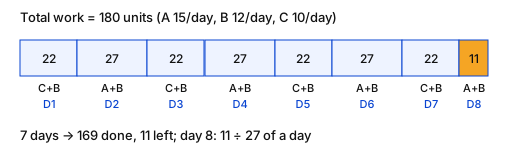
- Work . A , B , C units/day.
- Day 1 (C+B) , Day 2 (A+B) → 2-day cycle units.
- 3 cycles (6 days) ; Day 7 (C+B) → total , left .
- Day 8 (A+B at 27/day): day. Total days.
Trick: Never multiply cycles blindly – stop before the work overshoots and finish the last day by fraction.
Answer: (D) days
अवधारणा: कुल कार्य = दिनों का LCM लें; प्रतिदिन इकाइयाँ निकालकर 2-दिन के चक्र में काम करें।
- कार्य । A , B , C इकाई/दिन।
- दिन 1 (C+B) , दिन 2 (A+B) → 2-दिन का चक्र इकाई।
- 3 चक्र (6 दिन) ; दिन 7 (C+B) → कुल , शेष ।
- दिन 8 (A+B, 27/दिन): दिन। कुल दिन।
ट्रिक: चक्रों को आँख मूँदकर गुणा न करें – कार्य पार होने से पहले रुकें और अंतिम दिन भिन्न में पूरा करें।
उत्तर: (D) दिन
RRB NTPC Graduate CBT 1MathematicsTime & work – alternate daysRRB NTPC Graduate CBT 1 2025 · 27 Mar Shift 2
Q37.P sells an item to Q at 53% profit. Q sells the same item to R at 68% loss. If R paid ₹ 3060 for the item, then at what price (in ₹) is the item purchased by P?
P एक वस्तु Q को 53% लाभ पर बेचता है। Q वही वस्तु R को 68% हानि पर बेचता है। यदि R ने वस्तु के लिए ₹ 3060 का भुगतान किया, तो P ने वस्तु किस मूल्य (₹ में) पर खरीदी?
- A6250
- B6247
- C6252
- D6253
Show answer
Concept: Final price = original cost × (1 + profit%) × (1 − loss%).
- .
- .
- .
Trick: Check: ; ✓.
Answer: (A) ₹6,250
अवधारणा: अंतिम मूल्य = मूल लागत × (1 + लाभ%) × (1 − हानि%)।
- ।
- ।
- ।
ट्रिक: जाँच: ; ✓।
उत्तर: (A) ₹6,250
RRB NTPC Graduate CBT 1MathematicsSuccessive profit & lossRRB NTPC Graduate CBT 1 2025 · 27 Mar Shift 2
Q38.If , then find the value of .
यदि है, तो का मान ज्ञात कीजिए।
- A6
- B8
- C3
- D5
Show answer
Concept: ; build the right triangle and read the other ratios.
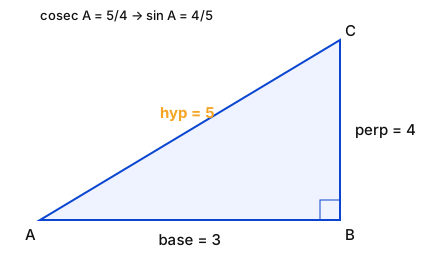
- → perp , hyp , base .
- , .
- .
Trick: , so the expression is just .
Answer: (B) 8
अवधारणा: ; समकोण त्रिभुज बनाकर बाकी अनुपात पढ़ें।
- → लंब , कर्ण , आधार ।
- , ।
- ।
ट्रिक: , अतः व्यंजक ही है।
उत्तर: (B) 8
RRB NTPC Graduate CBT 1MathematicsTrigonometric ratiosRRB NTPC Graduate CBT 1 2025 · 27 Mar Shift 2
Q39.If (5, 5) are the coordinates of the geometric centre of a triangle whose vertices are (9, 5), (4 ,p) and (q ,4), then find the values for p and q, respectively.
यदि (5, 5) एक त्रिभुज के केंद्रक (geometric centre) के निर्देशांक हैं, जिसके शीर्ष (9, 5), (4 ,p) और (q ,4) हैं, तो p और q के मान क्रमशः ज्ञात कीजिए।
- A4 , 3
- B3 , 4
- C6 , 2
- D2 , 6
Show answer
Concept: Centroid .
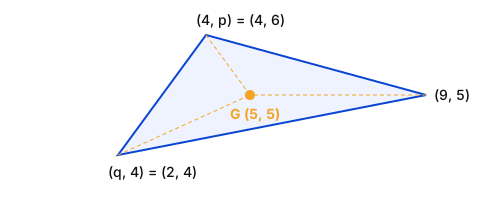
- x: .
- y: .
- So , .
Trick: Sum of x-coordinates centroid x; same for y – one line each.
Answer: (C) 6 , 2
अवधारणा: केन्द्रक ।
- x: ।
- y: ।
- अतः , ।
ट्रिक: x-निर्देशांकों का योग केन्द्रक का x; y के लिए भी वही – एक-एक पंक्ति में हल।
उत्तर: (C) 6 , 2
RRB NTPC Graduate CBT 1MathematicsCoordinate geometry – centroidRRB NTPC Graduate CBT 1 2025 · 27 Mar Shift 2
Q40.If 3 : 27 :: 5.6 : x and 5 : 35 :: 6 : y, then what is the ratio of x to y?
यदि 3 : 27 :: 5.6 : x और 5 : 35 :: 6 : y है, तो x और y का अनुपात क्या है?
- A7 : 3
- B6 : 5
- C4 : 6
- D11 : 15
Show answer
Concept: In , .
- .
- .
- .
Trick: and – so , directly.
Answer: (B) 6 : 5
अवधारणा: में ।
- ।
- ।
- ।
ट्रिक: और – अतः सीधे , ।
उत्तर: (B) 6 : 5
RRB NTPC Graduate CBT 1MathematicsProportionRRB NTPC Graduate CBT 1 2025 · 27 Mar Shift 2

