Q261.Manisha bought a toy for ₹849, decorated it at a cost of ₹6 and sold the toy for ₹441. Find the loss or profit percentage.
मनीषा ने ₹849 में एक खिलौना खरीदा, ₹6 की लागत से उसे सजाया और खिलौने को ₹441 में बेच दिया। हानि या लाभ प्रतिशत ज्ञात कीजिए।
- A loss हानि
- B loss हानि
- C profit लाभ
- D profit लाभ
Show answer
Concept: Overhead (decoration) is added to cost price. .
- CP ; SP → loss.
- Loss .
- .
Trick: SP < CP means loss – options with 'profit' are out at once.
Answer: (A) loss
अवधारणा: सजावट का खर्च क्रय मूल्य में जुड़ता है। ।
- क्रय मूल्य ; विक्रय मूल्य → हानि।
- हानि ।
- ।
ट्रिक: विक्रय मूल्य < क्रय मूल्य, अतः 'profit' वाले विकल्प तुरंत हट जाते हैं।
उत्तर: (A) हानि
RRB NTPC Undergraduate CBT 1MathematicsProfit and LossRRB NTPC Undergraduate CBT 1 2024 · 4 Sep Shift 1
Q262.The value of is ______.
का मान ______ है।
- A4.52
- B5.64
- C11.04
- D6.17
Show answer
Concept: Square roots of decimals: take the root of the digits and halve the decimal places.
- .
- (since ).
- .
- .
Trick: 4 decimal places under the root → 2 decimal places in the answer.
Answer: (C) 11.04
अवधारणा: दशमलव का वर्गमूल: अंकों का वर्गमूल लें और दशमलव स्थान आधे कर दें।
- ।
- (क्योंकि )।
- ।
- ।
ट्रिक: मूल के अंदर 4 दशमलव स्थान → उत्तर में 2 दशमलव स्थान।
उत्तर: (C) 11.04
RRB NTPC Undergraduate CBT 1MathematicsSquare RootsRRB NTPC Undergraduate CBT 1 2024 · 4 Sep Shift 1
Q263.Abdul and Mohsin together invested ₹79,200 in a business. At the end of the year, out of a total profit of ₹14,400, Mohsin's share was ₹2,600. What was the difference between their investments?
अब्दुल और मोहसिन ने मिलकर एक व्यवसाय में ₹79,200 का निवेश किया। वर्ष के अंत में, ₹14,400 के कुल लाभ में से मोहसिन का हिस्सा ₹2,600 था। उनके निवेशों के बीच का अंतर कितना था?
- A₹52,000
- B₹50,600
- C₹49,800
- D₹51,400
Show answer
Concept: For the same time period, profit is shared in the ratio of investments.
- Mohsin's share ; Abdul's .
- Mohsin's investment ; Abdul's .
- Difference .
Trick: Difference .
Answer: (B) ₹50,600
अवधारणा: समान अवधि में लाभ, निवेश के अनुपात में बँटता है।
- मोहसिन का हिस्सा ; अब्दुल का ।
- मोहसिन का निवेश ; अब्दुल का ।
- अंतर ।
ट्रिक: अंतर ।
उत्तर: (B) ₹50,600
RRB NTPC Undergraduate CBT 1MathematicsPartnershipRRB NTPC Undergraduate CBT 1 2024 · 4 Sep Shift 1
Q264.The income of Raman is ₹91,700. He saves 25% of his income. If his income increases by 27% and expenditure increases by 40%, then his savings will:
रमन की आय ₹91,700 है। वह अपनी आय का 25% बचाता है। यदि उसकी आय में 27% और व्यय में 40% की वृद्धि होती है, तो उसकी बचत:
- Adecrease by ₹2,751₹2,751 घट जाएगी
- Bincrease by ₹2,753₹2,753 बढ़ जाएगी
- Cdecrease by ₹2,753₹2,753 घट जाएगी
- Dincrease by ₹2,754₹2,754 बढ़ जाएगी
Show answer
Concept: Savings = Income − Expenditure; apply each % change separately.
- Savings of 91700 ; expenditure .
- New income .
- New expenditure .
- New savings ; change → decrease by ₹2,751.
Trick: Change in savings .
Answer: (A) decrease by ₹2,751
अवधारणा: बचत = आय − व्यय; प्रत्येक प्रतिशत परिवर्तन अलग-अलग लगाएँ।
- बचत का ; व्यय ।
- नई आय ।
- नया व्यय ।
- नई बचत ; परिवर्तन → ₹2,751 की कमी।
ट्रिक: बचत में परिवर्तन ।
उत्तर: (A) ₹2,751 की कमी
RRB NTPC Undergraduate CBT 1MathematicsIncome, Expenditure and SavingsRRB NTPC Undergraduate CBT 1 2024 · 4 Sep Shift 1
Q265.Shifa can do a certain piece of work in 30 days. Shifa and Afiya can together do the same work in 18 days, and Shifa, Afiya and Mariyam can do the same work together in 9 days. In how many days can Shifa and Mariyam do the same work?
शिफ़ा किसी कार्य को 30 दिनों में कर सकती है। शिफ़ा और आफ़िया मिलकर उसी कार्य को 18 दिनों में कर सकती हैं, और शिफ़ा, आफ़िया और मरियम मिलकर उसी कार्य को 9 दिनों में कर सकती हैं। शिफ़ा और मरियम उसी कार्य को कितने दिनों में कर सकती हैं?
- A
- B
- C
- D
Show answer
Concept: Take one day's work as a fraction of the whole work and subtract group rates.
- Shifa , Shifa + Afiya , all three .
- Mariyam .
- Shifa + Mariyam .
- Days .
Trick: LCM method: total work 90 units → S = 3, S+A = 5, S+A+M = 10 → M = 5; S+M = 8 → .
Answer: (D)
अवधारणा: एक दिन का कार्य कुल कार्य के भिन्न के रूप में लें और समूह की दरें घटाएँ।
- शिफा , शिफा + अफ़िया , तीनों ।
- मरियम ।
- शिफा + मरियम ।
- दिन ।
ट्रिक: LCM विधि: कुल कार्य 90 इकाई → S = 3, S+A = 5, S+A+M = 10 → M = 5; S+M = 8 → ।
उत्तर: (D)
RRB NTPC Undergraduate CBT 1MathematicsTime and WorkRRB NTPC Undergraduate CBT 1 2024 · 4 Sep Shift 1
Q266.If , then find the value of .
यदि है, तो का मान ज्ञात कीजिए।
- A2
- B3
- C
- D1
Show answer
Concept: If (with ), then .
- , so .
- Then .
- .
Trick: for every .
Answer: (A) 2
अवधारणा: यदि () तो ।
- , अतः ।
- तब ।
- ।
ट्रिक: हो तो हर घात के लिए ।
उत्तर: (A) 2
RRB NTPC Undergraduate CBT 1MathematicsTrigonometryRRB NTPC Undergraduate CBT 1 2024 · 4 Sep Shift 1
Q267.The value of ______.
का मान ______ है।
- A28
- B35
- C31
- D26
Show answer
Concept: Follow BODMAS: powers and brackets first, then multiplication, then addition/subtraction.
- , , , .
- .
Trick: Any number divided by itself is 1, and .
Answer: (D) 26
अवधारणा: BODMAS लगाएँ: पहले घात और कोष्ठक, फिर गुणा, फिर जोड़/घटाव।
- , , , ।
- ।
ट्रिक: कोई संख्या स्वयं से भाग देने पर 1, और ।
उत्तर: (D) 26
RRB NTPC Undergraduate CBT 1MathematicsSimplificationRRB NTPC Undergraduate CBT 1 2024 · 4 Sep Shift 1
Q268.An article listed at ₹500 is sold at successive discounts of 10% and 14%. The buyer wants to sell it at a profit of 15% after offering a 10% discount. What should be his list price (in ₹)?
₹500 अंकित मूल्य वाली एक वस्तु 10% और 14% की क्रमिक छूट पर बेची जाती है। क्रेता इसे 10% की छूट देने के बाद 15% के लाभ पर बेचना चाहता है। उसका अंकित मूल्य (₹ में) क्या होना चाहिए?
- A484.50
- B485
- C494.50
- D474
Show answer
Concept: Buyer's cost = list price after successive discounts; required SP = cost × 1.15 = 90% of new list price.
- Cost .
- Required SP .
- New list price .
Trick: List price .
Answer: (C) 494.50
अवधारणा: खरीदार का क्रय मूल्य = क्रमिक छूट के बाद मूल्य; आवश्यक विक्रय मूल्य = क्रय मूल्य × 1.15 = नए अंकित मूल्य का 90%।
- क्रय मूल्य ।
- आवश्यक विक्रय मूल्य ।
- नया अंकित मूल्य ।
ट्रिक: अंकित मूल्य ।
उत्तर: (C) 494.50
RRB NTPC Undergraduate CBT 1MathematicsSuccessive Discount, ProfitRRB NTPC Undergraduate CBT 1 2024 · 4 Sep Shift 1
Q269.A trader claims to sell pulses at a profit of 48%, but also dishonestly uses a weight which is 12% less than what is mentioned on it. Find the total percentage of profit earned by the trader. (Round off the answer to the nearest whole number.)
एक व्यापारी 48% के लाभ पर दालें बेचने का दावा करता है, परंतु साथ ही बेईमानी से ऐसे बाट का उपयोग करता है जो उस पर अंकित भार से 12% कम है। व्यापारी द्वारा अर्जित कुल लाभ प्रतिशत ज्ञात कीजिए। (उत्तर को निकटतम पूर्ण संख्या तक पूर्णांकित कीजिए।)
- A
- B
- C
- D
Show answer
Concept: Profit from a false weight: compare the price received with the cost of the quantity actually given.
- For 1 kg marked, he gives 0.88 kg (cost 88) and charges .
- Profit% .
- Rounded: 68%.
Trick: Total gain .
Answer: (C)
अवधारणा: कम तौल से लाभ: मिली हुई कीमत की तुलना वास्तव में दी गई मात्रा की लागत से करें।
- 1 kg के बदले वह 0.88 kg देता है (लागत 88) और लेता है।
- लाभ% ।
- निकटतम पूर्णांक: 68%।
ट्रिक: कुल लाभ ।
उत्तर: (C)
RRB NTPC Undergraduate CBT 1MathematicsDishonest DealerRRB NTPC Undergraduate CBT 1 2024 · 4 Sep Shift 1
Q270.The sum of five numbers is 655. The average of the first two numbers is 80 and the third number is 108. Find the average of the remaining two numbers.
पाँच संख्याओं का योग 655 है। पहली दो संख्याओं का औसत 80 है और तीसरी संख्या 108 है। शेष दो संख्याओं का औसत ज्ञात कीजिए।
- A189
- B193.5
- C194.5
- D188
Show answer
Concept: Sum = average × count; subtract the known parts.
- First two numbers sum .
- Remaining two .
- Average .
Trick: Total − known parts, then divide by how many are left.
Answer: (B) 193.5
अवधारणा: योग = औसत × संख्या; ज्ञात भाग घटाएँ।
- पहली दो संख्याओं का योग ।
- शेष दो का योग ।
- औसत ।
ट्रिक: कुल − ज्ञात भाग, फिर बची संख्याओं से भाग दें।
उत्तर: (B) 193.5
RRB NTPC Undergraduate CBT 1MathematicsAverageRRB NTPC Undergraduate CBT 1 2024 · 4 Sep Shift 1
Q271.The number 726179 is divisible by which of the following?
संख्या 726179 निम्नलिखित में से किससे विभाज्य है?
- A23
- B29
- C28
- D20
Show answer
Concept: Check each option by division or divisibility rules.
- : number must end in – ends in , so no. : an odd number cannot be divisible by .
- : , remainder .
- leaves remainder , .
Trick: Odd number → strike out every even divisor first (, ), then test only and .
Answer: (A)
अवधारणा: हर विकल्प को भाग देकर या विभाज्यता नियम से जाँचें।
- : संख्या पर समाप्त होनी चाहिए – का अंत है, अतः नहीं। : विषम संख्या से विभाज्य नहीं हो सकती।
- : , शेषफल ।
- : , ।
ट्रिक: विषम संख्या → पहले सभी सम भाजक (, ) हटाएँ, फिर केवल और जाँचें।
उत्तर: (A)
RRB NTPC Undergraduate CBT 1MathematicsNumber System – DivisibilityRRB NTPC Undergraduate CBT 1 2024 · 3 Sep Shift 3
Q272.ABCD is a quadrilateral such that , , and . What type of a quadrilateral is ABCD?
ABCD एक चतुर्भुज इस प्रकार है कि , , और है। ABCD किस प्रकार का चतुर्भुज है?
- ATrapeziumसमलंब
- BRhombusसमचतुर्भुज
- CCyclic quadrilateralचक्रीय चतुर्भुज
- DParallelogramसमांतर चतुर्भुज
Show answer
Concept: A quadrilateral is cyclic if its opposite angles are supplementary (sum ).
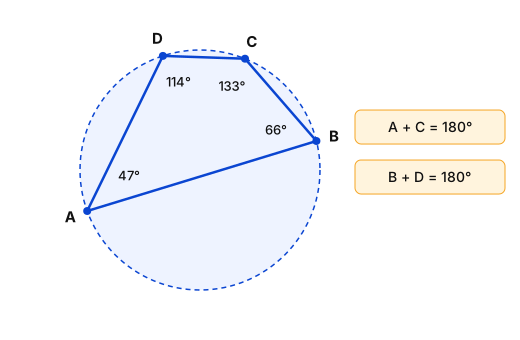
- and .
- Opposite angles are supplementary, so A, B, C, D lie on a circle – cyclic quadrilateral.
- Not a parallelogram/rhombus (opposite angles not equal); not a trapezium (adjacent pairs , etc. are not , so no sides parallel).
Trick: Add opposite angles: both pairs → cyclic.
Answer: (C) Cyclic quadrilateral
अवधारणा: यदि किसी चतुर्भुज के सम्मुख कोण संपूरक हों (योग ), तो वह चक्रीय (cyclic) चतुर्भुज होता है।
- और ।
- सम्मुख कोण संपूरक हैं, अतः A, B, C, D एक वृत्त पर हैं – चक्रीय चतुर्भुज।
- समांतर चतुर्भुज/समचतुर्भुज नहीं (सम्मुख कोण बराबर नहीं); समलंब नहीं (आसन्न कोण-युग्म जैसे , का योग नहीं)।
ट्रिक: सम्मुख कोण जोड़ें: दोनों युग्म → चक्रीय।
उत्तर: (C) चक्रीय चतुर्भुज
RRB NTPC Undergraduate CBT 1MathematicsGeometry – QuadrilateralsRRB NTPC Undergraduate CBT 1 2024 · 3 Sep Shift 3
Q273.If the radius of a sphere is 24 cm, then its surface area is:
यदि किसी गोले की त्रिज्या 24 cm है, तो उसका पृष्ठीय क्षेत्रफल है:
- A2374 π cm2
- B2280 π cm2
- C2304 π cm2
- D2330 π cm2
Show answer
Concept: Surface area of a sphere .
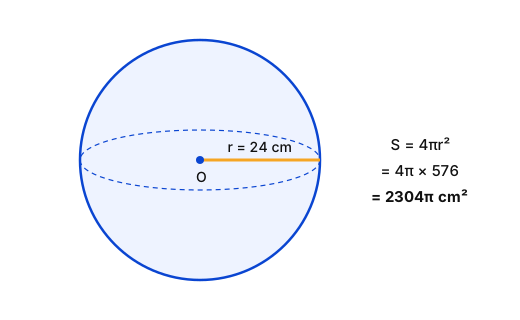
- , so .
- .
Trick: – square the diameter.
Answer: (C)
अवधारणा: गोले का पृष्ठीय क्षेत्रफल ।
- , अतः ।
- ।
ट्रिक: – व्यास का वर्ग करें।
उत्तर: (C)
RRB NTPC Undergraduate CBT 1MathematicsMensuration – SphereRRB NTPC Undergraduate CBT 1 2024 · 3 Sep Shift 3
Q274.If 3 times the mother's age is 29 years more than 5 times her daughter's age, and 2 times the daughter's age is 2 years less than the mother's age, then what is the difference (in years) between the ages of the mother and the daughter?
यदि माँ की आयु का 3 गुना, उसकी बेटी की आयु के 5 गुने से 29 वर्ष अधिक है, और बेटी की आयु का 2 गुना, माँ की आयु से 2 वर्ष कम है, तो माँ और बेटी की आयु के बीच का अंतर (वर्षों में) क्या है?
- A25
- B24
- C29
- D23
Show answer
Concept: Let mother's age and daughter's age ; form two linear equations.
- and .
- Substitute: .
- ; difference years.
Trick: Check: and ✓.
Answer: (A)
अवधारणा: माँ की आयु और बेटी की आयु मानकर दो रैखिक समीकरण बनाएँ।
- और ।
- प्रतिस्थापन: ।
- ; अंतर वर्ष।
ट्रिक: जाँच: और ✓।
उत्तर: (A)
RRB NTPC Undergraduate CBT 1MathematicsProblems on AgesRRB NTPC Undergraduate CBT 1 2024 · 3 Sep Shift 3
Q275.The LCM of 33 × 92 × 13, 32 × 132 × 18 and 93 × 132 × 182 is
33 × 92 × 13, 32 × 132 × 18 और 93 × 132 × 182 का LCM है
- A22 x 311 x 132
- B22 x 310 x 132
- C23 x 310 x 132
- D22 x 39 x 132
Show answer
Concept: Write each number in prime factors; LCM = highest power of every prime.
- .
- .
- .
- LCM .
Trick: Here the third number already contains the other two, so it is itself the LCM.
Answer: (B)
अवधारणा: हर संख्या को अभाज्य गुणनखंडों में लिखें; LCM = हर अभाज्य की सबसे बड़ी घात।
- ।
- ।
- ।
- LCM ।
ट्रिक: यहाँ तीसरी संख्या में बाकी दोनों समाहित हैं, इसलिए वही LCM है।
उत्तर: (B)
RRB NTPC Undergraduate CBT 1MathematicsLCM – Prime FactorisationRRB NTPC Undergraduate CBT 1 2024 · 3 Sep Shift 3
Q276.Simplify .
को सरल कीजिए।
- A−729
- B729
- C−81
- D81
Show answer
Concept: Use to pair the brackets in the denominator.
- .
- .
- Expression .
- Since , value .
Trick: Put : .
Answer: (A)
अवधारणा: हर में कोष्ठकों को से जोड़ें।
- ।
- ।
- व्यंजक ।
- चूँकि , मान ।
ट्रिक: रखें: ।
उत्तर: (A)
RRB NTPC Undergraduate CBT 1MathematicsAlgebra – SimplificationRRB NTPC Undergraduate CBT 1 2024 · 3 Sep Shift 3
Q277.The H.C.F. and the L.C.M. of two numbers are 8 and 4200, respectively. If one of the numbers is 168, find the other one.
दो संख्याओं का H.C.F. और L.C.M. क्रमशः 8 और 4200 है। यदि उनमें से एक संख्या 168 है, तो दूसरी संख्या ज्ञात कीजिए।
- A100
- B200
- C300
- D400
Show answer
Concept: For two numbers: Product of numbers .
- .
- .
Trick: Check: HCF ✓.
Answer: (B)
अवधारणा: दो संख्याओं के लिए: संख्याओं का गुणनफल ।
- ।
- ।
ट्रिक: जाँच: HCF ✓।
उत्तर: (B)
RRB NTPC Undergraduate CBT 1MathematicsHCF and LCMRRB NTPC Undergraduate CBT 1 2024 · 3 Sep Shift 3
Q278.A man driving a car at a speed of 48 km/hr crosses a bridge in 4.6 minutes. Find the length of the bridge.
48 km/hr की चाल से कार चला रहा एक व्यक्ति 4.6 मिनट में एक पुल पार करता है। पुल की लंबाई ज्ञात कीजिए।
- A4.35 km
- B3.92 km
- C2.75 km
- D3.68 km
Show answer
Concept: The car is treated as a point, so length of bridge = distance covered = speed × time (same units).
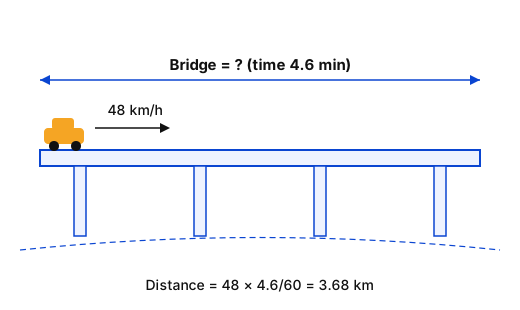
- Time .
- Distance .
Trick: per minute; .
Answer: (D)
अवधारणा: कार को बिंदु माना जाता है, अतः पुल की लंबाई = तय दूरी = चाल × समय (समान मात्रकों में)।
- समय ।
- दूरी ।
ट्रिक: प्रति मिनट; ।
उत्तर: (D)
RRB NTPC Undergraduate CBT 1MathematicsSpeed, Time and DistanceRRB NTPC Undergraduate CBT 1 2024 · 3 Sep Shift 3
Q279.The product of two positive numbers is 2000. If the first number is five times the second number, then the sum of the two numbers is:
दो धनात्मक संख्याओं का गुणनफल 2000 है। यदि पहली संख्या, दूसरी संख्या की पाँच गुनी है, तो दोनों संख्याओं का योग है:
- A120
- B133
- C121
- D125
Show answer
Concept: Let the second number be ; then the first is .
- .
- First number ; sum .
Trick: Sum , so it must be a multiple of – only fits.
Answer: (A)
अवधारणा: दूसरी संख्या मानें; तब पहली ।
- ।
- पहली संख्या ; योग ।
ट्रिक: योग , अतः का गुणज होना चाहिए – केवल उपयुक्त है।
उत्तर: (A)
RRB NTPC Undergraduate CBT 1MathematicsAlgebra – NumbersRRB NTPC Undergraduate CBT 1 2024 · 3 Sep Shift 3
Q280.Pipe P can fill part of a tank in 18 hours, and pipe Q can fill part of the same tank in 25 hours. Both P and Q were kept open for 3 hours, then both were closed. Pipe R alone was then opened and it emptied the water in the tank in 8 hours. Pipes P, Q and R together can fill the empty tank in:
पाइप P किसी टंकी का भाग 18 घंटे में भर सकता है, और पाइप Q उसी टंकी का भाग 25 घंटे में भर सकता है। P और Q दोनों को 3 घंटे के लिए खुला रखा गया, फिर दोनों को बंद कर दिया गया। इसके बाद केवल पाइप R को खोला गया और उसने टंकी का पानी 8 घंटे में खाली कर दिया। पाइप P, Q और R एक साथ खाली टंकी को कितने समय में भर सकते हैं?
- A25 hours25 घंटे
- B42 hours42 घंटे
- C38 hours38 घंटे
- D53 hours53 घंटे
Show answer
Concept: Find each pipe's full-tank time, then add filling rates and subtract the emptying rate.
- P: in → full in . Q: in → full in .
- In : of tank filled.
- R empties in → full tank in .
- Together: → hours.
Trick: Use LCM as total work: P , Q , R units/h → net ; .
Answer: (B) hours
अवधारणा: हर पाइप का पूरी टंकी का समय निकालें, फिर भरने की दरें जोड़ें और खाली करने की दर घटाएँ।
- P: भाग में → पूरी में। Q: भाग में → पूरी में।
- में: भाग भरा।
- R, भाग में खाली करता है → पूरी टंकी में।
- एक साथ: → घंटे।
ट्रिक: कुल कार्य LCM मानें: P , Q , R इकाई/घंटा → शुद्ध ; ।
उत्तर: (B) घंटे
RRB NTPC Undergraduate CBT 1MathematicsPipes and CisternsRRB NTPC Undergraduate CBT 1 2024 · 3 Sep Shift 3

