Q1121.Given that 1320.14 = x, 1320.26= y and xz = y2, then the value of z is close to:
दिया गया है कि 1320.14 = x, 1320.26= y और xz = y2 है, तो z का मान लगभग है:
- A5.03
- B4.84
- C2.37
- D3.71
Show answer
Concept: Same base: ; compare exponents.
- Equate powers:
Trick: Base is the same, so just divide the exponents: .
Answer: (D)
अवधारणा: आधार समान हो तो ; घातों की तुलना करें।
- घात बराबर:
ट्रिक: आधार एक ही है, सीधे घात भाग करें: ।
उत्तर: (D)
RRB NTPC Undergraduate CBT 1MathematicsIndicesRRB NTPC Undergraduate CBT 1 2024 · 18 Aug Shift 1
Q1122.M and N start a business. M invests ₹49,000 more than N for 6 months and N invests for 7 months. M's share is ₹207 more than that of N, out of a total profit of ₹3,519. Find the capital contributed by M.
M और N एक व्यवसाय शुरू करते हैं। M, N से ₹49,000 अधिक 6 महीने के लिए निवेश करता है और N 7 महीने के लिए निवेश करता है। ₹3,519 के कुल लाभ में से M का हिस्सा N के हिस्से से ₹207 अधिक है। M द्वारा लगाई गई पूँजी ज्ञात कीजिए।
- A₹2,05,873
- B₹2,05,777
- C₹2,05,800
- D₹2,05,705
Show answer
Concept: Profit share capital time.
- ,
- Ratio
- Let N's capital :
- , so M's capital
Trick: Get the profit ratio first (), then plug capitals into .
Answer: (C) ₹2,05,800
अवधारणा: लाभ का भाग पूँजी समय।
- ,
- अनुपात
- N की पूँजी :
- , M की पूँजी
ट्रिक: पहले लाभ अनुपात () निकालें, फिर पूँजी×समय से समीकरण बनाएँ।
उत्तर: (C) ₹2,05,800
RRB NTPC Undergraduate CBT 1MathematicsPartnershipRRB NTPC Undergraduate CBT 1 2024 · 18 Aug Shift 1
Q1123.If , then the value of K is:
यदि है, तो K का मान है:
- A
- B
- C
- D
Show answer
Concept: and .
- Numerator
- Denominator
- Fraction
Trick: Put : fraction , so .
Answer: (A)
अवधारणा: तथा ।
- अंश
- हर
- भिन्न
ट्रिक: रखें: भिन्न , अतः ।
उत्तर: (A)
RRB NTPC Undergraduate CBT 1MathematicsTrigonometric identitiesRRB NTPC Undergraduate CBT 1 2024 · 18 Aug Shift 1
Q1124.A man makes a monthly payment equal to 33% of his monthly salary towards debt repayment. He spends 25% of the remaining salary and saves ₹402. His monthly salary (in ₹) is:
एक व्यक्ति अपने मासिक वेतन के 33% के बराबर राशि का मासिक भुगतान ऋण चुकाने में करता है। वह शेष वेतन का 25% खर्च करता है और ₹402 बचाता है। उसका मासिक वेतन (₹ में) है:
- A734
- B771
- C707
- D800
Show answer
Concept: Work on the remaining part step by step.
- After debt: of salary remains
- Spends of it, saves : of salary
Trick: Check options: , ✓.
Answer: (D)
अवधारणा: बची हुई राशि पर क्रमशः प्रतिशत लगाएँ।
- कर्ज़ के बाद वेतन बचता है
- उसका बचत:
ट्रिक: विकल्प जाँचें: , ✓।
उत्तर: (D)
RRB NTPC Undergraduate CBT 1MathematicsPercentage – income & savingsRRB NTPC Undergraduate CBT 1 2024 · 18 Aug Shift 1
Q1125.Tiger and Disha have to travel from Delhi to Kanpur in their respective cars. Tiger is driving at 100 km/hr while Disha is driving at 35 km/hr. Find the time taken by Disha to reach Kanpur if Tiger takes 14 hours.
टाइगर और दिशा को अपनी-अपनी कारों से दिल्ली से कानपुर की यात्रा करनी है। टाइगर 100 km/hr की चाल से और दिशा 35 km/hr की चाल से गाड़ी चला रही है। यदि टाइगर को 14 घंटे लगते हैं, तो दिशा को कानपुर पहुँचने में लगने वाला समय ज्ञात कीजिए।
- A36 hours36 घंटे
- B47 hours47 घंटे
- C40 hours40 घंटे
- D45 hours45 घंटे
Show answer
Concept: Same distance: time .
- Distance
- Disha's time hours
Trick: .
Answer: (C) 40 hours
अवधारणा: दूरी समान हो तो समय ।
- दूरी
- दिशा का समय घंटे
ट्रिक: ।
उत्तर: (C) 40 घंटे
RRB NTPC Undergraduate CBT 1MathematicsSpeed, time & distanceRRB NTPC Undergraduate CBT 1 2024 · 18 Aug Shift 1
Q1126.A company earns a profit (in ₹) that is distributed among the company's three partners in the ratio of 13 : 3 : 9. If the difference between the smallest and the largest shares is ₹36,846, the total profit (in ₹) of the company is:
एक कंपनी लाभ (₹ में) अर्जित करती है जिसे कंपनी के तीन साझेदारों में 13 : 3 : 9 के अनुपात में बाँटा जाता है। यदि सबसे छोटे और सबसे बड़े हिस्से का अंतर ₹36,846 है, तो कंपनी का कुल लाभ (₹ में) है:
- A92,051
- B92,110
- C92,167
- D92,115
Show answer
Concept: Difference of ratio parts gives one part's value.
- Largest − smallest parts
- 1 part
- Total parts
Trick: Total .
Answer: (D) 92,115
अवधारणा: अनुपात के भागों का अंतर एक भाग का मान देता है।
- सबसे बड़ा − सबसे छोटा भाग
- 1 भाग
- कुल भाग
ट्रिक: कुल ।
उत्तर: (D) 92,115
RRB NTPC Undergraduate CBT 1MathematicsRatio – profit sharingRRB NTPC Undergraduate CBT 1 2024 · 18 Aug Shift 1
Q1127.The number 267533 is divisible by which of the following?
संख्या 267533 निम्नलिखित में से किससे विभाज्य है?
- A5
- B7
- C6
- D12
Show answer
Concept: Test each option.
- Ends in 3 → not divisible by 5; odd → not by 6 or 12
- Rule of 7: ; ; ✓
- Direct:
Trick: Odd number kills 6 and 12 at once; last digit kills 5 — only 7 is left.
Answer: (B) 7
अवधारणा: हर विकल्प की जाँच करें।
- अंतिम अंक 3 → 5 से नहीं; विषम → 6, 12 से नहीं
- 7 का नियम: ; ; ✓
- सीधे:
ट्रिक: विषम संख्या 6 व 12 हटा देती है, अंतिम अंक 5 हटा देता है — बचा 7।
उत्तर: (B) 7
RRB NTPC Undergraduate CBT 1MathematicsDivisibilityRRB NTPC Undergraduate CBT 1 2024 · 18 Aug Shift 1
Q1128.ABCD is a quadrilateral whose sides are equal and . If the opposite sides are parallel and opposite angles are equal, then ABCD is a:
ABCD एक चतुर्भुज है जिसकी भुजाएँ बराबर हैं और है। यदि सम्मुख भुजाएँ समांतर हैं और सम्मुख कोण बराबर हैं, तो ABCD एक:
- Arectangleआयत है
- Bsquareवर्ग है
- Crhombusसमचतुर्भुज है
- Dkiteपतंग है
Show answer
Concept: All sides equal + one right angle + parallelogram ⇒ square.
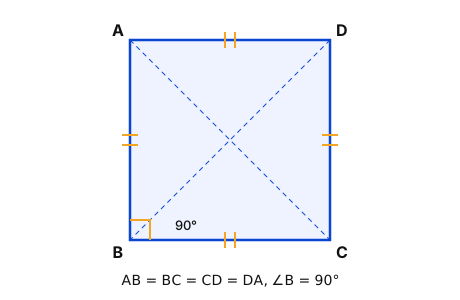
- Opposite sides parallel and opposite angles equal → parallelogram
- All sides equal → rhombus
- One angle → every angle → square
Trick: Rhombus + right angle = square; rectangle needs only opposite sides equal.
Answer: (B) square
अवधारणा: सभी भुजाएँ बराबर + एक समकोण + समांतर चतुर्भुज ⇒ वर्ग।
- सम्मुख भुजाएँ समांतर, सम्मुख कोण बराबर → समांतर चतुर्भुज
- सभी भुजाएँ बराबर → समचतुर्भुज (rhombus)
- एक कोण → सभी → वर्ग
ट्रिक: समचतुर्भुज + समकोण = वर्ग; आयत में केवल सम्मुख भुजाएँ बराबर होती हैं।
उत्तर: (B) square (वर्ग)
RRB NTPC Undergraduate CBT 1MathematicsQuadrilateralsRRB NTPC Undergraduate CBT 1 2024 · 18 Aug Shift 1
Q1129.A wholesaler offers a trade discount of 15% on a product with a marked price of ₹12,000. After the trade discount, a scheme discount of 10% is applied on the reduced price. What is the final price the customer has to pay?
एक थोक विक्रेता ₹12,000 अंकित मूल्य वाले एक उत्पाद पर 15% की व्यापारिक छूट देता है। व्यापारिक छूट के बाद, घटे हुए मूल्य पर 10% की योजना छूट लागू की जाती है। ग्राहक को अंतिम रूप से कितना मूल्य चुकाना होगा?
- A₹9,520
- B₹8,400
- C₹9,180
- D₹8,750
Show answer
Concept: Apply discounts one after another.
- After 15%:
- After 10%:
Trick: Net discount ; .
Answer: (C) ₹9,180
अवधारणा: छूट एक के बाद एक लगाएँ।
- 15% के बाद:
- 10% के बाद:
ट्रिक: शुद्ध छूट ; ।
उत्तर: (C) ₹9,180
RRB NTPC Undergraduate CBT 1MathematicsSuccessive discountRRB NTPC Undergraduate CBT 1 2024 · 18 Aug Shift 1
Q1130.The average weight (in kg) of a family of five members whose weights are 40 kg, 49 kg, 56 kg, 74 kg and 37 kg is:
पाँच सदस्यों वाले एक परिवार, जिनके भार 40 kg, 49 kg, 56 kg, 74 kg और 37 kg हैं, का औसत भार (kg में) है:
- A52.2
- B53.2
- C50.2
- D51.2
Show answer
Concept: Average .
- Sum
- Average
Trick: Take 50 as base: deviations ; .
Answer: (D)
अवधारणा: औसत ।
- योग
- औसत
ट्रिक: 50 को आधार लें: विचलन का योग ; ।
उत्तर: (D)
RRB NTPC Undergraduate CBT 1MathematicsAverageRRB NTPC Undergraduate CBT 1 2024 · 18 Aug Shift 1
Q1131.Veer bought some pens at the rate of ₹180/dozen. He sold them for ₹22 each. His profit percentage is ______% (rounded off to two decimal places).
वीर ने ₹180/दर्जन की दर से कुछ पेन खरीदे। उसने उन्हें ₹22 प्रति पेन की दर से बेचा। उसका लाभ प्रतिशत ______% है (दशमलव के दो स्थानों तक पूर्णांकित)।
- A46.67
- B44.67
- C50.67
- D48.67
Show answer
Concept: .
- CP per pen
- SP , profit
Trick: .
Answer: (A)
अवधारणा: ।
- प्रति पेन क्रय मूल्य
- विक्रय मूल्य , लाभ
ट्रिक: ।
उत्तर: (A)
RRB NTPC Undergraduate CBT 1MathematicsProfit & lossRRB NTPC Undergraduate CBT 1 2024 · 18 Aug Shift 1
Q1132.A can do a work in 16 days and B can do the same work in 22 days. If they work on it together for 2 days, then what fraction of the work is left?
A किसी कार्य को 16 दिनों में कर सकता है और B उसी कार्य को 22 दिनों में कर सकता है। यदि वे 2 दिनों तक एक साथ कार्य करते हैं, तो कार्य का कितना भाग शेष रह जाता है?
- A
- B
- C
- D
Show answer
Concept: Total work = LCM of days; find units done.
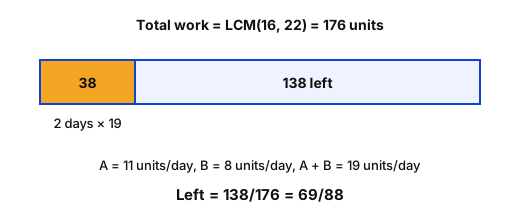
- Total units; A , B units/day
- Together in 2 days: units
- Left units
Trick: Done , left .
Answer: (B)
अवधारणा: कुल कार्य = दिनों का LCM; इकाइयों में हल करें।
- कुल इकाई; A , B इकाई/दिन
- 2 दिन में: इकाई
- शेष इकाई
ट्रिक: किया गया , शेष ।
उत्तर: (B)
RRB NTPC Undergraduate CBT 1MathematicsTime & workRRB NTPC Undergraduate CBT 1 2024 · 18 Aug Shift 1
Q1133.A sum of ₹625 is invested in a bank at 16% interest per annum compounded annually. On maturity, the amount payable becomes ₹841. Find the time period of the investment.
₹625 की राशि एक बैंक में 16% वार्षिक चक्रवृद्धि ब्याज (वार्षिक रूप से संयोजित) पर निवेश की जाती है। परिपक्वता पर देय मिश्रधन ₹841 हो जाता है। निवेश की समयावधि ज्ञात कीजिए।
- A1.5 years1.5 वर्ष
- B2.5 years2.5 वर्ष
- C2 years2 वर्ष
- D1 year1 वर्ष
Show answer
Concept: .
- and
- So years
Trick: , — the squares give the time instantly.
Answer: (C) 2 years
अवधारणा: ।
- ,
- अतः वर्ष
ट्रिक: , — वर्ग देखते ही समय मिल जाता है।
उत्तर: (C) 2 वर्ष
RRB NTPC Undergraduate CBT 1MathematicsCompound interestRRB NTPC Undergraduate CBT 1 2024 · 18 Aug Shift 1
Q1134.Find the difference between a single discount of 20% and two successive discounts of 10% and 10% on a gift of ₹600.
₹600 के एक उपहार पर 20% की एकल छूट और 10% तथा 10% की दो क्रमिक छूटों के बीच का अंतर ज्ञात कीजिए।
- A₹5
- B₹1
- C₹3
- D₹6
Show answer
Concept: Two successive discounts .
- Single 20%:
- Successive:
- Difference
Trick: Difference of 600 .
Answer: (D) ₹6
अवधारणा: दो क्रमिक छूट ।
- एकल 20%:
- क्रमिक:
- अंतर
ट्रिक: अंतर of 600 ।
उत्तर: (D) ₹6
RRB NTPC Undergraduate CBT 1MathematicsSuccessive discountRRB NTPC Undergraduate CBT 1 2024 · 18 Aug Shift 1
Q1135.Pipe P can fill part of a tank in 20 hours, and pipe Q can fill part of the same tank in 30 hours. Both P and Q were kept open for 3 hours, then both were closed. Pipe R alone was then opened and it emptied the water in the tank in 4 hours. Pipes P, Q and R together can fill the empty tank in:
पाइप P किसी टंकी का भाग 20 घंटे में भर सकता है, और पाइप Q उसी टंकी का भाग 30 घंटे में भर सकता है। P और Q दोनों को 3 घंटे के लिए खुला रखा गया, फिर दोनों को बंद कर दिया गया। इसके बाद केवल पाइप R को खोला गया और उसने टंकी का पानी 4 घंटे में खाली कर दिया। पाइप P, Q और R एक साथ खाली टंकी को कितने समय में भर सकते हैं?
- A117 hours117 घंटे
- B135 hours135 घंटे
- C115 hours115 घंटे
- D147 hours147 घंटे
Show answer
Concept: Find each pipe's full-tank time, then net rate.
- P: in 20 h → full in h; Q: in 30 h → full in h
- In 3 h: filled
- R empties in 4 h → empties full tank in h
- Together: → 135 h
Trick: R cancels P exactly (both 45 h), so the net is just Q: 135 h.
Answer: (B) 135 hours
अवधारणा: हर पाइप का पूरा भरने/खाली करने का समय निकालें।
- P: 45 घंटे; Q: 135 घंटे
- 3 घंटे में भरा:
- R, को 4 घंटे में खाली करता है → पूरा 45 घंटे में
- मिलकर: → 135 घंटे
ट्रिक: R और P दोनों 45 घंटे — एक-दूसरे को काट देते हैं, बचा Q: 135 घंटे।
उत्तर: (B) 135 hours
RRB NTPC Undergraduate CBT 1MathematicsPipes & cisternsRRB NTPC Undergraduate CBT 1 2024 · 18 Aug Shift 1
Q1136.The value of is
का मान है
- A
- B
- C
- D
Show answer
Concept: Simplify the complex fraction first, then take LCM.
- , so
- , LCM
Trick: Denominator must contain 13 and 6 → only 78 fits.
Answer: (C)
अवधारणा: पहले जटिल भिन्न सरल करें, फिर LCM लें।
- , अतः
- , LCM
ट्रिक: हर में 13 और 6 दोनों चाहिए → केवल 78।
उत्तर: (C)
RRB NTPC Undergraduate CBT 1MathematicsSimplification – fractionsRRB NTPC Undergraduate CBT 1 2024 · 18 Aug Shift 1
Q1137.Five solid cubes, each of volume 15625 cm3, are joined end to end to form a cuboid. What is the lateral surface area (in cm2) of the cuboid?
प्रत्येक 15625 cm3 आयतन वाले पाँच ठोस घनों को सिरे से सिरा मिलाकर एक घनाभ बनाया जाता है। घनाभ का पार्श्व पृष्ठीय क्षेत्रफल (cm2 में) कितना है?
- A7593
- B7500
- C7591
- D7280
Show answer
Concept: Lateral surface area of cuboid .
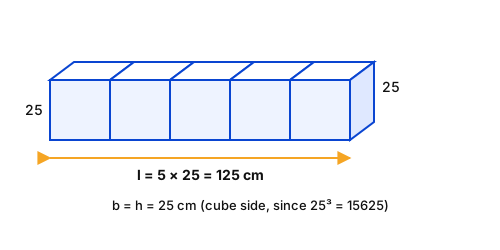
- Cube side
- Cuboid: ,
- LSA
Trick: LSA = 4 long faces .
Answer: (B)
अवधारणा: घनाभ का पार्श्व पृष्ठ क्षेत्रफल ।
- घन की भुजा
- घनाभ: ,
- LSA
ट्रिक: 4 लंबे फलक ।
उत्तर: (B)
RRB NTPC Undergraduate CBT 1MathematicsMensuration – cube & cuboidRRB NTPC Undergraduate CBT 1 2024 · 18 Aug Shift 1
Q1138.In covering a distance of 112 km, Salaj takes 3 hours more than Kevin. If Salaj doubles his speed, then he would take 5 hours less than Kevin. Salaj's speed is:
112 km की दूरी तय करने में सलज, केविन से 3 घंटे अधिक लेता है। यदि सलज अपनी चाल दोगुनी कर दे, तो वह केविन से 5 घंटे कम लेगा। सलज की चाल है:
- A5 km/hr
- B7 km/hr
- C10 km/hr
- D6 km/hr
Show answer
Concept: Form two equations in Salaj's speed and Kevin's time .
- Subtract:
Trick: Halving the time saves h, so normal time h; .
Answer: (B)
अवधारणा: सलज की चाल , केविन का समय लेकर दो समीकरण।
- घटाएँ:
ट्रिक: चाल दोगुनी → आधा समय बचा घंटे, पूरा समय ; ।
उत्तर: (B)
RRB NTPC Undergraduate CBT 1MathematicsSpeed, time & distanceRRB NTPC Undergraduate CBT 1 2024 · 18 Aug Shift 1
Q1139.Simplify:
सरल कीजिए:
- A102x − 132
- B−102x + 132
- C−102x − 132
- D102x + 132
Show answer
Concept: Expand and collect like terms.
- :
- Sum
Trick: terms cancel (); just add terms and constants.
Answer: (B)
अवधारणा: कोष्ठक खोलकर समान पद जोड़ें।
- योग
ट्रिक: पद कट जाते हैं; केवल और अचर जोड़ें।
उत्तर: (B)
RRB NTPC Undergraduate CBT 1MathematicsAlgebraic simplificationRRB NTPC Undergraduate CBT 1 2024 · 18 Aug Shift 1
Q1140.If 3 times Mary’s present age is 29 years more than 5 times Diya's present age, and 2 times Diya's present age is 9 years less than Mary's present age, then what is the difference (in years) between the ages of Mary and Diya?
यदि मैरी की वर्तमान आयु का 3 गुना, दीया की वर्तमान आयु के 5 गुने से 29 वर्ष अधिक है, और दीया की वर्तमान आयु का 2 गुना, मैरी की वर्तमान आयु से 9 वर्ष कम है, तो मैरी और दीया की आयु में अंतर (वर्षों में) कितना है?
- A11
- B9
- C7
- D8
Show answer
Concept: Translate statements into equations.
- ,
- Difference
Trick: Check: ✓.
Answer: (A) 11
अवधारणा: कथनों को समीकरण में बदलें।
- ,
- अंतर
ट्रिक: जाँच: ✓।
उत्तर: (A) 11
RRB NTPC Undergraduate CBT 1MathematicsProblems on agesRRB NTPC Undergraduate CBT 1 2024 · 18 Aug Shift 1

