Q101.Find the value of: [167 ÷ {17 + 4 × ( 3 − 7 )}].
[167 ÷ {17 + 4 × ( 3 − 7 )}] का मान ज्ञात कीजिए।
- A167
- B166
- C172
- D164
Show answer
Concept: Solve innermost bracket first, then multiplication, then addition, and finally the outer division (BODMAS).
Trick: If the curly bracket becomes , the answer is the numerator itself.
Answer: (A)
अवधारणा: सबसे अंदर के कोष्ठक से शुरू करें, फिर गुणा, फिर जोड़ और अंत में बाहर का भाग (BODMAS)।
ट्रिक: मझला कोष्ठक बन जाए तो उत्तर अंश ही होगा।
उत्तर: (A)
RRB NTPC Undergraduate CBT 1MathematicsSimplification (BODMAS)RRB NTPC Undergraduate CBT 1 2024 · 8 Sep Shift 3
Q102.The current population of a town is 20,000. It increases by 30% and 50% in two successive years but decreases by 68% in the third year. What is the population of the town at the end of the third year?
एक कस्बे की वर्तमान जनसंख्या 20,000 है। यह लगातार दो वर्षों में 30% और 50% बढ़ती है, लेकिन तीसरे वर्ष में 68% घट जाती है। तीसरे वर्ष के अंत में कस्बे की जनसंख्या कितनी है?
- A12,480
- B12,485
- C12,481
- D12,475
Show answer
Concept: Successive % changes multiply: .
- Decrease leaves :
Trick: – the answer must be a multiple of here.
Answer: (A)
अवधारणा: क्रमिक प्रतिशत परिवर्तन गुणा होते हैं: ।
- कमी के बाद बचता है:
ट्रिक: ।
उत्तर: (A)
RRB NTPC Undergraduate CBT 1MathematicsPopulation growthRRB NTPC Undergraduate CBT 1 2024 · 8 Sep Shift 3
Q103.Simplify:
सरल कीजिए:
- A89x − 77
- B89x + 77
- C−89x + 77
- D−89x − 77
Show answer
Concept: Expand each bracket and combine like terms.
- Add:
Trick: The terms cancel, so only a linear expression remains – check sign of : .
Answer: (C)
अवधारणा: हर कोष्ठक खोलें और समान पदों को जोड़ें।
- जोड़ने पर:
ट्रिक: वाले पद कट जाते हैं; का गुणांक ।
उत्तर: (C)
RRB NTPC Undergraduate CBT 1MathematicsAlgebraic simplificationRRB NTPC Undergraduate CBT 1 2024 · 8 Sep Shift 3
Q104.If , then ______.
यदि है, तो ______ है।
- A
- B
- C
- D
Show answer
Concept: If , take perpendicular , hypotenuse ; then base and .
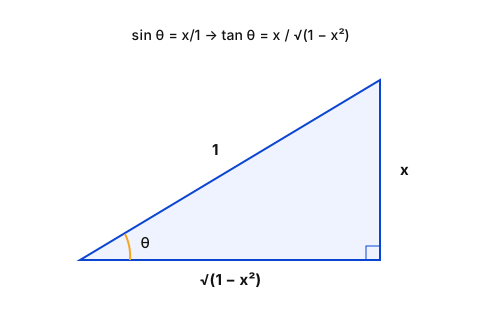
Trick: Put (): LHS and .
Answer: (A)
अवधारणा: हो तो लम्ब , कर्ण ; आधार और ।
ट्रिक: () रखकर जाँचें: दोनों तरफ आता है।
उत्तर: (A)
RRB NTPC Undergraduate CBT 1MathematicsTrigonometric ratiosRRB NTPC Undergraduate CBT 1 2024 · 8 Sep Shift 3
Q105.Nisha, Sameer, and Rupesh invest ₹1,730, ₹1,420, and ₹1,350 respectively to start a business. If the profit at the end of the year is ₹1,490, then what is the share of Rupesh in the profit?
निशा, समीर और रूपेश एक व्यवसाय शुरू करने के लिए क्रमशः ₹1,730, ₹1,420 और ₹1,350 निवेश करते हैं। यदि वर्ष के अंत में लाभ ₹1,490 है, तो लाभ में रूपेश का हिस्सा कितना है?
- A₹449
- B₹447
- C₹446
- D₹445
Show answer
Concept: For the same time period, profit is shared in the ratio of investments.
- Ratio
- Sum
- Rupesh's share
Trick: , so just take of ₹.
Answer: (B) ₹
अवधारणा: समय समान हो तो लाभ निवेश के अनुपात में बँटता है।
- अनुपात
- योग
- रूपेश का हिस्सा
ट्रिक: , यानी ₹ का ।
उत्तर: (B) ₹
RRB NTPC Undergraduate CBT 1MathematicsPartnershipRRB NTPC Undergraduate CBT 1 2024 · 8 Sep Shift 3
Q106.If the radius of the base of a right circular cylinder is decreased by 23% and its height is increased by 151%, then what is the percentage increase (closest integer) in its volume?
यदि एक लंब वृत्तीय बेलन के आधार की त्रिज्या 23% कम कर दी जाए और उसकी ऊँचाई 151% बढ़ा दी जाए, तो उसके आयतन में प्रतिशत वृद्धि (निकटतम पूर्णांक) कितनी है?
- A20%
- B49%
- C66%
- D69%
Show answer
Concept: . Take , ; new , new .
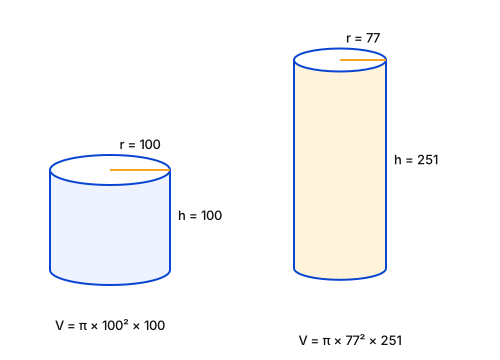
- Old
- New
- Increase
Trick: Multiplying factor → about increase.
Answer: (B)
अवधारणा: । मान लें , ; नई , नई ।
- पुराना
- नया
- वृद्धि
ट्रिक: गुणक → लगभग वृद्धि।
उत्तर: (B)
RRB NTPC Undergraduate CBT 1MathematicsVolume of cylinder – % changeRRB NTPC Undergraduate CBT 1 2024 · 8 Sep Shift 3
Q107.If 2 times the age of Ram is 24 years more than 2 times the age of Ramya, and 4 times the age of Ramya is 3 years less than the age of Ram, then what is the difference (in years) between the ages of Ram and Ramya?
यदि राम की आयु का 2 गुना, राम्या की आयु के 2 गुने से 24 वर्ष अधिक है, और राम्या की आयु का 4 गुना, राम की आयु से 3 वर्ष कम है, तो राम और राम्या की आयु के बीच का अंतर (वर्षों में) कितना है?
- A15
- B12
- C11
- D9
Show answer
Concept: Form equations from the statements; the first one alone gives the difference.
- Check with second: ; with : ,
- Difference years
Trick: Divide the first equation by – the difference is directly .
Answer: (B)
अवधारणा: कथनों से समीकरण बनाएँ; पहला समीकरण ही अंतर दे देता है।
- दूसरे से जाँच: ; रखने पर ,
- अंतर वर्ष
ट्रिक: पहले समीकरण को से भाग दें – अंतर सीधे ।
उत्तर: (B)
RRB NTPC Undergraduate CBT 1MathematicsProblems on agesRRB NTPC Undergraduate CBT 1 2024 · 8 Sep Shift 3
Q108.The sum of two numbers is 78 and their L.C.M. is 180. What are the two numbers?
दो संख्याओं का योग 78 है और उनका ल.स.प. (L.C.M.) 180 है। वे दो संख्याएँ कौन-सी हैं?
- A58, 20
- B53, 25
- C60, 18
- D65, 13
Show answer
Concept: Check each option: sum must be and LCM must be .
- but LCM ✗
- , LCM ✗
- , , , LCM ✓
- , LCM ✗
Trick: Both numbers must divide ; only and are divisors of .
Answer: (C)
अवधारणा: हर विकल्प जाँचें: योग और LCM होना चाहिए।
- : LCM ✗
- : LCM ✗
- : LCM ✓
- : LCM ✗
ट्रिक: दोनों संख्याएँ की गुणनखंड होनी चाहिए – केवल और ।
उत्तर: (C)
RRB NTPC Undergraduate CBT 1MathematicsLCM and HCFRRB NTPC Undergraduate CBT 1 2024 · 8 Sep Shift 3
Q109.Kunal and Abhishek start a business. Kunal invests ₹33,000 more than Abhishek for 7 months and Abhishek invests for 3 months. Kunal's share is ₹2,654 more than that of Abhishek, out of a total profit of ₹5,308. Find the capital contributed by Kunal.
कुणाल और अभिषेक एक व्यवसाय शुरू करते हैं। कुणाल, अभिषेक से ₹33,000 अधिक 7 महीने के लिए निवेश करता है और अभिषेक 3 महीने के लिए निवेश करता है। ₹5,308 के कुल लाभ में से कुणाल का हिस्सा अभिषेक के हिस्से से ₹2,654 अधिक है। कुणाल द्वारा लगाई गई पूँजी ज्ञात कीजिए।
- A₹1,48,367
- B₹1,48,556
- C₹1,48,647
- D₹1,48,500
Show answer
Concept: Profit ratio (capital time) ratio.
- Kunal Abhishek , difference → Kunal , Abhishek ; ratio
- Let Abhishek , Kunal :
- Kunal
Trick: Profit ratio with times → capital ratio ; parts → parts .
Answer: (D) ₹
अवधारणा: लाभ का अनुपात (पूँजी समय) का अनुपात।
- योग , अंतर → कुणाल , अभिषेक ; अनुपात
- अभिषेक , कुणाल :
- कुणाल
ट्रिक: पूँजी अनुपात ; भाग → भाग ।
उत्तर: (D) ₹
RRB NTPC Undergraduate CBT 1MathematicsPartnership with timeRRB NTPC Undergraduate CBT 1 2024 · 8 Sep Shift 3
Q110.Two school bells ring at intervals of 36 minutes and 45 minutes. If both bells ring together at 9:00 a.m., when will they ring together again?
स्कूल की दो घंटियाँ क्रमशः 36 मिनट और 45 मिनट के अंतराल पर बजती हैं। यदि दोनों घंटियाँ सुबह 9:00 बजे एक साथ बजती हैं, तो वे फिर से एक साथ कब बजेंगी?
- A1:12 p.m.दोपहर 1:12 बजे
- B11:36 a.m.सुबह 11:36 बजे
- C12 noonदोपहर 12 बजे
- D11:48 a.m.सुबह 11:48 बजे
Show answer
Concept: Bells ring together again after the LCM of their intervals.
- ,
- LCM minutes hours
- 9:00 a.m. h 12:00 noon
Trick: LCM min.
Answer: (C) 12 noon
अवधारणा: घंटियाँ अंतरालों के LCM के बाद फिर साथ बजती हैं।
- ,
- LCM मिनट घंटे
- सुबह 9:00 घंटे दोपहर 12:00
ट्रिक: LCM मिनट।
उत्तर: (C) 12 noon (दोपहर 12 बजे)
RRB NTPC Undergraduate CBT 1MathematicsLCM applicationRRB NTPC Undergraduate CBT 1 2024 · 8 Sep Shift 3
Q111.Sapna invested ₹22,800 on simple interest, partly at 5% per annum and partly at 14% per annum. If she earns equal interests from the two investments after 4 years, then find the sum invested at 5% per annum (in ₹).
सपना ने ₹22,800 साधारण ब्याज पर निवेश किए, कुछ भाग 5% वार्षिक दर पर और कुछ भाग 14% वार्षिक दर पर। यदि 4 वर्ष बाद उसे दोनों निवेशों से समान ब्याज प्राप्त होता है, तो 5% वार्षिक दर पर निवेश की गई राशि (₹ में) ज्ञात कीजिए।
- A16,798
- B16,799
- C16,800
- D16,801
Show answer
Concept: Equal interest for equal time ⇒ principal rate is equal, so principals are in inverse ratio of rates.
- Total parts , part
- Sum at
Trick: Sum at lower rate is larger: ratio of sums inverse of rates ().
Answer: (C)
अवधारणा: समान समय में समान ब्याज ⇒ मूलधन दर बराबर; अतः मूलधन दरों के व्युत्क्रम अनुपात में।
- कुल भाग, भाग
- पर राशि
ट्रिक: कम दर पर राशि अधिक होती है – अनुपात दरों का उल्टा ()।
उत्तर: (C)
RRB NTPC Undergraduate CBT 1MathematicsSimple interestRRB NTPC Undergraduate CBT 1 2024 · 8 Sep Shift 3
Q112.A shop offers 'Buy three for ₹6,000, get one free' for Dasara celebration, and also offers ₹600 cash back if a person pays in cash. What is the total percentage of discount offered for a customer who pays in cash?
एक दुकान दशहरा उत्सव के लिए 'तीन ₹6,000 में खरीदें, एक मुफ़्त पाएँ' की पेशकश करती है, और यदि कोई व्यक्ति नकद भुगतान करता है तो ₹600 कैशबैक भी देती है। नकद भुगतान करने वाले ग्राहक को दी गई कुल छूट का प्रतिशत कितना है?
- A25.5%
- B67.5%
- C33.33%
- D32.5%
Show answer
Concept: Discount .
- Price of one item ; customer gets items worth
- Pays
- Discount
Trick: Always divide by the value of ALL items received ( items), not the paid for.
Answer: (D)
अवधारणा: छूट ।
- एक वस्तु ; ग्राहक को वस्तुएँ की मिलती हैं
- भुगतान
- छूट
ट्रिक: भाग हमेशा मिली हुई सभी () वस्तुओं के मूल्य से दें।
उत्तर: (D)
RRB NTPC Undergraduate CBT 1MathematicsDiscount – buy x get yRRB NTPC Undergraduate CBT 1 2024 · 8 Sep Shift 3
Q113.I bought two dresses for ₹1,200. I sold the first one at a loss of 9% and the second at a gain of 15%. If, on the whole I made neither a loss nor a gain, find the cost price (in ₹) of the first dress.
मैंने दो पोशाकें ₹1,200 में खरीदीं। मैंने पहली को 9% की हानि पर और दूसरी को 15% के लाभ पर बेचा। यदि कुल मिलाकर मुझे न तो हानि हुई और न ही लाभ, तो पहली पोशाक का क्रय मूल्य (₹ में) ज्ञात कीजिए।
- A774
- B770
- C750
- D734
Show answer
Concept: No overall gain/loss ⇒ loss on first gain on second.
Trick: CP ratio inverse of : → first .
Answer: (C)
अवधारणा: कुल न लाभ न हानि ⇒ पहली पर हानि दूसरी पर लाभ।
ट्रिक: क्रय मूल्य का अनुपात का उल्टा: → पहली ।
उत्तर: (C)
RRB NTPC Undergraduate CBT 1MathematicsProfit and loss – no gain no lossRRB NTPC Undergraduate CBT 1 2024 · 8 Sep Shift 3
Q114.The value of is
का मान है:
- A-19
- B-27
- C-28
- D-26
Show answer
Concept: Evaluate each term: powers and roots first, then add/subtract left to right.
Trick: for positive .
Answer: (C)
अवधारणा: पहले घात और वर्गमूल निकालें, फिर बाएँ से दाएँ जोड़-घटाव करें।
ट्रिक: धनात्मक के लिए ।
उत्तर: (C)
RRB NTPC Undergraduate CBT 1MathematicsSquares and rootsRRB NTPC Undergraduate CBT 1 2024 · 8 Sep Shift 3
Q115.The interior angle between two adjacent sides of a regular -sided polygon is ______ degrees.
एक सम -भुजीय बहुभुज की दो आसन्न भुजाओं के बीच का अंतः कोण ______ डिग्री है।
- A
- B
- C
- D
Show answer
Concept: Exterior angles of any polygon add up to ; interior exterior .
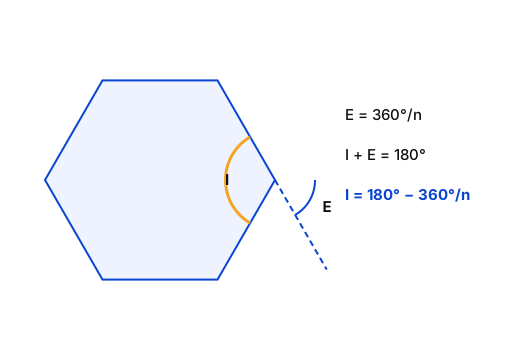
- Each exterior angle of a regular -gon
- Interior angle
- Check: gives ✓
Yaad rakhein: Same as .
Answer: (C)
अवधारणा: किसी भी बहुभुज के बाह्य कोणों का योग ; अंतः बाह्य ।
- सम -भुज का प्रत्येक बाह्य कोण
- अंतः कोण
- जाँच: पर ✓
याद रखें: यह के बराबर है।
उत्तर: (C)
RRB NTPC Undergraduate CBT 1MathematicsPolygons – interior angleRRB NTPC Undergraduate CBT 1 2024 · 8 Sep Shift 3
Q116.A can do a work in 9 days and B can do the same work in 21 days. If they work on it together for 2 days, then what fraction of the work is left?
A किसी कार्य को 9 दिनों में और B उसी कार्य को 21 दिनों में कर सकता है। यदि वे 2 दिनों तक एक साथ उस पर कार्य करते हैं, तो कार्य का कितना भाग शेष रह जाता है?
- A
- B
- C
- D
Show answer
Concept: Take total work LCM of days, find per-day efficiencies.
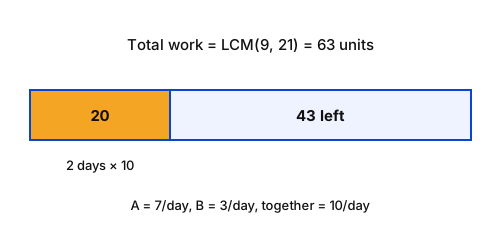
- Total LCM units; A /day, B /day
- Together /day; in days units
- Left units →
Trick: .
Answer: (C)
अवधारणा: कुल कार्य दिनों का LCM लें, फिर प्रतिदिन की क्षमता निकालें।
- कुल इकाई; A /दिन, B /दिन
- साथ में /दिन; दिन में इकाई
- शेष इकाई →
ट्रिक: ।
उत्तर: (C)
RRB NTPC Undergraduate CBT 1MathematicsTime and workRRB NTPC Undergraduate CBT 1 2024 · 8 Sep Shift 3
Q117.The product of two consecutive positive natural numbers is 110. The greater of the two numbers is:
दो क्रमागत धनात्मक प्राकृत संख्याओं का गुणनफल 110 है। दोनों संख्याओं में से बड़ी संख्या है:
- A7
- B5
- C11
- D3
Show answer
Concept: Consecutive numbers and : .
- (positive)
- Numbers: ; greater
Trick: lies next to , so try .
Answer: (C)
अवधारणा: क्रमागत संख्याएँ और : ।
- संख्याएँ ; बड़ी
ट्रिक: का वर्गमूल लगभग – तो ।
उत्तर: (C)
RRB NTPC Undergraduate CBT 1MathematicsNumber systemRRB NTPC Undergraduate CBT 1 2024 · 8 Sep Shift 3
Q118.By how much is of greater than of ?
का , के से कितना अधिक है?
- A26.75
- B28.75
- C22.75
- D25.75
Show answer
Concept: Find both values and subtract.
- of
- of
Trick: of : , .
Answer: (B)
अवधारणा: दोनों मान निकालकर घटाएँ।
- का
- का
ट्रिक: , → ।
उत्तर: (B)
RRB NTPC Undergraduate CBT 1MathematicsPercentage and fractionsRRB NTPC Undergraduate CBT 1 2024 · 8 Sep Shift 3
Q119.By selling an article at of its actual selling price, Hitesh incurs a loss of .
If he sells it at of its actual selling price, then the profit percentage is:
किसी वस्तु को उसके वास्तविक विक्रय मूल्य के पर बेचने से, हितेश को की हानि होती है।
यदि वह इसे इसके वास्तविक विक्रय मूल्य के पर बेचता है, तो लाभ प्रतिशत है:
- A78.7%
- B77.5%
- C78.1%
- D78.5%
Show answer
Concept: Express CP in terms of the actual SP using the first condition.
- New SP
- Profit
Trick: Take : then ; new SP , so ratio .
Answer: (D)
अवधारणा: पहली शर्त से क्रय मूल्य को वास्तविक विक्रय मूल्य में लिखें।
- नया विक्रय मूल्य
- लाभ
ट्रिक: लें: , नया SP → अनुपात ।
उत्तर: (D)
RRB NTPC Undergraduate CBT 1MathematicsProfit and lossRRB NTPC Undergraduate CBT 1 2024 · 8 Sep Shift 3
Q120.The sum of five numbers is 655. The average of the first two numbers is 80, and the third number is 104. Find the average of the remaining two numbers.
पाँच संख्याओं का योग 655 है। पहली दो संख्याओं का औसत 80 है, और तीसरी संख्या 104 है। शेष दो संख्याओं का औसत ज्ञात कीजिए।
- A185
- B184
- C196.5
- D195.5
Show answer
Concept: Sum of the remaining numbers total known parts.
- First two sum
- Remaining two
- Average
Trick: Answer must end in because is odd.
Answer: (D)
अवधारणा: शेष संख्याओं का योग कुल ज्ञात भाग।
- पहली दो का योग
- शेष दो
- औसत
ट्रिक: विषम है, तो औसत पर ख़त्म होगा।
उत्तर: (D)
RRB NTPC Undergraduate CBT 1MathematicsAverageRRB NTPC Undergraduate CBT 1 2024 · 8 Sep Shift 3

