Q181.The time taken to cover 150 km by car is 2 hours. Find the time taken to cover 125 km by the same car.
कार से 150 km तय करने में 2 घंटे लगते हैं। उसी कार से 125 km तय करने में कितना समय लगेगा?
- A1 hour 45 min1 घंटा 45 मिनट
- B1 hour 40 min1 घंटा 40 मिनट
- C1 hour 30 min1 घंटा 30 मिनट
- D1 hour 20 min1 घंटा 20 मिनट
Show answer
Concept: At constant speed, time is proportional to distance.
- Speed = km/h.
- Time = h h h h 40 min.
Trick: Unitary: 150 km → 120 min, so 125 km → min = 1 h 40 min.
Answer: (B) 1 hour 40 min
अवधारणा: समान चाल पर समय दूरी के समानुपाती होता है।
हल:
- चाल = km/h।
- समय = घंटा = 1 घंटा 40 मिनट।
ट्रिक: 150 km → 120 मिनट, तो 125 km → मिनट = 1 घंटा 40 मिनट।
उत्तर: (B) 1 घंटा 40 मिनट
SSC CGLQuantitative AptitudeSpeed, distance, time – same speedSSC CGL 2025 · 25 Sep Shift 2
Q182.The surface area of a cuboid is 736 cm² and its dimensions are in the ratio 1 : 3 : 5. Find its volume.
एक घनाभ का पृष्ठीय क्षेत्रफल 736 cm² है और उसकी विमाएँ 1 : 3 : 5 के अनुपात में हैं। उसका आयतन ज्ञात कीजिए।
- A960 cm³
- B948 cm³
- C860 cm³
- D528 cm³
Show answer
Concept: TSA = ; volume = .
- Sides , , : , so TSA .
- , ; sides 4, 12, 20.
- Volume = .
Trick: Volume must be — a multiple of 15. Only 960 () is divisible by 15.
Answer: (A) 960 cm³
अवधारणा: कुल पृष्ठीय क्षेत्रफल = ; आयतन = ।
हल:
- भुजाएँ , , : TSA ।
- ; भुजाएँ 4, 12, 20।
- आयतन = ।
ट्रिक: आयतन = यानी 15 का गुणज; विकल्पों में केवल 960 () 15 से विभाज्य।
उत्तर: (A) 960 cm³
SSC CGLQuantitative AptitudeCuboid – volume from surface areaSSC CGL 2025 · 25 Sep Shift 2
Q183.A building has 4 square pyramidal turrets, each with base side 5 m and height 7 m. If each needs 1.5 times its volume for structural fill, find the total fill needed.
एक इमारत में 4 वर्गाकार पिरामिडनुमा बुर्ज हैं, प्रत्येक की आधार भुजा 5 m और ऊँचाई 7 m है। यदि प्रत्येक हेतु उसके आयतन का 1.5 गुना भराव चाहिए, तो कुल भराव ज्ञात कीजिए।
- A350 m³
- B260 m³
- C280 m³
- D180 m³
Show answer
Concept: Volume of a pyramid = base area height.
- One turret = .
- Four turrets = .
- Fill = .
Trick: , so fill = directly.
Answer: (A) 350 m³
अवधारणा: पिरामिड का आयतन = आधार क्षेत्रफल ऊँचाई।
हल:
- एक मीनार = ।
- चार मीनारें = ।
- भराव = ।
ट्रिक: , अतः भराव = सीधे।
उत्तर: (A) 350 m³
SSC CGLQuantitative AptitudePyramid volume – practical applicationSSC CGL 2025 · 25 Sep Shift 2
Q184.A man spends 70% of his income. His income increases by 15% and his expenditure by 10%. What is the percentage increase in his savings?
एक व्यक्ति अपनी आय का 70% खर्च करता है। उसकी आय 15% और खर्च 10% बढ़ जाता है। उसकी बचत में कितने प्रतिशत वृद्धि होगी?
- A26.67%
- B31.67%
- C41.67%
- D51.67%
Show answer
Concept: Savings = Income − Expenditure; work with income = 100.
- Old: , , .
- New: , , .
- Increase = .
Trick: Weighted change: extra savings on 30 → 26.67%.
Answer: (A) 26.67%
अवधारणा: बचत = आय − व्यय; आय = 100 मान लें।
हल:
- पहले: आय 100, व्यय 70, बचत 30।
- बाद में: आय 115, व्यय , बचत 38।
- वृद्धि = ।
ट्रिक: 100 का 15% − 70 का 10% = अतिरिक्त बचत; 30 पर → 26.67%।
उत्तर: (A) 26.67%
SSC CGLQuantitative AptitudeIncome, expenditure and savingsSSC CGL 2025 · 25 Sep Shift 2
Q185.The average score of a batsman in 20 innings is 43. If his highest score of 115 is excluded, what is the new average?
एक बल्लेबाज़ का 20 पारियों में औसत 43 है। यदि उसका सर्वोच्च स्कोर 115 हटा दिया जाए, तो नया औसत क्या होगा?
- A37.89
- B38.89
- C39.21
- D36.89
Show answer
Concept: New average = (total − removed value) ÷ (new count).
- Total = .
- After removing 115: 745 runs in 19 innings.
- New average = .
Trick: Deviation method: 115 is 72 above 43; spread over 19 innings → .
Answer: (C) 39.21
अवधारणा: नया औसत = (कुल − हटाया गया मान) ÷ (नई संख्या)।
हल:
- कुल रन = ।
- 115 हटाने पर 19 पारियों में 745 रन।
- नया औसत = ।
ट्रिक: विचलन विधि: 115, औसत से 72 अधिक; 19 पारियों में बाँटें → ।
उत्तर: (C) 39.21
SSC CGLQuantitative AptitudeAverage – removing one valueSSC CGL 2025 · 25 Sep Shift 2
Q186.If the price tag of a microwave is ₹4,500 and the shopkeeper offers a discount of 19%, what is the selling price?
यदि एक माइक्रोवेव का अंकित मूल्य ₹4,500 है और दुकानदार 19% छूट देता है, तो विक्रय मूल्य क्या होगा?
- A₹3,545
- B₹3,645
- C₹4,345
- D₹4,200
Show answer
Concept: .
- SP = .
- ₹3,645.
Trick: 19% of 4,500 = (20% minus 1%); .
Answer: (B) ₹3,645
अवधारणा: ।
हल:
- SP = ।
- ₹3,645।
ट्रिक: 4,500 का 19% = 20% (900) − 1% (45) = 855; ।
उत्तर: (B) ₹3,645
SSC CGLQuantitative AptitudeDiscount – selling priceSSC CGL 2025 · 25 Sep Shift 2
Q187.The radii of three concentric circles are in arithmetic progression. If the innermost radius is 5 cm and the outermost is 15 cm, what is the radius of the middle circle?
तीन संकेंद्री वृत्तों की त्रिज्याएँ समांतर श्रेढ़ी में हैं। यदि सबसे भीतरी त्रिज्या 5 cm और सबसे बाहरी 15 cm है, तो बीच वाले वृत्त की त्रिज्या क्या है?
- A12 cm
- B11 cm
- C10 cm
- D14 cm
Show answer
Concept: In three terms of an AP, the middle term is the mean of the outer two.
- Middle radius = .
- cm.
Trick: For any three AP terms a, b, c: .
Answer: (C) 10 cm
अवधारणा: समांतर श्रेणी के तीन पदों में मध्य पद, बाहरी दो का औसत होता है।
हल:
- मध्य त्रिज्या = ।
- = 10 cm।
ट्रिक: AP के किन्हीं तीन पदों a, b, c में ।
उत्तर: (C) 10 cm
SSC CGLQuantitative AptitudeArithmetic mean of AP termsSSC CGL 2025 · 25 Sep Shift 2
Q188.If the height of a cylinder is equal to its diameter and the radius is 6 cm, find its volume.
यदि किसी बेलन की ऊँचाई उसके व्यास के बराबर है और त्रिज्या 6 cm है, तो उसका आयतन ज्ञात कीजिए।
- A432π cm³
- B238π cm³
- C500π cm³
- D316π cm³
Show answer
Concept: Volume of a cylinder = .
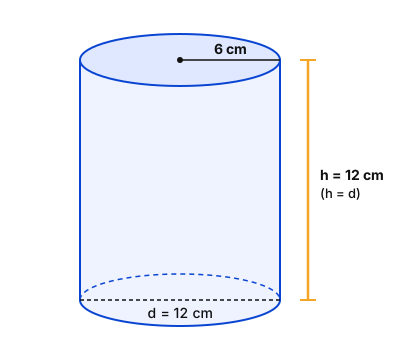
- diameter cm.
- .
Trick: When , .
Answer: (A) 432π cm³
अवधारणा: बेलन का आयतन = ।
हल:
- व्यास cm।
- ।
ट्रिक: जब हो, ।
उत्तर: (A) 432π cm³
SSC CGLQuantitative AptitudeCylinder volumeSSC CGL 2025 · 25 Sep Shift 2
Q189.A right triangular prism has a base area of 35 cm² and height 8 cm. What is its volume?
एक लंब त्रिभुजाकार प्रिज़्म का आधार क्षेत्रफल 35 cm² और ऊँचाई 8 cm है। उसका आयतन क्या है?
- A120 cm³
- B240 cm³
- C280 cm³
- D360 cm³
Show answer
Concept: Volume of any prism = base area × height (length).
- .
- .
Trick: Same rule works for all prisms and cylinders: area of cross-section × length.
Answer: (C) 280 cm³
अवधारणा: किसी भी प्रिज़्म का आयतन = आधार क्षेत्रफल × ऊँचाई।
हल:
- ।
- ।
ट्रिक: यही नियम हर प्रिज़्म व बेलन पर: अनुप्रस्थ काट का क्षेत्रफल × लंबाई।
उत्तर: (C) 280 cm³
SSC CGLQuantitative AptitudePrism volumeSSC CGL 2025 · 25 Sep Shift 2
Q190.If cotA = 3 and A is acute, then find cosA.
यदि cotA = 3 है और A न्यून कोण है, तो cosA ज्ञात कीजिए।
- A
- B
- C
- D
Show answer
Concept: ; .
- ⇒ base = 3, perpendicular = 1.
- Hypotenuse = .
- .
Trick: Since exceeds 1, A is below , so must exceed ; fits.
Answer: (D)
अवधारणा: ; ।
हल:
- ⇒ आधार = 3, लंब = 1।
- कर्ण = ।
- ।
ट्रिक: , 1 से बड़ा ⇒ A, से कम, इसलिए , 0.71 से अधिक; सही बैठता है।
उत्तर: (D)
SSC CGLQuantitative AptitudeTrigonometric ratios – cos from cotSSC CGL 2025 · 25 Sep Shift 2
Q191.Convert 5 radians to degrees.
5 रेडियन को डिग्री में बदलिए।
- A171.89°
- B240°
- C286.62°
- D540°
Show answer
Concept: Degrees = radians .
- .
- With : .
Trick: 1 radian ≈ 57.3°, so 5 rad ≈ 286.5° — only 286.62° is close.
Answer: (C) 286.62°
अवधारणा: डिग्री = रेडियन ।
हल:
- ।
- लेने पर ।
ट्रिक: 1 रेडियन ≈ 57.3°, अतः 5 रेडियन ≈ 286.5° — केवल 286.62° निकट है।
उत्तर: (C) 286.62°
SSC CGLQuantitative AptitudeRadian to degree conversionSSC CGL 2025 · 25 Sep Shift 2
Q192.If tanP = cotQ and both P and Q are acute, what is P + Q?
यदि tanP = cotQ है और P तथा Q दोनों न्यून कोण हैं, तो P + Q क्या होगा?
- A60°
- B90°
- C120°
- D180°
Show answer
Concept: cot θ = tan(90° − θ).
- tan P = cot Q = tan(90° − Q).
- Both acute ⇒ P = 90° − Q ⇒ P + Q = 90°.
Trick: Any 'co-' pair (sin–cos, tan–cot, sec–cosec) being equal means the angles add to 90°.
Answer: (B) 90°
अवधारणा: cot θ = tan(90° − θ)।
हल:
- tan P = cot Q = tan(90° − Q)।
- दोनों न्यून ⇒ P = 90° − Q ⇒ P + Q = 90°।
ट्रिक: sin–cos, tan–cot, sec–cosec जोड़ी बराबर हो तो कोणों का योग 90°।
उत्तर: (B) 90°
SSC CGLQuantitative AptitudeComplementary angles – tan and cotSSC CGL 2025 · 25 Sep Shift 2
Q193.The measures of the interior angles of a pentagon are y, y + 5, y + 10, y + 15 and y + 20. What is the measure of the smallest angle?
एक पंचभुज के अंतःकोण y, y + 5, y + 10, y + 15 और y + 20 हैं। सबसे छोटे कोण की माप क्या है?
- A88°
- B98°
- C108°
- D118°
Show answer
Concept: Sum of interior angles of an n-sided polygon = .
- Pentagon: .
- .
Trick: Angles are in AP, so the middle one ; smallest = .
Answer: (B) 98°
अवधारणा: n भुजाओं वाले बहुभुज के अंतः कोणों का योग = ।
हल:
- पंचभुज: ।
- ।
ट्रिक: कोण AP में हैं, मध्य कोण ; सबसे छोटा = 98°।
उत्तर: (B) 98°
SSC CGLQuantitative AptitudeInterior angles of a polygonSSC CGL 2025 · 25 Sep Shift 2
Q194.In triangle PQR an altitude PS is drawn from P to side QR. Given the coordinates P(3, 4), Q(1, 1) and R(5, 3), what is the slope of the line representing the altitude PS?
त्रिभुज PQR में P से भुजा QR पर शीर्षलंब PS खींचा गया है। यदि निर्देशांक P(3, 4), Q(1, 1) और R(5, 3) हैं, तो शीर्षलंब PS की प्रवणता क्या है?
- A2
- B−2
- C−
- D
Show answer
Concept: An altitude is perpendicular to the opposite side; for perpendicular lines .
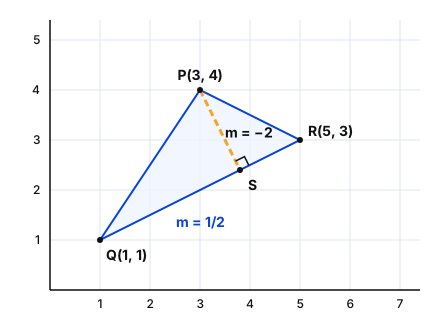
- Slope of QR = .
- Slope of PS = .
Trick: Perpendicular slope = 'flip and change sign': . P's coordinates are not even needed.
Answer: (B) −2
अवधारणा: शीर्षलंब सामने की भुजा पर लंब होता है; लंब रेखाओं के लिए ।
हल:
- QR की ढाल = ।
- PS की ढाल = ।
ट्रिक: लंब ढाल = 'उलटें और चिह्न बदलें': । P के निर्देशांक की ज़रूरत ही नहीं।
उत्तर: (B) −2
SSC CGLQuantitative AptitudeCoordinate geometry – slope of altitudeSSC CGL 2025 · 25 Sep Shift 2
Q195.Triangle ABC has vertices A(0, 0), B(5, 0) and C(0, 12). Triangle XYZ has vertices X(1, 1), Y(13, 1) and Z(1, 6). Are these two triangles congruent?
त्रिभुज ABC के शीर्ष A(0, 0), B(5, 0) और C(0, 12) हैं। त्रिभुज XYZ के शीर्ष X(1, 1), Y(13, 1) और Z(1, 6) हैं। क्या ये दोनों त्रिभुज सर्वांगसम हैं?
- AYes, by SSSहाँ, SSS से
- BYes, by SASहाँ, SAS से
- CYes, by ASAहाँ, ASA से
- DNo, they are not congruentनहीं, वे सर्वांगसम नहीं हैं
Show answer
Concept: Find all three side lengths of each triangle and compare.
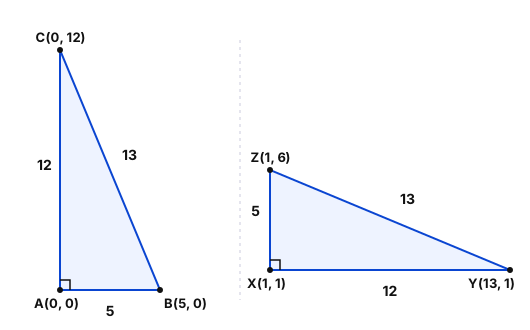
- △ABC: , , .
- △XYZ: , , .
- Sides 5, 12, 13 match ⇒ congruent by SSS.
Trick: Both are right triangles with legs 5 and 12 (the 5-12-13 triplet) — one look at the axis-parallel sides is enough.
Answer: (A) Yes, by SSS
अवधारणा: दोनों त्रिभुजों की तीनों भुजाएँ निकालकर मिलाएँ।
हल:
- △ABC: , , ।
- △XYZ: , , ।
- भुजाएँ 5, 12, 13 समान ⇒ SSS से सर्वांगसम।
ट्रिक: दोनों समकोण त्रिभुज हैं जिनकी भुजाएँ 5 व 12 (त्रिक 5-12-13) — अक्ष के समांतर भुजाएँ देखना ही काफ़ी।
उत्तर: (A) हाँ, SSS से
SSC CGLQuantitative AptitudeCongruence using distance formulaSSC CGL 2025 · 25 Sep Shift 2
Q196.Simplify: 2( − )
सरल कीजिए: 2( − )
- A6
- B4
- C5
- D10
Show answer
Concept: Write each root as (number) by taking out perfect squares.
- , bracket .
- .
Trick: Pull out the square factor first (, ) — the surd then cancels neatly.
Answer: (D) 10
अवधारणा: पूर्ण वर्ग बाहर निकालकर हर करणी को (संख्या) रूप में लिखें।
हल:
- , कोष्ठक ।
- ।
ट्रिक: पहले वर्ग गुणनखंड निकालें (, ) — करणी आसानी से कट जाती है।
उत्तर: (D) 10
SSC CGLQuantitative AptitudeSurds – simplificationSSC CGL 2025 · 25 Sep Shift 2
Q197.If a chord subtends an angle of 100° at the centre, the angle it subtends at the circumference on the same side is:
यदि कोई जीवा केंद्र पर 100° का कोण बनाती है, तो वह उसी ओर परिधि पर कितना कोण बनाएगी?
- A50°
- B37.5°
- C45°
- D60°
Show answer
Concept: Angle at the centre = 2 × angle at the circumference (same arc).
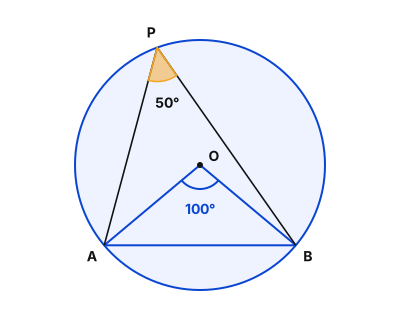
- Central angle = 100°; the inscribed angle stands on the same arc.
- Angle at circumference = 100° ÷ 2 = 50°.
Trick: On the opposite (minor-arc) side the angle would be 180° − 50° = 130° — read 'same side' carefully.
Answer: (A) 50°
अवधारणा: केंद्र पर कोण = 2 × परिधि पर कोण (एक ही चाप के लिए)।
हल:
- केंद्र पर कोण = 100°; परिधि का कोण उसी चाप पर है।
- परिधि पर कोण = 100° ÷ 2 = 50°।
ट्रिक: दूसरी ओर (लघु चाप पर) कोण 180° − 50° = 130° होता — 'उसी ओर' ध्यान से पढ़ें।
उत्तर: (A) 50°
SSC CGLQuantitative AptitudeCircle – angle at centre vs circumferenceSSC CGL 2025 · 25 Sep Shift 2
Q198.What is the area of the segment formed by a chord in a circle of radius 4 cm, if the angle subtended at the centre is 90°?
4 cm त्रिज्या वाले वृत्त में एक जीवा द्वारा बने वृत्तखंड का क्षेत्रफल क्या है, यदि केंद्र पर बना कोण 90° है?
- A4π − 8
- B8π − 4
- C16π − 8
- D4π − 4
Show answer
Concept: Segment area = sector area − area of the triangle formed by the two radii.
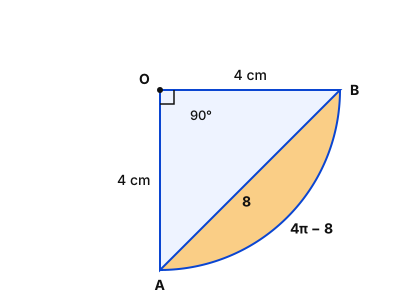
- Sector = .
- Triangle (right-angled) = .
- Segment = .
Trick: For a angle: segment = ; with .
Answer: (A) 4π − 8
अवधारणा: वृत्तखंड क्षेत्रफल = त्रिज्यखंड क्षेत्रफल − दो त्रिज्याओं से बने त्रिभुज का क्षेत्रफल।
हल:
- त्रिज्यखंड = ।
- त्रिभुज (समकोण) = ।
- वृत्तखंड = ।
ट्रिक: के लिए: वृत्तखंड = ; ।
उत्तर: (A) 4π − 8
SSC CGLQuantitative AptitudeArea of a minor segmentSSC CGL 2025 · 25 Sep Shift 2
Q199.If cosA = , then what is sin²A + cos²A − 2 sinA cosA?
यदि cosA = है, तो sin²A + cos²A − 2 sinA cosA का मान क्या है?
- A1
- B0
- C
- D
Show answer
Concept: .
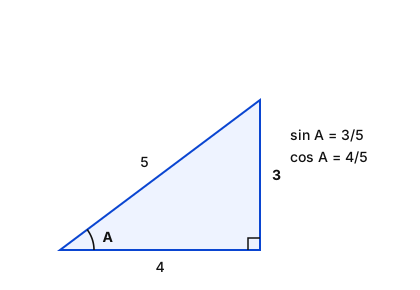
- (3-4-5 triangle).
- .
Trick: Alternatively .
Answer: (C)
अवधारणा: ।
हल:
- (3-4-5 त्रिभुज)।
- ।
ट्रिक: या ।
उत्तर: (C)
SSC CGLQuantitative AptitudeTrigonometry – perfect square identitySSC CGL 2025 · 25 Sep Shift 2
Q200.Kuldeep can complete a task in 30 days and Pankaj can complete the same task in 60 days. How long will it take them to complete the task together?
कुलदीप एक कार्य 30 दिनों में और पंकज वही कार्य 60 दिनों में पूरा कर सकता है। दोनों मिलकर उसे कितने दिनों में पूरा करेंगे?
- A11 days11 दिन
- B13 days13 दिन
- C15 days15 दिन
- D20 days20 दिन
Show answer
Concept: Together time = .
- One-day work: .
- Time = days.
Trick: When one takes double the other's time (30 and 60), together time = of the faster one: .
Answer: (D) 20 days
अवधारणा: साथ में समय = ।
हल:
- एक दिन का काम: ।
- समय = दिन।
ट्रिक: जब एक का समय दूसरे का दुगना हो, तो साथ का समय = तेज़ वाले का : ।
उत्तर: (D) 20 दिन
SSC CGLQuantitative AptitudeTime and work – two persons togetherSSC CGL 2025 · 25 Sep Shift 2

