SSC CGL · 4,800 questions

SSC CGL 2025 PYQs

Real previous year questions, subject-wise. Try the question, then open the answer and the explanation in Hindi & English – free, no login.

Courses – airGurukul

1,200 questions in General Intelligence & Reasoning.

Q221.
If 6 pens cost ₹60, how many pens can you buy for ₹180?
यदि 6 कलमों की कीमत ₹60 है, तो ₹180 में कितनी कलमें खरीदी जा सकती हैं?
  1. A18
  2. B12
  3. C15
  4. D16
Show answer

Concept: Find price of one, then divide the money.

  1. 1 pen = 60÷6= ₹10.
  2. Pens for ₹180 = 180÷10=18.

Trick: Money ×3 (60 → 180) ⇒ pens ×3: 6×3=18.

Answer: (A) 18

अवधारणा: एक का मूल्य निकालकर कुल राशि से भाग दें।

हल:

  1. 1 पेन = 60÷6= ₹10.
  2. ₹180 में पेन = 180÷10=18.

ट्रिक: राशि 3 गुना (60 → 180) ⇒ पेन भी 3 गुना: 6×3=18.

उत्तर: (A) 18

SSC CGLGeneral Intelligence & ReasoningUnitary method – costSSC CGL 2025 · 25 Sep Shift 1
Q222.
If * = +, @ = − and # = ×, then 4 * 5 # 2 @ 3 = ?
यदि * = +, @ = − और # = × है, तो 4 * 5 # 2 @ 3 = ?
  1. A11
  2. B9
  3. C8
  4. D12
Show answer

Concept: Replace symbols, then follow BODMAS.

  1. 4 * 5 # 2 @ 3 → 4+5×2−3.
  2. 5×2=10; 4+10−3=11.

Trick: Always do × before + and − even after substitution.

Answer: (A) 11

अवधारणा: चिह्न बदलकर BODMAS लगाएँ।

हल:

  1. 4 * 5 # 2 @ 3 → 4+5×2−3.
  2. 5×2=10; 4+10−3=11.

ट्रिक: बदलने के बाद भी पहले ×, फिर + और −।

उत्तर: (A) 11

SSC CGLGeneral Intelligence & ReasoningSymbol substitution – BODMASSSC CGL 2025 · 25 Sep Shift 1
Q223.
If you multiply the first seven natural numbers, what do you get?
यदि पहली सात प्राकृत संख्याओं का गुणनफल निकाला जाए, तो क्या मिलेगा?
  1. A5040
  2. B5100
  3. C4900
  4. D5010
Show answer

Concept: Product of first n natural numbers = n!

  1. 7!=1×2×3×4×5×6×7.
  2. (2×3×4)=24; (5×6×7)=210; 24×210=5040.

Yaad rakhein: Remember: 5!=120, 6!=720, 7!=5040.

Answer: (A) 5040

अवधारणा: पहली n प्राकृत संख्याओं का गुणनफल = n!

हल:

  1. 7!=1×2×3×4×5×6×7.
  2. 24×210=5040.

याद रखें: 5!=120, 6!=720, 7!=5040 याद रखें।

उत्तर: (A) 5040

SSC CGLGeneral Intelligence & ReasoningFactorial – 7!SSC CGL 2025 · 25 Sep Shift 1
Q224.
If XJOEPX is coded as YKPFQY, how is WINDOW coded?
यदि XJOEPX का कूट YKPFQY है, तो WINDOW का कूट क्या होगा?
  1. AXJOEPX
  2. BXKPFQX
  3. CXKOEQY
  4. DXKPEQY
Show answer

Concept: Each letter moves 1 place forward.

  1. X→Y, J→K, O→P, E→F, P→Q, X→Y ✓
  2. WINDOW → W+1, I+1, N+1, D+1, O+1, W+1 = X J O E P X.

Trick: WINDOW coded gives XJOEPX – the same as the given word, so the option repeating the question word is correct here.

Answer: (A) XJOEPX

अवधारणा: हर अक्षर 1 स्थान आगे जाता है।

हल:

  1. X→Y, J→K, O→P, E→F, P→Q, X→Y ✓
  2. WINDOW → X J O E P X.

ट्रिक: WINDOW का कोड XJOEPX है – यानी दिया गया शब्द ही; इसलिए वही विकल्प सही है।

उत्तर: (A) XJOEPX

SSC CGLGeneral Intelligence & ReasoningLetter coding – forward shiftSSC CGL 2025 · 25 Sep Shift 1
Q225.
If in a certain language 'ABSENT' is written as 'ZARFMS', how is 'COVERT' written in that code?
यदि किसी भाषा में 'ABSENT' को 'ZARFMS' लिखा जाता है, तो 'COVERT' उसी कूट में कैसे लिखा जाएगा?
  1. ABNUFQS
  2. BBNUFDS
  3. CBUNSFD
  4. DBCQTRD
Show answer

Concept: Find the shift at each position separately.

  1. ABSENT → ZARFMS: −1, −1, −1, +1, −1, −1.
  2. COVERT: C→B, O→N, V→U (back 1), E→F (forward 1), R→Q, T→S (back 1) → BNUFQS.

Trick: Only (A) and (B) start with BNUF; the 5th letter R−1 = Q picks (A).

Answer: (A) BNUFQS

अवधारणा: हर स्थान का परिवर्तन अलग देखें।

हल:

  1. ABSENT → ZARFMS: −1, −1, −1, +1, −1, −1.
  2. COVERT: C→B, O→N, V→U, E→F (+1), R→Q, T→S → BNUFQS.

ट्रिक: BNUF से (A) और (B) शुरू होते हैं; पाँचवाँ अक्षर R−1 = Q से (A) तय।

उत्तर: (A) BNUFQS

SSC CGLGeneral Intelligence & ReasoningLetter coding – mixed shiftsSSC CGL 2025 · 25 Sep Shift 1
Q226.
Choose the address that is the same as the one given below.
Plot No. 18, Sector 15, Dwarka, New Delhi, Delhi - 110078
नीचे दिए गए पते के समान पता चुनिए।
Plot No. 18, Sector 15, Dwarka, New Delhi, Delhi - 110078
  1. APlot No. 18, Sector 15, Dwarka, New Delhi, Haryana - 110078
  2. BPlot No. 18, Sector 15, Dwarka, New Delhi, Delhi - 110078
  3. CPlot No. 18, Sector 15, Dwarka, Gurugram, Delhi - 110078
  4. DPlot No. 18, Sector 16, Dwarka, New Delhi, Delhi - 110078
Show answer

Concept: An exact copy must agree in every part – plot, sector, locality, city, state and PIN.

  1. Check part by part against the given address.
  2. (A) shows Haryana in place of Delhi; (C) shows Gurugram in place of New Delhi; (D) shows Sector 16 in place of Sector 15.
  3. (B) agrees in every part.

Trick: Compare numbers first (plot, sector, PIN) – they knock out options fastest; then compare place names.

Answer: (B) Plot No. 18, Sector 15, Dwarka, New Delhi, Delhi - 110078

अवधारणा: सही प्रति में प्लॉट, सेक्टर, इलाका, शहर, राज्य और पिन – सब कुछ बिल्कुल एक जैसा होना चाहिए।

हल:

  1. दिए गए पते से हर हिस्से को मिलाइए।
  2. (A) में Delhi की जगह Haryana, (C) में New Delhi की जगह Gurugram और (D) में Sector 15 की जगह Sector 16 है।
  3. केवल (B) हर हिस्से में मेल खाता है।

ट्रिक: पहले अंक (प्लॉट, सेक्टर, पिन) मिलाइए – गलत विकल्प सबसे जल्दी कटते हैं; फिर नाम मिलाइए।

उत्तर: (B) Plot No. 18, Sector 15, Dwarka, New Delhi, Delhi - 110078

SSC CGLGeneral Intelligence & ReasoningAddress matching – exact copySSC CGL 2025 · 24 Sep Shift 3
Q227.
In a series of seminars held daily from 10th to 17th April 2022:
Varanasi – 17 April, Patna – 11 April, Hyderabad – 16 April, Bilaspur – 10 April, Rourkela – 13 April, Bokaro – 12 April, Durgapur – 14 April, Karimnagar – 15 April.
Arrange the following cities in order of their seminar dates (earliest to latest): Karimnagar, Bilaspur, Bokaro, Patna
10 से 17 अप्रैल 2022 तक प्रतिदिन हुई संगोष्ठियों में:
वाराणसी – 17 अप्रैल, पटना – 11 अप्रैल, हैदराबाद – 16 अप्रैल, बिलासपुर – 10 अप्रैल, राउरकेला – 13 अप्रैल, बोकारो – 12 अप्रैल, दुर्गापुर – 14 अप्रैल, करीमनगर – 15 अप्रैल।
निम्न शहरों को उनकी संगोष्ठी की तिथि के अनुसार (पहले से बाद में) क्रम में रखिए: करीमनगर, बिलासपुर, बोकारो, पटना
  1. ABilaspur, Bokaro, Patna, Karimnagarबिलासपुर, बोकारो, पटना, करीमनगर
  2. BBilaspur, Patna, Bokaro, Karimnagarबिलासपुर, पटना, बोकारो, करीमनगर
  3. CBokaro, Patna, Bilaspur, Karimnagarबोकारो, पटना, बिलासपुर, करीमनगर
  4. DBilaspur, Karimnagar, Patna, Bokaroबिलासपुर, करीमनगर, पटना, बोकारो
Show answer

Concept: Note only the dates of the four asked cities and sort them in ascending order.

  1. Bilaspur – 10, Patna – 11, Bokaro – 12, Karimnagar – 15 April.
  2. Ascending order of dates: 10 < 11 < 12 < 15.
  3. Sequence: Bilaspur, Patna, Bokaro, Karimnagar.

Trick: Find only the earliest city (Bilaspur, 10th) and the second one (Patna, 11th) – only one option starts 'Bilaspur, Patna'.

Answer: (B) Bilaspur, Patna, Bokaro, Karimnagar

अवधारणा: सिर्फ पूछे गए चार शहरों की तिथियाँ लिखकर उन्हें बढ़ते क्रम में लगाइए।

हल:

  1. बिलासपुर – 10, पटना – 11, बोकारो – 12, करीमनगर – 15 अप्रैल।
  2. तिथियों का बढ़ता क्रम: 10 < 11 < 12 < 15।
  3. क्रम: Bilaspur, Patna, Bokaro, Karimnagar।

ट्रिक: बस पहले दो शहर (10 – बिलासपुर, 11 – पटना) देखिए – 'Bilaspur, Patna' से शुरू होने वाला एक ही विकल्प है।

उत्तर: (B) बिलासपुर, पटना, बोकारो, करीमनगर

SSC CGLGeneral Intelligence & ReasoningArranging by dateSSC CGL 2025 · 24 Sep Shift 3
Q228.
Find the missing number.
20, 62, 189, 571, ?, 5160
लुप्त संख्या ज्ञात कीजिए।
20, 62, 189, 571, ?, 5160
  1. A1718
  2. B1726
  3. C2718
  4. D2717
Show answer

Concept: Each term = previous × 3 + a number that increases by 1 (2, 3, 4, …).

  1. 62=(20×3)+2, 189=(62×3)+3, 571=(189×3)+4.
  2. Next addend is 5: (571×3)+5=1718.
  3. Last-term check: (1718×3)+6=5160 ✓

Trick: Terms grow about 3 times each step, so the blank ≈ 571×3≈1713+ – only 1718 / 1726 fit; the last-term check picks 1718.

Answer: (A) 1718

अवधारणा: हर पद = पिछला पद × 3 + एक-एक बढ़ती संख्या (2, 3, 4, …)।

हल:

  1. 62=(20×3)+2, 189=(62×3)+3, 571=(189×3)+4।
  2. अगला जोड़ 5 होगा: (571×3)+5=1718।
  3. अंतिम पद से मिलान: (1718×3)+6=5160 ✓

ट्रिक: हर पद लगभग 3 गुना है, तो उत्तर ≈571×3=1713 से थोड़ा ज्यादा – अंतिम पद से जाँच कर 1718 चुनें।

उत्तर: (A) 1718

SSC CGLGeneral Intelligence & ReasoningNumber series – ×3 plus increasing numberSSC CGL 2025 · 24 Sep Shift 3
Q229.
Find the missing number.
24, 35, 46, 57, 68, ?
लुप्त संख्या ज्ञात कीजिए।
24, 35, 46, 57, 68, ?
  1. A78
  2. B80
  3. C79
  4. D81
Show answer

Concept: The terms form an arithmetic progression with common difference 11.

  1. 35 − 24 = 11, 46 − 35 = 11, 57 − 46 = 11, 68 − 57 = 11.
  2. Next term = 68 + 11 = 79.

Trick: Adding 11 to a two-digit number raises both digits by 1 (68 → 79) when there is no carry.

Answer: (C) 79

अवधारणा: पद एक समांतर श्रेणी में हैं, सार्व अंतर 11 है।

हल:

  1. 35 − 24 = 11, 46 − 35 = 11, 57 − 46 = 11, 68 − 57 = 11।
  2. अगला पद = 68 + 11 = 79।

ट्रिक: दो अंकों की संख्या में 11 जोड़ने पर (हासिल न हो तो) दोनों अंक 1-1 बढ़ जाते हैं: 68 → 79।

उत्तर: (C) 79

SSC CGLGeneral Intelligence & ReasoningNumber series – constant differenceSSC CGL 2025 · 24 Sep Shift 3
Q230.
Find the smallest number which, when divided by 4, 6 and 8, leaves a remainder of 5 in each case.
वह छोटी से छोटी संख्या ज्ञात कीजिए जिसे 4, 6 और 8 से भाग देने पर हर बार शेषफल 5 बचे।
  1. A27
  2. B29
  3. C866
  4. D463
Show answer

Concept: If a number leaves the same remainder r with several divisors, it is (LCM×k)+r.

  1. LCM of 4, 6, 8 = 24.
  2. Smallest such number = 24+5=29.
  3. Check: 29÷4, 29÷6, 29÷8 all leave 5.

Trick: Test the smallest option: 27−5=22 is not divisible by 4; 29−5=24 is divisible by 4, 6 and 8.

Answer: (B) 29

अवधारणा: यदि कई भाजकों से एक ही शेषफल r बचे, तो संख्या = (LCM×k)+r।

हल:

  1. 4, 6, 8 का LCM = 24।
  2. सबसे छोटी संख्या = 24+5=29।
  3. जाँच: 29 को 4, 6, 8 से भाग देने पर हर बार 5 बचता है।

ट्रिक: विकल्प से 5 घटाइए: 27−5=22 (4 से नहीं बँटता), 29−5=24 (4, 6, 8 तीनों से बँटता है)।

उत्तर: (B) 29

SSC CGLGeneral Intelligence & ReasoningLCM – same remainderSSC CGL 2025 · 24 Sep Shift 3
Q231.
If 6 → 42 and 7 → 56, then 8 → ?
यदि 6 → 42 और 7 → 56 है, तो 8 → ?
  1. A64
  2. B72
  3. C70
  4. D74
Show answer

Concept: Each number is multiplied by its next consecutive number.

  1. 6×7=42 ✓, 7×8=56 ✓
  2. 8×9=72.

Trick: n(n+1)=n2+n: 82+8=64+8=72. Note 64 (only n2) is a trap option.

Answer: (B) 72

अवधारणा: हर संख्या को उसकी अगली क्रमागत संख्या से गुणा किया गया है।

हल:

  1. 6×7=42 ✓, 7×8=56 ✓
  2. 8×9=72।

ट्रिक: n(n+1)=n2+n: 82+8=72। विकल्प 64 (सिर्फ n2) एक जाल है।

उत्तर: (B) 72

SSC CGLGeneral Intelligence & ReasoningNumber analogy – n × (n + 1)SSC CGL 2025 · 24 Sep Shift 3
Q232.
Let x % y = x + y + xy. Then 4 % 5 = ?
यदि x % y = x + y + xy है, तो 4 % 5 = ?
  1. A29
  2. B30
  3. C28
  4. D31
Show answer

Concept: Put the given values into the defined rule x%y=x+y+xy.

  1. x=4, y=5.
  2. 4+5+4×5=9+20=29.

Trick: x+y+xy=(x+1)(y+1)−1=5×6−1=29.

Answer: (A) 29

अवधारणा: दिए गए नियम x%y=x+y+xy में मान रखिए।

हल:

  1. x=4, y=5।
  2. 4+5+4×5=9+20=29।

ट्रिक: x+y+xy=(x+1)(y+1)−1=5×6−1=29।

उत्तर: (A) 29

SSC CGLGeneral Intelligence & ReasoningDefined operation – substitutionSSC CGL 2025 · 24 Sep Shift 3
Q233.
Select the different one.
भिन्न को चुनिए।
  1. AGoogle Chromeगूगल क्रोम
  2. BVLC Media Playerवीएलसी मीडिया प्लेयर
  3. CMicrosoft Edgeमाइक्रोसॉफ्ट एज
  4. DMozilla Firefoxमोज़िला फ़ायरफ़ॉक्स
Show answer

Concept: Group the items by what they are used for.

  1. Google Chrome, Microsoft Edge and Mozilla Firefox are web browsers (used to open websites).
  2. VLC Media Player plays audio/video files – it is not a browser.

Yaad rakhein: Other browsers you may see as options: Safari, Opera, Brave; VLC is open-source software by VideoLAN.

Answer: (B) VLC Media Player

अवधारणा: चीज़ों को उनके उपयोग के आधार पर समूह में बाँटिए।

हल:

  1. Google Chrome, Microsoft Edge और Mozilla Firefox – तीनों वेब ब्राउज़र हैं (वेबसाइट खोलने के लिए)।
  2. VLC Media Player ऑडियो/वीडियो चलाने का सॉफ्टवेयर है – ब्राउज़र नहीं।

याद रखें: अन्य ब्राउज़र: Safari, Opera, Brave; VLC, VideoLAN का open-source सॉफ्टवेयर है।

उत्तर: (B) वीएलसी मीडिया प्लेयर

SSC CGLGeneral Intelligence & ReasoningOdd one out – software typeSSC CGL 2025 · 24 Sep Shift 3
Q234.
In a certain code language, 'start cool sugar brick' is coded as 'at bt ct mt', 'through car cool' is coded as 'vt kt at' and 'brick clear car' is coded as 'ct ot kt'. How will 'start clear sugar' be coded in the same language?
एक कूट भाषा में 'start cool sugar brick' का कूट 'at bt ct mt', 'through car cool' का कूट 'vt kt at' और 'brick clear car' का कूट 'ct ot kt' है। इसी भाषा में 'start clear sugar' का कूट क्या होगा?
  1. Aat, ct, mt
  2. Bbt, ot, mt
  3. Cvt, ot, mt
  4. Dct, ot, kt
Show answer

Concept: A word common to two sentences gets the code common to both.

  1. Sentences 1 & 2: common word cool, common code at → cool = at.
  2. Sentences 2 & 3: common word car, common code kt → car = kt; so in sentence 3, brick/clear = ct/ot. Sentences 1 & 3 share brick and ct → brick = ct, clear = ot.
  3. Sentence 1 left: start, sugar = bt, mt.
  4. start clear sugar = bt, ot, mt (order may vary).

Trick: The answer must contain ot (clear) and must not contain at, ct or kt – only (B) qualifies.

Answer: (B) bt, ot, mt

अवधारणा: दो वाक्यों में समान शब्द का कोड भी दोनों में समान होगा।

हल:

  1. वाक्य 1 और 2: समान शब्द cool, समान कोड at → cool = at।
  2. वाक्य 2 और 3: समान car, समान कोड kt → car = kt। वाक्य 1 और 3: समान brick, कोड ct → brick = ct, अतः clear = ot।
  3. वाक्य 1 में बचे start, sugar = bt, mt।
  4. start clear sugar = bt, ot, mt।

ट्रिक: उत्तर में ot (clear) होना चाहिए और at, ct, kt नहीं होने चाहिए – केवल (B) सही बैठता है।

उत्तर: (B) bt, ot, mt

SSC CGLGeneral Intelligence & ReasoningCoding-decoding – word codesSSC CGL 2025 · 24 Sep Shift 3
Q235.
Find the value of 30% of 680 + 25% of 840.
680 का 30% + 840 का 25% ज्ञात कीजिए।
  1. A434
  2. B454
  3. C384
  4. D414
Show answer

Concept: x% of N = N×x100.

  1. 30% of 680 = 680×310=204.
  2. 25% of 840 = 840÷4=210.
  3. Sum = 204+210=414.

Trick: 25%=14, so just divide by 4; 30%=3×10%: 3×68=204.

Answer: (D) 414

अवधारणा: N का x% = N×x100।

हल:

  1. 680 का 30% = 680×310=204।
  2. 840 का 25% = 840÷4=210।
  3. योग = 204+210=414।

ट्रिक: 25%=14, यानी 4 से भाग; 30%=3×10%: 3×68=204।

उत्तर: (D) 414

SSC CGLGeneral Intelligence & ReasoningPercentage – value of an expressionSSC CGL 2025 · 24 Sep Shift 3
Q236.
Find the missing number:
324 : 400 :: 196 : ?
लुप्त संख्या ज्ञात कीजिए:
324 : 400 :: 196 : ?
  1. A256
  2. B225
  3. C289
  4. D169
Show answer

Concept: Both pairs are perfect squares whose bases differ by 2.

  1. 324=182, 400=202 (base +2).
  2. 196=142→162=256.

Trick: Squares ending in 6 come from bases ending in 4 or 6: 196 (14), 256 (16).

Answer: (A) 256

अवधारणा: दोनों जोड़े पूर्ण वर्ग हैं, जिनके मूल में 2 का अंतर है।

हल:

  1. 324=182, 400=202 (मूल +2)।
  2. 196=142→162=256।

ट्रिक: जिन वर्गों का अंतिम अंक 6 है, उनका मूल 4 या 6 पर खत्म होता है: 196 (14), 256 (16)।

उत्तर: (A) 256

SSC CGLGeneral Intelligence & ReasoningNumber analogy – squaresSSC CGL 2025 · 24 Sep Shift 3
Q237.
How many of these roll numbers are palindromes?
List: 789987, 98765, 5005, 4321234
इनमें से कितने अनुक्रमांक पैलिंड्रोम हैं?
सूची: 789987, 98765, 5005, 4321234
  1. A1
  2. B2
  3. C3
  4. D4
Show answer

Concept: A palindrome reads the same from left and from right.

  1. 789987 → reverse 789987 ✓
  2. 98765 → reverse 56789 ✗
  3. 5005 ✓ and 4321234 ✓
  4. Total palindromes = 3.

Trick: Just compare the first and last digit: 98765 starts with 9 but ends with 5 – rejected instantly.

Answer: (C) 3

अवधारणा: पैलिंड्रोम वह संख्या है जो बाएँ और दाएँ दोनों ओर से एक जैसी पढ़ी जाए।

हल:

  1. 789987 → उल्टा 789987 ✓
  2. 98765 → उल्टा 56789 ✗
  3. 5005 ✓ और 4321234 ✓
  4. कुल पैलिंड्रोम = 3।

ट्रिक: पहला और आखिरी अंक मिलाइए: 98765 में 9 और 5 – तुरंत बाहर।

उत्तर: (C) 3

SSC CGLGeneral Intelligence & ReasoningPalindrome numbersSSC CGL 2025 · 24 Sep Shift 3
Q238.
Read the following statements carefully and identify the conclusion that follows.
Statements:
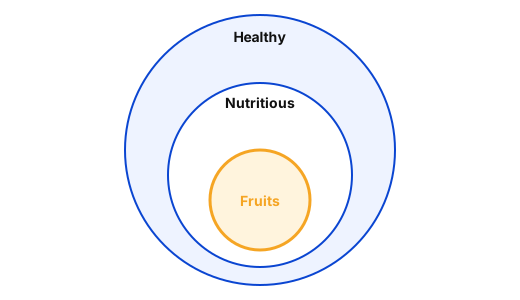
All fruits are nutritious.
All nutritious things are healthy.
Conclusions:
I. All fruits are healthy.
II. Some healthy things are nutritious.
निम्न कथनों को ध्यानपूर्वक पढ़कर अनुसरण करने वाला निष्कर्ष पहचानिए।
कथन:
सभी फल पौष्टिक हैं।
सभी पौष्टिक वस्तुएँ स्वास्थ्यकर हैं।
निष्कर्ष:
I. सभी फल स्वास्थ्यकर हैं।
II. कुछ स्वास्थ्यकर वस्तुएँ पौष्टिक हैं।
  1. AOnly I followsकेवल I अनुसरण करता है
  2. BOnly II followsकेवल II अनुसरण करता है
  3. CBoth I and II followI और II दोनों अनुसरण करते हैं
  4. DNeither I nor II followsन I न II अनुसरण करता है
Show answer

Concept: All A are B + All B are C ⇒ All A are C; also 'All B are C' gives 'Some C are B'.

  1. Fruits ⊂ Nutritious ⊂ Healthy ⇒ all fruits are healthy – I follows.
  2. 'All nutritious are healthy' converts to 'Some healthy are nutritious' – II follows.

Trick: An 'All' statement can always be converted into 'Some' with the terms swapped.

Answer: (C) Both I and II follow

अवधारणा: सभी A, B हैं + सभी B, C हैं ⇒ सभी A, C हैं; और 'सभी B, C हैं' से 'कुछ C, B हैं' बनता है।

हल:

  1. फल ⊂ पौष्टिक ⊂ स्वस्थ ⇒ सभी फल स्वस्थ हैं – I सही।
  2. 'सभी पौष्टिक स्वस्थ हैं' का रूपांतरण 'कुछ स्वस्थ पौष्टिक हैं' – II सही।

ट्रिक: 'सभी' वाले कथन को पद उलटकर हमेशा 'कुछ' में बदला जा सकता है।

उत्तर: (C) I और II दोनों अनुसरण करते हैं

SSC CGLGeneral Intelligence & ReasoningSyllogism – chain of 'All'SSC CGL 2025 · 24 Sep Shift 3
Q239.
Read the following statements carefully and identify the conclusion that follows.
Statements:
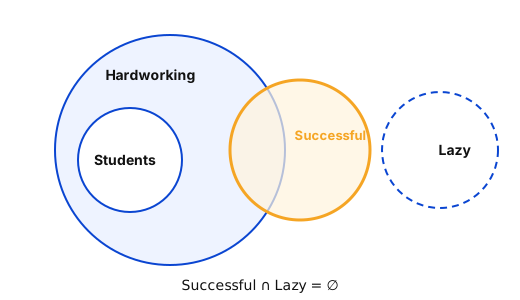
All students are hardworking.
Some hardworking are successful.
No successful is lazy.
Conclusions:
I. Some hardworking are not lazy.
II. Some students are not lazy.
निम्न कथनों को ध्यानपूर्वक पढ़कर अनुसरण करने वाला निष्कर्ष पहचानिए।
कथन:
सभी विद्यार्थी परिश्रमी हैं।
कुछ परिश्रमी सफल हैं।
कोई सफल आलसी नहीं है।
निष्कर्ष:
I. कुछ परिश्रमी आलसी नहीं हैं।
II. कुछ विद्यार्थी आलसी नहीं हैं।
  1. AOnly I followsकेवल I अनुसरण करता है
  2. BOnly II followsकेवल II अनुसरण करता है
  3. CBoth I and II followI और II दोनों अनुसरण करते हैं
  4. DNeither I nor II followsन I न II अनुसरण करता है
Show answer

Concept: Some A are B + No B is C ⇒ Some A are not C.

  1. Some hardworking are successful; no successful is lazy ⇒ those hardworking are not lazy – I follows.
  2. Students are inside hardworking, but they may lie outside the successful part, so they may all be lazy – II does not follow.

Trick: Some + No = Some Not (in the same order). Students are not linked to 'successful', so nothing definite about them.

Answer: (A) Only I follows

अवधारणा: कुछ A, B हैं + कोई B, C नहीं ⇒ कुछ A, C नहीं हैं।

हल:

  1. कुछ मेहनती सफल हैं; कोई सफल आलसी नहीं ⇒ वे मेहनती आलसी नहीं – I सही।
  2. छात्र मेहनती के अंदर हैं, पर सफल वाले हिस्से से बाहर भी हो सकते हैं, यानी सब आलसी भी हो सकते हैं – II गलत।

ट्रिक: Some + No = Some Not। छात्रों का 'सफल' से सीधा संबंध नहीं, इसलिए उनके बारे में निश्चित नहीं।

उत्तर: (A) केवल I अनुसरण करता है

SSC CGLGeneral Intelligence & ReasoningSyllogism – 'Some' and 'No'SSC CGL 2025 · 24 Sep Shift 3
Q240.
What comes next in the series?
W, S, N, H, ?
शृंखला में आगे क्या आएगा?
W, S, N, H, ?
  1. AA
  2. BB
  3. CZ
  4. DC
Show answer

Concept: Use alphabet positions; the backward gap increases by 1 each step.

  1. W = 23, S = 19, N = 14, H = 8.
  2. Gaps: −4, −5, −6 → next gap −7.
  3. 8 − 7 = 1 = A.

Trick: Remember EJOTY = 5, 10, 15, 20, 25 to get positions fast (S = 19, N = 14).

Answer: (A) A

अवधारणा: अक्षरों के स्थानांक लीजिए; पीछे जाने का अंतर हर बार 1 बढ़ता है।

हल:

  1. W = 23, S = 19, N = 14, H = 8।
  2. अंतर: −4, −5, −6 → अगला −7।
  3. 8 − 7 = 1 = A।

ट्रिक: EJOTY = 5, 10, 15, 20, 25 याद रखें – स्थानांक तुरंत मिलेंगे।

उत्तर: (A) A

SSC CGLGeneral Intelligence & ReasoningLetter series – increasing gapsSSC CGL 2025 · 24 Sep Shift 3