Q761.A sphere and a cylinder of equal radii have equal total surface areas. Find the ratio of cylinder height to radius.
समान त्रिज्या वाले एक गोले और एक बेलन के कुल पृष्ठीय क्षेत्रफल बराबर हैं। बेलन की ऊँचाई और त्रिज्या का अनुपात ज्ञात कीजिए।
- A1 : 1
- B7 : 4
- C6 : 5
- D2 : 5
Show answer
Concept: Sphere ; cylinder .
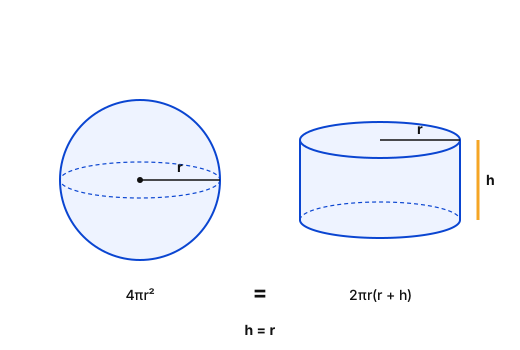
- .
- .
- .
Trick: Cancel first: , done in one line.
Answer: (A) 1 : 1
अवधारणा: गोले का , बेलन का ।
ट्रिक: पहले काट दें – ।
उत्तर: (A) 1 : 1
SSC CGLQuantitative AptitudeSphere and cylinder – equal TSASSC CGL 2025 · 17 Sep Shift 3
Q762.A large cubical cake needs to be cut into 27 smaller, identical cubical pieces. What is the minimum number of straight cuts required?
एक बड़े घनाकार केक को 27 समान छोटे घनों में काटना है। न्यूनतम कितने सीधे कट आवश्यक हैं?
- A8
- B6
- C4
- D5
Show answer
Concept: To get n pieces along an edge you need cuts in that direction.
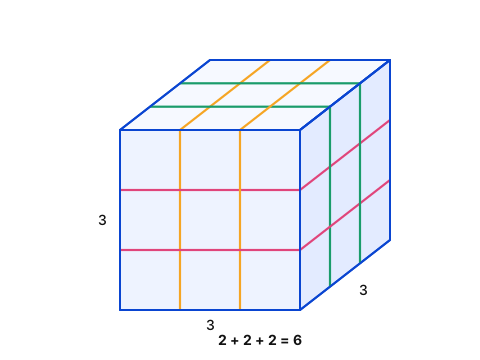
- → 3 pieces along each edge.
- Cuts = .
Trick: For equal cubes, minimum cuts = .
Answer: (B) 6
अवधारणा: किसी दिशा में n टुकड़ों के लिए कट चाहिए।
- → हर किनारे पर 3 टुकड़े
- कट =
ट्रिक: समान घनों के लिए न्यूनतम कट = ।
उत्तर: (B) 6
SSC CGLQuantitative AptitudeCube cutting – minimum cutsSSC CGL 2025 · 17 Sep Shift 3
Q763.The radius of a cone is raised by 25%, while the height is reduced by 10%. What is the percentage change in the volume of the cone?
एक शंकु की त्रिज्या 25% बढ़ाई जाती है, जबकि ऊँचाई 10% घटाई जाती है। शंकु के आयतन में कितने प्रतिशत परिवर्तन होगा?
- A27.4% decrease27.4% कमी
- B40.6% increase40.6% वृद्धि
- C40.8% increase40.8% वृद्धि
- D51.2% increase51.2% वृद्धि
Show answer
Concept: , so multiply the change factors.
- Factor = .
- Change = increase.
Trick: Fractions: .
Answer: (B) 40.6% increase
अवधारणा: , इसलिए परिवर्तन-गुणक गुणा करें।
- गुणक =
- परिवर्तन ≈ 40.6% वृद्धि
ट्रिक: भिन्न में: ।
उत्तर: (B) 40.6% वृद्धि
SSC CGLQuantitative AptitudeCone – percentage change in volumeSSC CGL 2025 · 17 Sep Shift 3
Q764.If sinA = and A lies in the second quadrant, find the value of (sinA + cosA)².
यदि sinA = और A दूसरे चतुर्थांश में है, तो (sinA + cosA)² का मान ज्ञात कीजिए।
- A0
- B1
- C
- D
Show answer
Concept: In quadrant II, sin is positive and cos is negative.
- → triplet 5-12-13 → .
- .
- Square: .
Trick: Add first, then square: – no need to expand .
Answer: (C)
अवधारणा: द्वितीय चतुर्थांश में sin धनात्मक, cos ऋणात्मक।
- 5-12-13 त्रिक →
- वर्ग =
ट्रिक: पहले जोड़ें, फिर वर्ग करें – विस्तार की ज़रूरत नहीं।
उत्तर: (C)
SSC CGLQuantitative AptitudeTrigonometry – sign in second quadrantSSC CGL 2025 · 17 Sep Shift 3
Q765.If sinA = , then what is the value of (1 + tan²A)?
यदि sinA = है, तो (1 + tan²A) का मान क्या है?
- A
- B
- C
- D
Show answer
Concept: .
- → .
- .
Trick: Use directly; no need to find the third side.
Answer: (A)
अवधारणा:
ट्रिक: सीधे लगाएँ, तीसरी भुजा की ज़रूरत नहीं।
उत्तर: (A)
SSC CGLQuantitative AptitudeTrigonometric identity – sec²ASSC CGL 2025 · 17 Sep Shift 3
Q766.What is the slope of the line passing through points (3, 4) and (5, 8)?
बिंदुओं (3, 4) और (5, 8) से गुजरने वाली रेखा की प्रवणता क्या है?
- A2
- B3
- C5
- D4
Show answer
Concept: Slope .
- .
Trick: Rise over run: y goes up 4 while x goes up 2.
Answer: (A) 2
अवधारणा: ढाल
ट्रिक: y में बढ़त ÷ x में बढ़त = ।
उत्तर: (A) 2
SSC CGLQuantitative AptitudeSlope of a lineSSC CGL 2025 · 17 Sep Shift 3
Q767.A sector has a central angle of 180° and a radius of 24 cm. Another sector has a central angle of radians and the same radius. What is the ratio of the area of the first sector to the area of the second sector?
एक त्रिज्यखंड का केंद्रीय कोण 180° और त्रिज्या 24 cm है। दूसरे त्रिज्यखंड का केंद्रीय कोण रेडियन और त्रिज्या वही है। पहले और दूसरे त्रिज्यखंड के क्षेत्रफलों का अनुपात क्या है?
- A3 : 2
- B2 : 1
- C1 : 2
- D1 : 3
Show answer
Concept: Same radius → sector area is proportional to central angle.
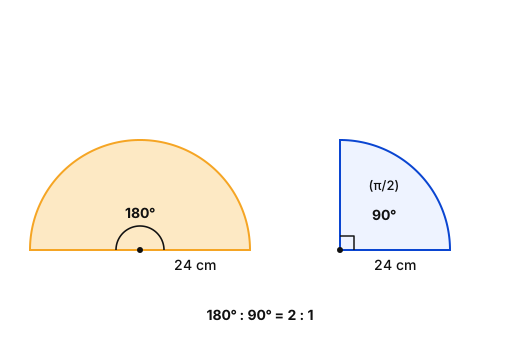
- .
- Ratio = .
Trick: Radius (24 cm) is a distractor when radii are equal.
Answer: (B) 2 : 1
अवधारणा: त्रिज्या समान हो तो क्षेत्रफल केंद्रीय कोण के अनुपात में।
- रेडियन
- अनुपात =
ट्रिक: समान त्रिज्या में 24 cm का मान अनावश्यक है।
उत्तर: (B) 2 : 1
SSC CGLQuantitative AptitudeArea of sectors – angle ratioSSC CGL 2025 · 17 Sep Shift 3
Q768.What is the total measure of all interior angles in an 8-sided polygon?
आठ भुजाओं वाले बहुभुज के सभी अंतःकोणों का कुल माप क्या है?
- A1540°
- B1080°
- C1220°
- D900°
Show answer
Concept: Sum = .
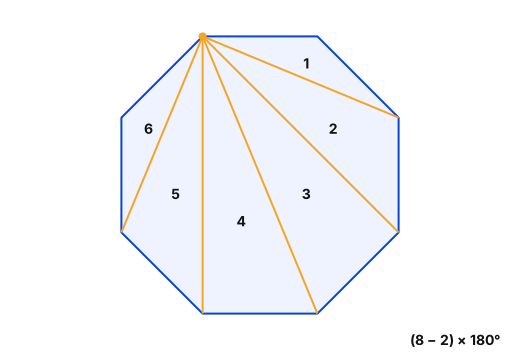
- .
Trick: Answer must be a multiple of 180° – 1080 is the only one fitting n = 8 (900 is for 7 sides).
Answer: (B) 1080°
अवधारणा: योग =
ट्रिक: उत्तर 180 का गुणज होगा; 900° सात भुजाओं का है।
उत्तर: (B) 1080°
SSC CGLQuantitative AptitudeSum of interior angles of a polygonSSC CGL 2025 · 17 Sep Shift 3
Q769.What is the equation of the perpendicular bisector of the line segment connecting the points (4, 8) and (2, 6)?
बिंदुओं (4, 8) और (2, 6) को जोड़ने वाले रेखाखंड के लंब समद्विभाजक का समीकरण क्या है?
- Ay = −x − 10
- By = x − 3
- Cy = −x + 10
- Dy = x + 4
Show answer
Concept: It passes through the midpoint and has slope = .
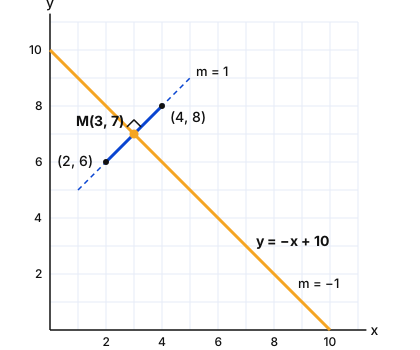
- Midpoint = .
- Segment slope = → perpendicular slope = −1.
- .
Trick: Slope −1 leaves (A) and (C); plug (3, 7): only works.
Answer: (C) y = −x + 10
अवधारणा: यह मध्यबिंदु से गुज़रता है और ।
- मध्यबिंदु = (3, 7)
- रेखाखंड की ढाल = 1 → लंब ढाल = −1
ट्रिक: ढाल −1 से (A), (C) बचे; (3, 7) रखें – केवल (C) सही।
उत्तर: (C) y = −x + 10
SSC CGLQuantitative AptitudePerpendicular bisector of a segmentSSC CGL 2025 · 17 Sep Shift 3
Q770.The ratios of the perimeters of two similar triangles are expressed as 5 : 7. Together, their areas total 74 cm². What is the area of the larger triangle?
दो समरूप त्रिभुजों के परिमापों का अनुपात 5 : 7 है। उनके क्षेत्रफलों का योग 74 cm² है। बड़े त्रिभुज का क्षेत्रफल क्या है?
- A39 cm²
- B45 cm²
- C49 cm²
- D35 cm²
Show answer
Concept: Area ratio of similar triangles = .
- Area ratio = 25 : 49 → total 74 parts.
- 74 parts = 74 cm² → 1 part = 1 cm².
- Larger = 49 cm².
Trick: Total is a giveaway – the squares themselves are the areas.
Answer: (C) 49 cm²
अवधारणा: समरूप त्रिभुजों का क्षेत्रफल अनुपात =
- अनुपात 25 : 49, कुल 74 भाग
- 74 भाग = 74 cm² → 1 भाग = 1 cm²
- बड़ा = 49 cm²
ट्रिक: – वर्ग ही सीधे क्षेत्रफल हैं।
उत्तर: (C) 49 cm²
SSC CGLQuantitative AptitudeSimilar triangles – area ratioSSC CGL 2025 · 17 Sep Shift 3
Q771.18³ + 20³ − 29³ + 116 is equal to:
18³ + 20³ − 29³ + 116 किसके बराबर है?
- A−10441
- B−16789
- C0
- D1
Show answer
Concept: , so no identity shortcut – compute directly.
- Positive part: ; add 116 → 13948.
- Negative part: .
- Result = .
Trick: Unit digits: → a negative answer ending in 1; −10441 fits, −16789 does not.
Answer: (A) −10441
अवधारणा: , इसलिए सर्वसमिका नहीं लगेगी – सीधे गणना करें।
- धनात्मक भाग: , इसमें 116 जोड़ें → 13948
- ऋणात्मक भाग:
- परिणाम =
ट्रिक: इकाई अंक: → ऋणात्मक उत्तर जिसका अंतिम अंक 1 हो – −10441।
उत्तर: (A) −10441
SSC CGLQuantitative AptitudeEvaluating cubesSSC CGL 2025 · 17 Sep Shift 3
Q772.If tanA = x + , find sec²A.
यदि tanA = x + है, तो sec²A ज्ञात कीजिए।
- Ax² + + 5
- Bx² + + 2
- Cx² + + 3
- Dx² + + 4
Show answer
Concept: .
- .
- .
Trick: always gives +2; then add 1 → +3.
Answer: (C) x² + + 3
अवधारणा:
ट्रिक: में +2 आता है; 1 जोड़ें → +3।
उत्तर: (C) x² + + 3
SSC CGLQuantitative AptitudeTrigonometric identity – sec²A from tanASSC CGL 2025 · 17 Sep Shift 3
Q773.A tangent line PA is drawn from an external point P to a circle. If the radius is 7 cm and the distance from P to the centre is 25 cm, what is the length of the tangent PA?
बाहरी बिंदु P से एक वृत्त पर स्पर्श रेखा PA खींची गई है। यदि त्रिज्या 7 cm और P से केंद्र की दूरी 25 cm है, तो स्पर्श रेखा PA की लंबाई क्या है?
- A19 cm
- B26 cm
- C24 cm
- D28 cm
Show answer
Concept: Radius ⟂ tangent, so .
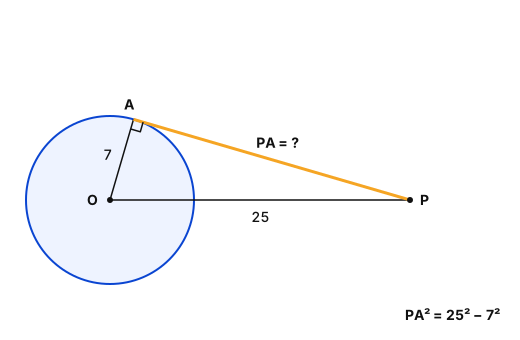
- .
- PA = 24 cm.
Trick: 7-24-25 is a Pythagorean triplet.
Answer: (C) 24 cm
अवधारणा: त्रिज्या स्पर्शरेखा पर लंब, अतः
- PA = 24 cm
ट्रिक: 7-24-25 पाइथागोरस त्रिक है।
उत्तर: (C) 24 cm
SSC CGLQuantitative AptitudeLength of tangent from external pointSSC CGL 2025 · 17 Sep Shift 3
Q774.When two tangents, PA and PB, are drawn to a circle from a point P outside the circle, and the angle between them is 90°, what is the distance from P to the centre (O) of the circle, if the radius is 6 cm?
वृत्त के बाहर बिंदु P से दो स्पर्श रेखाएँ PA और PB खींची गई हैं और उनके बीच का कोण 90° है। यदि त्रिज्या 6 cm है, तो P से केंद्र O की दूरी क्या है?
- A6 cm
- B6 cm
- C12 cm
- D6 cm
Show answer
Concept: , and → OAPB is a square.
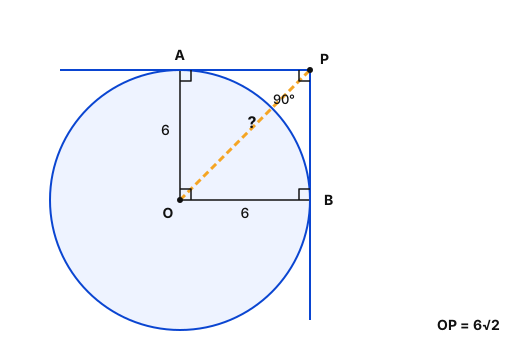
- ; and .
- So OAPB is a square of side 6.
- cm.
Trick: (in general ).
Answer: (B) 6 cm
अवधारणा: , और → OAPB वर्ग है।
- , सभी भुजाएँ 6
- OAPB भुजा 6 का वर्ग
- विकर्ण cm
ट्रिक: हो तो ।
उत्तर: (B) 6 cm
SSC CGLQuantitative AptitudeTwo tangents at right angleSSC CGL 2025 · 17 Sep Shift 3
Q775.Multiply 0.48 by 0.7 and express the result as a decimal.
0.48 को 0.7 से गुणा कीजिए और परिणाम दशमलव में लिखिए।
- A0.386
- B0.336
- C0.236
- D0.254
Show answer
Concept: Multiply as whole numbers, then place decimal = total decimal digits.
- .
- Decimal places: .
Trick: Estimate: about – slightly less → 0.336.
Answer: (B) 0.336
अवधारणा: पूर्णांक की तरह गुणा करें, फिर कुल दशमलव स्थान गिनें।
- दशमलव स्थान
ट्रिक: अनुमान: से थोड़ा कम → 0.336।
उत्तर: (B) 0.336
SSC CGLQuantitative AptitudeDecimal multiplicationSSC CGL 2025 · 17 Sep Shift 3
Q776.Simplify: (2.8 + 5.125) × 0.45 − (0.90 ÷ 0.3)
सरल कीजिए: (2.8 + 5.125) × 0.45 − (0.90 ÷ 0.3)
- A0.566
- B0.11875
- C2.8756
- D−2.8756
Show answer
Concept: Solve brackets first, then × / ÷, then −.
- First bracket:
- Second bracket:
- Result:
Trick: is a bit above 3.5, minus 3 gives about 0.5–0.6 — only 0.566 fits.
Answer: (A) 0.566
अवधारणा: पहले कोष्ठक, फिर × / ÷, फिर −।
- पहला कोष्ठक:
- दूसरा कोष्ठक:
- परिणाम:
ट्रिक: ≈ 3.5+; 3 घटाने पर लगभग 0.5–0.6 — केवल 0.566।
उत्तर: (A) 0.566
SSC CGLQuantitative AptitudeDecimal simplificationSSC CGL 2025 · 17 Sep Shift 2
Q777.If 40% of (P + Q) = 60% of (P − Q), then find the ratio P : Q.
यदि (P + Q) का 40%, (P − Q) के 60% के बराबर है, तो अनुपात P : Q ज्ञात कीजिए।
- A5 : 1
- B2 : 3
- C2 : 5
- D3 : 2
Show answer
Concept: Convert both percentages and collect P and Q terms.
- 0.4(P + Q) = 0.6(P − Q) → 2(P + Q) = 3(P − Q)
- 2P + 2Q = 3P − 3Q
- P = 5Q → P : Q = 5 : 1
Trick: Divide the % by 20 first: 40 : 60 = 2 : 3, then solve 2(P+Q) = 3(P−Q).
Answer: (A) 5 : 1
अवधारणा: दोनों प्रतिशत लिखकर P और Q अलग करें।
- 0.4(P + Q) = 0.6(P − Q) → 2(P + Q) = 3(P − Q)
- 2P + 2Q = 3P − 3Q
- P = 5Q → P : Q = 5 : 1
ट्रिक: 40 : 60 = 2 : 3 पहले कर लें, गणना छोटी हो जाती है।
उत्तर: (A) 5 : 1
SSC CGLQuantitative AptitudePercentage equation – ratioSSC CGL 2025 · 17 Sep Shift 2
Q778.A shopkeeper mixes two varieties of pulses - one costing ₹50 per kg and the other costing ₹90 per kg, in the ratio 3 : 1. If he sells the mixed variety at ₹96 per kg, find his gain or loss percent.
एक दुकानदार ₹50 प्रति किग्रा और ₹90 प्रति किग्रा की दो दालें 3 : 1 के अनुपात में मिलाता है। यदि वह मिश्रण ₹96 प्रति किग्रा बेचता है, तो लाभ/हानि प्रतिशत ज्ञात कीजिए।
- A60% Gain60% लाभ
- B40% Gain40% लाभ
- C45% Loss45% हानि
- D60% Loss60% हानि
Show answer
Concept: Cost of mixture = weighted average of the two costs.
- CP of 4 kg = → ₹60/kg
- SP = ₹96/kg → profit = ₹36/kg
- Profit % = gain
Trick: SP 96 is , so gain = 60% directly.
Answer: (A) 60% Gain
अवधारणा: मिश्रण का क्रय मूल्य = दोनों मूल्यों का भारित औसत।
- 4 kg का CP = → ₹60/kg
- SP = ₹96/kg → लाभ = ₹36/kg
- लाभ % =
ट्रिक: , अतः सीधे 60% लाभ।
उत्तर: (A) 60% लाभ
SSC CGLQuantitative AptitudeMixture – profit %SSC CGL 2025 · 17 Sep Shift 2
Q779.A and B invest ₹60,000 and ₹80,000 respectively. A remains in business for 8 months, B for 9 months. If the total profit is ₹40,000, what is A's share?
A और B क्रमशः ₹60,000 और ₹80,000 निवेश करते हैं। A 8 माह और B 9 माह व्यवसाय में रहता है। यदि कुल लाभ ₹40,000 है, तो A का हिस्सा क्या है?
- A₹16,000
- B₹18,000
- C₹20,000
- D₹24,000
Show answer
Concept: Profit is shared in the ratio capital × time.
- A → 8 months × ₹60,000; B → 9 months × ₹80,000
- In thousands: 480 : 720 = 2 : 3
- A gets 2 parts out of 5 → ₹16,000
Trick: Drop zeros: .
Answer: (A) ₹16,000
अवधारणा: लाभ, पूँजी × समय के अनुपात में बँटता है।
- A → 8 माह × ₹60,000; B → 9 माह × ₹80,000
- हज़ार में: 480 : 720 = 2 : 3
- A को 5 में से 2 भाग → ₹16,000
ट्रिक: शून्य हटाएँ: ।
उत्तर: (A) ₹16,000
SSC CGLQuantitative AptitudePartnership – profit shareSSC CGL 2025 · 17 Sep Shift 2
Q780.The average weight of 40 students is 70 kg. If one student is removed, the average drops to 69.5 kg. What is the weight of the removed student?
40 विद्यार्थियों का औसत वजन 70 kg है। एक विद्यार्थी हटाने पर औसत 69.5 kg हो जाता है। हटाए गए विद्यार्थी का वजन क्या है?
- A84.5 kg
- B89.5 kg
- C80.5 kg
- D86.5 kg
Show answer
Concept: Removed value = old total − new total.
- Old total = kg
- New total = kg
- Removed = kg
Trick: Removed = new avg + (old count × fall) = .
Answer: (B) 89.5 kg
अवधारणा: हटाए गए का भार = पुराना योग − नया योग।
- पुराना योग = kg
- नया योग = kg
- हटाया गया = 89.5 kg
ट्रिक: नया औसत + (पुरानी संख्या × गिरावट) = ।
उत्तर: (B) 89.5 kg
SSC CGLQuantitative AptitudeAverage – one removedSSC CGL 2025 · 17 Sep Shift 2

