Q221.Which of the following options will have sum as 100?
निम्नलिखित में से किस विकल्प का योग 100 होगा?
- A
- B
- C
- D
Show answer
Concept: Evaluate each option.
- (D) ✔.
- (A) 50.75, (B) ≈ 62.83, (C) ≈ 135.4 ✘.
Trick: Look for two clean halves of 100: and .
Answer: (D)
अवधारणा: हर विकल्प हल करें।
हल:
- (D) ✔।
- बाकी 100 नहीं बनते।
ट्रिक: ऐसी जोड़ी ढूँढें जिसके दोनों भाग 50 हों।
उत्तर: (D)
SSC CHSL Tier-1Quantitative AptitudeSimplification – fractionsSSC CHSL Tier-1 2025 · 28 Nov Shift 1
Q222.If , then what is the value of ?
यदि है, तो का मान क्या है?
- A150
- B108
- C104
- D97
Show answer
Concept: Bring surds to like form.
- .
- .
Trick: .
Answer: (B) 108
अवधारणा: करणियों को समान रूप में लाएँ।
हल:
- ।
- ।
ट्रिक: .
उत्तर: (B) 108
SSC CHSL Tier-1Quantitative AptitudeSurds – simplify and squareSSC CHSL Tier-1 2025 · 28 Nov Shift 1
Q223.A sum is being lent at percent per annum compound interest (compounding annually). What is the ratio of amount at the end of first year to the amount at the end of second year ?
एक धनराशि प्रतिशत वार्षिक चक्रवृद्धि ब्याज (वार्षिक संयोजन) पर उधार दी जाती है। पहले वर्ष के अंत के मिश्रधन का दूसरे वर्ष के अंत के मिश्रधन से अनुपात क्या है?
- A8 : 7
- B7 : 8
- C11 : 7
- D8 : 11
Show answer
Concept: Each year the amount is multiplied by .
- .
- .
Trick: Consecutive years' amounts are always in ratio .
Answer: (B) 7 : 8
अवधारणा: हर वर्ष राशि गुना होती है।
हल:
- ।
- ।
ट्रिक: लगातार दो वर्षों की राशि का अनुपात = ।
उत्तर: (B) 7 : 8
SSC CHSL Tier-1Quantitative AptitudeCompound interest – ratio of amountsSSC CHSL Tier-1 2025 · 28 Nov Shift 1
Q224.The average of 7 consecutive odd natural numbers is 39. Previous 7 consecutive odd natural numbers to these 7 odd natural numbers are also included. What will be the average of newly added numbers ?
7 क्रमागत विषम प्राकृत संख्याओं का औसत 39 है। इन 7 विषम प्राकृत संख्याओं से ठीक पहले की 7 क्रमागत विषम प्राकृत संख्याएँ भी सम्मिलित कर ली जाती हैं। नई जोड़ी गई संख्याओं का औसत क्या होगा?
- A20
- B26
- C25
- D23
Show answer
Concept: For consecutive odd numbers, average = middle term; shifting 7 terms back lowers average by .
- Given numbers: 33 … 45 (middle 39).
- Previous 7: 19 … 31 → .
Trick: .
Answer: (C) 25
अवधारणा: क्रमागत विषम संख्याओं का औसत = बीच का पद; 7 पद पीछे जाने पर औसत 14 कम।
हल:
- दी गई संख्याएँ 33 से 45।
- पिछली 7: 19 से 31 → ।
ट्रिक: ।
उत्तर: (C) 25
SSC CHSL Tier-1Quantitative AptitudeAverage – consecutive odd numbersSSC CHSL Tier-1 2025 · 28 Nov Shift 1
Q225.P, Q and R working alone can complete a work in 16, 36 and 48 days respectively. All three of them started the work together but after 6 days P left the work. Q left the work 4 days before the work was completed. R completed the remaining work alone. In how many days was the total work completed ?
P, Q तथा R अकेले कार्य करते हुए एक कार्य को क्रमशः 16, 36 तथा 48 दिनों में पूरा कर सकते हैं। तीनों ने मिलकर कार्य आरंभ किया, परंतु 6 दिन बाद P ने कार्य छोड़ दिया। कार्य पूरा होने से 4 दिन पहले Q ने कार्य छोड़ दिया। शेष कार्य R ने अकेले पूरा किया। कुल कार्य कितने दिनों में पूरा हुआ?
- A
- B
- C
- D
Show answer
Concept: units; per day.
- First 6 days (all): .
- Last 4 days (R only): 12.
- Middle (Q + R): days.
- days.
Trick: Fix the start and end blocks first; the middle block is the only unknown.
Answer: (B)
अवधारणा: कुल = 144 इकाई; प्रतिदिन।
हल:
- पहले 6 दिन: 96।
- अंतिम 4 दिन (केवल R): 12।
- बीच (Q + R): दिन।
- दिन।
ट्रिक: पहले शुरू और अंत के खंड तय करें, बीच वाला अपने आप मिलेगा।
उत्तर: (B)
SSC CHSL Tier-1Quantitative AptitudeTime & work – workers leavingSSC CHSL Tier-1 2025 · 28 Nov Shift 1
Q226.25% of a number is 35. What is of that number?
किसी संख्या का 25% 35 है। उस संख्या का कितना होगा?
- A100
- B112
- C122
- D132
Show answer
Concept: If p% of N is known, .
- → .
- = 112.
Trick: 80% is times 25% → (no need to find the number).
Answer: (B) 112
अवधारणा: p% ज्ञात हो तो ।
- → ।
- 140 का 80% = 112।
ट्रिक: 80% = 25% का 3.2 गुना → ।
उत्तर: (B) 112
SSC CHSL Tier-1Quantitative AptitudePercentage – Scaling a known partSSC CHSL Tier-1 2025 · 27 Nov Shift 3
Q227.On selling 15 articles, a trader gains the cost price of 5 articles. What is his profit percentage?
15 वस्तुएँ बेचने पर एक व्यापारी को 5 वस्तुओं के क्रय मूल्य के बराबर लाभ होता है। उसका लाभ प्रतिशत क्या है?
- A30.33%
- B33.33%
- C30%
- D21.25%
Show answer
Concept: .
- Let CP of 1 article = ₹1 → CP of 15 = ₹15.
- Profit = CP of 5 = ₹5.
- .
Trick: straight away.
Answer: (B) 33.33%
अवधारणा: ।
- 1 वस्तु का CP = ₹1 → 15 का = ₹15।
- लाभ = 5 वस्तुओं का CP = ₹5।
- ।
ट्रिक: – सीधे।
उत्तर: (B) 33.33%
SSC CHSL Tier-1Quantitative AptitudeProfit % – Gain equal to CP of some articlesSSC CHSL Tier-1 2025 · 27 Nov Shift 3
Q228.A can complete a task in 12 days, while B can finish the same task in 18 days. They decide to work alternately, with A starting the work on the first day. How many days will it take for them to complete the entire task?
A किसी कार्य को 12 दिनों में पूरा कर सकता है, जबकि B उसी कार्य को 18 दिनों में समाप्त कर सकता है। वे एकांतर दिनों में कार्य करने का निर्णय लेते हैं, जिसमें पहले दिन A कार्य आरंभ करता है। संपूर्ण कार्य पूरा करने में उन्हें कितने दिन लगेंगे?
- A days दिन
- B days दिन
- C days दिन
- D days दिन
Show answer
Concept: Take total work = LCM; find work in one 2-day cycle.
- Work = units; A = 3/day, B = 2/day.
- One cycle (A+B, 2 days) = 5 units → 7 cycles = 14 days = 35 units.
- Left 1 unit, day 15 is A's: day → total = days.
Trick: Pick cycles so the leftover is less than one day of the starter (A) – here 35 units, leftover 1.
Answer: (C) days
अवधारणा: कुल कार्य = LCM; 2 दिन के एक चक्र का कार्य निकालें।
- कार्य = इकाई; A = 3/दिन, B = 2/दिन।
- एक चक्र (2 दिन) = 5 इकाई → 7 चक्र = 14 दिन = 35 इकाई।
- बचा 1 इकाई, 15वाँ दिन A का: दिन → कुल = दिन।
ट्रिक: इतने चक्र लें कि बचा कार्य, पहले काम करने वाले (A) के एक दिन से कम हो।
उत्तर: (C) दिन
SSC CHSL Tier-1Quantitative AptitudeTime & work – Alternate daysSSC CHSL Tier-1 2025 · 27 Nov Shift 3
Q229.If a car reduces its speed by 8 , it takes 1 hour more for a journey of 160 km . Find original speed.
यदि कोई कार अपनी चाल 8 कम कर देती है, तो 160 km की यात्रा में उसे 1 घंटा अधिक लगता है। मूल चाल ज्ञात कीजिए।
- A32 km/h
- B
- C48 km/h
- D
Show answer
Concept: .
- → .
- → .
- s = 40 km/h.
Trick: Test options: h, h → difference 1 h ✓.
Answer: (B)
अवधारणा: ।
- → ।
- → ।
- s = 40 km/h।
ट्रिक: विकल्प जाँचें: घंटे, घंटे → अंतर 1 घंटा ✓।
उत्तर: (B)
SSC CHSL Tier-1Quantitative AptitudeSpeed – Reduced speed, extra timeSSC CHSL Tier-1 2025 · 27 Nov Shift 3
Q230.A sum becomes ₹6000 in 5 years at simple interest per annum. What is the original sum?
कोई धनराशि वार्षिक साधारण ब्याज की दर से 5 वर्षों में ₹6000 हो जाती है। मूलधन कितना है?
- A₹3000
- B₹5000
- C₹4000
- D₹6000
Show answer
Concept: .
- .
- .
- = ₹4000.
Trick: 50% SI → A : P = 3 : 2 → = 4000.
Answer: (C) ₹4000
अवधारणा: ।
- ।
- ।
- = ₹4000।
ट्रिक: 50% ब्याज → मिश्रधन : मूलधन = 3 : 2 → ।
उत्तर: (C) ₹4000
SSC CHSL Tier-1Quantitative AptitudeSimple interest – Principal from amountSSC CHSL Tier-1 2025 · 27 Nov Shift 3
Q231.A tank shaped like a rectangular parallelepiped measures 1.5 m . How many liters of water can it hold?
एक टंकी आयताकार समांतर षट्फलक के आकार की है, जिसकी माप 1.5 m है। इसमें कितने लीटर पानी आ सकता है?
- A10000 L
- B11000 L
- C10800 L
- D10900 L
Show answer
Concept: ; litres.
- m³.
- = 10800 L.
Trick: ; → shift decimal three places.
Answer: (C) 10800 L
अवधारणा: ; लीटर।
- m³।
- = 10800 L।
ट्रिक: , × 4 = 10.8 → दशमलव तीन स्थान आगे।
उत्तर: (C) 10800 L
SSC CHSL Tier-1Quantitative AptitudeMensuration – Cuboid capacitySSC CHSL Tier-1 2025 · 27 Nov Shift 3
Q232.An artist carves an ice sculpture in shape of a right triangular pyramid (base triangle: base 5 cm , height 12 cm , pyramid height 15 cm ). What is the volume of ice used?
एक कलाकार बर्फ की एक मूर्ति लंब त्रिभुजाकार पिरामिड के आकार में तराशता है (आधार त्रिभुज: आधार 5 cm, ऊँचाई 12 cm, पिरामिड की ऊँचाई 15 cm)। प्रयुक्त बर्फ का आयतन कितना है?
- A
- B
- C
- D
Show answer
Concept: .
- Base (right triangle) area = cm².
- = 150 cm³.
Yaad rakhein: A pyramid holds exactly one-third of the prism with the same base and height ( → 150).
Answer: (B)
अवधारणा: ।
- आधार (समकोण त्रिभुज) = cm²।
- = 150 cm³।
याद रखें: पिरामिड, उसी आधार-ऊँचाई वाले प्रिज़्म का होता है (450 → 150)।
उत्तर: (B)
SSC CHSL Tier-1Quantitative AptitudeMensuration – Volume of pyramidSSC CHSL Tier-1 2025 · 27 Nov Shift 3
Q233.In triangle ' is a point on QR such that . If and , then find the length of MR.
त्रिभुज ', QR पर एक ऐसा बिंदु है कि है। यदि तथा हो, तो MR की लंबाई ज्ञात कीजिए।
- A9.1 cm
- B6.2 cm
- C6.5 cm
- D9 cm
Show answer
Concept: Bisector of ∠P divides QR in the ratio PQ : PR.
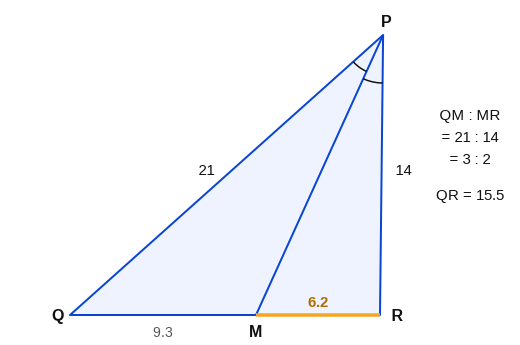
- QM : MR = 21 : 14 = 3 : 2.
- = 6.2 cm.
Trick: MR is next to the shorter side PR → it is the smaller part (below 7.75); only 6.2 and 6.5 qualify, ratio gives 6.2.
Answer: (B) 6.2 cm
अवधारणा: ∠P का समद्विभाजक QR को PQ : PR के अनुपात में बाँटता है।
- QM : MR = 21 : 14 = 3 : 2।
- = 6.2 cm।
ट्रिक: MR छोटी भुजा PR की ओर है → छोटा भाग (7.75 से कम)।
उत्तर: (B) 6.2 cm
SSC CHSL Tier-1Quantitative AptitudeTriangles – Angle bisector theoremSSC CHSL Tier-1 2025 · 27 Nov Shift 3
Q234.Out of 400 students, 40% failed the exam. Out of the remaining 40% passed the exam with distinction. Find the ratio of the students who passed the exam with distinction to the students who passed the exam without distinction.
400 विद्यार्थियों में से 40% परीक्षा में अनुत्तीर्ण हो गए। शेष में से 40% विद्यार्थी परीक्षा में विशेष योग्यता (distinction) के साथ उत्तीर्ण हुए। विशेष योग्यता के साथ उत्तीर्ण विद्यार्थियों तथा बिना विशेष योग्यता के उत्तीर्ण विद्यार्थियों का अनुपात ज्ञात कीजिए।
- A2 : 3
- B2 : 4
- C2 : 1
- D2 : 6
Show answer
Concept: Work in stages: failed → passed → distinction.
- Passed = 60% of 400 = 240.
- Distinction = 40% of 240 = 96; without = 144.
- 96 : 144 = 2 : 3.
Trick: Within the passed group it is 40% : 60% = 2 : 3 – the total 400 is not even needed.
Answer: (A) 2 : 3
अवधारणा: चरणों में: अनुत्तीर्ण → उत्तीर्ण → विशेष योग्यता।
- उत्तीर्ण = 400 का 60% = 240।
- Distinction = 240 का 40% = 96; बिना = 144।
- 96 : 144 = 2 : 3।
ट्रिक: उत्तीर्ण में 40% : 60% = 2 : 3 – 400 की ज़रूरत ही नहीं।
उत्तर: (A) 2 : 3
SSC CHSL Tier-1Quantitative AptitudePercentage – Ratio of sub-groupsSSC CHSL Tier-1 2025 · 27 Nov Shift 3
Q235.Assertion (A): If in two right-angled triangles the hypotenuse and one side are equal, then the triangles are congruent.
Reason (R): The RHS (Right angle-Hypotenuse-Side) congruence rule is applicable to right-angled triangles.
अभिकथन (A): यदि दो समकोण त्रिभुजों में कर्ण तथा एक भुजा बराबर हों, तो वे त्रिभुज सर्वांगसम होते हैं।
कारण (R): RHS (समकोण-कर्ण-भुजा) सर्वांगसमता नियम समकोण त्रिभुजों पर लागू होता है।
- ABoth A and R are true, and R is the correct explanation of AA और R दोनों सत्य हैं तथा R, A की सही व्याख्या है
- BBoth A and R are true, but R is not the correct explanation of AA और R दोनों सत्य हैं, किंतु R, A की सही व्याख्या नहीं है
- CA is true, but R is falseA सत्य है, किंतु R असत्य है
- DA is false, but R is trueA असत्य है, किंतु R सत्य है
Show answer
Concept: RHS: two right triangles with equal hypotenuse and one equal side are congruent.
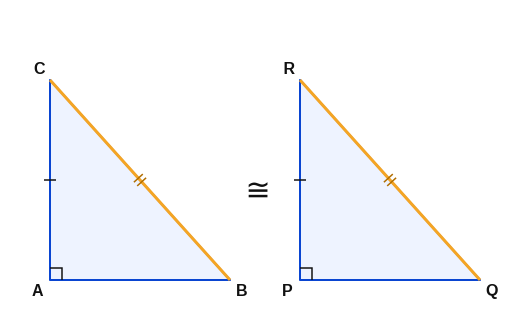
- A states the RHS result → true.
- R names the RHS rule for right triangles → true.
- R is the very rule behind A → R explains A.
Yaad rakhein: Congruence rules: SSS, SAS, ASA, AAS, RHS – but not SSA or AAA.
Answer: (A) Both A and R are true, and R is the correct explanation of A
अवधारणा: RHS: कर्ण और एक भुजा बराबर हो तो दो समकोण त्रिभुज सर्वांगसम होते हैं।
- A, RHS का ही कथन है → सत्य।
- R, समकोण त्रिभुजों के लिए RHS नियम बताता है → सत्य।
- A इसी नियम से सिद्ध होता है → R सही व्याख्या।
याद रखें: सर्वांगसमता नियम: SSS, SAS, ASA, AAS, RHS – SSA और AAA नहीं।
उत्तर: (A) A और R दोनों सत्य हैं तथा R, A की सही व्याख्या है
SSC CHSL Tier-1Quantitative AptitudeCongruence – RHS ruleSSC CHSL Tier-1 2025 · 27 Nov Shift 3
Q236.The ratio of the length and breadth of a rectangle is , respectively. It is made from a circular loop of a wire having a radius of 21 cm . Find the sum of the length of the rectangle and the diameter of the loop.
एक आयत की लंबाई तथा चौड़ाई का अनुपात क्रमशः है। इसे 21 cm त्रिज्या वाले तार के एक वृत्ताकार लूप से बनाया गया है। आयत की लंबाई तथा लूप के व्यास का योग ज्ञात कीजिए।
- A84 cm
- B91 cm
- C70 cm
- D86 cm
Show answer
Concept: Same wire → perimeter of rectangle = circumference of circle.
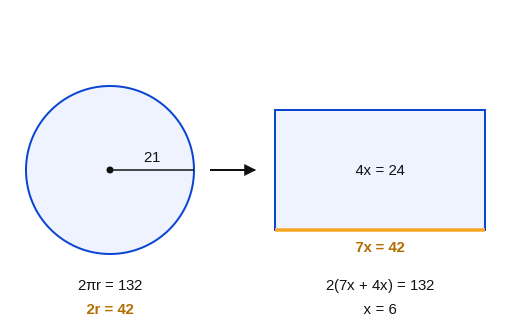
- cm.
- → → cm.
- Diameter = 42 cm → = 84 cm.
Yaad rakhein: Circumference of a circle with is 132 cm, with is 44 cm – worth memorising.
Answer: (A) 84 cm
अवधारणा: एक ही तार → आयत का परिमाप = वृत्त की परिधि।
- cm।
- → → cm।
- व्यास = 42 cm → योग = 84 cm।
याद रखें: की परिधि 132 cm, की 44 cm – याद रखें।
उत्तर: (A) 84 cm
SSC CHSL Tier-1Quantitative AptitudeMensuration – Wire bent into rectangleSSC CHSL Tier-1 2025 · 27 Nov Shift 3
Q237.If , what is the value of .
यदि है, तो का मान क्या है।
- A1
- B2
- C0
- D
Show answer
Concept: Identify the angle from the given ratio.
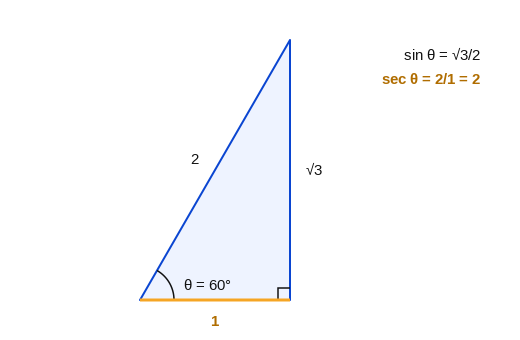
- → → .
- → = 2.
Trick: Without the angle: → → .
Answer: (B) 2
अवधारणा: दिए अनुपात से कोण पहचानें।
- → → ।
- → = 2।
ट्रिक: → → ।
उत्तर: (B) 2
SSC CHSL Tier-1Quantitative AptitudeTrigonometry – Standard angleSSC CHSL Tier-1 2025 · 27 Nov Shift 3
Q238.P, Q, and R invest in a business. P invests Rs 40,000, Q invests Rs 50,000, and invests . What is the total profit if the share of is ?
P, Q तथा R एक व्यवसाय में निवेश करते हैं। P, Rs 40,000 निवेश करता है, Q, Rs 50,000 निवेश करता है तथा , निवेश करता है। यदि का हिस्सा है, तो कुल लाभ क्या है?
- A₹ 30,000
- B₹ 15,000
- C₹ 20,000
- D₹ 25,000
Show answer
Concept: Equal time → profit ratio = investment ratio.
- 40000 : 50000 : 60000 = 4 : 5 : 6 (total 15).
- R's 6 parts = ₹6000 → 1 part = ₹1000.
- Total = = ₹15,000.
Trick: R's share in rupees equals R's ratio × 1000 → total = .
Answer: (B) ₹ 15,000
अवधारणा: समान समय → लाभ का अनुपात = निवेश का अनुपात।
- 40000 : 50000 : 60000 = 4 : 5 : 6 (कुल 15)।
- R के 6 भाग = ₹6000 → 1 भाग = ₹1000।
- कुल = = ₹15,000।
ट्रिक: 6 भाग = 6000 → 1 भाग = 1000 → कुल 15000।
उत्तर: (B) ₹ 15,000
SSC CHSL Tier-1Quantitative AptitudePartnership – Total profit from one shareSSC CHSL Tier-1 2025 · 27 Nov Shift 3
Q239.Two runners, and , start from the same point on a circular track of 500 m . They run in the same direction with speeds of and , respectively. How many times will they cross each other in 10 minutes?
दो धावक, तथा , 500 m के एक वृत्ताकार पथ पर एक ही बिंदु से चलना प्रारंभ करते हैं। वे क्रमशः तथा की चाल से एक ही दिशा में दौड़ते हैं। 10 मिनट में वे कितनी बार एक-दूसरे को पार करेंगे?
- A4
- B5
- C6
- D7
Show answer
Concept: Same direction: they meet each time the faster gains one full lap.
- m/s.
- Time per meeting = s.
- In 600 s: = 6 times.
Trick: Total extra distance = m = laps gained = 6 meetings.
Answer: (C) 6
अवधारणा: समान दिशा: तेज़ धावक जब भी एक पूरा चक्कर आगे निकलता है, वे मिलते हैं।
- m/s।
- एक मिलन का समय = s।
- 600 s में: = 6 बार।
ट्रिक: अतिरिक्त दूरी = m = 6 चक्कर = 6 बार।
उत्तर: (C) 6
SSC CHSL Tier-1Quantitative AptitudeCircular track – Meetings in same directionSSC CHSL Tier-1 2025 · 27 Nov Shift 3
Q240.The average marks of 50 students in a class is 80. Later, it was discovered that a student's marks were recorded as 39 instead of 92. What is the correct average?
एक कक्षा के 50 विद्यार्थियों के औसत अंक 80 हैं। बाद में ज्ञात हुआ कि एक विद्यार्थी के अंक 92 के स्थान पर 39 दर्ज किए गए थे। सही औसत क्या है?
- A80.94
- B78.94
- C81.94
- D79.94
Show answer
Concept: .
- .
- The options fit only if 92 was counted in place of 39, so the total drops by → 3947.
- = 78.94.
Trick: → .
Answer: (B) 78.94
अवधारणा: ।
- ।
- विकल्पों के अनुसार 39 की जगह 92 जुड़ा था, अतः कुल घटेगा → 3947।
- = 78.94।
ट्रिक: → ।
उत्तर: (B) 78.94
SSC CHSL Tier-1Quantitative AptitudeAverage – Correcting a wrong entrySSC CHSL Tier-1 2025 · 27 Nov Shift 3

