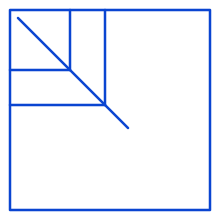
Q3041.Which option figure will complete the pattern in the question figure? (Rotation is not allowed)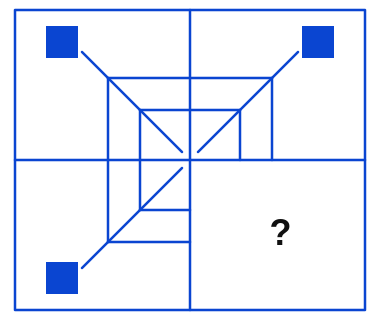
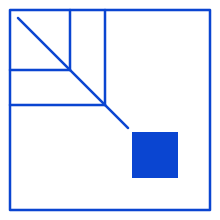
कौन-सी विकल्प आकृति प्रश्न आकृति के पैटर्न को पूरा करेगी? (घुमाने की अनुमति नहीं है) - A
- B
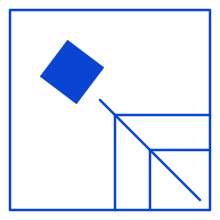
- C
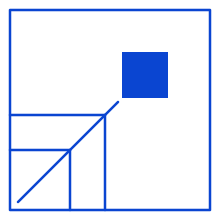
- D
Show answer
Concept: The four quarters show the same design turned by 90° each time.
- Each quarter has a black square near its outer corner, a slant from it to the centre and two step-lines touching that slant.
- The step-lines always start on the two inner dividing lines of the quarter.
- The missing bottom-right quarter must have its slant from the centre down to a black square near the outer corner – option (A).
Trick: In 4-part rotating patterns, compare the missing quarter with the diagonally opposite one – it is usually its 180° turn.
Answer: (A)
अवधारणा: चारों भाग एक ही डिज़ाइन हैं, हर बार 90° घूमे हुए।
हल:
- हर भाग में बाहरी कोने के पास काला वर्ग, उससे केंद्र तक तिरछी रेखा और उस रेखा को छूती दो सीढ़ीनुमा रेखाएँ हैं।
- सीढ़ी रेखाएँ हमेशा भीतरी विभाजक रेखाओं से शुरू होती हैं।
- नीचे-दाएँ खाली भाग में केंद्र से बाहरी कोने के काले वर्ग तक तिरछी रेखा चाहिए – विकल्प (A)।
ट्रिक: खाली भाग की तुलना सामने वाले विकर्ण भाग से करें – वह प्रायः उसका 180° घुमाव होता है।
उत्तर: (A)
SSC CHSL Tier-1General IntelligencePattern completionSSC CHSL Tier-1 2025 · 19 Nov Shift 3
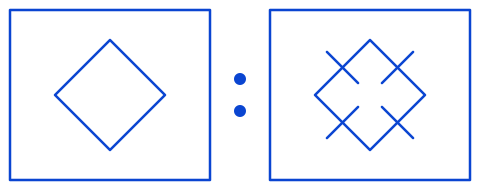
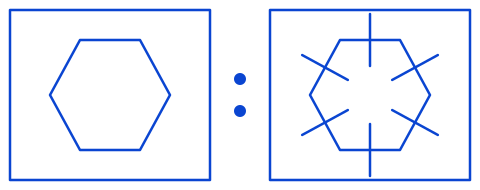
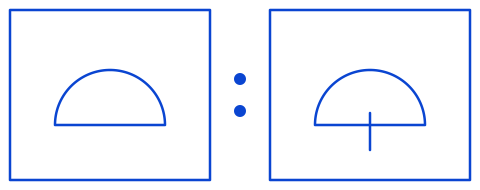
Q3042.In the following question, in each option a pair of figures is given. In each pair the figure towards the left of (:) is related by some logic/rule/relation with the figure on the right of (:). Select the odd figure pair from the given alternatives.
निम्नलिखित प्रश्न में, प्रत्येक विकल्प में आकृतियों का एक युग्म दिया गया है। प्रत्येक युग्म में (:) के बाईं ओर की आकृति, (:) के दाईं ओर की आकृति से किसी तर्क/नियम/संबंध द्वारा संबंधित है। दिए गए विकल्पों में से भिन्न आकृति युग्म का चयन कीजिए।
- A
- B
- C
- D
Show answer
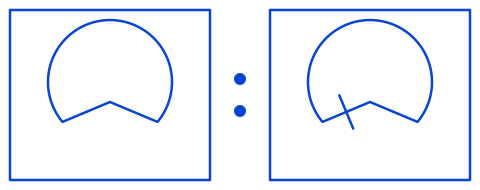
Concept: Find the rule linking the two figures in most pairs.
- Rule: on the second figure, a short outward mark is added at the middle of every straight edge.
- Rhombus → 4 marks, hexagon → 6, D-shape (1 straight edge) → 1 – all follow it.
- In (D) the V-shape has 2 straight edges but gets only one mark, and it points inward – odd pair.
Trick: Count straight edges vs marks in each pair – the mismatch shows the odd one.
Answer: (D)
अवधारणा: अधिकांश युग्मों में दोनों आकृतियों का नियम खोजें।
हल:
- नियम: दूसरी आकृति में हर सीधी भुजा के मध्य पर बाहर की ओर छोटी रेखा जुड़ती है।
- समचतुर्भुज → 4, षट्भुज → 6, D-आकार (1 सीधी भुजा) → 1 – सब नियम मानते हैं।
- (D) में V-आकार की 2 सीधी भुजाएँ हैं पर निशान केवल 1 और वह भी अंदर की ओर – यही विषम।
ट्रिक: हर युग्म में सीधी भुजाएँ और निशान गिनें – जहाँ मेल न हो वही उत्तर।
उत्तर: (D)
SSC CHSL Tier-1General IntelligenceOdd figure pairSSC CHSL Tier-1 2025 · 19 Nov Shift 3
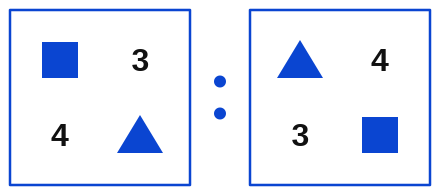
Q3043.In the following question, in each option a pair of figures is given. In each pair the figure towards the left of (:) is related by some logic/rule/relation with the figure on the right of (:). Select the odd figure pair from the given alternatives.
निम्नलिखित प्रश्न में, प्रत्येक विकल्प में आकृतियों का एक युग्म दिया गया है। प्रत्येक युग्म में (:) के बाईं ओर की आकृति, (:) के दाईं ओर की आकृति से किसी तर्क/नियम/संबंध द्वारा संबंधित है। दिए गए विकल्पों में से भिन्न आकृति युग्म का चयन कीजिए।
- A
- B
- C
- D
Show answer
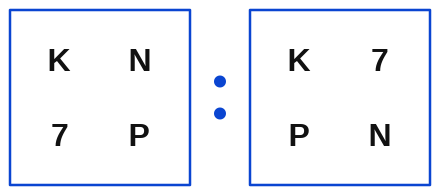
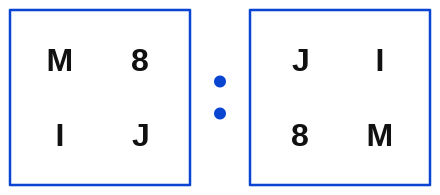
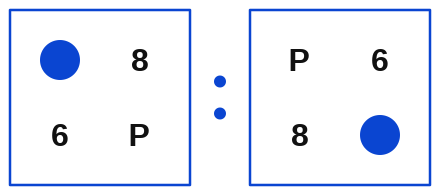
Concept: Track where each corner element moves from the first box to the second.
- In (B), (C), (D) every element goes to the diagonally opposite corner (top-left ↔ bottom-right, top-right ↔ bottom-left).
- In (A) the letter K stays in the top-left corner – it has not moved.
- So (A) breaks the rule.
Trick: Follow just one element per pair; the pair where it lands in the 'wrong' corner is odd.
Answer: (A)
अवधारणा: पहले खाने से दूसरे खाने में हर कोने का तत्व कहाँ गया, देखें।
हल:
- (B), (C), (D) में हर तत्व विकर्ण के सामने वाले कोने में गया।
- (A) में K ऊपर-बाएँ कोने में ही रह गया – वह हिला ही नहीं।
- इसलिए (A) नियम तोड़ता है।
ट्रिक: हर युग्म में सिर्फ एक तत्व का पीछा करें – जिसमें वह गलत कोने पहुँचे वही विषम।
उत्तर: (A)
SSC CHSL Tier-1General IntelligenceOdd figure pair – diagonal swapSSC CHSL Tier-1 2025 · 19 Nov Shift 3
Q3044.In the following figure series, select the figure which can be placed at the sign of question mark (?) from the given alternatives.
निम्नलिखित आकृति शृंखला में, दिए गए विकल्पों में से उस आकृति का चयन कीजिए जिसे प्रश्नवाचक चिह्न (?) के स्थान पर रखा जा सकता है। - A

- B

- C

- D

Show answer
Concept: Check both the number of ovals and their shading pattern.
- Ovals: 2, 3, 5, 7 → after the 2nd figure +2 each time → next = 9.
- Shading alternates dark, light, dark… starting dark, so 9 ovals begin and end dark.
- Only (B) has 9 ovals with this alternation; (A) and (C) have 8, (D) breaks the alternation.
Trick: Fix the count first – it removes most options before you check shading.
Answer: (B)
अवधारणा: अंडाकारों की संख्या और छायांकन दोनों जाँचें।
हल:
- संख्या: 2, 3, 5, 7 → दूसरी आकृति के बाद हर बार +2 → अगली = 9।
- छायांकन गहरा-हल्का बारी-बारी, गहरे से शुरू → 9 हों तो शुरू और अंत दोनों गहरे।
- यह केवल (B) में है; (A), (C) में 8 हैं, (D) में क्रम टूटा है।
ट्रिक: पहले संख्या पक्की करें – ज़्यादातर विकल्प वहीं हट जाते हैं।
उत्तर: (B)
SSC CHSL Tier-1General IntelligenceFigure series – count and shadingSSC CHSL Tier-1 2025 · 19 Nov Shift 3
Q3045.In a certain coded language 'QSBN' is coded as 'LMWH' and 'EFOZ' is coded as 'ZZJT'. How will 'IBUT' be coded in the same code language?
एक निश्चित कूट भाषा में 'QSBN' को 'LMWH' के रूप में तथा 'EFOZ' को 'ZZJT' के रूप में कूटबद्ध किया जाता है। उसी कूट भाषा में 'IBUT' को किस प्रकार कूटबद्ध किया जाएगा?
- ADVPN
- BFWOM
- CCUQO
- DDVQP
Show answer
Concept: Find the shift for each position and apply it.
- QSBN → LMWH: 1st and 3rd letters go back 5, 2nd and 4th go back 6 (wrap Z after A).
- EFOZ → ZZJT also fits this −5, −6, −5, −6 rule ✔.
- Apply to IBUT (9, 2, 21, 20): 9−5 = 4 (D), 2−6 → 22 (V), 21−5 = 16 (P), 20−6 = 14 (N) → DVPN.
Trick: Only first letter needed: I − 5 = D leaves (A) and (D); second-last U − 5 = P vs Q → DVPN.
Answer: (A) DVPN
अवधारणा: हर स्थान का खिसकाव निकालकर लागू करें।
हल:
- QSBN → LMWH: पहला व तीसरा अक्षर 5 पीछे, दूसरा व चौथा 6 पीछे (A के बाद Z पर लौटें)।
- EFOZ → ZZJT भी इसी −5, −6, −5, −6 नियम से बनता है ✔।
- IBUT (9, 2, 21, 20) पर: 9−5 = 4 (D), 2−6 → 22 (V), 21−5 = 16 (P), 20−6 = 14 (N) → DVPN।
ट्रिक: I − 5 = D से (A) और (D) बचते हैं; U − 5 = P (Q नहीं) → DVPN।
उत्तर: (A) DVPN
SSC CHSL Tier-1General IntelligenceCoding – backward letter shiftsSSC CHSL Tier-1 2025 · 19 Nov Shift 3
Q3046.From the given alternatives, select the word that CANNOT be formed by using the letters of the given word. EARTHQUAKES
दिए गए विकल्पों में से उस शब्द का चयन कीजिए जिसे दिए गए शब्द के अक्षरों का प्रयोग करके नहीं बनाया जा सकता। EARTHQUAKES
- AEARTH
- BSEEK
- CRATHER
- DHEAR
Show answer
Concept: A word can be formed only if every letter is available in the needed number.
- EARTHQUAKES: E ×2, A ×2, R ×1, T, H, Q, U, K, S ×1 each.
- EARTH, HEAR, SEEK – all letters available.
- RATHER needs R twice, but only one R exists → cannot be formed.
Trick: Look first for doubled letters in the options and check them against the given word.
Answer: (C) RATHER
अवधारणा: शब्द तभी बनेगा जब हर अक्षर आवश्यक संख्या में मौजूद हो।
हल:
- EARTHQUAKES: E ×2, A ×2, R ×1, बाकी एक-एक।
- EARTH, HEAR, SEEK – सभी अक्षर उपलब्ध।
- RATHER में R दो बार चाहिए, पर R केवल एक है → नहीं बन सकता।
ट्रिक: विकल्पों में दोहराए गए अक्षर पहले जाँचें।
उत्तर: (C) RATHER
SSC CHSL Tier-1General IntelligenceWord formation – letter countSSC CHSL Tier-1 2025 · 19 Nov Shift 3
Q3047. is the incentre of triangle . If angle , find angle ABC .
, त्रिभुज का अंतःकेंद्र है। यदि कोण है, तो कोण ABC ज्ञात कीजिए।
- A70°
- B140°
- C130°
- D150°
Show answer
Concept: At the incentre O: .
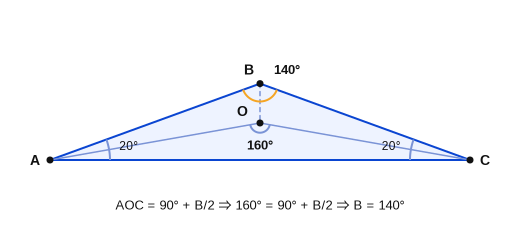
- .
- 140°.
- Check: , so ✔.
Trick: Quick: .
Answer: (B) 140°
अवधारणा: अंतःकेंद्र O पर: ।
हल:
- ।
- 140°।
- जाँच: , तो ✔।
ट्रिक: सीधा: ।
उत्तर: (B) 140°
SSC CHSL Tier-1Quantitative AptitudeIncentre – angle at incentreSSC CHSL Tier-1 2025 · 19 Nov Shift 3
Q3048.The length and breadth of a rectangle are in the ratio 22 : 7, respectively, and the perimeter of the rectangle is 174 cm . If the area of the rectangle is equal to the area of the top surface of a solid cylinder, then find the curved surface area of the cylinder given that its radius is 84% of its height.
एक आयत की लंबाई और चौड़ाई क्रमशः 22 : 7 के अनुपात में हैं तथा आयत का परिमाप 174 cm है। यदि आयत का क्षेत्रफल एक ठोस बेलन के ऊपरी पृष्ठ के क्षेत्रफल के बराबर है, तो बेलन का वक्र पृष्ठीय क्षेत्रफल ज्ञात कीजिए, जबकि उसकी त्रिज्या उसकी ऊँचाई का 84% है।
- A
- B
- C
- D
Show answer
Concept: Top of a cylinder is a circle (); .
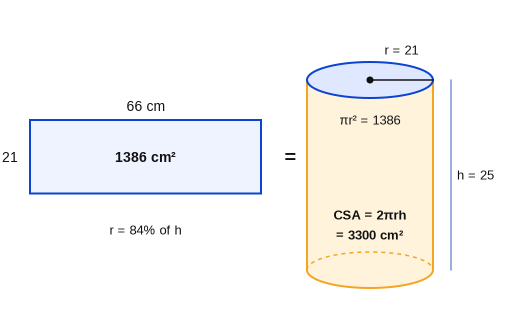
- Sides 22k, 7k: → 66 cm × 21 cm, area = 1386 cm².
- cm.
- r = 84% of h → cm.
- 3300 cm².
Trick: is a standard value worth remembering (also area of circle of radius 21).
Answer: (D)
अवधारणा: बेलन का ऊपरी तल वृत्त है (); ।
हल:
- भुजाएँ 22k, 7k: → 66 × 21, क्षेत्रफल = 1386 cm²।
- cm।
- r = h का 84% → cm।
- 3300 cm²।
ट्रिक: 21 त्रिज्या वाले वृत्त का क्षेत्रफल 1386 – यह मान याद रखें।
उत्तर: (D)
SSC CHSL Tier-1Quantitative AptitudeMensuration – rectangle to cylinder CSASSC CHSL Tier-1 2025 · 19 Nov Shift 3
Q3049.A rhombus has diagonals in the ratio 5 : 12. If the side length is 13 cm, find the exact lengths of the diagonals and hence the area of the rhombus.
एक समचतुर्भुज के विकर्ण 5 : 12 के अनुपात में हैं। यदि उसकी भुजा की लंबाई 13 cm है, तो विकर्णों की सटीक लंबाइयाँ तथा उससे समचतुर्भुज का क्षेत्रफल ज्ञात कीजिए।
- A16 cm and 16 cm और
- B10 cm and 10 cm और
- C14 cm and 14 cm और
- D10 cm and 10 cm और
Show answer
Concept: Diagonals of a rhombus bisect at 90°: .
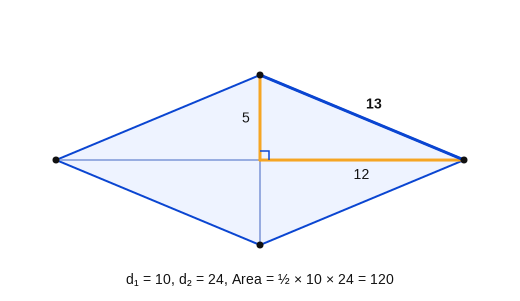
- Take , (ratio 5 : 12), halves 5k and 12k.
- .
- Diagonals = 10 cm and 24 cm; area = 120 cm².
Trick: 5-12-13 is a Pythagorean triplet: side 13 → half-diagonals 5 and 12 directly.
Answer: (B) 10 cm and
अवधारणा: समचतुर्भुज के विकर्ण एक-दूसरे को समकोण पर समद्विभाजित करते हैं: ।
हल:
- , लें, आधे 5k और 12k।
- ।
- विकर्ण 10 cm और 24 cm; क्षेत्रफल = 120 cm²।
ट्रिक: 5-12-13 त्रिक: भुजा 13 हो तो आधे विकर्ण 5 और 12 तुरंत।
उत्तर: (B) 10 cm और
SSC CHSL Tier-1Quantitative AptitudeRhombus – diagonals from sideSSC CHSL Tier-1 2025 · 19 Nov Shift 3
Q3050.A and B invested Rs. 80,000 and Rs. , respectively. At the end of 8 months, the total profit is Rs. 60,000 . What is B's share in the profit?
A और B ने क्रमशः Rs. 80,000 तथा Rs. निवेश किए। 8 महीने के अंत में कुल लाभ Rs. 60,000 है। लाभ में B का हिस्सा क्या है?
- ARs. 26,000
- BRs. 28,000
- CRs. 30,000
- DRs. 36,000
Show answer
Concept: Same time for both → profit shared in the ratio of capitals.
- 80,000 : 1,20,000 = 2 : 3.
- B's share = ₹36,000.
Trick: B has the bigger capital, so B's share must exceed half (₹30,000) – only ₹36,000 qualifies.
Answer: (D) Rs. 36,000
अवधारणा: दोनों का समय बराबर हो तो लाभ पूँजी के अनुपात में बँटता है।
हल:
- 80,000 : 1,20,000 = 2 : 3।
- B का हिस्सा = ₹36,000।
ट्रिक: B की पूँजी ज़्यादा है, तो उसका हिस्सा आधे (₹30,000) से अधिक होगा – केवल ₹36,000।
उत्तर: (D) Rs. 36,000
SSC CHSL Tier-1Quantitative AptitudePartnership – equal timeSSC CHSL Tier-1 2025 · 19 Nov Shift 3
Q3051.The average score of 40 students is 42 . When a group of 16 new students joins, the average rises to 50 . Find the average score of the new students.
40 विद्यार्थियों का औसत प्राप्तांक 42 है। जब 16 नए विद्यार्थियों का एक समूह जुड़ता है, तो औसत बढ़कर 50 हो जाता है। नए विद्यार्थियों का औसत प्राप्तांक ज्ञात कीजिए।
- A70
- B66
- C68
- D74
Show answer
Concept: ; difference of totals gives the new group's total.
- Old total = .
- New total = .
- New students' total = 1120 → average = 70.
Trick: Deviation method: each of the 40 old students gains 8 → 320 extra; new average = .
Answer: (A) 70
अवधारणा: ; कुल का अंतर नए समूह का योग देता है।
हल:
- पुराना योग = ।
- नया योग = ।
- नए छात्रों का योग = 1120 → औसत = 70।
ट्रिक: विचलन विधि: 40 छात्रों को 8-8 की कमी पूरी करनी → 320; नया औसत = ।
उत्तर: (A) 70
SSC CHSL Tier-1Quantitative AptitudeAverage – new group joinsSSC CHSL Tier-1 2025 · 19 Nov Shift 3
Q3052.The average monthly salary of employees in a company is ₹ 60,000 . When 6 new employees with average salary ₹45,000 join, the average salary of the whole company decreases by ₹6,000. Find the original number of employees.
एक कंपनी के कर्मचारियों का औसत मासिक वेतन ₹ 60,000 है। जब ₹45,000 औसत वेतन वाले 6 नए कर्मचारी जुड़ते हैं, तो पूरी कंपनी का औसत वेतन ₹6,000 घट जाता है। कर्मचारियों की मूल संख्या ज्ञात कीजिए।
- A10
- B16
- C15
- D9
Show answer
Concept: Compare totals before and after joining.
- New average = .
- .
- 9.
Trick: Deviation: each old employee loses 6,000 (); each newcomer is 9,000 below the new average () → n = 9.
Answer: (D) 9
अवधारणा: जुड़ने से पहले और बाद का कुल वेतन बराबर करें।
हल:
- नया औसत = ।
- ।
- 9।
ट्रिक: विचलन: पुराने हर कर्मचारी की 6,000 कमी = नए 6 लोगों की 9,000 कमी × 6 → ।
उत्तर: (D) 9
SSC CHSL Tier-1Quantitative AptitudeAverage – original countSSC CHSL Tier-1 2025 · 19 Nov Shift 3
Q3053.A cyclist covers a total distance of 54 km . After cycling for 3 hours and 30 minutes, he finds that the distance he has covered is of the remaining distance. What is his speed in ?
एक साइकिल चालक कुल 54 km की दूरी तय करता है। 3 घंटे 30 मिनट साइकिल चलाने के बाद वह पाता है कि उसके द्वारा तय की गई दूरी, शेष दूरी की है। उसकी चाल में क्या है?
- A
- B6.42 km/hr
- C
- D7.5 km/hr
Show answer
Concept: Covered : remaining = 5 : 7 → split the total in 12 parts.
- 1 part = km → covered = 22.5 km.
- Time = 3 h 30 min = 3.5 h.
- Speed = 6.43 km/h (listed as 6.42).
Trick: Covered = of total directly: .
Answer: (B) 6.42 km/hr
अवधारणा: तय दूरी : शेष = 5 : 7 → कुल को 12 भागों में बाँटें।
हल:
- 1 भाग = km → तय दूरी = 22.5 km।
- समय = 3.5 घंटे।
- चाल = 6.43 km/h (विकल्प में 6.42)।
ट्रिक: तय दूरी = कुल का km।
उत्तर: (B) 6.42 km/hr
SSC CHSL Tier-1Quantitative AptitudeSpeed – fraction of remaining distanceSSC CHSL Tier-1 2025 · 19 Nov Shift 3
Q3054.A train is on a 140 km journey. After travelling for 3 hours and 20 minutes, the distance it has covered is of the remaining distance. What is the speed of the train in ?
एक ट्रेन 140 km की यात्रा पर है। 3 घंटे 20 मिनट चलने के बाद उसके द्वारा तय की गई दूरी, शेष दूरी की है। ट्रेन की चाल में क्या है?
- A
- B4.50 m/s
- C
- D
Show answer
Concept: Find distance covered, then speed, then convert using .
- Covered : remaining = 5 : 9 → covered = km.
- Time = 3 h 20 min = h → speed = km/h.
- 4.16 m/s.
Trick: km/h → m/s: ; m/s → km/h: .
Answer: (C)
अवधारणा: तय दूरी, फिर चाल, फिर से m/s में बदलें।
हल:
- तय : शेष = 5 : 9 → तय दूरी = km।
- समय = घंटे → चाल = 15 km/h।
- 4.16 m/s।
ट्रिक: km/h → m/s के लिए ।
उत्तर: (C)
SSC CHSL Tier-1Quantitative AptitudeSpeed – km/h to m/sSSC CHSL Tier-1 2025 · 19 Nov Shift 3
Q3055.A and B together can complete a task in 30 days. If A alone can complete the task in 50 days, how long will B take to complete the task alone?
A और B मिलकर एक कार्य को 30 दिनों में पूरा कर सकते हैं। यदि A अकेला उस कार्य को 50 दिनों में पूरा कर सकता है, तो B अकेला उस कार्य को पूरा करने में कितना समय लेगा?
- A41 days41 दिन
- B75 days75 दिन
- C80 days80 दिन
- D100 days100 दिन
Show answer
Concept: Use efficiency: work = LCM of the given days.
- Work = LCM(30, 50) = 150 units.
- (A + B) = 5 units/day, A = 3 units/day → B = 2 units/day.
- B alone = 75 days.
Trick: Formula: .
Answer: (B) 75 days
अवधारणा: दक्षता विधि: कुल कार्य = दिनों का LCM।
हल:
- कार्य = LCM(30, 50) = 150 इकाई।
- A + B = 5/दिन, A = 3/दिन → B = 2/दिन।
- B अकेला = 75 दिन।
ट्रिक: सूत्र: ।
उत्तर: (B) 75 दिन
SSC CHSL Tier-1Quantitative AptitudeTime and work – one person's timeSSC CHSL Tier-1 2025 · 19 Nov Shift 3
Q3056.A shopkeeper offers successive discounts of 25% and 20% on a bag and sells it for ₹1200. What was the original marked price of the bag?
एक दुकानदार एक बैग पर 25% और 20% की क्रमिक छूट देता है तथा उसे ₹1200 में बेचता है। बैग का मूल अंकित मूल्य क्या था?
- A₹2,000
- B₹1,500
- C₹1,406
- D₹1,800
Show answer
Concept: .
- .
- → MP = ₹2,000.
Trick: Net discount of 25% and 20% = → 60% of MP = 1200 → MP = 2000.
Answer: (A) ₹2,000
अवधारणा: ।
हल:
- ।
- → MP = ₹2,000।
ट्रिक: 25% और 20% की कुल छूट = → MP का 60% = 1200 → 2000।
उत्तर: (A) ₹2,000
SSC CHSL Tier-1Quantitative AptitudeSuccessive discounts – marked priceSSC CHSL Tier-1 2025 · 19 Nov Shift 3
Q3057.A product is sold for ₹1,560 after a discount is given on its marked price. What was the marked price of the product?
एक उत्पाद को उसके अंकित मूल्य पर की छूट देने के बाद ₹1,560 में बेचा जाता है। उत्पाद का अंकित मूल्य क्या था?
- A₹2,900
- B₹2,000
- C₹1,100
- D₹3,200
Show answer
Concept: After d% discount, of MP.
- SP = 78% of MP = 1560.
- ₹2,000.
Trick: Option test: 78% of 2000 = 1560 – done in 5 seconds.
Answer: (B) ₹2,000
अवधारणा: d% छूट के बाद MP का ।
हल:
- MP का 78% = 1560।
- ₹2,000।
ट्रिक: विकल्प जाँच: 2000 का 78% = 1560।
उत्तर: (B) ₹2,000
SSC CHSL Tier-1Quantitative AptitudeDiscount – marked priceSSC CHSL Tier-1 2025 · 19 Nov Shift 3
Q3058.The width of a rectangle is such that its length exceeds it by 3 cm. Given that the perimeter measures 66 cm , determine the area of the rectangle.
एक आयत की चौड़ाई ऐसी है कि उसकी लंबाई चौड़ाई से 3 cm अधिक है। यदि आयत का परिमाप 66 cm है, तो आयत का क्षेत्रफल ज्ञात कीजिए।
- A
- B
- C
- D
Show answer
Concept: Perimeter gives ; the given difference fixes each side.
- and .
- l = 18 cm, b = 15 cm.
- Area = 270 cm².
Trick: Sum and difference: , .
Answer: (D)
अवधारणा: परिमाप से मिलता है; दिया अंतर दोनों भुजाएँ तय करता है।
हल:
- और ।
- l = 18 cm, b = 15 cm।
- क्षेत्रफल = 270 cm²।
ट्रिक: योग-अंतर विधि: , ।
उत्तर: (D)
SSC CHSL Tier-1Quantitative AptitudeRectangle – area from perimeterSSC CHSL Tier-1 2025 · 19 Nov Shift 3
Q3059.In an 80 liter mixture of milk and water, the ratio of milk to water is . How much water must be added to make the ratio of milk to water 4 : 7 ?
दूध और पानी के 80 लीटर मिश्रण में दूध और पानी का अनुपात है। दूध और पानी का अनुपात 4 : 7 करने के लिए इसमें कितना पानी और मिलाया जाना चाहिए?
- A1.5 liters1.5 लीटर
- B2 liters2 लीटर
- C3.5 liters3.5 लीटर
- D2.5 liters2.5 लीटर
Show answer
Concept: Adding water keeps the milk quantity fixed.
- Milk = L, water = 50 L.
- New ratio 4 : 7 → 30 L milk ↔ water = L.
- Water to add = 2.5 L.
Trick: Keep the unchanged item fixed and scale the other to the new ratio.
Answer: (D) 2.5 liters
अवधारणा: पानी मिलाने पर दूध की मात्रा नहीं बदलती।
हल:
- दूध = L, पानी = 50 L।
- नया अनुपात 4 : 7 → पानी = L।
- मिलाना होगा = 2.5 L।
ट्रिक: जो चीज़ नहीं बदलती उसे स्थिर रखकर दूसरी को नए अनुपात से निकालें।
उत्तर: (D) 2.5 लीटर
SSC CHSL Tier-1Quantitative AptitudeMixture – adding waterSSC CHSL Tier-1 2025 · 19 Nov Shift 3
Q3060.If a chord of a circle is 30 cm and the distance of the chord from the center is 8 cm , what is the diameter of the circle?
यदि किसी वृत्त की एक जीवा 30 cm लंबी है तथा केंद्र से उस जीवा की दूरी 8 cm है, तो वृत्त का व्यास क्या है?
- A15 cm
- B25 cm
- C34 cm
- D17 cm
Show answer
Concept: Perpendicular from centre bisects the chord: .
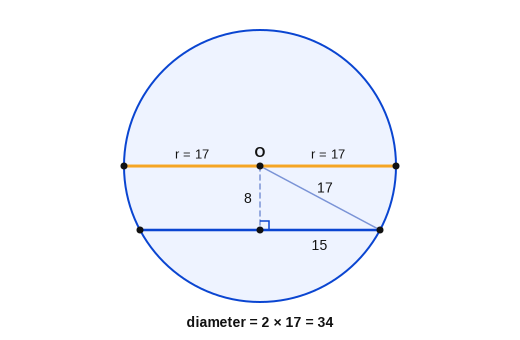
- Half-chord = 15 cm, distance = 8 cm.
- cm.
- Diameter = 34 cm.
Trick: 8-15-17 triplet → radius 17 instantly; don't stop at the radius (17 is a trap option).
Answer: (C) 34 cm
अवधारणा: केंद्र से जीवा पर लंब उसे समद्विभाजित करता है: ।
हल:
- आधी जीवा = 15 cm, दूरी = 8 cm।
- cm।
- व्यास = 34 cm।
ट्रिक: 8-15-17 त्रिक; 17 त्रिज्या है, व्यास नहीं – जाल से बचें।
उत्तर: (C) 34 cm
SSC CHSL Tier-1Quantitative AptitudeCircle – chord and distance from centreSSC CHSL Tier-1 2025 · 19 Nov Shift 3

