Q401.If 30% of a number is 120, what is 45% of that number ?
यदि किसी संख्या का 30% 120 है, तो उस संख्या का 45% कितना होगा?
- A160
- B180
- C150
- D190
Show answer
Concept: If a% of N is known, .
- 30% → 120, so 1% → 4.
- 45% → 180.
- (Number = 400; 45% of 400 = 180.)
Trick: .
Answer: (B) 180
अवधारणा: a% मान पता हो तो ।
हल:
- 30% → 120, तो 1% → 4।
- 45% → 180।
- (संख्या = 400; 400 का 45% = 180)
ट्रिक: ।
उत्तर: (B) 180
SSC CHSL Tier-1Quantitative AptitudePercentage – proportional scalingSSC CHSL Tier-1 2025 · 25 Nov Shift 2
Q402.The price of an article was increased by 20% and then decreased by . What is the final price if the original price was ₹300?
किसी वस्तु के मूल्य में पहले 20% की वृद्धि की गई और उसके बाद की कमी की गई। यदि मूल मूल्य ₹300 था, तो अंतिम मूल्य क्या होगा?
- A₹345
- B₹340
- C₹342
- D₹336
Show answer
Concept: Net change for +a% then −b% .
- Net = .
- Final price = ₹342.
Trick: Multiplier method: .
Answer: (C) ₹342
अवधारणा: +a% के बाद −b% का शुद्ध परिवर्तन ।
हल:
- शुद्ध = ।
- अंतिम मूल्य = ₹342।
ट्रिक: गुणक विधि: ।
उत्तर: (C) ₹342
SSC CHSL Tier-1Quantitative AptitudeSuccessive percentage changeSSC CHSL Tier-1 2025 · 25 Nov Shift 2
Q403.A shopkeeper bought a bag for Rs. 150 and sold it for Rs. 195. What is the profit percent ?
एक दुकानदार ने एक बैग Rs. 150 में खरीदा और उसे Rs. 195 में बेच दिया। लाभ प्रतिशत कितना है?
- A20%
- B
- C30%
- D35%
Show answer
Concept: (always on CP).
- Profit = ₹45.
- Profit % = 30%.
Trick: → 30% profit instantly.
Answer: (C) 30%
अवधारणा: (हमेशा CP पर)।
हल:
- लाभ = ₹45।
- लाभ % = 30%।
ट्रिक: → सीधे 30% लाभ।
उत्तर: (C) 30%
SSC CHSL Tier-1Quantitative AptitudeProfit percentSSC CHSL Tier-1 2025 · 25 Nov Shift 2
Q404.Two cylindrical tanks have equal heights. The radius of the second tank is three times the radius of the first tank. What is the ratio of the volume of the first tank to the volume of the second tank ?
दो बेलनाकार टंकियों की ऊँचाइयाँ बराबर हैं। दूसरी टंकी की त्रिज्या पहली टंकी की त्रिज्या की तीन गुनी है। पहली टंकी के आयतन का दूसरी टंकी के आयतन से अनुपात क्या है?
- A1 : 3
- B1 : 6
- C1 : 9
- D1 : 27
Show answer
Concept: ; with equal h, .
- .
- 1 : 9.
Trick: Same height → just square the radius ratio; 1 : 3 is a trap.
Answer: (C) 1 : 9
अवधारणा: ; h समान हो तो ।
हल:
- ।
- 1 : 9।
ट्रिक: ऊँचाई समान → बस त्रिज्या अनुपात का वर्ग; 1 : 3 जाल है।
उत्तर: (C) 1 : 9
SSC CHSL Tier-1Quantitative AptitudeMensuration – cylinder volume ratioSSC CHSL Tier-1 2025 · 25 Nov Shift 2
Q405.The profit earned by a shopkeeper on selling a watch is Rs. 120. Even after offering a discount of on the marked price, the shopkeeper earns a profit of . What is the marked price (list price) of the watch ?
एक दुकानदार को एक घड़ी बेचने पर Rs. 120 का लाभ होता है। अंकित मूल्य पर की छूट देने के बाद भी दुकानदार को का लाभ होता है। घड़ी का अंकित मूल्य (सूची मूल्य) क्या है?
- ARs. 800
- BRs. 750
- CRs. 720
- DRs. 700
Show answer
Concept: Profit% gives CP; .
- 25% of CP = 120 → CP ₹480.
- SP ₹600.
- ₹750.
Trick: ; ; .
Answer: (B) Rs. 750
अवधारणा: लाभ% से CP; ।
हल:
- CP का 25% = 120 → CP ₹480।
- SP ₹600।
- ₹750।
ट्रिक: ; ; ।
उत्तर: (B) Rs. 750
SSC CHSL Tier-1Quantitative AptitudeDiscount & profit – marked priceSSC CHSL Tier-1 2025 · 25 Nov Shift 2
Q406.A right hexagonal prism has a base edge of 8 cm and a height of 14 cm . The lateral faces are all painted. If the cost of painting is ₹12.50 per , find the total painting cost. Use where needed.
एक लंब षट्भुजीय प्रिज्म के आधार की भुजा 8 cm तथा ऊँचाई 14 cm है। इसके सभी पार्श्व फलकों पर रंग किया जाता है। यदि रंगाई की लागत ₹12.50 प्रति है, तो रंगाई की कुल लागत ज्ञात कीजिए। जहाँ आवश्यक हो, का प्रयोग कीजिए।
- A₹8,200
- B₹8,400
- C₹8,600
- D₹9,250
Show answer
Concept: .
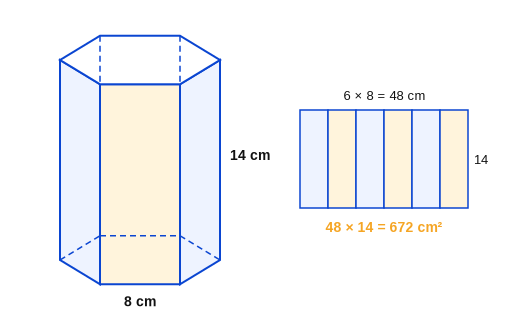
- Hexagon perimeter = cm.
- LSA = cm².
- Cost = ₹8,400.
Trick: . is a distractor (only for the hexagon ends).
Answer: (B) ₹8,400
अवधारणा: ।
हल:
- षट्भुज परिमाप = cm।
- LSA = cm²।
- लागत = ₹8,400।
ट्रिक: । केवल षट्भुज सिरों के लिए – यहाँ ज़रूरत नहीं।
उत्तर: (B) ₹8,400
SSC CHSL Tier-1Quantitative AptitudePrism – lateral surface costSSC CHSL Tier-1 2025 · 25 Nov Shift 2
Q407.A father deposited ₹50,000 in a compound interest scheme for his daughter when she was 21 years old. The scheme offers 10% compound interest per annum. What will be the total amount she will receive when she turns 25?
एक पिता ने अपनी पुत्री के 21 वर्ष की आयु के होने पर उसके लिए एक चक्रवृद्धि ब्याज योजना में ₹50,000 जमा किए। यह योजना 10% वार्षिक चक्रवृद्धि ब्याज देती है। जब वह 25 वर्ष की होगी, तब उसे कुल कितनी राशि प्राप्त होगी?
- A₹70,000
- B₹73,205
- C₹66,550
- D₹72,505
Show answer
Concept: ; time = years.
- .
- ₹73,205.
Yaad rakhein: Powers of 11: 121, 1331, 14641 → .
Answer: (B) ₹73,205
अवधारणा: ; समय = वर्ष।
हल:
- ।
- ₹73,205।
याद रखें: 11 की घातें: 121, 1331, 14641 → ।
उत्तर: (B) ₹73,205
SSC CHSL Tier-1Quantitative AptitudeCompound interest – 4 yearsSSC CHSL Tier-1 2025 · 25 Nov Shift 2
Q408.Suresh took a loan of Rs. 10,000 at compound interest per annum for 3 years. He repaid Rs. 5,000 at the end of the 1st year and the remaining balance at the end of the 3rd year to clear the debt. Find the total interest paid by Suresh.
सुरेश ने Rs. 10,000 का ऋण वार्षिक चक्रवृद्धि ब्याज की दर पर 3 वर्षों के लिए लिया। उसने पहले वर्ष के अंत में Rs. 5,000 चुकाए तथा ऋण समाप्त करने के लिए शेष राशि तीसरे वर्ष के अंत में चुकाई। सुरेश द्वारा चुकाया गया कुल ब्याज ज्ञात कीजिए।
- ARs. 2,260
- BRs. 2,380
- CRs. 2,300
- DRs. 2,500
Show answer
Concept: Grow the balance year by year; subtract each repayment when made.
- End of year 1: ; pays 5,000 → balance 6,000.
- After 2 more years: .
- Total paid = → interest = ₹2,260.
Trick: ; never just CI on 10,000 for 3 years.
Answer: (A) Rs. 2,260
अवधारणा: हर वर्ष बकाया बढ़ाएँ; भुगतान होते ही घटाएँ।
हल:
- पहले वर्ष के अंत: ; 5,000 चुकाए → बकाया 6,000।
- अगले 2 वर्ष बाद: ।
- कुल भुगतान = → ब्याज = ₹2,260।
ट्रिक: ; सीधे 3 वर्ष का CI न लगाएँ।
उत्तर: (A) Rs. 2,260
SSC CHSL Tier-1Quantitative AptitudeCompound interest – part repaymentSSC CHSL Tier-1 2025 · 25 Nov Shift 2
Q409.P, Q, and R are partners in a business. P and Q share profits in the ratio 2 : 3, while and share in the ratio . At the end of the year, the total profit received is Rs. 70,000. What is the share of P ?
P, Q और R एक व्यवसाय में साझेदार हैं। P और Q लाभ को 2 : 3 के अनुपात में बाँटते हैं, जबकि और इसे के अनुपात में बाँटते हैं। वर्ष के अंत में प्राप्त कुल लाभ Rs. 70,000 है। P का हिस्सा कितना है?
- ARs. 16,000
- BRs. 24,000
- CRs. 20,000
- DRs. 30,000
Show answer
Concept: Make the common term (Q) equal in both ratios.
- P : Q = 2 : 3 → 8 : 12; Q : R = 4 : 5 → 12 : 15.
- P : Q : R = 8 : 12 : 15 (sum 35).
- ₹16,000.
Trick: Chain rule: P : Q : R = .
Answer: (A) Rs. 16,000
अवधारणा: साझा पद (Q) को दोनों अनुपातों में बराबर करें।
हल:
- P : Q = 2 : 3 → 8 : 12; Q : R = 4 : 5 → 12 : 15।
- P : Q : R = 8 : 12 : 15 (योग 35)।
- ₹16,000।
ट्रिक: शृंखला नियम: P : Q : R = ।
उत्तर: (A) Rs. 16,000
SSC CHSL Tier-1Quantitative AptitudeRatio – combining two ratiosSSC CHSL Tier-1 2025 · 25 Nov Shift 2
Q410.Three numbers are in a ratio 3 : 5 : 7. If the difference between the largest and the smallest number is 24 , find the middle number.
तीन संख्याएँ 3 : 5 : 7 के अनुपात में हैं। यदि सबसे बड़ी और सबसे छोटी संख्या का अंतर 24 है, तो मध्य संख्या ज्ञात कीजिए।
- A30
- B35
- C28
- D42
Show answer
Concept: .
- Difference of parts = parts = 24 → 1 part = 6.
- Middle = 30.
Trick: Unit method: value of 1 part first, then multiply.
Answer: (A) 30
अवधारणा: ।
हल:
- भागों का अंतर = भाग = 24 → 1 भाग = 6।
- बीच की संख्या = 30।
ट्रिक: इकाई विधि: पहले 1 भाग का मान, फिर गुणा करें।
उत्तर: (A) 30
SSC CHSL Tier-1Quantitative AptitudeRatio – find middle numberSSC CHSL Tier-1 2025 · 25 Nov Shift 2
Q411.A solution containing 40% of milk is mixed with another mixture containing m% of milk in equal proportions. The mixture so formed contains of milk. What is the value of ?
40% दूध वाले एक घोल को m% दूध वाले एक अन्य मिश्रण के साथ बराबर मात्रा में मिलाया जाता है। इस प्रकार बने मिश्रण में दूध है। का मान क्या है?
- A60%
- B65%
- C70%
- D75%
Show answer
Concept: Equal quantities → resulting % = simple average.
- 70%.
Trick: 55 is 15 above 40, so m must be 15 above 55 = 70.
Answer: (C) 70%
अवधारणा: बराबर मात्रा मिलाने पर → परिणामी % = साधारण औसत।
हल:
- 70%।
ट्रिक: 55, 40 से 15 अधिक है, तो m = ।
उत्तर: (C) 70%
SSC CHSL Tier-1Quantitative AptitudeMixture – equal quantitiesSSC CHSL Tier-1 2025 · 25 Nov Shift 2
Q412.A mixture containing 80% acid is mixed with another mixture containing 55% acid in the ratio 12 : 8. What is the percentage of acid in the resulting mixture?
80% अम्ल वाले एक मिश्रण को 55% अम्ल वाले एक अन्य मिश्रण के साथ 12 : 8 के अनुपात में मिलाया जाता है। परिणामी मिश्रण में अम्ल का प्रतिशत क्या है?
- A65%
- B68%
- C70%
- D72%
Show answer
Concept: .
- 12 : 8 = 3 : 2.
- 70%.
Trick: Alligation: gap 25 split in 2 : 3 from 80 → .
Answer: (C) 70%
अवधारणा: ।
हल:
- 12 : 8 = 3 : 2।
- 70%।
ट्रिक: Alligation: अंतर 25 को 2 : 3 में बाँटें → ।
उत्तर: (C) 70%
SSC CHSL Tier-1Quantitative AptitudeMixture – weighted averageSSC CHSL Tier-1 2025 · 25 Nov Shift 2
Q413.If , then find the value of .
यदि , तो का मान ज्ञात कीजिए।
- A2
- B8
- C15
- D16
Show answer
Concept: .
- .
- 8.
Trick: The always cancels → answer = 5 + 3 directly.
Answer: (B) 8
अवधारणा: ।
हल:
- ।
- 8।
ट्रिक: कट जाता है → उत्तर सीधे 5 + 3।
उत्तर: (B) 8
SSC CHSL Tier-1Quantitative AptitudeSurds – squaring a sumSSC CHSL Tier-1 2025 · 25 Nov Shift 2
Q414.Evaluate.
मान ज्ञात कीजिए।
- A
- B
- C
- D
Show answer
Concept: .
- .
- .
Trick: Never expand both squares – use 4ab.
Answer: (D)
अवधारणा: ।
हल:
- ।
- ।
ट्रिक: दोनों वर्ग अलग-अलग न खोलें – सीधे 4ab लगाएँ।
उत्तर: (D)
SSC CHSL Tier-1Quantitative AptitudeAlgebraic identity – (a+b)² − (a−b)²SSC CHSL Tier-1 2025 · 25 Nov Shift 2
Q415.A sphere of radius 12 cm is melted and recast into hemispherical bowls, each of external radius 4 cm and wall thickness 1 cm . How many such bowls can be made ? (in approx)
12 cm त्रिज्या वाले एक गोले को पिघलाकर अर्धगोलाकार कटोरे बनाए जाते हैं, जिनमें से प्रत्येक की बाह्य त्रिज्या 4 cm तथा दीवार की मोटाई 1 cm है। ऐसे कितने कटोरे बनाए जा सकते हैं? (लगभग)
- A89
- B91
- C93
- D96
Show answer
Concept: Metal volume is conserved; a bowl's metal = .
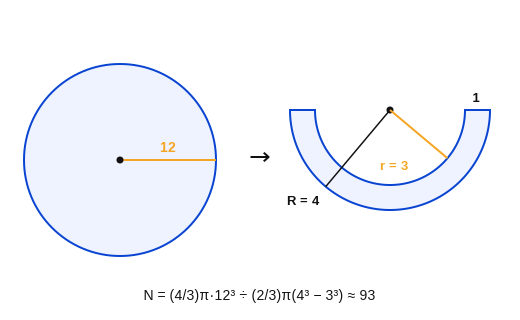
- Sphere: .
- Bowl: .
- Bowls = 93.
Trick: cancels; just compute .
Answer: (C) 93
अवधारणा: धातु का आयतन वही रहता है; कटोरे की धातु = ।
हल:
- गोला: ।
- कटोरा: ।
- कटोरे = 93।
ट्रिक: कट जाता है; सीधे ।
उत्तर: (C) 93
SSC CHSL Tier-1Quantitative AptitudeRecasting – sphere into hollow bowlsSSC CHSL Tier-1 2025 · 25 Nov Shift 2
Q416.In a mathematics test, a student is asked to identify a number that satisfies the following three conditions:
i) It is an irrational number.
ii) It is greater than 3 but less than 4 .
iii) Its square is also an irrational number. Which of the following numbers satisfies all conditions?
एक गणित परीक्षा में, एक विद्यार्थी से ऐसी संख्या पहचानने को कहा जाता है जो निम्नलिखित तीन शर्तों को संतुष्ट करती हो:
i) यह एक अपरिमेय संख्या है।
ii) यह 3 से बड़ी परंतु 4 से छोटी है।
iii) इसका वर्ग भी एक अपरिमेय संख्या है। निम्नलिखित में से कौन-सी संख्या सभी शर्तों को संतुष्ट करती है?
- A
- B3.5
- C
- D
Show answer
Concept: Test each option on all three conditions.
- 3.5 is rational ✘.
- , lie in (3, 4) but their squares 11, 15 are rational ✘.
- ✔; , irrational ✔ → .
Trick: Square of is always n (rational) – any pure √ option fails condition (iii).
Answer: (C)
अवधारणा: हर विकल्प को तीनों शर्तों पर जाँचें।
हल:
- 3.5 परिमेय है ✘।
- , (3, 4) में हैं पर उनके वर्ग 11, 15 परिमेय ✘।
- ✔; , अपरिमेय ✔ → ।
ट्रिक: का वर्ग हमेशा n (परिमेय) – शुद्ध √ वाला विकल्प शर्त (iii) में fail।
उत्तर: (C)
SSC CHSL Tier-1Quantitative AptitudeNumber system – irrational numbersSSC CHSL Tier-1 2025 · 25 Nov Shift 2
Q417.A man bought of rice and used for cooking. He sold the remaining rice equally in 3 bags. How much rice did he put in each bag?
एक व्यक्ति ने चावल खरीदा तथा उसमें से पकाने में उपयोग किया। शेष चावल उसने 3 थैलों में बराबर-बराबर बाँटकर बेच दिया। उसने प्रत्येक थैले में कितना चावल रखा?
- A
- B
- C
- D
Show answer
Concept: Convert mixed numbers to improper fractions, subtract, then divide.
- ; .
- Left = kg.
- Each bag = kg.
Trick: Decimals: ; kg .
Answer: (B)
अवधारणा: मिश्र संख्याओं को विषम भिन्न में बदलें, घटाएँ, फिर भाग दें।
हल:
- ; ।
- शेष = kg।
- हर थैला = kg।
ट्रिक: दशमलव से: ; kg ।
उत्तर: (B)
SSC CHSL Tier-1Quantitative AptitudeFractions – mixed numbersSSC CHSL Tier-1 2025 · 25 Nov Shift 2
Q418.P and Q started a business with initial investments of Rs. 40,000 and Rs. 60,000 , respectively. After 6 months, R joined with an investment of Rs. . If the total profit at the end of 1 year is Rs. , how much will receive ?
P तथा Q ने क्रमशः Rs. 40,000 और Rs. 60,000 की आरंभिक पूँजी से एक व्यवसाय आरंभ किया। 6 महीने बाद R, Rs. की पूँजी के साथ इसमें शामिल हुआ। यदि 1 वर्ष के अंत में कुल लाभ Rs. है, तो को कितनी राशि प्राप्त होगी?
- ARs.
- BRs. 1,50,000
- CRs. 1,00,000
- DRs. 1,80,000
Show answer
Concept: .
- ; ; .
- Ratio = 2 : 3 : 3 (8 parts).
- ₹1,50,000.
Trick: Cancel common factors early: .
Answer: (B) Rs. 1,50,000
अवधारणा: ।
हल:
- ; ; ।
- अनुपात = 2 : 3 : 3 (8 भाग)।
- ₹1,50,000।
ट्रिक: उभयनिष्ठ गुणनखंड पहले काटें: ।
उत्तर: (B) Rs. 1,50,000
SSC CHSL Tier-1Quantitative AptitudePartnership – capital × timeSSC CHSL Tier-1 2025 · 25 Nov Shift 2
Q419.Two runners, Rahul and Aman, jog around a 3 km circular track. They start from the same point at the same time and run in opposite directions. Rahul's speed is and Aman's speed is 8 . If they start at 6:00 a.m., at what time will they meet for the 9th time?
दो धावक, राहुल तथा अमन, 3 km के एक वृत्ताकार ट्रैक पर दौड़ते हैं। वे एक ही बिंदु से एक ही समय पर आरंभ करते हैं और विपरीत दिशाओं में दौड़ते हैं। राहुल की चाल तथा अमन की चाल 8 है। यदि वे प्रातः 6:00 बजे आरंभ करते हैं, तो वे 9वीं बार किस समय मिलेंगे?
- A7:15 a.m.
- B7:30 a.m.
- C7:45 a.m.
- D8:00 a.m
Show answer
Concept: Opposite directions: relative speed = sum; one meeting per track length.
- Relative speed = km/h.
- Time per meeting h = 10 min.
- 9th meeting = min → 6:00 + 1:30 = 7:30 a.m.
Trick: .
Answer: (B) 7:30 a.m.
अवधारणा: विपरीत दिशा: सापेक्ष चाल = योग; हर एक चक्कर (track) पर एक मिलन।
हल:
- सापेक्ष चाल = km/h।
- एक मिलन का समय h = 10 मिनट।
- 9वाँ मिलन = मिनट → 6:00 + 1:30 = 7:30 a.m.
ट्रिक: ।
उत्तर: (B) 7:30 a.m.
SSC CHSL Tier-1Quantitative AptitudeCircular track – meetingsSSC CHSL Tier-1 2025 · 25 Nov Shift 2
Q420.The average of 150 real numbers is zero. At most, how many of them can be negative ?
150 वास्तविक संख्याओं का औसत शून्य है। उनमें से अधिक-से-अधिक कितनी संख्याएँ ऋणात्मक हो सकती हैं?
- A75
- B148
- C100
- D149
Show answer
Concept: Average 0 ⇒ sum 0 ⇒ at least one positive number is needed.
- All 150 negative → sum negative, impossible.
- 149 numbers = −1 and one number = +149 → sum 0 ✔.
- Max negatives = 150 − 1 = 149.
Trick: Average zero: at most (n − 1) can be negative (or positive).
Answer: (D) 149
अवधारणा: औसत 0 ⇒ योग 0 ⇒ कम से कम एक धनात्मक संख्या चाहिए।
हल:
- सभी 150 ऋणात्मक → योग ऋणात्मक, असंभव।
- 149 संख्याएँ = −1 और एक = +149 → योग 0 ✔।
- अधिकतम ऋणात्मक = 150 − 1 = 149।
ट्रिक: औसत शून्य: अधिकतम (n − 1) संख्याएँ ऋणात्मक (या धनात्मक) हो सकती हैं।
उत्तर: (D) 149
SSC CHSL Tier-1Quantitative AptitudeAverage – maximum negativesSSC CHSL Tier-1 2025 · 25 Nov Shift 2

