Q561.A train 240 meters long passes a man running at in the same direction in 12 seconds. What is the speed of the train?
एक 240 मीटर लंबी रेलगाड़ी समान दिशा में की चाल से दौड़ रहे एक व्यक्ति को 12 सेकंड में पार कर जाती है। रेलगाड़ी की चाल क्या है?
- A
- B86 km/h
- C
- D
Show answer
Concept: Same direction → relative speed = train speed − man speed; distance = train length.
- Relative speed = .
- Train speed = km/h.
Trick: m/s → km/h: multiply by 3.6 ().
Answer: (A)
अवधारणा: एक ही दिशा → सापेक्ष चाल = ट्रेन − व्यक्ति; दूरी = ट्रेन की लंबाई।
- सापेक्ष चाल = ।
- ट्रेन की चाल = km/h।
ट्रिक: m/s को km/h में: 3.6 से गुणा ()।
उत्तर: (A)
SSC CHSLQuantitative AptitudeTrain passing a moving manSSC CHSL 2025 · 22 Nov Shift 2
Q562.A train passes a tunnel 400 m long in 40 seconds. Speed is . Find the train's length.
एक रेलगाड़ी 400 मीटर लंबी एक सुरंग को 40 सेकंड में पार करती है। चाल है। रेलगाड़ी की लंबाई ज्ञात कीजिए।
- A300 m
- B400 m
- C100 m
- D200 m
Show answer
Concept: Distance = train length + tunnel length.
- .
- Distance in 40 s = m.
- Train length = m.
Yaad rakhein: km/h → m/s: ; m/s → km/h: .
Answer: (D) 200 m
अवधारणा: दूरी = ट्रेन की लंबाई + सुरंग की लंबाई।
- ।
- 40 s में दूरी = m।
- ट्रेन की लंबाई = m।
याद रखें: km/h → m/s: ; m/s → km/h: ।
उत्तर: (D) 200 m
SSC CHSLQuantitative AptitudeTrain crossing a tunnelSSC CHSL 2025 · 22 Nov Shift 2
Q563.A small mosque dome is shaped like a hemisphere of diameter 14 m.How much area (in square metres) must be painted on its curved surface?
एक छोटी मस्जिद का गुंबद 14 मीटर व्यास वाले अर्धगोले के आकार का है। इसके वक्र पृष्ठ पर कितना क्षेत्रफल (वर्ग मीटर में) रँगना होगा?
- A284
- B322
- C308
- D362
Show answer
Concept: CSA of hemisphere = .
- m.
- CSA = .
Trick: With , ; hemisphere CSA = .
Answer: (C) 308
अवधारणा: अर्धगोले का वक्र पृष्ठ = ।
- m।
- वक्र पृष्ठ = ।
ट्रिक: पर ; अर्धगोला = ।
उत्तर: (C) 308
SSC CHSLQuantitative AptitudeHemisphere – curved surface areaSSC CHSL 2025 · 22 Nov Shift 2
Q564.A land plot is defined by points .What is the area of the parallelogram representing this plot?
एक भूखंड बिंदुओं से परिभाषित है। इस भूखंड को निरूपित करने वाले समांतर चतुर्भुज का क्षेत्रफल क्या है?
- A10
- B20
- C15
- D25
Show answer
Concept: .
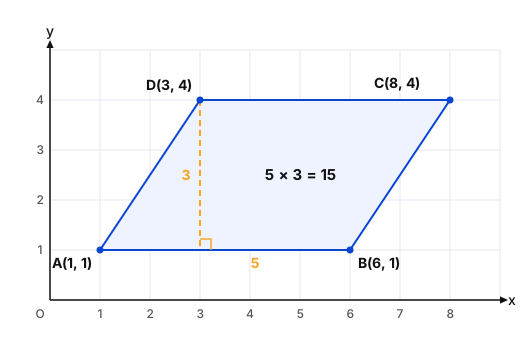
- AB on : base = .
- DC on is parallel: height = .
- Area = sq units.
Trick: Horizontal side → base from x-values, height from y-values; no formula needed.
Answer: (C) 15
अवधारणा: ।
- AB रेखा पर: आधार = ।
- DC रेखा पर: ऊँचाई = ।
- क्षेत्रफल = वर्ग इकाई।
ट्रिक: क्षैतिज भुजा हो तो आधार x से, ऊँचाई y से – सूत्र की ज़रूरत नहीं।
उत्तर: (C) 15
SSC CHSLQuantitative AptitudeParallelogram area from coordinatesSSC CHSL 2025 · 22 Nov Shift 2
Q565.A meeting hall of is to be tiled using tiles. How many are needed?
माप के एक सभा-कक्ष में माप की टाइलें लगाई जानी हैं। कितनी टाइलों की आवश्यकता होगी?
- A130
- B100
- C110
- D150
Show answer
Concept: Number of tiles = (same units).
- Along 8 m: tiles.
- Along 6 m: tiles.
- Total = .
Trick: Divide side by side when they fit exactly – avoids big areas.
Answer: (B) 100
अवधारणा: टाइलें = (एक ही इकाई)।
- 8 m दिशा में: टाइलें।
- 6 m दिशा में: टाइलें।
- कुल = ।
ट्रिक: भुजाओं को अलग-अलग भाग दें – बड़ी संख्याओं से बचें।
उत्तर: (B) 100
SSC CHSLQuantitative AptitudeTiles needed – area divisionSSC CHSL 2025 · 22 Nov Shift 2
Q566.A large wooden block of size 72 is cut into smaller cuboidal blocks of size cm .How many small blocks are obtained?
72 माप के एक बड़े लकड़ी के गुटके को सेमी माप के छोटे घनाभाकार गुटकों में काटा जाता है। कितने छोटे गुटके प्राप्त होते हैं?
- A72
- B96
- C120
- D108
Show answer
Concept: Number = (edges divide exactly).
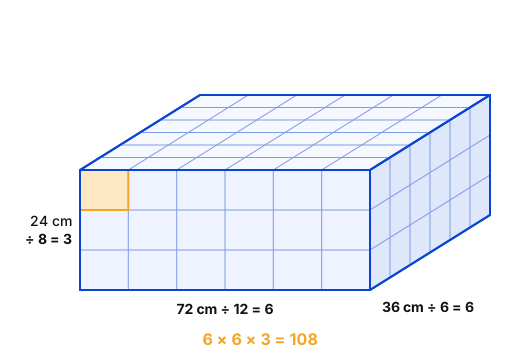
- , , .
- Blocks = .
Trick: Edge-wise division is faster than computing .
Answer: (D) 108
अवधारणा: संख्या = (भुजाएँ पूरी बँटती हों)।
- , , ।
- ब्लॉक = ।
ट्रिक: भुजा-वार भाग देना से तेज़ है।
उत्तर: (D) 108
SSC CHSLQuantitative AptitudeCuboid – number of small blocksSSC CHSL 2025 · 22 Nov Shift 2
Q567.A water filter tank is 1.5 m long, 0.8 m wide, and 0.5 m deep. It takes 2 hours to fill the tank.At what rate is water being filled (in liters per minute)?
एक जल-फ़िल्टर टंकी 1.5 मीटर लंबी, 0.8 मीटर चौड़ी तथा 0.5 मीटर गहरी है। इस टंकी को भरने में 2 घंटे लगते हैं। जल किस दर से (लीटर प्रति मिनट में) भरा जा रहा है?
- A5
- B6
- C10
- D8
Show answer
Concept: ; .
- Volume = .
- Time = 2 h = 120 min.
- Rate = L/min.
Yaad rakhein: litres; 1 litre = .
Answer: (A) 5
अवधारणा: ; ।
- आयतन = ।
- समय = 2 घंटे = 120 मिनट।
- दर = L/मिनट।
याद रखें: लीटर; 1 लीटर = ।
उत्तर: (A) 5
SSC CHSLQuantitative AptitudeTank filling rateSSC CHSL 2025 · 22 Nov Shift 2
Q568.A square-based pyramid tent has base side 8 m and slant height 5 m . How much canvas is needed to cover only the four triangular sides (lateral surface) ?
एक वर्गाकार आधार वाले पिरामिड के आकार के तंबू के आधार की भुजा 8 मीटर तथा तिर्यक ऊँचाई 5 मीटर है। केवल चारों त्रिभुजाकार फलकों (पार्श्व पृष्ठ) को ढकने के लिए कितने कैनवास की आवश्यकता होगी?
- A
- B
- C
- D
Show answer
Concept: Lateral surface = .
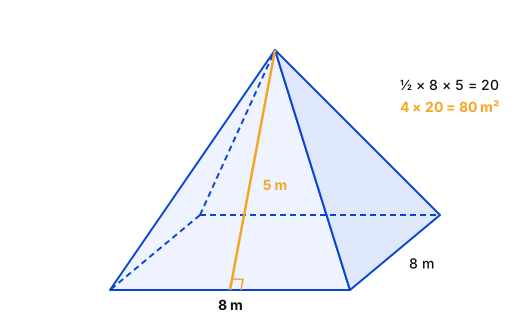
- Perimeter = m.
- LSA = .
Trick: Or 4 triangles .
Answer: (B)
अवधारणा: पार्श्व पृष्ठ = ।
- परिमाप = m।
- पार्श्व पृष्ठ = ।
ट्रिक: या 4 त्रिभुज ।
उत्तर: (B)
SSC CHSLQuantitative AptitudePyramid – lateral surface areaSSC CHSL 2025 · 22 Nov Shift 2
Q569.A triangular pyramid is built on a right-angled triangular concrete base with sides , and 10 m .If the height of the pyramid is 9 m , what is the volume of the pyramid ?
एक त्रिभुजाकार पिरामिड , तथा 10 मीटर भुजाओं वाले समकोण त्रिभुजाकार कंक्रीट आधार पर बनाया गया है। यदि पिरामिड की ऊँचाई 9 मीटर है, तो पिरामिड का आयतन क्या है?
- A
- B
- C
- D
Show answer
Concept: Volume = .
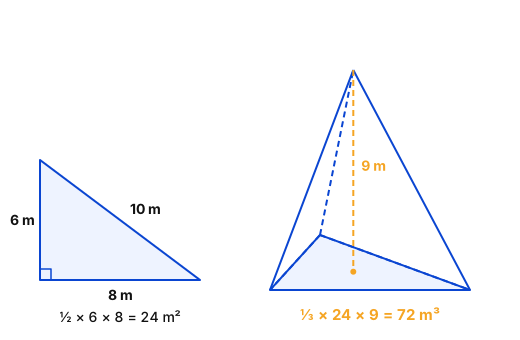
- → right angle between 6 and 8.
- Base area = .
- Volume = .
Yaad rakhein: Pyramid/cone volume is always one-third of the matching prism/cylinder.
Answer: (C)
अवधारणा: आयतन = ।
- → समकोण 6 और 8 के बीच।
- आधार = ।
- आयतन = ।
याद रखें: पिरामिड/शंकु का आयतन संगत प्रिज़्म/बेलन का एक-तिहाई होता है।
उत्तर: (C)
SSC CHSLQuantitative AptitudePyramid – volumeSSC CHSL 2025 · 22 Nov Shift 2
Q570.In a manufacturing plant, a cone-shaped part has a curved surface area of and a base radius of 7 cm.What is its height ?
एक विनिर्माण संयंत्र में शंकु के आकार के एक पुर्जे का वक्र पृष्ठीय क्षेत्रफल तथा आधार की त्रिज्या 7 सेमी है। इसकी ऊँचाई क्या है?
- A18 cm
- B16 cm
- C25 cm
- D24 cm
Show answer
Concept: and .
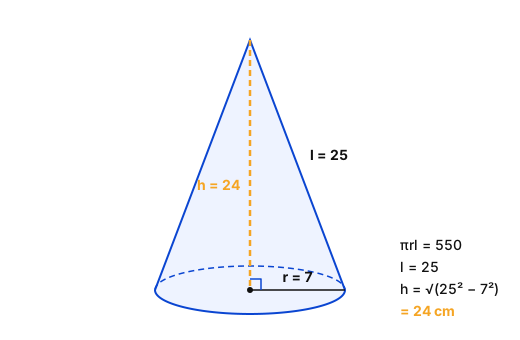
- cm.
- cm.
Trick: 7-24-25 is a Pythagorean triplet – once , directly.
Answer: (D) 24 cm
अवधारणा: वक्र पृष्ठ = और ।
- cm।
- cm।
ट्रिक: 7-24-25 त्रिक है – मिलते ही ।
उत्तर: (D) 24 cm
SSC CHSLQuantitative AptitudeCone – height from curved surfaceSSC CHSL 2025 · 22 Nov Shift 2
Q571.A construction worker uses a right triangular prism block. The triangular base has sides , and 15 cm , and the height (length) of the prism is 20 cm . What is the volume of the block?
एक निर्माण-श्रमिक एक समकोण त्रिभुजाकार प्रिज़्म वाले गुटके का उपयोग करता है। त्रिभुजाकार आधार की भुजाएँ , तथा 15 सेमी हैं और प्रिज़्म की ऊँचाई (लंबाई) 20 सेमी है। गुटके का आयतन क्या है?
- A
- B
- C
- D
Show answer
Concept: Volume = base area × length.
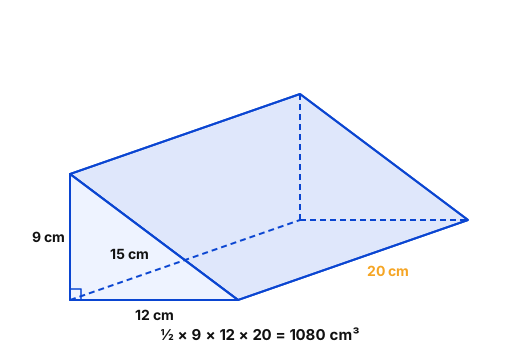
- → right triangle with legs 9 and 12.
- Base area = .
- Volume = .
Trick: 9-12-15 = 3 × (3-4-5) – spot the right angle instantly.
Answer: (B)
अवधारणा: आयतन = आधार क्षेत्रफल × लंबाई।
- → समकोण त्रिभुज (भुजाएँ 9, 12)।
- आधार = ।
- आयतन = ।
ट्रिक: 9-12-15 = 3 × (3-4-5) – समकोण तुरंत पहचानें।
उत्तर: (B)
SSC CHSLQuantitative AptitudeTriangular prism – volumeSSC CHSL 2025 · 22 Nov Shift 2
Q572.A sphere of maximum volume is cut out from a solid hemisphere. What is the ratio of the volume of the sphere to that of the remaining solid ?
एक ठोस अर्धगोले में से अधिकतम आयतन वाला एक गोला काटकर निकाला जाता है। गोले के आयतन तथा शेष ठोस के आयतन का अनुपात क्या है?
- A
- B
- C
- D1 : 1
Show answer
Concept: Largest sphere inside a hemisphere of radius r has radius .
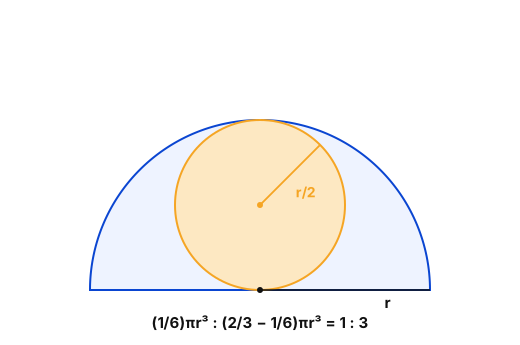
- Hemisphere = .
- Sphere = .
- Remaining = .
- Ratio = .
Trick: Take : hemisphere = , sphere = → remaining → 4 : 12 = 1 : 3.
Answer: (C)
अवधारणा: r त्रिज्या के अर्धगोले में सबसे बड़े गोले की त्रिज्या होती है।
- अर्धगोला = ।
- गोला = ।
- शेष = ।
- अनुपात = ।
ट्रिक: लें: अर्धगोला , गोला , शेष → 1 : 3।
उत्तर: (C)
SSC CHSLQuantitative AptitudeLargest sphere from a hemisphereSSC CHSL 2025 · 22 Nov Shift 2
Q573.Find the fourth proportional to 3,9 , and 6?
3, 9 तथा 6 का चतुर्थानुपाती ज्ञात कीजिए?
- A18
- B22
- C15
- D16
Show answer
Concept: .
- .
Trick: 9 is 3 times 3, so d is 3 times 6 = 18.
Answer: (A) 18
अवधारणा: ।
- ।
ट्रिक: 9, 3 का तीन गुना है, तो d = 6 का तीन गुना = 18।
उत्तर: (A) 18
SSC CHSLQuantitative AptitudeFourth proportionalSSC CHSL 2025 · 22 Nov Shift 2
Q574.The average of the squares of the first 8 natural numbers is B. If each number is doubled first, and then squared, what is the new average?
प्रथम 8 प्राकृत संख्याओं के वर्गों का औसत B है। यदि प्रत्येक संख्या को पहले दोगुना किया जाए और फिर उसका वर्ग किया जाए, तो नया औसत क्या होगा?
- A107
- B102
- C108
- D112
Show answer
Concept: Doubling a number makes its square 4 times; so the average becomes 4 times.
- Sum of squares 1–8 = .
- New average = .
Trick: – any average of squares just gets multiplied by 4.
Answer: (B) 102
अवधारणा: संख्या दोगुनी करने पर उसका वर्ग 4 गुना होता है, इसलिए औसत भी 4 गुना।
- 1–8 के वर्गों का योग = ।
- नया औसत = ।
ट्रिक: – वर्गों का औसत सीधे 4 से गुणा।
उत्तर: (B) 102
SSC CHSLQuantitative AptitudeAverage of squares – scalingSSC CHSL 2025 · 22 Nov Shift 2
Q575.The average age of a group of 5 people increases by 3 years when one person aged 20 years leaves and another person joins. What is the age of the new person?
5 व्यक्तियों के एक समूह की औसत आयु 3 वर्ष बढ़ जाती है, जब 20 वर्ष आयु का एक व्यक्ति समूह छोड़ देता है और उसके स्थान पर दूसरा व्यक्ति सम्मिलित हो जाता है। नए व्यक्ति की आयु क्या है?
- A35
- B30
- C25
- D40
Show answer
Concept: New person's age = old person's age + (number × rise in average).
- Rise in total = years.
- New person = years.
Trick: Replacement rule: .
Answer: (A) 35
अवधारणा: नए व्यक्ति की आयु = गए व्यक्ति की आयु + (संख्या × औसत में वृद्धि)।
- कुल में वृद्धि = वर्ष।
- नया व्यक्ति = वर्ष।
ट्रिक: प्रतिस्थापन नियम: ।
उत्तर: (A) 35
SSC CHSLQuantitative AptitudeAverage – replacing a memberSSC CHSL 2025 · 22 Nov Shift 2
Q576.Find the average of 17, 27, 37, 47, and 57.
17, 27, 37, 47 और 57 का औसत ज्ञात कीजिए।
- A47
- B27
- C17
- D37
Show answer
Concept: For equally spaced numbers, average = middle term.
- 17, 27, 37, 47, 57 rise by 10 each – an AP of 5 terms.
- Middle (3rd) term = 37.
- Check: total 185, and .
Trick: Odd count + equal gaps → just pick the middle number, no adding needed.
Answer: (D) 37
अवधारणा: समान अंतर वाली संख्याओं का औसत = बीच वाला पद।
- 17, 27, 37, 47, 57 – हर बार +10, यानी 5 पदों की AP।
- बीच का (तीसरा) पद = 37।
- जाँच: योग 185, ।
ट्रिक: पद विषम संख्या में और अंतर समान → सीधे बीच वाली संख्या।
उत्तर: (D) 37
SSC CHSLQuantitative AptitudeAverage of numbers in APSSC CHSL 2025 · 22 Nov Shift 1
Q577.A can complete a job in 30 days and B in 40 days. They work together for 10 days. How much work is left?
A एक कार्य को 30 दिनों में और B उसी कार्य को 40 दिनों में पूरा कर सकता है। वे 10 दिनों तक एक साथ कार्य करते हैं। कितना कार्य शेष रह जाता है?
- A
- B
- C
- D
Show answer
Concept: Take total work = LCM of days, then use efficiencies.
- Total work = units.
- A does 4 units/day, B does 3 units/day → together 7 units/day.
- In 10 days: 70 units done; left = 50 units.
- Fraction left = .
Trick: Fraction done = → left .
Answer: (B)
अवधारणा: कुल कार्य = दिनों का LCM मानें, फिर क्षमता से हल करें।
- कुल कार्य = इकाई।
- A = 4 इकाई/दिन, B = 3 इकाई/दिन → मिलकर 7 इकाई/दिन।
- 10 दिन में 70 इकाई; शेष = 50 इकाई।
- शेष भाग = ।
ट्रिक: किया गया भाग = → शेष ।
उत्तर: (B)
SSC CHSLQuantitative AptitudeTime & work – work leftSSC CHSL 2025 · 22 Nov Shift 1
Q578.The decimal expansion of a rational number is:
किसी परिमेय संख्या का दशमलव प्रसार होता है:
- AIt can be either a terminating or a recurring decimalयह या तो सांत दशमलव हो सकता है या आवर्ती दशमलव
- BNon-terminating and non-recurring decimalअसांत और अनावर्ती दशमलव
- CTerminating decimalसांत दशमलव
- DRecurring decimalआवर्ती दशमलव
Show answer
Concept: A rational number gives either a terminating or a non-terminating repeating decimal.
- If q (lowest terms) has only factors 2 and 5 → terminating, e.g. .
- Otherwise the digits repeat, e.g.
- Non-terminating non-repeating (like , ) = irrational. So (c) and (d) are only half-true.
Yaad rakhein: Rational = 'ends or repeats'; irrational = 'never ends, never repeats'.
Answer: (A) It can be either a terminating or a recurring decimal
अवधारणा: परिमेय संख्या का दशमलव रूप या तो सांत होता है या असांत आवर्ती।
- q (सरलतम रूप) के गुणनखंड केवल 2 और 5 हों → सांत, जैसे ।
- अन्यथा अंक दोहराते हैं, जैसे
- असांत अनावर्ती (, ) अपरिमेय होते हैं। (c) और (d) अधूरे सत्य हैं।
याद रखें: परिमेय = 'रुकता है या दोहराता है'; अपरिमेय = 'न रुकता, न दोहराता'।
उत्तर: (A) यह या तो सांत दशमलव हो सकता है या आवर्ती दशमलव
SSC CHSLQuantitative AptitudeRational numbers – decimal formSSC CHSL 2025 · 22 Nov Shift 1
Q579.By selling a watch at 50% of its marked price, a shopkeeper loses 20 %. What would have been his profit percentage if he had sold it at 90% of the marked price?
एक घड़ी को उसके अंकित मूल्य के 50% पर बेचने से एक दुकानदार को 20% की हानि होती है। यदि वह उसे अंकित मूल्य के 90% पर बेचता, तो उसका लाभ प्रतिशत कितना होता?
- A44%
- B
- C46%
- D48%
Show answer
Concept: Link MP and CP through the first sale, then use it for the second.
- 50% of MP = 80% of CP (20% loss) → .
- Take CP = 100 → MP = 160.
- → profit = 44 on 100 = 44%.
Trick: Ratio method: SP changes from 50 to 90 (); → 44% profit.
Answer: (A) 44%
अवधारणा: पहली बिक्री से MP और CP का संबंध निकालें, फिर दूसरी पर लगाएँ।
- MP का 50% = CP का 80% (20% हानि) → ।
- CP = 100 मानें → MP = 160।
- 160 का 90% = 144 → लाभ = 44%।
ट्रिक: अनुपात विधि: SP 50 से 90 (); → 44% लाभ।
उत्तर: (A) 44%
SSC CHSLQuantitative AptitudeProfit & loss – selling at % of MPSSC CHSL 2025 · 22 Nov Shift 1
Q580.The cost price of a TV set is Rs 11000, and its marked price is Rs 14000. If the shopkeeper sells it at a gain of , then what is the percentage rate of discount offered by him?
एक टीवी सेट का क्रय मूल्य ₹11000 है और उसका अंकित मूल्य ₹14000 है। यदि दुकानदार उसे के लाभ पर बेचता है, तो उसके द्वारा दी गई छूट की प्रतिशत दर क्या है?
- A
- B
- C
- D
Show answer
Concept: SP from gain %, then discount % = .
- ₹13,200.
- Discount = ₹800.
- Discount % = .
Trick: Discount % is always on MP, never on CP – divide by 14000.
Answer: (A)
अवधारणा: लाभ % से SP निकालें, फिर छूट % = ।
- ₹13,200।
- छूट = ₹800।
- छूट % = ।
ट्रिक: छूट % हमेशा MP पर, CP पर नहीं – 14000 से भाग दें।
उत्तर: (A)
SSC CHSLQuantitative AptitudeDiscount % from CP, MP and gainSSC CHSL 2025 · 22 Nov Shift 1

