Q41.A right prism has a rectangular base measuring , and its height is 12 cm . Find the total surface area of the prism.
एक लंब प्रिज्म का आधार माप का एक आयत है तथा उसकी ऊँचाई 12 cm है। प्रिज्म का कुल पृष्ठीय क्षेत्रफल ज्ञात कीजिए।
- A
- B
- C
- D
Show answer
Concept: TSA of prism = perimeter of base × height + 2 × base area.
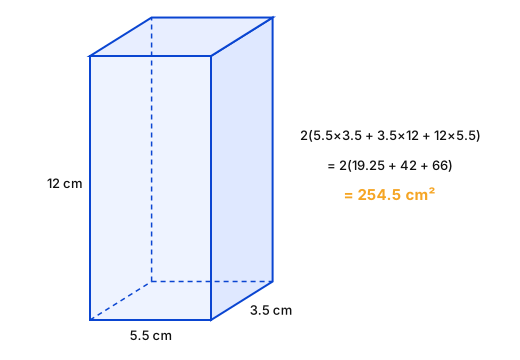
- Lateral area = cm².
- Two bases = cm².
- TSA = cm².
Trick: It is just a cuboid: .
Answer: (C)
अवधारणा: प्रिज़्म का TSA = आधार परिमाप × ऊँचाई + 2 × आधार क्षेत्रफल।
- पार्श्व क्षेत्रफल = cm²।
- दो आधार = cm²।
- TSA = cm²।
ट्रिक: यह घनाभ ही है: ।
उत्तर: (C)
SSC CHSLQuantitative AptitudeTotal surface area of a prismSSC CHSL 2025 · 30 Nov Shift 2
Q42.In a construction project, two support beams form angles of and 45° with the ground, respectively. Engineers must calculate combined efficiency using where and . Both angles are complementary. Find the value of when and ,
एक निर्माण परियोजना में, दो सहारा-बीम भूमि के साथ क्रमशः तथा 45° के कोण बनाती हैं। अभियंताओं को का उपयोग करके संयुक्त दक्षता की गणना करनी है, जहाँ तथा है। दोनों कोण पूरक हैं। का मान ज्ञात कीजिए, जब तथा हो,
- A1
- B
- C
- D2
Show answer
Concept: .
- .
- .
- .
Trick: If , then , so the sum = .
Answer: (D) 2
अवधारणा: ।
- ।
- ।
- ।
ट्रिक: यदि हो तो , अतः योग = ।
उत्तर: (D) 2
SSC CHSLQuantitative AptitudeTrigonometric values at 45°SSC CHSL 2025 · 30 Nov Shift 2
Q43.If and is acute, find the value of .
यदि हो तथा न्यून कोण हो, तो का मान ज्ञात कीजिए।
- A
- B
- C
- D
Show answer
Concept: Use the right triangle: .
- → , , B = .
- , .
- .
Trick: Remember triplet 5-12-13; LCM of 6 and 5 is 30.
Answer: (A)
अवधारणा: समकोण त्रिभुज लें: ।
- → लंब = 5, कर्ण = 13, आधार = ।
- , ।
- ।
ट्रिक: त्रिक 5-12-13 याद रखें; 6 और 5 का LCM 30।
उत्तर: (A)
SSC CHSLQuantitative AptitudeTrigonometric ratios from sin xSSC CHSL 2025 · 30 Nov Shift 2
Q44.A sum becomes Rs. 12,860 in 6 years at simple interest. If the interest rate had been p.a., the amount would have been Rs. 14,420 . Find the principal.
कोई धनराशि साधारण ब्याज की दर से 6 वर्षों में Rs. 12,860 हो जाती है। यदि ब्याज दर प्रति वर्ष होती, तो मिश्रधन Rs. 14,420 होता। मूलधन ज्ञात कीजिए।
- ARs. 5,000
- BRs. 5,800
- CRs. 5,200
- DRs. 6,000
Show answer
Concept: Extra amount comes only from the extra rate: .
- Extra = ₹1560.
- → .
- ₹5200.
Trick: Extra 5% for 6 yrs = 30% of P = 1560 → 10% = 520 → .
Answer: (C) Rs. 5,200
अवधारणा: राशि का अंतर केवल बढ़ी हुई दर से आता है: ।
- अंतर = ₹1560।
- → ।
- ₹5200।
ट्रिक: 6 वर्ष में अतिरिक्त 5% = P का 30% = 1560 → 10% = 520 → ।
उत्तर: (C) Rs. 5,200
SSC CHSLQuantitative AptitudeSimple interest – change in rateSSC CHSL 2025 · 30 Nov Shift 2
Q45.In a mixture of 45 litres, the ratio of milk to water is . If this ratio is to be , then what quantity of water needs to be added?
45 लीटर के एक मिश्रण में दूध तथा पानी का अनुपात है। यदि इस अनुपात को करना हो, तो कितनी मात्रा में पानी मिलाना होगा?
- A35 litres35 लीटर
- B39 litres39 लीटर
- C45 litre45 लीटर
- D41 litres41 लीटर
Show answer
Concept: When only water is added, milk quantity stays the same.
- Milk = L; water = 27 L.
- New ratio 1 : 4 → water needed = L.
- Water to add = L.
Trick: Milk fixed at 18 → new total = L → add L.
Answer: (C) 45 litre
अवधारणा: केवल पानी मिलाने पर दूध की मात्रा नहीं बदलती।
- दूध = L; पानी = 27 L।
- नया अनुपात 1 : 4 → आवश्यक पानी = L।
- मिलाना है = L।
ट्रिक: दूध 18 स्थिर → नया कुल = L → L मिलाएँ।
उत्तर: (C) 45 लीटर
SSC CHSLQuantitative AptitudeMixture – adding waterSSC CHSL 2025 · 30 Nov Shift 2
Q46.Amita can build a room in the same amount of time that Bina and Sita working together can build. If Amita and Bina together could do it in 25 days and Sita alone in 35 days, then how many days are required for Bina alone to do the same work ?
अमिता एक कमरा उतने ही समय में बना सकती है, जितने समय में बीना तथा सीता मिलकर उसे बना सकती हैं। यदि अमिता तथा बीना मिलकर इसे 25 दिनों में कर सकती हैं तथा सीता अकेले 35 दिनों में, तो बीना को अकेले वही कार्य करने में कितने दिन लगेंगे?
- A152
- B175
- C165
- D180
Show answer
Concept: Equal time ⇒ equal efficiency: (per day).
- Total work = units.
- ; units/day.
- → → unit/day.
- Bina alone = days.
Trick: Fractions: .
Answer: (B) 175
अवधारणा: बराबर समय ⇒ बराबर दक्षता: (प्रति दिन)।
- कुल कार्य = इकाई।
- ; इकाई/दिन।
- → → इकाई/दिन।
- बीना अकेले = दिन।
ट्रिक: भिन्न विधि: ।
उत्तर: (B) 175
SSC CHSLQuantitative AptitudeTime & work – efficiency methodSSC CHSL 2025 · 30 Nov Shift 2
Q47.Which of the following statements is/are INCORRECT ?
I. The average of 8 numbers is 25 . If one number is removed, the average of the remaining 7 numbers becomes 24 , then the removed number is 32 .
II. If instead, the removed number was 18 , the average of the remaining 7 numbers would be 26 .
निम्नलिखित में से कौन-सा/से कथन गलत है/हैं?
I. 8 संख्याओं का औसत 25 है। यदि एक संख्या हटा दी जाए, तो शेष 7 संख्याओं का औसत 24 हो जाता है, तो हटाई गई संख्या 32 है।
II. यदि इसके स्थान पर हटाई गई संख्या 18 होती, तो शेष 7 संख्याओं का औसत 26 होता।
- AOnly Iकेवल I
- BOnly IIकेवल II
- CBoth I and III और II दोनों
- DNeither I nor IIन तो I और न ही II
Show answer
Concept: Total = average × count; removed number = old total − new total.
- Total of 8 = .
- I: → removed = ✓ correct.
- II: ✓ correct.
- No statement is incorrect.
Trick: Removed number = old avg + (numbers left × fall in avg) = .
Answer: (D) Neither I nor II
अवधारणा: कुल योग = औसत × संख्या; हटाई गई संख्या = पुराना योग − नया योग।
- 8 संख्याओं का योग = ।
- I: → हटाई = ✓ सही।
- II: ✓ सही।
- कोई कथन गलत नहीं है।
ट्रिक: हटाई संख्या = पुराना औसत + (बची संख्या × औसत में कमी) = ।
उत्तर: (D) न तो I और न ही II
SSC CHSLQuantitative AptitudeAverage – removing a numberSSC CHSL 2025 · 30 Nov Shift 2
Q48.If , then is:
यदि हो, तो का मान है:
- A0.8
- B0.6
- C0.5
- D0.4
Show answer
Concept: for acute θ.
- .
- .
Trick: 0.6, 0.8, 1 is the 3-4-5 triangle scaled down.
Answer: (A) 0.8
अवधारणा: न्यून कोण के लिए ।
- ।
- ।
ट्रिक: 0.6, 0.8, 1 = 3-4-5 त्रिभुज का छोटा रूप।
उत्तर: (A) 0.8
SSC CHSLQuantitative AptitudeIdentity sin²θ + cos²θ = 1SSC CHSL 2025 · 30 Nov Shift 2
Q49.Simplify the expression: .
व्यंजक को सरल कीजिए: ।
- A
- B
- C
- D
Show answer
Concept: , and .
- .
- .
Trick: Put : → only gives 1.
Answer: (A)
अवधारणा: और ।
- ।
- ।
ट्रिक: रखें: बायाँ पक्ष = 1 → केवल = 1 देता है।
उत्तर: (A)
SSC CHSLQuantitative AptitudeTrigonometric simplificationSSC CHSL 2025 · 30 Nov Shift 2
Q50.A shopkeeper offers a 'Buy 4, Get 1 Free' scheme. What is the equivalent single discount percentage?
एक दुकानदार 'Buy 4, Get 1 Free' (4 खरीदें, 1 मुफ़्त पाएँ) की योजना देता है। इसके समतुल्य एकल छूट प्रतिशत क्या है?
- A25%
- B20%
- C
- D35%
Show answer
Concept: .
- Customer gets 5 items, pays for 4.
- Discount = 1 out of 5 = .
Trick: Divide by total items received (), not by the items paid for – 25% is the trap.
Answer: (B) 20%
अवधारणा: ।
- ग्राहक को 5 वस्तुएँ मिलती हैं, भुगतान 4 का।
- छूट = 5 में से 1 = ।
ट्रिक: कुल प्राप्त वस्तुओं () से भाग दें, खरीदी गई से नहीं – 25% जाल है।
उत्तर: (B) 20%
SSC CHSLQuantitative AptitudeBuy x get y free – discount %SSC CHSL 2025 · 30 Nov Shift 2
Q51.Which of these number sets is NOT a subset of the Real Numbers?
इनमें से कौन-सा संख्या समुच्चय वास्तविक संख्याओं का उपसमुच्चय नहीं है?
- ARationalपरिमेय
- BIrrationalअपरिमेय
- CIntegersपूर्णांक
- DImaginaryकाल्पनिक
Show answer
Concept: Real numbers = rational + irrational numbers; they all lie on the number line.
- Integers ⊂ rationals ⊂ reals; irrationals (, ) are also real.
- Imaginary numbers like 2i () cannot be placed on the number line, so they are not real.
Yaad rakhein: Natural ⊂ Whole ⊂ Integers ⊂ Rational ⊂ Real ⊂ Complex.
Answer: (D) Imaginary
अवधारणा: वास्तविक संख्याएँ = परिमेय + अपरिमेय; ये सब संख्या रेखा पर होती हैं।
- पूर्णांक ⊂ परिमेय ⊂ वास्तविक; अपरिमेय (, ) भी वास्तविक हैं।
- काल्पनिक संख्याएँ जैसे 2i () संख्या रेखा पर नहीं आतीं, इसलिए वास्तविक नहीं।
याद रखें: प्राकृत ⊂ पूर्ण ⊂ पूर्णांक ⊂ परिमेय ⊂ वास्तविक ⊂ सम्मिश्र।
उत्तर: (D) काल्पनिक
SSC CHSLQuantitative AptitudeNumber system – real and imaginary numbersSSC CHSL 2025 · 30 Nov Shift 1
Q52.A decimal number is called a pure recurring decimal if:
एक दशमलव संख्या को शुद्ध आवर्ती दशमलव कहा जाता है, यदि:
- AThe decimal terminates after some digitsदशमलव कुछ अंकों के बाद समाप्त हो जाता है
- BRepeating digits begin after some non-repeating digitsआवर्ती अंक कुछ अनावर्ती अंकों के बाद प्रारंभ होते हैं
- CRepeating digits start immediately after the decimal pointआवर्ती अंक दशमलव बिंदु के तुरंत बाद प्रारंभ होते हैं
- DThe number has no decimal partसंख्या का कोई दशमलव भाग नहीं होता
Show answer
Concept: Pure recurring: every digit after the decimal point is part of the repeating block.
- Example: 0.333… or 0.454545… – repetition starts right after the point.
- Mixed recurring: some digits come first, then repetition, e.g. 0.2777….
- Terminating (option A) and no decimal part (option D) are not recurring at all.
Yaad rakhein: 0.ab ; 0.ab .
Answer: (C) Repeating digits start immediately after the decimal point
अवधारणा: शुद्ध आवर्ती: दशमलव के बाद के सभी अंक दोहराए जाने वाले समूह का हिस्सा हों।
- उदाहरण: 0.333… या 0.4545… – दोहराव दशमलव के तुरंत बाद शुरू।
- मिश्रित आवर्ती: पहले कुछ अंक, फिर दोहराव, जैसे 0.2777…।
- सांत दशमलव (A) और बिना दशमलव भाग (D) आवर्ती ही नहीं।
याद रखें: 0.ab ; 0.ab ।
उत्तर: (C) आवर्ती अंक दशमलव बिंदु के तुरंत बाद प्रारंभ होते हैं
SSC CHSLQuantitative AptitudeDecimals – pure recurring decimalSSC CHSL 2025 · 30 Nov Shift 1
Q53.A grocer sells rice at a 10% loss. Had he sold it for ₹0.40 more per kg, he would have gained . What is the cost price of rice per kg?
एक पंसारी चावल को 10% हानि पर बेचता है। यदि उसने उसे प्रति किग्रा ₹0.40 अधिक में बेचा होता, तो उसे का लाभ होता। चावल का प्रति किग्रा क्रय मूल्य क्या है?
- A₹2.50
- B₹2.25
- C₹2.22
- D₹2.40
Show answer
Concept: The gap between two selling prices equals the gap in their percentages of CP.
- From −10% to +8% = 18% of CP.
- 18% of CP = ₹0.40 → .
- CP = ₹2.22 (approx.).
Trick: → .
Answer: (C) ₹2.22
अवधारणा: दो विक्रय मूल्यों का अंतर = CP के प्रतिशतों का अंतर।
- −10% से +8% तक = CP का 18%।
- CP का 18% = ₹0.40 → ।
- CP ≈ ₹2.22।
ट्रिक: → ।
उत्तर: (C) ₹2.22
SSC CHSLQuantitative AptitudeProfit and loss – CP from change in SPSSC CHSL 2025 · 30 Nov Shift 1
Q54.In a science club, the average score of 20 students in a monthly test is 68.5. After including the scores of 4 more students, the overall average becomes 70.2 . If the scores of two of the new students are 72.5 and 75.5 , respectively, and the remaining two students have equal scores, find the score of each of the remaining two students.
एक विज्ञान क्लब में, एक मासिक परीक्षा में 20 विद्यार्थियों का औसत प्राप्तांक 68.5 है। 4 और विद्यार्थियों के प्राप्तांक सम्मिलित करने के बाद कुल औसत 70.2 हो जाता है। यदि दो नए विद्यार्थियों के प्राप्तांक क्रमशः 72.5 तथा 75.5 हैं, तथा शेष दो विद्यार्थियों के प्राप्तांक बराबर हैं, तो शेष दोनों विद्यार्थियों में से प्रत्येक का प्राप्तांक ज्ञात कीजिए।
- A84.5
- B87.5
- C83.4
- D85.4
Show answer
Concept: Work with totals: .
- Old total = ; new total = .
- 4 new students = .
- Other two = → each = 83.4.
Trick: New students total = .
Answer: (C) 83.4
अवधारणा: योग से काम करें: ।
- पुराना योग = ; नया योग = ।
- 4 नए छात्रों का योग = ।
- बाकी दो = → प्रत्येक = 83.4।
ट्रिक: नए छात्रों का योग = ।
उत्तर: (C) 83.4
SSC CHSLQuantitative AptitudeAverage – adding new membersSSC CHSL 2025 · 30 Nov Shift 1
Q55.A contractor estimated that a project would cost ₹ . He planned to spend of the cost on materials, on labor, and the remaining amount on contingency. Later, due to price fluctuations, the material cost increased by , the labor cost increased by , while the contingency cost remained unchanged. What is the new total cost of the project?
एक ठेकेदार ने अनुमान लगाया कि एक परियोजना की लागत ₹ होगी। उसने लागत का भाग सामग्री पर, भाग श्रम पर तथा शेष राशि आकस्मिक व्यय पर खर्च करने की योजना बनाई। बाद में मूल्यों में उतार-चढ़ाव के कारण सामग्री की लागत बढ़ गई तथा श्रम की लागत बढ़ गई, जबकि आकस्मिक व्यय अपरिवर्तित रहा। परियोजना की नई कुल लागत क्या है?
- A₹6,60,000
- B₹6,66,000
- C₹6,72,000
- D₹6,54,000
Show answer
Concept: Only the increases need to be added to the old total.
- Materials = 50% of 6,00,000 = ₹3,00,000 → +10% = ₹30,000.
- Labour = 30% = ₹1,80,000 → +20% = ₹36,000.
- Contingency (₹1,20,000) unchanged. New cost = 6,00,000 + 30,000 + 36,000 = ₹6,66,000.
Trick: Overall rise = 50% × 10% + 30% × 20% = 5% + 6% = 11% of 6,00,000 = 66,000.
Answer: (B) ₹6,66,000
अवधारणा: पुराने कुल में केवल बढ़ोतरी जोड़नी है।
- सामग्री = 6,00,000 का 50% = ₹3,00,000 → 10% वृद्धि = ₹30,000।
- मज़दूरी = 30% = ₹1,80,000 → 20% वृद्धि = ₹36,000।
- आकस्मिक (₹1,20,000) वही। नई लागत = 6,00,000 + 30,000 + 36,000 = ₹6,66,000।
ट्रिक: कुल वृद्धि = 50% × 10% + 30% × 20% = 5% + 6% = 11% → 66,000।
उत्तर: (B) ₹6,66,000
SSC CHSLQuantitative AptitudePercentage – increase in cost componentsSSC CHSL 2025 · 30 Nov Shift 1
Q56.A right pentagonal prism has each side of its regular pentagonal base measuring 5.8 cm , and the height of the prism is 12 cm .If the area of the pentagonal base is approximately 58.0 , find the total surface area of the prism.
एक लंब पंचभुजाकार प्रिज्म के सम पंचभुजाकार आधार की प्रत्येक भुजा 5.8 cm है तथा प्रिज्म की ऊँचाई 12 cm है। यदि पंचभुजाकार आधार का क्षेत्रफल लगभग 58.0 है, तो प्रिज्म का कुल पृष्ठीय क्षेत्रफल ज्ञात कीजिए।
- A
- B
- C
- D
Show answer
Concept: .
- Perimeter = cm.
- Lateral area = .
- TSA = 464 cm².
Yaad rakhein: Same formula works for every right prism – triangular, hexagonal, etc.
Answer: (A)
अवधारणा: ।
- परिमाप = cm।
- पार्श्व पृष्ठ = ।
- TSA = 464 cm²।
याद रखें: यही सूत्र हर लंब प्रिज़्म (त्रिभुजाकार, षट्भुज आदि) पर लागू होता है।
उत्तर: (A)
SSC CHSLQuantitative AptitudeMensuration – TSA of a pentagonal prismSSC CHSL 2025 · 30 Nov Shift 1
Q57.The base of a right prism is a regular hexagon with each side equal to 6.5 cm . If the height of the prism is 20 cm and the area of the hexagonal base is approximately , calculate the total surface area of the prism.
एक लंब प्रिज्म का आधार एक सम षट्भुज है जिसकी प्रत्येक भुजा 6.5 cm है। यदि प्रिज्म की ऊँचाई 20 cm है तथा षट्भुजाकार आधार का क्षेत्रफल लगभग है, तो प्रिज्म का कुल पृष्ठीय क्षेत्रफल परिकलित कीजिए।
- A
- B
- C
- D
Show answer
Concept: .
- Perimeter = cm.
- Lateral area = .
- TSA = 999.20 cm².
Trick: Lateral area 780 is a whole number, so the decimal part comes only from 219.20 → answer must end in .20; only (A) does.
Answer: (A)
अवधारणा: ।
- परिमाप = cm।
- पार्श्व पृष्ठ = ।
- TSA = 999.20 cm²।
ट्रिक: 780 पूर्ण संख्या है, दशमलव भाग केवल 219.20 से आएगा → उत्तर .20 पर खत्म; केवल (A)।
उत्तर: (A)
SSC CHSLQuantitative AptitudeMensuration – TSA of a hexagonal prismSSC CHSL 2025 · 30 Nov Shift 1
Q58.Find the distance from the centroid to the vertex if the median is 18 cm .
यदि माध्यिका 18 cm है, तो केंद्रक से शीर्ष तक की दूरी ज्ञात कीजिए।
- A13 cm
- B16 cm
- C12 cm
- D18 cm
Show answer
Concept: Centroid divides each median in 2 : 1, the larger part towards the vertex.
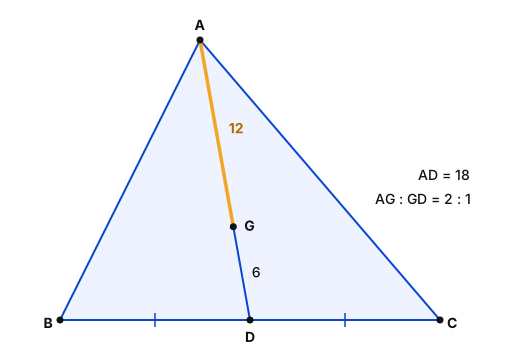
- Vertex to centroid = of median.
- 12 cm (and centroid to side = 6 cm).
Trick: Split the median into 3 equal parts (); vertex side gets 2 parts = 12.
Answer: (C) 12 cm
अवधारणा: केन्द्रक हर माध्यिका को 2 : 1 में बाँटता है, बड़ा भाग शीर्ष की ओर।
- शीर्ष से केन्द्रक = माध्यिका का ।
- 12 cm (केन्द्रक से भुजा = 6 cm)।
ट्रिक: माध्यिका के 3 बराबर हिस्से (); शीर्ष की ओर 2 हिस्से = 12।
उत्तर: (C) 12 cm
SSC CHSLQuantitative AptitudeTriangle – centroid divides median 2:1SSC CHSL 2025 · 30 Nov Shift 1
Q59.A sphere is melted and recast into smaller spheres each of radius one-third of the original sphere. How many small spheres can be formed ?
एक गोले को पिघलाकर छोटे गोलों में ढाला जाता है, जिनमें से प्रत्येक की त्रिज्या मूल गोले की त्रिज्या की एक-तिहाई है। कितने छोटे गोले बनाए जा सकते हैं?
- A28
- B27
- C25
- D34
Show answer
Concept: Volume stays the same; .
- Number of small spheres = .
- → 27.
Trick: Radius becomes → number of spheres ( gives 8, gives 27).
Answer: (B) 27
अवधारणा: पिघलाने पर आयतन वही रहता है; ।
- छोटे गोलों की संख्या = ।
- → 27।
ट्रिक: त्रिज्या हो जाए तो गोलों की संख्या ( → 8, → 27)।
उत्तर: (B) 27
SSC CHSLQuantitative AptitudeMensuration – melting and recasting spheresSSC CHSL 2025 · 30 Nov Shift 1
Q60.Jiva invests a certain sum of money on simple interest at p.a. for 20 years. If the interest earned by her is Rs. 58,410, then find the sum invested by her.
जीवा एक निश्चित धनराशि साधारण ब्याज पर वार्षिक दर से 20 वर्षों के लिए निवेश करती है। यदि उसके द्वारा अर्जित ब्याज Rs. 58,410 है, तो उसके द्वारा निवेश की गई धनराशि ज्ञात कीजिए।
- A₹45,635
- B₹48,675
- C₹40,600
- D₹47,565
Show answer
Concept: .
- Total rate = of P.
- 120% of P = 58,410 → .
- ₹48,675.
Trick: Interest is more than the principal (120%), so ; ✔.
Answer: (B) ₹48,675
अवधारणा: ।
- कुल दर = P का 120%।
- P का 120% = 58,410 → ।
- ₹48,675।
ट्रिक: ब्याज मूलधन का 120% है, यानी P, 58,410 से छोटा; जाँच: ✔।
उत्तर: (B) ₹48,675
SSC CHSLQuantitative AptitudeSimple interest – finding principalSSC CHSL 2025 · 30 Nov Shift 1

