Q821.From point A , two tangents AP and AQ are drawn to a circle. If the length of the chord PQ is equal to the radius of the circle, what is the angle ?
बिंदु A से एक वृत्त पर दो स्पर्श रेखाएँ AP और AQ खींची गई हैं। यदि जीवा PQ की लंबाई वृत्त की त्रिज्या के बराबर है, तो कोण कितना है?
- A90°
- B60°
- C45°
- D120°
Show answer
Concept: ∠PAQ + ∠POQ = 180° (radius ⊥ tangent).
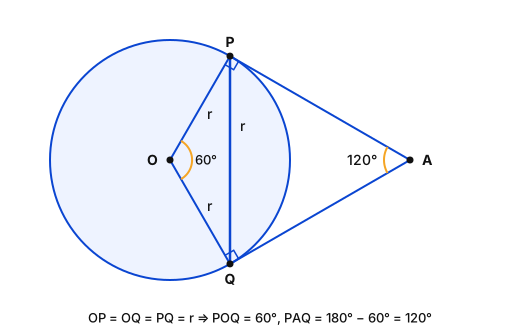
- OP = OQ = PQ → △OPQ equilateral → ∠POQ = 60°.
- ∠PAQ = 180° − 60° = 120°.
Trick: Chord = radius ⇒ central angle 60° ⇒ tangent angle 120°.
Answer: (D) 120°
अवधारणा: ∠PAQ + ∠POQ = 180° (त्रिज्या ⊥ स्पर्शरेखा)।
हल:
- OP = OQ = PQ → समबाहु △ → ∠POQ = 60°।
- ∠PAQ = 180° − 60° = 120°।
ट्रिक: जीवा = त्रिज्या ⇒ केंद्रीय कोण 60° ⇒ स्पर्शरेखा कोण 120°।
उत्तर: (D) 120°
SSC CHSLQuantitative AptitudeTangents – angle between themSSC CHSL 2025 · 19 Nov Shift 1
Q822.A circle has radius of 8 cm , and from a point outside the circle a tangent of length 15 cm is drawn to touch the circle. Calculate the distance of this point from the center of the circle.
एक वृत्त की त्रिज्या 8 cm है और वृत्त के बाहर स्थित एक बिंदु से वृत्त को स्पर्श करती हुई 15 cm लंबी एक स्पर्श रेखा खींची जाती है। केंद्र से इस बिंदु की दूरी ज्ञात कीजिए।
- A17 cm
- B18 cm
- C19 cm
- D16 cm
Show answer
Concept: The radius to the point of contact is perpendicular to the tangent, so .
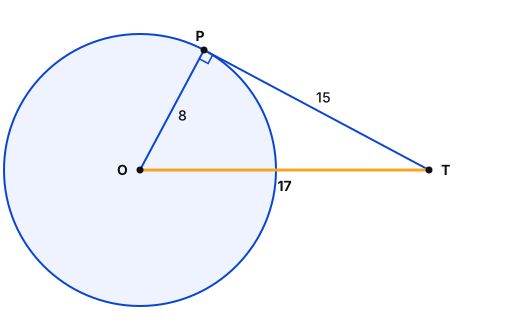
- cm.
Trick: 8-15-17 is a Pythagorean triplet.
Answer: (A) 17 cm
अवधारणा: स्पर्श बिंदु पर त्रिज्या स्पर्श रेखा पर लंब होती है, अतः ।
- cm।
ट्रिक: 8-15-17 पाइथागोरस त्रिक है।
उत्तर: (A) 17 cm
SSC CHSLQuantitative AptitudeTangent lengthSSC CHSL 2025 · 19 Nov Shift 1
Q823.A line passes through the points (2, 4) and (4, 8). What is the equation of the line?
एक रेखा बिंदुओं (2, 4) और (4, 8) से होकर जाती है। इस रेखा का समीकरण क्या है?
- A
- B
- C
- D
Show answer
Concept: Slope .
- .
- .
Trick: Put the points in options: and – only works.
Answer: (A)
अवधारणा: ढाल ।
हल:
- ।
- ।
ट्रिक: बिंदु विकल्पों में रखें: (2, 4), (4, 8) केवल को संतुष्ट करते हैं।
उत्तर: (A)
SSC CHSLQuantitative AptitudeCoordinate geometry – line through two pointsSSC CHSL 2025 · 19 Nov Shift 1
Q824.The angle at the center of a circle subtended by a chord is . What is the length of the chord if the radius of the circle is 9 cm ?
किसी वृत्त की एक जीवा द्वारा केंद्र पर अंतरित कोण है। यदि वृत्त की त्रिज्या 9 cm है, तो जीवा की लंबाई कितनी है?
- A7 cm
- B8 cm
- C9 cm
- D10 cm
Show answer
Concept: Two radii with 60° between them form an equilateral triangle.
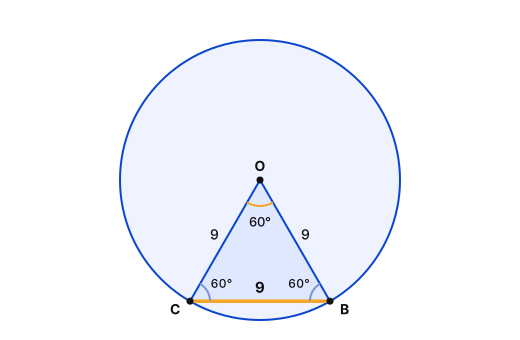
- , → base angles also 60°.
- So chord = radius = 9 cm.
Trick: .
Answer: (C) 9 cm
अवधारणा: 60° पर दो त्रिज्याएँ → समबाहु त्रिभुज।
हल:
- , → बाकी कोण भी 60°।
- जीवा = त्रिज्या = 9 cm।
ट्रिक: ।
उत्तर: (C) 9 cm
SSC CHSLQuantitative AptitudeChord – 60° central angleSSC CHSL 2025 · 19 Nov Shift 1
Q825.Rahul sold a bicycle for ₹5250 at a profit. What should be the selling price of the bicycle to gain a profit?
राहुल ने एक साइकिल लाभ पर ₹5250 में बेची। लाभ प्राप्त करने के लिए साइकिल का विक्रय मूल्य कितना होना चाहिए?
- A₹ 6237
- B₹ 4600
- C₹ 6000
- D₹ 5089
Show answer
Concept: .
- .
- SP for 20% = ₹6000.
Trick: One step: .
Answer: (C) ₹ 6000
अवधारणा: ।
हल:
- ।
- 20% लाभ पर SP = ₹6000।
ट्रिक: सीधे: ।
उत्तर: (C) ₹ 6000
SSC CHSLQuantitative AptitudeProfit – new SP for new profit %SSC CHSL 2025 · 19 Nov Shift 1
Q826.If is irrational and is irrational, then is:
यदि अपरिमेय है और अपरिमेय है, तो है:
- AAlways irrationalसदैव अपरिमेय
- BAlways rationalसदैव परिमेय
- CRational if परिमेय, यदि
- DNever rationalकभी भी परिमेय नहीं
Show answer
Concept: Irrational numbers are not closed under addition – the sum can be rational or irrational.
- is irrational.
- Pick : then – a rational result.
- Hence becomes rational when ; A, B, D fail.
Trick: For 'always/never' options, one counter-example is enough to reject them.
Answer: (C) Rational if
अवधारणा: अपरिमेय संख्याएँ जोड़ पर संवृत (closed) नहीं हैं – योग परिमेय भी हो सकता है।
- अपरिमेय है।
- पर परिमेय है।
- अतः होने पर योग परिमेय है।
ट्रिक: 'हमेशा/कभी नहीं' वाले विकल्प को एक उलटे उदाहरण से हटाएँ।
उत्तर: (C) परिमेय, यदि
SSC CHSLQuantitative AptitudeSum of two irrational numbersSSC CHSL 2025 · 18 Nov Shift 3
Q827.In and . Find the value of
तथा में। का मान ज्ञात कीजिए।
- A2.070
- B1.070
- C2.170
- D2.275
Show answer
Concept: 8, 15, 17 is a Pythagorean triplet, so the angle opposite 17 (∠Q) is .
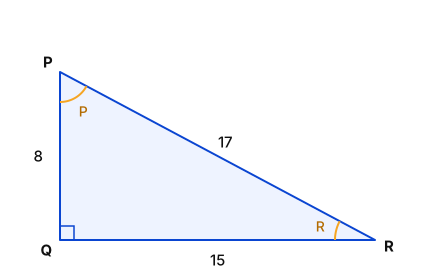
- For ∠R: opposite = PQ = 8, adjacent = QR = 15, hypotenuse = 17.
- , .
- For ∠P: .
- Sum = .
Trick: ; then add → 2.07.
Answer: (A) 2.070
अवधारणा: 8, 15, 17 पाइथागोरस त्रिक है, इसलिए 17 के सामने का कोण ।
- ∠R के लिए: सम्मुख = 8, आसन्न = 15, कर्ण = 17।
- , ।
- ∠P के लिए ।
- योग ≈ ।
ट्रिक: ; इसमें जोड़ें → 2.07।
उत्तर: (A) 2.070
SSC CHSLQuantitative AptitudeTrigonometric ratios in a right triangleSSC CHSL 2025 · 18 Nov Shift 3
Q828.Sonu and Monu together can do a piece of work in 40 days. If Sonu is 30% less efficient than Monu, in how many days can Sonu, working alone, complete 70% of the work ?
सोनू और मोनू मिलकर किसी कार्य को 40 दिनों में पूरा कर सकते हैं। यदि सोनू, मोनू की तुलना में 30% कम कुशल है, तो अकेले कार्य करते हुए सोनू उस कार्य का 70% कितने दिनों में पूरा करेगा?
- A62 days62 दिन
- B65 days65 दिन
- C60 days60 दिन
- D68 days68 दिन
Show answer
Concept: Use efficiency ratio to find total work in units.
- Monu = 10, Sonu = 30% less = 7 units/day.
- Total work = units.
- 70% of work = units.
- Sonu alone: days.
Trick: Sonu alone does full work in days; 70% of it = days.
Answer: (D) 68 days
अवधारणा: दक्षता अनुपात से कुल कार्य इकाइयों में निकालें।
- Monu = 10, Sonu = 7 इकाई/दिन।
- कुल कार्य = इकाई।
- 70% = 476 इकाई; Sonu: दिन।
ट्रिक: दिन।
उत्तर: (D) 68 दिन
SSC CHSLQuantitative AptitudeTime & work – efficiency ratioSSC CHSL 2025 · 18 Nov Shift 3
Q829.The angle subtended by a chord at the center is 90°. Its length is 12 cm. What is the radius?
किसी जीवा द्वारा केंद्र पर अंतरित कोण 90° है। उसकी लंबाई 12 cm है। त्रिज्या क्या है?
- A
- B
- C6 cm
- D12 cm
Show answer
Concept: Two radii and the chord form a right isosceles triangle when the central angle is .
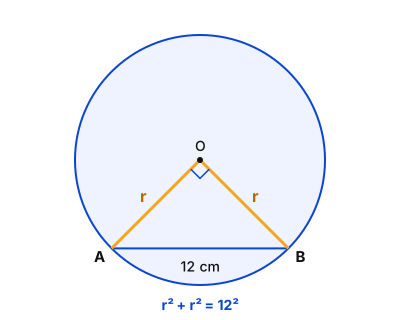
- .
- cm.
Trick: In a 45-45-90 triangle, hypotenuse = .
Answer: (B)
अवधारणा: केंद्रीय कोण हो तो दो त्रिज्याएँ और जीवा समद्विबाहु समकोण त्रिभुज बनाती हैं।
- ।
- cm।
ट्रिक: 45-45-90 त्रिभुज में कर्ण = ।
उत्तर: (B)
SSC CHSLQuantitative AptitudeChord subtending 90° at centreSSC CHSL 2025 · 18 Nov Shift 3
Q830.The length of a chord that is at a distance of 8 cm from the center of a circle of radius 17 cm is:
17 cm त्रिज्या वाले वृत्त के केंद्र से 8 cm की दूरी पर स्थित जीवा की लंबाई है:
- A37 cm
- B34 cm
- C30 cm
- D32 cm
Show answer
Concept: The perpendicular from the centre bisects the chord: half-chord = .
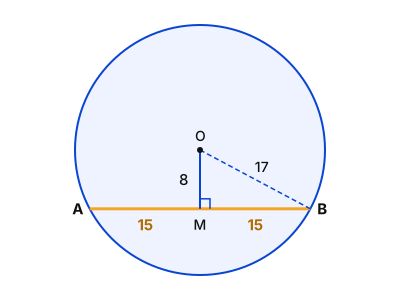
- Half chord = .
- Chord = cm.
Trick: 8-15-17 triplet → half chord 15 instantly, chord 30.
Answer: (C) 30 cm
अवधारणा: केंद्र से डाला गया लंब जीवा को समद्विभाजित करता है: आधी जीवा = ।
- आधी जीवा = ।
- जीवा = cm।
ट्रिक: 8-15-17 त्रिक याद हो तो आधी जीवा तुरंत 15।
उत्तर: (C) 30 cm
SSC CHSLQuantitative AptitudeChord length from distance to centreSSC CHSL 2025 · 18 Nov Shift 3
Q831.The angle subtended by a chord at the center is 100°. The angle between the chord and the tangent at one endpoint is:
किसी जीवा द्वारा केंद्र पर अंतरित कोण 100° है। जीवा तथा उसके एक सिरे पर खींची गई स्पर्श रेखा के बीच का कोण है:
- A30°
- B50°
- C60°
- D65*
Show answer
Concept: Tangent–chord angle = half the angle the chord makes at the centre.
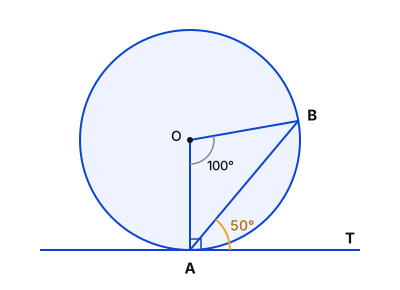
- Central angle = .
- Angle in alternate segment = .
- So tangent–chord angle = .
Trick: Radius ⟂ tangent: base angles of the isosceles triangle = , so .
Answer: (B) 50°
अवधारणा: स्पर्शरेखा-जीवा कोण = जीवा द्वारा केंद्र पर बने कोण का आधा।
- केंद्रीय कोण = ।
- एकांतर वृत्तखंड का कोण = ।
ट्रिक: त्रिज्या ⟂ स्पर्शरेखा: , अतः ।
उत्तर: (B) 50°
SSC CHSLQuantitative AptitudeAngle between tangent and chordSSC CHSL 2025 · 18 Nov Shift 3
Q832.The ratio of curved surface area and total surface area of a cylinder is 3 : 4. If the volume of the cylinder is 3234 , find the curved surface area of the cylinder.
एक बेलन के वक्र पृष्ठीय क्षेत्रफल तथा संपूर्ण पृष्ठीय क्षेत्रफल का अनुपात 3 : 4 है। यदि बेलन का आयतन 3234 है, तो बेलन का वक्र पृष्ठीय क्षेत्रफल ज्ञात कीजिए।
- A
- B
- C
- D
Show answer
Concept: CSA : TSA = .
- .
- Volume = .
- h = 21; CSA = .
Trick: CSA = .
Answer: (A)
अवधारणा: CSA : TSA = ।
- ।
- , h = 21।
- CSA = ।
ट्रिक: CSA = ।
उत्तर: (A)
SSC CHSLQuantitative AptitudeCylinder – CSA from ratio and volumeSSC CHSL 2025 · 18 Nov Shift 3
Q833.A circle is inscribed in touching the sides and PQ at the points and T , respectively. . If the perimeter of is 34 cm , then PR is equal to:
में एक वृत्त इस प्रकार अंतर्निहित है कि वह भुजाओं तथा PQ को क्रमशः बिंदुओं तथा T पर स्पर्श करता है। । यदि का परिमाप 34 cm है, तो PR बराबर है:
- A18 cm
- B14 cm
- C11 cm
- D12 cm
Show answer
Concept: Write all sides in one variable and use the perimeter.
- Let PQ = x → QR = x − 7, PR = x − 4.
- x + (x − 7) + (x − 4) = 34 → 3x = 45 → x = 15.
- PR = 15 − 4 = 11 cm.
Yaad rakhein: The incircle only names the contact points here – it is not needed for the calculation.
Answer: (C) 11 cm
अवधारणा: सभी भुजाएँ एक चर में लिखकर परिमाप का प्रयोग करें।
- PQ = x → QR = x − 7, PR = x − 4।
- 3x − 11 = 34 → x = 15।
- PR = 15 − 4 = 11 cm।
याद रखें: यहाँ अंतःवृत्त की जानकारी गणना में काम नहीं आती।
उत्तर: (C) 11 cm
SSC CHSLQuantitative AptitudeTriangle sides from relations and perimeterSSC CHSL 2025 · 18 Nov Shift 3
Q834.At 8% p.a. simple interest, the simple interest earned by A on his investment for 5 years equals the simple interest earned by B on his investment for 7 years. If B invested ₹ 12,000 less than , what was A's investment (principal)?
8% प्रति वर्ष साधारण ब्याज की दर पर, A द्वारा अपने निवेश पर 5 वर्षों में अर्जित साधारण ब्याज, B द्वारा अपने निवेश पर 7 वर्षों में अर्जित साधारण ब्याज के बराबर है। यदि B ने से ₹ 12,000 कम निवेश किया, तो A का निवेश (मूलधन) कितना था?
- ARs. 44000रु. 44000
- BRs. 40000रु. 40000
- CRs. 42000रु. 42000
- DRs. 48000रु. 48000
Show answer
Concept: Same rate → equal SI means is equal.
- .
- Difference = 2 parts = ₹12,000 → 1 part = ₹6,000.
- A = ₹42,000.
Trick: Principal ratio = inverse of time ratio (7 : 5).
Answer: (C) Rs. 42000
अवधारणा: दर समान हो तो बराबर ब्याज का अर्थ है बराबर।
- → 7 : 5।
- अंतर 2 भाग = ₹12,000 → 1 भाग = ₹6,000।
- A = ₹42,000।
ट्रिक: मूलधन का अनुपात = समय के अनुपात का उलटा।
उत्तर: (C) रु. 42000
SSC CHSLQuantitative AptitudeSimple interest – equal interestSSC CHSL 2025 · 18 Nov Shift 3
Q835.In a partnership, A, B, and C invested Rs 40,000 , Rs 30,000 , and Rs 80,000 respectively. If the total profit is Rs 30,000 , how much will receive?
एक साझेदारी में, A, B और C ने क्रमशः रु. 40,000 , रु. 30,000 और रु. 80,000 का निवेश किया। यदि कुल लाभ रु. 30,000 है, तो को कितना प्राप्त होगा?
- ARs 6,200रु. 6,200
- BRs 6,000रु. 6,000
- CRs 6,500रु. 6,500
- DRs 7,000रु. 7,000
Show answer
Concept: Same time period → profit shared in ratio of investments.
- 40,000 : 30,000 : 80,000 = 4 : 3 : 8 (total 15).
- B = ₹6,000.
Trick: B invested 30,000 out of 1,50,000 = → of 30,000 = 6,000.
Answer: (B) Rs 6,000
अवधारणा: समय समान हो तो लाभ निवेश के अनुपात में बँटता है।
- 4 : 3 : 8 (कुल 15)।
- B = ₹6,000।
ट्रिक: B का निवेश कुल का → लाभ का = ₹6,000।
उत्तर: (B) रु. 6,000
SSC CHSLQuantitative AptitudePartnership – profit shareSSC CHSL 2025 · 18 Nov Shift 3
Q836.Two numbers are in the ratio of 3 : 7. If 14 is added to each number, the new ratio becomes 13 : 17. What is the sum of the original two numbers?
दो संख्याएँ 3 : 7 के अनुपात में हैं। यदि प्रत्येक संख्या में 14 जोड़ दिया जाए, तो नया अनुपात 13 : 17 हो जाता है। मूल दोनों संख्याओं का योग क्या है?
- A14
- B15
- C16
- D18
Show answer
Concept: Take numbers as and and form the new ratio equation.
- .
- .
- Sum = .
Trick: Difference stays same: parts and parts. New 13 − old 3 = 10 parts = 14 → 1 part = 1.4; sum = .
Answer: (A) 14
अवधारणा: संख्याएँ और मानकर नया अनुपात बनाएँ।
- ।
- ।
- योग = ।
ट्रिक: अंतर दोनों में 4 भाग है; भाग = 14 → 1 भाग = 1.4, योग = ।
उत्तर: (A) 14
SSC CHSLQuantitative AptitudeRatio – adding same numberSSC CHSL 2025 · 18 Nov Shift 3
Q837.What is the least value that should be added to 5757 to make it divisible by 7,11 , and 15 ?
5757 में कम से कम कौन-सा मान जोड़ा जाना चाहिए ताकि वह 7, 11 और 15 से विभाज्य हो जाए?
- A13
- B18
- C71
- D153
Show answer
Concept: Number must be a multiple of LCM(7, 11, 15).
- LCM = .
- is the next multiple after 5757.
- Add .
Trick: leaves 1137; add .
Answer: (B) 18
अवधारणा: संख्या LCM(7, 11, 15) का गुणज होनी चाहिए।
- LCM = 1155।
- 5757 के बाद अगला गुणज ।
- जोड़ें ।
ट्रिक: शेषफल 1137; जोड़ना = ।
उत्तर: (B) 18
SSC CHSLQuantitative AptitudeLCM – least number to be addedSSC CHSL 2025 · 18 Nov Shift 3
Q838.The sum of two numbers is 104 and their HCF is 13. If the ratio of their LCM to their HCF is 7 : 1, what are the two numbers?
दो संख्याओं का योग 104 है तथा उनका म.स. 13 है। यदि उनके ल.स. और म.स. का अनुपात 7 : 1 है, तो वे दोनों संख्याएँ क्या हैं?
- A38 and 6638 और 66
- B13 and 9113 और 91
- C26 and 7826 और 78
- D39 and 6539 और 65
Show answer
Concept: Numbers = , with a, b co-prime; .
- , .
- Numbers = 13 and 91; sum = 104 ✔.
Trick: Check options: both numbers must be multiples of 13 with sum 104 and LCM = – only 13 and 91 fit.
Answer: (B) 13 and 91
अवधारणा: संख्याएँ , (a, b सह-अभाज्य); ।
- , ।
- संख्याएँ 13 और 91; योग 104 ✔।
ट्रिक: 26 और 78 का LCM 78 है (91 नहीं) – इसलिए केवल 13, 91 सही।
उत्तर: (B) 13 और 91
SSC CHSLQuantitative AptitudeHCF & LCM – find the numbersSSC CHSL 2025 · 18 Nov Shift 3
Q839.The average of 20 numbers is 55 . If each number is decreased by 8, what will be the new average?
20 संख्याओं का औसत 55 है। यदि प्रत्येक संख्या में से 8 घटा दिया जाए, तो नया औसत क्या होगा?
- A48
- B47
- C46
- D44
Show answer
Concept: Subtracting the same value from every number lowers the average by that value.
- New average = 55 − 8 = 47.
Trick: Count of numbers (20) does not matter here.
Answer: (B) 47
अवधारणा: हर संख्या से समान मान घटाने पर औसत भी उतना ही घटता है।
- नया औसत = 55 − 8 = 47।
ट्रिक: यहाँ संख्याओं की गिनती (20) का कोई उपयोग नहीं।
उत्तर: (B) 47
SSC CHSLQuantitative AptitudeAverage – same change to allSSC CHSL 2025 · 18 Nov Shift 3
Q840.The average salary of employees in a company is ₹30,000. If a new employee with a salary of ₹60,000 joins, the average increases by ₹300. Find the number of employees originally in the company.
एक कंपनी में कर्मचारियों का औसत वेतन ₹30,000 है। यदि ₹60,000 वेतन वाला एक नया कर्मचारी शामिल होता है, तो औसत ₹300 बढ़ जाता है। कंपनी में मूल रूप से कर्मचारियों की संख्या ज्ञात कीजिए।
- A99
- B95
- C90
- D89
Show answer
Concept: .
- Newcomer's extra over old average = .
- This spreads as ₹300 to everyone: .
- .
Trick: → ; original = 99.
Answer: (A) 99
अवधारणा: ।
- अतिरिक्त = ।
- ।
- ।
ट्रिक: (नई संख्या) → पहले 99।
उत्तर: (A) 99
SSC CHSLQuantitative AptitudeAverage – new member joinsSSC CHSL 2025 · 18 Nov Shift 3

