Q861.A bike is chasing a car, which is 24 km ahead of it. The speeds of the bike and the car are and , respectively. If the bike catches the car in ' ' minutes, then find the distance covered by the bike in ( ) minute.
एक बाइक एक कार का पीछा कर रही है, जो उससे 24 km आगे है। बाइक और कार की चालें क्रमशः और हैं। यदि बाइक कार को ' ' मिनट में पकड़ लेती है, तो ( ) मिनट में बाइक द्वारा तय की गई दूरी ज्ञात कीजिए।
- A25 km
- B24 km
- C27 km
- D22 km
Show answer
Concept: Same direction: relative speed = difference of speeds.
- Relative speed = km/h; gap 24 km.
- h = 32 min ⇒ min.
- Bike's distance = km ≈ 27 km.
Trick: Minutes from hours: .
Answer: (C) 27 km
अवधारणा: एक ही दिशा: सापेक्ष चाल = चालों का अंतर।
- सापेक्ष चाल = km/h; दूरी 24 km।
- घंटा = 32 मिनट ⇒ मिनट।
- बाइक की दूरी = km।
ट्रिक: मिनट।
उत्तर: (C) 27 km
SSC CHSLQuantitative AptitudeRelative speed – chaseSSC CHSL 2025 · 18 Nov Shift 2
Q862.If and ,
then find .
यदि तथा हो,
तो का मान ज्ञात कीजिए।
- A36
- B56
- C35
- D25
Show answer
Concept: .
- , .
- .
Trick: Cross terms cancel – just double the sum of the squares.
Answer: (A) 36
अवधारणा: ।
- , ।
- ।
ट्रिक: वाले पद कट जाते हैं – वर्गों के योग का दोगुना करें।
उत्तर: (A) 36
SSC CHSLQuantitative AptitudeSurds – x² + y²SSC CHSL 2025 · 18 Nov Shift 2
Q863.If and , find the value of .
यदि तथा हो, तो का मान ज्ञात कीजिए।
- A
- B
- C
- DNone of theseइनमें से कोई नहीं
Show answer
Concept: Add and subtract the surds; the or terms cancel.
- , , .
- .
- No option equals this (even the product is not listed).
Trick: Convert options to decimals and compare with – none matches.
Answer: (D) None of these
अवधारणा: जोड़ने-घटाने पर एक-एक करणी कट जाती है।
- , ।
- ।
- कोई विकल्प इसके बराबर नहीं (गुणनफल भी नहीं दिया)।
ट्रिक: विकल्पों के दशमलव मान से मिलाएँ – कोई मेल नहीं।
उत्तर: (D) इनमें से कोई नहीं
SSC CHSLQuantitative AptitudeSurds – (a + b)/(a − b)SSC CHSL 2025 · 18 Nov Shift 2
Q864.A rectangular tile having a perimeter of 288 cm has been used to pave a floor of length and breadth 25.6 m and 14.4 m , respectively. If the ratio of length to breadth of each tile is , then find the number of tiles required to pave the floor completely.
288 cm परिमाप वाली एक आयताकार टाइल का उपयोग क्रमशः 25.6 m लंबाई तथा 14.4 m चौड़ाई वाले फर्श पर टाइल लगाने में किया गया है। यदि प्रत्येक टाइल की लंबाई तथा चौड़ाई का अनुपात है, तो फर्श को पूर्णतः ढकने के लिए आवश्यक टाइलों की संख्या ज्ञात कीजिए।
- A720
- B605
- C714
- D654
Show answer
Concept: (same units).
- Tile: .
- Floor = .
- Tiles = .
Trick: Divide lengths separately instead of multiplying big areas.
Answer: (A) 720
अवधारणा: ।
- टाइल: ।
- फर्श = ।
- टाइलें = ।
ट्रिक: बड़े क्षेत्रफल गुणा करने के बजाय लंबाई-चौड़ाई अलग-अलग भाग दें।
उत्तर: (A) 720
SSC CHSLQuantitative AptitudeArea – number of tilesSSC CHSL 2025 · 18 Nov Shift 2
Q865.A rectangle has one side of 9 cm , and its diagonal is 15 cm . Find the other side and the area.
एक आयत की एक भुजा 9 cm है तथा उसका विकर्ण 15 cm है। दूसरी भुजा तथा क्षेत्रफल ज्ञात कीजिए।
- A11 cm and 11 cm तथा
- B12 cm and 12 cm तथा
- C11 cm and 11 cm तथा
- D12 cm and 12 cm तथा
Show answer
Concept: Sides and diagonal form a right triangle: .
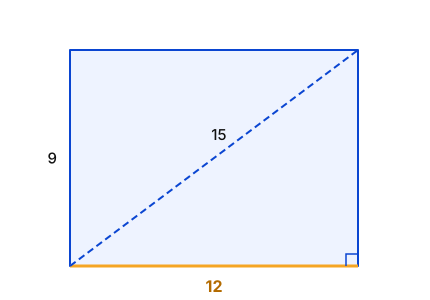
- Other side = cm.
- Area = cm².
Trick: 9-12-15 is 3 × (3-4-5) triplet – no calculation needed.
Answer: (B) 12 cm and
अवधारणा: भुजाएँ और विकर्ण समकोण त्रिभुज बनाते हैं: ।
- दूसरी भुजा = cm।
- क्षेत्रफल = cm²।
ट्रिक: 9-12-15 = 3 × (3-4-5) त्रिक – सीधे 12।
उत्तर: (B) 12 cm तथा
SSC CHSLQuantitative AptitudeRectangle – diagonalSSC CHSL 2025 · 18 Nov Shift 2
Q866.The average of 7 consecutive even numbers is 50 . If the next 5 consecutive even numbers are added, what is the new average?
7 क्रमागत सम संख्याओं का औसत 50 है। यदि अगली 5 क्रमागत सम संख्याएँ भी जोड़ दी जाएँ, तो नया औसत क्या होगा?
- A45
- B54
- C50
- D55
Show answer
Concept: For equally spaced numbers, average = middle term.
- 7 numbers, average 50 ⇒ 44 to 56; sum = 350.
- Next 5: 58, 60, 62, 64, 66; sum = .
- New average = .
Trick: All 12 numbers run 44 to 66 → average = .
Answer: (D) 55
अवधारणा: समान अंतर वाली संख्याओं का औसत = बीच वाला पद।
- 7 संख्याएँ, औसत 50 ⇒ 44 से 56; योग = 350।
- अगली 5: 58 से 66; योग = ।
- नया औसत = ।
ट्रिक: सभी 12 संख्याएँ 44 से 66 → औसत = ।
उत्तर: (D) 55
SSC CHSLQuantitative AptitudeAverage – consecutive even numbersSSC CHSL 2025 · 18 Nov Shift 2
Q867.A population falls by 15% in the first year. By what percentage must it increase in the second year so that at the end of the second year the population is exactly the same as the original?
किसी जनसंख्या में पहले वर्ष 15% की कमी होती है। दूसरे वर्ष में उसमें कितने प्रतिशत की वृद्धि होनी चाहिए ताकि दूसरे वर्ष के अंत में जनसंख्या ठीक मूल जनसंख्या के बराबर हो जाए?
- A10.6 %
- B
- C13.6 %
- D15.6 %
Show answer
Concept: Required increase = .
- 100 → 85 after a 15% fall.
- Needed rise = 15 on base 85 = .
Trick: Formula: .
Answer: (B)
अवधारणा: आवश्यक वृद्धि = ।
- 15% कमी से 100 → 85।
- आवश्यक वृद्धि = ।
ट्रिक: सूत्र: ।
उत्तर: (B)
SSC CHSLQuantitative AptitudePercentage – restoring after a fallSSC CHSL 2025 · 18 Nov Shift 2
Q868.A shopkeeper marks up his goods by 20% and then offers a discount of . If the cost price is ₹600, what is the selling price?
एक दुकानदार अपने सामान पर 20% का अंकित मूल्य बढ़ाता है और फिर की छूट देता है। यदि क्रय मूल्य ₹600 है, तो विक्रय मूल्य क्या होगा?
- A₹634
- B₹648
- C₹643
- D₹639
Show answer
Concept: Markup is on CP; discount is on MP.
- MP = ₹720.
- SP = ₹648.
Trick: Net effect: gain → .
Answer: (B) ₹648
अवधारणा: Markup CP पर, छूट MP पर।
- MP = ₹720।
- SP = ₹648।
ट्रिक: शुद्ध प्रभाव: लाभ → ।
उत्तर: (B) ₹648
SSC CHSLQuantitative AptitudeMarkup and discountSSC CHSL 2025 · 18 Nov Shift 2
Q869.A sum of money becomes 25 times in 2 years. What is the annual compound interest rate?
कोई धनराशि 2 वर्षों में 25 गुनी हो जाती है। वार्षिक चक्रवृद्धि ब्याज की दर क्या है?
- A100%
- B
- C300%
- D
Show answer
Concept: .
- .
- .
Trick: Growth factor per year = times → rise of 4 times = 400%.
Answer: (D)
अवधारणा: ।
- ।
- ।
ट्रिक: हर वर्ष गुणक = गुना → 4 गुना वृद्धि = 400%।
उत्तर: (D)
SSC CHSLQuantitative AptitudeCompound interest – rate from growthSSC CHSL 2025 · 18 Nov Shift 2
Q870.A car starts 40 minutes late and in order to reach its destination 160 km away on time, it increases its speed by .What is the normal speed of the bus?
एक कार 40 मिनट देर से चलती है और 160 km दूर स्थित अपने गंतव्य पर समय से पहुँचने के लिए वह अपनी चाल बढ़ा देती है। बस की सामान्य चाल क्या है?
- A
- B65 km/h
- C70 km/h
- D75 km/h
Show answer
Concept: Time at normal speed − time at faster speed = .
- .
- ⇒ ⇒ .
- km/h.
Trick: Test options: ✔.
Answer: (A)
अवधारणा: सामान्य चाल का समय − बढ़ी चाल का समय = ।
- ।
- ⇒ ।
- km/h।
ट्रिक: विकल्प जाँचें: ✔।
उत्तर: (A)
SSC CHSLQuantitative AptitudeSpeed – late startSSC CHSL 2025 · 18 Nov Shift 2
Q871.In a football tournament, Team A had a winning percentage of after playing matches. After losing 10 matches consecutively, their winning percentage dropped to . Find the number of matches played before the losing streak.
एक फुटबॉल टूर्नामेंट में टीम A का जीत प्रतिशत था, जब उसने मैच खेले थे। लगातार 10 मैच हारने के बाद उनका जीत प्रतिशत घटकर रह गया। हार के इस क्रम से पहले खेले गए मैचों की संख्या ज्ञात कीजिए।
- A20
- B50
- C30
- D40
Show answer
Concept: Wins stay the same during a losing streak.
- Wins .
- .
- Check: , ✔.
Trick: Test options: only 50 gives wins 30 = half of 60.
Answer: (B) 50
अवधारणा: हार की लड़ी में जीतें उतनी ही रहती हैं।
- जीत ।
- ।
- जाँच: , ✔।
ट्रिक: विकल्प से: 50 मैच में 30 जीत, 60 का आधा = 30 ✔।
उत्तर: (B) 50
SSC CHSLQuantitative AptitudePercentage – winning recordSSC CHSL 2025 · 18 Nov Shift 2
Q872.A and B together can complete a job in 9 days. If A alone can do it in 18 days, how many days will B alone take?
A और B मिलकर एक कार्य को 9 दिनों में पूरा कर सकते हैं। यदि A अकेला इसे 18 दिनों में कर सकता है, तो B अकेला कितने दिनों में इसे पूरा करेगा?
- A18 days18 दिन
- B16 days16 दिन
- C12 days12 दिन
- D15 days15 दिन
Show answer
Concept: B's 1-day work = (A + B)'s − A's.
- .
- B alone takes 18 days.
Trick: .
Answer: (A) 18 days
अवधारणा: B का 1 दिन का कार्य = (A + B) का − A का।
- ।
- B अकेले 18 दिन लेगा।
ट्रिक: ।
उत्तर: (A) 18 दिन
SSC CHSLQuantitative AptitudeTime & work – one person's timeSSC CHSL 2025 · 18 Nov Shift 2
Q873.If the original price of the items is ₹3,060 and the discount is 36%, what will be the final price after the discount?
यदि वस्तुओं का मूल मूल्य ₹3,060 है तथा छूट 36% है, तो छूट के बाद अंतिम मूल्य क्या होगा?
- A₹1,505.4
- B₹1,652.4
- C₹1,958.4
- D₹1,713.4
Show answer
Concept: Price after d% discount = .
- .
- .
Trick: → about 2040; nearest option above 1900 is ₹1,958.4.
Answer: (C) ₹1,958.4
अवधारणा: d% छूट के बाद मूल्य = ।
- ।
- ।
ट्रिक: लगभग → लगभग 2000; केवल ₹1,958.4 उसके पास है।
उत्तर: (C) ₹1,958.4
SSC CHSLQuantitative AptitudeDiscount – final priceSSC CHSL 2025 · 18 Nov Shift 2
Q874.A farmer wants to fence a triangular field with sides , and 132 m . If the cost of fencing is ₹19 per meter, what will be the total expense?
एक किसान तथा 132 m भुजाओं वाले त्रिभुजाकार खेत के चारों ओर बाड़ लगाना चाहता है। यदि बाड़ लगाने की लागत ₹19 प्रति मीटर है, तो कुल व्यय क्या होगा?
- A₹5,833
- B₹5,000
- C₹5,982
- D₹5,412
Show answer
Concept: Fencing length = perimeter.
- Perimeter = m.
- Cost = ₹5,833.
Trick: Unit digit: → ends in 3; only ₹5,833 fits.
Answer: (A) ₹5,833
अवधारणा: बाड़ की लंबाई = परिमाप।
- परिमाप = m।
- खर्च = ₹5,833।
ट्रिक: इकाई अंक: → 3; केवल ₹5,833।
उत्तर: (A) ₹5,833
SSC CHSLQuantitative AptitudePerimeter – cost of fencingSSC CHSL 2025 · 18 Nov Shift 2
Q875.A wire of length 480 metres is cut into three pieces in the ratio . What are the lengths of the three pieces?
480 मीटर लंबे एक तार को के अनुपात में तीन टुकड़ों में काटा जाता है। तीनों टुकड़ों की लंबाइयाँ क्या हैं?
- A60 m, 150 m, 270 m
- B110 m, 150 m, 220 m
- C
- D
Show answer
Concept: Pieces = 2x, 5x, 9x; total = 16x.
- 16x = 480 ⇒ x = 30.
- Pieces = 60 m, 150 m, 270 m.
Trick: Check the sum quickly: 60 + 150 + 270 = 480 and ratio 2 : 5 : 9 – only (A) passes both.
Answer: (A) 60 m, 150 m, 270 m
अवधारणा: टुकड़े = 2x, 5x, 9x; कुल लंबाई = 16x।
- 16x = 480 ⇒ x = 30।
- टुकड़े = 60 m, 150 m, 270 m।
ट्रिक: योग 480 और अनुपात 2 : 5 : 9 – दोनों शर्तें केवल (A) पूरी करता है।
उत्तर: (A) 60 m, 150 m, 270 m
SSC CHSLQuantitative AptitudeRatio – dividing a lengthSSC CHSL 2025 · 18 Nov Shift 2
Q876.The intersection of Natural numbers and Whole numbers is:
प्राकृत संख्याओं तथा पूर्ण संख्याओं का सर्वनिष्ठ (प्रतिच्छेदन) है:
- ANaturalप्राकृत
- BWholeपूर्ण
- CIntegersपूर्णांक
- DEmptyरिक्त
Show answer
Concept: Intersection = elements common to both sets.
- N = {1, 2, 3, …}; W = {0, 1, 2, 3, …}.
- N is a subset of W (W only adds 0).
- Common part = N itself → Natural numbers.
Trick: If A ⊂ B, then A ∩ B = A (smaller set) and A ∪ B = B (bigger set).
Answer: (A) Natural
अवधारणा: Intersection = दोनों समुच्चयों के उभयनिष्ठ अवयव।
- N = {1, 2, 3, …}; W = {0, 1, 2, 3, …}।
- N, W का उपसमुच्चय है (W में केवल 0 अतिरिक्त)।
- उभयनिष्ठ भाग = N → प्राकृत संख्याएँ।
ट्रिक: A ⊂ B हो तो A ∩ B = A (छोटा समुच्चय) और A ∪ B = B (बड़ा समुच्चय)।
उत्तर: (A) प्राकृत
SSC CHSLQuantitative AptitudeNumber sets – N ∩ WSSC CHSL 2025 · 18 Nov Shift 1
Q877.Which number is NOT real ?
कौन-सी संख्या वास्तविक नहीं है?
- A
- B
- C
- D
Show answer
Concept: The square root of a negative number is not real (it is imaginary).
- , and are irrational but still real.
- : no real number squared gives → (imaginary).
- So the non-real number is .
Trick: Minus sign inside the √ → not real; minus sign outside the √ → still real.
Answer: (B)
अवधारणा: ऋणात्मक संख्या का वर्गमूल वास्तविक नहीं होता (काल्पनिक होता है)।
- , और अपरिमेय हैं, पर वास्तविक हैं।
- : किसी वास्तविक संख्या का वर्ग नहीं होता → (काल्पनिक)।
- अतः अवास्तविक संख्या है।
ट्रिक: √ के अंदर ऋण चिह्न → अवास्तविक; √ के बाहर ऋण → वास्तविक।
उत्तर: (B)
SSC CHSLQuantitative AptitudeReal vs non-real numbersSSC CHSL 2025 · 18 Nov Shift 1
Q878.The number of irrational numbers between any two rational numbers is:
किन्हीं दो परिमेय संख्याओं के बीच अपरिमेय संख्याओं की संख्या होती है:
- A0
- B1
- CFiniteपरिमित
- DInfiniteअनंत
Show answer
Concept: Between any two distinct real numbers lie infinitely many rationals and irrationals.
- Example: between 1 and 2 → , , , , …
- Such numbers can be produced endlessly → infinite.
Yaad rakhein: The real number line has no gaps: rationals and irrationals are both 'dense'.
Answer: (D) Infinite
अवधारणा: किन्हीं दो भिन्न वास्तविक संख्याओं के बीच अनंत परिमेय और अपरिमेय संख्याएँ होती हैं।
- उदाहरण: 1 और 2 के बीच → , , , , …
- ऐसी संख्याएँ लगातार बनाई जा सकती हैं → अनंत।
याद रखें: संख्या रेखा पर कोई खाली जगह नहीं — परिमेय और अपरिमेय दोनों 'सघन' हैं।
उत्तर: (D) अनंत
SSC CHSLQuantitative AptitudeDensity of irrational numbersSSC CHSL 2025 · 18 Nov Shift 1
Q879.In triangle ABC, two medians, AE and BF, intersect each other at 0 at right angles. If and , then find the length of .
त्रिभुज ABC में, दो माध्यिकाएँ AE तथा BF एक-दूसरे को O पर समकोण पर प्रतिच्छेद करती हैं। यदि तथा हो, तो की लंबाई ज्ञात कीजिए।
- A
- B
- C
- D
Show answer
Concept: Centroid divides each median from the vertex.
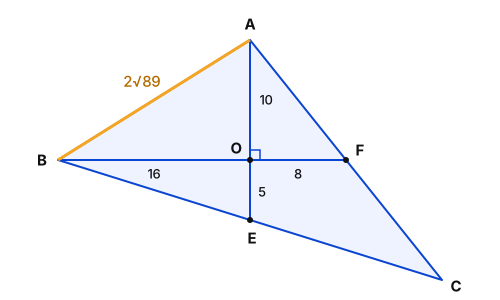
- cm; cm.
- → .
- = cm.
Trick: Take of both medians first, then apply Pythagoras on the two vertex parts.
Answer: (A)
अवधारणा: केन्द्रक प्रत्येक माध्यिका को शीर्ष से में बाँटता है।
- cm; cm।
- → ।
- = cm।
ट्रिक: पहले दोनों माध्यिकाओं का लें, फिर पाइथागोरस लगाएँ।
उत्तर: (A)
SSC CHSLQuantitative AptitudeMedians at right angles – centroidSSC CHSL 2025 · 18 Nov Shift 1
Q880.If 18 men can do a piece of work in 25 days, the time taken by 15 men to do the same piece of work will be:
यदि 18 पुरुष किसी कार्य को 25 दिनों में कर सकते हैं, तो उसी कार्य को 15 पुरुषों द्वारा करने में लगने वाला समय होगा:
- A25 days25 दिन
- B28 days28 दिन
- C26 days26 दिन
- D30 days30 दिन
Show answer
Concept: for the same work.
- Work = man-days.
- Days for 15 men = = 30 days.
Trick: Days = (fewer men → bigger fraction).
Answer: (D) 30 days
अवधारणा: एक ही काम के लिए ।
- कुल काम = मानव-दिवस।
- 15 व्यक्तियों को दिन = = 30 दिन।
ट्रिक: दिन = (कम व्यक्ति → बड़ा भिन्न)।
उत्तर: (D) 30 दिन
SSC CHSLQuantitative AptitudeMen and days – inverse proportionSSC CHSL 2025 · 18 Nov Shift 1

