Q81.Find the next element that replace the ? Logically
2, 14, 62, 254, ?
उस अगले पद को ज्ञात कीजिए जो तार्किक रूप से प्रश्नवाचक चिह्न (?) का स्थान लेगा।
2, 14, 62, 254, ?
- A1014
- B1006
- C1022
- D998
Show answer
Concept: Differences grow in a ×4 pattern.
- Differences: 12, 48, 192 – each is 4 times the previous.
- Next difference = .
- Next term = 1022 (same as ).
Trick: Terms grow about 4 times → try ×4 and see what is left over (+6 each time).
Answer: (C) 1022
अवधारणा: अंतर ×4 के पैटर्न में बढ़ते हैं।
हल:
- अंतर: 12, 48, 192 – हर अंतर पिछले का 4 गुना।
- अगला अंतर = ।
- अगला पद = 1022।
ट्रिक: पद लगभग 4 गुना बढ़ रहे हैं → ×4 करके बचा अंतर (+6) देखें।
उत्तर: (C) 1022
SSC CHSLGeneral IntelligenceNumber series – ×4 + 6SSC CHSL 2025 · 29 Nov Shift 3
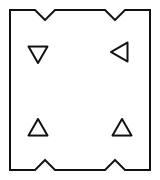
Q82.A piece of paper is folded and punched as shown below in the question figures. From the given option figures, indicate how it will appear when opened.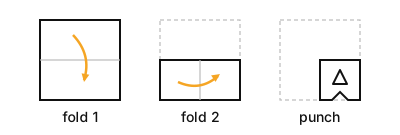
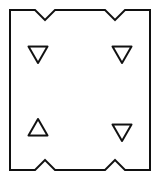
एक कागज़ के टुकड़े को नीचे प्रश्न-आकृतियों में दर्शाए अनुसार मोड़ा और पंच किया गया है। दी गई विकल्प-आकृतियों में से बताइए कि खोलने पर वह कैसा दिखाई देगा। - A
- B
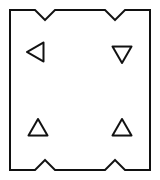
- C
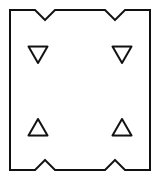
- D
Show answer
Concept: Unfold step by step; each unfold mirrors cuts across the fold line.
- Two folds leave one quarter; it has a triangle cut and an edge notch.
- Opening the vertical fold copies them to the side quarter (triangle still points the same way).
- Opening the horizontal fold flips them to the other half – triangles point the opposite way, notches appear on the opposite edge.
- Final sheet: 4 triangles + 4 notches in mirror pairs – option C.
Trick: Mirror across a horizontal line flips up↔down; across a vertical line flips left↔right only.
Answer: (C) Figure (C)
अवधारणा: उल्टे क्रम में खोलें; हर बार कटाव fold-रेखा के पार दर्पण-प्रतिबिंब बनता है।
हल:
- दो बार मोड़ने पर एक चौथाई बचता है, जिस पर एक त्रिभुज छेद और किनारे पर notch है।
- खड़ी fold खोलने पर ये बगल वाले भाग में बनते हैं।
- क्षैतिज fold खोलने पर दूसरे आधे में उलटे बनते हैं – त्रिभुज की दिशा उलट जाती है।
- कुल 4 त्रिभुज + 4 notch – विकल्प C।
ट्रिक: क्षैतिज रेखा पर दर्पण: ऊपर↔नीचे; खड़ी रेखा पर: बाएँ↔दाएँ।
उत्तर: (C) आकृति (C)
SSC CHSLGeneral IntelligencePaper folding and punchingSSC CHSL 2025 · 29 Nov Shift 3
Q83.A piece of paper is folded and punched as shown below in the question figures. From the given option figures, indicate how it will appear when opened.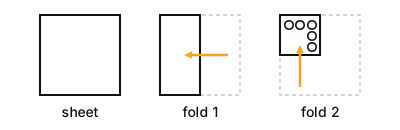
एक कागज़ के टुकड़े को नीचे प्रश्न-आकृतियों में दर्शाए अनुसार मोड़ा और पंच किया गया है। दी गई विकल्प-आकृतियों में से बताइए कि खोलने पर वह कैसा दिखाई देगा। - A
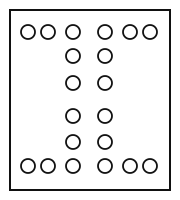
- B
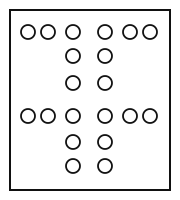
- C
- D
Show answer
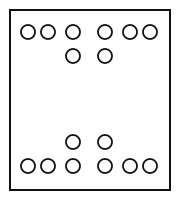
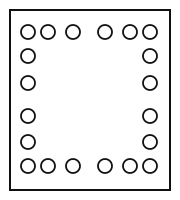
Concept: Each unfold doubles the holes as a mirror image.
- After two folds one quarter carries 5 holes.
- Unfolding once → 10 holes; unfolding again → 20 holes.
- Holes form a symmetric pattern about both fold lines – only option A matches.
Trick: Holes in final sheet = holes punched × 2number of folds (if no hole lies on a fold line).
Answer: (A) Figure (A)
अवधारणा: हर बार खोलने पर छेद दर्पण-रूप में दोगुने होते हैं।
हल:
- दो fold के बाद एक चौथाई में 5 छेद।
- एक बार खोलें → 10, दोबारा → 20 छेद।
- दोनों fold रेखाओं के सापेक्ष सममित पैटर्न केवल A में।
ट्रिक: कुल छेद = किए गए छेद × 2fold की संख्या (यदि छेद fold रेखा पर न हो)।
उत्तर: (A) आकृति (A)
SSC CHSLGeneral IntelligencePaper folding and punchingSSC CHSL 2025 · 29 Nov Shift 3
Q84.Identify the next number.
5, 11, 19, 29, 41, ?
अगली संख्या पहचानिए।
5, 11, 19, 29, 41, ?
- A55
- B53
- C51
- D49
Show answer
Concept: Second-level differences are constant.
- Differences: 6, 8, 10, 12.
- Next difference = 14.
- 55.
Trick: Terms are for n = 2,3,4…: .
Answer: (A) 55
अवधारणा: अंतरों का अंतर स्थिर है।
हल:
- अंतर: 6, 8, 10, 12।
- अगला अंतर = 14।
- 55।
ट्रिक: पद = (n = 2,3,4…): ।
उत्तर: (A) 55
SSC CHSLGeneral IntelligenceNumber series – differences rise by 2SSC CHSL 2025 · 29 Nov Shift 3
Q85.In the following question, select the number which can be placed at the sign of question mark (?) from the given alternatives.
निम्नलिखित प्रश्न में, दिए गए विकल्पों में से वह संख्या चुनिए जिसे प्रश्नवाचक चिह्न (?) के स्थान पर रखा जा सकता है।
- A6
- B5
- C4
- D2
Show answer
Concept: Find the rule from the complete rows/sections and apply it to the incomplete one.
- Test simple operations (+, −, ×, ÷) on each complete row until one rule fits all.
- Apply that same rule to the row containing '?'.
- The value obtained is 2.
Yaad rakhein: Always verify the rule on at least two complete rows before applying it.
Answer: (D) 2
अवधारणा: पूर्ण पंक्तियों से नियम निकालकर अपूर्ण पंक्ति पर लगाएँ।
हल:
- हर पूर्ण पंक्ति पर +, −, ×, ÷ आज़माएँ जब तक एक नियम सब पर लागू न हो।
- वही नियम '?' वाली पंक्ति पर लगाएँ।
- प्राप्त मान = 2।
याद रखें: नियम कम से कम दो पूर्ण पंक्तियों पर जाँचकर ही लगाएँ।
उत्तर: (D) 2
SSC CHSLGeneral IntelligenceMissing number – figure basedSSC CHSL 2025 · 29 Nov Shift 3
Q86.Find the number of triangles in the given figure.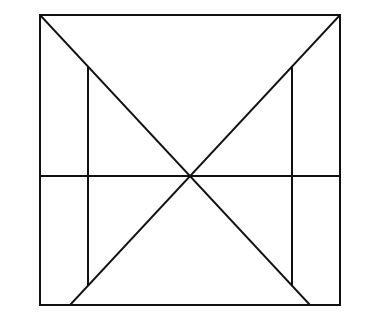
दी गई आकृति में त्रिभुजों की संख्या ज्ञात कीजिए। - A14
- B10
- C8
- D12
Show answer
Concept: Count in groups by size so nothing is missed.
- Smallest triangles around the centre between the horizontal, slant and vertical lines: 4.
- Centre triangles cut by a vertical line on each side: 2; top and bottom triangles at the crossing point: 2.
- Corner triangles on the left and right sides of the centre: 2; large triangles each using a full slant line: 2.
- Total = 4 + 2 + 2 + 2 + 2 = 12.
Trick: Label all points, then count 1-part, 2-part, larger triangles in order – avoids double counting.
Answer: (D) 12
अवधारणा: आकार के अनुसार समूह बनाकर गिनें।
हल:
- केंद्र के पास सबसे छोटे त्रिभुज: 4।
- vertical रेखा से बने केंद्र के त्रिभुज: 2; ऊपर व नीचे के त्रिभुज: 2।
- बाएँ-दाएँ किनारे वाले: 2; पूरी तिरछी रेखा वाले बड़े त्रिभुज: 2।
- कुल = 4 + 2 + 2 + 2 + 2 = 12।
ट्रिक: बिंदुओं को नाम दें, फिर छोटे से बड़े क्रम में गिनें – दोहराव नहीं होगा।
उत्तर: (D) 12
SSC CHSLGeneral IntelligenceCounting trianglesSSC CHSL 2025 · 29 Nov Shift 3
Q87.In the figure given below the square represents the car, the triangle represents the bus and the circle represents the train. The number in each area represents the number of items in that area.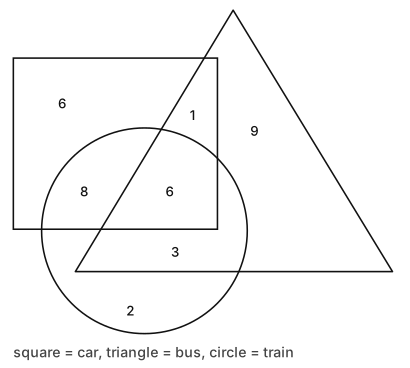
Which of the following statement is NOT correct?
I. Number of Car which are bus are 7 .
II. Total number of train are 21.
नीचे दी गई आकृति में वर्ग कार को, त्रिभुज बस को तथा वृत्त ट्रेन को दर्शाता है। प्रत्येक क्षेत्र में लिखी संख्या उस क्षेत्र की वस्तुओं की संख्या दर्शाती है।निम्नलिखित में से कौन-सा कथन सही नहीं है?
I. ऐसी कारों की संख्या जो बसें भी हैं, 7 है।
II. ट्रेनों की कुल संख्या 21 है।
- AOnly IIकेवल II
- BOnly Iकेवल I
- CBoth I and III और II दोनों
- DNeither I nor IIन तो I और न ही II
Show answer
Concept: Add only the regions lying in the required shapes.
- Car AND bus = square ∩ triangle = 1 + 6 = 7 → statement I true.
- All trains = whole circle = 8 + 6 + 3 + 2 = 19, not 21 → statement II false.
- So only II is NOT correct.
Trick: For 'total of X', add every number inside that shape – including overlaps.
Answer: (A) Only II
अवधारणा: जिस आकृति में पूछा है, उसके सभी क्षेत्र जोड़ें।
हल:
- Car और bus दोनों = वर्ग ∩ त्रिभुज = 1 + 6 = 7 → कथन I सही।
- कुल train = पूरा वृत्त = 8 + 6 + 3 + 2 = 19, 21 नहीं → कथन II गलत।
- अतः केवल II सही नहीं है।
ट्रिक: 'कुल X' के लिए उस आकृति के भीतर की हर संख्या जोड़ें – overlap भी।
उत्तर: (A) केवल II
SSC CHSLGeneral IntelligenceVenn diagram – reading regionsSSC CHSL 2025 · 29 Nov Shift 3
Q88.Sales of 5 bikes and T are compared. Sales of no two bikes are equal. Sales of Q is less than only P. Sales of S is less than R but more than T. If sales of R is 450, then what is the possible value of sales of ?
5 बाइकों $P,Q,R,S$ और T की बिक्री की तुलना की जाती है। किन्हीं दो बाइकों की बिक्री समान नहीं है। Q की बिक्री केवल P से कम है। S की बिक्री R से कम है परंतु T से अधिक है। यदि R की बिक्री 450 है, तो $P$ की बिक्री का संभावित मान क्या है?
- A460
- B440
- C430
- D445
Show answer
Concept: Build the full order from the clues.
- 'Q is less than only P' → P first, Q second.
- R > S > T, all below Q.
- Order: P > Q > R(450) > S > T → P must be above 450.
- Only 460 is more than 450.
Trick: Once you know P > R, just pick the only option larger than R's value.
Answer: (A) 460
अवधारणा: संकेतों से पूरा क्रम बनाएँ।
हल:
- 'Q केवल P से कम' → P पहले, Q दूसरे।
- R > S > T, सभी Q से नीचे।
- क्रम: P > Q > R(450) > S > T → P, 450 से अधिक।
- केवल 460 450 से बड़ा है।
ट्रिक: P > R पता चलते ही R से बड़ा एकमात्र विकल्प चुन लें।
उत्तर: (A) 460
SSC CHSLGeneral IntelligenceOrdering – comparison of salesSSC CHSL 2025 · 29 Nov Shift 3
Q89.There are 6 flats on a floor in two rows (three in each row opposite to each other). Flats of one row are facing north. Flats of other row are facing south. These flats are alloted to P, Q, R, S, T and U. S and U get diagonally opposite flats. U's flat is next to R's flat. R gets a South facing flat. The direction in which the flats of Q and T are facing is same. Q's flat is not next to S. Which of the following pair represents people having flats opposite to each other ?
एक मंजिल पर दो पंक्तियों में 6 फ्लैट हैं (प्रत्येक पंक्ति में तीन, एक-दूसरे के सामने)। एक पंक्ति के फ्लैट उत्तर की ओर उन्मुख हैं। दूसरी पंक्ति के फ्लैट दक्षिण की ओर उन्मुख हैं। ये फ्लैट P, Q, R, S, T और U को आवंटित किए गए हैं। S और U को विकर्णतः विपरीत फ्लैट मिलते हैं। U का फ्लैट R के फ्लैट के बगल में है। R को दक्षिणमुखी फ्लैट मिलता है। Q और T के फ्लैट जिस दिशा की ओर उन्मुख हैं, वह समान है। Q का फ्लैट S के बगल में नहीं है। निम्नलिखित में से कौन-सा युग्म उन व्यक्तियों को दर्शाता है जिनके फ्लैट एक-दूसरे के सामने हैं?
- AUR
- BUT
- CQP
- DTR
Show answer
Concept: Place fixed persons first, then use negatives.
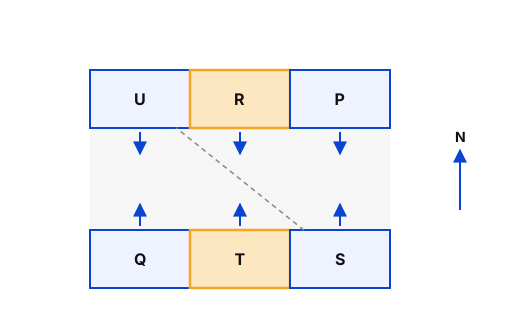
- R is in the south row; U is next to R, so also south. S is diagonal to U → U at an end (south), S at the far end (north).
- Q, T face the same way; south row has one seat left → Q, T both north; P takes the last south flat.
- Q not next to S → Q at the other north end, T in the middle.
- Opposite pairs: Q–U, T–R, S–P → TR.
Trick: Diagonally opposite means both are at ends of different rows – fixes two seats instantly.
Answer: (D) TR
अवधारणा: पहले निश्चित लोगों को रखें, फिर नकारात्मक संकेत लगाएँ।
हल:
- R दक्षिणमुखी पंक्ति में; U, R के बगल में → वह भी दक्षिण। S, U के विकर्ण पर → U एक छोर पर, S दूसरी पंक्ति के दूसरे छोर पर।
- Q, T एक ही दिशा में – दक्षिण में एक ही जगह बची → Q, T उत्तर में; P दक्षिण की बची जगह।
- Q, S के बगल नहीं → Q दूसरे छोर, T बीच में।
- आमने-सामने: Q–U, T–R, S–P → TR।
ट्रिक: विकर्णतः विपरीत = दोनों अलग पंक्तियों के छोर पर – दो स्थान तुरंत तय।
उत्तर: (D) TR
SSC CHSLGeneral IntelligenceArrangement – flats facing each otherSSC CHSL 2025 · 29 Nov Shift 3
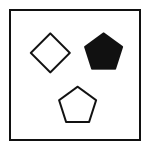
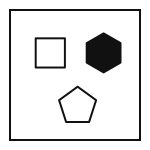
Q90.Select the option which has the same relation with the figure C as the relation of figure B with the figure A.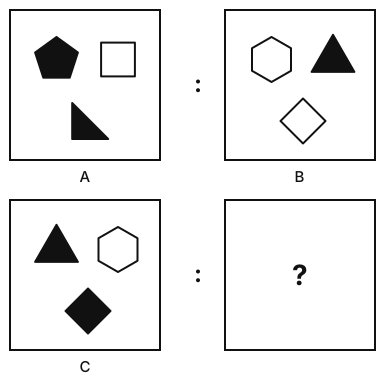
उस विकल्प का चयन कीजिए जिसका आकृति C से वही संबंध है जो आकृति B का आकृति A से है। - A
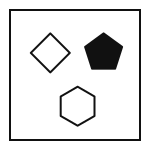
- B
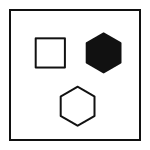
- C
- D
Show answer
Concept: Compare each position: number of sides and shading change.
- A → B: top-left +1 side, top-right −1 side, bottom +1 side.
- Shading of every shape is reversed.
- Apply to C: triangle → 4-sided, hexagon → pentagon, diamond → pentagon, with shading reversed → option C.
Trick: Track one feature at a time (sides, then shading) – eliminate options failing either.
Answer: (C) Figure (C)
अवधारणा: हर स्थान पर भुजाओं की संख्या और छायांकन का बदलाव देखें।
हल:
- A → B: ऊपर-बाएँ +1 भुजा, ऊपर-दाएँ −1, नीचे +1।
- हर आकृति का छायांकन उलट जाता है।
- C पर लागू: त्रिभुज → चतुर्भुज, षट्भुज → पंचभुज, diamond → पंचभुज, छायांकन उलटा → विकल्प C।
ट्रिक: एक-एक गुण (भुजाएँ, फिर shading) जाँचें और गलत विकल्प हटाएँ।
उत्तर: (C) आकृति (C)
SSC CHSLGeneral IntelligenceFigure analogy – sides and shadingSSC CHSL 2025 · 29 Nov Shift 3
Q91.Select the option figure that is related to the third figure in the same way as the second figure is related to the first figure.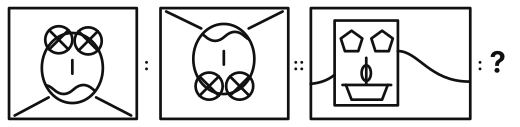
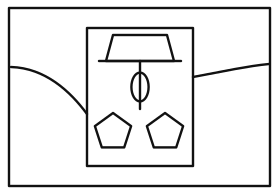
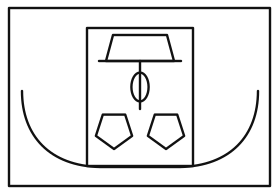
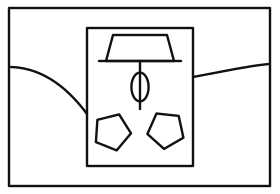
उस विकल्प आकृति का चयन कीजिए जो तीसरी आकृति से उसी प्रकार संबंधित है, जिस प्रकार दूसरी आकृति पहली आकृति से संबंधित है। - A
- B
- C
- D
Show answer
Concept: The second figure is the first turned upside down (180°).
- In pair 1, every part has swapped top↔bottom and left↔right → 180° turn.
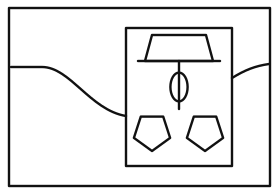
- Turn figure 3 the same way: the pot goes on top, flowers point down, the small square moves to the right.
- Only option A shows all these changes.
Trick: 180° rotation = both up-down and left-right swap; check one off-centre element to verify.
Answer: (A) Figure (A)
अवधारणा: दूसरी आकृति पहली को 180° घुमाने से बनी है।
हल:
- पहले जोड़े में हर भाग ऊपर↔नीचे और बाएँ↔दाएँ बदल गया → 180° घुमाव।
- तीसरी आकृति को ऐसे ही घुमाएँ: गमला ऊपर, फूल नीचे की ओर, छोटा वर्ग दाईं ओर।
- ये सभी बदलाव केवल विकल्प A में।
ट्रिक: 180° = ऊपर-नीचे और बाएँ-दाएँ दोनों बदलते हैं; किसी किनारे वाले भाग से जाँचें।
उत्तर: (A) आकृति (A)
SSC CHSLGeneral IntelligenceFigure analogy – 180° rotationSSC CHSL 2025 · 29 Nov Shift 3
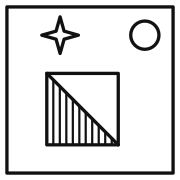
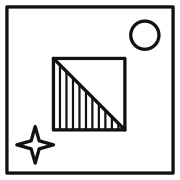
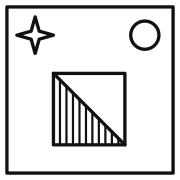
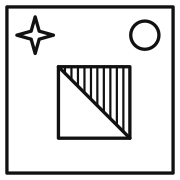
Q92.In the following figure series, select the figure which can be placed at the sign of question mark (?) from the given alternatives.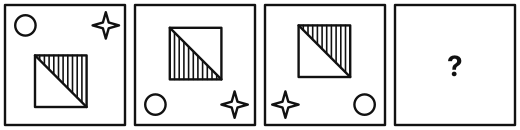
निम्नलिखित आकृति शृंखला में, दिए गए विकल्पों में से उस आकृति का चयन कीजिए जिसे प्रश्नवाचक चिह्न (?) के स्थान पर रखा जा सकता है। - A
- B
- C
- D
Show answer
Concept: Track each element separately.
- Circle: TL → BL → BR → next TR (one corner anticlockwise each step).
- Star: TR → BR → BL → next TL.
- Square shading alternates upper-right / lower-left → next lower-left.
- Option C matches all three.
Trick: Find the movement of one element, eliminate options, then confirm with the second.
Answer: (C) Figure (C)
अवधारणा: हर तत्व को अलग-अलग देखें।
हल:
- वृत्त: ऊपर-बाएँ → नीचे-बाएँ → नीचे-दाएँ → अगला ऊपर-दाएँ (वामावर्त)।
- तारा: ऊपर-दाएँ → नीचे-दाएँ → नीचे-बाएँ → अगला ऊपर-बाएँ।
- वर्ग का छायांकन बारी-बारी बदलता → अगला निचला-बायाँ आधा।
- तीनों शर्तें विकल्प C में।
ट्रिक: एक तत्व की गति से विकल्प हटाएँ, दूसरे से पुष्टि करें।
उत्तर: (C) आकृति (C)
SSC CHSLGeneral IntelligenceFigure series – corner movementSSC CHSL 2025 · 29 Nov Shift 3
Q93.After interchanging the given two numbers (not digits), what will be the value of the given equation ?
6 and 8
?
दी गई दो संख्याओं (अंकों को नहीं) को आपस में बदलने पर, दिए गए समीकरण का मान क्या होगा?
6 और 8
?
- A36
- B38
- C40
- D42
Show answer
Concept: Swap the numbers, then solve by BODMAS.
- Swap 6 ↔ 8: .
- ; .
- 36.
Trick: Write the new expression fully before solving – swapping in your head causes errors.
Answer: (A) 36
अवधारणा: संख्याएँ बदलें, फिर BODMAS से हल करें।
हल:
- 6 ↔ 8: ।
- ; ।
- 36।
ट्रिक: नया व्यंजक पूरा लिखकर हल करें – मन में बदलने से गलती होती है।
उत्तर: (A) 36
SSC CHSLGeneral IntelligenceInterchange of numbers – BODMASSSC CHSL 2025 · 29 Nov Shift 3
Q94.Select the correct combination of mathematical signs to replace (*) signs sequentially and to balance the given equation.
50 * 5 * 6 * 15 *
गणितीय चिह्नों के उस सही संयोजन का चयन कीजिए, जिससे (*) चिह्नों को क्रमानुसार प्रतिस्थापित करने पर दिया गया समीकरण संतुलित हो जाए।
50 * 5 * 6 * 15 *
- A
- B
- C
- D
Show answer
Concept: Put the option signs in order and solve with BODMAS.
- Try ÷, ×, −, +: .
- ; .
- 65 ✓
Trick: Option C is not even a valid sign set – drop it first and test the rest.
Answer: (D)
अवधारणा: विकल्प के चिह्न क्रम से रखें और BODMAS से हल करें।
हल:
- ÷, ×, −, + लगाएँ: ।
- ; ।
- 65 ✓
ट्रिक: विकल्प C चिह्नों का सही समूह ही नहीं – पहले हटाएँ।
उत्तर: (D)
SSC CHSLGeneral IntelligenceMathematical signs – balancingSSC CHSL 2025 · 29 Nov Shift 3
Q95.In the following question, four letter-number pairs are given. The letter-number on the left side of ( - ) is related to the letter-number on the right side of (-) with some Logic/Rule/Relation. Three pairs are similar on the basis of same Logic/Rule/Relation. Select the odd one out from the given alternatives.
(NOTE: Operations should be performed on the whole numbers, without breaking down the number into its constituent digits. E.g. 13 - Operations on 13 such as adding /subtracting /multiplying etc. to 13 can be performed. Breaking down 13 into 1 and 3 and then performing mathematical operations on 1 and 3 is not allowed)
निम्नलिखित प्रश्न में, चार अक्षर-संख्या युग्म दिए गए हैं। ( - ) के बाईं ओर की अक्षर-संख्या, (-) के दाईं ओर की अक्षर-संख्या से किसी तर्क/नियम/संबंध द्वारा संबंधित है। तीन युग्म एक ही तर्क/नियम/संबंध के आधार पर समान हैं। दिए गए विकल्पों में से असंगत युग्म का चयन कीजिए।
(नोट: संक्रियाएँ पूर्ण संख्याओं पर की जानी चाहिए, संख्या को उसके अंकों में विभाजित किए बिना। उदाहरण: 13 - 13 पर संक्रियाएँ जैसे 13 में जोड़ना/घटाना/गुणा करना आदि की जा सकती हैं। 13 को 1 और 3 में विभाजित करके 1 और 3 पर गणितीय संक्रियाएँ करने की अनुमति नहीं है।)
- AD150P - E300R
- BM210H - N420J
- CB175E - C350G
- DK198S - L390U
Show answer
Concept: Rule: first letter +1, number × 2, last letter +2.
- D→E, , P→R ✓; M→N, 420 ✓, H→J ✓; B→C, 350 ✓, E→G ✓.
- K→L and S→U fit, but , not 390 ✗.
Trick: Check the number part first – it is quickest to spot the odd one.
Answer: (D) K198S - L390U
अवधारणा: नियम: पहला अक्षर +1, संख्या × 2, अंतिम अक्षर +2।
हल:
- D→E, 300, P→R ✓; M→N, 420, H→J ✓; B→C, 350, E→G ✓।
- K→L, S→U सही, पर , 390 नहीं ✗।
ट्रिक: पहले संख्या वाला भाग जाँचें – विषम जल्दी मिलता है।
उत्तर: (D) K198S - L390U
SSC CHSLGeneral IntelligenceOdd pair – letters and doublingSSC CHSL 2025 · 29 Nov Shift 3
Q96.In the following question, four letter-number pairs are given. The letter-number on the left side of (-) is related to the letter-number on the right side of (-) with some Logic/Rule/Relation. Three pairs are similar on the basis of same Logic/Rule/Relation. Select the odd one out from the given alternatives. (NOTE: Operations should be performed on the whole numbers, without breaking down the number into its constituent digits. E.g. 13 - Operations on 13 such as adding /subtracting /multiplying etc. to 13 can be performed. Breaking down 13 into 1 and 3 and then performing mathematical operations on 1 and 3 is not allowed)
निम्नलिखित प्रश्न में, चार अक्षर-संख्या युग्म दिए गए हैं। ( - ) के बाईं ओर की अक्षर-संख्या, (-) के दाईं ओर की अक्षर-संख्या से किसी तर्क/नियम/संबंध द्वारा संबंधित है। तीन युग्म एक ही तर्क/नियम/संबंध के आधार पर समान हैं। दिए गए विकल्पों में से असंगत युग्म का चयन कीजिए। (नोट: संक्रियाएँ पूर्ण संख्याओं पर की जानी चाहिए, संख्या को उसके अंकों में विभाजित किए बिना। उदाहरण: 13 - 13 पर संक्रियाएँ जैसे 13 में जोड़ना/घटाना/गुणा करना आदि की जा सकती हैं। 13 को 1 और 3 में विभाजित करके 1 और 3 पर गणितीय संक्रियाएँ करने की अनुमति नहीं है।)
- ABD315 - WY525
- BHK329 - CE539
- CGT541 - BO751
- DQC487 - LX697
Show answer
Concept: Each letter moves +21 (= −5) and the number increases by 210.
- +21 is the same as −5 in a 26-letter cycle: B→W, D→Y, G→B, T→O, Q→L, C→X ✓.
- HK329: H→C ✓, but K−5 = F, not E ✗; 329 + 210 = 539 fits.
- So HK329 - CE539 is odd.
Trick: Moving +21 forward = moving 5 back – much easier to count.
Answer: (B) HK329 - CE539
अवधारणा: हर अक्षर +21 (= −5) खिसकता है और संख्या 210 बढ़ती है।
हल:
- 26 अक्षरों के चक्र में +21 = −5: B→W, D→Y, G→B, T→O, Q→L, C→X ✓।
- HK329: H→C ✓, पर K−5 = F, E नहीं ✗; 329 + 210 = 539 सही।
- अतः HK329 - CE539 विषम।
ट्रिक: +21 आगे गिनने के बजाय 5 पीछे गिनें – जल्दी होता है।
उत्तर: (B) HK329 - CE539
SSC CHSLGeneral IntelligenceOdd pair – letter shift and +210SSC CHSL 2025 · 29 Nov Shift 3
Q97.In the following each alternative a group of numbers is given. The numbers of each group are related to the numbers of the same group by some Logic/Rule/Relation. Select that group of numbers in which numbers are not related by that same Logic/Rule/Relation.
(NOTE: Operations should be performed on the whole numbers, without breaking down the number into its constituent digits. E.g. 13 - Operations on 13 such as adding /subtracting /multiplying etc. to 13 can be performed. Breaking down 13 into 1 and 3 and then performing mathematical operations on 1 and 3 is not allowed)
प्रत्येक विकल्प में संख्याओं का एक समूह दिया गया है। प्रत्येक समूह की संख्याएँ उसी समूह की संख्याओं से किसी तर्क/नियम/संबंध द्वारा संबंधित हैं। उस संख्या-समूह का चयन कीजिए जिसमें संख्याएँ उसी तर्क/नियम/संबंध द्वारा संबंधित नहीं हैं।
(नोट: संक्रियाएँ पूर्ण संख्याओं पर की जानी चाहिए, संख्या को उसके अंकों में विभाजित किए बिना। उदाहरण: 13 - 13 पर संक्रियाएँ जैसे 13 में जोड़ना/घटाना/गुणा करना आदि की जा सकती हैं। 13 को 1 और 3 में विभाजित करके 1 और 3 पर गणितीय संक्रियाएँ करने की अनुमति नहीं है।)
- A(1231, 1197, 1163)
- B(1050, 1016, 982)
- C
- D
Show answer
Concept: In each group consecutive numbers fall by 34.
- 1231→1197→1163: −34, −34 ✓; 1050→1016→982 ✓; 1382→1348→1314 ✓.
- 1446→1406 is −40, then −34 ✗.
Trick: Check just the first gap in each option – the odd gap appears at once.
Answer: (D)
अवधारणा: हर समूह में संख्याएँ 34-34 से घटती हैं।
हल:
- 1231→1197→1163: −34, −34 ✓; B और C भी ✓।
- 1446→1406 = −40, फिर −34 ✗।
ट्रिक: हर विकल्प का केवल पहला अंतर देखें – अलग वाला तुरंत दिखेगा।
उत्तर: (D)
SSC CHSLGeneral IntelligenceOdd group – equal gaps of 34SSC CHSL 2025 · 29 Nov Shift 3
Q98.In the following question, in each alternative a group of numbers is given. The numbers of each group are related to the numbers of the same group by some Logic/Rule/Relation. Select that group of numbers in which numbers are not related by that same Logic/Rule/Relation.
(NOTE: Operations should be performed on the whole numbers, without breaking down the number into its constituent digits. E.g. 13 - Operations on 13 such as adding /subtracting /multiplying etc. to 13 can be performed. Breaking down 13 into 1 and 3 and then performing mathematical operations on 1 and 3 is not allowed)
प्रत्येक विकल्प में संख्याओं का एक समूह दिया गया है। प्रत्येक समूह की संख्याएँ उसी समूह की संख्याओं से किसी तर्क/नियम/संबंध द्वारा संबंधित हैं। उस संख्या-समूह का चयन कीजिए जिसमें संख्याएँ उसी तर्क/नियम/संबंध द्वारा संबंधित नहीं हैं।
(नोट: संक्रियाएँ पूर्ण संख्याओं पर की जानी चाहिए, संख्या को उसके अंकों में विभाजित किए बिना। उदाहरण: 13 - 13 पर संक्रियाएँ जैसे 13 में जोड़ना/घटाना/गुणा करना आदि की जा सकती हैं। 13 को 1 और 3 में विभाजित करके 1 और 3 पर गणितीय संक्रियाएँ करने की अनुमति नहीं है।)
- A(152, 408, 16)
- B(175, 500, 18)
- C(120, 520, 20)
- D(168, 492, 18)
Show answer
Concept: Rule: .
- ✓; ✓; ✓.
- ✗.
Trick: Last-digit check: a square never ends in 2,3,7,8 – but 325 can, so compute; settles it.
Answer: (B) (175, 500, 18)
अवधारणा: नियम: ।
हल:
- ✓; ✓; ✓।
- ✗।
ट्रिक: D और B दोनों में तीसरी संख्या 18 है – पर अंतर अलग (324 बनाम 325), तो एक ही गलत होगा।
उत्तर: (B) (175, 500, 18)
SSC CHSLGeneral IntelligenceOdd group – difference equals squareSSC CHSL 2025 · 29 Nov Shift 3
Q99.Select the option that is related to the fifth letter-number cluster in the same way as the second letter-number cluster is related to the first letter-number cluster and fourth letter-number cluster is related to third letter-number cluster.
(NOTE: Operations should be performed on the whole numbers, without breaking down the numbers into its constituent digits. E.g. 13 - Operations on 13 such as adding /subtracting /multiplying etc. to 13 can be performed. Breaking down 13 into 1 and 3 and then performing mathematical operations on 1 and 3 is not allowed)
JD150 : LG345 :: FM130 : HP325 :: CX70 :?
उस विकल्प का चयन कीजिए जो पाँचवें अक्षर-संख्या समूह से उसी प्रकार संबंधित है, जिस प्रकार दूसरा अक्षर-संख्या समूह पहले अक्षर-संख्या समूह से तथा चौथा अक्षर-संख्या समूह तीसरे अक्षर-संख्या समूह से संबंधित है।
(नोट: संक्रियाएँ पूर्ण संख्याओं पर की जानी चाहिए, संख्या को उसके अंकों में विभाजित किए बिना। उदाहरण: 13 - 13 पर संक्रियाएँ जैसे 13 में जोड़ना/घटाना/गुणा करना आदि की जा सकती हैं। 13 को 1 और 3 में विभाजित करके 1 और 3 पर गणितीय संक्रियाएँ करने की अनुमति नहीं है।)
JD150 : LG345 :: FM130 : HP325 :: CX70 :?
- AEA265
- BFA265
- CEA245
- DFA245
Show answer
Concept: Rule: 1st letter +2, 2nd letter +3, number +195.
- JD150 → LG345: J+2, D+3, +195 ✓; FM130 → HP325 ✓.
- CX70: C+2 = E, X+3 = A (wrap past Z), 70 + 195 = 265.
- Answer: EA265.
Trick: C+2 = E removes the two F options; then +195 gives 265.
Answer: (A) EA265
अवधारणा: नियम: पहला अक्षर +2, दूसरा +3, संख्या +195।
हल:
- JD150 → LG345 और FM130 → HP325 – दोनों में यही नियम।
- CX70: C+2 = E, X+3 = A (Z के बाद फिर A), 70 + 195 = 265।
- उत्तर: EA265।
ट्रिक: C+2 = E से F वाले दोनों विकल्प हटते हैं; फिर +195 = 265।
उत्तर: (A) EA265
SSC CHSLGeneral IntelligenceLetter-number cluster analogySSC CHSL 2025 · 29 Nov Shift 3
Q100.Select the option that is related to the fifth letter-number cluster in the same way as the second letter-number cluster is related to the first letter-number cluster and fourth letter-number cluster is related to third letter-number cluster.
(NOTE: Operations should be performed on the whole numbers, without breaking down the numbers into its constituent digits. E.g. 13 - Operations on 13 such as adding /subtracting /multiplying etc. to 13 can be performed. Breaking down 13 into 1 and 3 and then performing mathematical operations on 1 and 3 is not allowed)
BM25 : DP126 :: D030 : FR151 :: TJ35 : ?
उस विकल्प का चयन कीजिए जो पाँचवें अक्षर-संख्या समूह से उसी प्रकार संबंधित है, जिस प्रकार दूसरा अक्षर-संख्या समूह पहले अक्षर-संख्या समूह से तथा चौथा अक्षर-संख्या समूह तीसरे अक्षर-संख्या समूह से संबंधित है।
(नोट: संक्रियाएँ पूर्ण संख्याओं पर की जानी चाहिए, संख्या को उसके अंकों में विभाजित किए बिना। उदाहरण: 13 - 13 पर संक्रियाएँ जैसे 13 में जोड़ना/घटाना/गुणा करना आदि की जा सकती हैं। 13 को 1 और 3 में विभाजित करके 1 और 3 पर गणितीय संक्रियाएँ करने की अनुमति नहीं है।)
BM25 : DP126 :: D030 : FR151 :: TJ35 : ?
- AFU169
- BVM176
- CNV169
- DRV171
Show answer
Concept: Rule: 1st letter +2, 2nd letter +3, .
- BM25 → DP126: ✓; DO30 → FR151 ✓.
- TJ35: T+2 = V, J+3 = M, .
- Answer: VM176.
Trick: Only one option starts with V – letters alone give the answer.
Answer: (B) VM176
अवधारणा: नियम: पहला अक्षर +2, दूसरा +3, ।
हल:
- ✓; ✓।
- TJ35: T+2 = V, J+3 = M, ।
- उत्तर: VM176।
ट्रिक: केवल एक विकल्प V से शुरू होता है – अक्षरों से ही उत्तर।
उत्तर: (B) VM176
SSC CHSLGeneral IntelligenceLetter-number cluster analogySSC CHSL 2025 · 29 Nov Shift 3

