SSC CHSL · 5,000 questions

SSC CHSL 2025 PYQs

Real previous year questions, subject-wise. Try the question, then open the answer and the explanation in Hindi & English – free, no login.

Courses – airGurukul

1,250 questions in Quantitative Aptitude.

Q1141.
A container can hold 60 liters of juice. First, 6 liters of juice are removed and the same amount of water is poured in to refill the container. The mixture is then thoroughly stirred. This entire process of removing 6 liters of juice and replacing it with water is carried out once again.
After these two successive operations, how many liters of pure juice remain in the container?
एक पात्र में 60 लीटर जूस आ सकता है। पहले 6 लीटर जूस निकाला जाता है और पात्र को पुनः भरने के लिए उतनी ही मात्रा में पानी डाल दिया जाता है। इसके बाद मिश्रण को अच्छी तरह मिलाया जाता है। 6 लीटर जूस निकालने और उसके स्थान पर पानी डालने की यह पूरी प्रक्रिया एक बार और की जाती है।
इन दो क्रमिक प्रक्रियाओं के बाद पात्र में कितने लीटर शुद्ध जूस शेष रहता है?
  1. A45 liters45 लीटर
  2. B42 liters42 लीटर
  3. C48.6 liters48.6 लीटर
  4. D40.5 liters40.5 लीटर
Show answer

Concept: Pure quantity left = A×(1−xA)n.

  1. A=60, x=6, n=2.
  2. Juice left = 60×(910)2=60×0.81.
  3. = 48.6 litres.

Trick: Each operation keeps 90% of the juice: 60 → 54 → 48.6.

Answer: (C) 48.6 liters

अवधारणा: बचा शुद्ध द्रव = A×(1−xA)n।

  1. A=60, x=6, n=2।
  2. बचा रस = 60×(910)2=60×0.81।
  3. = 48.6 लीटर।

ट्रिक: हर बार 90% रस बचता है: 60 → 54 → 48.6।

उत्तर: (C) 48.6 लीटर
SSC CHSLQuantitative AptitudeMixture – repeated replacementSSC CHSL 2025 · 13 Nov Shift 3
Q1142.
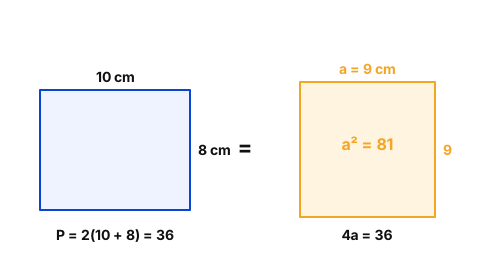
The perimeter of a rectangle is equal to the perimeter of a square. If the length and the breadth of the rectangle are 10 cm and 8 cm , respectively, then what will be the area of the square?
एक आयत का परिमाप एक वर्ग के परिमाप के बराबर है। यदि आयत की लंबाई और चौड़ाई क्रमशः 10 cm और 8 cm हैं, तो वर्ग का क्षेत्रफल क्या होगा?
  1. A72cm2
  2. B98cm2
  3. C81cm2
  4. D64cm2
Show answer

Concept: Equal perimeters → find the square's side, then its area.

  1. Rectangle perimeter = 2(10+8)=36 cm.
  2. Square side = 364=9 cm.
  3. Area = 92=81cm2.

Trick: Square side = average of l and b = 10+82=9.

Answer: (C) 81cm2

अवधारणा: परिमाप बराबर → वर्ग की भुजा, फिर क्षेत्रफल।

  1. परिमाप (आयत) = 2×18=36 cm।
  2. भुजा a = 36÷4=9 cm।
  3. क्षेत्रफल = 92=81cm2।

ट्रिक: वर्ग की भुजा = l और b का औसत = 9।

उत्तर: (C) 81cm2

SSC CHSLQuantitative AptitudeMensuration – equal perimetersSSC CHSL 2025 · 13 Nov Shift 3
Q1143.
A bus travels at a constant speed. It covers 37 of a journey in 6 hours. How long will it take to cover the remaining journey?
एक बस नियत चाल से चलती है। वह किसी यात्रा का 37 भाग 6 घंटों में तय करती है। शेष यात्रा तय करने में उसे कितना समय लगेगा?
  1. A12 hours12 घंटे
  2. B8 hours8 घंटे
  3. C15 hours15 घंटे
  4. D10 hours10 घंटे
Show answer

Concept: At constant speed, time is proportional to distance.

  1. 37 of the journey → 6 h, so 17 → 2 h.
  2. Remaining = 47 → 4×2=8 h.

Trick: Remaining time = 6×4/73/7=6×43=8 h.

Answer: (B) 8 hours

अवधारणा: चाल स्थिर हो तो समय दूरी के अनुपात में।

  1. यात्रा का 37 → 6 घंटे, तो 17 → 2 घंटे।
  2. शेष 47 → 4×2=8 घंटे।

ट्रिक: शेष समय = 6×43=8 घंटे।

उत्तर: (B) 8 घंटे

SSC CHSLQuantitative AptitudeTime & distance – fraction of journeySSC CHSL 2025 · 13 Nov Shift 3
Q1144.
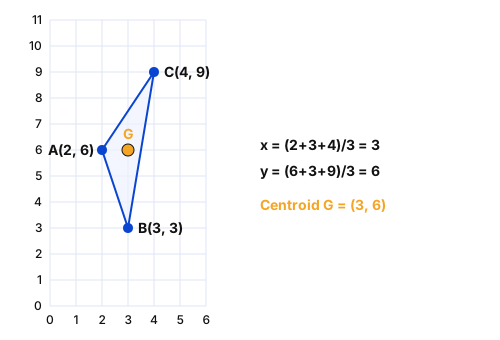
In △ABC, the coordinates of the vertices are A(2,6),B(3,3), and C(4,9). Find the coordinates of the centroid.
△ABC में शीर्षों के निर्देशांक A(2,6),B(3,3) तथा C(4,9) हैं। केंद्रक के निर्देशांक ज्ञात कीजिए।
  1. A(7,3)
  2. B(3,7)
  3. C(6,3)
  4. D(3,6)
Show answer

Concept: Centroid = (average of x's, average of y's).

  1. x=2+3+43=93=3
  2. y=6+3+93=183=6
  3. Centroid G=(3,6).

Trick: Add each coordinate column and divide by 3: (9,18)÷3=(3,6).

Answer: (D) (3,6)

अवधारणा: केन्द्रक = (x का औसत, y का औसत)।

  1. x=2+3+43=93=3
  2. y=6+3+93=183=6
  3. केन्द्रक G=(3,6)।

ट्रिक: हर निर्देशांक का योग लेकर 3 से भाग दें: (9,18)÷3=(3,6)।

उत्तर: (D) (3,6)

SSC CHSLQuantitative AptitudeCoordinate geometry – centroidSSC CHSL 2025 · 13 Nov Shift 3
Q1145.
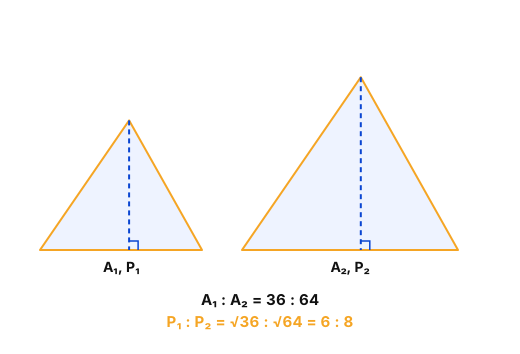
Two similar triangles have areas in the ratio of 36:64. What is the ratio of their corresponding perimeters?
दो समरूप त्रिभुजों के क्षेत्रफलों का अनुपात 36:64 है। उनके संगत परिमापों का अनुपात क्या है?
  1. A6 : 8
  2. B36 : 64
  3. C7 : 11
  4. D3 : 7
Show answer

Concept: Area ratio = (side ratio)²; perimeter ratio = side ratio.

  1. Side ratio = 36:64=6:8.
  2. Perimeters are in the same ratio: 6 : 8.

Trick: Perimeter, altitude, median – all follow the side ratio; only area is squared.

Answer: (A) 6 : 8

अवधारणा: क्षेत्रफल अनुपात = (भुजा अनुपात)²; परिमाप अनुपात = भुजा अनुपात।

  1. भुजा अनुपात = 36:64=6:8।
  2. परिमाप भी इसी अनुपात में: 6 : 8।

ट्रिक: परिमाप, शीर्षलंब, माध्यिका – सब भुजा अनुपात में; केवल क्षेत्रफल वर्ग में।

उत्तर: (A) 6 : 8

SSC CHSLQuantitative AptitudeSimilar triangles – area vs perimeterSSC CHSL 2025 · 13 Nov Shift 3
Q1146.
What is the slope of the line that passes through the points (3,2) and (5, 12) ?
उन बिंदुओं (3,2) और (5, 12) से होकर जाने वाली रेखा की ढाल क्या है?
  1. A4
  2. B34
  3. C35
  4. D5
Show answer

Concept: Slope m=y2−y1x2−x1.

  1. Rise = 12−2=10; run = 5−3=2.
  2. m=102=5.

Trick: Slope = rise ÷ run – just subtract y's and x's.

Answer: (D) 5

अवधारणा: ढाल m=y2−y1x2−x1।

  1. y का अंतर = 10; x का अंतर = 2।
  2. m=102=5।

ट्रिक: ढाल = y-अंतर ÷ x-अंतर।

उत्तर: (D) 5

SSC CHSLQuantitative AptitudeCoordinate geometry – slopeSSC CHSL 2025 · 13 Nov Shift 3
Q1147.
Solve:
y(y+1)+1y=4.
हल कीजिए:
y(y+1)+1y=4.
  1. Ay=−3+216
  2. By=(−1+5)2
  3. Cy=(3+21)6
  4. Dy=(−1+5)8
Show answer

Concept: Clear denominators, form a quadratic, use the formula.

  1. yy+1+1y=4 → y2+y+1=4y2+4y.
  2. 3y2+3y−1=0.
  3. y=−3±9+126=−3±216.

Trick: Denominator 2a=6 and discriminant 21 – match these two in the options.

Answer: (A) y=−3+216

अवधारणा: हर हटाएँ, द्विघात बनाएँ, सूत्र लगाएँ।

  1. yy+1+1y=4 → y2+y+1=4y2+4y।
  2. 3y2+3y−1=0।
  3. y=−3±9+126=−3±216।

ट्रिक: विकल्पों में हर 2a=6 और 21 मिलाएँ।

उत्तर: (A) y=−3+216

SSC CHSLQuantitative AptitudeAlgebra – quadratic from rational equationSSC CHSL 2025 · 13 Nov Shift 3
Q1148.
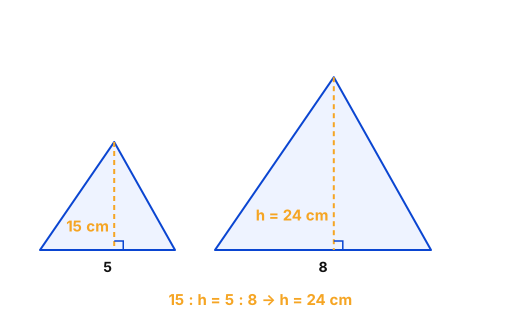
Two triangles are similar. The ratio of their corresponding side lengths is 5: 8. If the length of an altitude of the smaller triangle is 15 cm , what is the length of the corresponding altitude of the larger triangle?
दो त्रिभुज समरूप हैं। उनकी संगत भुजाओं की लंबाइयों का अनुपात 5: 8 है। यदि छोटे त्रिभुज के एक शीर्षलंब की लंबाई 15 cm है, तो बड़े त्रिभुज के संगत शीर्षलंब की लंबाई क्या है?
  1. A8 cm
  2. B16 cm
  3. C24 cm
  4. D32 cm
Show answer

Concept: Corresponding altitudes are in the ratio of the sides.

  1. 15:h=5:8.
  2. h=15×85=24 cm.

Trick: 5 → 15 is ×3, so 8 → 24.

Answer: (C) 24 cm

अवधारणा: संगत शीर्षलंब भुजाओं के अनुपात में होते हैं।

  1. 15:h=5:8।
  2. h=15×85=24 cm।

ट्रिक: 5 → 15 = ×3, तो 8 → 24।

उत्तर: (C) 24 cm

SSC CHSLQuantitative AptitudeSimilar triangles – altitudeSSC CHSL 2025 · 13 Nov Shift 3
Q1149.
Solve:
2532+2532=?
हल कीजिए:
2532+2532=?
  1. A12515626
  2. B15626125
  3. C15626625
  4. D1562625
Show answer

Concept: am/n=(an)m and a−m=1am.

  1. 253/2=(25)3=53=125.
  2. 25−3/2=1125.
  3. 125+1125=15625+1125=15626125.

Trick: x+1x with x=125 → x2+1x; 1252=15625.

Answer: (B) 15626125

अवधारणा: am/n=(an)m और a−m=1am।

  1. 253/2=(25)3=125।
  2. 25−3/2=1125।
  3. 125+1125=15626125।

ट्रिक: x+1x=x2+1x; 1252=15625।

उत्तर: (B) 15626125

SSC CHSLQuantitative AptitudeIndices – fractional and negative powersSSC CHSL 2025 · 13 Nov Shift 3
Q1150.
If sin⁡θ1+cos⁡θ+1+cos⁡θsin⁡θ=43 0∘<θ<90∘, then the value of (tan⁡θ+sec⁡θ)−1 is :
यदि sin⁡θ1+cos⁡θ+1+cos⁡θsin⁡θ=43 0∘<θ<90∘ है, तो (tan⁡θ+sec⁡θ)−1 का मान क्या होगा?
  1. A2−3
  2. B3−2
  3. C3+2
  4. D2+3
Show answer

Concept: sinθ1+cosθ+1+cosθsinθ simplifies to 2sinθ.

  1. Numerator: sin2θ+1+2cosθ+cos2θ=2(1+cosθ) → LHS = 2sinθ.
  2. 2sinθ=43 → sinθ=32 → θ=60∘.
  3. tan60∘+sec60∘=3+2; its reciprocal = 2−3.

Trick: 12+3=2−3, because (2+3)(2−3)=1.

Answer: (A) 2−3

अवधारणा: sinθ1+cosθ+1+cosθsinθ = 2sinθ होता है।

  1. अंश: sin2θ+1+2cosθ+cos2θ=2(1+cosθ) → बायाँ पक्ष = 2sinθ।
  2. 2sinθ=43 → sinθ=32 → θ=60∘।
  3. tan60∘+sec60∘=3+2; इसका व्युत्क्रम = 2−3।

ट्रिक: 12+3=2−3, क्योंकि (2+3)(2−3)=1।

उत्तर: (A) 2−3

SSC CHSLQuantitative AptitudeTrigonometry – find θ, then evaluateSSC CHSL 2025 · 13 Nov Shift 3
Q1151.
P, Q, and R enter into a partnership. P invests Rs. 1,00,000,Q invests Rs. 80,000, and R invests Rs. 60,000. After 6 months, Q increases his capital by 20%, while R decreases his capital by 20%. At the end of 1 year, the total profit is Rs .
1,40,000. What is R's share in the profit? (approximate value)
P, Q और R एक साझेदारी में प्रवेश करते हैं। P, Rs. 1,00,000,Q Rs. 80,000 निवेश करता है, तथा R, Rs. 60,000 निवेश करता है। 6 माह बाद, Q अपनी पूँजी में 20% की वृद्धि कर देता है, जबकि R अपनी पूँजी में 20% की कमी कर देता है। 1 वर्ष के अंत में, कुल लाभ Rs .
1,40,000 है। लाभ में R का हिस्सा कितना है? (सन्निकट मान)
  1. A₹50,000
  2. B₹31,240
  3. C₹40,000
  4. D₹65,780
Show answer

Concept: Profit is shared in the ratio of capital × time (month-equivalents).

  1. P: 1,00,000×12=12,00,000.
  2. Q: 80,000×6+96,000×6=10,56,000 (80,000+20%).
  3. R: 60,000×6+48,000×6=6,48,000 (60,000−20%).
  4. Ratio (÷24,000) = 50 : 44 : 27; total 121.
  5. R = 1,40,000×27121≈ ₹31,240.

Trick: For equal halves, just add the two capitals: P 200, Q 80+96=176, R 60+48=108 (in thousands) → 50 : 44 : 27.

Answer: (B) ₹31,240

अवधारणा: लाभ का बँटवारा (पूँजी × समय) के अनुपात में होता है।

  1. P: 1,00,000×12=12,00,000।
  2. Q: 80,000×6+96,000×6=10,56,000 (20% वृद्धि)।
  3. R: 60,000×6+48,000×6=6,48,000 (20% कमी)।
  4. अनुपात (÷24,000) = 50 : 44 : 27; योग 121।
  5. R = 1,40,000×27121≈ ₹31,240।

ट्रिक: दोनों हिस्से 6-6 महीने हैं, तो पूँजियाँ जोड़ें: P 200, Q 176, R 108 (हज़ार में) → 50 : 44 : 27।

उत्तर: (B) ₹31,240

SSC CHSLQuantitative AptitudePartnership – capital changed mid-yearSSC CHSL 2025 · 13 Nov Shift 2
Q1152.
If cos⁡A=817 and sin⁡B=1517, find sin⁡Acos⁡B−cos⁡Asin⁡B :
यदि cos⁡A=817 तथा sin⁡B=1517 है, तो sin⁡Acos⁡B−cos⁡Asin⁡B का मान ज्ञात कीजिए :
  1. A240289
  2. B1517
  3. C0
  4. D120289
Show answer

Concept: sinAcosB−cosAsinB=sin(A−B).

  1. cosA=817 → sinA=1517 (8-15-17 triplet).
  2. sinB=1517 → cosB=817.
  3. So A=B, and the expression = (1517)(817)−(817)(1517)= 0.

Trick: Spot that sinA=sinB and cosA=cosB → A=B → sin(A−B)=sin0=0, no multiplication needed.

Answer: (C) 0

अवधारणा: sinAcosB−cosAsinB=sin(A−B)।

  1. cosA=817 → sinA=1517 (8-15-17 त्रिक)।
  2. sinB=1517 → cosB=817।
  3. अतः A=B, मान = (1517)(817)−(817)(1517)= 0।

ट्रिक: sinA=sinB और cosA=cosB → A=B → sin0=0, गुणा करने की ज़रूरत नहीं।

उत्तर: (C) 0

SSC CHSLQuantitative AptitudeTrigonometry – sin(A − B)SSC CHSL 2025 · 13 Nov Shift 2
Q1153.
A trader buys 60 kg of rice at ₹60 per kg and 40 kg of a different variety at ₹70 per kg. He mixes the two varieties and sells the entire mixture at ₹65 per kg. What is his total profit or loss?
एक व्यापारी ₹60 प्रति किग्रा की दर से 60 किग्रा चावल तथा ₹70 प्रति किग्रा की दर से 40 किग्रा दूसरी किस्म का चावल खरीदता है। वह दोनों किस्मों को मिलाकर पूरे मिश्रण को ₹65 प्रति किग्रा की दर से बेच देता है। उसका कुल लाभ या हानि कितनी है?
  1. A₹200 profit₹200 लाभ
  2. B₹200 loss₹200 हानि
  3. C₹100 profit₹100 लाभ
  4. D₹100 loss₹100 हानि
Show answer

Concept: Profit = total SP − total CP.

  1. CP = 60×60+40×70=3600+2800= ₹6,400.
  2. SP = 100×65= ₹6,500.
  3. Profit = ₹100.

Trick: Per kg gain/loss: first lot +₹5×60=+300, second lot −₹5×40=−200 → net +₹100.

Answer: (C) ₹100 profit

अवधारणा: लाभ = कुल विक्रय मूल्य − कुल क्रय मूल्य।

  1. CP = 60×60+40×70=3600+2800= ₹6,400।
  2. SP = 100×65= ₹6,500।
  3. लाभ = ₹100।

ट्रिक: प्रति किग्रा: पहले चावल पर +₹5×60=+300, दूसरे पर −₹5×40=−200 → शुद्ध +₹100।

उत्तर: (C) ₹100 लाभ

SSC CHSLQuantitative AptitudeMixture – profit on selling a blendSSC CHSL 2025 · 13 Nov Shift 2
Q1154.
Two numbers are respectively 30% less and 40% more than a third number. What is the ratio of the two numbers?
दो संख्याएँ किसी तीसरी संख्या से क्रमशः 30% कम तथा 40% अधिक हैं। इन दोनों संख्याओं का अनुपात क्या है?
  1. A1 : 2
  2. B2 : 1
  3. C7 : 10
  4. D10:7
Show answer

Concept: Take the base number as 100 when only a ratio is asked.

  1. First = 100 − 30% = 70.
  2. Second = 100 + 40% = 140.
  3. Ratio = 70 : 140 = 1 : 2.

Trick: Directly (100 − 30) : (100 + 40) = 70 : 140 = 1 : 2.

Answer: (A) 1 : 2

अवधारणा: केवल अनुपात पूछा हो तो आधार संख्या 100 मान लें।

  1. पहली = 100 − 30% = 70।
  2. दूसरी = 100 + 40% = 140।
  3. अनुपात = 70 : 140 = 1 : 2।

ट्रिक: सीधे (100 − 30) : (100 + 40) = 70 : 140 = 1 : 2।

उत्तर: (A) 1 : 2

SSC CHSLQuantitative AptitudePercentage – ratio of two numbersSSC CHSL 2025 · 13 Nov Shift 2
Q1155.
The average of 10 numbers is 55. If each of the first 5 numbers is increased by 6 and each of the last 5 numbers is decreased by 4, what will be the new average ?
10 संख्याओं का औसत 55 है। यदि पहली 5 संख्याओं में से प्रत्येक में 6 की वृद्धि की जाए तथा अंतिम 5 संख्याओं में से प्रत्येक में 4 की कमी की जाए, तो नया औसत क्या होगा?
  1. A55
  2. B57
  3. C56
  4. D58
Show answer

Concept: New average = old average + (net change in sum) ÷ count.

  1. Net change = 5×6−5×4=30−20=+10.
  2. Change in average = 10÷10=+1.
  3. New average = 55+1= 56.

Trick: Half the numbers +6, half −4 → average shifts by 6−42=+1.

Answer: (C) 56

अवधारणा: नया औसत = पुराना औसत + (योग में कुल परिवर्तन) ÷ संख्याओं की गिनती।

  1. कुल परिवर्तन = 5×6−5×4=30−20=+10।
  2. औसत में परिवर्तन = 10÷10=+1।
  3. नया औसत = 55+1= 56।

ट्रिक: आधी संख्याएँ +6, आधी −4 → औसत 6−42=+1 बढ़ेगा।

उत्तर: (C) 56

SSC CHSLQuantitative AptitudeAverage – change in some valuesSSC CHSL 2025 · 13 Nov Shift 2
Q1156.
The HCF of 25×33×52×112 and 31×52×13×3 is:
25×33×52×112 तथा 31×52×13×3 का म.स.प. (HCF) है:
  1. A31
  2. B11
  3. C5
  4. D75
Show answer

Concept: HCF = product of common primes, each with its lowest power.

  1. First: 25×33×52×112.
  2. Second has 3 (power 1), 52 and other primes (13, 31) not in the first.
  3. Common: 31 and 52 → HCF = 3×25= 75.

Trick: HCF must divide both numbers; 2 and 11 are absent in the second, so HCF is built only from 3 and 5.

Answer: (D) 75

अवधारणा: HCF = उभयनिष्ठ अभाज्य गुणनखंडों का गुणनफल, प्रत्येक की न्यूनतम घात के साथ।

  1. पहली संख्या: 25×33×52×112।
  2. दूसरी में 3 (घात 1), 52 तथा अन्य अभाज्य (13, 31) हैं।
  3. उभयनिष्ठ: 31 और 52 → HCF = 3×25= 75।

ट्रिक: 2 और 11 दूसरी संख्या में नहीं हैं, इसलिए HCF केवल 3 और 5 से बनेगा।

उत्तर: (D) 75

SSC CHSLQuantitative AptitudeHCF using prime factorsSSC CHSL 2025 · 13 Nov Shift 2
Q1157.
The population of a town increases by 25% in the first year, decreases by 20% in the second year, and again increases by 30% in the third year. If the population at the beginning was 60,000 , what will it be after 3 years?
एक नगर की जनसंख्या पहले वर्ष में 25% बढ़ जाती है, दूसरे वर्ष में 20% घट जाती है, तथा तीसरे वर्ष में पुनः 30% बढ़ जाती है। यदि प्रारंभ में जनसंख्या 60,000 थी, तो 3 वर्ष बाद यह कितनी होगी?
  1. A64,000
  2. B53,200
  3. C78,000
  4. D84,000
Show answer

Concept: Multiply by (1±r100) for each year.

  1. 60,000×54=75,000.
  2. 75,000×45=60,000.
  3. 60,000×1310= 78,000.

Trick: +25% and −20% cancel (54×45=1); only +30% remains: 60,000×1.3.

Answer: (C) 78,000

अवधारणा: हर वर्ष (1±r100) से गुणा करें।

  1. 60,000×54=75,000।
  2. 75,000×45=60,000।
  3. 60,000×1310= 78,000।

ट्रिक: +25% और −20% एक-दूसरे को काट देते हैं (54×45=1); बस 60,000×1.3।

उत्तर: (C) 78,000

SSC CHSLQuantitative AptitudePopulation – successive % changesSSC CHSL 2025 · 13 Nov Shift 2
Q1158.
A thief escapes from a bank at 12:00 noon at a speed of 30km/h. A police car starts chasing him at 12:30 PM at a speed of 45km/h. At what time will the police car catch the thief?
एक चोर दोपहर 12:00 बजे 30km/h की चाल से एक बैंक से भागता है। एक पुलिस कार 12:30 PM पर 45km/h की चाल से उसका पीछा करना आरंभ करती है। पुलिस कार चोर को किस समय पकड़ लेगी?
  1. A01:00 PM
  2. B01:30 PM
  3. C02:00 PM
  4. D02:30 PM
Show answer

Concept: Catch-up time = head-start distance ÷ relative speed (same direction).

  1. Thief's lead in 30 min = 30×12=15 km.
  2. Relative speed = 45−30=15 km/h.
  3. Time = 15÷15=1 h after 12:30 → 1:30 PM.

Trick: Police gains 15 km/h and the thief's lead is 15 km – exactly 1 hour.

Answer: (B) 01:30 PM

अवधारणा: एक ही दिशा में पीछा: समय = आगे की बढ़त ÷ (तेज़ चाल − धीमी चाल)।

  1. 30 मिनट में चोर की बढ़त = 30×12=15 km।
  2. पुलिस हर घंटे 45−30=15 km पास आती है।
  3. समय = 15÷15=1 घंटा, 12:30 के बाद → 1:30 PM।

ट्रिक: पुलिस हर घंटे 15 km पास आती है और बढ़त 15 km है – ठीक 1 घंटा।

उत्तर: (B) 01:30 PM

SSC CHSLQuantitative AptitudeRelative speed – chaseSSC CHSL 2025 · 13 Nov Shift 2
Q1159.
A can do a work in 30 days, B in 45 days. They start together but A leaves after 10 days. In how many more days will B complete the remaining work?
A एक कार्य को 30 दिनों में तथा B उसी कार्य को 45 दिनों में कर सकता है। वे एक साथ कार्य आरंभ करते हैं, परंतु A 10 दिनों बाद कार्य छोड़ देता है। शेष कार्य को B कितने और दिनों में पूरा करेगा?
  1. A20 days20 दिन
  2. B16 days16 दिन
  3. C10 days10 दिन
  4. D18 days18 दिन
Show answer

Concept: Take total work = LCM of days; find units per day.

  1. Work = LCM(30, 45) = 90 units; A = 3/day, B = 2/day.
  2. 10 days together = 5×10=50 units.
  3. Left = 40 units → B needs 40÷2= 20 days.

Trick: Fraction way: (130+145)×10=59 done; 49×45=20 days.

Answer: (A) 20 days

अवधारणा: कुल कार्य = दिनों का LCM; प्रतिदिन की इकाइयाँ निकालें।

  1. कार्य = LCM(30, 45) = 90 इकाई; A = 3/दिन, B = 2/दिन।
  2. 10 दिन साथ = 5×10=50 इकाई।
  3. शेष = 40 इकाई → B को 40÷2= 20 दिन।

ट्रिक: भिन्न से: (130+145)×10=59 पूरा; 49×45=20 दिन।

उत्तर: (A) 20 दिन

SSC CHSLQuantitative AptitudeTime and work – one leaves midwaySSC CHSL 2025 · 13 Nov Shift 2
Q1160.
A jeweler marks a necklace at 40% above its cost price. She gives a cash discount of ₹200 on the marked price. If the necklace is sold for ₹2000 and she earns a profit of 25%, what is the cost price of the necklace?
एक जौहरी एक हार पर उसके क्रय मूल्य से 40% अधिक अंकित मूल्य रखती है। वह अंकित मूल्य पर ₹200 की नकद छूट देती है। यदि हार ₹2000 में बेचा जाता है और उसे 25% का लाभ होता है, तो हार का क्रय मूल्य क्या है?
  1. A₹1800
  2. B₹1500
  3. C₹1650
  4. D₹1600
Show answer

Concept: CP = SP × 100 ÷ (100 + profit%).

  1. SP = ₹2,000 with 25% profit.
  2. CP=2000×100125=2000×45.
  3. CP = ₹1,600.

Trick: Use only SP and profit%; the marked-price details are not needed (and 140% of 1600 − 200 gives 2040, so they don't fit exactly).

Answer: (D) ₹1600

अवधारणा: CP = SP × 100 ÷ (100 + लाभ%)।

  1. SP = ₹2,000, लाभ 25%।
  2. CP=2000×100125=2000×45।
  3. CP = ₹1,600।

ट्रिक: केवल SP और लाभ% से हल करें; अंकित मूल्य वाली जानकारी की ज़रूरत नहीं (वह आँकड़ों से पूरी तरह मेल भी नहीं खाती)।

उत्तर: (D) ₹1600

SSC CHSLQuantitative AptitudeProfit – cost price from SP and profit %SSC CHSL 2025 · 13 Nov Shift 2