Q1221.If the ratio of the altitudes of two similar triangles is , what is the ratio of their areas?
यदि दो समरूप त्रिभुजों के शीर्षलंबों का अनुपात है, तो उनके क्षेत्रफलों का अनुपात क्या होगा?
- A
- B
- C
- D
Show answer
Concept: All corresponding lengths of similar triangles share one ratio; areas go as its square.
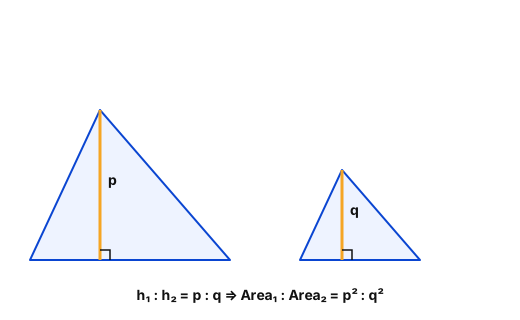
- Altitudes p : q → sides p : q.
- Area ratio = .
- = .
Trick: Length ratio k → area , volume .
Answer: (B)
अवधारणा: समरूप त्रिभुजों की सभी संगत लंबाइयों का अनुपात एक ही होता है; क्षेत्रफल उसके वर्ग में।
हल:
- शीर्षलंब p : q → भुजाएँ p : q।
- क्षेत्रफल अनुपात = ।
- = ।
ट्रिक: लंबाई अनुपात k → क्षेत्रफल , आयतन ।
उत्तर: (B)
SSC CHSLQuantitative AptitudeSimilar triangles – area ratioSSC CHSL 2025 · 12 Nov Shift 3
Q1222.Rationalize the denominator:
हर का परिमेयकरण कीजिए:
- A
- B
- C
- D
Show answer
Concept: Multiply by the conjugate: .
- .
- Denominator = .
- .
Trick: Denominator becomes , so the coefficient is and the sign flips to minus.
Answer: (B)
अवधारणा: संयुग्मी से गुणा करें: ।
हल:
- ।
- हर = ।
- ।
ट्रिक: हर 2 बनता है, तो गुणांक और चिह्न ऋण हो जाता है।
उत्तर: (B)
SSC CHSLQuantitative AptitudeSurds – rationalising the denominatorSSC CHSL 2025 · 12 Nov Shift 3
Q1223.If , and , find the value of .
यदि तथा है, तो का मान ज्ञात कीजिए।
- A27
- B54
- C18
- D45
Show answer
Concept: .
- , where S is the required sum.
- .
- .
Trick: Required value = .
Answer: (B) 54
अवधारणा: ।
हल:
- (S = माँगा गया योग)।
- ।
- ।
ट्रिक: सीधा: ।
उत्तर: (B) 54
SSC CHSLQuantitative AptitudeAlgebra – a³ + b³ + c³ − 3abc identitySSC CHSL 2025 · 12 Nov Shift 3
Q1224. ?
- A
- B
- C
- D
Show answer
Concept: Use and .
- Numerator: .
- Denominator: .
- .
Trick: Put : expression = ; option D = ✔, option B = 3 ✘.
Answer: (D)
अवधारणा: और का प्रयोग।
हल:
- अंश: ।
- हर: ।
- ।
ट्रिक: रखें: मान = ; विकल्प D: ✔।
उत्तर: (D)
SSC CHSLQuantitative AptitudeTrigonometry – simplificationSSC CHSL 2025 · 12 Nov Shift 3
Q1225.A line passes through the points ( 3 , 5) and (2, 7). Find the equation of the line in slope-intercept form.
एक रेखा बिंदुओं ( 3 , 5) और (2, 7) से होकर जाती है। इस रेखा का समीकरण ढाल-अंतःखंड रूप में ज्ञात कीजिए।
- A
- B
- C
- D
Show answer
Concept: Slope ; then .
- .
- Through (3, 5): → .
- , i.e. .
Trick: Just substitute both points in the options: and ✔.
Answer: (D)
अवधारणा: ढाल ; फिर ।
हल:
- ।
- (3, 5) से: → ।
- , अर्थात ।
ट्रिक: दोनों बिंदु विकल्पों में रखें: , ✔।
उत्तर: (D)
SSC CHSLQuantitative AptitudeStraight line – equation from two pointsSSC CHSL 2025 · 12 Nov Shift 3
Q1226.If , and 64 , then find the value of
यदि है, तथा 64 है, तो का मान ज्ञात कीजिए।
- A-32
- B32
- C-64
- D64
Show answer
Concept: .
- Let . Then .
- .
Trick: If , then directly.
Answer: (A) -32
अवधारणा: ।
- माना , तो ।
- ।
ट्रिक: हो तो = = ।
उत्तर: (A) -32
SSC CHSLQuantitative AptitudeAlgebra – (a+b+c)² identitySSC CHSL 2025 · 12 Nov Shift 2
Q1227.P, Q, and R invest in a business with their capitals in the ratio 4 : 5 : 6. After 8 months, P increases his capital by . At the end of 2 years, the total profit earned is ₹1,40,000. How much profit does P receive?
P, Q तथा R किसी व्यवसाय में 4 : 5 : 6 के अनुपात में पूँजी निवेश करते हैं। 8 महीने बाद P अपनी पूँजी बढ़ा देता है। 2 वर्ष के अंत में अर्जित कुल लाभ ₹1,40,000 है। P को कितना लाभ प्राप्त होता है?
- ARs. 58,000
- BRs. 40,456.78
- CRs. 42,000
- DRs. 45,714.28
Show answer
Concept: Profit is shared in the ratio of capital × time (months).
- Total time = 24 months. P: 4 for 8 months, then for 16 months.
- ; ; .
- Ratio 128 : 120 : 144 = 16 : 15 : 18 (sum 49).
- ₹45,714.28.
Trick: Reduce the ratio first (÷8): is easier – and since is not exact, only the decimal option can be right.
Answer: (D) Rs. 45,714.28
अवधारणा: लाभ का बँटवारा पूँजी × समय (महीने) के अनुपात में होता है।
- कुल समय 24 महीने। P: 8 महीने 4, फिर 16 महीने ।
- ; ; ।
- अनुपात 16 : 15 : 18 (योग 49)।
- ₹45,714.28।
ट्रिक: अनुपात को पहले 8 से छोटा करें; पूर्ण नहीं बँटता, इसलिए दशमलव वाला विकल्प ही सही होगा।
उत्तर: (D) Rs. 45,714.28
SSC CHSLQuantitative AptitudePartnership – capital changed mid-waySSC CHSL 2025 · 12 Nov Shift 2
Q1228.If and , find
यदि तथा है, तो का मान ज्ञात कीजिए।
- A
- B
- C1
- D
Show answer
Concept: ; use the 8-15-17 triplet.
- .
- .
- Value = .
Trick: means A and B are the same acute angle, so .
Answer: (C) 1
अवधारणा: ; 8-15-17 त्रिक का उपयोग करें।
- ।
- ।
- मान = ।
ट्रिक: और , इसलिए ।
उत्तर: (C) 1
SSC CHSLQuantitative AptitudeTrigonometry – cos(A − B)SSC CHSL 2025 · 12 Nov Shift 2
Q1229.A vendor buys apples at 6 for ₹80 and sells them at 4 for ₹90. What is his profit or loss percentage?
एक विक्रेता 6 सेब ₹80 में खरीदता है तथा 4 सेब ₹90 में बेचता है। उसका लाभ अथवा हानि प्रतिशत क्या है?
- A64.75% profit64.75% लाभ
- B65.65% loss65.65% हानि
- C67.50% loss67.50% हानि
- D68.75% profit68.75% लाभ
Show answer
Concept: Compare CP and SP of the same number of articles (take LCM of 6 and 4 = 12).
- CP of 12 apples = ₹160.
- SP of 12 apples = ₹270.
- Profit = 110; profit % = .
Trick: Cross-multiply: Profit % = .
Answer: (D) 68.75% profit
अवधारणा: बराबर संख्या की वस्तुओं का CP और SP निकालें (6 और 4 का LCM = 12)।
- 12 सेब का CP = ₹160।
- 12 सेब का SP = ₹270।
- लाभ = 110; लाभ% = ।
ट्रिक: गुणा-तिरछा तरीका: ।
उत्तर: (D) 68.75% लाभ
SSC CHSLQuantitative AptitudeProfit & loss – buying and selling in bunchesSSC CHSL 2025 · 12 Nov Shift 2
Q1230.P and Q together have Rs. 12000. If of s amount is equal to of s amount, how much amount does P have?
P तथा Q के पास मिलाकर Rs. 12000 हैं। यदि गुना की राशि, गुना की राशि के बराबर है, तो P के पास कितनी राशि है?
- ARs. 6683.5
- BRs. 7000
- CRs. 5016
- DRs. 5498.5
Show answer
Concept: If , then .
- .
- Total parts = .
- ₹6683.5.
Trick: Cross rule: in , – just flip the fractions.
Answer: (A) Rs. 6683.5
अवधारणा: यदि , तो ।
- ।
- कुल भाग = 79।
- ₹6683.5।
ट्रिक: हो तो – भिन्नों को उलट दें।
उत्तर: (A) Rs. 6683.5
SSC CHSLQuantitative AptitudeRatio – fraction of one equals fraction of otherSSC CHSL 2025 · 12 Nov Shift 2
Q1231.An amount is said to double in 8 years with compound interest. How many years will it take for the amount to grow to 16 times its original value ?
चक्रवृद्धि ब्याज पर कोई धनराशि 8 वर्षों में दोगुनी हो जाती है। उसी धनराशि को अपने मूल मान का 16 गुना होने में कितने वर्ष लगेंगे?
- A35
- B30
- C32
- D20
Show answer
Concept: Under CI, the amount multiplies by the same factor in equal time intervals.
- ×2 every 8 years.
- → four doublings.
- Time = years.
Trick: 1→2→4→8→16: count the arrows (4) and multiply by 8.
Answer: (C) 32
अवधारणा: चक्रवृद्धि में समान समय-अंतराल पर राशि उसी गुणक से बढ़ती है।
- हर 8 वर्ष में ×2।
- → चार बार दोगुना।
- समय = वर्ष।
ट्रिक: 1→2→4→8→16: तीर गिनें (4) और 8 से गुणा करें।
उत्तर: (C) 32
SSC CHSLQuantitative AptitudeCompound interest – doubling timeSSC CHSL 2025 · 12 Nov Shift 2
Q1232.The ratio of the speeds of a bike and a car is . If the bike travels 180 km in 6 hours, how far will the car travel in 8 hours ?
एक बाइक तथा एक कार की चालों का अनुपात है। यदि बाइक 6 घंटे में 180 km की दूरी तय करती है, तो कार 8 घंटे में कितनी दूरी तय करेगी?
- A300 km
- B336 km
- C350 km
- D380 km
Show answer
Concept: Find the bike's speed, scale it by the ratio, then distance = speed × time.
- Bike speed = km/h = 5 units → 1 unit = 6.
- Car speed = km/h.
- Distance = km.
Trick: Directly: km.
Answer: (B) 336 km
अवधारणा: बाइक की चाल निकालें, अनुपात से कार की चाल, फिर दूरी = चाल × समय।
- बाइक की चाल = km/h = 5 भाग → 1 भाग = 6।
- कार की चाल = 42 km/h।
- दूरी = km।
ट्रिक: सीधे: km।
उत्तर: (B) 336 km
SSC CHSLQuantitative AptitudeSpeed – ratio of speedsSSC CHSL 2025 · 12 Nov Shift 2
Q1233.The average marks of 40 students is 66 . If one student who scored 50 is replaced by another who scored 90 , what will be the new average ?
40 छात्रों के औसत अंक 66 हैं। यदि 50 अंक प्राप्त करने वाले एक छात्र के स्थान पर 90 अंक प्राप्त करने वाला दूसरा छात्र आ जाए, तो नया औसत क्या होगा?
- A67
- B68
- C60
- D65
Show answer
Concept: New average = old average + (change in total) ÷ number of items.
- Change in total = .
- Change in average = .
- New average = .
Trick: No need to find the total – just divide the difference by the count.
Answer: (A) 67
अवधारणा: नया औसत = पुराना औसत + (योग में परिवर्तन) ÷ संख्या।
- योग में परिवर्तन = ।
- औसत में परिवर्तन = ।
- नया औसत = 67।
ट्रिक: कुल योग निकालने की ज़रूरत नहीं – केवल अंतर को संख्या से भाग दें।
उत्तर: (A) 67
SSC CHSLQuantitative AptitudeAverage – replacementSSC CHSL 2025 · 12 Nov Shift 2
Q1234.Which of the following is the smallest number divisible by 11,15 , and 24 and leaves a remainder of 5 in each case ?
निम्नलिखित में से कौन-सी सबसे छोटी संख्या है, जो 11, 15 तथा 24 से भाग देने पर प्रत्येक स्थिति में शेषफल 5 छोड़ती है?
- A1320
- B1325
- C1250
- D1300
Show answer
Concept: Smallest number leaving the same remainder r = LCM + r.
- .
- Required number = .
Trick: The answer must end in 5 more than a multiple of 1320 – options 1320, 1250, 1300 drop out at a glance.
Answer: (B) 1325
अवधारणा: समान शेषफल r छोड़ने वाली सबसे छोटी संख्या = LCM + r।
- ।
- अभीष्ट संख्या = ।
ट्रिक: उत्तर = LCM + 5 – इसलिए 1320, 1250, 1300 तुरंत हट जाते हैं।
उत्तर: (B) 1325
SSC CHSLQuantitative AptitudeLCM – same remainderSSC CHSL 2025 · 12 Nov Shift 2
Q1235.The price of a shirt is increased by and then again increased by . What is the net percentage increase in price?
एक शर्ट की कीमत बढ़ा दी जाती है और फिर उसे पुनः बढ़ा दिया जाता है। कीमत में शुद्ध प्रतिशत वृद्धि क्या है?
- A50%
- B56%
- C51%
- D53%
Show answer
Concept: Two successive changes a% and b% give net .
- , .
- Net = .
Trick: Multiplier method: → 56% increase.
Answer: (B) 56%
अवधारणा: दो क्रमिक परिवर्तन a% और b% का कुल प्रभाव = ।
- , ।
- कुल = ।
ट्रिक: गुणक विधि: → 56% वृद्धि।
उत्तर: (B) 56%
SSC CHSLQuantitative AptitudeSuccessive percentage increaseSSC CHSL 2025 · 12 Nov Shift 2
Q1236.P can complete a task in 20 days and , can finish a task in 30 days respectively. starts the work and works for 8 days, after which joins P. How many more days will they take to complete the task ?
P एक कार्य को 20 दिनों में और एक कार्य को क्रमशः 30 दिनों में पूरा कर सकता है। कार्य आरंभ करता है और 8 दिनों तक कार्य करता है, जिसके बाद भी P के साथ कार्य में जुड़ जाता है। शेष कार्य पूरा करने में उन्हें और कितने दिन लगेंगे?
- A7.2 days7.2 दिन
- B7.5 days7.5 दिन
- C7.8 days7.8 दिन
- D7.4 days7.4 दिन
Show answer
Concept: Take total work = LCM of days; find what is left after P works alone.
- Work = 60 units; P = 3/day, Q = 2/day.
- P in 8 days = 24 → left 36.
- Together 5/day → days.
Trick: Fraction way: P does ; remaining .
Answer: (A) 7.2 days
अवधारणा: कुल कार्य = दिनों का LCM; P के अकेले काम के बाद शेष कार्य निकालें।
- कार्य = 60 इकाई; P = 3/दिन, Q = 2/दिन।
- P 8 दिन में = 24 → शेष 36।
- दोनों मिलकर 5/दिन → दिन।
ट्रिक: भिन्न विधि: शेष दिन।
उत्तर: (A) 7.2 दिन
SSC CHSLQuantitative AptitudeTime & work – one joins laterSSC CHSL 2025 · 12 Nov Shift 2
Q1237.A fan's cost price is unknown. A retailer marks it up so that its marked price is ₹8,000. They offer a 25% discount on this marked price. Even after the discount, they make a profit of 20%. What was the original cost price of the fan for the retailer ?
एक पंखे का क्रय मूल्य ज्ञात नहीं है। एक फुटकर विक्रेता उस पर इस प्रकार मूल्य अंकित करता है कि उसका अंकित मूल्य ₹8,000 हो जाता है। वह इस अंकित मूल्य पर 25% की छूट देता है। छूट देने के बाद भी उसे 20% का लाभ होता है। फुटकर विक्रेता के लिए पंखे का मूल क्रय मूल्य कितना था?
- A₹5,000
- B₹5,500
- C₹5,200
- D₹5,000
Show answer
Concept: ; .
- ₹6000.
- ₹5000.
Trick: One line: ₹5000. (Options A and D both read ₹5,000; the key marks D.)
Answer: (D) ₹5,000
अवधारणा: SP = MP × (1 − छूट); CP = SP ÷ (1 + लाभ)।
- ₹6000।
- ₹5000।
ट्रिक: एक पंक्ति में: ₹5000। (विकल्प A और D दोनों ₹5,000 हैं; key में D है।)
उत्तर: (D) ₹5,000
SSC CHSLQuantitative AptitudeDiscount and profit – find CPSSC CHSL 2025 · 12 Nov Shift 2
Q1238.A sum of money amounts to ₹8,840 in 7 years and to ₹9,880 in 9 years at a certain rate of simple interest. What is the annual rate of interest?
एक धनराशि साधारण ब्याज की किसी निश्चित दर पर 7 वर्षों में ₹8,840 और 9 वर्षों में ₹9,880 हो जाती है। ब्याज की वार्षिक दर कितनी है?
- A12%
- B15%
- C10%
- D13%
Show answer
Concept: In SI, the difference of amounts = interest for the extra years.
- 2 years' interest = → 1 year = 520.
- Principal = .
- Rate = .
Trick: After getting yearly SI, rate = yearly SI ÷ P × 100 – no formula juggling needed.
Answer: (C) 10%
अवधारणा: साधारण ब्याज में मिश्रधनों का अंतर = अतिरिक्त वर्षों का ब्याज।
- 2 वर्ष का ब्याज = 1040 → 1 वर्ष = 520।
- मूलधन = ।
- दर = ।
ट्रिक: एक वर्ष का ब्याज ÷ मूलधन × 100 = दर।
उत्तर: (C) 10%
SSC CHSLQuantitative AptitudeSimple interest – rate from two amountsSSC CHSL 2025 · 12 Nov Shift 2
Q1239.Find the value of
निम्नलिखित का मान ज्ञात कीजिए:
- A5
- B3
- C8
- D15
Show answer
Concept: If , then .
- Square: ⇒ .
- ⇒ (x must be positive).
Trick: For : write ; the value is n. Here .
Answer: (A) 5
अवधारणा: यदि , तो ।
- वर्ग करने पर: ⇒ ।
- ⇒ (x धनात्मक)।
ट्रिक: में लिखें, मान n होगा। ।
उत्तर: (A) 5
SSC CHSLQuantitative AptitudeInfinite nested square rootSSC CHSL 2025 · 12 Nov Shift 2
Q1240.A drum contains 120 litres of a pure acid solution. If 16 litres of this solution are removed and replaced with 16 litres of pure water, what is the new percentage of acid in the solution ?
एक ड्रम में शुद्ध अम्ल वाले विलयन के 120 लीटर हैं। यदि इस विलयन में से 16 लीटर निकालकर उसके स्थान पर 16 लीटर शुद्ध जल मिला दिया जाए, तो विलयन में अम्ल का नया प्रतिशत क्या होगा?
- A60.33%
- B61 %
- C69.33%
- D65%
Show answer
Concept: Removing part of a mixture removes acid in the same ratio; added water adds no acid.
- Acid = 80% of 120 = 96 L.
- Removed acid = 80% of 16 = 12.8 L → left 83.2 L.
- New % = .
Trick: Concentration × (1 − removed/total): .
Answer: (C) 69.33%
अवधारणा: मिश्रण का कुछ भाग निकालने पर अम्ल उसी अनुपात में निकलता है; पानी डालने से अम्ल नहीं बढ़ता।
- अम्ल = 120 का 80% = 96 L।
- निकाला गया अम्ल = 16 का 80% = 12.8 L → शेष 83.2 L।
- नया % = ।
ट्रिक: सांद्रता × (1 − निकाला/कुल) = ।
उत्तर: (C) 69.33%
SSC CHSLQuantitative AptitudeMixture – replacement with waterSSC CHSL 2025 · 12 Nov Shift 2

