Q141.Two figures given on the left side of (::) are related with some logic/rule/relation. Select the missing figure on the right side of (:) from the given alternatives based on the same logic/rule/relation.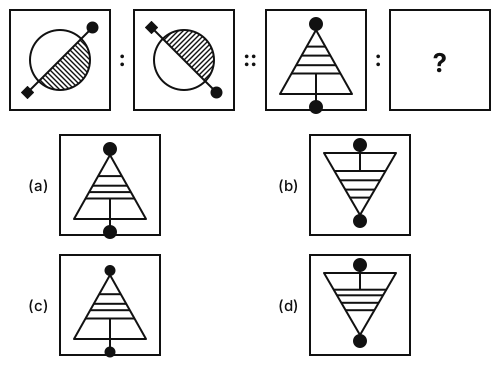
(::) के बाईं ओर दी गई दो आकृतियाँ किसी तर्क/नियम/संबंध से संबंधित हैं। उसी तर्क/नियम/संबंध के आधार पर दिए गए विकल्पों में से (:) के दाईं ओर की लुप्त आकृति का चयन कीजिए। - A(a)
- B(b)
- C(c)
- D(d)
Show answer
Concept: The second figure is the first flipped about a horizontal line (top ↔ bottom).
- In pair 1, the parts at the top go to the bottom and vice versa; left-right positions stay the same.
- Flip the third figure the same way: the upright triangle becomes inverted, its top dot goes to the bottom vertex and the stem with the other dot now points upward.
- This matches option (B).
Trick: In a top-bottom flip, nothing moves sideways — reject options where elements shift left or right.
Answer: (B) Option (B)
अवधारणा: दूसरी आकृति, पहली को क्षैतिज रेखा के सापेक्ष पलटने (ऊपर ↔ नीचे) से बनी है।
- जोड़ा 1 में ऊपर के भाग नीचे और नीचे के ऊपर चले गए; बाएँ-दाएँ स्थिति वही रही।
- तीसरी आकृति को भी ऐसे पलटें: सीधा त्रिभुज उल्टा, ऊपर का बिंदु नीचे के शीर्ष पर और दूसरी डंडी ऊपर की ओर।
- यह विकल्प (B) से मेल खाता है।
ट्रिक: ऊपर-नीचे पलटने में कोई भाग बाएँ-दाएँ नहीं खिसकता — ऐसे विकल्प हटा दें।
उत्तर: (B) विकल्प (B)
SSC CHSLGeneral IntelligenceFigure analogy – water image (flip)SSC CHSL 2025 · 29 Nov Shift 1
Q142.In the following figure series, select the figure which can be placed at the sign of question mark (?) from the given alternatives.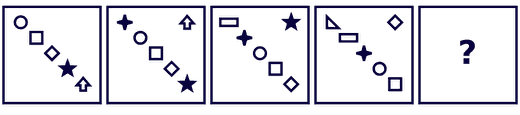
निम्नलिखित आकृति-शृंखला में, दिए गए विकल्पों में से उस आकृति का चयन कीजिए जिसे प्रश्नवाचक चिह्न (?) के स्थान पर रखा जा सकता है। - A (b) O
- B O (d) 口
- C
- D口
Show answer
Concept: Track how the row of shapes on the diagonal shifts from one figure to the next.
- Each step, the five diagonal shapes slide one place towards the bottom-right.
- The shape that falls off the end goes to the top-right corner; a new shape enters at the top-left.
- Figure 4: triangle, bar, 4-point star, circle, square on the diagonal → in figure 5 the square leaves to the corner and the rest shift down → option (D).
Trick: Only the corner shape needs checking: it is always the last shape of the previous diagonal — here the square (口).
Answer: (D) 口
अवधारणा: तिरछी रेखा पर रखी आकृतियाँ हर चरण में कैसे खिसकती हैं, यह देखें।
- हर चरण में पाँचों आकृतियाँ एक स्थान नीचे-दाएँ खिसकती हैं।
- अंत से निकली आकृति ऊपर-दाएँ कोने में जाती है; ऊपर-बाएँ नई आकृति आती है।
- आकृति 4: त्रिभुज, डंडी, 4-कोनी तारा, वृत्त, वर्ग → आकृति 5 में वर्ग कोने में जाएगा और बाकी नीचे खिसकेंगी → विकल्प (D)।
ट्रिक: केवल कोने वाली आकृति जाँचें: वह पिछली आकृति की अंतिम आकृति (यहाँ वर्ग 口) होती है।
उत्तर: (D) 口
SSC CHSLGeneral IntelligenceFigure series – sliding chainSSC CHSL 2025 · 29 Nov Shift 1
Q143.After interchanging the given two signs, what will be the value of the given equation?
and ÷
?
दिए गए दो चिह्नों को आपस में बदलने पर, दिए गए समीकरण का मान क्या होगा?
और ÷
?
- A85
- B90
- C100
- D95
Show answer
Concept: Swap the two given signs (− and ÷) everywhere, then solve by BODMAS.
- → .
- .
- = 95.
Trick: Rewrite the whole expression after swapping before calculating — most errors come from swapping only one sign.
Answer: (D) 95
अवधारणा: दिए गए दोनों चिह्न (− और ÷) हर जगह आपस में बदलें, फिर BODMAS से हल करें।
- → ।
- ।
- = 95।
ट्रिक: गणना से पहले पूरा व्यंजक बदलकर लिखें — गलती अक्सर एक ही चिह्न बदलने से होती है।
उत्तर: (D) 95
SSC CHSLGeneral IntelligenceSign interchange – BODMASSSC CHSL 2025 · 29 Nov Shift 1
Q144.Select the correct combination of mathematical signs to replace (*) signs sequentially and to balance the given equation.
(*) चिह्नों को क्रमानुसार प्रतिस्थापित करने तथा दिए गए समीकरण को संतुलित करने के लिए गणितीय चिह्नों के सही संयोजन का चयन कीजिए।
- A,
- B
- C
- D,
Show answer
Concept: Insert the signs in order and evaluate with BODMAS.
- Using ×, +, ÷, −: .
- ; .
- = 94 ✓.
Trick: 94 is close to , so the first sign is likely ×; then you need , i.e. .
Answer: (A) ,
अवधारणा: चिह्नों को क्रम से रखें और BODMAS से जाँचें।
- ×, +, ÷, − लगाने पर: ।
- ; ।
- = 94 ✓।
ट्रिक: 94, के पास है — पहला चिह्न × लगेगा; फिर चाहिए यानी ।
उत्तर: (A) ,
SSC CHSLGeneral IntelligenceBalancing an equation with signsSSC CHSL 2025 · 29 Nov Shift 1
Q145.In the following question, four letter-number pairs are given. The letter-number on the left side of is related to the letter-number on the right side of (-) with some Logic/Rule/Relation. Three pairs are similar on the basis of same Logic/Rule/Relation. Select the odd one out from the given alternatives.
(NOTE: Operations should be performed on the whole numbers, without breaking down the number into its constituent digits. E.g. 13 - Operations on 13 such as adding /subtracting /multiplying etc. to 13 can be performed. Breaking down 13 into 1 and 3 and then performing mathematical operations on 1 and 3 is not allowed)
निम्नलिखित प्रश्न में चार अक्षर-संख्या युग्म दिए गए हैं। के बाईं ओर की अक्षर-संख्या, (-) के दाईं ओर की अक्षर-संख्या से किसी तर्क/नियम/संबंध द्वारा संबंधित है। तीन युग्म उसी तर्क/नियम/संबंध के आधार पर समान हैं। दिए गए विकल्पों में से विषम युग्म का चयन कीजिए।
(नोट: संक्रियाएँ पूर्ण संख्याओं पर की जानी चाहिए, संख्या को उसके अंकों में विभाजित किए बिना। उदाहरण के लिए 13 - 13 पर की जाने वाली संक्रियाएँ जैसे 13 में जोड़ना/घटाना/गुणा करना आदि की जा सकती हैं। 13 को 1 और 3 में विभाजित करके 1 और 3 पर गणितीय संक्रियाएँ करने की अनुमति नहीं है।)
- ATB287 - SZ581
- BQL320 - PJ604
- CFC231 - EA525
- DUH410 - TF704
Show answer
Concept: Check letters and numbers separately; the pair that breaks either rule is odd.
- Letters: 1st letter −1, 2nd letter −2 in all pairs (T→S, B→Z; Q→P, L→J …).
- Numbers: 287 + 294 = 581; 231 + 294 = 525; 410 + 294 = 704.
- But 320 + 294 = 614 ≠ 604 → QL320 – PJ604 is odd.
Trick: If the letters agree everywhere, go straight to the numbers — just compare the difference in each pair.
Answer: (B) QL320 - PJ604
अवधारणा: अक्षर और संख्या अलग-अलग जाँचें; जो युग्म किसी नियम को तोड़े वही विषम।
- अक्षर: सभी में पहला अक्षर −1, दूसरा −2 (T→S, B→Z; Q→P, L→J …)।
- संख्या: 287 + 294 = 581; 231 + 294 = 525; 410 + 294 = 704।
- पर 320 + 294 = 614 ≠ 604 → QL320 – PJ604 विषम।
ट्रिक: अक्षर सब में समान हों तो सीधे संख्याओं का अंतर देखें।
उत्तर: (B) QL320 - PJ604
SSC CHSLGeneral IntelligenceOdd one out – letter-number pairsSSC CHSL 2025 · 29 Nov Shift 1
Q146.In the following question, four letter-number pairs are given. The letter-number on the left side of (-) is related to the letter-number on the right side of (-) with some Logic/Rule/Relation. Three pairs are similar on the basis of same Logic/Rule/Relation. Select the odd one out from the given alternatives.
(NOTE: Operations should be performed on the whole numbers, without breaking down the number into its constituent digits. E.g. 13 - Operations on 13 such as adding /subtracting /multiplying etc. to 13 can be performed. Breaking down 13 into 1 and 3 and then performing mathematical operations on 1 and 3 is not allowed)
निम्नलिखित प्रश्न में चार अक्षर-संख्या युग्म दिए गए हैं। (-) के बाईं ओर की अक्षर-संख्या, (-) के दाईं ओर की अक्षर-संख्या से किसी तर्क/नियम/संबंध द्वारा संबंधित है। तीन युग्म उसी तर्क/नियम/संबंध के आधार पर समान हैं। दिए गए विकल्पों में से विषम युग्म का चयन कीजिए।
(नोट: संक्रियाएँ पूर्ण संख्याओं पर की जानी चाहिए, संख्या को उसके अंकों में विभाजित किए बिना। उदाहरण के लिए 13 - 13 पर की जाने वाली संक्रियाएँ जैसे 13 में जोड़ना/घटाना/गुणा करना आदि की जा सकती हैं। 13 को 1 और 3 में विभाजित करके 1 और 3 पर गणितीय संक्रियाएँ करने की अनुमति नहीं है।)
- ARC206-OW617
- BLA194 - IU581
- CKS187 - HM560
- DER313 - BN939
Show answer
Concept: Find the common letter shift and number rule from the majority.
- Letters: 1st letter −3, 2nd letter −6 (R→O, C→W; L→I, A→U; K→H, S→M).
- Numbers: × 3 − 1: 206 → 617, 194 → 581, 187 → 560.
- ER313 – BN939: R→N is only −4, and → odd.
Trick: Backward shift past A: count C, B, A, Z, Y, X, W — or use = W.
Answer: (D) ER313 - BN939
अवधारणा: बहुमत से अक्षरों का खिसकाव और संख्या का नियम निकालें।
- अक्षर: पहला −3, दूसरा −6 (R→O, C→W; L→I, A→U; K→H, S→M)।
- संख्या: × 3 − 1: 206 → 617, 194 → 581, 187 → 560।
- ER313 – BN939: R→N केवल −4, और → विषम।
ट्रिक: A से पीछे जाना हो तो 26 जोड़ें: = W।
उत्तर: (D) ER313 - BN939
SSC CHSLGeneral IntelligenceOdd one out – letter-number pairsSSC CHSL 2025 · 29 Nov Shift 1
Q147.In the following question, four number pairs are given. In each pair the number on left side of (-) is related to the number of the right side of (-) with some Logic/Rule/Relation. Three pairs are similar on the basis of same Logic/Rule/Relation. Select the odd one out from the given alternatives.
(NOTE: Operations should be performed on the whole numbers, without breaking down the number into its constituent digits. E.g.13- Operations on 13 such as adding /subtracting /multiplying etc. to 13 can be performed. Breaking down 13 into 1 and 3 and then performing mathematical operations on 1 and 3 is not allowed)
निम्नलिखित प्रश्न में चार संख्या युग्म दिए गए हैं। प्रत्येक युग्म में (-) के बाईं ओर की संख्या, (-) के दाईं ओर की संख्या से किसी तर्क/नियम/संबंध द्वारा संबंधित है। तीन युग्म उसी तर्क/नियम/संबंध के आधार पर समान हैं। दिए गए विकल्पों में से विषम युग्म का चयन कीजिए।
(नोट: संक्रियाएँ पूर्ण संख्याओं पर की जानी चाहिए, संख्या को उसके अंकों में विभाजित किए बिना। उदाहरण के लिए 13 - 13 पर की जाने वाली संक्रियाएँ जैसे 13 में जोड़ना/घटाना/गुणा करना आदि की जा सकती हैं। 13 को 1 और 3 में विभाजित करके 1 और 3 पर गणितीय संक्रियाएँ करने की अनुमति नहीं है।)
- A2652-663
- B1548-387
- C2376-594
- D1981-492
Show answer
Concept: .
- ✓; ✓; ✓.
- 1981 is odd, so not divisible by 4 → 1981 – 492 is the odd pair.
Trick: Divisibility by 4: last two digits must be divisible by 4 — 52, 48, 76 yes; 81 no.
Answer: (D) 1981-492
अवधारणा: ।
- ✓; ✓; ✓।
- 1981 विषम संख्या है, 4 से विभाज्य नहीं → 1981 – 492 विषम युग्म।
ट्रिक: 4 से विभाज्यता: अंतिम दो अंक 4 से विभाज्य — 52, 48, 76 हाँ; 81 नहीं।
उत्तर: (D) 1981-492
SSC CHSLGeneral IntelligenceOdd one out – number pairsSSC CHSL 2025 · 29 Nov Shift 1
Q148.In the following question, in each alternative a group of numbers is given. The numbers of each group are related to the numbers of the same group by some Logic/Rule/Relation. Select that group of numbers in which numbers are not related by that same Logic/Rule/Relation.
(NOTE: Operations should be performed on the whole numbers, without breaking down the number into its constituent digits. E.g. 13 - Operations on 13 such as adding /subtracting /multiplying etc. to 13 can be performed. Breaking down 13 into 1 and 3 and then performing mathematical operations on 1 and 3 is not allowed)
निम्नलिखित प्रश्न में, प्रत्येक विकल्प में संख्याओं का एक समूह दिया गया है। प्रत्येक समूह की संख्याएँ उसी समूह की संख्याओं से किसी तर्क/नियम/संबंध द्वारा संबंधित हैं। उस संख्या समूह का चयन कीजिए जिसमें संख्याएँ उसी तर्क/नियम/संबंध द्वारा संबंधित नहीं हैं।
(नोट: संक्रियाएँ पूर्ण संख्याओं पर की जानी चाहिए, संख्या को उसके अंकों में विभाजित किए बिना। उदाहरण के लिए 13 - 13 पर की जाने वाली संक्रियाएँ जैसे 13 में जोड़ना/घटाना/गुणा करना आदि की जा सकती हैं। 13 को 1 और 3 में विभाजित करके 1 और 3 पर गणितीय संक्रियाएँ करने की अनुमति नहीं है।)
- A(48, 96, 120)
- B(66, 132, 170)
- C
- D(72, 144, 180)
Show answer
Concept: In each group: and (ratio 2 : 4 : 5).
- 48 → 96, 120 ✓; 90 → 180, 225 ✓; 72 → 144, 180 ✓.
- 66 → 132 ✓ but , not 170 → odd group.
Trick: 3rd ÷ 2nd should be : is not 1.25 (165 would be).
Answer: (B) (66, 132, 170)
अवधारणा: हर समूह में: , (अनुपात 2 : 4 : 5)।
- 48 → 96, 120 ✓; 90 → 180, 225 ✓; 72 → 144, 180 ✓।
- 66 → 132 ✓ पर , 170 नहीं → विषम समूह।
ट्रिक: तीसरी ÷ दूसरी = होना चाहिए; ।
उत्तर: (B) (66, 132, 170)
SSC CHSLGeneral IntelligenceOdd group – ratio 2 : 4 : 5SSC CHSL 2025 · 29 Nov Shift 1
Q149.Select the option that is related to the fifth letter-number cluster in the same way as the second letter-number cluster is related to the first letter-number cluster and fourth letter-number cluster is related to third letter-number cluster.(NOTE: Operations should be performed on the whole numbers, without breaking down the numbers into its constituent digits. E.g.13- Operations on 13 such as adding /subtracting /multiplying etc. to 13 can be performed. Breaking down 13 into 1 and 3 and then performing mathematical operations on 1 and 3 is not allowed) BM112 : AN562 :: CS280 : BT730 :: GX96 : ?
उस विकल्प का चयन कीजिए जो पाँचवें अक्षर-संख्या समूह से उसी प्रकार संबंधित है, जिस प्रकार दूसरा अक्षर-संख्या समूह पहले अक्षर-संख्या समूह से तथा चौथा अक्षर-संख्या समूह तीसरे अक्षर-संख्या समूह से संबंधित है। (नोट: संक्रियाएँ पूर्ण संख्याओं पर की जानी चाहिए, संख्याओं को उनके अंकों में विभाजित किए बिना। उदाहरण के लिए 13 - 13 पर की जाने वाली संक्रियाएँ जैसे 13 में जोड़ना/घटाना/गुणा करना आदि की जा सकती हैं। 13 को 1 और 3 में विभाजित करके 1 और 3 पर गणितीय संक्रियाएँ करने की अनुमति नहीं है।) BM112 : AN562 :: CS280 : BT730 :: GX96 : ?
- AEZ538
- BEY546
- CFY546
- DFZ538
Show answer
Concept: Apply the same letter shift and number operation to the third cluster.
- Letters: 1st −1, 2nd +1 (B→A, M→N; C→B, S→T).
- Numbers: 112 + 450 = 562; 280 + 450 = 730.
- GX96 → G−1 = F, X+1 = Y, 96 + 450 = 546 → FY546.
Trick: Letters alone settle it: G→F, X→Y gives 'FY' — only one option starts with FY.
Answer: (C) FY546
अवधारणा: वही अक्षर-खिसकाव और संख्या-संक्रिया तीसरे समूह पर लगाएँ।
- अक्षर: पहला −1, दूसरा +1 (B→A, M→N; C→B, S→T)।
- संख्या: 112 + 450 = 562; 280 + 450 = 730।
- GX96 → F, Y; 96 + 450 = 546 → FY546।
ट्रिक: केवल अक्षर देखें: G→F, X→Y = 'FY' — एक ही विकल्प FY से शुरू होता है।
उत्तर: (C) FY546
SSC CHSLGeneral IntelligenceLetter-number analogySSC CHSL 2025 · 29 Nov Shift 1
Q150.Select the option that is related to the fifth letter-number cluster in the same way as the second letter-number cluster is related to the first letter-number cluster and fourth letter-number cluster is related to third letter-number cluster.
(NOTE: Operations should be performed on the whole numbers, without breaking down the numbers into its constituent digits. E.g. 13 - Operations on 13 such as adding /subtracting /multiplying etc. to 13 can be performed. Breaking down 13 into 1 and 3 and then performing mathematical operations on 1 and 3 is not allowed)
PQ8 : JK66 :: G019 : Al363 :: BX13 : ?
उस विकल्प का चयन कीजिए जो पाँचवें अक्षर-संख्या समूह से उसी प्रकार संबंधित है, जिस प्रकार दूसरा अक्षर-संख्या समूह पहले अक्षर-संख्या समूह से तथा चौथा अक्षर-संख्या समूह तीसरे अक्षर-संख्या समूह से संबंधित है।
(नोट: संक्रियाएँ पूर्ण संख्याओं पर की जानी चाहिए, संख्याओं को उनके अंकों में विभाजित किए बिना। उदाहरण के लिए 13 - 13 पर की जाने वाली संक्रियाएँ जैसे 13 में जोड़ना/घटाना/गुणा करना आदि की जा सकती हैं। 13 को 1 और 3 में विभाजित करके 1 और 3 पर गणितीय संक्रियाएँ करने की अनुमति नहीं है।)
PQ8 : JK66 :: G019 : Al363 :: BX13 : ?
- AVR173
- BVS173
- CVS171
- DVR171
Show answer
Concept: Find the letter shift and number rule from the first two pairs.
- Letters: both −6 (P→J, Q→K; G→A, O→I).
- Numbers: ; .
- BX13 → B−6 = V, X−6 = R; → VR171.
Trick: Moving back past A, add 26: = V.
Answer: (D) VR171
अवधारणा: पहले दो युग्मों से अक्षर-खिसकाव और संख्या नियम निकालें।
- अक्षर: दोनों −6 (P→J, Q→K; G→A, O→I)।
- संख्या: ; ।
- BX13 → V, R; → VR171।
ट्रिक: A से पीछे जाने पर 26 जोड़ें: = V।
उत्तर: (D) VR171
SSC CHSLGeneral IntelligenceLetter-number analogy – square + 2SSC CHSL 2025 · 29 Nov Shift 1
Q151.In a row of students, Ravi is 10th from the left and Sumit is 15th from the right. If they exchange their positions, Ravi becomes 24th from the left. What will be the position of Sumit from the right ?
विद्यार्थियों की एक पंक्ति में रवि बाएँ से 10वें स्थान पर तथा सुमित दाएँ से 15वें स्थान पर है। यदि वे अपने स्थान आपस में बदल लेते हैं, तो रवि बाएँ से 24वें स्थान पर आ जाता है। दाएँ से सुमित का स्थान क्या होगा ?
- A28th28वाँ
- B29th29वाँ
- C30th30वाँ
- D31st31वाँ
Show answer
Concept: On exchange, each person takes the other's exact seat; Total = left rank + right rank − 1.
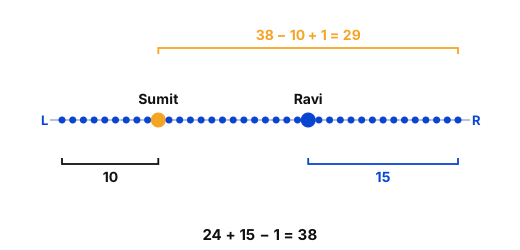
Solution:
- Ravi's new seat (24th from left) = Sumit's old seat, which is 15th from right.
- Total students = 24 + 15 − 1 = 38.
- Sumit now sits at Ravi's old seat = 10th from left → from right = 38 − 10 + 1 = 29th.
Trick: The seat that has both a left rank and a right rank gives the total in one line.
Answer: (B) 29th
अवधारणा: अदला-बदली में दोनों एक-दूसरे की जगह ले लेते हैं; कुल = बाएँ से स्थान + दाएँ से स्थान − 1।
हल:
- रवि की नई जगह (बाएँ से 24वाँ) = सुमित की पुरानी जगह (दाएँ से 15वाँ)।
- कुल छात्र = 24 + 15 − 1 = 38।
- सुमित अब बाएँ से 10वें स्थान पर → दाएँ से = 38 − 10 + 1 = 29वाँ।
ट्रिक: जिस सीट के दोनों ओर के स्थान पता हों, उसी से कुल संख्या निकालें।
उत्तर: (B) 29वाँ
SSC CHSLGeneral IntelligenceRanking – positions after exchangeSSC CHSL 2025 · 28 Nov Shift 3
Q152.In a row of 50 students, Arjun is 18th from the left and Neha is 24th from the right. How many students are between Arjun and Neha ?
50 विद्यार्थियों की एक पंक्ति में अर्जुन बाएँ से 18वें तथा नेहा दाएँ से 24वें स्थान पर है। अर्जुन और नेहा के बीच कितने विद्यार्थी हैं ?
- A6
- B7
- C8
- D9
Show answer
Concept: Convert both ranks to the same end, then between = difference − 1.
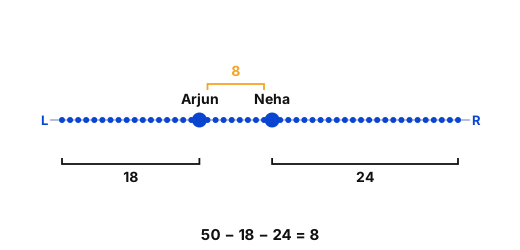
Solution:
- Neha from left = 50 − 24 + 1 = 27th.
- Arjun = 18th from left.
- Between them = 27 − 18 − 1 = 8.
Trick: Quick check: 18 + 24 = 42 < 50, so they do not overlap → between = 50 − 42 = 8.
Answer: (C) 8
अवधारणा: दोनों स्थानों को एक ही सिरे से बदलें; बीच में = अंतर − 1।
हल:
- नेहा बाएँ से = 50 − 24 + 1 = 27वीं।
- अर्जुन बाएँ से 18वाँ।
- बीच में = 27 − 18 − 1 = 8।
ट्रिक: 18 + 24 = 42 < 50 (आपस में नहीं कटते) → बीच में = 50 − 42 = 8।
उत्तर: (C) 8
SSC CHSLGeneral IntelligenceRanking – persons between twoSSC CHSL 2025 · 28 Nov Shift 3
Q153.If and ,
then what is the value of ?
यदि तथा है,
तो का मान क्या होगा ?
- A20.5
- B21.5
- C22.5
- D23.5
Show answer
Concept: Find a rule that fits both given examples, then apply it.
Solution:
- 56 $ 20: ✔
- 74 $ 30: ✔
- 63 $ 18: 22.5
Trick: Results are much smaller than the numbers → try subtraction first; decimal options hint at ÷ 2.
Answer: (C) 22.5
अवधारणा: दोनों उदाहरणों पर लागू होने वाला नियम खोजें, फिर प्रयोग करें।
हल:
- ✔, ✔
- 22.5
ट्रिक: उत्तर संख्याओं से बहुत छोटे हों तो पहले घटाव आज़माएँ; दशमलव विकल्प ÷ 2 का संकेत हैं।
उत्तर: (C) 22.5
SSC CHSLGeneral IntelligenceSymbol operation – half the differenceSSC CHSL 2025 · 28 Nov Shift 3
Q154.If and , then what is the value of 6 ; 25 ?
यदि तथा है, तो 6 ; 25 का मान क्या होगा ?
- A440
- B450
- C460
- D480
Show answer
Concept: Test the pattern on the given pairs.
Solution:
- and ✔
- and ✔
- → 450
Trick: instantly shows the multiplier; answer must be a multiple of 3 and 150 → 450.
Answer: (B) 450
अवधारणा: दिए गए युग्मों पर नियम जाँचें।
हल:
- , ✔; , ✔
- → 450
ट्रिक: से गुणक तुरंत मिलता है।
उत्तर: (B) 450
SSC CHSLGeneral IntelligenceSymbol operation – 3 × productSSC CHSL 2025 · 28 Nov Shift 3
Q155.Find the next element that replaces the ? Logically
19, 28, 39, 52, ?
? के स्थान पर तार्किक रूप से आने वाला अगला पद ज्ञात कीजिए
19, 28, 39, 52, ?
- A65
- B67
- C70
- D57
Show answer
Concept: Check the gaps between terms.
Solution:
- Gaps: 9, 11, 13 → increase by 2.
- Next gap = 15 → = 67.
Trick: Terms = for n = 4, 5, 6, 7, 8 → .
Answer: (B) 67
अवधारणा: पदों के बीच का अंतर देखें।
हल:
- अंतर: 9, 11, 13 → हर बार 2 बढ़ रहा है।
- अगला अंतर 15 → = 67।
ट्रिक: पद = (n = 4 से 8) → ।
उत्तर: (B) 67
SSC CHSLGeneral IntelligenceNumber series – odd differencesSSC CHSL 2025 · 28 Nov Shift 3
Q156.Find the next element that replaces the ? Logically
11, 18, 27, 38, ?
? के स्थान पर तार्किक रूप से आने वाला अगला पद ज्ञात कीजिए
11, 18, 27, 38, ?
- A45
- B42
- C53
- D51
Show answer
Concept: Check the gaps between terms.
Solution:
- Gaps: 7, 9, 11 → increase by 2.
- Next gap = 13 → = 51.
Trick: Terms = for n = 3, 4, 5, 6, 7 → .
Answer: (D) 51
अवधारणा: पदों के बीच का अंतर देखें।
हल:
- अंतर: 7, 9, 11 → हर बार 2 अधिक।
- अगला अंतर 13 → = 51।
ट्रिक: पद = (n = 3 से 7) → ।
उत्तर: (D) 51
SSC CHSLGeneral IntelligenceNumber series – odd differencesSSC CHSL 2025 · 28 Nov Shift 3
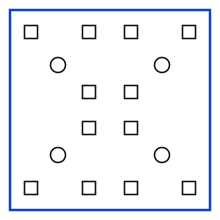
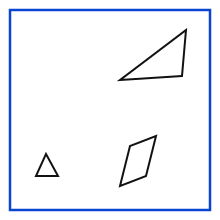
Q157.A piece of paper is folded and punched as shown below in the question figures. From the given option figures, indicate how it will appear when opened.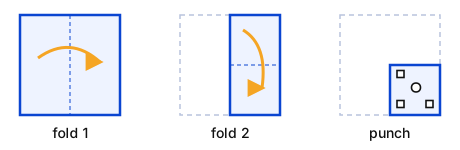
एक कागज़ के टुकड़े को नीचे प्रश्न-आकृतियों में दर्शाए अनुसार मोड़ा और पंच किया गया है। दी गई विकल्प-आकृतियों में से बताइए कि खोलने पर वह कैसा दिखाई देगा। - A
- B
- C
- D
Show answer
Concept: Unfold in reverse order; every unfolding mirrors the holes across that fold line.
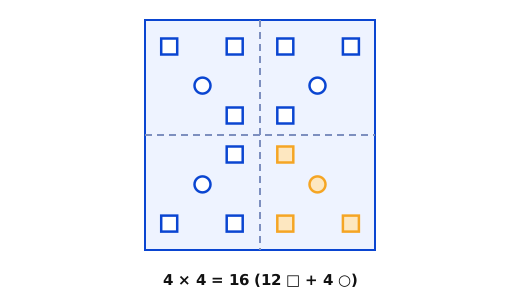
Solution:
- Fold 1 (left onto right) + Fold 2 (top onto bottom) leave only the bottom-right quarter.
- That quarter has 3 square holes and 1 circle.
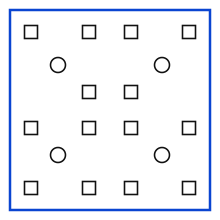
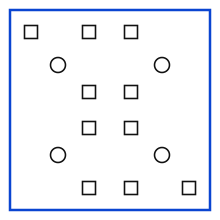
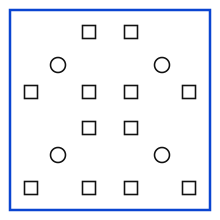
- Two unfoldings → each hole appears 4 times: 12 squares and 4 circles, symmetric about both centre lines.
Trick: ; pick the option with full left-right and top-bottom symmetry.
Answer: (D) Option D
अवधारणा: मोड़ उल्टे क्रम में खोलें; हर बार छेद उस मोड़-रेखा के सापेक्ष दर्पण-प्रतिबिंब बनाते हैं।
हल:
- दो मोड़ों के बाद केवल नीचे-दाएँ का चौथाई भाग बचता है।
- उस पर 3 वर्गाकार छेद और 1 वृत्त है।
- दो बार खोलने पर हर छेद 4 बार → 12 वर्ग और 4 वृत्त, दोनों केंद्र-रेखाओं के सापेक्ष सममित।
ट्रिक: ।
उत्तर: (D) विकल्प D
SSC CHSLGeneral IntelligencePaper folding – two folds, quarter punchSSC CHSL 2025 · 28 Nov Shift 3
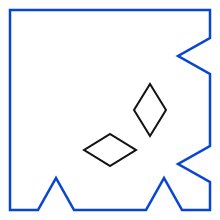
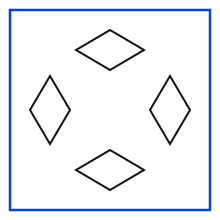
Q158.A piece of paper is folded and punched as shown below in the question figures. From the given option figures, indicate how it will appear when opened.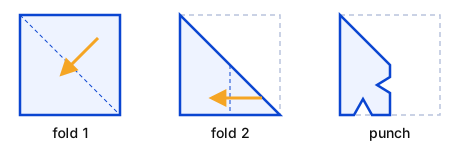
एक कागज़ के टुकड़े को नीचे प्रश्न-आकृतियों में दर्शाए अनुसार मोड़ा और पंच किया गया है। दी गई विकल्प-आकृतियों में से बताइए कि खोलने पर वह कैसा दिखाई देगा। - A
- B
- C
- D
Show answer
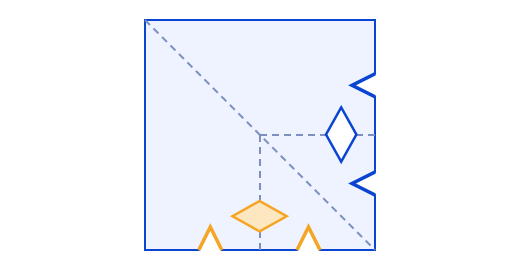
Concept: A cut on a fold line becomes a full hole; a cut on a free edge becomes a notch copied across each fold.
Solution:
- Fold 1 is along the main diagonal; fold 2 is a vertical fold of the triangle.
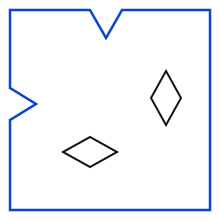
- Cut on the folded edge → a diamond hole after opening fold 2; cut on the bottom edge → two symmetric notches.
- Opening the diagonal fold copies this bottom pattern onto the right edge.
Trick: Diagonal fold acts like a mirror that swaps 'bottom edge' with 'right edge' – look for the option with identical patterns on these two edges.
Answer: (C) Option C
अवधारणा: मोड़-रेखा पर कटा भाग पूरा छेद बनता है; खुले किनारे का कटाव हर मोड़ पर नकल होता है।
हल:
- पहला मोड़ विकर्ण पर, दूसरा त्रिभुज को ऊर्ध्व रूप से मोड़ता है।
- मोड़ वाले किनारे का कट खुलकर हीरे (diamond) जैसा छेद, निचले किनारे पर दो सममित खाँचे।
- विकर्ण मोड़ खोलने पर यही पैटर्न दाएँ किनारे पर भी बनता है।
ट्रिक: विकर्ण मोड़ = दर्पण, जो नीचे वाले किनारे को दाएँ किनारे से बदल देता है।
उत्तर: (C) विकल्प C
SSC CHSLGeneral IntelligencePaper folding – diagonal then vertical foldSSC CHSL 2025 · 28 Nov Shift 3
Q159.In the following question, select the number which can be placed at the sign of question mark (?) from the given alternatives.
निम्नलिखित प्रश्न में, दिए गए विकल्पों में से वह संख्या चुनिए जिसे प्रश्नवाचक चिह्न (?) के स्थान पर रखा जा सकता है।
- A22
- B25
- C12
- D21
Show answer
Concept: .
Solution:
- Column 1: ✔; Column 2: ✔
- Column 3: , so
- = 12
Trick: When the bottom row has big numbers like 361, 729, 1225, think of perfect squares first.
Answer: (C) 12
अवधारणा: हर स्तंभ की नीचे वाली संख्या = ऊपर की तीनों संख्याओं के योग का वर्ग।
हल:
- → 361 ✔; → 729 ✔
- →
- ? = 12
ट्रिक: 361, 729, 1225 जैसी संख्याएँ दिखें तो पूर्ण वर्ग सोचें।
उत्तर: (C) 12
SSC CHSLGeneral IntelligenceMissing number – square of column sumSSC CHSL 2025 · 28 Nov Shift 3
Q160.In the following question, select the number which can be placed at the sign of question mark (?) from the given alternatives.
निम्नलिखित प्रश्न में, दिए गए विकल्पों में से वह संख्या चुनिए जिसे प्रश्नवाचक चिह्न (?) के स्थान पर रखा जा सकता है।
- A2
- B4
- C1
- D6
Show answer
Concept: In each figure: .
Solution:
- Figure 1: ✔; Figure 3: ✔
- Figure 2: → = 2
Trick: Bigger number in one corner usually comes from multiplying the two smaller ones; the leftover is the missing value.
Answer: (A) 2
अवधारणा: हर आकृति में: ।
हल:
- ✔; ✔
- → ? = 2
ट्रिक: बड़ी संख्या अक्सर बाकी दो के गुणनफल से बनती है; बचा अंतर ही उत्तर।
उत्तर: (A) 2
SSC CHSLGeneral IntelligenceMissing number – product plus a numberSSC CHSL 2025 · 28 Nov Shift 3

