Q301.Select the correct active form of the given sentence.
The books should have been placed on their proper shelves.
- AYou should place the books on their proper shelves.
- BYou will have placed the books on their proper shelves.
- CYou need to place the books on their proper shelves.
- DYou should have placed the books on their proper shelves.
Show answer
Concept: A passive of the form should have been + V3 becomes should have + V3 in the active voice; the modal and the perfect sense must stay.
- The agent is not given, so the doer is understood as you.
- should have been placed → should have placed.
- (A) and (C) lose the perfect sense (a past duty that was not done); (B) changes the modal to will.
Yaad rakhein: should have been + V3 ↔ should have + V3 – only been is dropped.
Answer: (D) You should have placed the books on their proper shelves.
अवधारणा: should have been + V3 वाला passive, active में should have + V3 बनता है; modal और perfect भाव वही रहते हैं।
- Agent नहीं दिया है, अतः कर्ता you माना जाएगा।
- should have been placed → should have placed।
- (A) और (C) में perfect भाव (अतीत का अधूरा कर्तव्य) खो गया; (B) में modal will कर दिया गया।
याद रखें: should have been + V3 ↔ should have + V3 – केवल been हटता है।
उत्तर: (D) You should have placed the books on their proper shelves.
SSC CPO Paper IIEnglish Language and ComprehensionActive and Passive VoiceSSC CPO Paper II 2021 · 8 Nov Shift 1
Q302.Given below are six sentences. A and F are the first and the last sentences. The rest of the sentences namely B, C, D and E are jumbled. Select the option that gives their correct order. A. Indeed, Kondiba, the beggar, had saved a life.
B. However, word soon began to spread about the beggar’s courage.
C. By afternoon Kondiba was back on the streets of Bombay with his gunny sack.
D. But his own still had to go on, and for him this meant begging.
E. His picture and the story of his daring rescue were published in many newspapers.
F. Suddenly Kondiba became a hero.
- AADECBF
- BADCBEF
- CACEDBF
- DACDBEF
Show answer
Concept: Link sentences through pronouns and connectives (his own, However, His picture) to form a logical story.
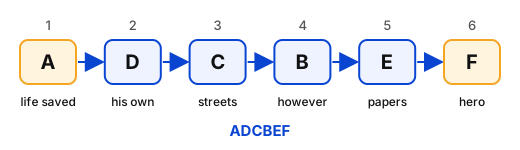
- A says Kondiba saved a life; D continues with his own (life) – so A→D.
- D says he had to go begging; C shows him back on the streets with his gunny sack – D→C.
- B (However, word began to spread) contrasts with his ordinary life; E (picture in newspapers) develops B and leads to F (he became a hero).
Yaad rakhein: his own needs a noun before it – find that noun (a life) to fix the first link.
Answer: (B) ADCBEF
अवधारणा: सर्वनाम और संयोजकों (his own, However, His picture) से वाक्यों को जोड़कर तार्किक कहानी बनाइए।
- A में Kondiba ने a life बचाई; D में his own (उसकी अपनी life) – अतः A→D।
- D: उसे भीख माँगनी पड़ी; C: वह दोपहर तक फिर gunny sack लेकर सड़कों पर था – D→C।
- B (However, word began to spread) विरोध दिखाता है; E (अख़बारों में तस्वीर) B को आगे बढ़ाता है और F (वह hero बन गया) तक ले जाता है।
याद रखें: his own से पहले कोई संज्ञा चाहिए – वह संज्ञा (a life) पहली कड़ी बताती है।
उत्तर: (B) ADCBEF
SSC CPO Paper IIEnglish Language and ComprehensionSentence RearrangementSSC CPO Paper II 2021 · 8 Nov Shift 1
Q303.Select the most appropriate direct form of the given sentence.
The customer asked the shopkeeper how much she had to pay for the little glass table.
- AThe customer said to the shopkeeper, “How much have I to pay for the little glass table?”
- BThe customer said to the shopkeeper, “How much I am to pay for the little glass
table?” - CThe customer said to the shopkeeper, “How much she had to pay for the little glass table?”
- DThe customer said to the shopkeeper, “How much had I to pay for the little glass
table?”
Show answer
Concept: Converting reported speech to direct: past tense moves one step back to present, third person becomes first person, and a question takes interrogative order with a question mark.
- she had to pay → I have to pay (had → have, she → I).
- As a direct question, the auxiliary comes before the subject: How much have I to pay …?
- (B) keeps statement order; (C) keeps she; (D) keeps the past had.
Yaad rakhein: Indirect → direct: tense one step back (had → have), pronoun to first person, add question order.
Answer: (A) The customer said to the shopkeeper, “How much have I to pay for the little glass table?”
अवधारणा: Indirect से direct बनाते समय past tense एक कदम पीछे present में जाता है, third person → first person, और प्रश्न में प्रश्नवाचक क्रम व प्रश्नचिह्न आता है।
- she had to pay → I have to pay (had → have, she → I)।
- Direct प्रश्न में सहायक क्रिया कर्ता से पहले: How much have I to pay …?
- (B) में कथन-क्रम है; (C) में she रह गया; (D) में past had रह गया।
याद रखें: Indirect → direct: tense एक कदम पीछे (had → have), सर्वनाम first person, प्रश्नवाचक क्रम।
उत्तर: (A) The customer said to the shopkeeper, “How much have I to pay for the little glass table?”
SSC CPO Paper IIEnglish Language and ComprehensionDirect and Indirect SpeechSSC CPO Paper II 2021 · 8 Nov Shift 1
Q304.Select the most appropriate option to fill in the blank.
I don’t think your sister is enjoying the party. She ______ at her watch for the last half an hour.
- Ahas looked
- Bhad looked
- Chad been looking
- Dhas been looking
Show answer
Concept: An action that began in the past and is still going on now, with a duration (for the last half an hour), takes the present perfect continuous: has/have been + V-ing.
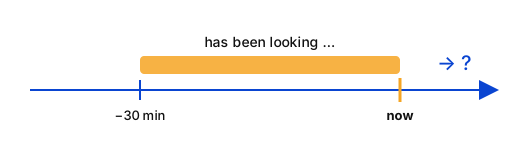
- The first sentence is in the present (I don’t think … is enjoying), so the time frame is now.
- She started looking at her watch half an hour ago and is still doing it → has been looking.
- had forms (B, C) belong to a past frame; has looked (A) does not show the continuing action.
Yaad rakhein: for/since + action still going on in the present → has/have been + V-ing.
Answer: (D) has been looking
अवधारणा: जो क्रिया अतीत में शुरू होकर अभी तक जारी है और अवधि (for the last half an hour) दी हो, उसमें present perfect continuous: has/have been + V-ing।
- पहला वाक्य present में है (I don’t think … is enjoying), अतः समय-सीमा 'अभी' की है।
- वह आधे घंटे पहले से घड़ी देख रही है और अभी भी देख रही है → has been looking।
- had वाले रूप (B, C) past के लिए हैं; has looked (A) जारी क्रिया नहीं दिखाता।
याद रखें: for/since + अभी तक जारी क्रिया → has/have been + V-ing।
उत्तर: (D) has been looking
SSC CPO Paper IIEnglish Language and ComprehensionTenses – Present Perfect ContinuousSSC CPO Paper II 2021 · 8 Nov Shift 1
Q305.Select the most appropriate direct form of the given sentence.
A worker told his companion that he was totally exhausted and couldn’t walk anymore.
- AA worker said to his companion, “He was totally exhausted and couldn’t walk
anymore.” - BA worker said to his companion, “I am totally exhausted and cannot walk anymore.”
- CA worker said to his companion, “He is totally exhausted and couldn’t walk anymore.”
- DA worker said to his companion, “I was totally exhausted and couldn’t walk anymore.”
Show answer
Concept: In converting to direct speech, he (the speaker himself) becomes I, and past tenses go back to present: was → am, couldn’t → cannot.
- he was totally exhausted → I am totally exhausted.
- couldn’t walk → cannot walk.
- (A) and (C) keep he; (D) keeps the past tenses.
Yaad rakhein: Both verbs must change: was → am, could → can.
Answer: (B) A worker said to his companion, “I am totally exhausted and cannot walk anymore.”
अवधारणा: Direct speech में बोलने वाला स्वयं he → I बनता है, और past tense present में लौटता है: was → am, couldn’t → cannot।
- he was totally exhausted → I am totally exhausted।
- couldn’t walk → cannot walk।
- (A) और (C) में he रह गया; (D) में past tense रह गया।
याद रखें: दोनों क्रियाएँ बदलेंगी: was → am, could → can।
उत्तर: (B) A worker said to his companion, “I am totally exhausted and cannot walk anymore.”
SSC CPO Paper IIEnglish Language and ComprehensionDirect and Indirect SpeechSSC CPO Paper II 2021 · 8 Nov Shift 1
Q306.Select the most appropriate option to fill in the blanks.
When John arrived ______ the exhibition it was already ______ full swing.
- Aat, in
- Bin, in
- Cat, at
- Din, at
Show answer
Concept: arrive at is used for a particular point/place or event (station, exhibition, meeting); in full swing is a fixed phrase meaning ‘at its most active’.
- arrived at the exhibition – an event/specific place, so at.
- in full swing – the idiom always takes in.
- arrive in is for large areas like cities or countries (arrive in Delhi).
Yaad rakhein: arrive in a city/country, arrive at a place/event; always in full swing.
Answer: (A) at, in
अवधारणा: arrive at किसी विशेष स्थान/कार्यक्रम (station, exhibition, meeting) के लिए; in full swing एक निश्चित वाक्यांश है – 'पूरे ज़ोरों पर'।
- arrived at the exhibition – कार्यक्रम/विशेष स्थान, अतः at।
- in full swing – यह मुहावरा हमेशा in के साथ आता है।
- arrive in बड़े क्षेत्र (शहर/देश) के लिए होता है (arrive in Delhi)।
याद रखें: शहर/देश में arrive in, स्थान/कार्यक्रम पर arrive at; हमेशा in full swing।
उत्तर: (A) at, in
SSC CPO Paper IIEnglish Language and ComprehensionPrepositionsSSC CPO Paper II 2021 · 8 Nov Shift 1
Q307.Select the correct active form of the given sentence.
All international and domestic flights have been cancelled by the government due to the Corona crisis.
- AThe government had cancelled all international and domestic flights due to the
Corona crisis. - BThe government has been cancelling all international and domestic flights due to the Corona crisis.
- CThe government is cancelling all international and domestic flights due to the Corona crisis.
- DThe government has cancelled all international and domestic flights due to the
Corona crisis.
Show answer
Concept: Passive has/have been + V3 (present perfect) becomes has/have + V3 in the active voice; the agent after by becomes the subject.
- Agent the government → subject.
- have been cancelled → has cancelled (singular subject government).
- (A) is past perfect, (B) present perfect continuous, (C) present continuous – tense changed.
Yaad rakhein: Voice change never changes the tense: present perfect stays present perfect.
Answer: (D) The government has cancelled all international and domestic flights due to the Corona crisis.
अवधारणा: Passive has/have been + V3 (present perfect) का active has/have + V3 होता है; by के बाद का agent कर्ता बनता है।
- Agent the government → कर्ता।
- have been cancelled → has cancelled (एकवचन कर्ता government)।
- (A) past perfect, (B) present perfect continuous, (C) present continuous है – काल बदल गया।
याद रखें: Voice बदलने पर काल (tense) नहीं बदलता।
उत्तर: (D) The government has cancelled all international and domestic flights due to the Corona crisis.
SSC CPO Paper IIEnglish Language and ComprehensionActive and Passive VoiceSSC CPO Paper II 2021 · 8 Nov Shift 1
Q308.Given below are six sentences. A and F are the first and the last sentences. The rest of the sentences namely B, C, D and E are jumbled. Select the option that gives their correct order. A. The Qazi was holding his court.
B. Sultan Gayasuddin entered the court room.
C. He remained seated as before.
D. Everybody stood up in respect, except the Qazi.
E. The room was packed with people, all eager to hear a case against the Sultan of the
country.
F. He called for the widow and asked her to explain her case against the Sultan.
- AADECBF
- BACEBDF
- CAEBDCF
- DAEDBCF
Show answer
Concept: Build the scene step by step: the setting first, then the entry of a character, then reactions, and finally the action that leads to the last sentence.
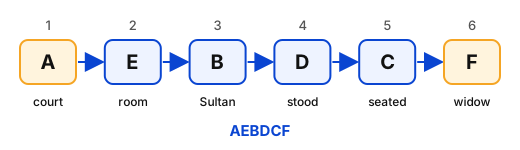
- A (Qazi holding court) → E describes the room packed with people – the setting.
- B: the Sultan enters → D: everybody stood up except the Qazi.
- C: He remained seated as before – He is the Qazi from D; F: he called the widow.
Yaad rakhein: except the Qazi (D) must come just before He remained seated (C).
Answer: (C) AEBDCF
अवधारणा: दृश्य क्रम से बनाइए: पहले स्थान का वर्णन, फिर पात्र का प्रवेश, फिर प्रतिक्रिया, और अंत में वह कार्य जो अंतिम वाक्य तक ले जाए।
- A (Qazi का court) → E: लोगों से भरा कमरा – वातावरण।
- B: Sultan का प्रवेश → D: Qazi को छोड़कर सब खड़े हुए।
- C: He remained seated as before – He = D वाला Qazi; F: उसने widow को बुलाया।
याद रखें: except the Qazi (D) ठीक He remained seated (C) से पहले आएगा।
उत्तर: (C) AEBDCF
SSC CPO Paper IIEnglish Language and ComprehensionSentence RearrangementSSC CPO Paper II 2021 · 8 Nov Shift 1
Q309.Parts of the following sentence are given as options. Identify the segment that contains a grammatical error.
No sooner did the ship touch the shore when the sailor jumped into the water.
- Ajumped into the water.
- Bdid the ship touch
- Cthe shore
- Dwhen the sailor
Show answer
Concept: No sooner is always paired with than, not when. (Hardly/Scarcely take when.)
- The correct sentence: No sooner did the ship touch the shore than the sailor jumped into the water.
- The inversion did the ship touch after No sooner is correct.
- So the error lies in when the sailor.
Yaad rakhein: No sooner … than; Hardly/Scarcely … when.
Answer: (D) when the sailor
अवधारणा: No sooner के साथ हमेशा than आता है, when नहीं। (Hardly/Scarcely के साथ when)।
- सही वाक्य: No sooner did the ship touch the shore than the sailor jumped into the water.
- No sooner के बाद inversion did the ship touch सही है।
- अतः त्रुटि when the sailor में है।
याद रखें: No sooner … than; Hardly/Scarcely … when।
उत्तर: (D) when the sailor
SSC CPO Paper IIEnglish Language and ComprehensionError Spotting – ConjunctionsSSC CPO Paper II 2021 · 8 Nov Shift 1
Q310.Select the wrongly spelt word.
- Aglorious
- Bvirtious
- Canxious
- Dprecious
Show answer
Concept: Adjectives formed from virtue drop the final e and keep the u: virtue → virtuous.
- Correct spelling: virtuous (v-i-r-t-u-o-u-s), meaning morally good.
- glorious, anxious and precious are spelt correctly.
- Hence virtious is wrong.
Yaad rakhein: virtue → virtuous, like continue → continuous.
Answer: (B) virtious
अवधारणा: virtue से विशेषण बनाते समय अंतिम e हटता है पर u रहता है: virtue → virtuous।
- सही वर्तनी: virtuous (v-i-r-t-u-o-u-s), अर्थ – सदाचारी।
- glorious, anxious और precious सही हैं।
- अतः virtious गलत है।
याद रखें: virtue → virtuous, जैसे continue → continuous।
उत्तर: (B) virtious
SSC CPO Paper IIEnglish Language and ComprehensionSpellingSSC CPO Paper II 2021 · 8 Nov Shift 1
Q311.Select the most appropriate option to substitute the underlined segment in the given
sentence. If there is no need to substitute it, select ‘No substitution required’.
An educated lady makes a better mother than an uneducated one.
- ANo substitution required
- Bis making a better mother
- Cmake a better mother
- Dmakes a best mother
Show answer
Concept: A singular subject takes a singular verb; for a general truth we use the simple present; comparison of two takes the comparative degree.
- Subject An educated lady is singular → makes is correct.
- It is a general truth, so the simple present (not is making) fits.
- better … than compares two – correct; best (D) is wrong with than.
Yaad rakhein: Universal truths → simple present; than → comparative, never superlative.
Answer: (A) No substitution required
अवधारणा: एकवचन कर्ता के साथ एकवचन क्रिया; सार्वभौमिक सत्य के लिए simple present; दो की तुलना में comparative degree।
- कर्ता An educated lady एकवचन है → makes सही।
- यह सामान्य सत्य है, अतः simple present (is making नहीं)।
- better … than दो की तुलना – सही; than के साथ best (D) गलत।
याद रखें: सार्वभौमिक सत्य → simple present; than के साथ comparative, superlative नहीं।
उत्तर: (A) No substitution required
SSC CPO Paper IIEnglish Language and ComprehensionSentence ImprovementSSC CPO Paper II 2021 · 8 Nov Shift 1
Q312.Select the correct passive form of the given sentence.
Buy some apples and grapes for the family.
- ALet us buy some apples and grapes for the family.
- BLet some apples and grapes be bought for the family.
- CWe should buy some apples and grapes for the family.
- DSome apples and grapes need to be bought for the family.
Show answer
Concept: An imperative (order) sentence becomes passive with the pattern Let + object + be + V3.
- Object: some apples and grapes; verb buy → bought.
- Let some apples and grapes be bought for the family.
- (A) and (C) are still active; (D) changes the meaning to a need/obligation statement.
Yaad rakhein: Imperative → passive: Let + object + be + V3.
Answer: (B) Let some apples and grapes be bought for the family.
अवधारणा: आज्ञार्थक (imperative) वाक्य का passive Let + object + be + V3 से बनता है।
- Object: some apples and grapes; क्रिया buy → bought।
- Let some apples and grapes be bought for the family.
- (A) और (C) अभी भी active हैं; (D) अर्थ बदलकर आवश्यकता बताता है।
याद रखें: Imperative → passive: Let + object + be + V3।
उत्तर: (B) Let some apples and grapes be bought for the family.
SSC CPO Paper IIEnglish Language and ComprehensionActive and Passive Voice – ImperativeSSC CPO Paper II 2021 · 8 Nov Shift 1
Q313.Select the most appropriate direct form of the given sentence.
Rahul told me he didn’t have time to go to the dispensary as he was getting late for the
office.
- ARahul said to me, “He didn’t have time to go to the dispensary as I was getting late for the office.”
- BRahul said to me, “I don’t have time to go to the dispensary as I am getting late for the office.”
- CRahul said to me, “I haven’t got time to go to the dispensary as I was getting late for the office.”
- DRahul said to me, “I couldn’t have time to go to the dispensary as he was getting late for the office.”
Show answer
Concept: Reported → direct: the reporter’s third person (he) becomes I, and each past verb returns to its present form.
- he didn’t have time → I don’t have time.
- he was getting late → I am getting late.
- (A) keeps He; (C) keeps was getting; (D) uses couldn’t and he.
Yaad rakhein: Change every clause: both didn’t have and was getting must go to present.
Answer: (B) Rahul said to me, “I don’t have time to go to the dispensary as I am getting late for the office.”
अवधारणा: Reported → direct: कहने वाले का he → I, और हर past क्रिया अपने present रूप में लौटती है।
- he didn’t have time → I don’t have time।
- he was getting late → I am getting late।
- (A) में He; (C) में was getting; (D) में couldn’t और he गलत।
याद रखें: हर उपवाक्य बदलें: didn’t have और was getting दोनों present में।
उत्तर: (B) Rahul said to me, “I don’t have time to go to the dispensary as I am getting late for the office.”
SSC CPO Paper IIEnglish Language and ComprehensionDirect and Indirect SpeechSSC CPO Paper II 2021 · 8 Nov Shift 1
Q314.Parts of the following sentence are given as options. Identify the segment that contains a grammatical error.
All the school have been closed in the country due to Covid-19.
- AAll the school
- Bin the country
- Chave been closed
- Ddue to Covid-19
Show answer
Concept: All the with a countable noun requires the plural form of the noun; the verb have is also plural.
- All the school → All the schools.
- have been closed then agrees with the plural subject.
- Other parts are correct.
Yaad rakhein: All the / Many / Several + plural countable noun.
Answer: (A) All the school
अवधारणा: गणनीय संज्ञा के साथ All the आने पर संज्ञा बहुवचन होगी; क्रिया have भी बहुवचन है।
- All the school → All the schools।
- तब have been closed बहुवचन कर्ता से मेल खाता है।
- बाकी भाग सही हैं।
याद रखें: All the / Many / Several + बहुवचन गणनीय संज्ञा।
उत्तर: (A) All the school
SSC CPO Paper IIEnglish Language and ComprehensionError Spotting – Subject-Verb AgreementSSC CPO Paper II 2021 · 8 Nov Shift 1
Q315.Select the correct passive form of the given sentence.
This institute is offering a new online course in Entrepreneurship.
- AA new online course in Entrepreneurship is being offered by this institute.
- BA new online course in Entrepreneurship has offered this institute.
- CA new online course in Entrepreneurship is offered by this institute.
- DA new online course in Entrepreneurship has been offered by this institute.
Show answer
Concept: Present continuous active is/are + V-ing becomes is/are + being + V3 in the passive.
- Object a new online course in Entrepreneurship → subject.
- is offering → is being offered.
- (C) drops being (simple present); (D) is present perfect; (B) has no by and wrong meaning.
Yaad rakhein: Continuous tense in passive always needs being.
Answer: (A) A new online course in Entrepreneurship is being offered by this institute.
अवधारणा: Present continuous active is/are + V-ing का passive is/are + being + V3 होता है।
- Object a new online course in Entrepreneurship → कर्ता।
- is offering → is being offered।
- (C) में being नहीं (simple present); (D) present perfect है; (B) में by नहीं और अर्थ गलत।
याद रखें: Continuous काल के passive में being ज़रूरी है।
उत्तर: (A) A new online course in Entrepreneurship is being offered by this institute.
SSC CPO Paper IIEnglish Language and ComprehensionActive and Passive VoiceSSC CPO Paper II 2021 · 8 Nov Shift 1
Q316.Select the most appropriate direct form of the given sentence.
She demanded of her younger brother why he had taken her paints without her permission.
- AShe said to her younger brother angrily, “Why do you take my paints without my
permission?” - BShe asked her younger brother angrily, “Why do you have to take my paints without my permission?”
- CShe said to her younger brother angrily, “Why have you taken my paints without my permission?”
- DShe said to her younger brother, “Why he had taken her paints without her
permission?”
Show answer
Concept: demanded shows an angry question, so the direct form uses said … angrily with a question; past perfect goes back to present perfect.
- he had taken → you have taken; her paints → my paints.
- Question order: Why have you taken …?
- (A) uses simple present do you take; (B) adds have to; (D) keeps indirect pronouns and tense.
Yaad rakhein: Past perfect (indirect) ← present perfect (direct).
Answer: (C) She said to her younger brother angrily, “Why have you taken my paints without my permission?”
अवधारणा: demanded क्रोध भरा प्रश्न दिखाता है, अतः direct में said … angrily और प्रश्न; past perfect → present perfect।
- he had taken → you have taken; her paints → my paints।
- प्रश्न-क्रम: Why have you taken …?
- (A) में simple present do you take; (B) में have to जोड़ा; (D) में indirect सर्वनाम और काल रह गए।
याद रखें: Indirect का past perfect ← direct का present perfect।
उत्तर: (C) She said to her younger brother angrily, “Why have you taken my paints without my permission?”
SSC CPO Paper IIEnglish Language and ComprehensionDirect and Indirect SpeechSSC CPO Paper II 2021 · 8 Nov Shift 1
Q317.Select the most appropriate meaning of the given idiom.
Hue and cry
- AAn admirable idea
- BA polite request
- CA fair bargain
- DA noisy expression of anger
Show answer
Concept: The idiom hue and cry means a loud public outcry or protest.
- Example: There was a hue and cry over the rise in fuel prices.
- It expresses anger or protest loudly – option (D).
- An idea, a request or a bargain has nothing to do with the idiom.
Yaad rakhein: hue and cry = शोर-शराबा / हो-हल्ला.
Answer: (D) A noisy expression of anger
अवधारणा: मुहावरा hue and cry का अर्थ है – ज़ोर-शोर से विरोध / हो-हल्ला।
- उदाहरण: There was a hue and cry over the rise in fuel prices.
- यह गुस्से या विरोध की शोरगुल भरी अभिव्यक्ति है – विकल्प (D)।
- विचार, अनुरोध या सौदे से इसका कोई संबंध नहीं।
याद रखें: hue and cry = शोर-शराबा / हो-हल्ला।
उत्तर: (D) A noisy expression of anger
SSC CPO Paper IIEnglish Language and ComprehensionIdioms and PhrasesSSC CPO Paper II 2021 · 8 Nov Shift 1
Q318.Select the most appropriate option to substitute the underlined segment in the given
sentence. If there is no need to substitute it, select ‘No substitution required’.
The state authorities seemed rather callous regarding the movement of workers during the Covid-19 lockdown.
- Aas regarding the moving of workers during
- BNo substitution required
- Cas regards to the workers movement during
- Dregarding movement inworkers along
Show answer
Concept: regarding (= about) is a preposition used without as or to; the phrase the movement of workers is correct.
- callous regarding the movement of workers during the lockdown – grammatical and clear.
- (A) as regarding and (C) as regards to are wrong forms (correct: as regards).
- (D) movement inworkers along makes no sense.
Yaad rakhein: Use regarding / as regards / with regard to – never as regards to.
Answer: (B) No substitution required
अवधारणा: regarding (= के बारे में) एक preposition है, इसके साथ as या to नहीं लगता; the movement of workers सही है।
- callous regarding the movement of workers during the lockdown – व्याकरण और अर्थ दोनों सही।
- (A) as regarding और (C) as regards to गलत रूप हैं (सही: as regards)।
- (D) movement inworkers along निरर्थक है।
याद रखें: regarding / as regards / with regard to – कभी as regards to नहीं।
उत्तर: (B) No substitution required
SSC CPO Paper IIEnglish Language and ComprehensionSentence ImprovementSSC CPO Paper II 2021 · 8 Nov Shift 1
Q319.Given below are four jumbled sentences. Select the option that gives their correct order. A. I was brought up by my sister, who was much older than me.
B. I never knew my father or mother.
C. They died when I was very young.
D. She married the village blacksmith, Joe Gargery, and I must say that he was much kinder to me than she was.
- ABADC
- BABCD
- CBCAD
- DACDB
Show answer
Concept: Begin with the independent statement, then follow the pronoun chain: They needs a plural noun before it, She needs a female noun before it.
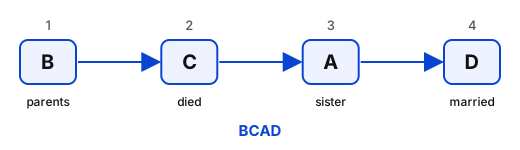
- B introduces my father or mother.
- C: They died – They = father and mother → B→C.
- A: brought up by my sister; D: She married – She = sister → A→D.
Yaad rakhein: Pronoun links (They, She) decide the pairs: BC and AD.
Answer: (C) BCAD
अवधारणा: स्वतंत्र कथन से शुरू करें, फिर सर्वनाम-श्रृंखला देखें: They से पहले बहुवचन संज्ञा, She से पहले स्त्रीलिंग संज्ञा चाहिए।
- B: my father or mother का परिचय।
- C: They died – They = माता-पिता → B→C।
- A: my sister ने पाला; D: She married – She = sister → A→D।
याद रखें: सर्वनाम (They, She) जोड़ियाँ तय करते हैं: BC और AD।
उत्तर: (C) BCAD
SSC CPO Paper IIEnglish Language and ComprehensionSentence RearrangementSSC CPO Paper II 2021 · 8 Nov Shift 1
Q320.Select the most appropriate meaning of the given idiom.
Give and take
- AObliging each other mutually
- BTaking something from others
- CGiving away something for free
- DBeing mild in your dealings
Show answer
Concept: The idiom give and take means mutual adjustment or compromise, each side giving something to the other.
- Example: A happy marriage needs a lot of give and take.
- It is two-way, so (A) obliging each other mutually fits.
- (B) and (C) are one-way actions; (D) is only about manners.
Yaad rakhein: give and take = आपसी लेन-देन / समझौता.
Answer: (A) Obliging each other mutually
अवधारणा: मुहावरा give and take का अर्थ है – आपसी तालमेल या समझौता, दोनों पक्ष एक-दूसरे के लिए कुछ करें।
- उदाहरण: A happy marriage needs a lot of give and take.
- यह दो-तरफ़ा है, अतः (A) obliging each other mutually सही।
- (B) और (C) एक-तरफ़ा क्रियाएँ हैं; (D) केवल व्यवहार की नरमी है।
याद रखें: give and take = आपसी लेन-देन / समझौता।
उत्तर: (A) Obliging each other mutually
SSC CPO Paper IIEnglish Language and ComprehensionIdioms and PhrasesSSC CPO Paper II 2021 · 8 Nov Shift 1

