Q2241.In this question, three statements are given, followed by two conclusions numbered I and II. Assuming the statements to be true, even if they seem to be at variance with commonly known facts, decide which of the conclusions logically follows/follow from the statements.
Statements:
I. All teas are coffees.
II. All coffees are beverages.
III. Some teas are drinks
Conclusions:
I. All teas are beverages.
II. No drink is a coffee.
इस प्रश्न में तीन कथन दिए गए हैं, जिनके बाद I और II क्रमांकित दो निष्कर्ष दिए गए हैं। कथनों को सत्य मानते हुए, भले ही वे सामान्य रूप से ज्ञात तथ्यों से भिन्न प्रतीत होते हों, निर्णय कीजिए कि कौन-सा/से निष्कर्ष तार्किक रूप से कथनों का अनुसरण करता है/करते हैं।
कथन:
I. सभी चाय, कॉफ़ी हैं।
II. सभी कॉफ़ी, पेय पदार्थ हैं।
III. कुछ चाय, ड्रिंक हैं
निष्कर्ष:
I. सभी चाय, पेय पदार्थ हैं।
II. कोई ड्रिंक, कॉफ़ी नहीं है।
- AOnly conclusion I followsकेवल निष्कर्ष I अनुसरण करता है
- BOnly conclusion II followsकेवल निष्कर्ष II अनुसरण करता है
- CBoth conclusions I and II followनिष्कर्ष I और II दोनों अनुसरण करते हैं
- DNeither conclusion I nor II followsन तो निष्कर्ष I और न ही II अनुसरण करता है
Show answer
Concept: Combine 'All' statements in a chain and test each conclusion with a Venn diagram.
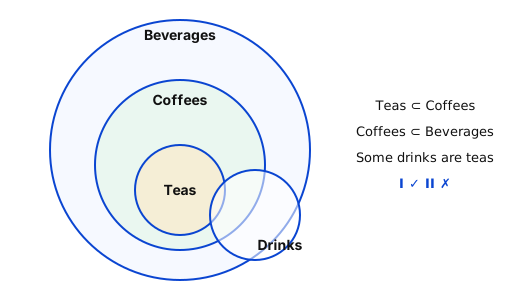
- All teas ⊂ coffees and all coffees ⊂ beverages → all teas are beverages: I follows.
- Some teas are drinks, and every tea is a coffee → some drinks are coffees.
- So 'No drink is a coffee' is false: II does not follow.
Yaad rakhein: 'All + All' gives 'All'; a 'No' conclusion fails whenever an overlap is forced.
Answer: (A) Only conclusion I follows
अवधारणा: 'सभी' वाले कथनों को श्रृंखला में जोड़ें और वेन आरेख से हर निष्कर्ष जाँचें।
- सभी teas ⊂ coffees ⊂ beverages → सभी teas beverages हैं: I अनुसरण करता है।
- कुछ teas drinks हैं और हर tea एक coffee है → कुछ drinks coffees हैं।
- अतः 'कोई drink coffee नहीं' गलत: II अनुसरण नहीं करता।
याद रखें: 'सभी + सभी' = 'सभी'; जहाँ ओवरलैप निश्चित हो वहाँ 'कोई नहीं' वाला निष्कर्ष गलत।
उत्तर: (A) केवल निष्कर्ष I अनुसरण करता है
SSC CPO Paper IGeneral Intelligence and ReasoningSyllogismSSC CPO Paper I 2023 · 5 Oct Shift 1
Q2242.Given below are two statements and two conclusions. Take the statements to be true even if they are at variance with commonly known facts, and decide whether the
conclusion(s) follow(s) the given statements.
Statements:
All irons are coppers.
All coppers are aluminiums.
Conclusions:
I. Some aluminiums are irons
II. Some aluminiums are coppers
नीचे दो कथन और दो निष्कर्ष दिए गए हैं। कथनों को सत्य मानते हुए विचार कीजिए, भले ही वे सामान्य रूप से ज्ञात तथ्यों से भिन्न प्रतीत होते हों, और निर्णय कीजिए कि कौन-सा/से निष्कर्ष दिए गए कथनों का
अनुसरण करता है/करते हैं।
कथन:
सभी लोहे, ताँबे हैं।
सभी ताँबे, एल्युमीनियम हैं।
निष्कर्ष:
I. कुछ एल्युमीनियम, लोहे हैं
II. कुछ एल्युमीनियम, ताँबे हैं
- AOnly conclusion II followsकेवल निष्कर्ष II अनुसरण करता है
- BNeither conclusion I nor II followsन तो निष्कर्ष I और न ही II अनुसरण करता है
- COnly conclusion I followsकेवल निष्कर्ष I अनुसरण करता है
- DBoth the conclusions followदोनों निष्कर्ष अनुसरण करते हैं
Show answer
Concept: Chain the 'All' statements: irons ⊂ coppers ⊂ aluminiums.
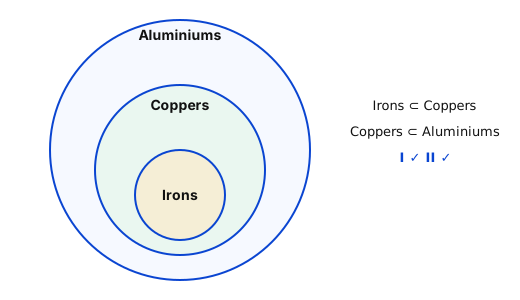
- All irons are aluminiums, so some aluminiums are irons: I follows.
- All coppers are aluminiums, so some aluminiums are coppers: II follows.
Yaad rakhein: 'All A are B' ⇒ 'Some B are A' is always valid.
Answer: (D) Both the conclusions follow
अवधारणा: 'सभी' वाले कथन जोड़ें: irons ⊂ coppers ⊂ aluminiums।
- सभी irons aluminiums हैं, अतः कुछ aluminiums irons हैं: I अनुसरण करता है।
- सभी coppers aluminiums हैं, अतः कुछ aluminiums coppers हैं: II अनुसरण करता है।
याद रखें: 'सभी A, B हैं' ⇒ 'कुछ B, A हैं' हमेशा सही।
उत्तर: (D) दोनों निष्कर्ष अनुसरण करते हैं
SSC CPO Paper IGeneral Intelligence and ReasoningSyllogismSSC CPO Paper I 2023 · 5 Oct Shift 1
Q2243.Select the correct option that indicates the arrangement of the given words in the
order in which they appear in an English dictionary.
1. Desperate
2. Desolate
3. Destruction
4. Desire
5. Descend
6. Destination
उस सही विकल्प का चयन कीजिए जो दिए गए शब्दों की उस व्यवस्था को दर्शाता है, जिस
क्रम में वे अंग्रेज़ी शब्दकोश में आते हैं।
1. Desperate
2. Desolate
3. Destruction
4. Desire
5. Descend
6. Destination
- A5, 4, 2, 1, 3, 6
- B5, 4, 1, 6, 2, 3
- C5, 4, 2, 1, 6, 3
- D5, 4, 1, 2, 6, 3
Show answer
Concept: All words start with DES; compare the 4th letter, then the next ones.
- 4th letters: Descend (c), Desire (i), Desolate (o), Desperate (p), Destination/Destruction (t).
- Destination vs Destruction: 5th letter i before r.
- Order: Descend, Desire, Desolate, Desperate, Destination, Destruction → 5, 4, 2, 1, 6, 3.
Trick: Skip the common prefix and sort by the first differing letter.
Answer: (C) 5, 4, 2, 1, 6, 3
अवधारणा: सभी शब्द DES से शुरू; चौथा अक्षर, फिर आगे के अक्षर देखें।
- चौथा अक्षर: Descend (c), Desire (i), Desolate (o), Desperate (p), Destination/Destruction (t)।
- Destination बनाम Destruction: पाँचवाँ अक्षर i, r से पहले।
- क्रम: 5, 4, 2, 1, 6, 3।
ट्रिक: समान आरंभ छोड़कर पहले अलग अक्षर से क्रम लगाएँ।
उत्तर: (C) 5, 4, 2, 1, 6, 3
SSC CPO Paper IGeneral Intelligence and ReasoningDictionary orderSSC CPO Paper I 2023 · 5 Oct Shift 1
Q2244.In a certain code language, 'YATCH' is coded as 67 and 'DINE' is coded as 40. How will 'MANGO' be coded in that language?
एक निश्चित कूट भाषा में, 'YATCH' को 67 के रूप में कूटबद्ध किया जाता है और 'DINE' को 40 के रूप में कूटबद्ध किया जाता है। उसी भाषा में 'MANGO' को किस प्रकार कूटबद्ध किया जाएगा?
- A57
- B60
- C62
- D65
Show answer
Concept: Code sum of letter positions (number of letters).
- YATCH: ; ✓
- DINE: ; ✓
- MANGO: ;
Trick: Find the place-value sum first; the leftover (, ) is letters.
Answer: (B)
अवधारणा: कोड अक्षरों के स्थानों का योग (अक्षरों की संख्या)।
- YATCH: ✓
- DINE: ✓
- MANGO: ;
ट्रिक: पहले स्थानीय मान का योग निकालें; बचा अंतर (, ) अक्षर।
उत्तर: (B)
SSC CPO Paper IGeneral Intelligence and ReasoningCoding-decodingSSC CPO Paper I 2023 · 5 Oct Shift 1
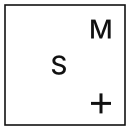
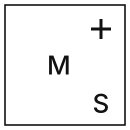
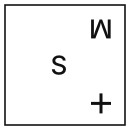
Q2245.Which of the given figures when placed in the 5
th position would continue the series that is established by the first four figures?
दी गई आकृतियों में से कौन-सी आकृति 5
वें स्थान पर रखे जाने पर पहली चार आकृतियों द्वारा स्थापित श्रृंखला को जारी रखेगी?
- A
- B
- C
- D
Show answer
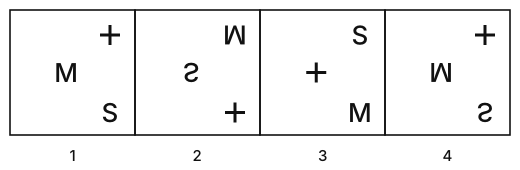
Concept: Compare alternate figures: letters are upright in figures 1, 3, 5 and inverted in figures 2, 4; the three symbols move one level down each time (bottom goes to the top).
- Fig 1: + top, M middle, S bottom. Fig 3: S top, + middle, M bottom — each moved down one level.
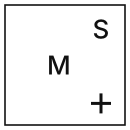
- So Fig 5: M top, S middle, + bottom, with M and S upright.
- Option (B) matches; (C) repeats Fig 1, (A) has S and M in wrong places, (D) shows M inverted.
Trick: With two interleaved series, compare figure 5 with figure 3 (and figure 1), not with figure 4.
Answer: (B) the second figure
अवधारणा: एकांतर आकृतियों की तुलना करें: आकृति 1, 3, 5 में अक्षर सीधे और 2, 4 में उल्टे हैं; तीनों चिह्न हर बार एक स्तर नीचे खिसकते हैं (सबसे नीचे वाला ऊपर)।
- आकृति 1: + ऊपर, M बीच, S नीचे। आकृति 3: S ऊपर, + बीच, M नीचे — हर चिह्न एक स्तर नीचे।
- अतः आकृति 5: M ऊपर, S बीच, + नीचे, M और S सीधे।
- विकल्प (B) मेल खाता है; (C) आकृति 1 जैसा, (A) में S-M गलत जगह, (D) में M उल्टा।
ट्रिक: दो मिली-जुली श्रृंखलाएँ हों तो आकृति 5 की तुलना आकृति 3 (और 1) से करें, 4 से नहीं।
उत्तर: (B) दूसरी आकृति
SSC CPO Paper IGeneral Intelligence and ReasoningFigure seriesSSC CPO Paper I 2023 · 5 Oct Shift 1
Q2246.If ‘+’ means ‘−’, ‘−’ means ‘×’, ‘×’ means ‘÷’ and ‘÷’ means ‘+’, what will come in place of ‘?’ in the following equation?
45 - 3 ÷ 144 × 12 + 38 = ?
यदि ‘+’ का अर्थ ‘−’, ‘−’ का अर्थ ‘×’, ‘×’ का अर्थ ‘÷’ और ‘÷’ का अर्थ ‘+’ है, तो निम्नलिखित समीकरण में ‘?’ के स्थान पर क्या आएगा?
45 - 3 ÷ 144 × 12 + 38 = ?
- A123
- B109
- C91
- D95
Show answer
Concept: Interchange signs as given (− → ×, ÷ → +, × → ÷, + → −) and apply BODMAS.
- becomes .
Trick: Rewrite first, calculate later — most mistakes come from mixing old and new signs.
Answer: (B)
अवधारणा: दिए अनुसार चिह्न बदलें (− → ×, ÷ → +, × → ÷, + → −) और BODMAS लगाएँ।
- बनता है ।
ट्रिक: पहले नया समीकरण लिखें, फिर गणना — पुराने-नए चिह्न मिलाने से गलती होती है।
उत्तर: (B)
SSC CPO Paper IGeneral Intelligence and ReasoningMathematical operationsSSC CPO Paper I 2023 · 5 Oct Shift 1
Q2247.Three of the following letter-clusters are alike in some manner and one is different. Select the one that is different.
निम्नलिखित चार अक्षर-समूहों में से तीन किसी प्रकार से एक समान हैं और एक उनसे भिन्न है। उस असंगत अक्षर-समूह का चयन कीजिए।
- AOKNL
- BJQAZ
- CFBEC
- DHDGE
Show answer
Concept: Check the gaps between consecutive letters in each cluster.
- OKNL: → .
- FBEC: ; HDGE: .
- JQAZ: , then Q to A, A to Z — a completely different pattern.
Trick: Compute only the first gap: three options give , the odd one does not.
Answer: (B) JQAZ
अवधारणा: हर समूह में क्रमागत अक्षरों का अंतर देखें।
- OKNL: ।
- FBEC और HDGE: भी ।
- JQAZ: … पूरी तरह अलग पैटर्न।
ट्रिक: सिर्फ़ पहला अंतर निकालें: तीन में है, विषम में नहीं।
उत्तर: (B) JQAZ
SSC CPO Paper IGeneral Intelligence and ReasoningOdd one out (letter clusters)SSC CPO Paper I 2023 · 5 Oct Shift 1
Q2248.In a certain code language, ‘STORY’ is coded as ‘97’ and ‘PULL’ is coded as ‘61’. How will ‘INCOME’ be coded in that language?
एक निश्चित कूट भाषा में, ‘STORY’ को ‘97’ के रूप में कूटबद्ध किया जाता है और ‘PULL’ को ‘61’ के रूप में कूटबद्ध किया जाता है। उसी भाषा में ‘INCOME’ को किस प्रकार कूटबद्ध किया जाएगा?
- A54
- B49
- C59
- D47
Show answer
Concept: Code sum of the alphabetical positions of the letters.
- STORY: ✓
- PULL: ✓
- INCOME:
Trick: Remember positions with EJOTY: .
Answer: (C)
अवधारणा: कोड अक्षरों के वर्णमाला स्थानों का योग।
- STORY: ✓
- PULL: ✓
- INCOME:
ट्रिक: EJOTY से स्थान याद रखें: ।
उत्तर: (C)
SSC CPO Paper IGeneral Intelligence and ReasoningCoding-decodingSSC CPO Paper I 2023 · 5 Oct Shift 1
Q2249.Which of the following numbers will replace the question mark (?) in the given series 32, 32, 32, 34, ?, 106, 530
दी गई शृंखला में प्रश्न चिह्न (?) के स्थान पर निम्नलिखित में से कौन-सी संख्या आएगी? 32, 32, 32, 34, ?, 106, 530
- A96
- B38
- C102
- D34
Show answer
Concept: Operations alternate: .
- ✓
Trick: A sudden jump (106 to 530) hints at multiplication; work backwards: .
Answer: (C)
अवधारणा: संक्रियाएँ बारी-बारी: ।
- ✓
ट्रिक: अचानक बड़ी छलाँग (106 से 530) गुणा का संकेत; उल्टा चलें: ।
उत्तर: (C)
SSC CPO Paper IGeneral Intelligence and ReasoningNumber seriesSSC CPO Paper I 2023 · 5 Oct Shift 1
Q2250.Which two signs should be interchanged to make the given equation correct?
729 × 9 – (56 – 6) × 5 ÷ 2 + 152 × 19 = 69
दिए गए समीकरण को सही बनाने के लिए किन दो चिह्नों को आपस में बदलना चाहिए?
729 × 9 – (56 – 6) × 5 ÷ 2 + 152 × 19 = 69
- A× and +× और +
- B× and ÷× और ÷
- C÷ and –÷ और –
- D+ and –+ और –
Show answer
Concept: Interchange the two signs of each option and evaluate with BODMAS.
- Interchange × and ÷:
- ✓
Trick: Big products like cannot give 69 — so × must become ÷.
Answer: (B) × and ÷
अवधारणा: हर विकल्प के दोनों चिह्न आपस में बदलें और BODMAS से जाँचें।
- × और ÷ बदलने पर:
- ✓
ट्रिक: जैसा बड़ा गुणनफल 69 नहीं दे सकता — अतः × को ÷ बनना होगा।
उत्तर: (B) × और ÷
SSC CPO Paper IGeneral Intelligence and ReasoningInterchanging signsSSC CPO Paper I 2023 · 5 Oct Shift 1
Q2251.Ashtadhyayi, is a Sanskrit treatise on grammar, written in the 6th to 5th century BCE by _________.
अष्टाध्यायी, व्याकरण पर एक संस्कृत ग्रंथ है, जिसकी रचना छठी से पाँचवीं शताब्दी ईसा पूर्व में _________ द्वारा की गई थी।
- APaniniपाणिनि
- BPatanjaliपतंजलि
- CAgastyaअगस्त्य
- DVishvamitraविश्वामित्र
Show answer
Concept: The Ashtadhyayi ("eight chapters") is the foundational text of Sanskrit grammar.
- It was composed by Panini, a grammarian from Shalatula near Gandhara (north-west India), around the 6th–5th century BCE.
- It contains nearly 4,000 sutras (aphorisms) describing Sanskrit phonetics, morphology and syntax.
- Patanjali came later and wrote the Mahabhashya, a commentary on Panini's grammar (and the Yoga Sutras) – so he is the tempting wrong option.
Yaad rakhein: Grammar trio – Panini (Ashtadhyayi) → Katyayana (Vartika) → Patanjali (Mahabhashya).
Answer: (A) Panini
अवधारणा: अष्टाध्यायी ("आठ अध्याय") संस्कृत व्याकरण (grammar) का मूल ग्रंथ है।
- इसकी रचना पाणिनि ने लगभग 6वीं–5वीं शताब्दी ईसा पूर्व में की; वे गांधार के पास शालातुर के निवासी थे।
- इसमें लगभग 4,000 सूत्र हैं जो संस्कृत के ध्वनि, शब्द-रूप और वाक्य-रचना के नियम बताते हैं।
- पतंजलि बाद में हुए और उन्होंने पाणिनि के व्याकरण पर महाभाष्य लिखा – इसलिए वह भ्रामक विकल्प है।
याद रखें: व्याकरण त्रयी – पाणिनि (अष्टाध्यायी) → कात्यायन (वार्तिक) → पतंजलि (महाभाष्य)।
उत्तर: (A) पाणिनि (Panini)
SSC CPO Paper IGeneral Knowledge and General AwarenessAncient Indian LiteratureSSC CPO Paper I 2023 · 5 Oct Shift 1
Q2252.The provision of fundamental duties in the Indian Constitution is inspired by
_______________.
भारतीय संविधान में मौलिक कर्तव्यों का प्रावधान
_______________ से प्रेरित है।
- Athe constitution of USSRUSSR के संविधान
- Bthe constitution of Franceफ्रांस के संविधान
- Cthe constitution of Canadaकनाडा के संविधान
- Dthe constitution of USAUSA के संविधान
Show answer
Concept: Different features of the Indian Constitution were borrowed from different foreign constitutions.
- Fundamental Duties were added by the 42nd Amendment, 1976 (Part IV-A, Article 51A) on the recommendation of the Swaran Singh Committee.
- The idea was taken from the constitution of the former USSR (Soviet Union), which listed duties of citizens along with rights.
- USA gave Fundamental Rights and judicial review; France gave Liberty, Equality, Fraternity; Canada gave a federation with a strong Centre.
Yaad rakhein: USSR → Fundamental Duties and the ideals of justice (social, economic, political) in the Preamble.
Answer: (A) the constitution of USSR
अवधारणा: भारतीय संविधान की कई विशेषताएँ अलग-अलग विदेशी संविधानों से ली गई हैं।
- मौलिक कर्तव्य 42वें संशोधन, 1976 द्वारा स्वर्ण सिंह समिति की सिफारिश पर जोड़े गए (भाग IV-A, अनुच्छेद 51A)।
- यह विचार पूर्व USSR (सोवियत संघ) के संविधान से लिया गया, जिसमें नागरिकों के अधिकारों के साथ कर्तव्य भी थे।
- USA से मौलिक अधिकार व न्यायिक पुनरावलोकन, फ्रांस से स्वतंत्रता-समानता-बंधुत्व, कनाडा से सशक्त केंद्र वाला संघ लिया गया।
याद रखें: USSR → मौलिक कर्तव्य तथा प्रस्तावना में सामाजिक, आर्थिक, राजनीतिक न्याय का आदर्श।
उत्तर: (A) USSR का संविधान
SSC CPO Paper IGeneral Knowledge and General AwarenessSources of Indian ConstitutionSSC CPO Paper I 2023 · 5 Oct Shift 1
Q2253.Which of the following is NOT included in inventory investment when calculating
national income?
राष्ट्रीय आय की गणना करते समय निम्नलिखित में से किसे माल-सूची निवेश (inventory investment) में
शामिल नहीं किया जाता है?
- AChange in sales during the yearवर्ष के दौरान बिक्री में परिवर्तन
- BChange in stock of raw materialकच्चे माल के स्टॉक में परिवर्तन
- CChange in stock of semi-finished goodsअर्ध-निर्मित वस्तुओं के स्टॉक में परिवर्तन
- DChange in stock of finished goodsतैयार वस्तुओं के स्टॉक में परिवर्तन
Show answer
Concept: Inventory investment = change in stock (inventories) of a firm during the year = closing stock − opening stock.
- Inventories include stocks of raw materials, semi-finished goods (work-in-progress) and finished goods.
- Change in each of these stocks is counted as inventory investment, a part of gross investment in national income.
- "Change in sales" is not a stock – sales are a flow that reduces inventory; they are not themselves counted as inventory investment.
Yaad rakhein: Inventory = stock: raw material + semi-finished + finished goods. Sales are not stock.
Answer: (A) Change in sales during the year
अवधारणा: माल-सूची निवेश (inventory investment) = वर्ष के दौरान फर्म के स्टॉक में परिवर्तन = अंतिम स्टॉक − प्रारंभिक स्टॉक।
- Inventory में कच्चा माल (raw material), अर्ध-निर्मित माल (semi-finished goods) और तैयार माल (finished goods) शामिल हैं।
- इन सबके स्टॉक में परिवर्तन inventory investment कहलाता है, जो राष्ट्रीय आय में सकल निवेश का भाग है।
- "बिक्री में परिवर्तन" स्टॉक नहीं है – बिक्री एक प्रवाह (flow) है जो स्टॉक घटाती है, इसलिए यह inventory investment में नहीं गिनी जाती।
याद रखें: Inventory = स्टॉक: कच्चा माल + अर्ध-निर्मित + तैयार माल। बिक्री स्टॉक नहीं है।
उत्तर: (A) Change in sales during the year (वर्ष में बिक्री में परिवर्तन)
SSC CPO Paper IGeneral Knowledge and General AwarenessNational Income – InvestmentSSC CPO Paper I 2023 · 5 Oct Shift 1
Q2254.The ________ birth rate indicates the number of live births occurring during the year per 1000 population estimated at midyear.
________ जन्म दर, वर्ष के मध्य में अनुमानित प्रति 1000 जनसंख्या पर वर्ष के दौरान होने वाले जीवित जन्मों की संख्या को दर्शाती है।
- Acrudeअशोधित (crude)
- Bpositiveधनात्मक
- Cnegativeऋणात्मक
- Dneutralतटस्थ
Show answer
Concept: The Crude Birth Rate (CBR) is the simplest measure of fertility.
- It is called "crude" because it uses the whole population, without adjusting for age or sex structure.
- Positive, negative and neutral are not names of birth-rate measures.
Yaad rakhein: Crude Birth Rate and Crude Death Rate are both expressed per 1000 mid-year population.
Answer: (A) crude
अवधारणा: अशोधित जन्म दर (Crude Birth Rate, CBR) प्रजनन का सबसे सरल माप है।
- इसे "crude" (अशोधित) इसलिए कहते हैं क्योंकि यह आयु या लिंग संरचना को ध्यान में नहीं रखती।
- Positive, negative, neutral जन्म दर के माप के नाम नहीं हैं।
याद रखें: Crude Birth Rate और Crude Death Rate दोनों प्रति 1000 मध्य-वर्ष जनसंख्या पर व्यक्त होते हैं।
उत्तर: (A) crude (अशोधित)
SSC CPO Paper IGeneral Knowledge and General AwarenessPopulation – DemographySSC CPO Paper I 2023 · 5 Oct Shift 1
Q2255.The shape of a basketball court is a_______.
बास्केटबॉल कोर्ट का आकार _______ होता है।
- Asquareवर्गाकार
- Brectangleआयताकार
- Ctriangleत्रिभुजाकार
- Dcircleवृत्ताकार
Show answer
Concept: A basketball court is a flat, hard rectangular surface.
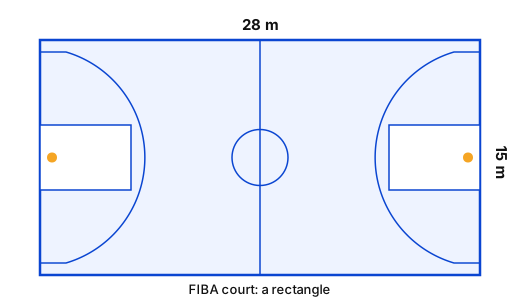
- As per FIBA rules the court measures (NBA: 94 ft × 50 ft).
- It is divided by a centre line, has a centre circle, and a basket with a three-point arc at each short end.
- Since length ≠ breadth, it is a rectangle, not a square.
Yaad rakhein: Basketball court: rectangle; 5 players per side on court.
Answer: (B) rectangle
अवधारणा: बास्केटबॉल कोर्ट एक समतल, कठोर आयताकार (rectangle) सतह होती है।
- FIBA नियमों के अनुसार कोर्ट का माप है (NBA: 94 ft × 50 ft)।
- इसे मध्य रेखा से बाँटा जाता है, बीच में centre circle और दोनों छोटे सिरों पर basket व three-point arc होते हैं।
- लंबाई ≠ चौड़ाई, इसलिए यह वर्ग नहीं, आयत है।
याद रखें: बास्केटबॉल कोर्ट: का आयत; हर टीम के 5 खिलाड़ी कोर्ट पर।
उत्तर: (B) rectangle (आयत)
SSC CPO Paper IGeneral Knowledge and General AwarenessSports – BasketballSSC CPO Paper I 2023 · 5 Oct Shift 1
Q2256.Under which Article of the Indian Constitution shall the executive power of the Union be vested in the President?
भारतीय संविधान के किस अनुच्छेद के अंतर्गत संघ की कार्यपालिका शक्ति राष्ट्रपति में निहित होगी?
- AArticle 53अनुच्छेद 53
- BArticle 55अनुच्छेद 55
- CArticle 58अनुच्छेद 58
- DArticle 56अनुच्छेद 56
Show answer
Concept: Part V, Chapter I of the Constitution deals with the Union Executive.
- Article 53: the executive power of the Union is vested in the President, exercised directly or through subordinate officers.
- Article 55: manner of election of the President; Article 56: term of office; Article 58: qualifications for election.
- Article 52 says there shall be a President of India.
Yaad rakhein: 52 – President exists; 53 – executive power; 54 and 55 – election; 56 – term; 58 – qualifications.
Answer: (A) Article 53
अवधारणा: संविधान का भाग V, अध्याय I संघ कार्यपालिका (Union Executive) से संबंधित है।
- अनुच्छेद 53: संघ की कार्यपालिका शक्ति राष्ट्रपति में निहित होगी, जिसका प्रयोग वे स्वयं या अधीनस्थ अधिकारियों द्वारा करेंगे।
- अनुच्छेद 55: राष्ट्रपति के चुनाव की रीति; अनुच्छेद 56: पदावधि; अनुच्छेद 58: योग्यताएँ।
- अनुच्छेद 52: भारत का एक राष्ट्रपति होगा।
याद रखें: 52 – राष्ट्रपति; 53 – कार्यपालिका शक्ति; 54 व 55 – चुनाव; 56 – कार्यकाल; 58 – योग्यता।
उत्तर: (A) अनुच्छेद 53
SSC CPO Paper IGeneral Knowledge and General AwarenessUnion Executive – ArticlesSSC CPO Paper I 2023 · 5 Oct Shift 1
Q2257.What are the drugs called which mimic the natural messenger by switching on the receptor?
उन औषधियों को क्या कहा जाता है जो अभिग्राहक (receptor) को सक्रिय करके प्राकृतिक संदेशवाहक की नकल करती हैं?
- AAntidepressantsअवसादरोधी (Antidepressants)
- BAgonistएगोनिस्ट (Agonist)
- CDepressantsअवसादक (Depressants)
- DAntagonistएंटागोनिस्ट (Antagonist)
Show answer
Concept: Drugs act on receptors – proteins that receive chemical messengers (like neurotransmitters or hormones).
- An agonist binds to the receptor and switches it on, mimicking the natural messenger.
- An antagonist binds to the receptor but blocks it, so the natural messenger cannot act.
- Antidepressants and depressants are therapeutic classes (by effect), not names for this mode of action.
Yaad rakhein: Agonist = Activates (mimics); Antagonist = blocks.
Answer: (B) Agonist
अवधारणा: औषधियाँ ग्राहियों (receptors) पर कार्य करती हैं – ये प्रोटीन रासायनिक संदेशवाहक (जैसे neurotransmitter, hormone) ग्रहण करते हैं।
- Agonist (एगोनिस्ट) ग्राही से जुड़कर उसे स्विच ऑन करता है और प्राकृतिक संदेशवाहक की नकल करता है।
- Antagonist (एंटागोनिस्ट) ग्राही से जुड़कर उसे अवरुद्ध करता है, जिससे प्राकृतिक संदेशवाहक कार्य नहीं कर पाता।
- प्रति-अवसादक और अवसादक प्रभाव के आधार पर दवाओं के वर्ग हैं, इस क्रिया-विधि के नाम नहीं।
याद रखें: Agonist = सक्रिय करता है (नकल); Antagonist = रोकता है।
उत्तर: (B) एगोनिस्ट (Agonist)
SSC CPO Paper IGeneral Knowledge and General AwarenessBiology – Drugs and ReceptorsSSC CPO Paper I 2023 · 5 Oct Shift 1
Q2258.In which of the following years did the government opt for a plan holiday after the
seventh five-year plan?
निम्नलिखित में से किन वर्षों में सरकार ने सातवीं पंचवर्षीय योजना के बाद योजना अवकाश (plan holiday)
का विकल्प चुना था?
- AFrom 1991 to 19931991 से 1993 तक
- BFrom 1990 to 19921990 से 1992 तक
- CFrom 1992 to 19931992 से 1993 तक
- DFrom 1989 to 19911989 से 1991 तक
Show answer
Concept: A plan holiday is a period when no five-year plan runs and only annual plans are made.
- The Seventh Plan ended in 1990; the Eighth Plan could not begin due to political instability at the Centre.
- Hence two Annual Plans were run: 1990–91 and 1991–92 – i.e. from 1990 to 1992.
- The Eighth Plan then started in 1992 (1992–97). The earlier plan holiday was 1966–69 after the Third Plan.
Yaad rakhein: Plan holidays: 1966–69 (after 3rd Plan) and 1990–92 (after 7th Plan); 1978–80 had Rolling Plans.
Answer: (B) From 1990 to 1992
अवधारणा: योजना अवकाश (plan holiday) वह अवधि है जब कोई पंचवर्षीय योजना नहीं चलती, केवल वार्षिक योजनाएँ बनती हैं।
- सातवीं योजना 1990 में समाप्त हुई; केंद्र में राजनीतिक अस्थिरता के कारण आठवीं योजना शुरू नहीं हो सकी।
- इसलिए दो वार्षिक योजनाएँ चलीं: 1990–91 और 1991–92, अर्थात 1990 से 1992 तक।
- आठवीं योजना 1992 (1992–97) से शुरू हुई। पहला plan holiday तीसरी योजना के बाद 1966–69 था।
याद रखें: Plan holiday: 1966–69 (तीसरी योजना के बाद) और 1990–92 (सातवीं के बाद); 1978–80 में Rolling Plan।
उत्तर: (B) 1990 से 1992
SSC CPO Paper IGeneral Knowledge and General AwarenessFive-Year PlansSSC CPO Paper I 2023 · 5 Oct Shift 1
Q2259.Which of the following did NOT emerge as a result of disintegration of the Bahmani kingdom during the 16th century?
16वीं शताब्दी के दौरान बहमनी साम्राज्य के विघटन के परिणामस्वरूप निम्नलिखित में से कौन-सा राज्य अस्तित्व में नहीं आया था?
- AAhmadnagarअहमदनगर
- BGaurगौड़
- CGolcondaगोलकुंडा
- DBidarबीदर
Show answer
Concept: The Bahmani Sultanate (founded 1347) broke up into five Deccan Sultanates.
- The five were: Bijapur (Adil Shahi), Ahmadnagar (Nizam Shahi), Golconda (Qutb Shahi), Bidar (Barid Shahi) and Berar (Imad Shahi).
- Gaur (Gauda) was a capital of the Bengal Sultanate in eastern India and had nothing to do with the Bahmani kingdom.
Yaad rakhein: Deccan five – "BAGBB": Bijapur, Ahmadnagar, Golconda, Bidar, Berar.
Answer: (B) Gaur
अवधारणा: बहमनी सल्तनत (स्थापना 1347) टूटकर पाँच दक्कन सल्तनतों में बँट गई।
- ये पाँच थीं: बीजापुर (आदिलशाही), अहमदनगर (निज़ामशाही), गोलकुंडा (कुतुबशाही), बीदर (बरीदशाही) और बरार (इमादशाही)।
- गौड़ पूर्वी भारत में बंगाल सल्तनत की राजधानी थी; इसका बहमनी राज्य से कोई संबंध नहीं था।
याद रखें: दक्कन की पाँच – बीजापुर, अहमदनगर, गोलकुंडा, बीदर, बरार।
उत्तर: (B) गौड़ (Gaur)
SSC CPO Paper IGeneral Knowledge and General AwarenessMedieval India – Deccan SultanatesSSC CPO Paper I 2023 · 5 Oct Shift 1
Q2260.When was the 8th round of the General Agreement on Tariffs and Trade (GATT), the so- called ‘Uruguay Round’ which led to the establishment of World Trade Organization (WTO) completed?
प्रशुल्क एवं व्यापार पर सामान्य समझौते (GATT) का 8वाँ दौर, जिसे ‘उरुग्वे दौर’ कहा जाता है और जिसके परिणामस्वरूप विश्व व्यापार संगठन (WTO) की स्थापना हुई, कब पूरा हुआ था?
- A1993
- B1994
- C1991
- D1992
Show answer
Concept: The Uruguay Round was the 8th and last round of GATT negotiations (launched at Punta del Este, 1986).
- Negotiations concluded and the Final Act was signed at Marrakesh, Morocco in April 1994.
- The Marrakesh Agreement created the WTO, which came into existence on 1 January 1995 in Geneva.
- India is a founder member of both GATT (1947) and WTO (1995).
Yaad rakhein: Uruguay Round: 1986 → 1994 (Marrakesh) → WTO on 1-1-1995.
Answer: (B) 1994
अवधारणा: उरुग्वे दौर (Uruguay Round) GATT वार्ताओं का 8वाँ और अंतिम दौर था (1986 में पुंटा डेल एस्टे से शुरू)।
- यह दौर पूरा हुआ और अंतिम समझौते पर अप्रैल 1994 में मराकेश (मोरक्को) में हस्ताक्षर हुए।
- मराकेश समझौते से WTO बना, जो 1 जनवरी 1995 से जिनेवा में कार्यरत है।
- भारत GATT (1947) और WTO (1995) दोनों का संस्थापक सदस्य है।
याद रखें: उरुग्वे दौर: 1986 → 1994 (मराकेश) → WTO 1-1-1995।
उत्तर: (B) 1994
SSC CPO Paper IGeneral Knowledge and General AwarenessInternational Organisations – WTOSSC CPO Paper I 2023 · 5 Oct Shift 1

