Q261.Eutrophication can be defined as:
सुपोषण (Eutrophication) को इस प्रकार परिभाषित किया जा सकता है:
- Athe gradual increase in the concentration of phosphorus, nitrogen, and other plant nutrients in an grassland ecosystemकिसी घास के मैदान के पारितंत्र में फॉस्फोरस, नाइट्रोजन और अन्य पादप पोषक तत्वों की सांद्रता में क्रमिक वृद्धि
- Bthe gradual decrease in the concentration of phosphorus, nitrogen, and other plant nutrients in an aging aquatic ecosystem such as a lakeकिसी पुराने होते जलीय पारितंत्र, जैसे झील, में फॉस्फोरस, नाइट्रोजन और अन्य पादप पोषक तत्वों की सांद्रता में क्रमिक कमी
- Cthe gradual increase in the concentration of phosphorus, nitrogen, and other plant nutrients in desert areasमरुस्थलीय क्षेत्रों में फॉस्फोरस, नाइट्रोजन और अन्य पादप पोषक तत्वों की सांद्रता में क्रमिक वृद्धि
- Dthe gradual increase in the concentration of phosphorus, nitrogen, and other plant nutrients in an aging aquatic ecosystem such as a lakeकिसी पुराने होते जलीय पारितंत्र, जैसे झील, में फॉस्फोरस, नाइट्रोजन और अन्य पादप पोषक तत्वों की सांद्रता में क्रमिक वृद्धि
Show answer
Concept: Eutrophication is the nutrient enrichment of water bodies, i.e., the natural ageing of a lake.
- Nitrogen and phosphorus (from fertiliser runoff, sewage, detergents) increase in the lake.
- Algal blooms grow, dissolved oxygen falls and fish die; the lake slowly fills and ages.
- It concerns aquatic ecosystems, not grasslands or deserts, and nutrients increase, not decrease.
Yaad rakhein: Eu-trophic = 'well-nourished' water → more N and P in an ageing lake.
Answer: (D) the gradual increase in the concentration of phosphorus, nitrogen and other plant nutrients in an ageing aquatic ecosystem such as a lake
अवधारणा: सुपोषण (Eutrophication) जलाशयों में पोषक तत्वों की वृद्धि है, यानी झील का प्राकृतिक रूप से बूढ़ा होना।
- उर्वरक बहाव, सीवेज, डिटर्जेंट से नाइट्रोजन और फॉस्फोरस झील में बढ़ते हैं।
- शैवाल प्रस्फुटन (algal bloom) होता है, घुलित ऑक्सीजन घटती है, मछलियाँ मरती हैं; झील धीरे-धीरे भरकर बूढ़ी होती है।
- यह जलीय तंत्र से जुड़ा है, घास के मैदान या मरुस्थल से नहीं; और पोषक तत्व बढ़ते हैं, घटते नहीं।
याद रखें: Eu-trophic = 'अच्छी तरह पोषित' जल → बूढ़ी झील में N और P अधिक।
उत्तर: (D) the gradual increase … in an aging aquatic ecosystem such as a lake
SSC CPO Paper IGeneral Knowledge and General AwarenessEutrophicationSSC CPO Paper I 2024 · 28 Jun Shift 1
Q262.Which of the following is the IUPAC name of m-Dichlorobenzene?
निम्नलिखित में से कौन-सा m-डाइक्लोरोबेंजीन (m-Dichlorobenzene) का IUPAC नाम है?
- A3,4-Dichlorobenzene3,4-डाइक्लोरोबेंजीन
- B1,2-Dichlorobenzene1,2-डाइक्लोरोबेंजीन
- C1,3-Dichlorobenzene1,3-डाइक्लोरोबेंजीन
- D2,3-Dichlorobenzene2,3-डाइक्लोरोबेंजीन
Show answer
Concept: In disubstituted benzene, positions are named ortho (1,2), meta (1,3) and para (1,4).
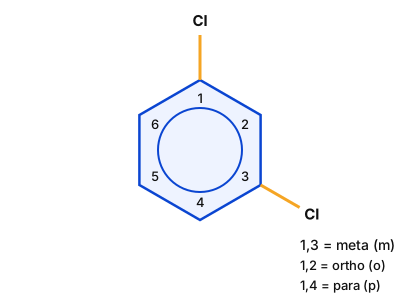
- 'm' stands for meta.
- In m-dichlorobenzene the two Cl atoms are on carbons 1 and 3.
- IUPAC uses lowest locants, so the name is 1,3-Dichlorobenzene; 1,2 is ortho, while '2,3' and '3,4' are not lowest numbering.
Trick: O-M-P = 1,2 – 1,3 – 1,4 (each one carbon further).
Answer: (C) 1,3-Dichlorobenzene
अवधारणा: द्वि-प्रतिस्थापित बेंज़ीन में स्थितियाँ ortho (1,2), meta (1,3) और para (1,4) कहलाती हैं।
- 'm' का अर्थ है meta।
- m-dichlorobenzene में दोनों Cl कार्बन 1 और 3 पर होते हैं।
- IUPAC में सबसे छोटे अंक (lowest locants) लेते हैं, इसलिए नाम 1,3-Dichlorobenzene; 1,2 ortho है, और '2,3', '3,4' सही क्रमांकन नहीं।
ट्रिक: O-M-P = 1,2 – 1,3 – 1,4।
उत्तर: (C) 1,3-Dichlorobenzene
SSC CPO Paper IGeneral Knowledge and General AwarenessIUPAC naming – benzene derivativesSSC CPO Paper I 2024 · 28 Jun Shift 1
Q263.World Athletics Under-20 Championship–2021 was held from 18 to 22 August 2021 at _________.
विश्व एथलेटिक्स अंडर-20 चैंपियनशिप–2021 का आयोजन 18 से 22 अगस्त 2021 तक _________ में किया गया था।
- ASouth Africaदक्षिण अफ्रीका
- BBrazilब्राज़ील
- CArgentinaअर्जेंटीना
- DKenyaकेन्या
Show answer
Concept: The World Athletics U20 Championships 2021 were held at Kasarani Stadium, Nairobi.
- Nairobi is the capital of Kenya; it was the first time Kenya hosted this championship.
- India won three medals there, including Neeraj's fellow athletes Amit Khatri (silver, 10 km race walk) and Shaili Singh (silver, long jump).
- South Africa, Brazil and Argentina were not hosts.
Yaad rakhein: U20 Worlds 2021 → Nairobi (Kenya), the land of distance runners.
Answer: (D) Kenya
अवधारणा: वर्ल्ड एथलेटिक्स U20 चैंपियनशिप 2021 कसारानी स्टेडियम, नैरोबी में आयोजित हुई।
- नैरोबी केन्या की राजधानी है; केन्या ने पहली बार इसकी मेज़बानी की।
- भारत ने यहाँ तीन पदक जीते, जिनमें अमित खत्री (रजत, 10 km race walk) और शैली सिंह (रजत, लंबी कूद) शामिल हैं।
- दक्षिण अफ्रीका, ब्राज़ील, अर्जेंटीना मेज़बान नहीं थे।
याद रखें: U20 विश्व चैंपियनशिप 2021 → नैरोबी (केन्या)।
उत्तर: (D) Kenya
SSC CPO Paper IGeneral Knowledge and General AwarenessSports events – venuesSSC CPO Paper I 2024 · 28 Jun Shift 1
Q264.Who among the following wrote Gulamgiri?
निम्नलिखित में से किसने ‘गुलामगिरी’ की रचना की?
- ABal Gangadhar Tilakबाल गंगाधर तिलक
- BMahatma Gandhiमहात्मा गांधी
- CBR Ambedkarबी.आर. अंबेडकर
- DJyotiba Phuleज्योतिबा फुले
Show answer
Concept: Gulamgiri (Slavery, 1873) attacked caste oppression and compared the condition of lower castes to slavery.
- It was written by Jyotiba Phule, who founded the Satyashodhak Samaj (1873).
- He dedicated it to the people of the USA who fought to end slavery.
- Tilak – Gita Rahasya; Gandhi – Hind Swaraj; Ambedkar – Annihilation of Caste.
Yaad rakhein: Phule 1873: Gulamgiri + Satyashodhak Samaj – same year.
Answer: (D) Jyotiba Phule
अवधारणा: गुलामगिरी (1873) ने जातिगत शोषण पर प्रहार किया और निम्न जातियों की स्थिति की तुलना दासता से की।
- इसके लेखक ज्योतिबा फुले हैं, जिन्होंने सत्यशोधक समाज (1873) की स्थापना की।
- उन्होंने यह पुस्तक दासता के विरुद्ध लड़ने वाले अमेरिकी लोगों को समर्पित की।
- तिलक – गीता रहस्य; गांधी – हिंद स्वराज; आंबेडकर – Annihilation of Caste।
याद रखें: फुले 1873: गुलामगिरी + सत्यशोधक समाज – एक ही वर्ष।
उत्तर: (D) Jyotiba Phule
SSC CPO Paper IGeneral Knowledge and General AwarenessSocial reformers – booksSSC CPO Paper I 2024 · 28 Jun Shift 1
Q265.Which of the following pairs of physicists and their contributions/discoveries is
INCORRECT?
भौतिकविदों और उनके योगदानों/खोजों का निम्नलिखित में से कौन-सा युग्म
गलत है?
- AHeinrich Rudolf Hertz – Generation of electromagnetic wavesहेनरिक रुडोल्फ हर्ट्ज़ – विद्युत चुंबकीय तरंगों का उत्पादन
- BAlbert Einstein – Explanation of photoelectric effectअल्बर्ट आइंस्टीन – प्रकाश विद्युत प्रभाव की व्याख्या
- CMichael Faraday – Laws of electromagnetic inductionमाइकल फैराडे – विद्युत चुंबकीय प्रेरण के नियम
- DGalileo Galilei – Wave theory of lightगैलीलियो गैलीली – प्रकाश का तरंग सिद्धांत
Show answer
Concept: Match each scientist with his actual contribution.
- Hertz experimentally produced and detected electromagnetic waves (1887) – correct.
- Einstein explained the photoelectric effect (Nobel Prize 1921) – correct.
- Faraday gave the laws of electromagnetic induction (1831) – correct.
- The wave theory of light was given by Christiaan Huygens, not Galileo; Galileo is known for the telescope and laws of falling bodies – incorrect pair.
Yaad rakhein: Wave theory → Huygens (H for 'Huygens' and 'wave')... Galileo → telescope.
Answer: (D) Galileo Galilei – Wave theory of light
अवधारणा: हर वैज्ञानिक को उसके वास्तविक योगदान से मिलाएँ।
- हर्ट्ज़ ने विद्युतचुंबकीय तरंगें प्रयोग से उत्पन्न कीं (1887) – सही।
- आइंस्टीन ने प्रकाश-विद्युत प्रभाव (photoelectric effect) समझाया (नोबेल 1921) – सही।
- फैराडे ने विद्युतचुंबकीय प्रेरण के नियम दिए (1831) – सही।
- प्रकाश का तरंग सिद्धांत क्रिस्टियान हाइगेंस ने दिया, गैलीलियो ने नहीं; गैलीलियो दूरबीन और गिरते पिंडों के नियमों के लिए प्रसिद्ध हैं – गलत युग्म।
याद रखें: तरंग सिद्धांत → हाइगेंस; गैलीलियो → दूरबीन।
उत्तर: (D) Galileo Galilei – Wave theory of light
SSC CPO Paper IGeneral Knowledge and General AwarenessPhysicists and discoveriesSSC CPO Paper I 2024 · 28 Jun Shift 1
Q266.Dantivarman or Dantidurga was the founder of which of the following dynasties?
दंतिवर्मन या दंतिदुर्ग निम्नलिखित में से किस राजवंश के संस्थापक थे?
- ACheraचेर
- BPalaपाल
- CPratiharaप्रतिहार
- DRashtrakutaराष्ट्रकूट
Show answer
Concept: The Rashtrakutas were feudatories of the Chalukyas of Badami before becoming independent in the Deccan.
- Dantidurga (Dantivarman II) overthrew the Chalukya king Kirtivarman II around 753 CE and founded the Rashtrakuta dynasty.
- Krishna I built the Kailasa temple at Ellora; Amoghavarsha I made Manyakheta the capital.
- Pala – Gopala; Gurjara-Pratihara – Nagabhata I; Chera – ancient Sangam-age dynasty.
Yaad rakhein: Danti-durga → Deccan → Rashtrakuta (part of the tripartite struggle with Palas and Pratiharas).
Answer: (D) Rashtrakuta
अवधारणा: राष्ट्रकूट पहले बादामी के चालुक्यों के सामंत थे, फिर दक्कन में स्वतंत्र हुए।
- दंतिदुर्ग (दंतिवर्मन II) ने लगभग 753 ई. में चालुक्य राजा कीर्तिवर्मन II को हराकर राष्ट्रकूट वंश की स्थापना की।
- कृष्ण I ने एलोरा का कैलाश मंदिर बनवाया; अमोघवर्ष I ने मान्यखेट को राजधानी बनाया।
- पाल – गोपाल; गुर्जर-प्रतिहार – नागभट्ट I; चेर – संगमकालीन प्राचीन वंश।
याद रखें: त्रिपक्षीय संघर्ष: पाल, प्रतिहार, राष्ट्रकूट – राष्ट्रकूट के संस्थापक दंतिदुर्ग।
उत्तर: (D) Rashtrakuta
SSC CPO Paper IGeneral Knowledge and General AwarenessRashtrakuta dynastySSC CPO Paper I 2024 · 28 Jun Shift 1
Q267.In which year was the Foreign Investment Board established?
विदेशी निवेश बोर्ड की स्थापना किस वर्ष की गई थी?
- A1991
- B1968
- C1960
- D1965
Show answer
Concept: India set up a body in the late 1960s to scrutinise foreign investment proposals.
- The Foreign Investment Board (FIB) was established in 1968 to handle foreign investment cases.
- In 1991, after liberalisation, the Foreign Investment Promotion Board (FIPB) was created – a different body (the tempting option).
- FIPB itself was abolished in 2017.
Yaad rakhein: FIB 1968 → FIPB 1991 → abolished 2017.
Answer: (B) 1968
अवधारणा: भारत ने 1960 के दशक के अंत में विदेशी निवेश प्रस्तावों की जाँच के लिए एक संस्था बनाई।
- विदेशी निवेश बोर्ड (FIB) की स्थापना 1968 में हुई।
- 1991 में उदारीकरण के बाद विदेशी निवेश संवर्धन बोर्ड (FIPB) बना – यह अलग संस्था है (भ्रामक विकल्प)।
- FIPB को 2017 में समाप्त कर दिया गया।
याद रखें: FIB 1968 → FIPB 1991 → समाप्त 2017।
उत्तर: (B) 1968
SSC CPO Paper IGeneral Knowledge and General AwarenessForeign investment institutionsSSC CPO Paper I 2024 · 28 Jun Shift 1
Q268.The Salal HydroelectricPower Station is located in which Union Territory of India?
सलाल जलविद्युत केंद्र भारत के किस केंद्र शासित प्रदेश में स्थित है?
- ALadakhलद्दाख
- BLakshadweepलक्षद्वीप
- CChandigarhचंडीगढ़
- DJammu and Kashmirजम्मू और कश्मीर
Show answer
Concept: The Salal Hydroelectric Project is a run-of-the-river project of NHPC.
- It is built on the Chenab river in Reasi district.
- Reasi lies in the Union Territory of Jammu and Kashmir.
- Ladakh's projects are Nimoo-Bazgo and Chutak; Lakshadweep and Chandigarh have no such project.
Yaad rakhein: Chenab projects (Salal, Baglihar, Dulhasti) → J&K.
Answer: (D) Jammu and Kashmir
अवधारणा: सलाल जलविद्युत परियोजना NHPC की run-of-the-river परियोजना है।
- यह चिनाब नदी पर रियासी ज़िले में बनी है।
- रियासी केंद्रशासित प्रदेश जम्मू और कश्मीर में है।
- लद्दाख में निमू-बाज़गो और चुटक परियोजनाएँ हैं; लक्षद्वीप व चंडीगढ़ में ऐसी परियोजना नहीं।
याद रखें: चिनाब परियोजनाएँ (सलाल, बगलिहार, दुलहस्ती) → J&K।
उत्तर: (D) Jammu and Kashmir
SSC CPO Paper IGeneral Knowledge and General AwarenessHydroelectric projectsSSC CPO Paper I 2024 · 28 Jun Shift 1
Q269.Selling of bonds by the RBI will cause money supply to __________.
RBI द्वारा बॉण्डों की बिक्री से मुद्रा आपूर्ति __________ होगी।
- Adecreaseकम
- Bfluctuateअस्थिर
- Cincreaseअधिक
- DNo relationship exists between selling bonds and money supplyबॉण्डों की बिक्री और मुद्रा आपूर्ति के बीच कोई संबंध नहीं है
Show answer
Concept: Open Market Operations (OMO) are the RBI's buying and selling of government securities to control liquidity.
- When the RBI sells bonds, banks and the public pay money to the RBI.
- This money leaves the system, so bank reserves and lending capacity fall.
- Hence the money supply decreases (contractionary policy, used to check inflation); buying bonds does the opposite.
Yaad rakhein: RBI sells bonds → sucks money; RBI buys bonds → pumps money.
Answer: (A) decrease
अवधारणा: खुले बाज़ार की क्रियाएँ (OMO) में RBI तरलता नियंत्रित करने हेतु सरकारी प्रतिभूतियाँ खरीदता-बेचता है।
- RBI जब बॉन्ड बेचता है तो बैंक व जनता RBI को पैसा देते हैं।
- यह पैसा प्रणाली से बाहर चला जाता है, बैंकों की ऋण देने की क्षमता घटती है।
- इसलिए मुद्रा आपूर्ति घटती है (संकुचनकारी नीति, महँगाई रोकने हेतु); बॉन्ड खरीदने पर उल्टा होता है।
याद रखें: RBI बेचे → पैसा खींचे; RBI खरीदे → पैसा डाले।
उत्तर: (A) decrease
SSC CPO Paper IGeneral Knowledge and General AwarenessOpen Market OperationsSSC CPO Paper I 2024 · 28 Jun Shift 1
Q270.Which of the following banks is in charge of India’s banking and monetary system?
निम्नलिखित में से कौन-सा बैंक भारत की बैंकिंग और मौद्रिक प्रणाली का प्रभारी है?
- ARBI
- BUnion Bank
- CBOB
- DSBI
Show answer
Concept: The central bank of a country controls its currency, credit and banking system.
- The Reserve Bank of India was set up on 1 April 1935 under the RBI Act, 1934 and nationalised in 1949.
- It issues currency, frames monetary policy and regulates banks (Banking Regulation Act, 1949).
- SBI, Bank of Baroda and Union Bank are commercial banks regulated by the RBI.
Yaad rakhein: RBI = Banker's bank + Government's bank + currency issuer.
Answer: (A) RBI
अवधारणा: किसी देश का केंद्रीय बैंक उसकी मुद्रा, साख (credit) और बैंकिंग प्रणाली को नियंत्रित करता है।
- भारतीय रिज़र्व बैंक की स्थापना RBI अधिनियम, 1934 के तहत 1 अप्रैल 1935 को हुई; 1949 में राष्ट्रीयकरण।
- यह मुद्रा जारी करता है, मौद्रिक नीति बनाता है और बैंकों का नियमन करता है।
- SBI, BOB, Union Bank वाणिज्यिक बैंक हैं जिनका नियमन RBI करता है।
याद रखें: RBI = बैंकों का बैंक + सरकार का बैंक + मुद्रा जारीकर्ता।
उत्तर: (A) RBI
SSC CPO Paper IGeneral Knowledge and General AwarenessReserve Bank of IndiaSSC CPO Paper I 2024 · 28 Jun Shift 1
Q271.Among the following, which is not a qualification for membership in the Vidhan Sabha
निम्नलिखित में से कौन-सी विधान सभा की सदस्यता के लिए योग्यता नहीं है?
- ANot hold any office of profitलाभ का कोई पद धारण न करना
- BCitizen of Indiaभारत का नागरिक होना
- CKnowledge of Politicsराजनीति का ज्ञान होना
- DHave attained the age of 25 Years25 वर्ष की आयु प्राप्त कर लेना
Show answer
Concept: Article 173 and the Representation of the People Act lay down qualifications for MLAs.
- Must be a citizen of India.
- Must be at least 25 years of age for the Vidhan Sabha.
- Must not hold an office of profit under government (Article 191 disqualification).
- There is no requirement of educational or 'knowledge of politics' qualification.
Yaad rakhein: Constitution asks for citizenship and age – never education or knowledge.
Answer: (C) Knowledge of Politics
अवधारणा: अनुच्छेद 173 और लोक प्रतिनिधित्व अधिनियम विधायक (MLA) की योग्यताएँ तय करते हैं।
- भारत का नागरिक होना चाहिए।
- विधानसभा के लिए कम से कम 25 वर्ष आयु।
- सरकार के अधीन लाभ का पद (office of profit) न हो (अनुच्छेद 191)।
- शैक्षिक योग्यता या 'राजनीति का ज्ञान' जैसी कोई शर्त नहीं।
याद रखें: संविधान नागरिकता और आयु माँगता है – शिक्षा या ज्ञान नहीं।
उत्तर: (C) Knowledge of Politics
SSC CPO Paper IGeneral Knowledge and General AwarenessState Legislature – qualificationsSSC CPO Paper I 2024 · 28 Jun Shift 1
Q272.Which Article of the Indian Constitution mentions about the right of the Advocate-
General of a state to speak in the State Legislature?
भारतीय संविधान के किस अनुच्छेद में किसी राज्य के महाधिवक्ता के
राज्य विधानमंडल में बोलने के अधिकार का उल्लेख है?
- AArticle 181अनुच्छेद 181
- BArticle 177अनुच्छेद 177
- CArticle 179अनुच्छेद 179
- DArticle 183अनुच्छेद 183
Show answer
Concept: The Advocate General (Article 165) is the highest law officer of a State.
- Article 177 gives Ministers and the Advocate General the right to speak and take part in proceedings of the State Legislature and its committees.
- He cannot vote there.
- Article 181 – Speaker not to preside when removal is under consideration; Article 179 – vacation of Speaker's office; Article 183 – Chairman of Council.
Yaad rakhein: Union: AG of India – Art 76 & 88; State: Advocate General – Art 165 & 177.
Answer: (B) Article 177
अवधारणा: महाधिवक्ता (Advocate General, अनुच्छेद 165) राज्य का सर्वोच्च विधि अधिकारी है।
- अनुच्छेद 177 मंत्रियों और महाधिवक्ता को राज्य विधानमंडल व उसकी समितियों में बोलने और कार्यवाही में भाग लेने का अधिकार देता है।
- वह वहाँ मत (vote) नहीं दे सकता।
- अनुच्छेद 181 – हटाने के प्रस्ताव पर अध्यक्ष अध्यक्षता न करे; 179 – अध्यक्ष पद रिक्त होना; 183 – परिषद का सभापति।
याद रखें: केंद्र: महान्यायवादी – अनुच्छेद 76 व 88; राज्य: महाधिवक्ता – 165 व 177।
उत्तर: (B) Article 177
SSC CPO Paper IGeneral Knowledge and General AwarenessAdvocate General – StateSSC CPO Paper I 2024 · 28 Jun Shift 1
Q273.What are bases that are soluble in water called?
जल में घुलनशील क्षारकों को क्या कहा जाता है?
- AAlkalisक्षार (Alkalis)
- BAlkanesऐल्केन (Alkanes)
- CAcidsअम्ल (Acids)
- DAlkenesऐल्कीन (Alkenes)
Show answer
Concept: Bases react with acids to form salt and water; some bases dissolve in water.
- Water-soluble bases are called alkalis – e.g., NaOH, KOH, Ca(OH)2.
- All alkalis are bases, but not all bases are alkalis (e.g., Cu(OH)2 is insoluble).
- Alkanes and alkenes are hydrocarbons; acids are the opposite of bases.
Yaad rakhein: All alkalis are bases, but not all bases are alkalis.
Answer: (A) Alkalis
अवधारणा: क्षारक (base) अम्ल से क्रिया कर लवण और जल बनाते हैं; कुछ क्षारक जल में घुलते हैं।
- जल में घुलनशील क्षारकों को क्षार (alkalis) कहते हैं – जैसे NaOH, KOH, Ca(OH)2।
- सभी क्षार क्षारक हैं, पर सभी क्षारक क्षार नहीं (जैसे Cu(OH)2 अघुलनशील)।
- Alkanes और alkenes हाइड्रोकार्बन हैं; acids क्षारकों के विपरीत हैं।
याद रखें: सभी alkalis, bases हैं; पर सभी bases, alkalis नहीं।
उत्तर: (A) Alkalis
SSC CPO Paper IGeneral Knowledge and General AwarenessAcids, bases and saltsSSC CPO Paper I 2024 · 28 Jun Shift 1
Q274.Who amongst the following became the president of the second session of the Indian National Congress held in Calcutta in December 1886?
दिसंबर 1886 में कलकत्ता में आयोजित भारतीय राष्ट्रीय कांग्रेस के दूसरे अधिवेशन के अध्यक्ष निम्नलिखित में से कौन बने?
- ADadabhai Naurojiदादाभाई नौरोजी
- BBadruddin Tyabjiबदरुद्दीन तैयबजी
- CP Ananda Charluपी. आनंद चार्लू
- DWilliam Wedderburnविलियम वेडरबर्न
Show answer
Concept: The early sessions of the Indian National Congress and their presidents are a standard exam topic.
- 1885 Bombay (1st) – W.C. Bonnerjee.
- 1886 Calcutta (2nd) – Dadabhai Naoroji.
- 1887 Madras – Badruddin Tyabji (first Muslim president); 1889 Bombay – William Wedderburn; 1891 Nagpur – P. Ananda Charlu.
Yaad rakhein: B-D-B: Bonnerjee (1885), Dadabhai (1886), Badruddin (1887).
Answer: (A) Dadabhai Nauroji
अवधारणा: भारतीय राष्ट्रीय कांग्रेस के प्रारंभिक अधिवेशन और उनके अध्यक्ष परीक्षा का सामान्य विषय हैं।
- 1885 बंबई (पहला) – डब्ल्यू.सी. बनर्जी।
- 1886 कलकत्ता (दूसरा) – दादाभाई नौरोजी।
- 1887 मद्रास – बदरुद्दीन तैयबजी (पहले मुस्लिम अध्यक्ष); 1889 बंबई – विलियम वेडरबर्न; 1891 नागपुर – पी. आनंद चार्लू।
याद रखें: B-D-B: बनर्जी (1885), दादाभाई (1886), बदरुद्दीन (1887)।
उत्तर: (A) Dadabhai Nauroji
SSC CPO Paper IGeneral Knowledge and General AwarenessINC sessions and presidentsSSC CPO Paper I 2024 · 28 Jun Shift 1
Q275.In which year was Dattopant Thengadi National Board for Workers Education and
Development established?
दत्तोपंत ठेंगड़ी राष्ट्रीय श्रमिक शिक्षा एवं विकास बोर्ड की स्थापना किस वर्ष
की गई थी?
- A1978
- B1968
- C1958
- D1948
Show answer
Concept: The Dattopant Thengadi National Board for Workers Education and Development works under the Ministry of Labour and Employment.
- It was set up in 1958 as the Central Board for Workers Education.
- It was later renamed after trade-union leader Dattopant Thengadi (founder of the Bharatiya Mazdoor Sangh).
- It trains workers of organised and unorganised sectors about their rights and welfare schemes.
Yaad rakhein: Workers Education Board – 1958, renamed after the BMS founder.
Answer: (C) 1958
अवधारणा: दत्तोपंत ठेंगड़ी राष्ट्रीय श्रमिक शिक्षा एवं विकास बोर्ड श्रम एवं रोज़गार मंत्रालय के अधीन है।
- इसकी स्थापना 1958 में केंद्रीय श्रमिक शिक्षा बोर्ड (Central Board for Workers Education) के रूप में हुई।
- बाद में इसका नाम भारतीय मज़दूर संघ के संस्थापक दत्तोपंत ठेंगड़ी के नाम पर रखा गया।
- यह संगठित व असंगठित क्षेत्र के श्रमिकों को अधिकारों और कल्याण योजनाओं की शिक्षा देता है।
याद रखें: श्रमिक शिक्षा बोर्ड – 1958; BMS संस्थापक के नाम पर।
उत्तर: (C) 1958
SSC CPO Paper IGeneral Knowledge and General AwarenessLabour welfare institutionsSSC CPO Paper I 2024 · 28 Jun Shift 1
Q276.When did the second urbanisation in Ganga Valley take place?
गंगा घाटी में द्वितीय नगरीकरण कब हुआ?
- A3rd Century BCEतीसरी शताब्दी ईसा पूर्व
- B5th Century BCEपाँचवीं शताब्दी ईसा पूर्व
- C6th Century BCEछठी शताब्दी ईसा पूर्व
- D2nd Century BCEदूसरी शताब्दी ईसा पूर्व
Show answer
Concept: India's first urbanisation was the Harappan civilisation; the second began in the Ganga valley after a long gap.
- Around the 6th century BCE, iron tools, surplus agriculture and trade led to new towns in the middle Ganga plain.
- This was the age of the 16 Mahajanapadas, Buddha and Mahavira.
- Towns like Rajagriha, Shravasti, Kaushambi and Champa grew; punch-marked coins appeared.
Yaad rakhein: Buddha's age = Mahajanapadas = second urbanisation (6th century BCE).
Answer: (C) 6th Century BCE
अवधारणा: भारत का पहला नगरीकरण हड़प्पा सभ्यता थी; दूसरा नगरीकरण लंबे अंतराल के बाद गंगा घाटी में हुआ।
- लगभग छठी शताब्दी ईसा पूर्व में लोहे के औज़ार, अधिशेष कृषि और व्यापार से मध्य गंगा मैदान में नए नगर बने।
- यह 16 महाजनपदों, बुद्ध और महावीर का युग था।
- राजगृह, श्रावस्ती, कौशाम्बी, चंपा जैसे नगर बढ़े; आहत (punch-marked) सिक्के आए।
याद रखें: बुद्ध का युग = महाजनपद = द्वितीय नगरीकरण (छठी शताब्दी ई.पू.)।
उत्तर: (C) 6th Century BCE
SSC CPO Paper IGeneral Knowledge and General AwarenessSecond urbanisationSSC CPO Paper I 2024 · 28 Jun Shift 1
Q277.Which festival is celebrated after the month of Ramzan?
रमज़ान के महीने के बाद कौन-सा त्योहार मनाया जाता है?
- AMilad un Nabiमिलाद-उन-नबी
- BJammat Ul Vidaजमात-उल-विदा
- CEid ul Fitrईद-उल-फित्र
- DMuharramमुहर्रम
Show answer
Concept: Ramzan (Ramadan) is the ninth month of the Islamic calendar, a month of fasting.
- Fasting ends with the sighting of the new moon of Shawwal.
- Eid-ul-Fitr ('festival of breaking the fast') is celebrated on the 1st of Shawwal.
- Jamat-ul-Vida is the last Friday within Ramzan; Muharram is the first month; Milad-un-Nabi marks the Prophet's birthday (Rabi-ul-Awwal).
Yaad rakhein: Fitr = breaking the fast → right after Ramzan.
Answer: (C) Eid ul Fitr
अवधारणा: रमज़ान इस्लामी कैलेंडर का नौवाँ महीना है, जिसमें रोज़े रखे जाते हैं।
- शव्वाल का नया चाँद दिखने पर रोज़े समाप्त होते हैं।
- ईद-उल-फ़ित्र ('रोज़ा तोड़ने का त्योहार') शव्वाल की पहली तारीख को मनाई जाती है।
- जमात-उल-विदा रमज़ान के भीतर अंतिम शुक्रवार है; मुहर्रम पहला महीना; मिलाद-उन-नबी पैगंबर का जन्मदिन।
याद रखें: फ़ित्र = रोज़ा खोलना → रमज़ान के ठीक बाद।
उत्तर: (C) Eid ul Fitr
SSC CPO Paper IGeneral Knowledge and General AwarenessIslamic festivalsSSC CPO Paper I 2024 · 28 Jun Shift 1
Q278.Veteran Kathak Dancer Aditi Mangaldas bagged the _________ .
अनुभवी कथक नृत्यांगना अदिति मंगलदास को _________ प्राप्त हुआ।
- AMahari Award 2022महरी पुरस्कार 2022
- BPadma Vibhushan Award 2022पद्म विभूषण पुरस्कार 2022
- CBharat Ratna Award 2022भारत रत्न पुरस्कार 2022
- DPadma Bhushan Award 2022पद्म भूषण पुरस्कार 2022
Show answer
Concept: Aditi Mangaldas is a leading Kathak and contemporary dancer from Ahmedabad, trained under Kumudini Lakhia and Birju Maharaj.
- She received the Mahari Award 2022, a dance honour named after the Mahari (temple dancer) tradition of Odisha.
- No Bharat Ratna was conferred in 2022.
- She was not among the Padma Vibhushan or Padma Bhushan awardees of 2022.
Yaad rakhein: Mahari = temple dancers of Odisha → award for a dancer.
Answer: (A) Mahari Award 2022
अवधारणा: अदिति मंगलदास अहमदाबाद की प्रमुख कथक व समकालीन नृत्यांगना हैं, जिन्होंने कुमुदिनी लाखिया और बिरजू महाराज से प्रशिक्षण लिया।
- उन्हें महरी पुरस्कार 2022 मिला, जो ओडिशा की महरी (मंदिर नर्तकी) परंपरा के नाम पर नृत्य सम्मान है।
- 2022 में कोई भारत रत्न नहीं दिया गया।
- वह 2022 के पद्म विभूषण या पद्म भूषण विजेताओं में नहीं थीं।
याद रखें: महरी = ओडिशा की मंदिर नर्तकियाँ → नर्तक को सम्मान।
उत्तर: (A) Mahari Award 2022
SSC CPO Paper IGeneral Knowledge and General AwarenessAwards – danceSSC CPO Paper I 2024 · 28 Jun Shift 1
Q279.In which year did Lord Dalhousie introduce the railway line in British India?
लॉर्ड डलहौज़ी ने ब्रिटिश भारत में किस वर्ष रेलवे लाइन की शुरुआत की?
- A1849
- B1870
- C1853
- D1861
Show answer
Concept: Lord Dalhousie (Governor-General 1848–56) is called the father of Indian Railways.
- The first passenger train ran on 16 April 1853 from Bombay (Bori Bunder) to Thane, about 34 km.
- His 1853 Railway Minute laid down the plan for the network.
- He also started the telegraph and a uniform postal system (1854).
Yaad rakhein: Dalhousie: Railway 1853, Post 1854 – both after 'Doctrine of Lapse'.
Answer: (C) 1853
अवधारणा: लॉर्ड डलहौज़ी (गवर्नर-जनरल 1848–56) को भारतीय रेलवे का जनक कहा जाता है।
- पहली यात्री रेल 16 अप्रैल 1853 को बंबई (बोरी बंदर) से ठाणे (लगभग 34 km) चली।
- 1853 के रेलवे मिनट में नेटवर्क की योजना बनी।
- उन्होंने टेलीग्राफ और एकसमान डाक प्रणाली (1854) भी शुरू की।
याद रखें: डलहौज़ी: रेल 1853, डाक 1854।
उत्तर: (C) 1853
SSC CPO Paper IGeneral Knowledge and General AwarenessLord Dalhousie – railwaysSSC CPO Paper I 2024 · 28 Jun Shift 1
Q280.Which river flows into the Wular lake in the north and then into Baramulla?
कौन-सी नदी उत्तर में वुलर झील में और फिर बारामूला में प्रवाहित होती है?
- ABeasब्यास
- BSutlejसतलुज
- CJhelumझेलम
- DRaviरावी
Show answer
Concept: The Jhelum is the main river of the Kashmir valley.
- It rises from Verinag spring, flows north-west through Srinagar.
- It enters Wular lake (India's largest freshwater lake), comes out and flows to Baramulla, then through a gorge into Pakistan.
- Beas, Sutlej and Ravi do not pass through the Kashmir valley.
Yaad rakhein: Verinag → Srinagar → Wular → Baramulla = Jhelum.
Answer: (C) Jhelum
अवधारणा: झेलम कश्मीर घाटी की प्रमुख नदी है।
- यह वेरीनाग झरने से निकलकर श्रीनगर होते हुए उत्तर-पश्चिम में बहती है।
- यह वुलर झील (भारत की सबसे बड़ी मीठे पानी की झील) में जाती है, फिर बारामूला होते हुए खड्ड से पाकिस्तान में प्रवेश करती है।
- ब्यास, सतलज और रावी कश्मीर घाटी से नहीं बहतीं।
याद रखें: वेरीनाग → श्रीनगर → वुलर → बारामूला = झेलम।
उत्तर: (C) Jhelum
SSC CPO Paper IGeneral Knowledge and General AwarenessRivers of Jammu and KashmirSSC CPO Paper I 2024 · 28 Jun Shift 1

