Q4001.Three statements are given, followed by three conclusions numbered I, II and III.
Assuming the statements to be true, even if they seem to be at variance with
commonly known facts, decide which of the conclusions logically follow(s) from the statements.
Statement :
Some Sofas are Chair.
Some Chairs are Tables.
All Tables are Beds.
Conclusions:
(I) Some Sofas are Tables.
(II) Some Chairs are Beds.
(III) Some Beds are Sofas.
तीन कथन दिए गए हैं, जिनके बाद तीन निष्कर्ष I, II और III दिए गए हैं।
कथनों को सत्य मानते हुए, भले ही वे सामान्य रूप से ज्ञात तथ्यों से भिन्न प्रतीत होते हों, निर्णय कीजिए कि कौन-सा/से निष्कर्ष तार्किक रूप से कथनों का अनुसरण करता/करते है/हैं।
कथन:
कुछ सोफ़े, कुर्सियाँ हैं।
कुछ कुर्सियाँ, मेज़ें हैं।
सभी मेज़ें, बिस्तर हैं।
निष्कर्ष:
(I) कुछ सोफ़े, मेज़ें हैं।
(II) कुछ कुर्सियाँ, बिस्तर हैं।
(III) कुछ बिस्तर, सोफ़े हैं।
- ABoth Conclusions II and III follow.निष्कर्ष II और III दोनों अनुसरण करते हैं।
- BOnly Conclusion I follows.केवल निष्कर्ष I अनुसरण करता है।
- CBoth Conclusions I and III follow.निष्कर्ष I और III दोनों अनुसरण करते हैं।
- DOnly Conclusion II follows.केवल निष्कर्ष II अनुसरण करता है।
Show answer
Concept: Draw the least-overlap Venn diagram and accept a conclusion only if it is true in every possible case.
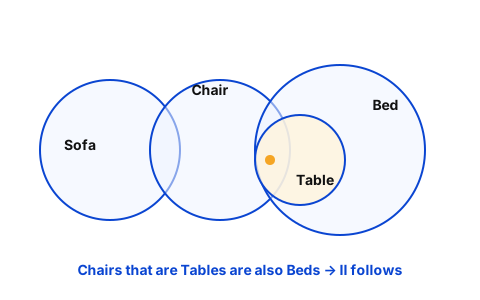
- Some Sofas are Chairs, Some Chairs are Tables – these are only partial overlaps; Sofa and Table need not meet.
- All Tables are Beds, so the Chairs that are Tables are surely Beds → II: Some Chairs are Beds follows.
- I (Some Sofas are Tables) and III (Some Beds are Sofas) are only possibilities – Sofa can stay completely outside Table and Bed. So they do not follow.
Yaad rakhein: Two ‘Some’ statements in a chain give no definite link between the end terms (Sofa–Table).
Answer: (D) Only Conclusion II follows.
अवधारणा: कम से कम overlap वाला Venn diagram बनाइए; निष्कर्ष तभी सही है जब वह हर स्थिति में सत्य हो।
- Some Sofas are Chairs और Some Chairs are Tables – केवल आंशिक overlap है; Sofa और Table का मिलना ज़रूरी नहीं।
- All Tables are Beds, इसलिए जो Chairs, Tables हैं वे निश्चित रूप से Beds हैं → II: Some Chairs are Beds सही है।
- I (Some Sofas are Tables) और III (Some Beds are Sofas) केवल संभावना हैं – Sofa, Table और Bed से पूरी तरह बाहर रह सकता है। अतः ये अनुसरण नहीं करते।
याद रखें: श्रृंखला में दो ‘Some’ कथन हों तो अंतिम पदों (Sofa–Table) के बीच कोई निश्चित संबंध नहीं बनता।
उत्तर: (D) केवल निष्कर्ष II अनुसरण करता है।
SSC CPO Paper IGeneral Intelligence and ReasoningSyllogismSSC CPO Paper I 2022 · 11 Nov Shift 1
Q4002.Select the option that represents the letters that, when sequentially placed from left to right in the blanks, will complete the letter series.
s _ t r m _ _ _ h _ _ m m k _ h t _ _ m k
उस विकल्प का चयन कीजिए जो उन अक्षरों को दर्शाता है जिन्हें रिक्त स्थानों में बाएँ से दाएँ क्रमिक रूप से रखने पर अक्षर श्रृंखला पूरी हो जाएगी।
s _ t r m _ _ _ h _ _ m m k _ h t _ _ m k
- Ah m k s t r s m r
- Bh m k s r t s m m
- Ch k m s t r s m m
- Dh m k s t r s r m
Show answer
Concept: In such blank-filling series, look for a block of letters that repeats.
- The series has 21 places; try a repeating block of 7 letters.
- Option (D) fills the blanks with h, m, k, s, t, r, s, r, m.
- Series becomes: shtrmmk | shtrmmk | shtrmmk – the block ‘shtrmmk’ repeats three times.
Trick: Count the total places (21) and test blocks of 7 or 3; check the option letters one by one.
Answer: (D) h m k s t r s r m
अवधारणा: इस प्रकार की रिक्त-स्थान श्रृंखला में अक्षरों का कोई दोहराने वाला समूह (block) खोजें।
- श्रृंखला में कुल 21 स्थान हैं; 7 अक्षरों के दोहराते block की जाँच करें।
- विकल्प (D) से रिक्त स्थान h, m, k, s, t, r, s, r, m से भरते हैं।
- श्रृंखला बनती है: shtrmmk | shtrmmk | shtrmmk – ‘shtrmmk’ तीन बार दोहराता है।
ट्रिक: कुल स्थान (21) गिनें और 7 या 3 के block से जाँचें; विकल्प के अक्षर एक-एक कर भरें।
उत्तर: (D) h m k s t r s r m
SSC CPO Paper IGeneral Intelligence and ReasoningLetter seriesSSC CPO Paper I 2022 · 11 Nov Shift 1
Q4003.Select the set in which the numbers are related in the same way as are the numbers of the given sets.
(NOTE : Operations should be performed on the whole numbers, without breaking
down the numbers into its constituent digits. E.g. 13 – Operations on 13 such as
adding /subtracting /multiplying etc. to 13 can be performed. Breaking down 13 into 1 and 3 and then performing mathematical operations on 1 and 3 is not allowed.)
(5, 60, 70)
(9, 108, 126)
उस समुच्चय का चयन कीजिए जिसकी संख्याएँ आपस में उसी प्रकार संबंधित हैं, जिस प्रकार दिए गए समुच्चयों की संख्याएँ आपस में संबंधित हैं।
(ध्यान दें: संख्याओं को उनके घटक अंकों में तोड़े बिना, पूर्ण संख्याओं पर संक्रियाएँ की जानी चाहिए। उदाहरण के लिए 13 – 13 पर संक्रियाएँ जैसे 13 में जोड़ना/घटाना/गुणा करना आदि किया जा सकता है। 13 को 1 और 3 में तोड़ना और फिर 1 और 3 पर गणितीय संक्रियाएँ करना वर्जित है।)
(5, 60, 70)
(9, 108, 126)
- A(7, 84, 98)
- B(4, 48, 52)
- C(6, 72, 74)
- D(8, 84, 112)
Show answer
Concept: Find how the 2nd and 3rd numbers are made from the 1st.
- : , .
- : , .
- : , ✓. Others fail, e.g. .
Trick: Divide the 2nd and 3rd numbers by the 1st – the same multipliers (12 and 14) must appear.
Answer: (A) (7, 84, 98)
अवधारणा: दूसरी और तीसरी संख्या पहली संख्या से कैसे बनती हैं, यह खोजें।
- : , ।
- : , ।
- : , ✓। बाकी गलत, जैसे ।
ट्रिक: दूसरी व तीसरी संख्या को पहली से भाग दें – वही गुणक (12 और 14) आने चाहिए।
उत्तर: (A) (7, 84, 98)
SSC CPO Paper IGeneral Intelligence and ReasoningNumber set analogySSC CPO Paper I 2022 · 11 Nov Shift 1
Q4004.In a certain code language, ‘TROUBLE’ is written as ‘93’ and ‘COMMUTE’ is written as ‘90’. How will ‘FRACTION’ be written in that language?
एक निश्चित कूट भाषा में, ‘TROUBLE’ को ‘93’ लिखा जाता है और ‘COMMUTE’ को ‘90’ लिखा जाता है। उसी भाषा में ‘FRACTION’ को कैसे लिखा जाएगा?
- A86
- B76
- C56
- D96
Show answer
Concept: The code is the sum of the alphabet positions of the letters.
- TROUBLE: ✓.
- COMMUTE: ✓.
- FRACTION: .
Trick: Remember EJOTY: E=5, J=10, O=15, T=20, Y=25 to get positions fast.
Answer: (A) 86
अवधारणा: कोड = शब्द के अक्षरों के वर्णमाला स्थानों (positions) का योग।
- TROUBLE: ✓।
- COMMUTE: ✓।
- FRACTION: ।
ट्रिक: EJOTY याद रखें: E=5, J=10, O=15, T=20, Y=25 – स्थान जल्दी मिलते हैं।
उत्तर: (A) 86
SSC CPO Paper IGeneral Intelligence and ReasoningCoding-decoding (letter sum)SSC CPO Paper I 2022 · 11 Nov Shift 1
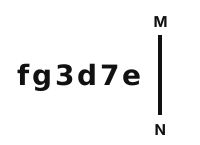
Q4005.Select the correct mirror image of the given figure when the mirror is placed at MN as shown.
जब दर्पण को दर्शाए गए अनुसार MN पर रखा जाता है, तो दी गई आकृति के सही दर्पण प्रतिबिंब का चयन कीजिए।
- A
- B
- C
- D
Show answer
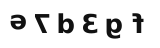
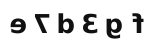
Concept: With a vertical mirror (MN) on the right, left and right are swapped: the order of the characters reverses and each character is laterally inverted; top and bottom stay the same.
- Original order: f g 3 d 7 e. In the mirror the order becomes e 7 d 3 g f (read left to right).
- Each character is also flipped left-right (e.g. ‘7’ faces the other way, ‘3’ looks like ‘ε’).
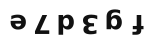
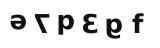
- Option (D) shows this reversed order with every character flipped and nothing turned upside down.
Trick: Vertical mirror: first character goes last; check one asymmetric character (like 7 or 3) to reject wrong options.
Answer: (D)
अवधारणा: दाईं ओर ऊर्ध्वाधर दर्पण (MN) में बायाँ-दायाँ बदल जाता है: अक्षरों का क्रम उलट जाता है और हर अक्षर पार्श्व रूप से उल्टा होता है; ऊपर-नीचे वही रहता है।
- मूल क्रम: f g 3 d 7 e। दर्पण में क्रम बनता है e 7 d 3 g f (बाएँ से दाएँ)।
- हर अक्षर बाएँ-दाएँ उल्टा भी होता है (जैसे ‘7’ दूसरी दिशा में, ‘3’ ‘ε’ जैसा)।
- विकल्प (D) में यही उल्टा क्रम है, हर अक्षर flipped है और कुछ भी उल्टा (upside down) नहीं है।
ट्रिक: ऊर्ध्वाधर दर्पण: पहला अक्षर अंत में जाता है; किसी असममित अक्षर (7 या 3) से गलत विकल्प हटाएँ।
उत्तर: (D)
SSC CPO Paper IGeneral Intelligence and ReasoningMirror imageSSC CPO Paper I 2022 · 11 Nov Shift 1
Q4006.Which letter-cluster will replace the question mark (?) to complete the given series? WGPR, UDLM, ?, QXDC, OUZX
दी गई श्रृंखला को पूरा करने के लिए कौन-सा अक्षर-समूह प्रश्न चिह्न (?) का स्थान लेगा? WGPR, UDLM, ?, QXDC, OUZX
- ASAHH
- BTBFG
- CUCHF
- DTAHG
Show answer
Concept: Track each letter position of the clusters separately.
- 1st letters: W, U, ?, Q, O → each → S.
- 2nd letters: G, D, ?, X, U → each → A.
- 3rd letters: P, L, ?, D, Z → each → H; 4th letters: R, M, ?, C, X → each → H.
Trick: Different steps (−2, −3, −4, −5) for each position – check one column first to cut options.
Answer: (A) SAHH
अवधारणा: समूह के प्रत्येक स्थान के अक्षर को अलग-अलग देखें।
- पहले अक्षर: W, U, ?, Q, O → हर बार → S।
- दूसरे अक्षर: G, D, ?, X, U → हर बार → A।
- तीसरे अक्षर: P, L, ?, D, Z → → H; चौथे अक्षर: R, M, ?, C, X → → H।
ट्रिक: हर स्थान का अलग अंतर (−2, −3, −4, −5) – पहले एक column जाँचें, विकल्प कम हो जाएँगे।
उत्तर: (A) SAHH
SSC CPO Paper IGeneral Intelligence and ReasoningLetter cluster seriesSSC CPO Paper I 2022 · 11 Nov Shift 1
Q4007.‘V + W’ means ‘V is the sister of W’
‘V – W’ means ‘V is the father of W’
‘V * W’ means ‘V is the mother of W’
‘V ÷ W’ means ‘V is the brother of W’
If ‘J + C * K – M’, how is J related to K?
‘V + W’ का अर्थ है ‘V, W की बहन है’
‘V – W’ का अर्थ है ‘V, W का पिता है’
‘V * W’ का अर्थ है ‘V, W की माता है’
‘V ÷ W’ का अर्थ है ‘V, W का भाई है’
यदि ‘J + C * K – M’ है, तो J का K से क्या संबंध है?
- AMotherमाता
- BBrotherभाई
- CSisterबहन
- DMaternal auntमौसी
Show answer
Concept: Decode each symbol and draw the family tree.
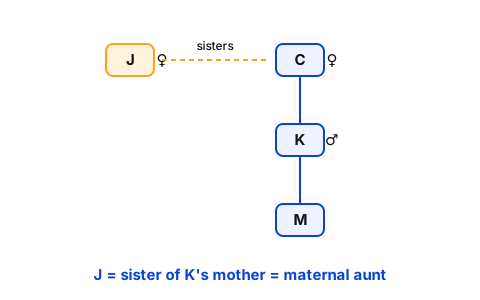
- J + C → J is the sister of C.
- C * K → C is the mother of K; K – M → K is the father of M.
- J is the sister of K's mother, i.e. K's maternal aunt.
Yaad rakhein: Mother's sister = maternal aunt (mausi); father's sister = paternal aunt (bua).
Answer: (D) Maternal aunt
अवधारणा: हर चिह्न को decode करके family tree बनाइए।
- J + C → J, C की बहन है।
- C * K → C, K की माँ है; K – M → K, M का पिता है।
- J, K की माँ की बहन है, अर्थात K की मौसी (Maternal aunt)।
याद रखें: माँ की बहन = मौसी (Maternal aunt); पिता की बहन = बुआ (Paternal aunt)।
उत्तर: (D) Maternal aunt (मौसी)
SSC CPO Paper IGeneral Intelligence and ReasoningBlood relation (coded)SSC CPO Paper I 2022 · 11 Nov Shift 1
Q4008.Which of the following numbers will replace the question mark (?) in the given series? 25, 29, 36, 49, 71, ?
दी गई श्रृंखला में प्रश्न चिह्न (?) के स्थान पर निम्नलिखित में से कौन-सी संख्या आएगी? 25, 29, 36, 49, 71, ?
- A108
- B106
- C103
- D105
Show answer
Concept: Take differences twice (second-order difference series).
- Differences: , , , .
- Differences of these: 3, 6, 9 → next is 12.
- Next difference , so .
Trick: When first differences look irregular, check their differences – here a +3 table.
Answer: (D) 105
अवधारणा: दो बार अंतर निकालें (द्वितीय क्रम अंतर श्रृंखला)।
- अंतर: , , , ।
- इनके अंतर: 3, 6, 9 → अगला 12।
- अगला अंतर , इसलिए ।
ट्रिक: पहले अंतर अनियमित लगें तो उनके अंतर देखें – यहाँ 3 का पहाड़ा है।
उत्तर: (D) 105
SSC CPO Paper IGeneral Intelligence and ReasoningNumber seriesSSC CPO Paper I 2022 · 11 Nov Shift 1
Q4009.Which of the following numbers will replace the question mark (?) in the given series? 85, 64, 51, 44, 41, ?
दी गई श्रृंखला में प्रश्न चिह्न (?) के स्थान पर निम्नलिखित में से कौन-सी संख्या आएगी? 85, 64, 51, 44, 41, ?
- A37
- B40
- C38
- D39
Show answer
Concept: Check the differences and then the differences of the differences.
- Differences: , , , .
- 21, 13, 7, 3 decrease by 8, 6, 4 → next decrease by 2 → 1.
- Next term .
Trick: Decreasing series with shrinking gaps – second differences 8, 6, 4, 2.
Answer: (B) 40
अवधारणा: अंतर और फिर अंतरों के अंतर देखें।
- अंतर: , , , ।
- 21, 13, 7, 3 क्रमशः 8, 6, 4 से घटते हैं → अगला 2 कम → 1।
- अगला पद ।
ट्रिक: घटती श्रृंखला जिसमें अंतर घटते जाएँ – द्वितीय अंतर 8, 6, 4, 2।
उत्तर: (B) 40
SSC CPO Paper IGeneral Intelligence and ReasoningNumber seriesSSC CPO Paper I 2022 · 11 Nov Shift 1
Q4010.Select the option that is related to the third term in the same way as the second term is related to the first term and sixth term is related to fifth term.
4 : 18 :: 12 : ? :: 7 : 51
उस विकल्प का चयन कीजिए जो तीसरे पद से उसी प्रकार संबंधित है, जिस प्रकार दूसरा पद पहले पद से संबंधित है और छठा पद पाँचवें पद से संबंधित है।
4 : 18 :: 12 : ? :: 7 : 51
- A146
- B142
- C148
- D144
Show answer
Concept: Find the rule from the given pairs (4 : 18 and 7 : 51) and apply it to 12.
- ✓.
- ✓.
- .
Trick: Numbers just above a perfect square (18, 51) suggest .
Answer: (A) 146
अवधारणा: दिए गए युग्मों (4 : 18 और 7 : 51) से नियम निकालें और 12 पर लगाएँ।
- ✓।
- ✓।
- ।
ट्रिक: पूर्ण वर्ग से थोड़ी बड़ी संख्याएँ (18, 51) हों तो जाँचें।
उत्तर: (A) 146
SSC CPO Paper IGeneral Intelligence and ReasoningNumber analogySSC CPO Paper I 2022 · 11 Nov Shift 1
Q4011.Select the figure that will come in place of the question mark (?) in the following figure series.
निम्नलिखित आकृति श्रृंखला में प्रश्न चिह्न (?) के स्थान पर आने वाली आकृति का चयन करें।
- A

- B

- C

- D

Show answer
Concept: Follow the corner position of each element from figure to figure.
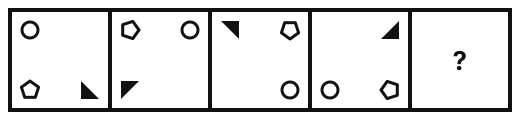
- Circle: top-left → top-right → bottom-right → bottom-left; it moves one corner clockwise each step. Pentagon and triangle also move one corner clockwise each step.
- After four moves every element is back where it started, so figure 5 = figure 1.
- Figure 5: circle top-left, pentagon bottom-left, black triangle bottom-right – this is option (C).
Trick: When all elements move one corner per step in a square, the pattern repeats after 4 figures.
Answer: (C)
अवधारणा: हर तत्व की कोने की स्थिति एक आकृति से अगली में देखें।
- वृत्त: ऊपर-बाएँ → ऊपर-दाएँ → नीचे-दाएँ → नीचे-बाएँ; हर बार एक कोना दक्षिणावर्त (clockwise)। पंचभुज और त्रिभुज भी हर बार एक कोना clockwise चलते हैं।
- चार चालों के बाद हर तत्व अपनी शुरुआती जगह पर लौट आता है, अतः आकृति 5 = आकृति 1।
- आकृति 5: वृत्त ऊपर-बाएँ, पंचभुज नीचे-बाएँ, काला त्रिभुज नीचे-दाएँ – यह विकल्प (C) है।
ट्रिक: वर्ग में हर तत्व एक-एक कोना चले तो पैटर्न 4 आकृतियों बाद दोहराता है।
उत्तर: (C)
SSC CPO Paper IGeneral Intelligence and ReasoningFigure seriesSSC CPO Paper I 2022 · 11 Nov Shift 1
Q4012.In a certain code language, ‘DRAFT’ is written as ‘GUDIW’ and ‘LIMIT’ is written as
‘OLPLW’. How will ‘MAJOR’ be written in that language?
एक निश्चित कूट भाषा में, ‘DRAFT’ को ‘GUDIW’ लिखा जाता है और ‘LIMIT’ को
‘OLPLW’ लिखा जाता है। उसी भाषा में ‘MAJOR’ को कैसे लिखा जाएगा?
- AOBMRT
- BQCNQT
- CPDMRU
- DQBWRU
Show answer
Concept: Compare each letter of the word with its code letter.
- DRAFT → GUDIW: D+3=G, R+3=U, A+3=D, F+3=I, T+3=W.
- LIMIT → OLPLW: every letter ✓.
- MAJOR: M+3=P, A+3=D, J+3=M, O+3=R, R+3=U → PDMRU.
Trick: Same shift for all letters – check only the first letter of each option (M+3 = P) to shortlist.
Answer: (C) PDMRU
अवधारणा: शब्द के हर अक्षर की तुलना उसके कोड अक्षर से करें।
- DRAFT → GUDIW: D+3=G, R+3=U, A+3=D, F+3=I, T+3=W।
- LIMIT → OLPLW: हर अक्षर ✓।
- MAJOR: M+3=P, A+3=D, J+3=M, O+3=R, R+3=U → PDMRU।
ट्रिक: सभी अक्षरों में समान shift – विकल्पों का केवल पहला अक्षर (M+3 = P) देखकर छाँटें।
उत्तर: (C) PDMRU
SSC CPO Paper IGeneral Intelligence and ReasoningCoding-decoding (letter shift)SSC CPO Paper I 2022 · 11 Nov Shift 1
Q4013.If A denotes ‘+’, B denotes ‘×’, C denotes ‘−’, and D denotes ‘÷’, then what will be the value of the following expression?
67 C 45 A 12 D 6 B 2
यदि A का अर्थ ‘+’, B का अर्थ ‘×’, C का अर्थ ‘−’ और D का अर्थ ‘÷’ है, तो निम्नलिखित व्यंजक का मान क्या होगा?
67 C 45 A 12 D 6 B 2
- A23
- B22
- C26
- D24
Show answer
Concept: Replace the letters by the signs and solve using BODMAS.
- 67 C 45 A 12 D 6 B 2 → .
- , then .
- .
Trick: Write the converted expression first – most errors come from wrong substitution, not arithmetic.
Answer: (C) 26
अवधारणा: अक्षरों को चिह्नों से बदलें और BODMAS से हल करें।
- 67 C 45 A 12 D 6 B 2 → ।
- , फिर ।
- ।
ट्रिक: पहले बदला हुआ व्यंजक लिख लें – गलतियाँ ज़्यादातर गलत substitution से होती हैं।
उत्तर: (C) 26
SSC CPO Paper IGeneral Intelligence and ReasoningMathematical operationsSSC CPO Paper I 2022 · 11 Nov Shift 1
Q4014.If 31 January 2022 was a Monday, what was the day on the same date 100 years ago?
यदि 31 जनवरी 2022 को सोमवार था, तो 100 वर्ष पहले उसी तिथि को कौन-सा दिन था?
- AWednesdayबुधवार
- BSundayरविवार
- CTuesdayमंगलवार
- DMondayसोमवार
Show answer
Concept: Ordinary year = 1 odd day, leap year = 2 odd days. Going back in time, subtract the odd days.
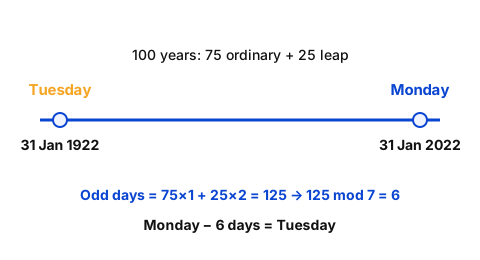
- From 31 Jan 1922 to 31 Jan 2022 = 100 years; leap Februaries crossed: 1924, 1928, …, 2020 = 25.
- Odd days , and leaves remainder 6.
- Monday − 6 days = Tuesday.
Trick: Going back 6 days is the same as going forward 1 day: Monday + 1 = Tuesday.
Answer: (C) Tuesday
अवधारणा: साधारण वर्ष = 1 विषम दिन (odd day), लीप वर्ष = 2 विषम दिन। पीछे जाने पर विषम दिन घटाएँ।
- 31 Jan 1922 से 31 Jan 2022 = 100 वर्ष; बीच के लीप फरवरी: 1924, 1928, …, 2020 = 25।
- विषम दिन , और का शेषफल 6।
- Monday − 6 दिन = Tuesday।
ट्रिक: 6 दिन पीछे जाना = 1 दिन आगे जाना: Monday + 1 = Tuesday।
उत्तर: (C) Tuesday
SSC CPO Paper IGeneral Intelligence and ReasoningCalendarSSC CPO Paper I 2022 · 11 Nov Shift 1
Q4015.Select the set in which the numbers are related in the same way as are the numbers of the following sets.
(NOTE : Operations should be performed on the whole numbers, without breaking
down the numbers into its constituent digits. E.g. 13- Operations on 13 such as adding /subtracting /multiplying etc. to 13 can be performed. Breaking down 13 into 1 and 3 and then performing mathematical operations on 1 and 3 is not allowed.)
(82, 75, 66)
(69, 62, 53)
उस समुच्चय का चयन कीजिए जिसकी संख्याएँ आपस में उसी प्रकार संबंधित हैं, जिस प्रकार निम्नलिखित समुच्चयों की संख्याएँ आपस में संबंधित हैं।
(ध्यान दें: संख्याओं को उनके घटक अंकों में तोड़े बिना, पूर्ण संख्याओं पर संक्रियाएँ की जानी चाहिए। उदाहरण के लिए 13 – 13 पर संक्रियाएँ जैसे 13 में जोड़ना/घटाना/गुणा करना आदि किया जा सकता है। 13 को 1 और 3 में तोड़ना और फिर 1 और 3 पर गणितीय संक्रियाएँ करना वर्जित है।)
(82, 75, 66)
(69, 62, 53)
- A(21, 16, 9)
- B(49, 52, 35)
- C(61, 54, 45)
- D(36, 28, 21)
Show answer
Concept: Check the gaps between consecutive numbers of each set.
- : , .
- : , .
- : , ✓. (A) gives −5, −7; (B) increases first; (D) gives −8, −7.
Trick: Pattern −7 then −9: just subtract 7 from the first number of each option.
Answer: (C) (61, 54, 45)
अवधारणा: हर समुच्चय में क्रमागत संख्याओं का अंतर देखें।
- : , ।
- : , ।
- : , ✓। (A) में −5, −7; (B) पहले बढ़ता है; (D) में −8, −7।
ट्रिक: पैटर्न −7 फिर −9: हर विकल्प की पहली संख्या से 7 घटाकर जाँचें।
उत्तर: (C) (61, 54, 45)
SSC CPO Paper IGeneral Intelligence and ReasoningNumber set analogySSC CPO Paper I 2022 · 11 Nov Shift 1
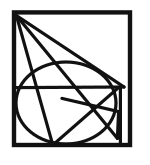
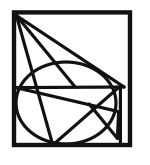
Q4016.Select the option figure in which the given figure is embedded (rotation is NOT allowed).
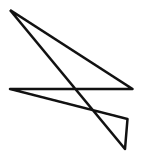
उस विकल्प आकृति का चयन करें जिसमें दी गई आकृति अंतर्निहित है (आकृति को घुमाने की अनुमति नहीं है)।
- A
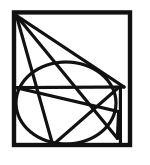
- B
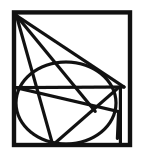
- C
- D
Show answer
Concept: The given zig-zag figure must appear in an option with exactly the same size and orientation (no rotation).
- The figure has a long slant line from the top-left, a short horizontal stroke at the left and a sharp return line forming a ‘Z’-like zig-zag.
- Trace these lines inside each option, matching every angle.
- Only in option (A) do the slanting lines and the horizontal line meet at the same angles to form the complete given shape.
Trick: Fix one distinctive part (the sharp corner) first and look for it in the options; then check the remaining lines.
Answer: (A)
अवधारणा: दी गई zig-zag आकृति किसी विकल्प में बिल्कुल उसी आकार और दिशा (rotation नहीं) में होनी चाहिए।
- आकृति में ऊपर-बाएँ से एक लंबी तिरछी रेखा, बाईं ओर एक छोटी क्षैतिज रेखा और एक तीखी वापसी रेखा है, जो ‘Z’ जैसा आकार बनाती है।
- हर विकल्प में इन रेखाओं को कोणों सहित खोजें।
- केवल विकल्प (A) में तिरछी रेखाएँ और क्षैतिज रेखा उसी कोण पर मिलकर पूरी आकृति बनाती हैं।
ट्रिक: पहले कोई खास हिस्सा (तीखा कोना) पकड़ें और विकल्पों में खोजें; फिर बाकी रेखाएँ मिलाएँ।
उत्तर: (A)
SSC CPO Paper IGeneral Intelligence and ReasoningEmbedded figureSSC CPO Paper I 2022 · 11 Nov Shift 1
Q4017.Select the correct combination of mathematical signs to sequentially replace the *
signs and to balance the given equation.
(440 * 11) * 85 * 57 * (34 * 3)
* चिह्नों को क्रमिक रूप से प्रतिस्थापित करने और दिए गए समीकरण को संतुलित करने के लिए गणितीय चिह्नों के सही संयोजन का चयन कीजिए।
(440 * 11) * 85 * 57 * (34 * 3)
- A+, −, =, ÷, +
- B×, =, −, ÷, +
- C+, ×, =, ÷, +
- D÷, −, =, −, ×
Show answer
Concept: Put each option's signs in order and check whether both sides of ‘=’ are equal (BODMAS).
- Option (D): .
- LHS .
- RHS ✓ – both sides equal.
Trick: 440 and 11 suggest ÷ (gives 40), and 34 with 3 suggests × (gives 102) – go straight to option (D).
Answer: (D) ÷, −, =, −, ×
अवधारणा: हर विकल्प के चिह्न क्रम से रखें और ‘=’ के दोनों पक्ष बराबर हैं या नहीं, जाँचें (BODMAS)।
- विकल्प (D): ।
- LHS ।
- RHS ✓ – दोनों पक्ष बराबर।
ट्रिक: 440 व 11 से ÷ (40 बनता है) और 34 व 3 से × (102) का अंदाज़ा – सीधे विकल्प (D) जाँचें।
उत्तर: (D) ÷, −, =, −, ×
SSC CPO Paper IGeneral Intelligence and ReasoningSign replacement (balancing)SSC CPO Paper I 2022 · 11 Nov Shift 1
Q4018.If M denotes ‘−’, N denotes ‘÷’, O denotes ‘×’, and P denotes ‘+’, then what will come in place of ‘?’ in the following equation?
P 48 N 4 M 21 P 32 = ?
यदि M का अर्थ ‘−’, N का अर्थ ‘÷’, O का अर्थ ‘×’ और P का अर्थ ‘+’ है, तो निम्नलिखित समीकरण में ‘?’ के स्थान पर क्या आएगा?
P 48 N 4 M 21 P 32 = ?
- A86
- B88
- C90
- D92
Show answer
Concept: Substitute the signs, then simplify with BODMAS (brackets and roots first).
- Expression: .
- Bracket: ; division: .
- .
Trick: Learn squares up to 30: , saves time.
Answer: (B) 88
अवधारणा: चिह्न बदलें, फिर BODMAS से हल करें (पहले कोष्ठक और वर्गमूल)।
- व्यंजक: ।
- कोष्ठक: ; भाग: ।
- ।
ट्रिक: 30 तक के वर्ग याद रखें: , – समय बचता है।
उत्तर: (B) 88
SSC CPO Paper IGeneral Intelligence and ReasoningMathematical operationsSSC CPO Paper I 2022 · 11 Nov Shift 1
Q4019.Two Statements are given followed by two conclusions numbered I and II. Assuming the statements to be true, even if they seem to be at variance with commonly known facts, decide which of the conclusions logically follow(s) from the statements.
Statements:
All trees are rocks.
All rocks are cups.
Conclusions:
I. All trees are cups.
II. Some cups are trees.
दो कथन दिए गए हैं, जिनके बाद दो निष्कर्ष I और II दिए गए हैं। कथनों को सत्य मानते हुए, भले ही वे सामान्य रूप से ज्ञात तथ्यों से भिन्न प्रतीत होते हों, निर्णय कीजिए कि कौन-सा/से निष्कर्ष तार्किक रूप से कथनों का अनुसरण करता/करते है/हैं।
कथन:
सभी पेड़, चट्टानें हैं।
सभी चट्टानें, कप हैं।
निष्कर्ष:
I. सभी पेड़, कप हैं।
II. कुछ कप, पेड़ हैं।
- AOnly conclusion I follows.केवल निष्कर्ष I अनुसरण करता है।
- BNeither conclusion I nor II followsन तो निष्कर्ष I और न ही II अनुसरण करता है
- CBoth conclusions I and II follow.निष्कर्ष I और II दोनों अनुसरण करते हैं।
- DOnly conclusion II follows.केवल निष्कर्ष II अनुसरण करता है।
Show answer
Concept: ‘All A are B’ and ‘All B are C’ give ‘All A are C’; any ‘All’ statement also gives ‘Some’ in reverse.
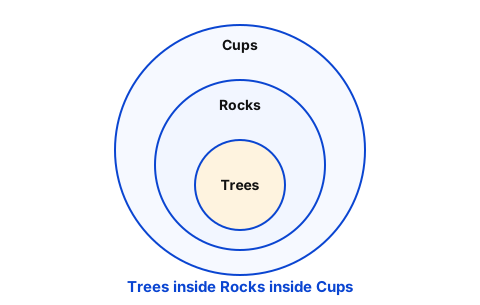
- All trees are rocks and all rocks are cups → all trees are cups. I follows.
- All trees are cups → some cups are trees (conversion of ‘All’ gives ‘Some’). II follows.
- So both conclusions follow.
Yaad rakhein: All + All = All; and ‘All A are B’ always allows ‘Some B are A’.
Answer: (C) Both conclusions I and II follow.
अवधारणा: ‘All A are B’ और ‘All B are C’ से ‘All A are C’ मिलता है; हर ‘All’ कथन उलटने पर ‘Some’ देता है।
- All trees are rocks और all rocks are cups → all trees are cups। I सही।
- All trees are cups → some cups are trees (‘All’ का रूपांतरण ‘Some’)। II सही।
- अतः दोनों निष्कर्ष अनुसरण करते हैं।
याद रखें: All + All = All; और ‘All A are B’ से ‘Some B are A’ हमेशा सही।
उत्तर: (C) दोनों निष्कर्ष I और II अनुसरण करते हैं।
SSC CPO Paper IGeneral Intelligence and ReasoningSyllogismSSC CPO Paper I 2022 · 11 Nov Shift 1
Q4020.Eight people are sitting in two parallel rows with 4 people each in such a way that
there is equal distance between adjacent persons. P, Q, R and S are seated in the same row facing south. L, M, N and O are seated in the same row facing north. L sits to the extreme left of the row and faces R who sits exactly opposite him. P sits second to the left of R and is exactly opposite O. M sits at the extreme right of their row and is
exactly opposite S. Who sits exactly opposite Q?
आठ व्यक्ति दो समानांतर पंक्तियों में, प्रत्येक में 4 व्यक्ति, इस प्रकार बैठे हैं कि
आसन्न व्यक्तियों के बीच समान दूरी है। P, Q, R और S एक ही पंक्ति में दक्षिण की ओर मुख करके बैठे हैं। L, M, N और O एक ही पंक्ति में उत्तर की ओर मुख करके बैठे हैं। L पंक्ति के सबसे बाएँ छोर पर बैठा है और R की ओर मुख किए हुए है जो उसके ठीक सामने बैठा है। P, R के बाएँ से दूसरे स्थान पर बैठा है और O के ठीक सामने है। M अपनी पंक्ति के सबसे दाएँ छोर पर बैठा है और
S के ठीक सामने है। Q के ठीक सामने कौन बैठा है?
- AL
- BM
- CN
- DO
Show answer
Concept: For people facing south, their left is towards the east; for people facing north, their left is towards the west.
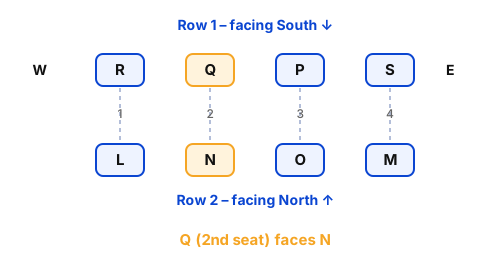
- L (facing north) is at the extreme left = west end; R sits opposite L, so R is at the west end of the south-facing row (seat 1).
- P is second to the left of R; R's left is east, so P is at seat 3; O is opposite P (seat 3).
- M is at the extreme right of the north row (east end, seat 4); S is opposite M (seat 4). So Q is at seat 2 and N at seat 2 – Q faces N.
Trick: Number the seats 1–4 from west to east for both rows; then ‘opposite’ simply means the same number.
Answer: (C) N
अवधारणा: दक्षिण की ओर मुख वाले व्यक्ति का बायाँ पूर्व की ओर होता है; उत्तर की ओर मुख वाले का बायाँ पश्चिम की ओर।
- L (उत्तरमुखी) अंतिम बाएँ = पश्चिमी छोर पर; R, L के ठीक सामने है, अतः R दक्षिणमुखी पंक्ति के पश्चिमी छोर (सीट 1) पर।
- P, R के बाएँ से दूसरा; R का बायाँ पूर्व है, अतः P सीट 3 पर; O, P के सामने (सीट 3)।
- M उत्तरी पंक्ति के अंतिम दाएँ (पूर्वी छोर, सीट 4) पर; S, M के सामने (सीट 4)। अतः Q सीट 2 पर और N सीट 2 पर – Q के सामने N।
ट्रिक: दोनों पंक्तियों में पश्चिम से पूर्व सीट 1–4 संख्या दें; ‘सामने’ = वही संख्या।
उत्तर: (C) N
SSC CPO Paper IGeneral Intelligence and ReasoningSeating arrangement (parallel rows)SSC CPO Paper I 2022 · 11 Nov Shift 1

