SSC CPO Paper I · 6,600 questions

SSC CPO Paper I 2020, 2022, 2023, 2024 PYQs

Real previous year questions, subject-wise. Try the question, then open the answer and the explanation in Hindi & English – free, no login.

Courses – airGurukul

6,600 questions.

Q4201.
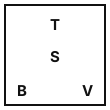
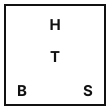
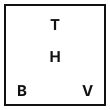
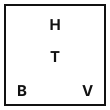
Select the figure from among the given options that can replace the question mark (?) in the following series.
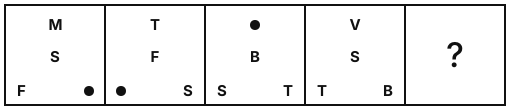
दिए गए विकल्पों में से उस आकृति का चयन कीजिए जो निम्नलिखित श्रृंखला में प्रश्न चिह्न (?) को प्रतिस्थापित कर सकती है।
  1. A
  2. B
  3. C
  4. D
Show answer

Concept: Each figure has four elements (top, second, bottom-left, bottom-right). From one figure to the next they move in a fixed cycle and exactly one new letter appears.
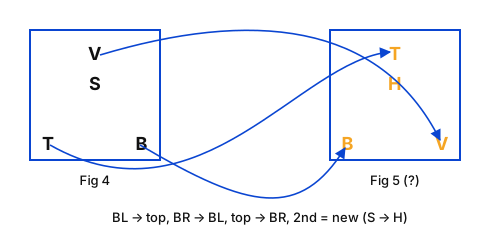
  1. From Fig 1 to Fig 4: bottom-right → bottom-left in the next figure (dot, S, T, B).
  2. Bottom-left goes up to the top area (F → 2nd, dot → top, S → 2nd, T → top), alternately into the second and the top slot.
  3. The top-area element that is not replaced drops to bottom-right (S, T, B, …), and the other top slot gets a new letter.
  4. Fig 5: T (from BL) → top, B (from BR) → BL, V (top of Fig 4) → BR, S is replaced by a new letter H.

Trick: Track one element at a time (follow ‘B’ or ‘T’) instead of comparing whole figures.

Answer: (C) Top T, second H, bottom-left B, bottom-right V

अवधारणा: हर आकृति में चार तत्व हैं (ऊपर, दूसरा, नीचे-बाएँ, नीचे-दाएँ)। हर अगली आकृति में ये एक निश्चित चक्र में खिसकते हैं और एक नया अक्षर आता है।

  1. नीचे-दाएँ वाला तत्व अगली आकृति में नीचे-बाएँ जाता है (dot, S, T, B)।
  2. नीचे-बाएँ वाला तत्व ऊपर जाता है – बारी-बारी से दूसरे स्थान और सबसे ऊपर (F, dot, S, T)।
  3. ऊपर का जो तत्व बचता है वह नीचे-दाएँ आता है, और खाली स्थान पर नया अक्षर आता है।
  4. Fig 5: T → ऊपर, B → नीचे-बाएँ, V → नीचे-दाएँ, S की जगह नया अक्षर H।

ट्रिक: पूरी आकृति की बजाय एक-एक तत्व (जैसे B या T) का रास्ता देखें।

उत्तर: (C) ऊपर T, दूसरा H, नीचे-बाएँ B, नीचे-दाएँ V
SSC CPO Paper IGeneral Intelligence and ReasoningFigure seriesSSC CPO Paper I 2022 · 10 Nov Shift 3
Q4202.
Which of the following numbers will replace the question mark (?) and complete the given number series?
35, 36, 39, 48, ?
निम्नलिखित में से कौन-सी संख्या प्रश्न चिह्न (?) का स्थान लेकर दी गई संख्या श्रृंखला को पूरा करेगी?
35, 36, 39, 48, ?
  1. A78
  2. B70
  3. C75
  4. D72
Show answer

Concept: Look at the differences between consecutive terms.

  1. Differences: 36−35=1, 39−36=3, 48−39=9.
  2. They are powers of 3: 30,31,32, so the next difference is 33=27.
  3. Next term =48+27=75.

Trick: Differences multiplying by the same number (×3) point to powers.

Answer: (C) 75

अवधारणा: क्रमागत पदों का अंतर देखें।

  1. अंतर: 1,3,9 – ये 30,31,32 हैं।
  2. अगला अंतर 33=27 होगा।
  3. अगला पद =48+27=75।

ट्रिक: अंतर हर बार 3 गुना हो रहा है – घातों (powers) का पैटर्न।

उत्तर: (C) 75

SSC CPO Paper IGeneral Intelligence and ReasoningNumber seriesSSC CPO Paper I 2022 · 10 Nov Shift 3
Q4203.
If M denotes ‘-’, N denotes ‘÷’, O denotes ‘×’, and P denotes ‘+’, then what will come in place of ‘?’ in the following equation?
185 N 5 P 62 M 32 O 4 P 32 = ?
यदि M का अर्थ ‘-’, N का अर्थ ‘÷’, O का अर्थ ‘×’ और P का अर्थ ‘+’ है, तो निम्नलिखित समीकरण में ‘?’ के स्थान पर क्या आएगा?
185 N 5 P 62 M 32 O 4 P 32 = ?
  1. A12
  2. B5
  3. C9
  4. D3
Show answer

Concept: Replace the letters by the signs, then solve using BODMAS.

  1. M = −, N = ÷, O = ×, P = +.
  2. Expression: 185÷5+62−32×4+32.
  3. =37+62−128+32=3.

Trick: Do ÷ and × first, then add all positives and subtract negatives: 131−128=3.

Answer: (D) 3

अवधारणा: अक्षरों की जगह चिह्न रखें और BODMAS से हल करें।

  1. M = −, N = ÷, O = ×, P = +।
  2. व्यंजक: 185÷5+62−32×4+32।
  3. =37+62−128+32=3।

ट्रिक: पहले ÷, × करें; फिर धनात्मक जोड़ें, ऋणात्मक घटाएँ: 131−128=3।

उत्तर: (D) 3

SSC CPO Paper IGeneral Intelligence and ReasoningMathematical operationsSSC CPO Paper I 2022 · 10 Nov Shift 3
Q4204.
Select the option that represents the letters that when placed from left to right in the blanks below will complete the letter series.
D_C_FE_CC_ _ E_C_EF_D_CE_E
उस विकल्प का चयन कीजिए जो उन अक्षरों को दर्शाता है जिन्हें नीचे दिए गए रिक्त स्थानों में बाएँ से दाएँ रखने पर अक्षर श्रृंखला पूरी हो जाएगी।
D_C_FE_CC_ _ E_C_EF_D_CE_E
  1. AECDEFDCECF
  2. BCEDEFCDECE
  3. CCEDFEDCECE
  4. DCEDEFDCECF
Show answer

Concept: Find a repeating block that fits the given letters.

  1. Given: D_C_FE_CC_ _E_C_EF_D_CE_E (24 places).
  2. Try the block DCCEFE repeated 4 times: DCCEFE DCCEFE DCCEFE DCCEFE.
  3. The blanks in order are C, E, D, E, F, D, C, E, C, F → CEDEFDCECF.

Trick: ‘FE’ in the first six letters suggests a block of 6 – check with the second block.

Answer: (D) CEDEFDCECF

अवधारणा: ऐसा दोहराने वाला समूह खोजें जो दिए गए अक्षरों से मेल खाए।

  1. कुल 24 स्थान हैं, समूह DCCEFE चार बार दोहराएँ।
  2. DCCEFE DCCEFE DCCEFE DCCEFE।
  3. रिक्त स्थान क्रम से: C, E, D, E, F, D, C, E, C, F → CEDEFDCECF।

ट्रिक: पहले 6 अक्षरों में ‘FE’ दिखे तो 6 का समूह जाँचें।

उत्तर: (D) CEDEFDCECF

SSC CPO Paper IGeneral Intelligence and ReasoningLetter series (blanks)SSC CPO Paper I 2022 · 10 Nov Shift 3
Q4205.
If A denotes ‘+’, B denotes ‘×’, C denotes ‘-’, and D denotes ‘÷’, then what will come in place of ‘?’ in the following equation?
(51 D 17) A (21 B 9) C 78 A (16 D 4) = ?
यदि A का अर्थ ‘+’, B का अर्थ ‘×’, C का अर्थ ‘-’ और D का अर्थ ‘÷’ है, तो निम्नलिखित समीकरण में ‘?’ के स्थान पर क्या आएगा?
(51 D 17) A (21 B 9) C 78 A (16 D 4) = ?
  1. A124
  2. B106
  3. C118
  4. D112
Show answer

Concept: Substitute the signs and apply BODMAS (brackets first).

  1. A = +, B = ×, C = −, D = ÷.
  2. (51÷17)+(21×9)−78+(16÷4).
  3. =3+189−78+4=118.

Trick: Solve each bracket separately first: 3, 189, 4.

Answer: (C) 118

अवधारणा: चिह्न बदलें और BODMAS लगाएँ (पहले कोष्ठक)।

  1. A = +, B = ×, C = −, D = ÷।
  2. (51÷17)+(21×9)−78+(16÷4)।
  3. =3+189−78+4=118।

ट्रिक: हर कोष्ठक पहले अलग से हल करें: 3, 189, 4।

उत्तर: (C) 118

SSC CPO Paper IGeneral Intelligence and ReasoningMathematical operationsSSC CPO Paper I 2022 · 10 Nov Shift 3
Q4206.
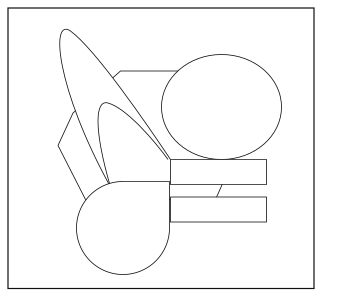
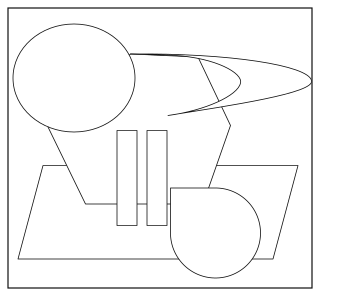
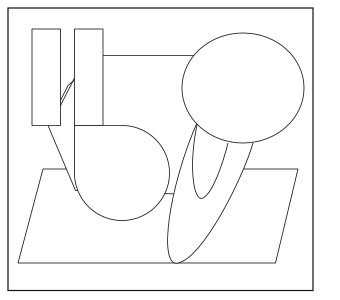
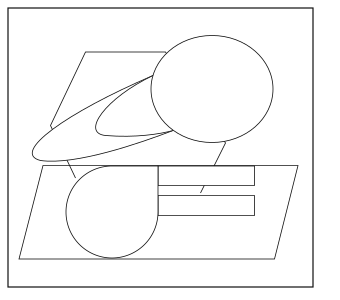
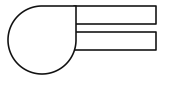
Select the option in which the given figure is embedded (rotation is NOT allowed).
उस विकल्प का चयन कीजिए जिसमें दी गई आकृति अंतर्निहित (embedded) है (घुमाने की अनुमति नहीं है)।
  1. A
  2. B
  3. C
  4. D
Show answer

Concept: The exact given figure (same size and orientation, no rotation) must be traceable inside the option.

  1. Key parts: a circle whose upper-right part is cut flat, with two thin rectangles attached at its top-right, extending to the right.
  2. In option (D), at the lower part, the same drop-shaped circle with the two rectangles to its right appears in the same orientation.
  3. In the other options the rectangles are placed differently (vertical or detached), so the figure cannot be traced.

Trick: Look first for the most distinctive part (the two parallel rectangles) and check their direction.

Answer: (D) Option figure (D)

अवधारणा: दी गई आकृति (वही आकार और दिशा, घुमाए बिना) विकल्प में पूरी दिखनी चाहिए।

  1. मुख्य भाग: ऊपर-दाएँ से सपाट कटा वृत्त और उसके ऊपरी-दाएँ भाग से दाईं ओर निकलती दो पतली आयतें।
  2. विकल्प (D) के निचले भाग में यही आकृति उसी दिशा में मौजूद है।
  3. अन्य विकल्पों में आयतें खड़ी या अलग स्थिति में हैं।

ट्रिक: सबसे अलग भाग (दो समांतर आयतें) पहले खोजें और उनकी दिशा मिलाएँ।

उत्तर: (D) विकल्प आकृति (D)

SSC CPO Paper IGeneral Intelligence and ReasoningEmbedded figureSSC CPO Paper I 2022 · 10 Nov Shift 3
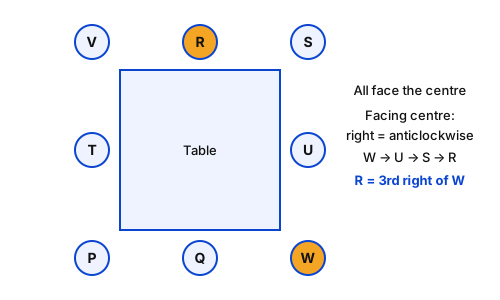
Q4207.
Eight children, P, Q, R, S, T, U, V, and W are seated around a square dining table, all facing towards the centre. Some of them are sitting at the corners while some are
sitting at the exact centre of the sides of the table. V is seated at a corner and R is
seated at the middle of one of the sides. S is an immediate neighbour of R. Q is seated third to the right of V. There are exactly two children sitting between Q and S. T is an immediate neighbour of both V and P. W is seated second to the left of S. If U is not an immediate neighbour of V, where is R seated?
आठ बच्चे, P, Q, R, S, T, U, V और W एक वर्गाकार डाइनिंग टेबल के चारों ओर केंद्र की ओर मुख करके बैठे हैं। उनमें से कुछ कोनों पर बैठे हैं, जबकि कुछ टेबल की भुजाओं के ठीक मध्य में बैठे हैं। V एक कोने पर बैठा है और R एक भुजा के मध्य में बैठा है। S, R का निकटतम पड़ोसी है। Q, V के दाएँ से तीसरे स्थान पर बैठा है। Q और S के बीच ठीक दो बच्चे बैठे हैं। T, V और P दोनों का निकटतम पड़ोसी है। W, S के बाएँ से दूसरे स्थान पर बैठा है। यदि U, V का निकटतम पड़ोसी नहीं है, तो R कहाँ बैठा है?
  1. AFourth to the left of UU के बाएँ से चौथे स्थान पर
  2. BThird to the right of UU के दाएँ से तीसरे स्थान पर
  3. CTo the immediate left of WW के ठीक बाएँ
  4. DThird to the right of WW के दाएँ से तीसरे स्थान पर
Show answer

Concept: Facing the centre, ‘right’ means moving anticlockwise. Corners and middles alternate.

  1. Fix V at a corner; Q is 3rd to the right of V (a middle seat).
  2. Two children between Q and S on the other side → S is at a corner; W is 2nd to the left of S.
  3. T is a neighbour of both V and P → T beside V, P next to T. U is not next to V, so U is beside S and R takes the seat between V and S.
  4. From W moving right: U (1), S (2), R (3).

Trick: In a closed arrangement of 8, ‘3rd to the right’ = ‘5th to the left’ – check options both ways.

Answer: (D) Third to the right of W

अवधारणा: केंद्र की ओर मुख होने पर ‘दाएँ’ का अर्थ वामावर्त (anticlockwise) चलना है। कोने और मध्य स्थान बारी-बारी से हैं।

  1. V को कोने पर रखें; Q, V के दाएँ तीसरा (मध्य स्थान)।
  2. Q और S के बीच दो बच्चे → S कोने पर; W, S के बाएँ दूसरा।
  3. T, V और P दोनों का पड़ोसी → T, V के पास और P, T के पास। U, V का पड़ोसी नहीं, तो U, S के पास और R, V व S के बीच।
  4. W से दाएँ चलें: U (1), S (2), R (3)।

ट्रिक: 8 लोगों की बंद व्यवस्था में ‘दाएँ तीसरा’ = ‘बाएँ पाँचवाँ’।

उत्तर: (D) W के दाएँ तीसरा

SSC CPO Paper IGeneral Intelligence and ReasoningSeating arrangement (square table)SSC CPO Paper I 2022 · 10 Nov Shift 3
Q4208.
Select the set in which the numbers are related in the same way as are the numbers of the following sets.
(NOTE : Operations should be performed on the whole numbers, without breaking
down the numbers into its constituent digits. E.g. 13- Operations on 13 such as adding /subtracting /multiplying etc. to 13 can be performed. Breaking down 13 into 1 and 3 and then performing mathematical operations on 1 and 3 is not allowed.)
(7, 13, 10)
(15, 21, 18)
उस समुच्चय का चयन कीजिए जिसमें संख्याएँ उसी प्रकार संबंधित हैं जिस प्रकार निम्नलिखित समुच्चयों की संख्याएँ संबंधित हैं।
(ध्यान दें: संख्याओं को उनके घटक अंकों में विभाजित किए बिना, पूर्ण संख्याओं पर संक्रियाएँ की जानी चाहिए। उदाहरण के लिए 13 – 13 पर संक्रियाएँ जैसे 13 में जोड़ना/घटाना/गुणा करना आदि की जा सकती हैं। 13 को 1 और 3 में विभाजित करना और फिर 1 और 3 पर गणितीय संक्रियाएँ करना वर्जित है।)
(7, 13, 10)
(15, 21, 18)
  1. A(9, 14, 12)
  2. B(8, 15, 22)
  3. C(11, 15, 13)
  4. D(5, 10, 15)
Show answer

Concept: Find one rule that works for both given sets.

  1. (7,13,10): 7+132=10.
  2. (15,21,18): 15+212=18.
  3. Third number = average of the first two. Option (C): 11+152=13 ✓; (A) gives 11.5, (D) gives 7.5, (B) fails.

Trick: When the third number lies midway between the first two, test the average.

Answer: (C) (11,15,13)

अवधारणा: ऐसा एक नियम खोजें जो दोनों समूहों पर लागू हो।

  1. (7,13,10): 7+132=10।
  2. (15,21,18): 15+212=18।
  3. तीसरी संख्या = पहली दो का औसत। विकल्प (C): 11+152=13 ✓।

ट्रिक: तीसरी संख्या दोनों के बीच में हो तो औसत जाँचें।

उत्तर: (C) (11,15,13)

SSC CPO Paper IGeneral Intelligence and ReasoningNumber set analogySSC CPO Paper I 2022 · 10 Nov Shift 3
Q4209.
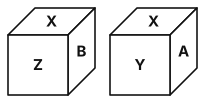
Two positions of the same cubical block are shown. When one of the faces W is at the top, which face will be at the bottom?
एक ही घनाकार ब्लॉक की दो स्थितियाँ दर्शाई गई हैं। जब फलक W शीर्ष पर हो, तो कौन-सा फलक तल पर होगा?
  1. AZ
  2. BY
  3. CX
  4. DB
Show answer

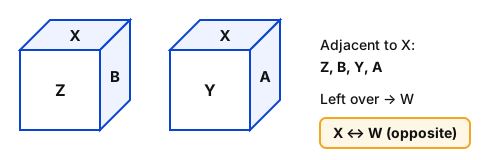
Concept: Faces seen together with a face are adjacent to it; the one face never seen with it is opposite.

  1. X is on top in both views; Z, B (first view) and Y, A (second view) touch X.
  2. So X is adjacent to Z, B, Y, A – four faces.
  3. The only remaining face W must be opposite X. With W on top, X is at the bottom.

Trick: A face has 4 neighbours and 1 opposite – list neighbours, the leftover is opposite.

Answer: (C) X

अवधारणा: जो फलक किसी फलक के साथ दिखते हैं वे आसन्न होते हैं; जो कभी साथ नहीं दिखता वह विपरीत है।

  1. दोनों स्थितियों में X ऊपर है; Z, B और Y, A उसके साथ दिखते हैं।
  2. अतः X के चार आसन्न फलक: Z, B, Y, A।
  3. बचा हुआ फलक W, X के विपरीत है। W ऊपर हो तो नीचे X होगा।

ट्रिक: एक फलक के 4 पड़ोसी और 1 विपरीत होता है।

उत्तर: (C) X

SSC CPO Paper IGeneral Intelligence and ReasoningCube – opposite facesSSC CPO Paper I 2022 · 10 Nov Shift 3
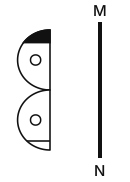
Q4210.
Select the correct mirror image of the given figure when the mirror is placed at line MN as shown.
जब दर्पण को दर्शाए गए अनुसार रेखा MN पर रखा जाता है, तो दी गई आकृति के सही दर्पण प्रतिबिंब का चयन कीजिए।
  1. A
  2. B
  3. C
  4. D
Show answer

Concept: A vertical mirror on the right swaps left and right; top and bottom stay unchanged.

  1. In the figure, the curved sides of both half-circles face left and the flat side faces right.
  2. In the image the curves must face right, flat side on the left.
  3. The black cap remains at the top and the small line at the bottom; the small circles stay inside. Only (D) shows this.

Trick: Vertical mirror: only left↔right changes – up/down details (black cap on top) must stay on top.

Answer: (D) Option figure (D)

अवधारणा: दाईं ओर रखा खड़ा दर्पण बाएँ-दाएँ बदलता है; ऊपर-नीचे वैसा ही रहता है।

  1. आकृति में अर्ध-वृत्तों का गोल भाग बाईं ओर, सपाट भाग दाईं ओर है।
  2. प्रतिबिंब में गोल भाग दाईं ओर, सपाट भाग बाईं ओर होगा।
  3. काला भाग ऊपर और छोटी रेखा नीचे ही रहेगी – केवल (D) में ऐसा है।

ट्रिक: खड़ा दर्पण: केवल बाएँ↔दाएँ बदलें, ऊपर का काला भाग ऊपर ही रहे।

उत्तर: (D) विकल्प आकृति (D)

SSC CPO Paper IGeneral Intelligence and ReasoningMirror imageSSC CPO Paper I 2022 · 10 Nov Shift 3
Q4211.
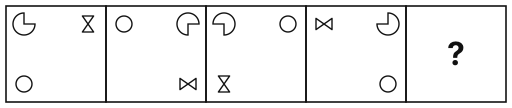
Select the figure that will come in place of the question mark (?) in the following figure series.
निम्नलिखित आकृति श्रृंखला में प्रश्न चिह्न (?) के स्थान पर आने वाली आकृति का चयन कीजिए।
  1. A
  2. B
  3. C
  4. D
Show answer

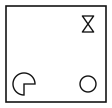
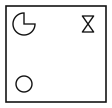
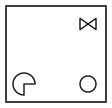
Concept: Follow each of the three symbols separately: position and orientation.

  1. Small circle: bottom-left → top-left → top-right → bottom-right, i.e. one corner clockwise each step; next = bottom-left.
  2. Hourglass: top-right → bottom-right → bottom-left → top-left (clockwise) and turns 90° each time; next = top-right, standing upright.
  3. Pac-man shape alternates top-left / top-right and turns 90° each time; after four turns it is back to its Fig 1 form at top-left.
  4. So Fig 5 is the same as Fig 1 – option (B).

Trick: If every element moves one corner and turns 90°, the 5th figure repeats the 1st.

Answer: (B) Option figure (B)

अवधारणा: तीनों चिह्नों की स्थिति और दिशा अलग-अलग देखें।

  1. छोटा वृत्त: नीचे-बाएँ → ऊपर-बाएँ → ऊपर-दाएँ → नीचे-दाएँ (घड़ी की दिशा); अगला नीचे-बाएँ।
  2. Hourglass: ऊपर-दाएँ → नीचे-दाएँ → नीचे-बाएँ → ऊपर-बाएँ और हर बार 90° घूमता है; अगला ऊपर-दाएँ, खड़ा।
  3. Pac-man आकृति ऊपर-बाएँ/ऊपर-दाएँ बदलती है और 90° घूमती है; चार बार बाद Fig 1 जैसी।
  4. अतः Fig 5 = Fig 1, विकल्प (B)।

ट्रिक: हर तत्व एक कोना और 90° घूमे तो 5वीं आकृति पहली जैसी होती है।

उत्तर: (B) विकल्प आकृति (B)

SSC CPO Paper IGeneral Intelligence and ReasoningFigure seriesSSC CPO Paper I 2022 · 10 Nov Shift 3
Q4212.
Which of the following letter-clusters will replace the question mark (?) in the given series to make it logically complete?
PTA, QUB, RVC, SWD, ?
निम्नलिखित में से कौन-सा अक्षर-समूह दी गई श्रृंखला में प्रश्न चिह्न (?) का स्थान लेकर उसे तार्किक रूप से पूर्ण करेगा?
PTA, QUB, RVC, SWD, ?
  1. AXET
  2. BTEX
  3. CXTE
  4. DTXE
Show answer

Concept: Check each letter position separately.

  1. 1st letters: P, Q, R, S → T (+1).
  2. 2nd letters: T, U, V, W → X (+1).
  3. 3rd letters: A, B, C, D → E (+1). Next cluster: TXE.

Trick: Write the clusters one under another and read each column.

Answer: (D) TXE

अवधारणा: हर स्थान के अक्षर अलग-अलग देखें।

  1. पहला अक्षर: P, Q, R, S → T (+1)।
  2. दूसरा: T, U, V, W → X (+1)।
  3. तीसरा: A, B, C, D → E (+1)। अगला समूह: TXE।

ट्रिक: समूहों को एक के नीचे एक लिखकर हर स्तंभ पढ़ें।

उत्तर: (D) TXE

SSC CPO Paper IGeneral Intelligence and ReasoningLetter cluster seriesSSC CPO Paper I 2022 · 10 Nov Shift 3
Q4213.
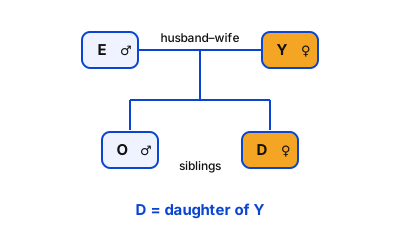
‘Q * R’ means ‘Q is the mother of R’
‘Q + R’ means ‘Q is the husband of R’
‘Q × R’ means ‘Q is the sister of R’
‘Q ÷ R’ means ‘Q is the son of R’
If ‘D × O ÷ E + Y’, how is D related to Y?
‘Q * R’ का अर्थ है ‘Q, R की माता है’
‘Q + R’ का अर्थ है ‘Q, R का पति है’
‘Q × R’ का अर्थ है ‘Q, R की बहन है’
‘Q ÷ R’ का अर्थ है ‘Q, R का पुत्र है’
यदि ‘D × O ÷ E + Y’ है, तो D का Y से क्या संबंध है?
  1. ASisterबहन
  2. BDaughter-in-lawपुत्रवधू
  3. CDaughterपुत्री
  4. DBrotherभाई
Show answer

Concept: Decode each symbol step by step and draw the family tree.

  1. D × O: D is the sister of O (D is female).
  2. O ÷ E: O is the son of E.
  3. E + Y: E is the husband of Y, so Y is O's mother.
  4. D, a sister of O, is also Y's child → D is Y's daughter.

Trick: Sister of someone's son = that person's daughter.

Answer: (C) Daughter

अवधारणा: हर चिह्न को क्रम से डिकोड करें और वंश-वृक्ष बनाएँ।

  1. D × O: D, O की बहन है (D स्त्री)।
  2. O ÷ E: O, E का पुत्र है।
  3. E + Y: E, Y का पति है, अतः Y, O की माँ है।
  4. O की बहन D भी Y की संतान → D, Y की पुत्री (Daughter) है।

ट्रिक: किसी के पुत्र की बहन = उसकी पुत्री।

उत्तर: (C) पुत्री (Daughter)

SSC CPO Paper IGeneral Intelligence and ReasoningBlood relation (coded)SSC CPO Paper I 2022 · 10 Nov Shift 3
Q4214.
If A denotes ‘+’, B denotes ‘×’, C denotes ‘−’, and D denotes ‘÷’, then what will be the value of the following expression?
32 C 16 D 8 A 4 B 2
यदि A का अर्थ ‘+’, B का अर्थ ‘×’, C का अर्थ ‘−’ और D का अर्थ ‘÷’ है, तो निम्नलिखित व्यंजक का मान क्या होगा?
32 C 16 D 8 A 4 B 2
  1. A38
  2. B89
  3. C35
  4. D98
Show answer

Concept: Substitute the signs and use BODMAS.

  1. A = +, B = ×, C = −, D = ÷.
  2. 32−16÷8+4×2.
  3. =32−2+8=38.

Trick: ÷ and × first: 16÷8=2, 4×2=8.

Answer: (A) 38

अवधारणा: चिह्न बदलें और BODMAS लगाएँ।

  1. A = +, B = ×, C = −, D = ÷।
  2. 32−16÷8+4×2।
  3. =32−2+8=38।

ट्रिक: पहले ÷ और ×: 16÷8=2, 4×2=8।

उत्तर: (A) 38

SSC CPO Paper IGeneral Intelligence and ReasoningMathematical operationsSSC CPO Paper I 2022 · 10 Nov Shift 3
Q4215.
Which of the following letter-clusters will replace the question mark (?) in the given series?
PL, RO, TS, VX, XD, ?
निम्नलिखित में से कौन-सा अक्षर-समूह दी गई श्रृंखला में प्रश्न चिह्न (?) का स्थान लेगा?
PL, RO, TS, VX, XD, ?
  1. AZL
  2. BZK
  3. CYK
  4. DZJ
Show answer

Concept: Use alphabet positions for each letter of the pair.

  1. First letters: P, R, T, V, X → +2 each → Z.
  2. Second letters: L(12), O(15), S(19), X(24), D(30 = 4): differences +3,+4,+5,+6.
  3. Next difference +7: 4+7=11 → K. Answer ZK.

Trick: When the count passes Z, subtract 26 (X + 6 = 24 + 6 = 30 → D).

Answer: (B) ZK

अवधारणा: हर अक्षर का वर्णमाला स्थान लें।

  1. पहले अक्षर: P, R, T, V, X → +2 → Z।
  2. दूसरे अक्षर: L(12), O(15), S(19), X(24), D(4): अंतर +3,+4,+5,+6।
  3. अगला +7: 4+7=11 → K। उत्तर ZK।

ट्रिक: Z के बाद गिनती दोबारा A से (26 घटाएँ)।

उत्तर: (B) ZK

SSC CPO Paper IGeneral Intelligence and ReasoningLetter cluster seriesSSC CPO Paper I 2022 · 10 Nov Shift 3
Q4216.
In a certain code language, ‘CLOUDS’ is written as ‘SBQAJM’ and ‘BRIGHT’ is written as ‘EFRZPG’. How will ‘DREAMY’ be written in that language?
एक निश्चित कूट भाषा में, ‘CLOUDS’ को ‘SBQAJM’ लिखा जाता है और ‘BRIGHT’ को ‘EFRZPG’ लिखा जाता है। उसी भाषा में ‘DREAMY’ को किस प्रकार लिखा जाएगा?
  1. AYKWCBP
  2. BYKWBPC
  3. CYKXCPB
  4. DWKXBPC
Show answer

Concept: The word is split into two halves, the halves are swapped, and every letter is moved 2 places back.

  1. CLOUDS → halves CLO | UDS → swap: UDSCLO → each −2: SBQAJM ✓.
  2. BRIGHT → halves BRI | GHT → swap: GHTBRI → each −2: EFRZPG ✓.
  3. DREAMY → halves DRE | AMY → swap: AMYDRE → −2: YKWBPC.

Trick: Spot that the code's first letter comes from the 4th letter of the word – a sign of swapped halves.

Answer: (B) YKWBPC

अवधारणा: शब्द के दो भाग करके उन्हें आपस में बदला जाता है, फिर हर अक्षर 2 स्थान पीछे।

  1. CLOUDS → CLO | UDS → UDSCLO → −2: SBQAJM ✓।
  2. BRIGHT → BRI | GHT → GHTBRI → −2: EFRZPG ✓।
  3. DREAMY → DRE | AMY → AMYDRE → −2: YKWBPC।

ट्रिक: कोड का पहला अक्षर शब्द के चौथे अक्षर से बने तो आधे भाग बदले गए हैं।

उत्तर: (B) YKWBPC

SSC CPO Paper IGeneral Intelligence and ReasoningCoding–decodingSSC CPO Paper I 2022 · 10 Nov Shift 3
Q4217.
In a certain code language, 'GARDEN' is written as 'OFESBH' and 'LADDER' is written as 'SFEEBM'. How will 'HANDLE' be written in that language?
एक निश्चित कूट भाषा में, 'GARDEN' को 'OFESBH' लिखा जाता है और 'LADDER' को 'SFEEBM' लिखा जाता है। उसी भाषा में 'HANDLE' को किस प्रकार लिखा जाएगा?
  1. AFMDOBI
  2. BFMEOBI
  3. CFMGOBI
  4. DFMFOBI
Show answer

Concept: Reverse the word, then shift each letter one place forward.

  1. GARDEN → reverse NEDRAG → +1: OFESBH ✓.
  2. LADDER → REDDAL → +1: SFEEBM ✓.
  3. HANDLE → ELDNAH → +1: FMEOBI.

Trick: The code's first letter (O) is next to the word's last letter (N) – reverse + 1.

Answer: (B) FMEOBI

अवधारणा: शब्द उलटें, फिर हर अक्षर एक स्थान आगे।

  1. GARDEN → NEDRAG → +1: OFESBH ✓।
  2. LADDER → REDDAL → +1: SFEEBM ✓।
  3. HANDLE → ELDNAH → +1: FMEOBI।

ट्रिक: कोड का पहला अक्षर शब्द के अंतिम अक्षर से ठीक आगे है – उलटें और +1।

उत्तर: (B) FMEOBI

SSC CPO Paper IGeneral Intelligence and ReasoningCoding–decodingSSC CPO Paper I 2022 · 10 Nov Shift 3
Q4218.
Which of the following numbers will replace the question mark (?) in the given series? 8, 10, 16, 28, ?
निम्नलिखित में से कौन-सी संख्या दी गई श्रृंखला में प्रश्न चिह्न (?) का स्थान लेगी? 8, 10, 16, 28, ?
  1. A46
  2. B56
  3. C48
  4. D58
Show answer

Concept: Check the differences and their pattern.

  1. Differences: 2,6,12 = 1×2, 2×3, 3×4.
  2. Next difference =4×5=20.
  3. Next term =28+20=48.

Trick: Differences 2, 6, 12, 20 are n(n+1) – a very common SSC pattern.

Answer: (C) 48

अवधारणा: अंतर और उनका पैटर्न देखें।

  1. अंतर: 2,6,12 = 1×2, 2×3, 3×4।
  2. अगला अंतर =4×5=20।
  3. अगला पद =28+20=48।

ट्रिक: अंतर 2, 6, 12, 20 = n(n+1) – SSC का आम पैटर्न।

उत्तर: (C) 48

SSC CPO Paper IGeneral Intelligence and ReasoningNumber seriesSSC CPO Paper I 2022 · 10 Nov Shift 3
Q4219.
Select the word-pair that best represents a similar relationship to the one expressed in the pair of words given below.
(The words must be considered as meaningful English words and must not be related to each other based on the number of letters/number of consonants/vowels in the
word)
Bird : Nest
उस शब्द-युग्म का चयन कीजिए जो नीचे दिए गए शब्द-युग्म में व्यक्त संबंध के समान संबंध का सबसे अच्छा प्रतिनिधित्व करता है।
(शब्दों को अर्थपूर्ण अंग्रेज़ी शब्द माना जाना चाहिए और उन्हें शब्द में अक्षरों की संख्या/व्यंजनों/स्वरों की संख्या के आधार पर एक-दूसरे से संबंधित नहीं किया जाना चाहिए।)
पक्षी : घोंसला
  1. AGoat : Grassबकरी : घास
  2. BTiger : Kennelबाघ : श्वानगृह
  3. CAnt : Sugarचींटी : चीनी
  4. DCattle : Barnमवेशी : पशुशाला
Show answer

Concept: Relation: living being : the place where it lives/shelters.

  1. A bird lives in a nest.
  2. Cattle are kept in a barn – same relation.
  3. Goat : Grass and Ant : Sugar are food relations; a kennel is a dog's shelter, not a tiger's.

Trick: Make a sentence: ‘A ___ lives in a ___’ and test each option.

Answer: (D) Cattle : Barn

अवधारणा: संबंध: जीव : उसका रहने का स्थान।

  1. पक्षी घोंसले (Nest) में रहता है।
  2. मवेशी (Cattle) बाड़े (Barn) में रखे जाते हैं – वही संबंध।
  3. Goat : Grass और Ant : Sugar भोजन संबंध हैं; Kennel कुत्ते का घर है, बाघ का नहीं।

ट्रिक: वाक्य बनाएँ: ‘___ रहता है ___ में’ और हर विकल्प जाँचें।

उत्तर: (D) Cattle : Barn

SSC CPO Paper IGeneral Intelligence and ReasoningWord analogySSC CPO Paper I 2022 · 10 Nov Shift 3
Q4220.
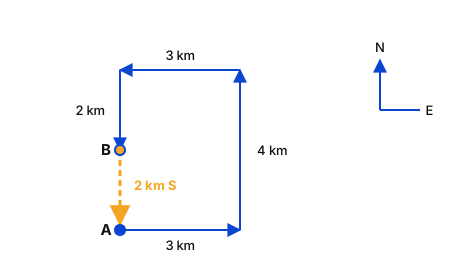
Rocky starts from point A and drives 3 km towards east. He takes left turn and drives 4 km. He again takes a left turn and drives 3 km. He takes one more left turn and drives 2 km and stops at B. How far and towards which direction should he drive in order to reach point A again?
रॉकी बिंदु A से चलना आरंभ करता है और पूर्व की ओर 3 km गाड़ी चलाता है। वह बाएँ मुड़ता है और 4 km गाड़ी चलाता है। वह फिर से बाएँ मुड़ता है और 3 km गाड़ी चलाता है। वह एक बार और बाएँ मुड़ता है और 2 km गाड़ी चलाकर B पर रुक जाता है। पुनः बिंदु A पर पहुँचने के लिए उसे कितनी दूरी तक और किस दिशा में गाड़ी चलानी चाहिए?
  1. A2 km towards southदक्षिण की ओर 2 km
  2. B3 km towards southदक्षिण की ओर 3 km
  3. C3 km towards eastपूर्व की ओर 3 km
  4. D2 km towards northउत्तर की ओर 2 km
Show answer

Concept: Draw the path with A at the origin, north up.

  1. 3 km east, left → 4 km north, left → 3 km west: he is 4 km straight north of A.
  2. Left again → south 2 km: B is 4−2=2 km north of A.
  3. To return to A he must go 2 km towards south.

Trick: Equal east and west moves cancel; only north–south is left: 4−2=2.

Answer: (A) 2 km towards south

अवधारणा: A को मूल बिंदु मानकर, उत्तर ऊपर रखकर रास्ता बनाएँ।

  1. 3 km पूर्व, बाएँ → 4 km उत्तर, बाएँ → 3 km पश्चिम: वह A से ठीक 4 km उत्तर में है।
  2. फिर बाएँ → 2 km दक्षिण: B, A से 4−2=2 km उत्तर में।
  3. A तक लौटने के लिए 2 km दक्षिण की ओर जाना होगा।

ट्रिक: पूर्व-पश्चिम बराबर हैं तो कट जाते हैं; केवल उत्तर–दक्षिण बचता है।

उत्तर: (A) 2 km दक्षिण की ओर

SSC CPO Paper IGeneral Intelligence and ReasoningDirection and distanceSSC CPO Paper I 2022 · 10 Nov Shift 3