Q421.If ‘A’ stands for ‘÷’, ‘B’ stands for ‘×’, ‘C’ stands for ‘+’ and ‘D’ stands for ‘−’, what will come in place of the question mark (?) in the following equation?
228 B 5 C 89 D 328 A 4 = ?
यदि ‘A’ का अर्थ ‘÷’ है, ‘B’ का अर्थ ‘×’ है, ‘C’ का अर्थ ‘+’ है और ‘D’ का अर्थ ‘−’ है, तो निम्नलिखित समीकरण में प्रश्न चिह्न (?) के स्थान पर क्या आएगा?
228 B 5 C 89 D 328 A 4 = ?
- A1774
- B1174
- C1147
- D1474
Show answer
Concept: Replace letters by operations and follow BODMAS.
- A = ÷, B = ×, C = +, D = −.
- .
- .
Trick: Check last digits: → the answer must end in 7, so 1147.
Answer: (C) 1147
अवधारणा: अक्षरों को संक्रियाओं से बदलें और BODMAS लगाएँ।
- A = ÷, B = ×, C = +, D = −।
- ।
- ।
ट्रिक: इकाई अंक जाँचें: → उत्तर का अंतिम अंक 7, अतः 1147।
उत्तर: (C) 1147
SSC CPO Paper IGeneral Intelligence and ReasoningMathematical OperationsSSC CPO Paper I 2024 · 29 Jun Shift 1
Q422.Select the option that is related to the third word in the same way as the second word is related to the first word. (The words must be considered as meaningful English
words and must not be related to each other based on the number of letters/number of consonants/vowels in the word.)
Swan : Cygnet :: Dog : ?
उस विकल्प का चयन कीजिए जो तीसरे शब्द से उसी प्रकार संबंधित है जिस प्रकार दूसरा शब्द पहले शब्द से संबंधित है। (शब्दों को अर्थपूर्ण अंग्रेज़ी शब्दों के रूप में माना जाना चाहिए और उन्हें शब्द में अक्षरों की संख्या/व्यंजनों/स्वरों की संख्या के आधार पर एक-दूसरे से संबंधित नहीं किया जाना चाहिए।)
Swan (हंस) : Cygnet (हंस का बच्चा) :: Dog (कुत्ता) : ?
- APuppyPuppy (पिल्ला)
- BCalfCalf (बछड़ा)
- CPetPet (पालतू पशु)
- DOmnivoresOmnivores (सर्वाहारी)
Show answer
Concept: The pair is animal : its young one.
- A young swan is called a cygnet.
- A young dog is called a puppy.
- Calf is the young of a cow; Pet and Omnivores are not names of young ones.
Yaad rakhein: Swan–cygnet, dog–puppy, cat–kitten, horse–foal, goat–kid.
Answer: (A) Puppy
अवधारणा: जोड़ा है – जानवर : उसका बच्चा।
- हंस (swan) के बच्चे को cygnet कहते हैं।
- कुत्ते (dog) के बच्चे को puppy कहते हैं।
- Calf गाय का बच्चा है; Pet और Omnivores बच्चे के नाम नहीं।
याद रखें: Swan–cygnet, dog–puppy, cat–kitten, horse–foal, goat–kid।
उत्तर: (A) Puppy
SSC CPO Paper IGeneral Intelligence and ReasoningWord AnalogySSC CPO Paper I 2024 · 29 Jun Shift 1
Q423.If ‘+’ means ‘–’ , ‘–’ means ‘×’ , ‘×’ means ‘÷’, ‘÷’ means ‘+’, what will come in place of the question mark (?) in the following equation?
42 × 3 – 16 ÷ 9 + 11 = ?
यदि ‘+’ का अर्थ ‘–’ है, ‘–’ का अर्थ ‘×’ है, ‘×’ का अर्थ ‘÷’ है, ‘÷’ का अर्थ ‘+’ है, तो निम्नलिखित समीकरण में प्रश्न चिह्न (?) के स्थान पर क्या आएगा?
42 × 3 – 16 ÷ 9 + 11 = ?
- A232
- B227
- C222
- D240
Show answer
Concept: Interchange the signs as per the meanings and apply BODMAS.
- + → −, − → ×, × → ÷, ÷ → +.
- becomes .
- .
Trick: Solve the ÷ and × block first: .
Answer: (C) 222
अवधारणा: अर्थ के अनुसार चिह्न बदलें और BODMAS लगाएँ।
- + → −, − → ×, × → ÷, ÷ → +।
- बनता है ।
- ।
ट्रिक: पहले ÷ और × वाला भाग: ।
उत्तर: (C) 222
SSC CPO Paper IGeneral Intelligence and ReasoningMathematical OperationsSSC CPO Paper I 2024 · 29 Jun Shift 1
Q424.Select the option that represents the correct order of the given words as they would appear in an English dictionary.
1. Winterish
2. Wingspread
3. Windblast
4. Wintertide
5. Windscreen
6. Winkling
उस विकल्प का चयन कीजिए जो दिए गए शब्दों के उस सही क्रम को दर्शाता है जिसमें वे अंग्रेज़ी शब्दकोश में आएँगे।
1. Winterish
2. Wingspread
3. Windblast
4. Wintertide
5. Windscreen
6. Winkling
- A3, 5, 2, 6, 1, 4
- B3, 5, 4, 2, 6, 1
- C3, 5, 2, 4, 6, 1
- D3, 5, 2, 4, 1, 6
Show answer
Concept: Compare words letter by letter from the left.
- All begin with WIN. Next letters: Wind (d), Wing (g), Wink (k), Wint (t).
- Windblast vs Windscreen: b before s → 3, 5.
- Then Wingspread (2), Winkling (6).
- Winterish vs Wintertide: 'winteri' vs 'wintert' – i before t → 1, 4. Order: 3, 5, 2, 6, 1, 4.
Trick: Group by the first letter where the words differ, then sort inside each group.
Answer: (A) 3, 5, 2, 6, 1, 4
अवधारणा: शब्दों की बाएँ से अक्षर-दर-अक्षर तुलना करें।
- सभी WIN से शुरू। अगला अक्षर: Wind (d), Wing (g), Wink (k), Wint (t)।
- Windblast और Windscreen: b, s से पहले → 3, 5।
- फिर Wingspread (2), Winkling (6)।
- Winterish और Wintertide: i, t से पहले → 1, 4। क्रम: 3, 5, 2, 6, 1, 4।
ट्रिक: जहाँ शब्द अलग होते हैं उस अक्षर से समूह बनाएँ, फिर समूह के अंदर क्रम लगाएँ।
उत्तर: (A) 3, 5, 2, 6, 1, 4
SSC CPO Paper IGeneral Intelligence and ReasoningDictionary OrderSSC CPO Paper I 2024 · 29 Jun Shift 1
Q425.In a code language, ‘ROCK’ is written as ‘PKAG’, and ‘CLUB’ is written as ‘AHSX’. How will ‘SHOP’ be written in that language?
एक कूट भाषा में, ‘ROCK’ को ‘PKAG’ लिखा जाता है, और ‘CLUB’ को ‘AHSX’ लिखा जाता है। उसी भाषा में ‘SHOP’ को कैसे लिखा जाएगा?
- AMQDL
- BQMLD
- CQDML
- DQMDL
Show answer
Concept: Find the shift applied to each letter position.
- ROCK → PKAG: R−2 = P, O−4 = K, C−2 = A, K−4 = G.
- CLUB → AHSX: C−2 = A, L−4 = H, U−2 = S, B−4 = X ✓.
- SHOP: S−2 = Q, H−4 = D, O−2 = M, P−4 = L → QDML.
Trick: Pattern −2, −4, −2, −4 – note (D) QMDL merely swaps letters; check the order.
Answer: (C) QDML
अवधारणा: हर स्थान के अक्षर पर लगा खिसकाव (shift) खोजें।
- ROCK → PKAG: R−2 = P, O−4 = K, C−2 = A, K−4 = G।
- CLUB → AHSX: C−2 = A, L−4 = H, U−2 = S, B−4 = X ✓।
- SHOP: S−2 = Q, H−4 = D, O−2 = M, P−4 = L → QDML।
ट्रिक: पैटर्न −2, −4, −2, −4 – (D) QMDL में अक्षर अदल-बदल हैं, क्रम जाँचें।
उत्तर: (C) QDML
SSC CPO Paper IGeneral Intelligence and ReasoningCoding-DecodingSSC CPO Paper I 2024 · 29 Jun Shift 1
Q426.In a certain code language, ‘COOL’ is written as ‘45’ and ‘TREE’ is written as ‘48’. How will ‘WELL’ be written in that language?
एक निश्चित कूट भाषा में, ‘COOL’ को ‘45’ लिखा जाता है और ‘TREE’ को ‘48’ लिखा जाता है। उसी भाषा में ‘WELL’ को कैसे लिखा जाएगा?
- A46
- B52
- C36
- D51
Show answer
Concept: Code = sum of the alphabetical positions of the letters.
- COOL: ✓.
- TREE: ✓.
- WELL: .
Trick: Remember positions with EJOTY: E5, J10, O15, T20, Y25.
Answer: (B) 52
अवधारणा: कोड = अक्षरों के वर्णमाला क्रमांकों का योग।
- COOL: ✓।
- TREE: ✓।
- WELL: ।
ट्रिक: EJOTY से स्थान याद रखें: E5, J10, O15, T20, Y25।
उत्तर: (B) 52
SSC CPO Paper IGeneral Intelligence and ReasoningCoding-DecodingSSC CPO Paper I 2024 · 29 Jun Shift 1
Q427.Select the option that indicates the correct arrangement of the given words in the
order in which they appear in an English dictionary.
1- Circle
2- Cinema
3- Circus
4- Circumference
5- Cipher
उस विकल्प का चयन कीजिए जो दिए गए शब्दों की उस सही व्यवस्था को दर्शाता है जिस
क्रम में वे अंग्रेज़ी शब्दकोश में आते हैं।
1- Circle
2- Cinema
3- Circus
4- Circumference
5- Cipher
- A2, 5, 1, 4, 3
- B2, 1, 5, 4, 3
- C5, 2, 4, 1, 3
- D5, 4, 3, 1, 2
Show answer
Concept: Arrange letter by letter.
- Cin (Cinema) comes before Cip (Cipher), which comes before Cir…: 2, 5.
- Among Circle, Circumference, Circus: 'circl' (l) comes before 'circu' (u) → Circle (1).
- Circumference vs Circus: 'circum' vs 'circus' – m before s → 4, 3.
- Order: 2, 5, 1, 4, 3.
Trick: for the third letter settles the first two places quickly.
Answer: (A) 2, 5, 1, 4, 3
अवधारणा: अक्षर-दर-अक्षर क्रम लगाएँ।
- Cin (Cinema) पहले, फिर Cip (Cipher), फिर Cir…: 2, 5।
- Circle, Circumference, Circus में 'circl' (l), 'circu' (u) से पहले → Circle (1)।
- Circumference और Circus: 'circum' और 'circus' – m, s से पहले → 4, 3।
- क्रम: 2, 5, 1, 4, 3।
ट्रिक: तीसरे अक्षर से पहले दो स्थान तुरंत तय होते हैं।
उत्तर: (A) 2, 5, 1, 4, 3
SSC CPO Paper IGeneral Intelligence and ReasoningDictionary OrderSSC CPO Paper I 2024 · 29 Jun Shift 1
Q428.Rajesh starts from Point A and drives 17 km towards West. He then takes a left turn, drives 10 km, turns left and drives 40 km. He then takes a left turn and drives 30 km. He takes a final left turn, drives 23 km and stops at Point Q. How far (shortest
distance) and towards which direction should he now drive to reach Point A again? (All turns are 90° turns only.)
राजेश बिंदु A से चलना आरंभ करता है और पश्चिम की ओर 17 km गाड़ी चलाता है। फिर वह बाएँ मुड़ता है, 10 km गाड़ी चलाता है, बाएँ मुड़ता है और 40 km गाड़ी चलाता है। फिर वह बाएँ मुड़ता है और 30 km गाड़ी चलाता है। वह अंतिम बार बाएँ मुड़ता है, 23 km गाड़ी चलाता है और बिंदु Q पर रुक जाता है। पुनः बिंदु A तक पहुँचने के लिए उसे अब कितनी दूरी (न्यूनतम
दूरी) तक और किस दिशा में गाड़ी चलानी चाहिए? (सभी मोड़ केवल 90° के मोड़ हैं।)
- A20 km towards Southदक्षिण की ओर 20 km
- B20 km towards Northउत्तर की ओर 20 km
- C15 km towards Northउत्तर की ओर 15 km
- D15 km towards Southदक्षिण की ओर 15 km
Show answer
Concept: Plot the path with coordinates taking A as origin (East +x, North +y).
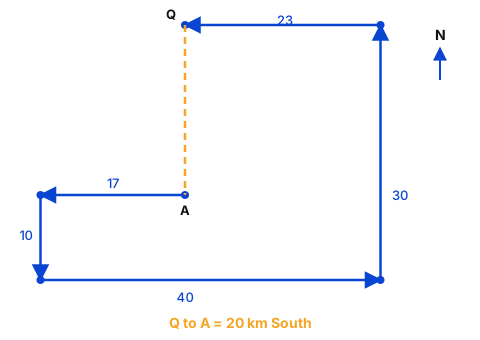
- 17 km West → . Facing West, a left turn is South: 10 km → .
- Left → East: 40 km → . Left → North: 30 km → .
- Left → West: 23 km → Q .
- Q is 20 km exactly North of A, so he must drive 20 km towards South.
Trick: Net East-West: ; net North-South: North.
Answer: (A) 20 km towards South
अवधारणा: A को मूल बिंदु मानकर पथ बनाएँ (पूर्व +x, उत्तर +y)।
- 17 km पश्चिम → । पश्चिम की ओर मुख, बाएँ = दक्षिण: 10 km → ।
- बाएँ → पूर्व: 40 km → । बाएँ → उत्तर: 30 km → ।
- बाएँ → पश्चिम: 23 km → Q ।
- Q, A से ठीक 20 km उत्तर में है, अतः उसे 20 km दक्षिण की ओर जाना होगा।
ट्रिक: कुल पूर्व-पश्चिम: ; कुल उत्तर-दक्षिण: उत्तर।
उत्तर: (A) 20 km towards South
SSC CPO Paper IGeneral Intelligence and ReasoningDirection and DistanceSSC CPO Paper I 2024 · 29 Jun Shift 1
Q429.Two statements are given, followed by two conclusions numbered I and II. Assuming the statements to be true, even if they seem to be at variance with commonly known facts, decide which of the conclusions logically follow(s) from the statements.
Statements:
Some clothes are sarees.
All sarees are silks.
Conclusions:
I. Some clothes are silks.
II. Some silks are sarees.
दो कथन दिए गए हैं, जिनके बाद I और II से संख्यांकित दो निष्कर्ष दिए गए हैं। कथनों को सत्य मानते हुए, भले ही वे सामान्य रूप से ज्ञात तथ्यों से भिन्न प्रतीत होते हों, निर्णय लीजिए कि कौन-सा/से निष्कर्ष कथनों का तार्किक रूप से अनुसरण करता है/करते हैं।
कथन:
कुछ कपड़े, साड़ियाँ हैं।
सभी साड़ियाँ, रेशम हैं।
निष्कर्ष:
I. कुछ कपड़े, रेशम हैं।
II. कुछ रेशम, साड़ियाँ हैं।
- AOnly conclusion II followsकेवल निष्कर्ष II अनुसरण करता है
- BOnly conclusion I followsकेवल निष्कर्ष I अनुसरण करता है
- CNeither conclusion I nor II followsन तो निष्कर्ष I और न ही II अनुसरण करता है
- DBoth conclusions I and II followनिष्कर्ष I और II दोनों अनुसरण करते हैं
Show answer
Concept: Use the least-overlap Venn diagram.
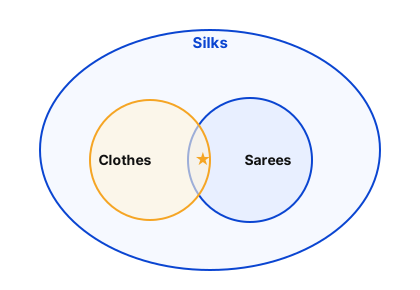
- All sarees are silks → Sarees inside Silks.
- Some clothes are sarees → the clothes that are sarees are also silks, so Some clothes are silks – I follows.
- Conversion of 'All sarees are silks' gives Some silks are sarees – II follows.
Yaad rakhein: Some + All (in this order) → a 'Some' conclusion follows.
Answer: (D) Both conclusions I and II follow
अवधारणा: न्यूनतम ओवरलैप वाला Venn आरेख प्रयोग करें।
- All sarees are silks → Sarees, Silks के अंदर।
- Some clothes are sarees → जो clothes sarees हैं वे silks भी हैं, अतः Some clothes are silks – I सत्य।
- 'All sarees are silks' का रूपांतरण → Some silks are sarees – II सत्य।
याद रखें: Some + All (इसी क्रम में) → 'Some' निष्कर्ष निकलता है।
उत्तर: (D) Both conclusions I and II follow
SSC CPO Paper IGeneral Intelligence and ReasoningSyllogismSSC CPO Paper I 2024 · 29 Jun Shift 1
Q430.254 is related to 524 following a certain logic. Following the same logic, 912 is related to 642. Which of the following numbers is related to 188 using the same logic?
254 एक निश्चित तर्क का अनुसरण करते हुए 524 से संबंधित है। उसी तर्क का अनुसरण करते हुए, 912, 642 से संबंधित है। उसी तर्क का उपयोग करते हुए निम्नलिखित में से कौन-सी संख्या 188 से संबंधित है?
- A900
- B845
- C825
- D840
Show answer
Concept: Compare the digit sums of each pair.
- 254: and 524: .
- 912: and 642: .
- So the related number has the same digit sum. 188: ; 845: ✓ (900 → 9, 825 → 15, 840 → 12).
Trick: When number pairs look unrelated, test the sum of digits.
Answer: (B) 845
अवधारणा: हर जोड़े के अंकों का योग तुलना करें।
- 254: और 524: ।
- 912: और 642: ।
- अतः संबंधित संख्या का अंक-योग समान है। 188: ; 845: ✓ (900 → 9, 825 → 15, 840 → 12)।
ट्रिक: जब संख्याएँ असंबद्ध लगें तो अंकों का योग जाँचें।
उत्तर: (B) 845
SSC CPO Paper IGeneral Intelligence and ReasoningNumber AnalogySSC CPO Paper I 2024 · 29 Jun Shift 1
Q431.In a certain code language,
'A @ B' means ‘A is the daughter of B’,
'A # B' means ‘A is the brother of B’,
'A + B' means ‘A is the wife of B’,
'A % B' means ‘A is the father of' B’.
How is M related to T if ‘M # N @ P + S % T’?
एक निश्चित कूट भाषा में,
'A @ B' का अर्थ है ‘A, B की पुत्री है’,
'A # B' का अर्थ है ‘A, B का भाई है’,
'A + B' का अर्थ है ‘A, B की पत्नी है’,
'A % B' का अर्थ है ‘A, B का पिता है’।
यदि ‘M # N @ P + S % T’ है, तो M, T से किस प्रकार संबंधित है?
- ABrotherभाई
- BHusbandपति
- CMother's brotherमाता का भाई
- DFatherपिता
Show answer
Concept: Decode each symbol and build the family tree.
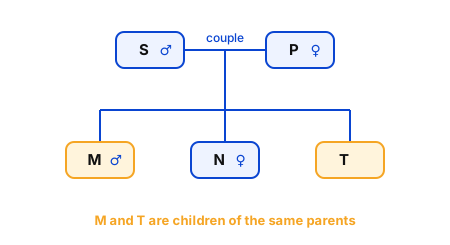
- M # N: M is the brother of N.
- N @ P: N is the daughter of P.
- P + S: P is the wife of S; S % T: S is the father of T.
- So N and T are both children of S and P, and M (brother of N, male) is also their son. Hence M is the brother of T.
Trick: Siblings of one child are siblings of every child of the same couple.
Answer: (A) Brother
अवधारणा: हर चिह्न का अर्थ लगाकर वंश-वृक्ष बनाएँ।
- M # N: M, N का भाई है।
- N @ P: N, P की बेटी है।
- P + S: P, S की पत्नी है; S % T: S, T का पिता है।
- अतः N और T दोनों S और P की संतान हैं, और M (N का भाई, पुरुष) भी उनका बेटा है। M, T का भाई है।
ट्रिक: एक संतान का भाई-बहन उसी दंपति की हर संतान का भाई-बहन होता है।
उत्तर: (A) Brother
SSC CPO Paper IGeneral Intelligence and ReasoningBlood Relations (Coded)SSC CPO Paper I 2024 · 29 Jun Shift 1
Q432.Select the pair which is related to each other in the same way as the following –
72:25
उस युग्म का चयन कीजिए जो एक-दूसरे से उसी प्रकार संबंधित है जिस प्रकार निम्नलिखित –
72:25
- A68:8
- B54:30
- C28:36
- D46:14
Show answer
Concept: Second number = square of the difference of the digits of the first number.
- 72: ✓.
- (C) 28: ✓.
- (A) ; (B) ; (D) .
Trick: A perfect square on the right side hints at a squared digit operation.
Answer: (C) 28:36
अवधारणा: दूसरी संख्या = पहली संख्या के अंकों के अंतर का वर्ग।
- 72: ✓।
- (C) 28: ✓।
- (A) ; (B) ; (D) ।
ट्रिक: दाईं ओर पूर्ण वर्ग हो तो अंकों पर वर्ग वाली संक्रिया जाँचें।
उत्तर: (C) 28:36
SSC CPO Paper IGeneral Intelligence and ReasoningNumber Pair AnalogySSC CPO Paper I 2024 · 29 Jun Shift 1
Q433.In a certain code language,
‘A + B’ means ‘A is the mother of B’;
‘A − B’ means ‘A is the husband of B’;
‘A × B’ means ‘B is the sister of A’ and
‘A ÷ B’ means ‘A is the father of B’.
Based on the above information, how is R related to T if ‘R ÷ S − V + Q × T’?
एक निश्चित कूट भाषा में,
‘A + B’ का अर्थ है ‘A, B की माता है’;
‘A − B’ का अर्थ है ‘A, B का पति है’;
‘A × B’ का अर्थ है ‘B, A की बहन है’ और
‘A ÷ B’ का अर्थ है ‘A, B का पिता है’।
उपर्युक्त जानकारी के आधार पर, यदि ‘R ÷ S − V + Q × T’ है, तो R, T से किस प्रकार संबंधित है?
- AFatherपिता
- BFather’s fatherपिता के पिता
- CBrotherभाई
- DSonपुत्र
Show answer
Concept: Decode step by step and draw the tree.
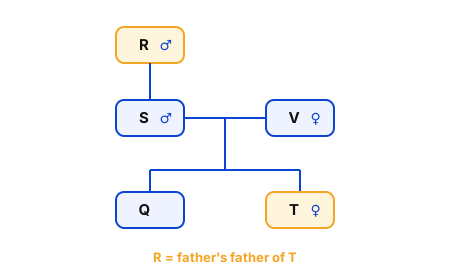
- R ÷ S: R is the father of S.
- S − V: S is the husband of V.
- V + Q: V is the mother of Q; Q × T: T is the sister of Q.
- So T is the daughter of S, and R is the father of S – R is T's father's father.
Trick: Two generations up on the father's side = father's father (grandfather).
Answer: (B) Father’s father
अवधारणा: क्रम से अर्थ निकालें और वंश-वृक्ष बनाएँ।
- R ÷ S: R, S का पिता है।
- S − V: S, V का पति है।
- V + Q: V, Q की माँ है; Q × T: T, Q की बहन है।
- अतः T, S की बेटी है और R, S का पिता – R, T के पिता का पिता (दादा) है।
ट्रिक: पिता की ओर से दो पीढ़ी ऊपर = पिता के पिता (दादा)।
उत्तर: (B) Father’s father
SSC CPO Paper IGeneral Intelligence and ReasoningBlood Relations (Coded)SSC CPO Paper I 2024 · 29 Jun Shift 1
Q434.Which of the following numbers will replace the question mark (?) in the given series? 67, 78, 103, 118, ?
दी गई शृंखला में प्रश्न चिह्न (?) के स्थान पर निम्नलिखित में से कौन-सी संख्या आएगी? 67, 78, 103, 118, ?
- A171
- B184
- C147
- D241
Show answer
Concept: Look at the differences between consecutive terms.
- Differences: , , .
- Alternate differences rise by 4: and .
- Next term .
Trick: If differences go up and down, split them into two alternate series.
Answer: (C) 147
अवधारणा: क्रमागत पदों के अंतर देखें।
- अंतर: , , ।
- एकांतर (alternate) अंतर 4 से बढ़ते हैं: और ।
- अगला पद ।
ट्रिक: अंतर ऊपर-नीचे हों तो उन्हें दो एकांतर श्रृंखलाओं में बाँटें।
उत्तर: (C) 147
SSC CPO Paper IGeneral Intelligence and ReasoningNumber SeriesSSC CPO Paper I 2024 · 29 Jun Shift 1
Q435.Find the two signs to be interchanged for making the following equation correct.
9 + 8 × 4 − 8 ÷ 2 = 11
निम्नलिखित समीकरण को सही बनाने के लिए परस्पर बदले जाने वाले दो चिह्नों को ज्ञात कीजिए।
9 + 8 × 4 − 8 ÷ 2 = 11
- A+ and ÷+ और ÷
- B÷ and ×÷ और ×
- C− and +− और +
- D÷ and −÷ और −
Show answer
Concept: Interchange the two signs in each option and check with BODMAS.
- (D) swap ÷ and −: .
- , so ✓.
- (A) gives , not 11; (B) ; (C) .
Trick: The result 11 is small, so the large product must be divided away.
Answer: (D) ÷ and −
अवधारणा: हर विकल्प के दोनों चिह्न बदलकर BODMAS से जाँचें।
- (D) ÷ और − बदलें: ।
- , अतः ✓।
- (A) ≠ 11; (B) ; (C) ।
ट्रिक: परिणाम 11 छोटा है, अतः बड़े गुणनफल को भाग देना होगा।
उत्तर: (D) ÷ और −
SSC CPO Paper IGeneral Intelligence and ReasoningSign InterchangeSSC CPO Paper I 2024 · 29 Jun Shift 1
Q436.Which letter cluster can replace the question mark (?) to complete the given series? TCVH, RETJ, ?, NIPN, LKNP
दी गई शृंखला को पूरा करने के लिए कौन-सा अक्षर-समूह प्रश्न चिह्न (?) का स्थान ले सकता है? TCVH, RETJ, ?, NIPN, LKNP
- AMGSK
- BMFSK
- CPGRL
- DPFRL
Show answer
Concept: Check each letter position separately.
- 1st: T, R, P, N, L (−2).
- 2nd: C, E, G, I, K (+2).
- 3rd: V, T, R, P, N (−2).
- 4th: H, J, L, N, P (+2). Missing term: PGRL.
Trick: Alternate −2, +2, −2, +2 across positions.
Answer: (C) PGRL
अवधारणा: हर स्थान के अक्षर अलग से जाँचें।
- पहला: T, R, P, N, L (−2)।
- दूसरा: C, E, G, I, K (+2)।
- तीसरा: V, T, R, P, N (−2)।
- चौथा: H, J, L, N, P (+2)। लुप्त पद: PGRL।
ट्रिक: स्थानों पर क्रमशः −2, +2, −2, +2।
उत्तर: (C) PGRL
SSC CPO Paper IGeneral Intelligence and ReasoningLetter SeriesSSC CPO Paper I 2024 · 29 Jun Shift 1
Q437.Select the figure from among the given options that can logically replace the question mark (?) in the following series.

दिए गए विकल्पों में से उस आकृति का चयन कीजिए जो निम्नलिखित शृंखला में प्रश्न चिह्न (?) के स्थान पर तार्किक रूप से आ सकती है।
- A
- B
- C
- D
Show answer
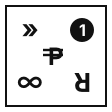
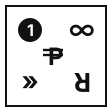
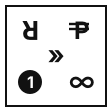
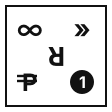
Concept: In each step three symbols rotate among three positions while two stay fixed; the two rotation paths alternate.
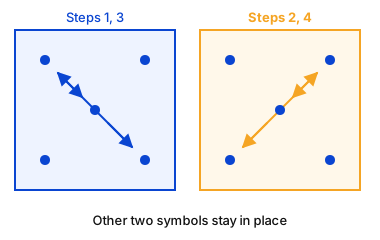
- Steps 1 and 3: the symbols at TL → C → BR → TL move (e.g. ● TL → C, » C → BR, ∞ BR → TL).
- Steps 2 and 4: the symbols at TR → C → BL → TR move (e.g. R TR → C, ● C → BL, ₱ BL → TR).
- Step 4 (figure 4 → 5) uses the second path: ₱ TR → C, ∞ C → BL, ● BL → TR; » (TL) and R (BR) stay.
- Figure 5: » TL, ● TR, ₱ centre, ∞ BL, R BR – option (A).
Trick: Mark which symbols do NOT move in each step – the fixed pair reveals the alternating pattern.
Answer: (A) the first figure
अवधारणा: हर चरण में तीन प्रतीक तीन स्थानों में घूमते हैं और दो स्थिर रहते हैं; दो घूर्णन-पथ बारी-बारी से आते हैं।
- चरण 1 और 3: TL → C → BR → TL वाले प्रतीक चलते हैं (जैसे ● TL → C, » C → BR, ∞ BR → TL)।
- चरण 2 और 4: TR → C → BL → TR वाले प्रतीक चलते हैं (जैसे R TR → C, ● C → BL, ₱ BL → TR)।
- आकृति 4 → 5 में दूसरा पथ: ₱ TR → C, ∞ C → BL, ● BL → TR; » (TL) और R (BR) स्थिर।
- आकृति 5: TL पर », TR पर ●, केंद्र में ₱, BL पर ∞, BR पर R – विकल्प (A)।
ट्रिक: हर चरण में कौन-से प्रतीक नहीं हिलते, यह देखें – वही बारी वाला पैटर्न बताते हैं।
उत्तर: (A) पहली आकृति
SSC CPO Paper IGeneral Intelligence and ReasoningFigure SeriesSSC CPO Paper I 2024 · 29 Jun Shift 1
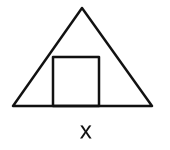
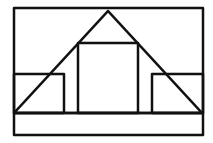
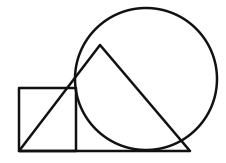
Q438.Select the option in which the given figure (X) is embedded as its part. (Rotation is NOT allowed.)
उस विकल्प का चयन कीजिए जिसमें दी गई आकृति (X) उसके भाग के रूप में निहित है। (घुमाने की अनुमति नहीं है।)
- A
- B
- C
- D
Show answer
Concept: Figure X (a triangle with a small square standing on the middle of its base) must appear unchanged, without rotation.
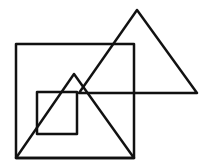
- In option (B) the left part has a triangle standing on the base of the rectangle with a small square at the middle of its base – exactly X.
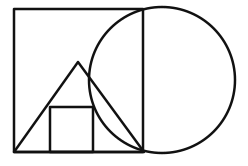
- In (A) the square is not on the triangle's base in the same proportion; in (C) the square is too tall and touches the sides; in (D) the square is outside the triangle.
Trick: Check the size of the inner square relative to the triangle, not just its presence.
Answer: (B) the second figure
अवधारणा: आकृति X (त्रिभुज जिसके आधार के बीच पर छोटा वर्ग है) बिना घुमाए जस-की-तस दिखनी चाहिए।
- विकल्प (B) के बाएँ भाग में आयत के आधार पर त्रिभुज है जिसके आधार के बीच में छोटा वर्ग है – बिल्कुल X।
- (A) में वर्ग उसी अनुपात में आधार पर नहीं; (C) में वर्ग बहुत ऊँचा है और भुजाओं को छूता है; (D) में वर्ग त्रिभुज के बाहर है।
ट्रिक: केवल वर्ग की उपस्थिति नहीं, त्रिभुज के सापेक्ष उसका आकार भी जाँचें।
उत्तर: (B) दूसरी आकृति
SSC CPO Paper IGeneral Intelligence and ReasoningEmbedded FiguresSSC CPO Paper I 2024 · 29 Jun Shift 1
Q439.Which of the following numbers will replace the question mark (?) in the given series? 43, 48, 46, ?, 49, 54, 52
दी गई शृंखला में प्रश्न चिह्न (?) के स्थान पर निम्नलिखित में से कौन-सी संख्या आएगी? 43, 48, 46, ?, 49, 54, 52
- A52
- B51
- C50
- D47
Show answer
Concept: Alternate operations +5 and −2.
- , .
- , .
- , ✓ – so ? = 51.
Trick: Verify the pattern on the terms after the blank (49, 54, 52).
Answer: (B) 51
अवधारणा: बारी-बारी से +5 और −2।
- , ।
- , ।
- , ✓ – अतः ? = 51।
ट्रिक: रिक्त स्थान के बाद के पदों (49, 54, 52) पर पैटर्न जाँचें।
उत्तर: (B) 51
SSC CPO Paper IGeneral Intelligence and ReasoningNumber SeriesSSC CPO Paper I 2024 · 29 Jun Shift 1
Q440.In a code language, 'DILIP' is coded as 46-36-30-36-22 and 'PRINCE' is coded as 22-18- 36-26-48-44. How will 'FIROZ' be coded in the same language?
एक कूट भाषा में, 'DILIP' को 46-36-30-36-22 के रूप में कूटबद्ध किया जाता है और 'PRINCE' को 22-18- 36-26-48-44 के रूप में कूटबद्ध किया जाता है। उसी भाषा में 'FIROZ' को किस प्रकार कूटबद्ध किया जाएगा?
- A42-36-18-24-2
- B2-36-18-42-52
- C56-36-18-32-52
- D48-36-18-38-6
Show answer
Concept: Each letter is coded as twice its reverse alphabetical position (A = 26, Z = 1).
- D: reverse 23, ; I: ; L: ; P: ✓.
- PRINCE also fits: N → , C → , E → .
- FIROZ: F , I 36, R , O , Z .
Trick: Reverse position = .
Answer: (A) 42-36-18-24-2
अवधारणा: हर अक्षर का कोड = उसके उल्टे वर्णमाला क्रमांक (A = 26, Z = 1) का दोगुना।
- D: उल्टा 23, ; I: ; L: ; P: ✓।
- PRINCE भी मेल खाता है: N → , C → , E → ।
- FIROZ: F , I 36, R , O , Z ।
ट्रिक: उल्टा क्रमांक ।
उत्तर: (A) 42-36-18-24-2
SSC CPO Paper IGeneral Intelligence and ReasoningCoding-DecodingSSC CPO Paper I 2024 · 29 Jun Shift 1

