In the following passage some words have been deleted. Read the passage carefully and select the most appropriate option to fill in each blank.
The concept of motivation focuses on explaining what ‘moves’ behaviour. In fact, the term (1)________ is derived from the Latin word ‘movere’, referring to movement of activity. Most of our everyday explanation of (2)________ is given in terms of motives. Motives also help in making (3)________ about behaviour. A person will work hard in school, in sports, in
business, in music, and in many other situations, if he/she has a very strong need for
(4)________. Hence, motives are the general states that enable us to make predictions about behaviour in many different situations. In other words, motivation is one of the (5)________ of behaviour. Instincts, drives, needs, goals, and incentives come under the broad cluster of motivation.
Q541.Select the most appropriate option to fill in blank number 1.
- Apsychology
- Bhuman behaviour
- Cinstinct
- Dmotivation
Show answer
Concept: The sentence explains the origin of a term from Latin movere (to move).
- The passage is about motivation, and ‘motivation’ comes from movere – ‘movement of activity’.
- ‘psychology’, ‘human behaviour’ and ‘instinct’ are not derived from movere.
Trick: Motive/motion/motivation all share the root mov-.
Answer: (D) motivation
अवधारणा: वाक्य लैटिन शब्द movere (हिलना/गति) से बने शब्द की उत्पत्ति बताता है।
- गद्यांश motivation पर है और ‘motivation’ ही movere से बना है।
- ‘psychology’, ‘human behaviour’ और ‘instinct’ movere से नहीं बने।
ट्रिक: Motive/motion/motivation – सबका मूल mov-।
उत्तर: (D) motivation
SSC CPO Paper IEnglish ComprehensionCloze TestSSC CPO Paper I 2023 · 5 Oct Shift 2
In the following passage some words have been deleted. Read the passage carefully and select the most appropriate option to fill in each blank.
The concept of motivation focuses on explaining what ‘moves’ behaviour. In fact, the term (1)________ is derived from the Latin word ‘movere’, referring to movement of activity. Most of our everyday explanation of (2)________ is given in terms of motives. Motives also help in making (3)________ about behaviour. A person will work hard in school, in sports, in
business, in music, and in many other situations, if he/she has a very strong need for
(4)________. Hence, motives are the general states that enable us to make predictions about behaviour in many different situations. In other words, motivation is one of the (5)________ of behaviour. Instincts, drives, needs, goals, and incentives come under the broad cluster of motivation.
Q542.Select the most appropriate option to fill in blank number 2.
- Abehaviour
- Bgoal
- Cincentive
- Dmotivation
Show answer
Concept: What do we explain in everyday life ‘in terms of motives’? Our actions, i.e. behaviour.
- The opening line says motivation explains what ‘moves’ behaviour; the blank continues this.
- ‘motivation … in terms of motives’ would be circular; ‘goal’ and ‘incentive’ are themselves parts of motivation (last line).
Trick: Motives explain behaviour – the key word repeated throughout the passage.
Answer: (A) behaviour
अवधारणा: रोज़मर्रा में हम ‘motives’ के आधार पर किसकी व्याख्या करते हैं? अपने कार्यों, यानी behaviour की।
- पहली पंक्ति कहती है कि motivation बताती है कि behaviour को क्या ‘moves’ करता है; रिक्त स्थान इसी को आगे बढ़ाता है।
- ‘motivation … in terms of motives’ चक्रीय होगा; ‘goal’ और ‘incentive’ स्वयं motivation के अंग हैं।
ट्रिक: Motives behaviour की व्याख्या करते हैं – गद्यांश का मुख्य शब्द।
उत्तर: (A) behaviour
SSC CPO Paper IEnglish ComprehensionCloze TestSSC CPO Paper I 2023 · 5 Oct Shift 2
In the following passage some words have been deleted. Read the passage carefully and select the most appropriate option to fill in each blank.
The concept of motivation focuses on explaining what ‘moves’ behaviour. In fact, the term (1)________ is derived from the Latin word ‘movere’, referring to movement of activity. Most of our everyday explanation of (2)________ is given in terms of motives. Motives also help in making (3)________ about behaviour. A person will work hard in school, in sports, in
business, in music, and in many other situations, if he/she has a very strong need for
(4)________. Hence, motives are the general states that enable us to make predictions about behaviour in many different situations. In other words, motivation is one of the (5)________ of behaviour. Instincts, drives, needs, goals, and incentives come under the broad cluster of motivation.
Q543.Select the most appropriate option to fill in blank number 3.
- Aclarifications
- Bpredictions
- Cdirections
- Ddecisions
Show answer
Concept: Look for clues later in the same passage.
- The passage later says: ‘motives are the general states that enable us to make predictions about behaviour’.
- ‘make predictions about behaviour’ is the natural collocation; ‘clarifications’, ‘directions’, ‘decisions’ do not fit this idea.
Trick: In cloze tests the passage often repeats the answer word – scan ahead.
Answer: (B) predictions
अवधारणा: उसी गद्यांश में आगे के संकेत देखें।
- आगे लिखा है: ‘motives are the general states that enable us to make predictions about behaviour’।
- ‘make predictions about behaviour’ स्वाभाविक collocation है; ‘clarifications’, ‘directions’, ‘decisions’ फिट नहीं।
ट्रिक: Cloze test में उत्तर-शब्द अक्सर गद्यांश में आगे दोहराया जाता है – आगे पढ़ें।
उत्तर: (B) predictions
SSC CPO Paper IEnglish ComprehensionCloze TestSSC CPO Paper I 2023 · 5 Oct Shift 2
In the following passage some words have been deleted. Read the passage carefully and select the most appropriate option to fill in each blank.
The concept of motivation focuses on explaining what ‘moves’ behaviour. In fact, the term (1)________ is derived from the Latin word ‘movere’, referring to movement of activity. Most of our everyday explanation of (2)________ is given in terms of motives. Motives also help in making (3)________ about behaviour. A person will work hard in school, in sports, in
business, in music, and in many other situations, if he/she has a very strong need for
(4)________. Hence, motives are the general states that enable us to make predictions about behaviour in many different situations. In other words, motivation is one of the (5)________ of behaviour. Instincts, drives, needs, goals, and incentives come under the broad cluster of motivation.
Q544.Select the most appropriate option to fill in blank number 4.
- Aachievements
- Bmotivation
- Cdesire
- Dgrow
Show answer
Concept: A person works hard in school, sports, business and music when he/she has a strong need for achievement (a standard motive in psychology).
- ‘need for achievement(s)’ fits the idea of working hard to succeed.
- ‘need for motivation’ is circular; ‘desire’ already means need; ‘grow’ is a verb and cannot follow ‘for’ here.
Trick: Hard work in every field ← need for achievement.
Answer: (A) achievements
अवधारणा: व्यक्ति स्कूल, खेल, व्यापार और संगीत में तब कड़ी मेहनत करता है जब उसमें उपलब्धि की तीव्र आवश्यकता (need for achievement) होती है।
- ‘need for achievement(s)’ सफलता हेतु मेहनत के भाव से मेल खाता है।
- ‘need for motivation’ चक्रीय है; ‘desire’ का अर्थ स्वयं need है; ‘grow’ क्रिया है, ‘for’ के बाद नहीं आ सकती।
ट्रिक: हर क्षेत्र में कड़ी मेहनत ← उपलब्धि की चाह (need for achievement)।
उत्तर: (A) achievements
SSC CPO Paper IEnglish ComprehensionCloze TestSSC CPO Paper I 2023 · 5 Oct Shift 2
In the following passage some words have been deleted. Read the passage carefully and select the most appropriate option to fill in each blank.
The concept of motivation focuses on explaining what ‘moves’ behaviour. In fact, the term (1)________ is derived from the Latin word ‘movere’, referring to movement of activity. Most of our everyday explanation of (2)________ is given in terms of motives. Motives also help in making (3)________ about behaviour. A person will work hard in school, in sports, in
business, in music, and in many other situations, if he/she has a very strong need for
(4)________. Hence, motives are the general states that enable us to make predictions about behaviour in many different situations. In other words, motivation is one of the (5)________ of behaviour. Instincts, drives, needs, goals, and incentives come under the broad cluster of motivation.
Q545.Select the most appropriate option to fill in blank number 5.
- Ameaning
- Bcauses
- Cways
- Ddeterminants
Show answer
Concept: Motivation is presented as something that ‘moves’ and predicts behaviour – i.e. a factor that decides behaviour.
- Determinants = factors that decide or shape something → ‘motivation is one of the determinants of behaviour’.
- ‘meaning’ and ‘ways’ do not fit; ‘causes’ is possible but ‘determinants’ is the precise academic term that includes instincts, drives, needs, goals and incentives.
Trick: ‘one of the determinants of …’ – standard phrase in psychology texts.
Answer: (D) determinants
अवधारणा: Motivation को ऐसा कारक बताया गया है जो behaviour को ‘move’ करता और उसका अनुमान लगाने में मदद करता है – यानी निर्धारक।
- Determinants = निर्धारक तत्व → ‘motivation is one of the determinants of behaviour’।
- ‘meaning’ और ‘ways’ फिट नहीं; ‘causes’ संभव है पर ‘determinants’ सटीक शब्द है जिसमें instincts, drives, needs, goals, incentives आते हैं।
ट्रिक: ‘one of the determinants of …’ – मनोविज्ञान का मानक वाक्यांश।
उत्तर: (D) determinants
SSC CPO Paper IEnglish ComprehensionCloze TestSSC CPO Paper I 2023 · 5 Oct Shift 2
Read the given passage carefully and answer the questions that follow.
The rise of social media has undoubtedly changed the way we communicate with one
another. It has connected people from all over the world and provided a platform for voices that were once silenced. However, as with any form of communication, social media has its downsides.
One of the most significant downsides is the spread of misinformation. With the rise of social media, anyone can become a content creator, which means that anyone can share
information without fact-checking or considering the consequences. This has led to a
proliferation of false information, from conspiracy theories to hoaxes, that can quickly spread and cause harm.
One recent example of this is the COVID-19 pandemic. Social media has played a significant role in the spread of misinformation about the virus and the vaccines. False claims about the safety and effectiveness of the vaccines have caused many people to be hesitant or outright refuse to get vaccinated. This, in turn, has led to the prolongation of the pandemic and the loss of many lives.
The spread of misinformation on social media is not a new phenomenon. In fact, it has been around for centuries. However, the speed and ease with which misinformation can spread on social media have made it a particularly pernicious problem in our modern world.
Throughout history, misinformation has been used to sow discord and manipulate people. For example, during World War II, the Nazi regime used propaganda to spread false information about Jews, Roma, and other targeted groups in order to justify their persecution and
ultimately their extermination. Similarly, during the Cold War, both the United States and the Soviet Union used propaganda to demonise one another and sway public opinion.
The difference now is that social media has made it easier than ever to spread false
information. A single post or tweet can reach millions of people within seconds, and it can be difficult to counteract the effects of that misinformation once it has spread.
So, what can we do about it? The answer is not simple, but it starts with education. We need to teach people how to think critically, how to fact-check, and how to discern between credible sources and fake news. We also need to hold social media companies accountable for the content on their platforms and ensure that they are doing their part to combat the spread of misinformation.
In short, the rise of social media has given us a powerful tool for communication, but we must use it wisely. We must be vigilant against the spread of misinformation and work together to ensure that the information we consume and share is accurate and reliable.
Q546.What is the ANTONYM of the word ‘accurate’ as used in the passage?
- ACorrect
- BInexact
- CPrecise
- DReliable
Show answer
Concept: In the passage ‘accurate’ (information that is accurate and reliable) means correct and free from error.
- Antonym = not correct/precise → inexact.
- ‘Correct’ and ‘Precise’ are synonyms; ‘Reliable’ is used alongside it in the passage with a similar sense.
Trick: Accurate ↔ inaccurate/inexact.
Answer: (B) Inexact
अवधारणा: गद्यांश में ‘accurate’ (information … accurate and reliable) का अर्थ है सही, त्रुटिरहित।
- विलोम = जो सटीक न हो → inexact।
- ‘Correct’ और ‘Precise’ समानार्थी हैं; ‘Reliable’ गद्यांश में इसके साथ समान भाव में आया है।
ट्रिक: Accurate (सटीक) ↔ inaccurate/inexact (असटीक)।
उत्तर: (B) Inexact
SSC CPO Paper IEnglish ComprehensionReading ComprehensionSSC CPO Paper I 2023 · 5 Oct Shift 2
Read the given passage carefully and answer the questions that follow.
The rise of social media has undoubtedly changed the way we communicate with one
another. It has connected people from all over the world and provided a platform for voices that were once silenced. However, as with any form of communication, social media has its downsides.
One of the most significant downsides is the spread of misinformation. With the rise of social media, anyone can become a content creator, which means that anyone can share
information without fact-checking or considering the consequences. This has led to a
proliferation of false information, from conspiracy theories to hoaxes, that can quickly spread and cause harm.
One recent example of this is the COVID-19 pandemic. Social media has played a significant role in the spread of misinformation about the virus and the vaccines. False claims about the safety and effectiveness of the vaccines have caused many people to be hesitant or outright refuse to get vaccinated. This, in turn, has led to the prolongation of the pandemic and the loss of many lives.
The spread of misinformation on social media is not a new phenomenon. In fact, it has been around for centuries. However, the speed and ease with which misinformation can spread on social media have made it a particularly pernicious problem in our modern world.
Throughout history, misinformation has been used to sow discord and manipulate people. For example, during World War II, the Nazi regime used propaganda to spread false information about Jews, Roma, and other targeted groups in order to justify their persecution and
ultimately their extermination. Similarly, during the Cold War, both the United States and the Soviet Union used propaganda to demonise one another and sway public opinion.
The difference now is that social media has made it easier than ever to spread false
information. A single post or tweet can reach millions of people within seconds, and it can be difficult to counteract the effects of that misinformation once it has spread.
So, what can we do about it? The answer is not simple, but it starts with education. We need to teach people how to think critically, how to fact-check, and how to discern between credible sources and fake news. We also need to hold social media companies accountable for the content on their platforms and ensure that they are doing their part to combat the spread of misinformation.
In short, the rise of social media has given us a powerful tool for communication, but we must use it wisely. We must be vigilant against the spread of misinformation and work together to ensure that the information we consume and share is accurate and reliable.
Q547.Identify the main theme of the passage.
- AThe role of education in combating misinformation.
- BThe dangers of spreading false information on social media.
- CThe significance of propaganda and misinformation.
- DThe benefits of social media for communication.
Show answer
Concept: The main theme is the idea that runs through most paragraphs.
- After one line on benefits, every paragraph deals with misinformation on social media – its spread, COVID-19 harm, historical propaganda, speed of spread and remedies.
- Education (A) and propaganda (C) are only supporting parts; benefits (D) get one sentence.
Trick: Main theme = the idea in almost every paragraph, not one example.
Answer: (B) The dangers of spreading false information on social media.
अवधारणा: मुख्य विषय वह है जो अधिकांश अनुच्छेदों में चलता है।
- लाभों की एक पंक्ति के बाद हर अनुच्छेद social media पर misinformation की बात करता है – इसका फैलाव, COVID-19 में नुकसान, ऐतिहासिक propaganda, तेज़ी और समाधान।
- शिक्षा (A) और propaganda (C) सहायक बातें हैं; लाभ (D) पर केवल एक वाक्य है।
ट्रिक: Main theme = लगभग हर अनुच्छेद का विचार, कोई एक उदाहरण नहीं।
उत्तर: (B) The dangers of spreading false information on social media.
SSC CPO Paper IEnglish ComprehensionReading ComprehensionSSC CPO Paper I 2023 · 5 Oct Shift 2
Read the given passage carefully and answer the questions that follow.
The rise of social media has undoubtedly changed the way we communicate with one
another. It has connected people from all over the world and provided a platform for voices that were once silenced. However, as with any form of communication, social media has its downsides.
One of the most significant downsides is the spread of misinformation. With the rise of social media, anyone can become a content creator, which means that anyone can share
information without fact-checking or considering the consequences. This has led to a
proliferation of false information, from conspiracy theories to hoaxes, that can quickly spread and cause harm.
One recent example of this is the COVID-19 pandemic. Social media has played a significant role in the spread of misinformation about the virus and the vaccines. False claims about the safety and effectiveness of the vaccines have caused many people to be hesitant or outright refuse to get vaccinated. This, in turn, has led to the prolongation of the pandemic and the loss of many lives.
The spread of misinformation on social media is not a new phenomenon. In fact, it has been around for centuries. However, the speed and ease with which misinformation can spread on social media have made it a particularly pernicious problem in our modern world.
Throughout history, misinformation has been used to sow discord and manipulate people. For example, during World War II, the Nazi regime used propaganda to spread false information about Jews, Roma, and other targeted groups in order to justify their persecution and
ultimately their extermination. Similarly, during the Cold War, both the United States and the Soviet Union used propaganda to demonise one another and sway public opinion.
The difference now is that social media has made it easier than ever to spread false
information. A single post or tweet can reach millions of people within seconds, and it can be difficult to counteract the effects of that misinformation once it has spread.
So, what can we do about it? The answer is not simple, but it starts with education. We need to teach people how to think critically, how to fact-check, and how to discern between credible sources and fake news. We also need to hold social media companies accountable for the content on their platforms and ensure that they are doing their part to combat the spread of misinformation.
In short, the rise of social media has given us a powerful tool for communication, but we must use it wisely. We must be vigilant against the spread of misinformation and work together to ensure that the information we consume and share is accurate and reliable.
Q548.According to the passage, which of the following is NOT a cause of the spread of false information on social media?
- ALack of education and critical thinking skills among social media users.
- BInability to discern between credible sources and fake news.
- CSocial media companies’ failure to regulate false information on their platforms.
- DThe desire of people to engage in controversial and sensational content.
Show answer
Concept: Match each option with what the passage says.
- (A) and (B): the passage calls for teaching critical thinking and how to discern credible sources – their lack is implied as a cause.
- (C): it asks to hold social media companies accountable – implying their failure.
- (D): people’s desire for sensational content is never mentioned → NOT a cause per the passage.
Trick: For ‘NOT stated’ questions, eliminate options that the passage supports.
Answer: (D) The desire of people to engage in controversial and sensational content.
अवधारणा: हर विकल्प को गद्यांश से मिलाएँ।
- (A) और (B): गद्यांश critical thinking और credible sources पहचानना सिखाने की बात करता है – इनकी कमी कारण के रूप में निहित है।
- (C): social media कंपनियों को जवाबदेह ठहराने की बात – उनकी विफलता निहित है।
- (D): sensational content की इच्छा का कहीं उल्लेख नहीं → यही ‘NOT a cause’ है।
ट्रिक: ‘NOT’ प्रश्नों में गद्यांश द्वारा समर्थित विकल्पों को हटाते जाएँ।
उत्तर: (D) The desire of people to engage in controversial and sensational content.
SSC CPO Paper IEnglish ComprehensionReading ComprehensionSSC CPO Paper I 2023 · 5 Oct Shift 2
Read the given passage carefully and answer the questions that follow.
The rise of social media has undoubtedly changed the way we communicate with one
another. It has connected people from all over the world and provided a platform for voices that were once silenced. However, as with any form of communication, social media has its downsides.
One of the most significant downsides is the spread of misinformation. With the rise of social media, anyone can become a content creator, which means that anyone can share
information without fact-checking or considering the consequences. This has led to a
proliferation of false information, from conspiracy theories to hoaxes, that can quickly spread and cause harm.
One recent example of this is the COVID-19 pandemic. Social media has played a significant role in the spread of misinformation about the virus and the vaccines. False claims about the safety and effectiveness of the vaccines have caused many people to be hesitant or outright refuse to get vaccinated. This, in turn, has led to the prolongation of the pandemic and the loss of many lives.
The spread of misinformation on social media is not a new phenomenon. In fact, it has been around for centuries. However, the speed and ease with which misinformation can spread on social media have made it a particularly pernicious problem in our modern world.
Throughout history, misinformation has been used to sow discord and manipulate people. For example, during World War II, the Nazi regime used propaganda to spread false information about Jews, Roma, and other targeted groups in order to justify their persecution and
ultimately their extermination. Similarly, during the Cold War, both the United States and the Soviet Union used propaganda to demonise one another and sway public opinion.
The difference now is that social media has made it easier than ever to spread false
information. A single post or tweet can reach millions of people within seconds, and it can be difficult to counteract the effects of that misinformation once it has spread.
So, what can we do about it? The answer is not simple, but it starts with education. We need to teach people how to think critically, how to fact-check, and how to discern between credible sources and fake news. We also need to hold social media companies accountable for the content on their platforms and ensure that they are doing their part to combat the spread of misinformation.
In short, the rise of social media has given us a powerful tool for communication, but we must use it wisely. We must be vigilant against the spread of misinformation and work together to ensure that the information we consume and share is accurate and reliable.
Q549.What is the author's opinion of social media in this passage?
- ASocial media has had a mostly positive impact on society, despite some drawbacks.
- BSocial media is responsible for the spread of false information, but its impact on
society is otherwise neutral. - CSocial media has changed the way we communicate, but has also brought about significant negative consequences.
- DSocial media is a powerful tool for communication that has many benefits.
Show answer
Concept: The author’s view is balanced but concerned.
- Opening: social media ‘has undoubtedly changed the way we communicate’ and connected people.
- But it has ‘downsides’ – misinformation, vaccine hesitancy, loss of lives.
- (A) and (D) ignore the harm; (B) ‘otherwise neutral’ contradicts the stated benefits.
Trick: Author’s opinion = combine the opening claim and the main concern.
Answer: (C) Social media has changed the way we communicate, but has also brought about significant negative consequences.
अवधारणा: लेखक का दृष्टिकोण संतुलित पर चिंतित है।
- शुरुआत: social media ने ‘undoubtedly changed the way we communicate’ और लोगों को जोड़ा।
- पर इसके ‘downsides’ हैं – misinformation, वैक्सीन से हिचक, जानों का नुकसान।
- (A) और (D) नुकसान को अनदेखा करते हैं; (B) ‘otherwise neutral’ बताए गए लाभों के विरुद्ध है।
ट्रिक: लेखक की राय = शुरुआती दावा + मुख्य चिंता।
उत्तर: (C) Social media has changed the way we communicate, but has also brought about significant negative consequences.
SSC CPO Paper IEnglish ComprehensionReading ComprehensionSSC CPO Paper I 2023 · 5 Oct Shift 2
Read the given passage carefully and answer the questions that follow.
The rise of social media has undoubtedly changed the way we communicate with one
another. It has connected people from all over the world and provided a platform for voices that were once silenced. However, as with any form of communication, social media has its downsides.
One of the most significant downsides is the spread of misinformation. With the rise of social media, anyone can become a content creator, which means that anyone can share
information without fact-checking or considering the consequences. This has led to a
proliferation of false information, from conspiracy theories to hoaxes, that can quickly spread and cause harm.
One recent example of this is the COVID-19 pandemic. Social media has played a significant role in the spread of misinformation about the virus and the vaccines. False claims about the safety and effectiveness of the vaccines have caused many people to be hesitant or outright refuse to get vaccinated. This, in turn, has led to the prolongation of the pandemic and the loss of many lives.
The spread of misinformation on social media is not a new phenomenon. In fact, it has been around for centuries. However, the speed and ease with which misinformation can spread on social media have made it a particularly pernicious problem in our modern world.
Throughout history, misinformation has been used to sow discord and manipulate people. For example, during World War II, the Nazi regime used propaganda to spread false information about Jews, Roma, and other targeted groups in order to justify their persecution and
ultimately their extermination. Similarly, during the Cold War, both the United States and the Soviet Union used propaganda to demonise one another and sway public opinion.
The difference now is that social media has made it easier than ever to spread false
information. A single post or tweet can reach millions of people within seconds, and it can be difficult to counteract the effects of that misinformation once it has spread.
So, what can we do about it? The answer is not simple, but it starts with education. We need to teach people how to think critically, how to fact-check, and how to discern between credible sources and fake news. We also need to hold social media companies accountable for the content on their platforms and ensure that they are doing their part to combat the spread of misinformation.
In short, the rise of social media has given us a powerful tool for communication, but we must use it wisely. We must be vigilant against the spread of misinformation and work together to ensure that the information we consume and share is accurate and reliable.
Q550.What is the author's purpose in writing this passage?
- ATo warn readers of the dangers of spreading false information on social media.
- BTo provide an in-depth analysis of the benefits of social media for communication.
- CTo explain the history of propaganda and misinformation and its impact on society.
- DTo persuade readers to delete their social media accounts.
Show answer
Concept: The purpose is shown by the conclusion: ‘We must be vigilant against the spread of misinformation’.
- The whole passage describes the harm of misinformation and asks for vigilance → a warning.
- (B) benefits are not analysed in depth; (C) history is only an example; (D) deleting accounts is never suggested – the author says ‘use it wisely’.
Trick: Purpose questions – read the last paragraph; it usually states the aim.
Answer: (A) To warn readers of the dangers of spreading false information on social media.
अवधारणा: उद्देश्य निष्कर्ष से स्पष्ट है: ‘We must be vigilant against the spread of misinformation’।
- पूरा गद्यांश misinformation के नुकसान बताकर सतर्क रहने को कहता है → चेतावनी।
- (B) लाभों का गहन विश्लेषण नहीं; (C) इतिहास केवल उदाहरण है; (D) अकाउंट डिलीट करने की बात नहीं – लेखक ‘use it wisely’ कहता है।
ट्रिक: Purpose प्रश्न – अंतिम अनुच्छेद पढ़ें, उद्देश्य वहीं होता है।
उत्तर: (A) To warn readers of the dangers of spreading false information on social media.
SSC CPO Paper IEnglish ComprehensionReading ComprehensionSSC CPO Paper I 2023 · 5 Oct Shift 2
Q551.Select the most appropriate meaning of the given idiom.
Fit as a fiddle
- ATo be extremely excited and energetic
- BTo be in good health
- CSomething is perfect
- DA good and useful invention
Show answer
Concept: The idiom fit as a fiddle describes a person who is in excellent physical health.
- A fiddle (violin) that is well tuned is 'fit' – in perfect working order; a person 'fit as a fiddle' is healthy and in good shape.
- Example: Even at eighty, my grandfather is fit as a fiddle.
- (A) 'extremely excited' is a different idea; (C) and (D) do not describe a person's health.
Yaad rakhein: Fiddle = healthy body, not excitement.
Answer: (B) To be in good health
अवधारणा: Idiom fit as a fiddle का अर्थ है – पूरी तरह स्वस्थ होना।
- अच्छी तरह tune किया हुआ fiddle (वायलिन) बिल्कुल ठीक काम करता है; वैसे ही 'fit as a fiddle' व्यक्ति पूरी तरह स्वस्थ होता है।
- उदाहरण: Even at eighty, my grandfather is fit as a fiddle.
- (A) excitement की बात करता है, (C) और (D) स्वास्थ्य से जुड़े नहीं हैं।
याद रखें: Fit as a fiddle = तंदुरुस्त।
उत्तर: (B) To be in good health
SSC CPO Paper IEnglish ComprehensionIdiomsSSC CPO Paper I 2023 · 5 Oct Shift 1
Q552.Select the most appropriate meaning of the underlined word.
She has become a familiar figure in the world of politics.
- AKnown
- BLegend
- CElevated
- DFancy
Show answer
Concept: Familiar means well known or easily recognised because of being seen often.
- 'A familiar figure in politics' = a person whom everyone in politics knows.
- Known carries exactly this meaning.
- Legend = a very famous person (too strong); elevated = raised; fancy = decorative.
Yaad rakhein: Familiar face = known face.
Answer: (A) Known
अवधारणा: Familiar का अर्थ है – जाना-पहचाना, परिचित।
- 'A familiar figure in politics' = राजनीति में सबका जाना-पहचाना व्यक्ति।
- Known का यही अर्थ है।
- Legend = महान/दिग्गज व्यक्ति (अर्थ बहुत ज़्यादा), elevated = ऊँचा उठाया हुआ, fancy = सजावटी।
याद रखें: Familiar = परिचित = Known.
उत्तर: (A) Known
SSC CPO Paper IEnglish ComprehensionSynonyms (contextual)SSC CPO Paper I 2023 · 5 Oct Shift 1
Q553.Select the most appropriate ANTONYM of the given word.
Authentic
- AGenuine
- BFake
- CBasic
- DDifferent
Show answer
Concept: Authentic means real, genuine, not copied.
- Its opposite is something false or not real – fake.
- Genuine is a synonym, not an antonym.
- Basic and different are unrelated in meaning.
Yaad rakhein: Authentic signature vs fake signature.
Answer: (B) Fake
अवधारणा: Authentic का अर्थ है – असली, वास्तविक।
- इसका विलोम है नकली – fake।
- Genuine समानार्थी है, विलोम नहीं।
- Basic (मूल) और different (भिन्न) का अर्थ से कोई संबंध नहीं।
याद रखें: Authentic = असली, Fake = नकली।
उत्तर: (B) Fake
SSC CPO Paper IEnglish ComprehensionAntonymsSSC CPO Paper I 2023 · 5 Oct Shift 1
Q554.Select the most appropriate ANTONYM of the given word.
Inquisitive
- AInnocent
- BIndifferent
- CCurious
- DStudious
Show answer
Concept: Inquisitive means eager to know or learn; curious.
- The opposite of being eager to know is having no interest at all – indifferent.
- Curious is a synonym; studious (fond of study) is close in sense.
- Innocent (free from guilt) is unrelated.
Yaad rakhein: Inquisitive = curious; indifferent = not bothered.
Answer: (B) Indifferent
अवधारणा: Inquisitive का अर्थ है – जिज्ञासु, जानने को उत्सुक।
- जानने की उत्सुकता का उल्टा है – बिल्कुल रुचि न होना, यानी indifferent (उदासीन)।
- Curious समानार्थी है; studious (पढ़ाकू) भी मिलता-जुलता है।
- Innocent (निर्दोष) असंबंधित है।
याद रखें: Inquisitive = जिज्ञासु, Indifferent = उदासीन।
उत्तर: (B) Indifferent
SSC CPO Paper IEnglish ComprehensionAntonymsSSC CPO Paper I 2023 · 5 Oct Shift 1
Q555.Select the INCORRECTLY spelt word from the underlined words in the following
sentence.
It is important to see school holistically, it is not a set of atomic items of rooms, library, assembly halls, canteen and playgrounds; it is all of these but in symbiotic
relationship with each other, the contors of which are often far too obvious and often simply mysterious.
- Amysterious
- Bsymbiotic
- Ccontors
- Dholistically
Show answer
Concept: Check each underlined word against its standard spelling.
- holistically, symbiotic and mysterious are correctly spelt.
- contors is wrong; the correct word is contours (outlines/shape of something).
- So the incorrectly spelt word is 'contors'.
Yaad rakhein: Contour = con + TOUR (the 'u' is needed).
Answer: (C) contors
अवधारणा: हर underlined शब्द की सही वर्तनी जाँचें।
- holistically, symbiotic और mysterious सही लिखे हैं।
- contors गलत है; सही शब्द है contours (रूपरेखा/आकृति)।
- अतः गलत वर्तनी वाला शब्द 'contors' है।
याद रखें: Contour में 'tour' छिपा है – u ज़रूरी है।
उत्तर: (C) contors
SSC CPO Paper IEnglish ComprehensionSpellingSSC CPO Paper I 2023 · 5 Oct Shift 1
Q556.The following sentence has been split into four segments. Identify the segment that contains an error.
Will Ramya / had completed / that work / by 2025?
- Aby 2025
- Bthat work
- Chad completed
- DWill Ramya
Show answer
Concept: An action that will be finished before a stated future time (by 2025) takes the future perfect: will + have + V3.
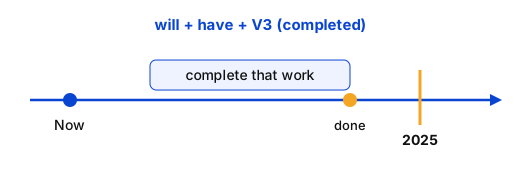
- The question begins with Will, so the verb must be have completed, not had completed.
- Had + V3 is past perfect and cannot follow will.
- Correct: Will Ramya have completed that work by 2025?
Yaad rakhein: By + future time → will have + V3.
Answer: (C) had completed
अवधारणा: भविष्य के किसी समय (by 2025) से पहले पूरा होने वाले कार्य के लिए future perfect: will + have + V3।
- वाक्य Will से शुरू है, इसलिए had completed नहीं, have completed आएगा।
- Had + V3 past perfect है, यह will के बाद नहीं आता।
- सही: Will Ramya have completed that work by 2025?
याद रखें: By + भविष्य का समय → will have + V3.
उत्तर: (C) had completed
SSC CPO Paper IEnglish ComprehensionTenses – future perfectSSC CPO Paper I 2023 · 5 Oct Shift 1
Q557.Select the most appropriate meaning of the given idiom.
Apple of discord
- APractical
- BDistant love
- CBone of contention
- DCentre of attraction
Show answer
Concept: Apple of discord means the cause of a quarrel or dispute.
- It comes from the Greek myth of the golden apple that started a quarrel among goddesses (and led to the Trojan War).
- Bone of contention has the same meaning – a subject of dispute.
- (D) 'centre of attraction' is the trap; that is closer to apple of one's eye (a dearly loved person).
Yaad rakhein: Apple of DISCORD = cause of discord (quarrel).
Answer: (C) Bone of contention
अवधारणा: Apple of discord का अर्थ है – झगड़े की जड़।
- यह यूनानी कथा के सोने के सेब से आया है जिसने देवियों में झगड़ा कराया।
- Bone of contention का भी यही अर्थ है – विवाद का विषय।
- (D) 'centre of attraction' भ्रम पैदा करता है; वह apple of one's eye (अत्यंत प्रिय) से मिलता है।
याद रखें: Discord = झगड़ा, इसलिए apple of discord = झगड़े की जड़।
उत्तर: (C) Bone of contention
SSC CPO Paper IEnglish ComprehensionIdiomsSSC CPO Paper I 2023 · 5 Oct Shift 1
Q558.Fill in the blank by selecting the meaningful and correctly spelt word from the given options.
They knew that the stock of the food was getting reduced and the fund________for that was not enough for the next week.
- Aasserted
- Ballotted
- Calerted
- Dabandoned
Show answer
Concept: Funds are allotted (assigned/set aside) for a purpose.
- The sentence says the money set aside for food was not enough – 'the fund allotted for that'.
- Asserted = stated firmly; alerted = warned; abandoned = left behind – none fits 'fund'.
- Spelling: allotted (double t).
Yaad rakhein: Fund/time/seats are 'allotted'.
Answer: (B) allotted
अवधारणा: किसी काम के लिए धन allotted (आवंटित) किया जाता है।
- वाक्य कहता है कि भोजन के लिए रखा गया fund अगले सप्ताह के लिए पर्याप्त नहीं था – 'the fund allotted for that'।
- Asserted = ज़ोर देकर कहा, alerted = सचेत किया, abandoned = छोड़ दिया – fund के साथ अर्थहीन।
- वर्तनी: allotted (दो t)।
याद रखें: Fund, समय, सीटें – सब 'allotted' होते हैं।
उत्तर: (B) allotted
SSC CPO Paper IEnglish ComprehensionFill in the blank (vocabulary)SSC CPO Paper I 2023 · 5 Oct Shift 1
Q559.Select the most appropriate option that can substitute the underlined segment in the given sentence. If there is no need to substitute it, select ‘No substitution required’ The unexpected turn beside the project put the company in a big financial crisis.
- Ain the project
- Buntil the project
- CNo substitution required
- Dbetween the project
Show answer
Concept: An unexpected development happens in a project (within it).
- 'A turn in the project' = a change within the project, which caused the crisis.
- Beside = next to (physical position) – wrong here.
- Until shows time and between needs two things.
Yaad rakhein: Turn in the case / in the story / in the project.
Answer: (A) in the project
अवधारणा: किसी project के भीतर आया अप्रत्याशित बदलाव – in the project।
- 'A turn in the project' = project में आया बदलाव, जिससे संकट आया।
- Beside = बगल में (स्थान) – यहाँ गलत।
- Until समय बताता है, between के लिए दो चीज़ें चाहिए।
याद रखें: Turn in the story/project – 'in' लगता है।
उत्तर: (A) in the project
SSC CPO Paper IEnglish ComprehensionPrepositionsSSC CPO Paper I 2023 · 5 Oct Shift 1
Q560.Select the most appropriate option that can substitute the underlined segment in the given sentence.
We all should respect each other.
- Aevery other
- Ball other
- Cone another
- Dall of us
Show answer
Concept: Traditional rule: each other is used for two persons, one another for more than two.
- The subject is We all – more than two people.
- So the reciprocal pronoun should be one another.
- Every other, all other, all of us are not reciprocal pronouns.
Yaad rakhein: Two → each other; many → one another.
Answer: (C) one another
अवधारणा: पारंपरिक नियम: दो व्यक्तियों के लिए each other, दो से अधिक के लिए one another।
- Subject We all है – दो से अधिक लोग।
- इसलिए one another आएगा।
- Every other, all other, all of us पारस्परिक सर्वनाम नहीं हैं।
याद रखें: दो → each other; अनेक → one another.
उत्तर: (C) one another
SSC CPO Paper IEnglish ComprehensionReciprocal pronounsSSC CPO Paper I 2023 · 5 Oct Shift 1

