Q581.In a certain code language, 'GRAPE' is coded as 21-54-3-48-15 and 'MELON' is coded as 39-15-36-45-42. How will 'PEACH' be coded in the same language?
एक निश्चित कूट भाषा में, 'GRAPE' को 21-54-3-48-15 के रूप में कूटबद्ध किया जाता है और 'MELON' को 39-15-36-45-42 के रूप में कूटबद्ध किया जाता है। उसी भाषा में 'PEACH' को किस प्रकार कूटबद्ध किया जाएगा?
- A48-15-3-8-27
- B48-15-3-9-24
- C49-15-3-9-27
- D45-16-3-9-24
Show answer
Concept: Each letter is coded as (its position in the alphabet).
- GRAPE: ✓
- PEACH:
- → 48-15-3-9-24
Trick: Every code is a multiple of 3 — divide by 3 to get the letter position.
Answer: (B) 48-15-3-9-24
अवधारणा: हर अक्षर का कोड (वर्णमाला में उसका स्थान)।
- GRAPE: ✓
- PEACH:
- → 48-15-3-9-24
ट्रिक: सभी कोड 3 के गुणज हैं — 3 से भाग देकर अक्षर का स्थान पाएँ।
उत्तर: (B) 48-15-3-9-24
SSC CPO Paper IGeneral Intelligence and ReasoningCoding-decodingSSC CPO Paper I 2023 · 5 Oct Shift 1
Q582.Which number will replace the question mark (?) in the following series?
6, 20, 42, ?, 110, 156
निम्नलिखित शृंखला में प्रश्न चिह्न (?) के स्थान पर कौन-सी संख्या आएगी?
6, 20, 42, ?, 110, 156
- A80
- B72
- C50
- D64
Show answer
Concept: Each term is the product of two consecutive numbers: with
- ✓
Trick: Differences also rise by 8 each: .
Answer: (B)
अवधारणा: हर पद दो क्रमागत संख्याओं का गुणनफल है: , जहाँ
- ✓
ट्रिक: अंतर भी हर बार 8 बढ़ते हैं: ।
उत्तर: (B)
SSC CPO Paper IGeneral Intelligence and ReasoningNumber seriesSSC CPO Paper I 2023 · 5 Oct Shift 1
Q583.Which of the following numbers will replace the question mark (?) in the given series? 473, 517, 561, ?, 649, 693
दी गई शृंखला में प्रश्न चिह्न (?) के स्थान पर निम्नलिखित में से कौन-सी संख्या आएगी? 473, 517, 561, ?, 649, 693
- A607
- B598
- C603
- D605
Show answer
Concept: The series increases by a constant difference.
- Check: ✓
Trick: Constant difference series: just add the common difference.
Answer: (D)
अवधारणा: श्रृंखला एक समान अंतर से बढ़ती है।
- जाँच: ✓
ट्रिक: समान अंतर वाली श्रृंखला में बस अंतर जोड़ते जाएँ।
उत्तर: (D)
SSC CPO Paper IGeneral Intelligence and ReasoningNumber seriesSSC CPO Paper I 2023 · 5 Oct Shift 1
Q584.Select the option that represents the letters which, when sequentially placed from left to right in the blanks below, will complete the letter series.
_ L _ _ K S _ T U _ S L _ _ K
उस विकल्प का चयन कीजिए जो उन अक्षरों को दर्शाता है, जिन्हें नीचे दिए गए रिक्त स्थानों में बाएँ से दाएँ क्रमिक रूप से रखने पर अक्षर शृंखला पूरी हो जाएगी।
_ L _ _ K S _ T U _ S L _ _ K
- AL U S K T U K
- BU T S K T L U
- CS T U L K T U
- DK T U L U T S
Show answer
Concept: Fill the blanks so that one block of letters repeats.
- With option (C) S T U L K T U the series becomes:
- S L T U K | S L T U K | S L T U K
- The block SLTUK repeats three times.
Trick: The series has 15 places; try a 5-letter repeating block.
Answer: (C) S T U L K T U
अवधारणा: रिक्त स्थान ऐसे भरें कि अक्षरों का एक समूह दोहराता रहे।
- विकल्प (C) S T U L K T U भरने पर:
- S L T U K | S L T U K | S L T U K
- समूह SLTUK तीन बार दोहराता है।
ट्रिक: कुल 15 स्थान हैं; 5 अक्षरों का दोहराता समूह आज़माएँ।
उत्तर: (C) S T U L K T U
SSC CPO Paper IGeneral Intelligence and ReasoningLetter series (missing letters)SSC CPO Paper I 2023 · 5 Oct Shift 1
Q585.Select the option that represents the correct order of the given words as they would appear in an English dictionary?
1.Flint
2.Flec
3.Flaw
4.Fleet
5.Flight
उस विकल्प का चयन कीजिए जो दिए गए शब्दों के उस सही क्रम को दर्शाता है, जिसमें वे अंग्रेज़ी शब्दकोश में आते हैं?
1.Flint
2.Flec
3.Flaw
4.Fleet
5.Flight
- A3, 5, 4, 2, 1
- B2, 3, 4, 5, 1
- C3, 2, 4, 5, 1
- D3, 4, 2, 5, 1
Show answer
Concept: Compare words letter by letter from the left.
- All begin with FL. Third letter: Flaw (a) comes first; then Flec, Fleet (e); then Flight, Flint (i).
- Flec vs Fleet: 4th letter c before e → Flec, Fleet.
- Flight vs Flint: 4th letter g before n → Flight, Flint.
- Order: Flaw, Flec, Fleet, Flight, Flint → 3, 2, 4, 5, 1.
Trick: Group by the first differing letter, then sort inside each group.
Answer: (C) 3, 2, 4, 5, 1
अवधारणा: शब्दों की बाएँ से अक्षर-दर-अक्षर तुलना करें।
- सभी FL से शुरू। तीसरा अक्षर: Flaw (a) पहले; फिर Flec, Fleet (e); फिर Flight, Flint (i)।
- Flec बनाम Fleet: चौथा अक्षर c, e से पहले।
- Flight बनाम Flint: g, n से पहले।
- क्रम: 3, 2, 4, 5, 1।
ट्रिक: पहले अलग अक्षर से समूह बनाएँ, फिर हर समूह के अंदर क्रम लगाएँ।
उत्तर: (C) 3, 2, 4, 5, 1
SSC CPO Paper IGeneral Intelligence and ReasoningDictionary orderSSC CPO Paper I 2023 · 5 Oct Shift 1
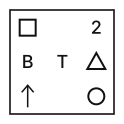
Q586.Which figure from the given options would replace the question mark (?) if the following figure series were to be continued?
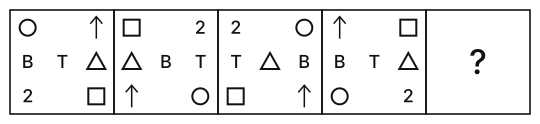
यदि निम्नलिखित आकृति श्रृंखला को जारी रखा जाए, तो दिए गए विकल्पों में से कौन-सी आकृति प्रश्न चिह्न (?) का स्थान लेगी?
- A
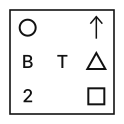
- B
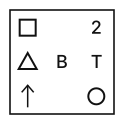
- C
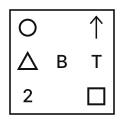
- D
Show answer
Concept: Track the middle row and the four corner symbols separately.
- Middle row: BTΔ → ΔBT → TΔB → BTΔ → next ΔBT (each step the last symbol moves to the front).
- Corners: Fig 1 → 2 and Fig 3 → 4 the corner symbols swap diagonally (TL ↔ BR, TR ↔ BL).
- Fig 2 → 3 the corners move one place anticlockwise, so Fig 4 → 5 also moves one place anticlockwise.
- Fig 4 (↑, □, ○, 2 at TL, TR, BL, BR) gives □ TL, 2 TR, ↑ BL, ○ BR — option (B).
Trick: Here Fig 5 must be the same as Fig 2, since the moves repeat in a cycle.
Answer: (B) the second figure
अवधारणा: बीच की पंक्ति और चारों कोनों के चिह्नों को अलग-अलग देखें।
- बीच की पंक्ति: BTΔ → ΔBT → TΔB → BTΔ → अगला ΔBT (हर बार आखिरी चिह्न आगे आता है)।
- कोने: चित्र 1 → 2 और 3 → 4 में चिह्न विकर्ण पर बदलते हैं (ऊपर-बाएँ ↔ नीचे-दाएँ, ऊपर-दाएँ ↔ नीचे-बाएँ)।
- चित्र 2 → 3 में कोने एक स्थान वामावर्त खिसकते हैं, अतः 4 → 5 में भी।
- चित्र 4 से: □ ऊपर-बाएँ, 2 ऊपर-दाएँ, ↑ नीचे-बाएँ, ○ नीचे-दाएँ — विकल्प (B)।
ट्रिक: यहाँ चित्र 5 चित्र 2 जैसा ही बनता है, क्योंकि चालें चक्र में दोहराती हैं।
उत्तर: (B) दूसरी आकृति
SSC CPO Paper IGeneral Intelligence and ReasoningFigure seriesSSC CPO Paper I 2023 · 5 Oct Shift 1
Q587.Select the set in which the numbers are related in the same way as are the numbers of the following set.
(NOTE : Operations should be performed on the whole numbers, without breaking
down the numbers into its constituent digits. E.g. 13 – Operations on 13 such as
adding /subtracting /multiplying etc. to 13 can be performed. Breaking down 13 into 1 and 3 and then performing mathematical operations on 1 and 3 is NOT allowed)
(2, 5, 341)
(1, 7, 510)
उस समुच्चय का चयन कीजिए जिसमें संख्याएँ उसी प्रकार संबंधित हैं, जिस प्रकार निम्नलिखित समुच्चय की संख्याएँ संबंधित हैं।
(ध्यान दें: संख्याओं को उसके संघटक अंकों में तोड़े बिना, पूर्ण संख्याओं पर संक्रियाएँ की जानी चाहिए। उदाहरण के लिए 13 – 13 पर संक्रियाएँ, जैसे 13 में जोड़ना/घटाना/गुणा करना आदि की जा सकती हैं। 13 को 1 और 3 में तोड़ना और फिर 1 और 3 पर गणितीय संक्रियाएँ करना वर्जित है।)
(2, 5, 341)
(1, 7, 510)
- A(8,2,140)
- B(1,2,25)
- C(2,5,56)
- D(3,6,64)
Show answer
Concept: Third number .
- : ✓
- : ✓
- (B) : ✓
- (A) , (C) , (D) — do not match.
Trick: Numbers like 341, 510 sit just below cubes 343, 512.
Answer: (B)
अवधारणा: तीसरी संख्या ।
- : ✓
- : ✓
- (B) : ✓
- (A) , (C) , (D) — मेल नहीं।
ट्रिक: 341, 510 घनों 343, 512 के ठीक नीचे हैं — घन सोचें।
उत्तर: (B)
SSC CPO Paper IGeneral Intelligence and ReasoningNumber set relationSSC CPO Paper I 2023 · 5 Oct Shift 1
Q588.Six characters A, B, C, 1, 2 and 3 are written on different faces of a dice. Two positions of this dice are shown in the figure. Find the character on the face opposite to C.
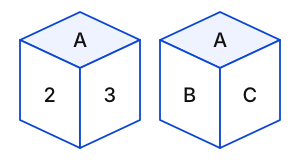
एक पासे के विभिन्न फलकों पर छह अक्षर/अंक A, B, C, 1, 2 और 3 लिखे गए हैं। आकृति में इस पासे की दो स्थितियाँ दर्शाई गई हैं। C के विपरीत फलक पर अंकित अक्षर/अंक ज्ञात कीजिए।
- A2
- B1
- C3
- DB
Show answer
Concept: When the same face (A) is on top in both positions, the four side faces go around A in one fixed order; faces two apart in that order are opposite.
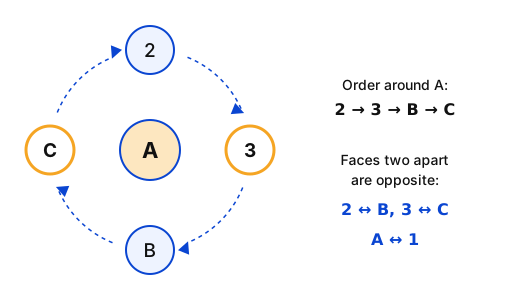
- Both positions show A on top, so 2, 3, B, C all touch A and 1 is opposite A.
- Going round A: 2 then 3 (first die) and B then C (second die) in the same direction.
- So the cycle is 2 → 3 → B → C; hence 2 ↔ B and 3 ↔ C.
Trick: Common face in the same place → the other faces read in the same rotation.
Answer: (C)
अवधारणा: दोनों स्थितियों में A ऊपर है, अतः चारों पार्श्व फलक A के चारों ओर एक निश्चित क्रम में हैं; क्रम में दो स्थान दूर वाले फलक विपरीत होते हैं।
- A ऊपर है, इसलिए 2, 3, B, C सब A को छूते हैं और 1, A के विपरीत।
- A के चारों ओर एक ही दिशा में: 2 फिर 3 (पहला पासा) और B फिर C (दूसरा पासा)।
- चक्र 2 → 3 → B → C; अतः 2 ↔ B और 3 ↔ C।
ट्रिक: उभयनिष्ठ फलक एक ही स्थान पर हो तो बाकी फलक एक ही घुमाव में पढ़ें।
उत्तर: (C)
SSC CPO Paper IGeneral Intelligence and ReasoningDice (opposite faces)SSC CPO Paper I 2023 · 5 Oct Shift 1
Q589.Given below are two statements and two conclusions. Take the statements to be true even if they are at variance with commonly known facts, and decide whether the
conclusion(s) follow(s) the given statements.
Statements:
Some dates are hazelnuts.
All hazelnuts are walnuts.
Conclusions:
I. Some dates are walnuts.
II. Some walnuts are hazelnuts.
नीचे दो कथन और दो निष्कर्ष दिए गए हैं। कथनों को सत्य मानते हुए विचार कीजिए, भले ही वे सामान्य रूप से ज्ञात तथ्यों से भिन्न प्रतीत होते हों, और निर्णय कीजिए कि कौन-सा/से निष्कर्ष दिए गए कथनों का
अनुसरण करता है/करते हैं।
कथन:
कुछ खजूर, हेज़लनट हैं।
सभी हेज़लनट, अखरोट हैं।
निष्कर्ष:
I. कुछ खजूर, अखरोट हैं।
II. कुछ अखरोट, हेज़लनट हैं।
- ABoth the conclusions followदोनों निष्कर्ष अनुसरण करते हैं
- BOnly conclusion I followsकेवल निष्कर्ष I अनुसरण करता है
- CNeither conclusion I nor II followsन तो निष्कर्ष I और न ही II अनुसरण करता है
- DOnly conclusion II followsकेवल निष्कर्ष II अनुसरण करता है
Show answer
Concept: Draw the least-overlap Venn diagram and check each conclusion.
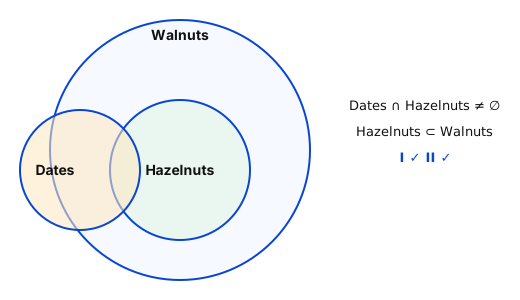
- Some dates are hazelnuts and all hazelnuts are walnuts → the dates that are hazelnuts are also walnuts.
- I: Some dates are walnuts → follows.
- II: All hazelnuts are walnuts → some walnuts are hazelnuts (conversion) → follows.
Yaad rakhein: 'Some + All' gives 'Some'; 'All A are B' always gives 'Some B are A'.
Answer: (A) Both the conclusions follow
अवधारणा: न्यूनतम ओवरलैप वाला वेन आरेख बनाकर हर निष्कर्ष जाँचें।
- कुछ dates hazelnuts हैं और सभी hazelnuts walnuts हैं → वे dates walnuts भी हैं।
- I: कुछ dates walnuts हैं → अनुसरण करता है।
- II: सभी hazelnuts walnuts हैं → कुछ walnuts hazelnuts हैं (रूपांतरण) → अनुसरण करता है।
याद रखें: 'कुछ + सभी' = 'कुछ'; 'सभी A, B हैं' से हमेशा 'कुछ B, A हैं'।
उत्तर: (A) दोनों निष्कर्ष अनुसरण करते हैं
SSC CPO Paper IGeneral Intelligence and ReasoningSyllogismSSC CPO Paper I 2023 · 5 Oct Shift 1
Q590.Pooja drives 4 km towards east from point A. She takes a right turn and drives 2 km. Then she takes a left turn and drives 3 km. Again, she takes a left turn and drives 2 km to reach point B. How far and towards which direction should she drive now in order to reach point A again?
पूजा बिंदु A से पूर्व की ओर 4 km गाड़ी चलाती है। वह दाएँ मुड़ती है और 2 km गाड़ी चलाती है। फिर वह बाएँ मुड़ती है और 3 km गाड़ी चलाती है। वह फिर से बाएँ मुड़ती है और बिंदु B पर पहुँचने के लिए 2 km गाड़ी चलाती है। पुनः बिंदु A पर पहुँचने के लिए उसे अब कितनी दूर और किस दिशा में गाड़ी चलानी चाहिए?
- A7 km towards westपश्चिम की ओर 7 km
- B4 km towards southदक्षिण की ओर 4 km
- C4 km towards eastपूर्व की ओर 4 km
- D5 km towards northउत्तर की ओर 5 km
Show answer
Concept: Draw the path step by step; north-south moves that cancel do not change the final distance.
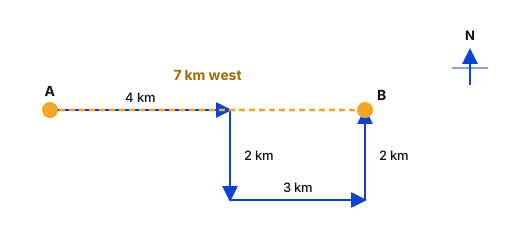
- From A: 4 km east, then right (south) 2 km.
- Left from south = east: 3 km east.
- Left from east = north: 2 km north — back on A's line.
- B is east of A, so she must drive 7 km west.
Trick: The 2 km south and 2 km north cancel; add only the east moves.
Answer: (A) 7 km towards west
अवधारणा: रास्ता चरण-दर-चरण बनाएँ; बराबर उत्तर-दक्षिण चालें आपस में कट जाती हैं।
- A से 4 km पूर्व, फिर दाएँ (दक्षिण) 2 km।
- दक्षिण से बाएँ = पूर्व: 3 km पूर्व।
- पूर्व से बाएँ = उत्तर: 2 km उत्तर — फिर A की रेखा पर।
- B, A से पूर्व में; अतः 7 km पश्चिम जाना होगा।
ट्रिक: 2 km दक्षिण और 2 km उत्तर कट जाते हैं; केवल पूर्व की दूरियाँ जोड़ें।
उत्तर: (A) 7 km पश्चिम की ओर
SSC CPO Paper IGeneral Intelligence and ReasoningDirection and distanceSSC CPO Paper I 2023 · 5 Oct Shift 1
Q591.In this question, three statements are given, followed by two conclusions numbered I and II. Assuming the statements to be true, even if they seem to be at variance with commonly known facts, decide which of the conclusions logically follows/follow from the statements.
Statements:
I. All teas are coffees.
II. All coffees are beverages.
III. Some teas are drinks
Conclusions:
I. All teas are beverages.
II. No drink is a coffee.
इस प्रश्न में तीन कथन दिए गए हैं, जिनके बाद I और II क्रमांकित दो निष्कर्ष दिए गए हैं। कथनों को सत्य मानते हुए, भले ही वे सामान्य रूप से ज्ञात तथ्यों से भिन्न प्रतीत होते हों, निर्णय कीजिए कि कौन-सा/से निष्कर्ष तार्किक रूप से कथनों का अनुसरण करता है/करते हैं।
कथन:
I. सभी चाय, कॉफ़ी हैं।
II. सभी कॉफ़ी, पेय पदार्थ हैं।
III. कुछ चाय, ड्रिंक हैं
निष्कर्ष:
I. सभी चाय, पेय पदार्थ हैं।
II. कोई ड्रिंक, कॉफ़ी नहीं है।
- AOnly conclusion I followsकेवल निष्कर्ष I अनुसरण करता है
- BOnly conclusion II followsकेवल निष्कर्ष II अनुसरण करता है
- CBoth conclusions I and II followनिष्कर्ष I और II दोनों अनुसरण करते हैं
- DNeither conclusion I nor II followsन तो निष्कर्ष I और न ही II अनुसरण करता है
Show answer
Concept: Combine 'All' statements in a chain and test each conclusion with a Venn diagram.
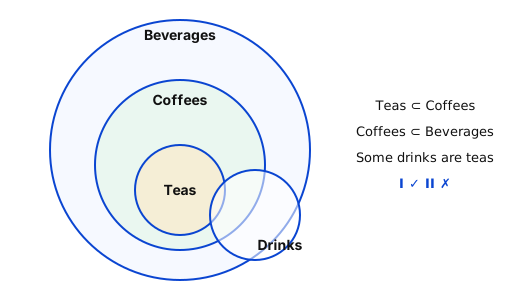
- All teas ⊂ coffees and all coffees ⊂ beverages → all teas are beverages: I follows.
- Some teas are drinks, and every tea is a coffee → some drinks are coffees.
- So 'No drink is a coffee' is false: II does not follow.
Yaad rakhein: 'All + All' gives 'All'; a 'No' conclusion fails whenever an overlap is forced.
Answer: (A) Only conclusion I follows
अवधारणा: 'सभी' वाले कथनों को श्रृंखला में जोड़ें और वेन आरेख से हर निष्कर्ष जाँचें।
- सभी teas ⊂ coffees ⊂ beverages → सभी teas beverages हैं: I अनुसरण करता है।
- कुछ teas drinks हैं और हर tea एक coffee है → कुछ drinks coffees हैं।
- अतः 'कोई drink coffee नहीं' गलत: II अनुसरण नहीं करता।
याद रखें: 'सभी + सभी' = 'सभी'; जहाँ ओवरलैप निश्चित हो वहाँ 'कोई नहीं' वाला निष्कर्ष गलत।
उत्तर: (A) केवल निष्कर्ष I अनुसरण करता है
SSC CPO Paper IGeneral Intelligence and ReasoningSyllogismSSC CPO Paper I 2023 · 5 Oct Shift 1
Q592.Given below are two statements and two conclusions. Take the statements to be true even if they are at variance with commonly known facts, and decide whether the
conclusion(s) follow(s) the given statements.
Statements:
All irons are coppers.
All coppers are aluminiums.
Conclusions:
I. Some aluminiums are irons
II. Some aluminiums are coppers
नीचे दो कथन और दो निष्कर्ष दिए गए हैं। कथनों को सत्य मानते हुए विचार कीजिए, भले ही वे सामान्य रूप से ज्ञात तथ्यों से भिन्न प्रतीत होते हों, और निर्णय कीजिए कि कौन-सा/से निष्कर्ष दिए गए कथनों का
अनुसरण करता है/करते हैं।
कथन:
सभी लोहे, ताँबे हैं।
सभी ताँबे, एल्युमीनियम हैं।
निष्कर्ष:
I. कुछ एल्युमीनियम, लोहे हैं
II. कुछ एल्युमीनियम, ताँबे हैं
- AOnly conclusion II followsकेवल निष्कर्ष II अनुसरण करता है
- BNeither conclusion I nor II followsन तो निष्कर्ष I और न ही II अनुसरण करता है
- COnly conclusion I followsकेवल निष्कर्ष I अनुसरण करता है
- DBoth the conclusions followदोनों निष्कर्ष अनुसरण करते हैं
Show answer
Concept: Chain the 'All' statements: irons ⊂ coppers ⊂ aluminiums.
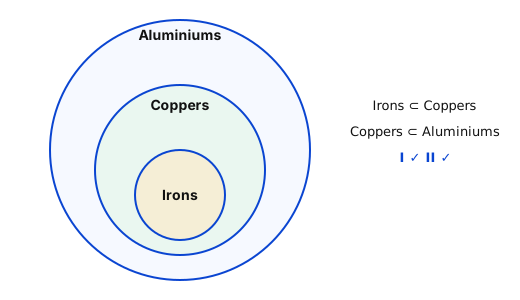
- All irons are aluminiums, so some aluminiums are irons: I follows.
- All coppers are aluminiums, so some aluminiums are coppers: II follows.
Yaad rakhein: 'All A are B' ⇒ 'Some B are A' is always valid.
Answer: (D) Both the conclusions follow
अवधारणा: 'सभी' वाले कथन जोड़ें: irons ⊂ coppers ⊂ aluminiums।
- सभी irons aluminiums हैं, अतः कुछ aluminiums irons हैं: I अनुसरण करता है।
- सभी coppers aluminiums हैं, अतः कुछ aluminiums coppers हैं: II अनुसरण करता है।
याद रखें: 'सभी A, B हैं' ⇒ 'कुछ B, A हैं' हमेशा सही।
उत्तर: (D) दोनों निष्कर्ष अनुसरण करते हैं
SSC CPO Paper IGeneral Intelligence and ReasoningSyllogismSSC CPO Paper I 2023 · 5 Oct Shift 1
Q593.Select the correct option that indicates the arrangement of the given words in the
order in which they appear in an English dictionary.
1. Desperate
2. Desolate
3. Destruction
4. Desire
5. Descend
6. Destination
उस सही विकल्प का चयन कीजिए जो दिए गए शब्दों की उस व्यवस्था को दर्शाता है, जिस
क्रम में वे अंग्रेज़ी शब्दकोश में आते हैं।
1. Desperate
2. Desolate
3. Destruction
4. Desire
5. Descend
6. Destination
- A5, 4, 2, 1, 3, 6
- B5, 4, 1, 6, 2, 3
- C5, 4, 2, 1, 6, 3
- D5, 4, 1, 2, 6, 3
Show answer
Concept: All words start with DES; compare the 4th letter, then the next ones.
- 4th letters: Descend (c), Desire (i), Desolate (o), Desperate (p), Destination/Destruction (t).
- Destination vs Destruction: 5th letter i before r.
- Order: Descend, Desire, Desolate, Desperate, Destination, Destruction → 5, 4, 2, 1, 6, 3.
Trick: Skip the common prefix and sort by the first differing letter.
Answer: (C) 5, 4, 2, 1, 6, 3
अवधारणा: सभी शब्द DES से शुरू; चौथा अक्षर, फिर आगे के अक्षर देखें।
- चौथा अक्षर: Descend (c), Desire (i), Desolate (o), Desperate (p), Destination/Destruction (t)।
- Destination बनाम Destruction: पाँचवाँ अक्षर i, r से पहले।
- क्रम: 5, 4, 2, 1, 6, 3।
ट्रिक: समान आरंभ छोड़कर पहले अलग अक्षर से क्रम लगाएँ।
उत्तर: (C) 5, 4, 2, 1, 6, 3
SSC CPO Paper IGeneral Intelligence and ReasoningDictionary orderSSC CPO Paper I 2023 · 5 Oct Shift 1
Q594.In a certain code language, 'YATCH' is coded as 67 and 'DINE' is coded as 40. How will 'MANGO' be coded in that language?
एक निश्चित कूट भाषा में, 'YATCH' को 67 के रूप में कूटबद्ध किया जाता है और 'DINE' को 40 के रूप में कूटबद्ध किया जाता है। उसी भाषा में 'MANGO' को किस प्रकार कूटबद्ध किया जाएगा?
- A57
- B60
- C62
- D65
Show answer
Concept: Code sum of letter positions (number of letters).
- YATCH: ; ✓
- DINE: ; ✓
- MANGO: ;
Trick: Find the place-value sum first; the leftover (, ) is letters.
Answer: (B)
अवधारणा: कोड अक्षरों के स्थानों का योग (अक्षरों की संख्या)।
- YATCH: ✓
- DINE: ✓
- MANGO: ;
ट्रिक: पहले स्थानीय मान का योग निकालें; बचा अंतर (, ) अक्षर।
उत्तर: (B)
SSC CPO Paper IGeneral Intelligence and ReasoningCoding-decodingSSC CPO Paper I 2023 · 5 Oct Shift 1
Q595.Which of the given figures when placed in the 5
th position would continue the series that is established by the first four figures?
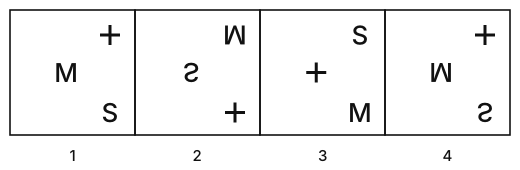
दी गई आकृतियों में से कौन-सी आकृति 5
वें स्थान पर रखे जाने पर पहली चार आकृतियों द्वारा स्थापित श्रृंखला को जारी रखेगी?
- A
- B
- C
- D
Show answer
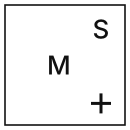
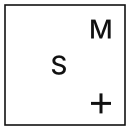
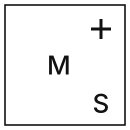
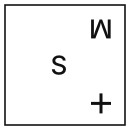
Concept: Compare alternate figures: letters are upright in figures 1, 3, 5 and inverted in figures 2, 4; the three symbols move one level down each time (bottom goes to the top).
- Fig 1: + top, M middle, S bottom. Fig 3: S top, + middle, M bottom — each moved down one level.
- So Fig 5: M top, S middle, + bottom, with M and S upright.
- Option (B) matches; (C) repeats Fig 1, (A) has S and M in wrong places, (D) shows M inverted.
Trick: With two interleaved series, compare figure 5 with figure 3 (and figure 1), not with figure 4.
Answer: (B) the second figure
अवधारणा: एकांतर आकृतियों की तुलना करें: आकृति 1, 3, 5 में अक्षर सीधे और 2, 4 में उल्टे हैं; तीनों चिह्न हर बार एक स्तर नीचे खिसकते हैं (सबसे नीचे वाला ऊपर)।
- आकृति 1: + ऊपर, M बीच, S नीचे। आकृति 3: S ऊपर, + बीच, M नीचे — हर चिह्न एक स्तर नीचे।
- अतः आकृति 5: M ऊपर, S बीच, + नीचे, M और S सीधे।
- विकल्प (B) मेल खाता है; (C) आकृति 1 जैसा, (A) में S-M गलत जगह, (D) में M उल्टा।
ट्रिक: दो मिली-जुली श्रृंखलाएँ हों तो आकृति 5 की तुलना आकृति 3 (और 1) से करें, 4 से नहीं।
उत्तर: (B) दूसरी आकृति
SSC CPO Paper IGeneral Intelligence and ReasoningFigure seriesSSC CPO Paper I 2023 · 5 Oct Shift 1
Q596.If ‘+’ means ‘−’, ‘−’ means ‘×’, ‘×’ means ‘÷’ and ‘÷’ means ‘+’, what will come in place of ‘?’ in the following equation?
45 - 3 ÷ 144 × 12 + 38 = ?
यदि ‘+’ का अर्थ ‘−’, ‘−’ का अर्थ ‘×’, ‘×’ का अर्थ ‘÷’ और ‘÷’ का अर्थ ‘+’ है, तो निम्नलिखित समीकरण में ‘?’ के स्थान पर क्या आएगा?
45 - 3 ÷ 144 × 12 + 38 = ?
- A123
- B109
- C91
- D95
Show answer
Concept: Interchange signs as given (− → ×, ÷ → +, × → ÷, + → −) and apply BODMAS.
- becomes .
Trick: Rewrite first, calculate later — most mistakes come from mixing old and new signs.
Answer: (B)
अवधारणा: दिए अनुसार चिह्न बदलें (− → ×, ÷ → +, × → ÷, + → −) और BODMAS लगाएँ।
- बनता है ।
ट्रिक: पहले नया समीकरण लिखें, फिर गणना — पुराने-नए चिह्न मिलाने से गलती होती है।
उत्तर: (B)
SSC CPO Paper IGeneral Intelligence and ReasoningMathematical operationsSSC CPO Paper I 2023 · 5 Oct Shift 1
Q597.Three of the following letter-clusters are alike in some manner and one is different. Select the one that is different.
निम्नलिखित चार अक्षर-समूहों में से तीन किसी प्रकार से एक समान हैं और एक उनसे भिन्न है। उस असंगत अक्षर-समूह का चयन कीजिए।
- AOKNL
- BJQAZ
- CFBEC
- DHDGE
Show answer
Concept: Check the gaps between consecutive letters in each cluster.
- OKNL: → .
- FBEC: ; HDGE: .
- JQAZ: , then Q to A, A to Z — a completely different pattern.
Trick: Compute only the first gap: three options give , the odd one does not.
Answer: (B) JQAZ
अवधारणा: हर समूह में क्रमागत अक्षरों का अंतर देखें।
- OKNL: ।
- FBEC और HDGE: भी ।
- JQAZ: … पूरी तरह अलग पैटर्न।
ट्रिक: सिर्फ़ पहला अंतर निकालें: तीन में है, विषम में नहीं।
उत्तर: (B) JQAZ
SSC CPO Paper IGeneral Intelligence and ReasoningOdd one out (letter clusters)SSC CPO Paper I 2023 · 5 Oct Shift 1
Q598.In a certain code language, ‘STORY’ is coded as ‘97’ and ‘PULL’ is coded as ‘61’. How will ‘INCOME’ be coded in that language?
एक निश्चित कूट भाषा में, ‘STORY’ को ‘97’ के रूप में कूटबद्ध किया जाता है और ‘PULL’ को ‘61’ के रूप में कूटबद्ध किया जाता है। उसी भाषा में ‘INCOME’ को किस प्रकार कूटबद्ध किया जाएगा?
- A54
- B49
- C59
- D47
Show answer
Concept: Code sum of the alphabetical positions of the letters.
- STORY: ✓
- PULL: ✓
- INCOME:
Trick: Remember positions with EJOTY: .
Answer: (C)
अवधारणा: कोड अक्षरों के वर्णमाला स्थानों का योग।
- STORY: ✓
- PULL: ✓
- INCOME:
ट्रिक: EJOTY से स्थान याद रखें: ।
उत्तर: (C)
SSC CPO Paper IGeneral Intelligence and ReasoningCoding-decodingSSC CPO Paper I 2023 · 5 Oct Shift 1
Q599.Which of the following numbers will replace the question mark (?) in the given series 32, 32, 32, 34, ?, 106, 530
दी गई शृंखला में प्रश्न चिह्न (?) के स्थान पर निम्नलिखित में से कौन-सी संख्या आएगी? 32, 32, 32, 34, ?, 106, 530
- A96
- B38
- C102
- D34
Show answer
Concept: Operations alternate: .
- ✓
Trick: A sudden jump (106 to 530) hints at multiplication; work backwards: .
Answer: (C)
अवधारणा: संक्रियाएँ बारी-बारी: ।
- ✓
ट्रिक: अचानक बड़ी छलाँग (106 से 530) गुणा का संकेत; उल्टा चलें: ।
उत्तर: (C)
SSC CPO Paper IGeneral Intelligence and ReasoningNumber seriesSSC CPO Paper I 2023 · 5 Oct Shift 1
Q600.Which two signs should be interchanged to make the given equation correct?
729 × 9 – (56 – 6) × 5 ÷ 2 + 152 × 19 = 69
दिए गए समीकरण को सही बनाने के लिए किन दो चिह्नों को आपस में बदलना चाहिए?
729 × 9 – (56 – 6) × 5 ÷ 2 + 152 × 19 = 69
- A× and +× और +
- B× and ÷× और ÷
- C÷ and –÷ और –
- D+ and –+ और –
Show answer
Concept: Interchange the two signs of each option and evaluate with BODMAS.
- Interchange × and ÷:
- ✓
Trick: Big products like cannot give 69 — so × must become ÷.
Answer: (B) × and ÷
अवधारणा: हर विकल्प के दोनों चिह्न आपस में बदलें और BODMAS से जाँचें।
- × और ÷ बदलने पर:
- ✓
ट्रिक: जैसा बड़ा गुणनफल 69 नहीं दे सकता — अतः × को ÷ बनना होगा।
उत्तर: (B) × और ÷
SSC CPO Paper IGeneral Intelligence and ReasoningInterchanging signsSSC CPO Paper I 2023 · 5 Oct Shift 1

