SSC CPO Paper I · 6,600 questions

SSC CPO Paper I 2020, 2022, 2023, 2024 PYQs

Real previous year questions, subject-wise. Try the question, then open the answer and the explanation in Hindi & English – free, no login.

Courses – airGurukul

1,650 questions in General Intelligence and Reasoning.

Q1041.
Select the combination of letters that when sequentially placed in the blanks of the given series, will complete the series.
_ EF _ E _ EE _ _ EF
अक्षरों के उस संयोजन का चयन कीजिए जिसे दी गई श्रृंखला के रिक्त स्थानों में क्रमिक रूप से रखने पर श्रृंखला पूरी हो जाएगी।
_ EF _ E _ EE _ _ EF
  1. AFEFEF
  2. BFEFFE
  3. CEEFEF
  4. DEEFFE
Show answer

Concept: Find a short block that repeats through the series.

  1. The series has 12 places; try the block ‘EEF’ (3 letters).
  2. Fill blanks with E, E, F, F, E: E EF E E F EE F E EF.
  3. Result: EEF EEF EEF EEF – the block repeats four times.

Trick: 12 places → test blocks of 3, 4 or 6 letters.

Answer: (D) EEFFE

अवधारणा: श्रृंखला में दोहराने वाला छोटा block खोजें।

  1. श्रृंखला में 12 स्थान हैं; block ‘EEF’ (3 अक्षर) आज़माएँ।
  2. रिक्त स्थान E, E, F, F, E से भरें: E EF E E F EE F E EF।
  3. परिणाम: EEF EEF EEF EEF – block चार बार दोहराता है।

ट्रिक: 12 स्थान → 3, 4 या 6 अक्षरों के block जाँचें।

उत्तर: (D) EEFFE
SSC CPO Paper IGeneral Intelligence and ReasoningLetter seriesSSC CPO Paper I 2022 · 11 Nov Shift 1
Q1042.
Two statements are given followed by three conclusions numbered I, II and III.
Assuming the statements to be true, even if they seem to be at variance with
commonly known facts, decide which of the conclusions logically follow(s) from the statements.
Statements:
Some mobiles are tablets.
All tablets are laptops.
Conclusions:
I. Some laptops are mobiles.
II. Some mobiles are laptops.
III. All mobiles are laptops.
दो कथन दिए गए हैं, जिनके बाद तीन निष्कर्ष I, II और III दिए गए हैं।
कथनों को सत्य मानते हुए, भले ही वे सामान्य रूप से ज्ञात तथ्यों से भिन्न प्रतीत होते हों, निर्णय कीजिए कि कौन-सा/से निष्कर्ष तार्किक रूप से कथनों का अनुसरण करता/करते है/हैं।
कथन:
कुछ मोबाइल, टैबलेट हैं।
सभी टैबलेट, लैपटॉप हैं।
निष्कर्ष:
I. कुछ लैपटॉप, मोबाइल हैं।
II. कुछ मोबाइल, लैपटॉप हैं।
III. सभी मोबाइल, लैपटॉप हैं।
  1. AOnly conclusions I and II followकेवल निष्कर्ष I और II अनुसरण करते हैं
  2. BOnly conclusions I and III followकेवल निष्कर्ष I और III अनुसरण करते हैं
  3. CAll of the conclusions followसभी निष्कर्ष अनुसरण करते हैं
  4. DOnly conclusions II and III followकेवल निष्कर्ष II और III अनुसरण करते हैं
Show answer

Concept: ‘Some A are B’ + ‘All B are C’ = ‘Some A are C’; conversion of ‘Some’ is ‘Some’.

  1. Some mobiles are tablets + all tablets are laptops → some mobiles are laptops. II follows.
  2. Converting II: some laptops are mobiles. I follows.
  3. ‘All mobiles are laptops’ is not certain – mobiles outside tablets may not be laptops. III does not follow.

Yaad rakhein: Some + All = Some (in that order). Never upgrade ‘Some’ to ‘All’.

Answer: (A) Only conclusions I and II follow

अवधारणा: ‘Some A are B’ + ‘All B are C’ = ‘Some A are C’; ‘Some’ का रूपांतरण ‘Some’ होता है।

  1. Some mobiles are tablets + all tablets are laptops → some mobiles are laptops। II सही।
  2. II को उलटने पर: some laptops are mobiles। I सही।
  3. ‘All mobiles are laptops’ निश्चित नहीं – tablets से बाहर के mobiles का laptops होना ज़रूरी नहीं। III गलत।

याद रखें: Some + All = Some (इसी क्रम में)। ‘Some’ को कभी ‘All’ न बनाएँ।

उत्तर: (A) केवल निष्कर्ष I और II अनुसरण करते हैं

SSC CPO Paper IGeneral Intelligence and ReasoningSyllogismSSC CPO Paper I 2022 · 11 Nov Shift 1
Q1043.
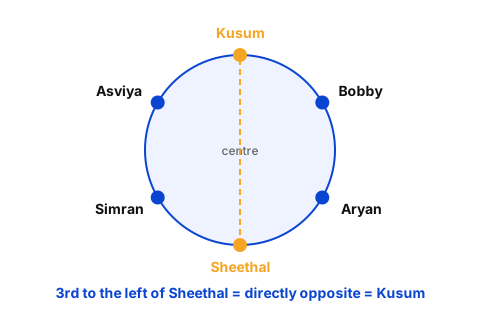
Six students are sitting around a circular table facing the centre. Bobby is an
immediate neighbour of both Aryan and Kusum. Simran is an immediate neighbour of both Asviya and Sheethal. Kusum is an immediate neighbour of both Bobby and
Asviya. Sheethal is an immediate neighbour of both Aryan and Simran. Who is sitting third to the left of Sheethal?
छह विद्यार्थी एक वृत्ताकार मेज़ के चारों ओर केंद्र की ओर मुख करके बैठे हैं। बॉबी, आर्यन और कुसुम दोनों का
निकटतम पड़ोसी है। सिमरन, अस्विया और शीतल दोनों की निकटतम पड़ोसी है। कुसुम, बॉबी और
अस्विया दोनों की निकटतम पड़ोसी है। शीतल, आर्यन और सिमरन दोनों की निकटतम पड़ोसी है। शीतल के बाएँ से तीसरे स्थान पर कौन बैठा है?
  1. ABobbyबॉबी
  2. BAsviyaअस्विया
  3. CAryanआर्यन
  4. DKusumकुसुम
Show answer

Concept: Join the ‘immediate neighbour’ clues into one chain around the table.

  1. Aryan – Bobby – Kusum (Bobby between Aryan and Kusum); Kusum – Asviya (Kusum between Bobby and Asviya).
  2. Asviya – Simran – Sheethal (Simran between them); Sheethal – Aryan closes the circle.
  3. Circle: Aryan, Bobby, Kusum, Asviya, Simran, Sheethal. With 6 people, the 3rd person to the left of anyone is the one directly opposite: opposite Sheethal is Kusum.

Trick: In a circle of 6, ‘3rd to the left’ = ‘3rd to the right’ = directly opposite – direction does not matter.

Answer: (D) Kusum

अवधारणा: ‘निकटतम पड़ोसी’ वाले सभी संकेतों को जोड़कर मेज़ के चारों ओर एक श्रृंखला बनाइए।

  1. Aryan – Bobby – Kusum (Bobby, Aryan और Kusum के बीच); Kusum – Asviya (Kusum, Bobby और Asviya के बीच)।
  2. Asviya – Simran – Sheethal (Simran बीच में); Sheethal – Aryan से वृत्त पूरा।
  3. वृत्त: Aryan, Bobby, Kusum, Asviya, Simran, Sheethal। 6 लोगों में किसी के बाएँ से तीसरा व्यक्ति ठीक सामने वाला होता है: Sheethal के सामने Kusum।

ट्रिक: 6 लोगों के वृत्त में ‘बाएँ से तीसरा’ = ‘दाएँ से तीसरा’ = ठीक सामने – दिशा मायने नहीं रखती।

उत्तर: (D) Kusum

SSC CPO Paper IGeneral Intelligence and ReasoningCircular seating arrangementSSC CPO Paper I 2022 · 11 Nov Shift 1
Q1044.
Select the option that indicates the correct arrangement of the given words in a logical and meaningful order.
1. Finger
2. Hand
3. Arm
4. Nail
5. Body
उस विकल्प का चयन कीजिए जो दिए गए शब्दों की तार्किक और सार्थक क्रम में सही व्यवस्था को दर्शाता है।
1. उंगली
2. हाथ
3. बाँह
4. नाखून
5. शरीर
  1. A4,1,2,3,5
  2. B1,2,3,5,4
  3. C1,2,3,4,5
  4. D5,4,3,2,1
Show answer

Concept: Arrange the parts from the smallest to the whole body.

  1. Nail is part of a finger; the finger is part of the hand.
  2. The hand is part of the arm; the arm is part of the body.
  3. Order: Nail (4) → Finger (1) → Hand (2) → Arm (3) → Body (5).

Trick: Part → bigger part → whole: start from the smallest item.

Answer: (A) 4, 1, 2, 3, 5

अवधारणा: भागों को सबसे छोटे से पूरे शरीर तक क्रम में रखें।

  1. Nail (नाखून) उँगली का भाग है; Finger (उँगली) हाथ का भाग है।
  2. Hand (हाथ) बाँह का भाग है; Arm (बाँह) शरीर का भाग है।
  3. क्रम: Nail (4) → Finger (1) → Hand (2) → Arm (3) → Body (5)।

ट्रिक: भाग → बड़ा भाग → पूरा: सबसे छोटी वस्तु से शुरू करें।

उत्तर: (A) 4, 1, 2, 3, 5

SSC CPO Paper IGeneral Intelligence and ReasoningLogical order of wordsSSC CPO Paper I 2022 · 11 Nov Shift 1
Q1045.
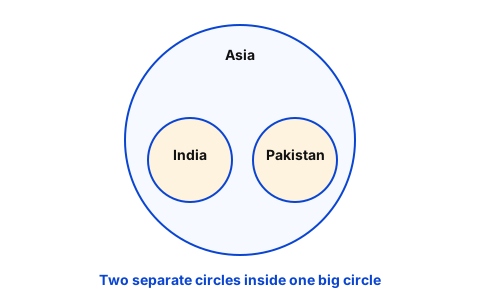
Select the Venn diagram that best illustrates the relationship between the following classes.
Asia, India, Pakistan
उस वेन आरेख का चयन कीजिए जो निम्नलिखित वर्गों के बीच संबंध को सबसे अच्छी तरह दर्शाता है।
एशिया, भारत, पाकिस्तान
  1. A
  2. B
  3. C
  4. D
Show answer

Concept: Show ‘part of’ by a circle inside a bigger circle and unrelated groups by separate circles.

  1. India is a country in Asia; Pakistan is also a country in Asia.
  2. India and Pakistan are two different countries – they do not overlap.
  3. So two separate small circles lie inside one big circle (Asia).

Trick: Two different members of the same class → two non-touching circles inside one circle.

Answer: (B)

अवधारणा: ‘का भाग’ को बड़े वृत्त के अंदर छोटे वृत्त से और असंबंधित समूहों को अलग वृत्तों से दिखाएँ।

  1. भारत, एशिया का देश है; पाकिस्तान भी एशिया का देश है।
  2. भारत और पाकिस्तान अलग-अलग देश हैं – इनमें कोई overlap नहीं।
  3. अतः एक बड़े वृत्त (एशिया) के अंदर दो अलग छोटे वृत्त।

ट्रिक: एक ही वर्ग के दो अलग सदस्य → एक वृत्त के अंदर दो अलग वृत्त।

उत्तर: (B)

SSC CPO Paper IGeneral Intelligence and ReasoningVenn diagramSSC CPO Paper I 2022 · 11 Nov Shift 1
Q1046.
If + means −, − means ×, × means ÷, and ÷ means +, what will be the value of the
following expression?
20 ÷ 2 + 4 – 8 × 4 = ?
यदि + का अर्थ −, − का अर्थ ×, × का अर्थ ÷ और ÷ का अर्थ + है, तो
निम्नलिखित व्यंजक का मान क्या होगा?
20 ÷ 2 + 4 – 8 × 4 = ?
  1. A14
  2. B10
  3. C8
  4. D4
Show answer

Concept: Replace each sign by its meaning, then apply BODMAS.

  1. 20÷2+4−8×4 becomes 20+2−4×8÷4.
  2. 4×8=32, 32÷4=8.
  3. 20+2−8=14.

Trick: Rewrite the whole expression with new signs before calculating.

Answer: (A) 14

अवधारणा: हर चिह्न को उसके अर्थ से बदलें, फिर BODMAS लगाएँ।

  1. 20÷2+4−8×4 बनता है 20+2−4×8÷4।
  2. 4×8=32, 32÷4=8।
  3. 20+2−8=14।

ट्रिक: गणना से पहले पूरा व्यंजक नए चिह्नों के साथ लिख लें।

उत्तर: (A) 14

SSC CPO Paper IGeneral Intelligence and ReasoningMathematical operations (sign interchange)SSC CPO Paper I 2022 · 11 Nov Shift 1
Q1047.
Select the option that represents the letters that, when sequentially placed from left to right in the blanks, will complete the letter series.
_ s t _ _ l b z _ t m m _ _ z s _ _ m l b
उस विकल्प का चयन कीजिए जो उन अक्षरों को दर्शाता है जिन्हें रिक्त स्थानों में बाएँ से दाएँ क्रमिक रूप से रखने पर अक्षर श्रृंखला पूरी हो जाएगी।
_ s t _ _ l b z _ t m m _ _ z s _ _ m l b
  1. Az m l s l b m t
  2. Bz m m s l b t m
  3. Cz m m s b l t m
  4. Dz m m s l b m t
Show answer

Concept: Look for a repeating block in the 21-place series.

  1. Try a block of 7 letters.
  2. Fill with z, m, m, s, l, b, t, m: z s t m m l b | z s t m m l b | z s t m m l b.
  3. The block ‘zstmmlb’ repeats three times.

Trick: 21 places → a 7-letter block repeating 3 times is the usual design.

Answer: (B) z m m s l b t m

अवधारणा: 21 स्थानों वाली श्रृंखला में दोहराने वाला block खोजें।

  1. 7 अक्षरों का block आज़माएँ।
  2. z, m, m, s, l, b, t, m से भरें: z s t m m l b | z s t m m l b | z s t m m l b।
  3. block ‘zstmmlb’ तीन बार दोहराता है।

ट्रिक: 21 स्थान → प्रायः 7 अक्षरों का block 3 बार दोहराता है।

उत्तर: (B) z m m s l b t m

SSC CPO Paper IGeneral Intelligence and ReasoningLetter seriesSSC CPO Paper I 2022 · 11 Nov Shift 1
Q1048.
Three of the following four letter-clusters are alike in a certain way and one is different. Pick the odd one out.
निम्नलिखित चार अक्षर-समूहों में से तीन किसी निश्चित प्रकार से एक समान हैं और एक उनसे असंगत है। असंगत का चयन कीजिए।
  1. AROL
  2. BRUO
  3. CVYS
  4. DPSM
Show answer

Concept: Write the alphabet positions and compare the gaps.

  1. RUO: 18, 21, 15 → +3, −6. VYS: 22, 25, 19 → +3, −6.
  2. PSM: 16, 19, 13 → +3, −6.
  3. ROL: 18, 15, 12 → −3, −3 – different.

Trick: Look at the first step: three clusters go forward (+3), only ROL goes backward.

Answer: (A) ROL

अवधारणा: वर्णमाला स्थान लिखें और अंतरों की तुलना करें।

  1. RUO: 18, 21, 15 → +3, −6। VYS: 22, 25, 19 → +3, −6।
  2. PSM: 16, 19, 13 → +3, −6।
  3. ROL: 18, 15, 12 → −3, −3 – अलग।

ट्रिक: पहला कदम देखें: तीन समूह आगे (+3) जाते हैं, केवल ROL पीछे।

उत्तर: (A) ROL

SSC CPO Paper IGeneral Intelligence and ReasoningOdd one out (letter clusters)SSC CPO Paper I 2022 · 11 Nov Shift 1
Q1049.
Which letter cluster will replace the question mark (?) to complete the given series? ZXVY, DXZY, ?, LXHY, PXLY
दी गई श्रृंखला को पूरा करने के लिए कौन-सा अक्षर-समूह प्रश्न चिह्न (?) का स्थान लेगा? ZXVY, DXZY, ?, LXHY, PXLY
  1. AHYDY
  2. BHXDY
  3. CHDXY
  4. DHZDY
Show answer

Concept: Check each letter position separately.

  1. 1st letters: Z, D, ?, L, P → +4 each → H.
  2. 2nd and 4th letters stay X and Y.
  3. 3rd letters: V, Z, ?, H, L → +4 each → D. So the cluster is HXDY.

Trick: Constant letters (X, Y) at fixed places instantly remove options like HYDY, HDXY, HZDY.

Answer: (B) HXDY

अवधारणा: हर स्थान के अक्षर को अलग देखें।

  1. पहले अक्षर: Z, D, ?, L, P → हर बार +4 → H।
  2. दूसरे और चौथे अक्षर X और Y ही रहते हैं।
  3. तीसरे अक्षर: V, Z, ?, H, L → हर बार +4 → D। अतः समूह HXDY।

ट्रिक: स्थिर अक्षर (X, Y) से HYDY, HDXY, HZDY जैसे विकल्प तुरंत हट जाते हैं।

उत्तर: (B) HXDY

SSC CPO Paper IGeneral Intelligence and ReasoningLetter cluster seriesSSC CPO Paper I 2022 · 11 Nov Shift 1
Q1050.
Select the set in which the numbers are related in the same way as are the numbers of the given sets.
(NOTE : Operations should be performed on the whole numbers, without breaking
down the numbers into its constituent digits. E.g. 13 – Operations on 13 such as
adding /subtracting /multiplying etc. to 13 can be performed. Breaking down 13 into 1 and 3 and then performing mathematical operations on 1 and 3 is not allowed.)
(241, 230, 189)
(218, 250, 232)
उस समुच्चय का चयन कीजिए जिसकी संख्याएँ आपस में उसी प्रकार संबंधित हैं, जिस प्रकार दिए गए समुच्चयों की संख्याएँ आपस में संबंधित हैं।
(ध्यान दें: संख्याओं को उनके घटक अंकों में तोड़े बिना, पूर्ण संख्याओं पर संक्रियाएँ की जानी चाहिए। उदाहरण के लिए 13 – 13 पर संक्रियाएँ जैसे 13 में जोड़ना/घटाना/गुणा करना आदि किया जा सकता है। 13 को 1 और 3 में तोड़ना और फिर 1 और 3 पर गणितीय संक्रियाएँ करना वर्जित है।)
(241, 230, 189)
(218, 250, 232)
  1. A(158, 194, 182)
  2. B(197, 233, 190)
  3. C(276, 260, 184)
  4. D(174, 212, 166)
Show answer

Concept: Find one relation that holds for both given sets.

  1. (241,230,189): 241+189−230=200.
  2. (218,250,232): 218+232−250=200.
  3. (276,260,184): 276+184−260=200 ✓. Others: 158+182−194=146, 197+190−233=154, 174+166−212=128.

Trick: When simple differences fail, try first+third−second (or similar) and look for a constant.

Answer: (C) (276, 260, 184)

अवधारणा: दोनों दिए गए समुच्चयों में एक ही संबंध खोजें।

  1. (241,230,189): 241+189−230=200।
  2. (218,250,232): 218+232−250=200।
  3. (276,260,184): 276+184−260=200 ✓। अन्य: 158+182−194=146, 197+190−233=154, 174+166−212=128।

ट्रिक: सरल अंतर काम न करें तो पहली+तीसरी−दूसरी जैसा संबंध आज़माएँ और स्थिर मान खोजें।

उत्तर: (C) (276, 260, 184)

SSC CPO Paper IGeneral Intelligence and ReasoningNumber set analogySSC CPO Paper I 2022 · 11 Nov Shift 1
Q1051.
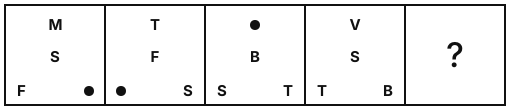
Select the figure from among the given options that can replace the question mark (?) in the following series.
दिए गए विकल्पों में से उस आकृति का चयन कीजिए जो निम्नलिखित श्रृंखला में प्रश्न चिह्न (?) को प्रतिस्थापित कर सकती है।
  1. A
  2. B
  3. C
  4. D
Show answer

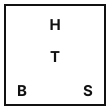
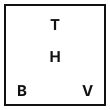
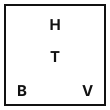
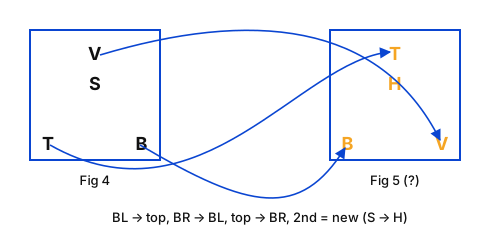
Concept: Each figure has four elements (top, second, bottom-left, bottom-right). From one figure to the next they move in a fixed cycle and exactly one new letter appears.

  1. From Fig 1 to Fig 4: bottom-right → bottom-left in the next figure (dot, S, T, B).
  2. Bottom-left goes up to the top area (F → 2nd, dot → top, S → 2nd, T → top), alternately into the second and the top slot.
  3. The top-area element that is not replaced drops to bottom-right (S, T, B, …), and the other top slot gets a new letter.
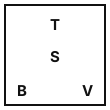
  4. Fig 5: T (from BL) → top, B (from BR) → BL, V (top of Fig 4) → BR, S is replaced by a new letter H.

Trick: Track one element at a time (follow ‘B’ or ‘T’) instead of comparing whole figures.

Answer: (C) Top T, second H, bottom-left B, bottom-right V

अवधारणा: हर आकृति में चार तत्व हैं (ऊपर, दूसरा, नीचे-बाएँ, नीचे-दाएँ)। हर अगली आकृति में ये एक निश्चित चक्र में खिसकते हैं और एक नया अक्षर आता है।

  1. नीचे-दाएँ वाला तत्व अगली आकृति में नीचे-बाएँ जाता है (dot, S, T, B)।
  2. नीचे-बाएँ वाला तत्व ऊपर जाता है – बारी-बारी से दूसरे स्थान और सबसे ऊपर (F, dot, S, T)।
  3. ऊपर का जो तत्व बचता है वह नीचे-दाएँ आता है, और खाली स्थान पर नया अक्षर आता है।
  4. Fig 5: T → ऊपर, B → नीचे-बाएँ, V → नीचे-दाएँ, S की जगह नया अक्षर H।

ट्रिक: पूरी आकृति की बजाय एक-एक तत्व (जैसे B या T) का रास्ता देखें।

उत्तर: (C) ऊपर T, दूसरा H, नीचे-बाएँ B, नीचे-दाएँ V

SSC CPO Paper IGeneral Intelligence and ReasoningFigure seriesSSC CPO Paper I 2022 · 10 Nov Shift 3
Q1052.
Which of the following numbers will replace the question mark (?) and complete the given number series?
35, 36, 39, 48, ?
निम्नलिखित में से कौन-सी संख्या प्रश्न चिह्न (?) का स्थान लेकर दी गई संख्या श्रृंखला को पूरा करेगी?
35, 36, 39, 48, ?
  1. A78
  2. B70
  3. C75
  4. D72
Show answer

Concept: Look at the differences between consecutive terms.

  1. Differences: 36−35=1, 39−36=3, 48−39=9.
  2. They are powers of 3: 30,31,32, so the next difference is 33=27.
  3. Next term =48+27=75.

Trick: Differences multiplying by the same number (×3) point to powers.

Answer: (C) 75

अवधारणा: क्रमागत पदों का अंतर देखें।

  1. अंतर: 1,3,9 – ये 30,31,32 हैं।
  2. अगला अंतर 33=27 होगा।
  3. अगला पद =48+27=75।

ट्रिक: अंतर हर बार 3 गुना हो रहा है – घातों (powers) का पैटर्न।

उत्तर: (C) 75

SSC CPO Paper IGeneral Intelligence and ReasoningNumber seriesSSC CPO Paper I 2022 · 10 Nov Shift 3
Q1053.
If M denotes ‘-’, N denotes ‘÷’, O denotes ‘×’, and P denotes ‘+’, then what will come in place of ‘?’ in the following equation?
185 N 5 P 62 M 32 O 4 P 32 = ?
यदि M का अर्थ ‘-’, N का अर्थ ‘÷’, O का अर्थ ‘×’ और P का अर्थ ‘+’ है, तो निम्नलिखित समीकरण में ‘?’ के स्थान पर क्या आएगा?
185 N 5 P 62 M 32 O 4 P 32 = ?
  1. A12
  2. B5
  3. C9
  4. D3
Show answer

Concept: Replace the letters by the signs, then solve using BODMAS.

  1. M = −, N = ÷, O = ×, P = +.
  2. Expression: 185÷5+62−32×4+32.
  3. =37+62−128+32=3.

Trick: Do ÷ and × first, then add all positives and subtract negatives: 131−128=3.

Answer: (D) 3

अवधारणा: अक्षरों की जगह चिह्न रखें और BODMAS से हल करें।

  1. M = −, N = ÷, O = ×, P = +।
  2. व्यंजक: 185÷5+62−32×4+32।
  3. =37+62−128+32=3।

ट्रिक: पहले ÷, × करें; फिर धनात्मक जोड़ें, ऋणात्मक घटाएँ: 131−128=3।

उत्तर: (D) 3

SSC CPO Paper IGeneral Intelligence and ReasoningMathematical operationsSSC CPO Paper I 2022 · 10 Nov Shift 3
Q1054.
Select the option that represents the letters that when placed from left to right in the blanks below will complete the letter series.
D_C_FE_CC_ _ E_C_EF_D_CE_E
उस विकल्प का चयन कीजिए जो उन अक्षरों को दर्शाता है जिन्हें नीचे दिए गए रिक्त स्थानों में बाएँ से दाएँ रखने पर अक्षर श्रृंखला पूरी हो जाएगी।
D_C_FE_CC_ _ E_C_EF_D_CE_E
  1. AECDEFDCECF
  2. BCEDEFCDECE
  3. CCEDFEDCECE
  4. DCEDEFDCECF
Show answer

Concept: Find a repeating block that fits the given letters.

  1. Given: D_C_FE_CC_ _E_C_EF_D_CE_E (24 places).
  2. Try the block DCCEFE repeated 4 times: DCCEFE DCCEFE DCCEFE DCCEFE.
  3. The blanks in order are C, E, D, E, F, D, C, E, C, F → CEDEFDCECF.

Trick: ‘FE’ in the first six letters suggests a block of 6 – check with the second block.

Answer: (D) CEDEFDCECF

अवधारणा: ऐसा दोहराने वाला समूह खोजें जो दिए गए अक्षरों से मेल खाए।

  1. कुल 24 स्थान हैं, समूह DCCEFE चार बार दोहराएँ।
  2. DCCEFE DCCEFE DCCEFE DCCEFE।
  3. रिक्त स्थान क्रम से: C, E, D, E, F, D, C, E, C, F → CEDEFDCECF।

ट्रिक: पहले 6 अक्षरों में ‘FE’ दिखे तो 6 का समूह जाँचें।

उत्तर: (D) CEDEFDCECF

SSC CPO Paper IGeneral Intelligence and ReasoningLetter series (blanks)SSC CPO Paper I 2022 · 10 Nov Shift 3
Q1055.
If A denotes ‘+’, B denotes ‘×’, C denotes ‘-’, and D denotes ‘÷’, then what will come in place of ‘?’ in the following equation?
(51 D 17) A (21 B 9) C 78 A (16 D 4) = ?
यदि A का अर्थ ‘+’, B का अर्थ ‘×’, C का अर्थ ‘-’ और D का अर्थ ‘÷’ है, तो निम्नलिखित समीकरण में ‘?’ के स्थान पर क्या आएगा?
(51 D 17) A (21 B 9) C 78 A (16 D 4) = ?
  1. A124
  2. B106
  3. C118
  4. D112
Show answer

Concept: Substitute the signs and apply BODMAS (brackets first).

  1. A = +, B = ×, C = −, D = ÷.
  2. (51÷17)+(21×9)−78+(16÷4).
  3. =3+189−78+4=118.

Trick: Solve each bracket separately first: 3, 189, 4.

Answer: (C) 118

अवधारणा: चिह्न बदलें और BODMAS लगाएँ (पहले कोष्ठक)।

  1. A = +, B = ×, C = −, D = ÷।
  2. (51÷17)+(21×9)−78+(16÷4)।
  3. =3+189−78+4=118।

ट्रिक: हर कोष्ठक पहले अलग से हल करें: 3, 189, 4।

उत्तर: (C) 118

SSC CPO Paper IGeneral Intelligence and ReasoningMathematical operationsSSC CPO Paper I 2022 · 10 Nov Shift 3
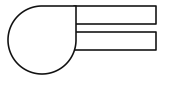
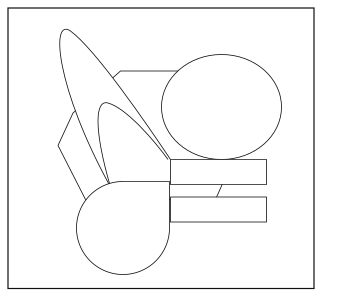
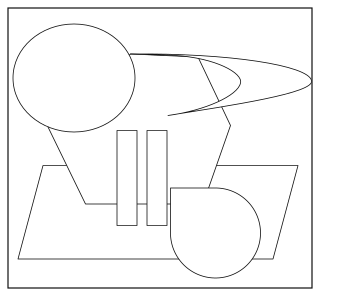
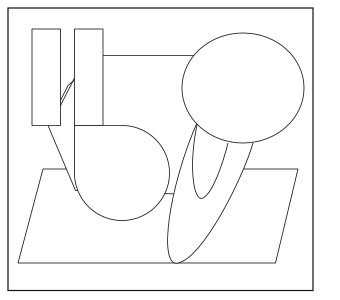
Q1056.
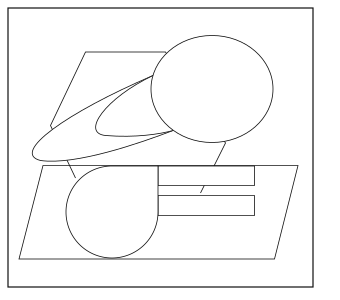
Select the option in which the given figure is embedded (rotation is NOT allowed).
उस विकल्प का चयन कीजिए जिसमें दी गई आकृति अंतर्निहित (embedded) है (घुमाने की अनुमति नहीं है)।
  1. A
  2. B
  3. C
  4. D
Show answer

Concept: The exact given figure (same size and orientation, no rotation) must be traceable inside the option.

  1. Key parts: a circle whose upper-right part is cut flat, with two thin rectangles attached at its top-right, extending to the right.
  2. In option (D), at the lower part, the same drop-shaped circle with the two rectangles to its right appears in the same orientation.
  3. In the other options the rectangles are placed differently (vertical or detached), so the figure cannot be traced.

Trick: Look first for the most distinctive part (the two parallel rectangles) and check their direction.

Answer: (D) Option figure (D)

अवधारणा: दी गई आकृति (वही आकार और दिशा, घुमाए बिना) विकल्प में पूरी दिखनी चाहिए।

  1. मुख्य भाग: ऊपर-दाएँ से सपाट कटा वृत्त और उसके ऊपरी-दाएँ भाग से दाईं ओर निकलती दो पतली आयतें।
  2. विकल्प (D) के निचले भाग में यही आकृति उसी दिशा में मौजूद है।
  3. अन्य विकल्पों में आयतें खड़ी या अलग स्थिति में हैं।

ट्रिक: सबसे अलग भाग (दो समांतर आयतें) पहले खोजें और उनकी दिशा मिलाएँ।

उत्तर: (D) विकल्प आकृति (D)

SSC CPO Paper IGeneral Intelligence and ReasoningEmbedded figureSSC CPO Paper I 2022 · 10 Nov Shift 3
Q1057.
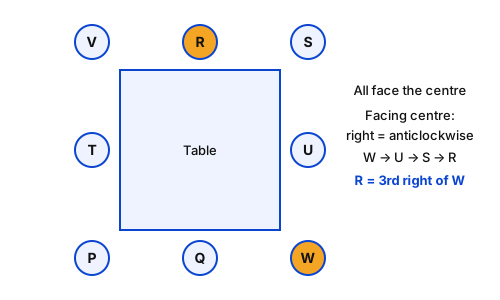
Eight children, P, Q, R, S, T, U, V, and W are seated around a square dining table, all facing towards the centre. Some of them are sitting at the corners while some are
sitting at the exact centre of the sides of the table. V is seated at a corner and R is
seated at the middle of one of the sides. S is an immediate neighbour of R. Q is seated third to the right of V. There are exactly two children sitting between Q and S. T is an immediate neighbour of both V and P. W is seated second to the left of S. If U is not an immediate neighbour of V, where is R seated?
आठ बच्चे, P, Q, R, S, T, U, V और W एक वर्गाकार डाइनिंग टेबल के चारों ओर केंद्र की ओर मुख करके बैठे हैं। उनमें से कुछ कोनों पर बैठे हैं, जबकि कुछ टेबल की भुजाओं के ठीक मध्य में बैठे हैं। V एक कोने पर बैठा है और R एक भुजा के मध्य में बैठा है। S, R का निकटतम पड़ोसी है। Q, V के दाएँ से तीसरे स्थान पर बैठा है। Q और S के बीच ठीक दो बच्चे बैठे हैं। T, V और P दोनों का निकटतम पड़ोसी है। W, S के बाएँ से दूसरे स्थान पर बैठा है। यदि U, V का निकटतम पड़ोसी नहीं है, तो R कहाँ बैठा है?
  1. AFourth to the left of UU के बाएँ से चौथे स्थान पर
  2. BThird to the right of UU के दाएँ से तीसरे स्थान पर
  3. CTo the immediate left of WW के ठीक बाएँ
  4. DThird to the right of WW के दाएँ से तीसरे स्थान पर
Show answer

Concept: Facing the centre, ‘right’ means moving anticlockwise. Corners and middles alternate.

  1. Fix V at a corner; Q is 3rd to the right of V (a middle seat).
  2. Two children between Q and S on the other side → S is at a corner; W is 2nd to the left of S.
  3. T is a neighbour of both V and P → T beside V, P next to T. U is not next to V, so U is beside S and R takes the seat between V and S.
  4. From W moving right: U (1), S (2), R (3).

Trick: In a closed arrangement of 8, ‘3rd to the right’ = ‘5th to the left’ – check options both ways.

Answer: (D) Third to the right of W

अवधारणा: केंद्र की ओर मुख होने पर ‘दाएँ’ का अर्थ वामावर्त (anticlockwise) चलना है। कोने और मध्य स्थान बारी-बारी से हैं।

  1. V को कोने पर रखें; Q, V के दाएँ तीसरा (मध्य स्थान)।
  2. Q और S के बीच दो बच्चे → S कोने पर; W, S के बाएँ दूसरा।
  3. T, V और P दोनों का पड़ोसी → T, V के पास और P, T के पास। U, V का पड़ोसी नहीं, तो U, S के पास और R, V व S के बीच।
  4. W से दाएँ चलें: U (1), S (2), R (3)।

ट्रिक: 8 लोगों की बंद व्यवस्था में ‘दाएँ तीसरा’ = ‘बाएँ पाँचवाँ’।

उत्तर: (D) W के दाएँ तीसरा

SSC CPO Paper IGeneral Intelligence and ReasoningSeating arrangement (square table)SSC CPO Paper I 2022 · 10 Nov Shift 3
Q1058.
Select the set in which the numbers are related in the same way as are the numbers of the following sets.
(NOTE : Operations should be performed on the whole numbers, without breaking
down the numbers into its constituent digits. E.g. 13- Operations on 13 such as adding /subtracting /multiplying etc. to 13 can be performed. Breaking down 13 into 1 and 3 and then performing mathematical operations on 1 and 3 is not allowed.)
(7, 13, 10)
(15, 21, 18)
उस समुच्चय का चयन कीजिए जिसमें संख्याएँ उसी प्रकार संबंधित हैं जिस प्रकार निम्नलिखित समुच्चयों की संख्याएँ संबंधित हैं।
(ध्यान दें: संख्याओं को उनके घटक अंकों में विभाजित किए बिना, पूर्ण संख्याओं पर संक्रियाएँ की जानी चाहिए। उदाहरण के लिए 13 – 13 पर संक्रियाएँ जैसे 13 में जोड़ना/घटाना/गुणा करना आदि की जा सकती हैं। 13 को 1 और 3 में विभाजित करना और फिर 1 और 3 पर गणितीय संक्रियाएँ करना वर्जित है।)
(7, 13, 10)
(15, 21, 18)
  1. A(9, 14, 12)
  2. B(8, 15, 22)
  3. C(11, 15, 13)
  4. D(5, 10, 15)
Show answer

Concept: Find one rule that works for both given sets.

  1. (7,13,10): 7+132=10.
  2. (15,21,18): 15+212=18.
  3. Third number = average of the first two. Option (C): 11+152=13 ✓; (A) gives 11.5, (D) gives 7.5, (B) fails.

Trick: When the third number lies midway between the first two, test the average.

Answer: (C) (11,15,13)

अवधारणा: ऐसा एक नियम खोजें जो दोनों समूहों पर लागू हो।

  1. (7,13,10): 7+132=10।
  2. (15,21,18): 15+212=18।
  3. तीसरी संख्या = पहली दो का औसत। विकल्प (C): 11+152=13 ✓।

ट्रिक: तीसरी संख्या दोनों के बीच में हो तो औसत जाँचें।

उत्तर: (C) (11,15,13)

SSC CPO Paper IGeneral Intelligence and ReasoningNumber set analogySSC CPO Paper I 2022 · 10 Nov Shift 3
Q1059.
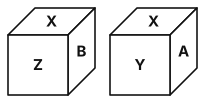
Two positions of the same cubical block are shown. When one of the faces W is at the top, which face will be at the bottom?
एक ही घनाकार ब्लॉक की दो स्थितियाँ दर्शाई गई हैं। जब फलक W शीर्ष पर हो, तो कौन-सा फलक तल पर होगा?
  1. AZ
  2. BY
  3. CX
  4. DB
Show answer

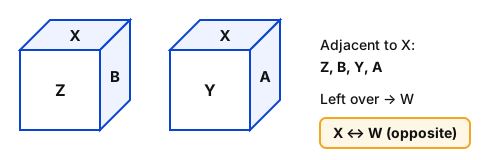
Concept: Faces seen together with a face are adjacent to it; the one face never seen with it is opposite.

  1. X is on top in both views; Z, B (first view) and Y, A (second view) touch X.
  2. So X is adjacent to Z, B, Y, A – four faces.
  3. The only remaining face W must be opposite X. With W on top, X is at the bottom.

Trick: A face has 4 neighbours and 1 opposite – list neighbours, the leftover is opposite.

Answer: (C) X

अवधारणा: जो फलक किसी फलक के साथ दिखते हैं वे आसन्न होते हैं; जो कभी साथ नहीं दिखता वह विपरीत है।

  1. दोनों स्थितियों में X ऊपर है; Z, B और Y, A उसके साथ दिखते हैं।
  2. अतः X के चार आसन्न फलक: Z, B, Y, A।
  3. बचा हुआ फलक W, X के विपरीत है। W ऊपर हो तो नीचे X होगा।

ट्रिक: एक फलक के 4 पड़ोसी और 1 विपरीत होता है।

उत्तर: (C) X

SSC CPO Paper IGeneral Intelligence and ReasoningCube – opposite facesSSC CPO Paper I 2022 · 10 Nov Shift 3
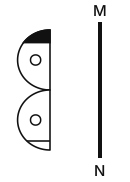
Q1060.
Select the correct mirror image of the given figure when the mirror is placed at line MN as shown.
जब दर्पण को दर्शाए गए अनुसार रेखा MN पर रखा जाता है, तो दी गई आकृति के सही दर्पण प्रतिबिंब का चयन कीजिए।
  1. A
  2. B
  3. C
  4. D
Show answer

Concept: A vertical mirror on the right swaps left and right; top and bottom stay unchanged.

  1. In the figure, the curved sides of both half-circles face left and the flat side faces right.
  2. In the image the curves must face right, flat side on the left.
  3. The black cap remains at the top and the small line at the bottom; the small circles stay inside. Only (D) shows this.

Trick: Vertical mirror: only left↔right changes – up/down details (black cap on top) must stay on top.

Answer: (D) Option figure (D)

अवधारणा: दाईं ओर रखा खड़ा दर्पण बाएँ-दाएँ बदलता है; ऊपर-नीचे वैसा ही रहता है।

  1. आकृति में अर्ध-वृत्तों का गोल भाग बाईं ओर, सपाट भाग दाईं ओर है।
  2. प्रतिबिंब में गोल भाग दाईं ओर, सपाट भाग बाईं ओर होगा।
  3. काला भाग ऊपर और छोटी रेखा नीचे ही रहेगी – केवल (D) में ऐसा है।

ट्रिक: खड़ा दर्पण: केवल बाएँ↔दाएँ बदलें, ऊपर का काला भाग ऊपर ही रहे।

उत्तर: (D) विकल्प आकृति (D)

SSC CPO Paper IGeneral Intelligence and ReasoningMirror imageSSC CPO Paper I 2022 · 10 Nov Shift 3