Q101.If + means − , − means × , × means ÷ , ÷ means +, what will come in place of the
question mark (?) in the given equation?
1200 × 3 – 1 ÷ 100 + 499 = ?
यदि + का अर्थ − है, − का अर्थ × है, × का अर्थ ÷ है, ÷ का अर्थ + है, तो दिए गए समीकरण में प्रश्न चिह्न (?) के स्थान पर क्या आएगा?
1200 × 3 – 1 ÷ 100 + 499 = ?
- A5
- B3
- C2
- D1
Show answer
Concept: Replace each sign by its meaning and then apply BODMAS.
- Swap signs: + → −, − → ×, × → ÷, ÷ → +.
- becomes .
- .
Trick: Rewrite the whole expression first, then solve – never solve while swapping.
Answer: (D) 1
अवधारणा: हर चिह्न को उसके अर्थ से बदलें, फिर BODMAS लगाएँ।
- चिह्न बदलें: + → −, − → ×, × → ÷, ÷ → +।
- बनता है ।
- ।
ट्रिक: पहले पूरा व्यंजक नए चिह्नों से लिखें, फिर हल करें।
उत्तर: (D) 1
SSC CPO Paper IGeneral Intelligence and ReasoningMathematical OperationsSSC CPO Paper I 2024 · 29 Jun Shift 1
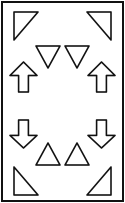
Q102.The sequence of folding a paper and the manner in which the folded paper is cut is shown in the following figures. How would this paper look when unfolded?
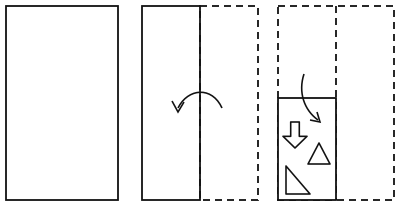
एक कागज़ को मोड़ने का क्रम और मोड़े गए कागज़ को काटने का तरीका निम्नलिखित आकृतियों में दर्शाया गया है। खोलने पर यह कागज़ कैसा दिखाई देगा?
- A
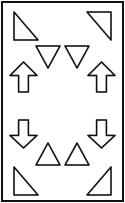
- B
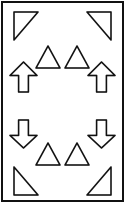
- C
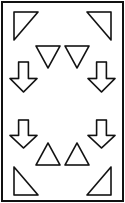
- D
Show answer
Concept: When a folded paper is cut, every cut appears in each layer; on unfolding, the cuts are mirror images about each fold line.
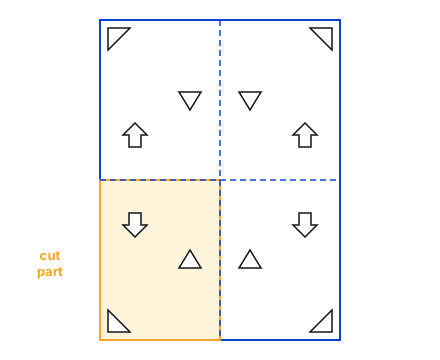
- First fold: right half goes onto the left half (vertical fold line). Second fold: the top goes down onto the bottom (horizontal fold line).
- The cuts – a down-arrow, an upright triangle and a corner right-triangle – lie in the bottom-left quarter.
- Unfold the horizontal fold: the top-left quarter gets an up-arrow, an inverted triangle and a corner triangle at the top corner.
- Unfold the vertical fold: the right half becomes the mirror image of the left half.
Trick: Unfold in the reverse order of folding, mirroring across each fold line. Arrows flip direction across the horizontal fold.
Answer: (D) the fourth figure
अवधारणा: मुड़े कागज़ में कटा भाग हर परत में आता है; खोलने पर कट हर मोड़-रेखा (fold line) के सापेक्ष दर्पण-प्रतिबिंब बनते हैं।
- पहला मोड़: दायाँ आधा बाएँ पर (ऊर्ध्वाधर मोड़-रेखा)। दूसरा मोड़: ऊपर का भाग नीचे पर (क्षैतिज मोड़-रेखा)।
- कट – नीचे की ओर तीर, सीधा त्रिभुज और कोने का समकोण त्रिभुज – नीचे-बाएँ चौथाई भाग में हैं।
- क्षैतिज मोड़ खोलें: ऊपर-बाएँ भाग में ऊपर की ओर तीर, उल्टा त्रिभुज और ऊपरी कोने पर त्रिभुज आएगा।
- ऊर्ध्वाधर मोड़ खोलें: दायाँ आधा, बाएँ आधे का दर्पण-प्रतिबिंब होगा।
ट्रिक: मोड़ने के उल्टे क्रम में खोलें; क्षैतिज मोड़ के पार तीर की दिशा उलट जाती है।
उत्तर: (D) चौथी आकृति
SSC CPO Paper IGeneral Intelligence and ReasoningPaper Folding and CuttingSSC CPO Paper I 2024 · 29 Jun Shift 1
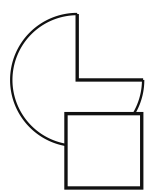
Q103.Select the option figure in which the given figure is embedded as its part (rotation is NOT allowed).
उस विकल्प आकृति का चयन कीजिए जिसमें दी गई आकृति उसके भाग के रूप में निहित है (घुमाने की अनुमति नहीं है)।
- A
- B
- C
- D
Show answer
Concept: The given figure must appear in an option with exactly the same size, shape and orientation (no rotation).
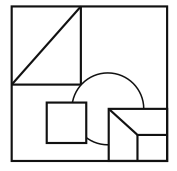
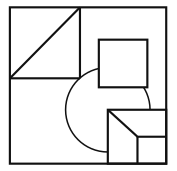
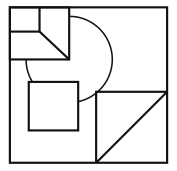
- The figure is a three-quarter circle (a quarter cut out at top-right) with a small square overlapping its lower-right part.
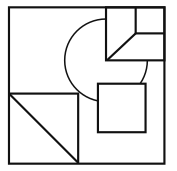
- In option (A) the same three-quarter circle with the square attached at the lower right is seen in the upper-right region of the big square.
- In the other options the arc and square are in different positions/orientation, so they do not match without rotation.
Trick: Lock onto one distinctive part (here the missing quarter of the circle) and check its position relative to the square.
Answer: (A) the first figure
अवधारणा: दी गई आकृति विकल्प में ठीक उसी आकार, आकृति और दिशा में होनी चाहिए (घुमाना मना है)।
- आकृति तीन-चौथाई वृत्त है (ऊपर-दाएँ का चौथाई भाग कटा), जिसके निचले-दाएँ भाग पर छोटा वर्ग है।
- विकल्प (A) में बड़े वर्ग के ऊपरी-दाएँ भाग में यही तीन-चौथाई वृत्त और नीचे-दाएँ वर्ग दिखता है।
- बाकी विकल्पों में चाप और वर्ग की स्थिति/दिशा अलग है, इसलिए बिना घुमाए मेल नहीं खाते।
ट्रिक: किसी विशेष भाग (यहाँ वृत्त का कटा चौथाई) को पकड़ें और वर्ग के सापेक्ष उसकी स्थिति जाँचें।
उत्तर: (A) पहली आकृति
SSC CPO Paper IGeneral Intelligence and ReasoningEmbedded FiguresSSC CPO Paper I 2024 · 29 Jun Shift 1
Q104.Two statements are given, followed by two conclusions numbered I and II. Assuming the statements to be true, even if they seem to be at variance with commonly known facts, decide which of the conclusions logically follow(s) from the statements.
Statements:
All papers are trees.
Some papers are leaves.
Conclusions:
I. Some trees are leaves.
II. Some trees are papers.
दो कथन दिए गए हैं, जिनके बाद I और II से संख्यांकित दो निष्कर्ष दिए गए हैं। कथनों को सत्य मानते हुए, भले ही वे सामान्य रूप से ज्ञात तथ्यों से भिन्न प्रतीत होते हों, निर्णय लीजिए कि कौन-सा/से निष्कर्ष कथनों का तार्किक रूप से अनुसरण करता है/करते हैं।
कथन:
सभी कागज़, पेड़ हैं।
कुछ कागज़, पत्तियाँ हैं।
निष्कर्ष:
I. कुछ पेड़, पत्तियाँ हैं।
II. कुछ पेड़, कागज़ हैं।
- AOnly conclusion I followsकेवल निष्कर्ष I अनुसरण करता है
- BBoth conclusions I and II followनिष्कर्ष I और II दोनों अनुसरण करते हैं
- CNeither conclusion I nor II followsन तो निष्कर्ष I और न ही II अनुसरण करता है
- DOnly conclusion II followsकेवल निष्कर्ष II अनुसरण करता है
Show answer
Concept: Draw the least-overlap Venn diagram consistent with the statements; a conclusion follows only if it is true in every possible diagram.
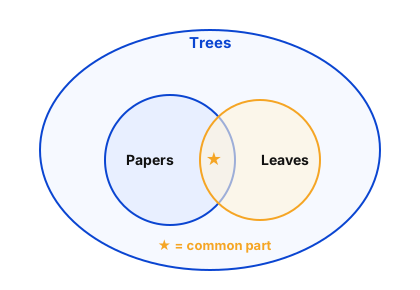
- All papers are trees → the Papers circle lies inside Trees.
- Some papers are leaves → Leaves overlaps Papers; that common part is also inside Trees, so Some trees are leaves – I follows.
- All papers are trees → its conversion gives Some trees are papers – II follows.
Trick: “All A are B” always gives “Some B are A”.
Answer: (B) Both conclusions I and II follow
अवधारणा: कथनों के अनुसार न्यूनतम Venn आरेख बनाएँ; निष्कर्ष तभी निकलेगा जब वह हर संभव आरेख में सत्य हो।
- All papers are trees → Papers वृत्त Trees के अंदर।
- Some papers are leaves → Leaves, Papers को काटता है; यह साझा भाग Trees के अंदर है, अतः Some trees are leaves – I सत्य।
- All papers are trees का रूपांतरण (conversion) → Some trees are papers – II सत्य।
याद रखें: “All A are B” से हमेशा “Some B are A” निकलता है।
उत्तर: (B) Both conclusions I and II follow
SSC CPO Paper IGeneral Intelligence and ReasoningSyllogismSSC CPO Paper I 2024 · 29 Jun Shift 1
Q105.Six students are sitting around a circular table facing the centre. Van is sitting second to the left of Luke. Luke is an immediate neighbour of both Ruth and Max. Jude is
sitting second to the left of Van. Ruth is an immediate neighbour of both Luke and Van. Who is the immediate neighbour of Jude and Luke?
छह विद्यार्थी एक वृत्ताकार मेज़ के चारों ओर केंद्र की ओर मुख करके बैठे हैं। Van, Luke के बाएँ से दूसरे स्थान पर बैठा है। Luke, Ruth और Max दोनों का निकटतम पड़ोसी है। Jude,
Van के बाएँ से दूसरे स्थान पर बैठा है। Ruth, Luke और Van दोनों की निकटतम पड़ोसी है। Jude और Luke दोनों का निकटतम पड़ोसी कौन है?
- ARuth
- BTess
- CMax
- DVan
Show answer
Concept: For people facing the centre, moving to someone's left means moving clockwise.
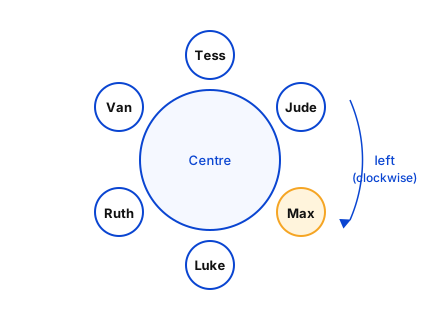
- Fix Luke. Van is second to the left of Luke; Ruth sits between them (neighbour of both).
- Max is the other neighbour of Luke.
- Jude is second to the left of Van, so one seat (Tess) is between Van and Jude, and Jude sits next to Max.
- Order (clockwise): Luke, Ruth, Van, Tess, Jude, Max – so Max is beside both Jude and Luke.
Trick: Start with the person mentioned most (Luke) and place the fixed-gap clues first.
Answer: (C) Max
अवधारणा: केंद्र की ओर मुख वाले व्यक्तियों में बाएँ जाना = दक्षिणावर्त (clockwise) जाना।
- Luke को स्थिर करें। Van, Luke के बाएँ से दूसरे स्थान पर; Ruth दोनों के बीच (दोनों का पड़ोसी)।
- Luke का दूसरा पड़ोसी Max है।
- Jude, Van के बाएँ से दूसरे स्थान पर, अतः बीच में Tess और Jude, Max के पास बैठता है।
- क्रम (clockwise): Luke, Ruth, Van, Tess, Jude, Max – Max ही Jude और Luke दोनों का पड़ोसी है।
ट्रिक: सबसे अधिक बार आए व्यक्ति (Luke) से शुरू करें और निश्चित दूरी वाले संकेत पहले लगाएँ।
उत्तर: (C) Max
SSC CPO Paper IGeneral Intelligence and ReasoningCircular Seating ArrangementSSC CPO Paper I 2024 · 29 Jun Shift 1
Q106.Select the set in which the numbers are related in the same way as are the numbers of the following sets.
(NOTE: Operations should be performed on the whole numbers, without breaking
down the numbers into its constituent digits. E.g. 13 – Operations on 13 such as
adding /deleting /multiplying etc. to 13 can be performed. Breaking down 13 into 1 and 3 and then performing mathematical operations on 1 and 3 is not allowed)
(104, 26, 13)
(168, 42, 21)
उस समुच्चय का चयन कीजिए जिसमें संख्याएँ उसी प्रकार संबंधित हैं जिस प्रकार निम्नलिखित समुच्चयों की संख्याएँ संबंधित हैं।
(नोट: संक्रियाएँ संख्याओं को उनके घटक अंकों में विभक्त किए बिना, पूर्ण संख्याओं पर की जानी चाहिए। उदाहरण के लिए, 13 – 13 पर की जाने वाली संक्रियाएँ, जैसे 13 में जोड़ना/घटाना/गुणा करना आदि की जा सकती हैं। 13 को 1 और 3 में विभक्त करना और फिर 1 और 3 पर गणितीय संक्रियाएँ करने की अनुमति नहीं है।)
(104, 26, 13)
(168, 42, 21)
- A(216, 54, 27)
- B(216, 52, 27)
- C(210, 54, 27)
- D(216, 54, 29)
Show answer
Concept: Find the operation that links the three numbers in each given set.
- and .
- and .
- Check (A): and ✓. The others break at least one step (e.g. ).
Trick: Third number is always of the first – check that first.
Answer: (A) (216, 54, 27)
अवधारणा: हर समूह की तीनों संख्याओं को जोड़ने वाली संक्रिया खोजें।
- और ।
- और ।
- (A) जाँचें: और ✓। अन्य विकल्प किसी चरण में असफल (जैसे )।
ट्रिक: तीसरी संख्या हमेशा पहली का है – पहले यही जाँचें।
उत्तर: (A) (216, 54, 27)
SSC CPO Paper IGeneral Intelligence and ReasoningNumber Set AnalogySSC CPO Paper I 2024 · 29 Jun Shift 1
Q107.Select the set in which the numbers are related in the same way as are the numbers of the following sets.
(NOTE : Operations should be performed on the whole numbers, without breaking
down the numbers into its constituent digits. E.g. 13 – Operations on 13 such as
adding /deleting /multiplying etc. to 13 can be performed. Breaking down 13 into 1 and 3 and then performing mathematical operations on 1 and 3 is not allowed.)
(145, 76)
(182, 113)
उस समुच्चय का चयन कीजिए जिसमें संख्याएँ उसी प्रकार संबंधित हैं जिस प्रकार निम्नलिखित समुच्चयों की संख्याएँ संबंधित हैं।
(नोट: संक्रियाएँ संख्याओं को उनके घटक अंकों में विभक्त किए बिना, पूर्ण संख्याओं पर की जानी चाहिए। उदाहरण के लिए, 13 – 13 पर की जाने वाली संक्रियाएँ, जैसे 13 में जोड़ना/घटाना/गुणा करना आदि की जा सकती हैं। 13 को 1 और 3 में विभक्त करना और फिर 1 और 3 पर गणितीय संक्रियाएँ करने की अनुमति नहीं है।)
(145, 76)
(182, 113)
- A(163, 94)
- B(153, 74)
- C(149, 72)
- D(174, 112)
Show answer
Concept: Look for a constant difference between the two numbers.
- .
- .
- (A) ✓; (B) , (C) , (D) ✗.
Trick: Same difference in both examples → just subtract each option.
Answer: (A) (163, 94)
अवधारणा: दोनों संख्याओं के बीच स्थिर अंतर देखें।
- ।
- ।
- (A) ✓; (B) , (C) , (D) ✗।
ट्रिक: दोनों उदाहरणों में अंतर समान → हर विकल्प घटाकर देखें।
उत्तर: (A) (163, 94)
SSC CPO Paper IGeneral Intelligence and ReasoningNumber Set AnalogySSC CPO Paper I 2024 · 29 Jun Shift 1
Q108.Harini starts from a cafe and walks 4 km towards the south. She then turns right and walks 2 km, again turns right and walks 4 km, and then turns left and walks 4 km. How many kilometres will Harini need to walk to reach the café straight from this point?
हरिणी एक कैफ़े से चलना आरंभ करती है और दक्षिण की ओर 4 km चलती है। फिर वह दाएँ मुड़ती है और 2 km चलती है, पुनः दाएँ मुड़ती है और 4 km चलती है, और फिर बाएँ मुड़ती है और 4 km चलती है। इस बिंदु से सीधे कैफ़े तक पहुँचने के लिए हरिणी को कितने किलोमीटर चलना होगा?
- A8 km
- B6 km
- C4 km
- D2 km
Show answer
Concept: Track each turn on a sketch; the straight-line distance is measured between the start and the end point.
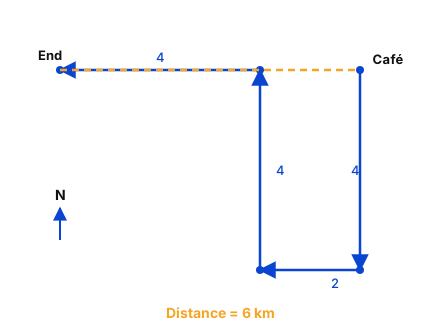
- 4 km South from the café.
- Facing South, a right turn means West: 2 km West.
- Right again → North: 4 km, which brings her back to the café's level, 2 km West of it.
- Left → West: 4 km more. She is now West of the café.
Trick: The two 4 km legs (South and North) cancel; add only the West legs.
Answer: (B) 6 km
अवधारणा: हर मोड़ को चित्र में दिखाएँ; सीधी दूरी आरंभ और अंतिम बिंदु के बीच नापें।
- कैफ़े से 4 km दक्षिण।
- दक्षिण की ओर मुख, दाएँ मुड़ना = पश्चिम: 2 km।
- फिर दाएँ → उत्तर: 4 km, यानी कैफ़े की सीध में, उससे 2 km पश्चिम।
- बाएँ → पश्चिम: 4 km और। अब वह कैफ़े से पश्चिम में है।
ट्रिक: दक्षिण और उत्तर के 4 km कट जाते हैं; केवल पश्चिम की दूरियाँ जोड़ें।
उत्तर: (B) 6 km
SSC CPO Paper IGeneral Intelligence and ReasoningDirection and DistanceSSC CPO Paper I 2024 · 29 Jun Shift 1
Q109.Select the set in which the numbers are related in the same way as are the numbers of the following sets.
(NOTE: Operations should be performed on the whole numbers, without breaking
down the numbers into its constituent digits. E.g. 13 – Operations on 13 such as
adding /deleting /multiplying etc. to 13 can be performed. Breaking down 13 into 1 and 3 and then performing mathematical operations on 1 and 3 is not allowed)
(15, 60, 10)
(21, 84, 14)
उस समुच्चय का चयन कीजिए जिसमें संख्याएँ उसी प्रकार संबंधित हैं जिस प्रकार निम्नलिखित समुच्चयों की संख्याएँ संबंधित हैं।
(नोट: संक्रियाएँ संख्याओं को उनके घटक अंकों में विभक्त किए बिना, पूर्ण संख्याओं पर की जानी चाहिए। उदाहरण के लिए, 13 – 13 पर की जाने वाली संक्रियाएँ, जैसे 13 में जोड़ना/घटाना/गुणा करना आदि की जा सकती हैं। 13 को 1 और 3 में विभक्त करना और फिर 1 और 3 पर गणितीय संक्रियाएँ करने की अनुमति नहीं है।)
(15, 60, 10)
(21, 84, 14)
- A(31, 132, 22)
- B(33, 132, 24)
- C(33, 134, 22)
- D(33, 132, 22)
Show answer
Concept: Relate the second and third numbers to the first.
- and .
- and .
- (D) and ✓. (A) ; (B) third should be 22; (C) .
Trick: Third number of the first.
Answer: (D) (33, 132, 22)
अवधारणा: दूसरी और तीसरी संख्या का पहली से संबंध खोजें।
- और ।
- और ।
- (D) और ✓। (A) ; (B) तीसरी 22 होनी चाहिए; (C) ।
ट्रिक: तीसरी संख्या पहली।
उत्तर: (D) (33, 132, 22)
SSC CPO Paper IGeneral Intelligence and ReasoningNumber Set AnalogySSC CPO Paper I 2024 · 29 Jun Shift 1
Q110.A dice has its faces marked by symbols α, β, θ, γ, π and δ . Two positions of the same dice are given below. Which face is opposite to face β?
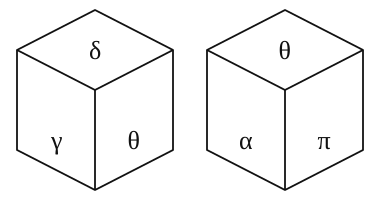
एक पासे के फलकों पर प्रतीक α, β, θ, γ, π और δ अंकित हैं। नीचे उसी पासे की दो स्थितियाँ दी गई हैं। फलक β के विपरीत कौन-सा फलक है?
- Aα
- Bδ
- Cθ
- Dγ
Show answer
Concept: A face that appears next to a common face in both positions is adjacent to it; the face never seen with it is opposite.
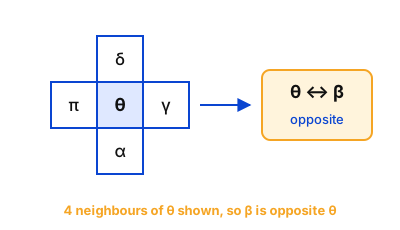
- θ appears in both positions.
- Faces seen with θ: δ, γ (first position) and α, π (second position).
- So θ touches δ, γ, α, π; the only remaining face β must be opposite θ.
Trick: Common face + its four neighbours → the sixth face is its opposite.
Answer: (C) θ
अवधारणा: दोनों स्थितियों में उभयनिष्ठ फलक के साथ दिखे फलक उसके आसन्न (adjacent) हैं; जो कभी साथ न दिखे वह विपरीत है।
- θ दोनों स्थितियों में है।
- θ के साथ दिखे फलक: δ, γ (पहली स्थिति) और α, π (दूसरी स्थिति)।
- θ के चार पड़ोसी δ, γ, α, π; बचा फलक β, θ के विपरीत है।
ट्रिक: उभयनिष्ठ फलक + उसके चार पड़ोसी → छठा फलक विपरीत।
उत्तर: (C) θ
SSC CPO Paper IGeneral Intelligence and ReasoningDiceSSC CPO Paper I 2024 · 29 Jun Shift 1
Q111.If ‘+’ means ‘−’, ‘−’ means ‘×’, ‘×’ means ‘÷’ and ‘÷’ means ‘+’, what will come in place of ‘?’ in the following equation?
59 ÷ 6 – 28 × 7 + 30 = ?
यदि ‘+’ का अर्थ ‘−’ है, ‘−’ का अर्थ ‘×’ है, ‘×’ का अर्थ ‘÷’ है और ‘÷’ का अर्थ ‘+’ है, तो निम्नलिखित समीकरण में ‘?’ के स्थान पर क्या आएगा?
59 ÷ 6 – 28 × 7 + 30 = ?
- A49
- B53
- C67
- D58
Show answer
Concept: Replace the signs as given, then solve using BODMAS.
- ÷ → +, − → ×, × → ÷, + → −.
- becomes .
- .
- .
Trick: Do × and ÷ together left-to-right before + and −.
Answer: (B) 53
अवधारणा: दिए अनुसार चिह्न बदलें, फिर BODMAS से हल करें।
- ÷ → +, − → ×, × → ÷, + → −।
- बनता है ।
- ।
- ।
ट्रिक: + और − से पहले × और ÷ (बाएँ से दाएँ) हल करें।
उत्तर: (B) 53
SSC CPO Paper IGeneral Intelligence and ReasoningMathematical OperationsSSC CPO Paper I 2024 · 29 Jun Shift 1
Q112.If ‘A’ stands for ‘+’, ‘B’ stands for ‘–’, ‘C’ stands for ‘×’ and ‘D’ stands for ‘÷’, what will come in place of the question mark (?) in the following equation?
69 D 3 A 4 C 7 B 10 = ?
यदि ‘A’ का अर्थ ‘+’ है, ‘B’ का अर्थ ‘–’ है, ‘C’ का अर्थ ‘×’ है और ‘D’ का अर्थ ‘÷’ है, तो निम्नलिखित समीकरण में प्रश्न चिह्न (?) के स्थान पर क्या आएगा?
69 D 3 A 4 C 7 B 10 = ?
- A39
- B41
- C37
- D35
Show answer
Concept: Substitute the letters by the operations and apply BODMAS.
- A = +, B = −, C = ×, D = ÷.
- .
- .
Trick: Write the converted expression in one line before calculating.
Answer: (B) 41
अवधारणा: अक्षरों को संक्रियाओं से बदलें और BODMAS लगाएँ।
- A = +, B = −, C = ×, D = ÷।
- ।
- ।
ट्रिक: गणना से पहले बदला हुआ व्यंजक एक पंक्ति में लिखें।
उत्तर: (B) 41
SSC CPO Paper IGeneral Intelligence and ReasoningMathematical OperationsSSC CPO Paper I 2024 · 29 Jun Shift 1
Q113.Select the option that is related to the third word in the same way as the second word is related to the first word.
(The words must be considered as meaningful English words and must not be related to each other based on the number of letters/number of consonants/ vowels in the
word.)
Ounce : Kilogram :: Quart : ?
उस विकल्प का चयन कीजिए जो तीसरे शब्द से उसी प्रकार संबंधित है जिस प्रकार दूसरा शब्द पहले शब्द से संबंधित है।
(शब्दों को अर्थपूर्ण अंग्रेज़ी शब्दों के रूप में माना जाना चाहिए और उन्हें शब्द में अक्षरों की संख्या/व्यंजनों/स्वरों की संख्या के आधार पर एक-दूसरे से संबंधित नहीं किया जाना चाहिए।)
Ounce (आउंस) : Kilogram (किलोग्राम) :: Quart (क्वार्ट) : ?
- AOuncesOunces (आउंस)
- BLiquidLiquid (द्रव)
- CStoneStone (स्टोन)
- DLitresLitres (लीटर)
Show answer
Concept: Ounce and kilogram are both units of mass – ounce is an imperial unit and kilogram is the metric unit.
- Quart is an imperial unit of volume (liquid capacity).
- The corresponding metric unit of volume is the litre – so Quart : Litres.
- 'Ounces' repeats the first pair, 'Stone' is a unit of weight, 'Liquid' is not a unit.
Trick: Imperial unit : metric unit of the same quantity.
Answer: (D) Litres
अवधारणा: Ounce और kilogram दोनों द्रव्यमान (mass) की इकाइयाँ हैं – ounce इंपीरियल और kilogram मीट्रिक इकाई।
- Quart आयतन (द्रव धारिता) की इंपीरियल इकाई है।
- आयतन की संगत मीट्रिक इकाई litre है – अतः Quart : Litres।
- 'Ounces' पहले जोड़े से है, 'Stone' भार की इकाई है, 'Liquid' इकाई नहीं है।
ट्रिक: इंपीरियल इकाई : उसी राशि की मीट्रिक इकाई।
उत्तर: (D) Litres
SSC CPO Paper IGeneral Intelligence and ReasoningWord AnalogySSC CPO Paper I 2024 · 29 Jun Shift 1
Q114.In a certain code language, ‘BELT’ is written as ‘78’, and ‘CASH’ is written as ‘62’. How will ‘DISC’ be written in that language?
एक निश्चित कूट भाषा में, ‘BELT’ को ‘78’ लिखा जाता है, और ‘CASH’ को ‘62’ लिखा जाता है। उसी भाषा में ‘DISC’ को कैसे लिखा जाएगा?
- A86
- B82
- C70
- D92
Show answer
Concept: Code = twice the sum of the alphabetical positions of the letters.
- BELT: , ✓.
- CASH: , ✓.
- DISC: , .
Trick: If both codes are even and near double the letter-sum, test ×2 first.
Answer: (C) 70
अवधारणा: कोड = अक्षरों के वर्णमाला क्रमांकों के योग का दोगुना।
- BELT: , ✓।
- CASH: , ✓।
- DISC: , ।
ट्रिक: दोनों कोड सम और अक्षर-योग के लगभग दोगुने हों तो पहले ×2 जाँचें।
उत्तर: (C) 70
SSC CPO Paper IGeneral Intelligence and ReasoningCoding-DecodingSSC CPO Paper I 2024 · 29 Jun Shift 1
Q115.Which letter cluster will replace the question mark (?) to complete the given series? PFBR, MKUA, ?, GUGS, DZZB
दी गई शृंखला को पूरा करने के लिए कौन-सा अक्षर-समूह प्रश्न चिह्न (?) का स्थान लेगा? PFBR, MKUA, ?, GUGS, DZZB
- AHKPE
- BJPNJ
- CJLEJ
- DQYGC
Show answer
Concept: Treat each letter position of the clusters as a separate series.
- 1st letters: P, M, J, G, D (−3 each).
- 2nd letters: F, K, P, U, Z (+5 each).
- 3rd letters: B, U, N, G, Z (−7 each, cyclic).
- 4th letters: R, A, J, S, B (+9 each, cyclic). So the missing term is JPNJ.
Trick: Check the 1st letter of options first: only J fits (M − 3), leaving JPNJ and JLEJ; the 2nd letter P decides.
Answer: (B) JPNJ
अवधारणा: गुच्छों के हर स्थान के अक्षरों को अलग श्रृंखला मानें।
- पहले अक्षर: P, M, J, G, D (प्रत्येक −3)।
- दूसरे अक्षर: F, K, P, U, Z (प्रत्येक +5)।
- तीसरे अक्षर: B, U, N, G, Z (प्रत्येक −7, चक्रीय)।
- चौथे अक्षर: R, A, J, S, B (प्रत्येक +9, चक्रीय)। अतः लुप्त पद JPNJ।
ट्रिक: पहले विकल्पों का पहला अक्षर देखें: केवल J (M − 3) सही; फिर दूसरा अक्षर P निर्णय करता है।
उत्तर: (B) JPNJ
SSC CPO Paper IGeneral Intelligence and ReasoningLetter SeriesSSC CPO Paper I 2024 · 29 Jun Shift 1
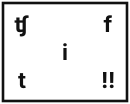
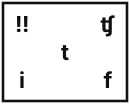
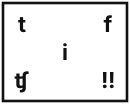
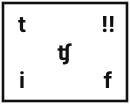
Q116.Select the figure from among the given options that can logically replace the question mark (?) in the following series.

दिए गए विकल्पों में से उस आकृति का चयन कीजिए जो निम्नलिखित शृंखला में प्रश्न चिह्न (?) के स्थान पर तार्किक रूप से आ सकती है।
- A
- B
- C
- D
Show answer
Concept: Track one symbol at a time through the positions TL, TR, C (centre), BL, BR.
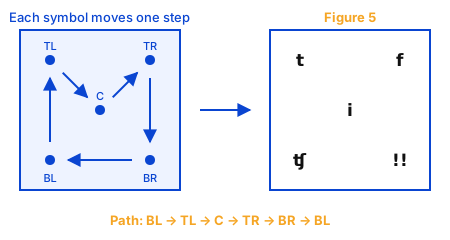
- ʧ: TL → C → TR → BR; t: C → TR → BR → BL; !!: BL → TL → C → TR.
- So every symbol moves one step along the path BL → TL → C → TR → BR → BL.
- Next figure: t at TL, f at TR, i at C, ʧ at BL, !! at BR – this is option (C).
Trick: Find the movement path of one symbol, then apply the same path to all.
Answer: (C) the third figure
अवधारणा: हर प्रतीक को स्थानों TL, TR, C (केंद्र), BL, BR पर अलग-अलग ट्रैक करें।
- ʧ: TL → C → TR → BR; t: C → TR → BR → BL; !!: BL → TL → C → TR।
- अतः हर प्रतीक पथ BL → TL → C → TR → BR → BL पर एक कदम बढ़ता है।
- अगली आकृति: TL पर t, TR पर f, C पर i, BL पर ʧ, BR पर !! – यही विकल्प (C) है।
ट्रिक: एक प्रतीक का पथ खोजें, वही पथ सब पर लगाएँ।
उत्तर: (C) तीसरी आकृति
SSC CPO Paper IGeneral Intelligence and ReasoningFigure SeriesSSC CPO Paper I 2024 · 29 Jun Shift 1
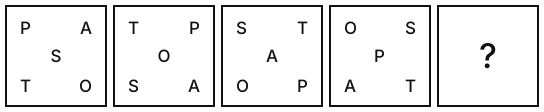
Q117.Identify the figure given in the options which when put in place of (?) will logically
complete the series.
विकल्पों में दी गई उस आकृति की पहचान कीजिए जिसे (?) के स्थान पर रखने पर शृंखला तार्किक रूप से
पूरी हो जाएगी।
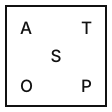
- A
- B
- C
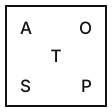
- D
Show answer
Concept: Follow each letter through the five positions TL, TR, C, BL, BR.
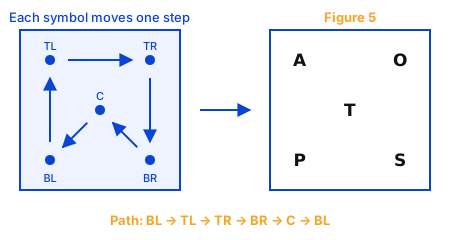
- P: TL → TR → BR → C; T: BL → TL → TR → BR; S: C → BL → TL → TR.
- Each letter moves one step along BL → TL → TR → BR → C → BL.
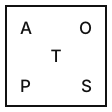
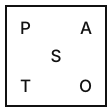
- Next figure: A at TL, O at TR, T at C, P at BL, S at BR – option (A).
Trick: Watch the centre: S, O, A, P, so next is T – only options (A) and (C) qualify, and (A) has P at BL.
Answer: (A) the first figure
अवधारणा: हर अक्षर को पाँच स्थानों TL, TR, C, BL, BR पर ट्रैक करें।
- P: TL → TR → BR → C; T: BL → TL → TR → BR; S: C → BL → TL → TR।
- हर अक्षर पथ BL → TL → TR → BR → C → BL पर एक कदम चलता है।
- अगली आकृति: TL पर A, TR पर O, C पर T, BL पर P, BR पर S – विकल्प (A)।
ट्रिक: केंद्र देखें: S, O, A, P, फिर T – केवल (A) और (C), और (A) में BL पर P है।
उत्तर: (A) पहली आकृति
SSC CPO Paper IGeneral Intelligence and ReasoningFigure SeriesSSC CPO Paper I 2024 · 29 Jun Shift 1
Q118.Which of the following terms will replace the question mark (?) in the given series? MLV, NMW, ONX,?
दी गई शृंखला में प्रश्न चिह्न (?) के स्थान पर निम्नलिखित में से कौन-सा पद आएगा? MLV, NMW, ONX,?
- AFJM
- BEFG
- CPOY
- DGNM
Show answer
Concept: Each letter of the cluster moves forward by one.
- 1st letters: M, N, O → P.
- 2nd letters: L, M, N → O.
- 3rd letters: V, W, X → Y. So the term is POY.
Trick: +1 in every position – the next cluster starts with the letter after O.
Answer: (C) POY
अवधारणा: गुच्छे का हर अक्षर एक-एक आगे बढ़ता है।
- पहले अक्षर: M, N, O → P।
- दूसरे अक्षर: L, M, N → O।
- तीसरे अक्षर: V, W, X → Y। अतः पद POY।
ट्रिक: हर स्थान पर +1 – अगला गुच्छा O के बाद वाले अक्षर से शुरू होगा।
उत्तर: (C) POY
SSC CPO Paper IGeneral Intelligence and ReasoningLetter SeriesSSC CPO Paper I 2024 · 29 Jun Shift 1
Q119.Two statements are given followed by two conclusions numbered I and II. Assuming the statements to be true, even if they seem to be at variance with commonly known facts, decide which of the conclusions logically follow(s) from the statements.
Statements:
1) All networks are fibers.
2) Some fibers are wires.
Conclusions:
I. All networks can never be wires.
II. Some networks are wires.
दो कथन दिए गए हैं, जिनके बाद I और II से संख्यांकित दो निष्कर्ष दिए गए हैं। कथनों को सत्य मानते हुए, भले ही वे सामान्य रूप से ज्ञात तथ्यों से भिन्न प्रतीत होते हों, निर्णय लीजिए कि कौन-सा/से निष्कर्ष कथनों का तार्किक रूप से अनुसरण करता है/करते हैं।
कथन:
1) सभी नेटवर्क, फाइबर हैं।
2) कुछ फाइबर, तार हैं।
निष्कर्ष:
I. सभी नेटवर्क कभी भी तार नहीं हो सकते।
II. कुछ नेटवर्क, तार हैं।
- ANeither Conclusion I nor II follows.न तो निष्कर्ष I और न ही II अनुसरण करता है।
- BBoth Conclusions I and II follow.निष्कर्ष I और II दोनों अनुसरण करते हैं।
- COnly Conclusion I follows.केवल निष्कर्ष I अनुसरण करता है।
- DOnly Conclusion II follows.केवल निष्कर्ष II अनुसरण करता है।
Show answer
Concept: A conclusion follows only if it is true in every possible Venn diagram of the statements.
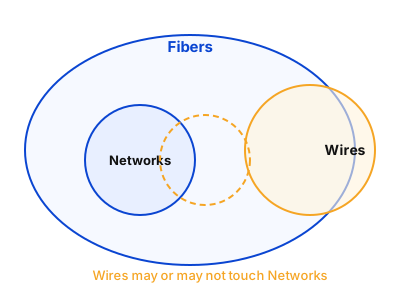
- All networks are fibers → Networks inside Fibers.
- Some fibers are wires → Wires overlap Fibers, but may or may not touch Networks.
- I (No network is a wire) is not certain, and II (Some networks are wires) is not certain either.
Trick: No direct statement links Networks with Wires → no definite conclusion between them.
Answer: (A) Neither Conclusion I nor II follows.
अवधारणा: निष्कर्ष तभी निकलता है जब वह कथनों के हर संभव Venn आरेख में सत्य हो।
- All networks are fibers → Networks, Fibers के अंदर।
- Some fibers are wires → Wires, Fibers को काटता है, पर Networks को छू भी सकता है और नहीं भी।
- I (कोई network wire नहीं) निश्चित नहीं, II (Some networks are wires) भी निश्चित नहीं।
याद रखें: Networks और Wires के बीच कोई सीधा संबंध नहीं → निश्चित निष्कर्ष नहीं।
उत्तर: (A) Neither Conclusion I nor II follows.
SSC CPO Paper IGeneral Intelligence and ReasoningSyllogismSSC CPO Paper I 2024 · 29 Jun Shift 1
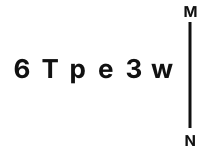
Q120.Select the correct mirror image of the given figure when the mirror is placed at MN as shown below.
जब दर्पण को नीचे दर्शाए अनुसार MN पर रखा जाता है, तो दी गई आकृति के सही दर्पण प्रतिबिंब का चयन कीजिए।
- A

- B
- C
- D
Show answer
Concept: With a vertical mirror (MN) on the right, left and right are interchanged; top and bottom stay the same.
- The order of the characters reverses: the last character w comes first and 6 comes last.
- Each character is also flipped left-right (e.g. p looks like q, 3 looks like Ɛ, 6 looks like ∂).
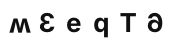
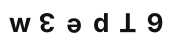
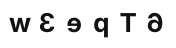
- Option (D) shows the reversed order with every character laterally flipped, while the others turn characters upside down or keep their orientation.
Trick: Vertical mirror → reverse the order AND flip each symbol sideways; heights do not change.
Answer: (D) the fourth figure
अवधारणा: दाईं ओर ऊर्ध्वाधर दर्पण (MN) में बायाँ-दायाँ बदल जाता है; ऊपर-नीचे वही रहता है।
- अक्षरों का क्रम उलट जाता है: अंतिम w पहले और 6 अंत में आता है।
- हर अक्षर बाएँ-दाएँ पलटता है (जैसे p, q जैसा; 3, Ɛ जैसा; 6, ∂ जैसा दिखता है)।
- विकल्प (D) में क्रम उल्टा है और हर अक्षर पार्श्व रूप से पलटा है; अन्य में अक्षर उल्टे-सीधे या बिना पलटे हैं।
ट्रिक: ऊर्ध्वाधर दर्पण → क्रम उलटें और हर चिह्न को बगल से पलटें; ऊँचाई नहीं बदलती।
उत्तर: (D) चौथी आकृति
SSC CPO Paper IGeneral Intelligence and ReasoningMirror ImageSSC CPO Paper I 2024 · 29 Jun Shift 1

