Q1401.Manish starts from Point A and drives 12 km towards East. He then takes a left turn, drives 5 km, turns left and drives 30 km. He then takes a left turn and drives 20 km. He takes a final left turn, drives 18 km and stops at Point Q. How far (shortest distance) and towards which direction should he now drive to reach Point A again? (All turns are 90° turns only.)
मनीष बिंदु A से चलना शुरू करता है और पूर्व की ओर 12 km गाड़ी चलाता है। फिर वह बाएँ मुड़ता है, 5 km गाड़ी चलाता है, बाएँ मुड़ता है और 30 km गाड़ी चलाता है। फिर वह बाएँ मुड़ता है और 20 km गाड़ी चलाता है। वह अंतिम बार बाएँ मुड़ता है, 18 km गाड़ी चलाता है और बिंदु Q पर रुक जाता है। फिर से बिंदु A पर पहुँचने के लिए उसे अब कितनी दूरी (न्यूनतम दूरी) तक और किस दिशा में गाड़ी चलानी चाहिए? (सभी मोड़ केवल 90° के मोड़ हैं।)
- A10 km towards Southदक्षिण की ओर 10 km
- B15 km towards Northउत्तर की ओर 15 km
- C10 km towards Northउत्तर की ओर 10 km
- D15 km towards Southदक्षिण की ओर 15 km
Show answer
Concept: Plot every move on East–North axes taking A as the origin .
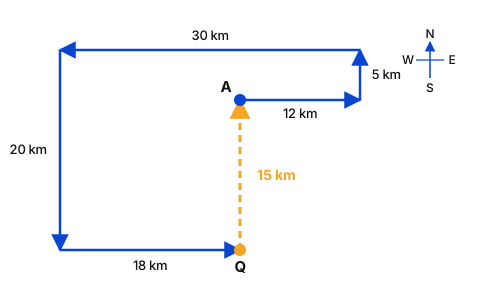
- East 12 km → ; left (North) 5 km → .
- Left (West) 30 km → ; left (South) 20 km → .
- Left (East) 18 km → = Q.
- Q is exactly below A on the same vertical line, so he must go North.
Trick: Net East–West , net North–South → Q is 15 km South of A.
Answer: (B) 15 km towards North
अवधारणा: A को मूल बिंदु मानकर हर चाल को पूर्व–उत्तर अक्षों पर लिखें।
- पूर्व 12 km → ; बाएँ (उत्तर) 5 km → ।
- बाएँ (पश्चिम) 30 km → ; बाएँ (दक्षिण) 20 km → ।
- बाएँ (पूर्व) 18 km → = Q।
- Q, A से ठीक दक्षिण में है, अतः उसे उत्तर की ओर जाना होगा।
ट्रिक: शुद्ध पूर्व–पश्चिम , उत्तर–दक्षिण → Q, A से 15 km दक्षिण।
उत्तर: (B) 15 km towards North
SSC CPO Paper IGeneral Intelligence and ReasoningDirection and DistanceSSC CPO Paper I 2024 · 27 Jun Shift 2
Q1402.Select the Venn diagram that best illustrates the relationship between the following classes.
Father, Pilots, Women
निम्नलिखित वर्गों के बीच संबंध को सर्वोत्तम रूप से दर्शाने वाले वेन आरेख का चयन कीजिए।
पिता, पायलट, महिलाएँ
- A

- B
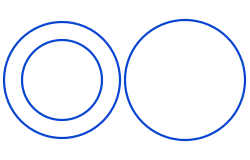
- C
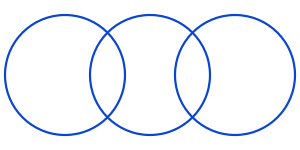
- D

Show answer
Concept: Find which classes can overlap and which can never overlap.
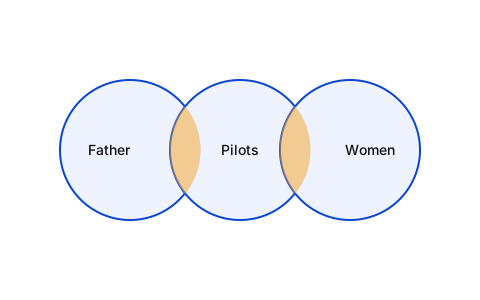
- A father is always a male, so Father and Women have nothing in common (separate circles).
- Some fathers are pilots and some women are pilots, so Pilots overlaps both.
- This gives three circles in a chain: Father – Pilots – Women, with the outer two not touching.
Trick: Two classes that can never mix (Father/Women) sit at the two ends; the common profession (Pilots) links them.
Answer: (C)
अवधारणा: देखें कौन-सी श्रेणियाँ आपस में मिल सकती हैं और कौन-सी कभी नहीं।
- पिता (Father) हमेशा पुरुष होता है, इसलिए Father और Women में कुछ भी उभयनिष्ठ नहीं (अलग वृत्त)।
- कुछ पिता pilot हैं और कुछ महिलाएँ भी pilot हैं, इसलिए Pilots दोनों से overlap करता है।
- अतः तीन वृत्त एक श्रृंखला में: Father – Pilots – Women, बाहरी दोनों एक-दूसरे को नहीं छूते।
ट्रिक: जो दो वर्ग कभी नहीं मिलते (Father/Women) वे दोनों सिरों पर; साझा पेशा (Pilots) बीच में जोड़ता है।
उत्तर: (C)
SSC CPO Paper IGeneral Intelligence and ReasoningVenn DiagramSSC CPO Paper I 2024 · 27 Jun Shift 2
Q1403.In a code language, ‘HAND’ is written as ‘GYMB’, and ‘FOOD’ is written as ‘EMNB’.
How will ‘TEXT’ be written in that language?
एक कूट भाषा में, ‘HAND’ को ‘GYMB’ लिखा जाता है, और ‘FOOD’ को ‘EMNB’ लिखा जाता है।
उसी भाषा में ‘TEXT’ को किस प्रकार लिखा जाएगा?
- ARWSC
- BSCWR
- CSCRW
- DSWRC
Show answer
Concept: Compare each letter with its code letter and note the shift.
- HAND → GYMB: .
- FOOD → EMNB: (same pattern ).
- TEXT: → SCWR.
Trick: Pattern of shifts repeats for every 4-letter word.
Answer: (B) SCWR
अवधारणा: हर अक्षर की तुलना उसके कोड अक्षर से करें और खिसकाव (shift) देखें।
- HAND → GYMB: ।
- FOOD → EMNB: (वही क्रम )।
- TEXT: → SCWR।
ट्रिक: हर 4-अक्षरी शब्द में shift का क्रम है।
उत्तर: (B) SCWR
SSC CPO Paper IGeneral Intelligence and ReasoningCoding-DecodingSSC CPO Paper I 2024 · 27 Jun Shift 2
Q1404.Which two signs should be interchanged to make the given equation correct?
5 + 156 − 12 × 15 ÷ 15 = 185
दिए गए समीकरण को सही बनाने के लिए किन दो चिह्नों को आपस में बदला जाना चाहिए?
5 + 156 − 12 × 15 ÷ 15 = 185
- A+ and ×+ और ×
- B− and +− और +
- C÷ and −÷ और −
- D× and −× और −
Show answer
Concept: Interchange the signs given in each option and evaluate using BODMAS until LHS = 185.
- Option (C): interchange and : .
- , then .
- = RHS. ✓
- Check (A): ✗ — far too large.
Trick: When RHS is small, first try options that create a division of the big number (156) — here is exact.
Answer: (C) ÷ and −
अवधारणा: हर विकल्प के चिह्न बदलकर BODMAS से हल करें, जब तक बायाँ पक्ष 185 न हो जाए।
- विकल्प (C): और बदलें: ।
- , फिर ।
- = दायाँ पक्ष। ✓
- (A) जाँचें: ✗।
ट्रिक: बड़ी संख्या (156) का पूरा भाग बनने वाला विकल्प पहले जाँचें — पूर्णांक है।
उत्तर: (C) ÷ और −
SSC CPO Paper IGeneral Intelligence and ReasoningMathematical OperationsSSC CPO Paper I 2024 · 27 Jun Shift 2
Q1405.Select the Venn diagram that best illustrates the relationship between the following classes.
Musical Instrument, Kathak, Xylophone.
निम्नलिखित वर्गों के बीच संबंध को सर्वोत्तम रूप से दर्शाने वाले वेन आरेख का चयन कीजिए।
वाद्य यंत्र, कथक, जाइलोफोन (Xylophone)।
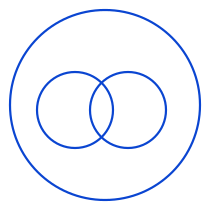
- A
- B

- C
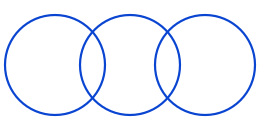
- D
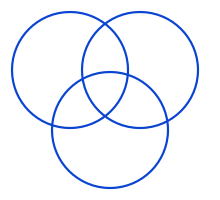
Show answer
Concept: Identify the subset relation and the unrelated class.
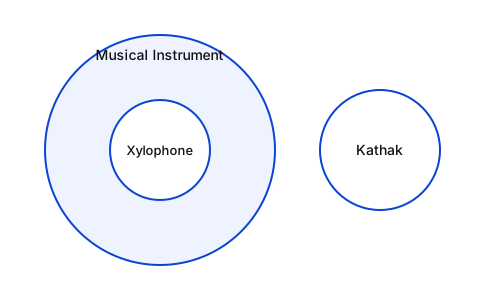
- A xylophone is a musical instrument → Xylophone circle lies inside Musical Instrument.
- Kathak is a classical dance form, not an instrument → a separate circle.
- So: one circle inside a bigger circle, plus one detached circle.
Trick: Thing–category pairs go one-inside-another; an unrelated item (a dance) stands alone.
Answer: (B)
अवधारणा: उपसमुच्चय (subset) संबंध और असंबंधित वर्ग पहचानें।
- Xylophone एक वाद्य यंत्र (musical instrument) है → Xylophone का वृत्त Musical Instrument के अंदर।
- Kathak एक शास्त्रीय नृत्य है, वाद्य यंत्र नहीं → अलग वृत्त।
- अतः एक वृत्त बड़े वृत्त के अंदर और एक अलग वृत्त।
ट्रिक: वस्तु–श्रेणी जोड़ी एक-दूसरे के अंदर; असंबंधित वस्तु (नृत्य) अलग।
उत्तर: (B)
SSC CPO Paper IGeneral Intelligence and ReasoningVenn DiagramSSC CPO Paper I 2024 · 27 Jun Shift 2
Q1406.Select the option that indicates the correct arrangement of the given words in the
order in which they appear in an English dictionary.
1- Elate
2- Election
3- Elbow
4- Elastic
5- Electoral
उस विकल्प का चयन कीजिए जो दिए गए शब्दों की उस सही व्यवस्था को दर्शाता है, जिस क्रम में वे
अंग्रेज़ी शब्दकोश में आते हैं।
1- Elate
2- Election
3- Elbow
4- Elastic
5- Electoral
- A1, 3, 4, 2, 5
- B4, 3, 2, 1, 5
- C1, 4, 5, 2, 3
- D4, 1, 3, 2, 5
Show answer
Concept: All words begin with EL; compare letter by letter from the third letter.
- Third letters: Elastic (a), Elate (a), Elbow (b), Election (e), Electoral (e).
- Elastic vs Elate: 4th letters s, t → Elastic first, then Elate.
- Election vs Electoral: ELECT-I vs ELECT-O → i before o → Election, then Electoral.
- Order: Elastic, Elate, Elbow, Election, Electoral = 4, 1, 3, 2, 5.
Trick: Strike off the common prefix and compare only the first different letter.
Answer: (D) 4, 1, 3, 2, 5
अवधारणा: सभी शब्द EL से शुरू होते हैं; तीसरे अक्षर से अक्षर-दर-अक्षर तुलना करें।
- तीसरे अक्षर: Elastic (a), Elate (a), Elbow (b), Election (e), Electoral (e)।
- Elastic बनाम Elate: चौथा अक्षर s, t → पहले Elastic, फिर Elate।
- Election बनाम Electoral: ELECT-I बनाम ELECT-O → i पहले → Election, फिर Electoral।
- क्रम: Elastic, Elate, Elbow, Election, Electoral = 4, 1, 3, 2, 5।
ट्रिक: साझा prefix हटाकर केवल पहला भिन्न अक्षर देखें।
उत्तर: (D) 4, 1, 3, 2, 5
SSC CPO Paper IGeneral Intelligence and ReasoningDictionary OrderSSC CPO Paper I 2024 · 27 Jun Shift 2
Q1407.In a certain code language,
'A + B' means ‘A is the father of B’,
'A – B' means ‘A is the husband of B’,
'A × B' means ‘A is the mother of B’,
'A ÷ B' means ‘A is the brother of B’.
How is P related to T if ‘P + Q – R × S÷T’?
एक निश्चित कूट भाषा में,
‘A + B’ का अर्थ है ‘A, B का पिता है’,
‘A – B’ का अर्थ है ‘A, B का पति है’,
‘A × B’ का अर्थ है ‘A, B की माता है’,
‘A ÷ B’ का अर्थ है ‘A, B का भाई है’।
यदि ‘P + Q – R × S÷T’ है, तो P का T से क्या संबंध है?
- AMother's fatherमाता के पिता
- BFather's brotherपिता के भाई
- CFather's fatherपिता के पिता
- DMother's brotherमाता के भाई
Show answer
Concept: Decode each symbol one at a time and build a family tree.
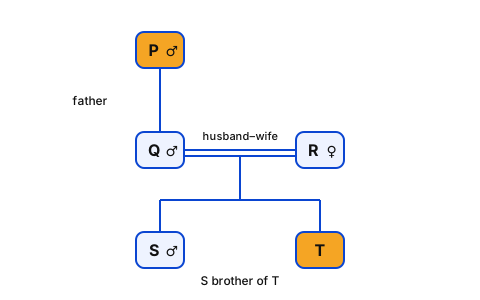
- P + Q → P is the father of Q.
- Q – R → Q is the husband of R; R × S → R is the mother of S.
- S ÷ T → S is the brother of T, so T is also a child of Q and R.
- Q is T's father and P is Q's father → P is T's father's father.
Trick: Go from T upward: T → father (Q) → his father (P) = father's father.
Answer: (C) Father's father
अवधारणा: हर चिह्न को एक-एक कर डिकोड करें और वंश-वृक्ष बनाएँ।
- P + Q → P, Q का पिता है।
- Q – R → Q, R का पति है; R × S → R, S की माँ है।
- S ÷ T → S, T का भाई है, अतः T भी Q और R की संतान है।
- Q, T का पिता और P, Q का पिता → P, T के पिता का पिता (दादा) है।
ट्रिक: T से ऊपर जाएँ: T → पिता (Q) → उनके पिता (P) = Father's father।
उत्तर: (C) Father's father
SSC CPO Paper IGeneral Intelligence and ReasoningBlood Relation (Coded)SSC CPO Paper I 2024 · 27 Jun Shift 2
Q1408.Select the correct combination of mathematical signs to replace the * signs and
balance the given equation.
16 * 17 * 14 * 2 * 3 * 251
* चिह्नों को प्रतिस्थापित करने और दिए गए समीकरण को संतुलित करने के लिए
गणितीय चिह्नों के सही संयोजन का चयन कीजिए।
16 * 17 * 14 * 2 * 3 * 251
- A−, −, ÷, ×, =
- B×, −, ÷, −, =
- C×, −, ÷, ×, =
- D×, −, +, ×, =
Show answer
Concept: Place the signs of each option in order and check with BODMAS.
- Option (C): .
- ; ; .
- ✓
- Option (B) gives ✗.
Trick: The last sign must be '=' — and 251 is close to , so start with then subtract a small value.
Answer: (C) ×, −, ÷, ×, =
अवधारणा: हर विकल्प के चिह्न क्रम से रखें और BODMAS से जाँचें।
- विकल्प (C): ।
- ; ; ।
- ✓
- विकल्प (B) से ✗।
ट्रिक: 251, के पास है, अतः पहले फिर छोटी संख्या घटाएँ।
उत्तर: (C) ×, −, ÷, ×, =
SSC CPO Paper IGeneral Intelligence and ReasoningMathematical OperationsSSC CPO Paper I 2024 · 27 Jun Shift 2
Q1409.Select the option that is related to the fifth letter-cluster in the same way as the second letter-cluster is related to the first letter-cluster and the fourth letter-cluster is related to the third letter-cluster.
PURE : IDGT :: COOL : VJJM :: LIPS : ?
उस विकल्प का चयन कीजिए जो पाँचवें अक्षर-समूह से उसी प्रकार संबंधित है, जिस प्रकार दूसरा अक्षर-समूह पहले अक्षर-समूह से और चौथा अक्षर-समूह तीसरे अक्षर-समूह से संबंधित है।
PURE : IDGT :: COOL : VJJM :: LIPS : ?
- APIFM
- BMPIF
- CRKHO
- DKHOR
Show answer
Concept: Take the opposite letter (pair summing to 27, e.g. ) and then move 2 steps back.
- PURE: opposites K F I V; each → I D G T ✓.
- COOL: opposites X L L O; each → V J J M ✓.
- LIPS: opposites O R K H; each → M P I F.
Trick: Opposite pairs to remember: A-Z, B-Y, … L-O, P-K, S-H (sum of positions = 27).
Answer: (B) MPIF
अवधारणा: प्रत्येक अक्षर का विपरीत अक्षर लें (स्थानों का योग 27, जैसे ) फिर 2 कदम पीछे जाएँ।
- PURE: विपरीत K F I V; हर एक → I D G T ✓।
- COOL: विपरीत X L L O; हर एक → V J J M ✓।
- LIPS: विपरीत O R K H; हर एक → M P I F।
ट्रिक: विपरीत जोड़े: A-Z, B-Y, … L-O, P-K, S-H (स्थानों का योग 27)।
उत्तर: (B) MPIF
SSC CPO Paper IGeneral Intelligence and ReasoningLetter AnalogySSC CPO Paper I 2024 · 27 Jun Shift 2
Q1410.In a certain code language, ‘FAVORITE’ is written as ‘ETIROVAF’ and ‘MINIMIZE’ is
written as ‘EZIMINIM’. How will ‘RESEMBLE’ be written in that language?
एक निश्चित कूट भाषा में, ‘FAVORITE’ को ‘ETIROVAF’ लिखा जाता है और ‘MINIMIZE’ को
‘EZIMINIM’ लिखा जाता है। उसी भाषा में ‘RESEMBLE’ को किस प्रकार लिखा जाएगा?
- AELBRESEM
- BELBMESER
- CERLBMESR
- DERESLMBE
Show answer
Concept: Check whether the code is simply the word written backwards.
- FAVORITE written from right to left = ETIROVAF ✓.
- MINIMIZE backwards = EZIMINIM ✓.
- RESEMBLE backwards: E-L-B-M-E-S-E-R = ELBMESER.
Trick: If the code starts with the last letter and ends with the first letter, test full reversal first.
Answer: (B) ELBMESER
अवधारणा: देखें कि कोड केवल शब्द को उल्टा लिखना तो नहीं।
- FAVORITE को दाएँ से बाएँ लिखें = ETIROVAF ✓।
- MINIMIZE उल्टा = EZIMINIM ✓।
- RESEMBLE उल्टा: E-L-B-M-E-S-E-R = ELBMESER।
ट्रिक: कोड का पहला अक्षर शब्द का अंतिम अक्षर हो तो पहले पूरा उल्टा क्रम जाँचें।
उत्तर: (B) ELBMESER
SSC CPO Paper IGeneral Intelligence and ReasoningCoding-DecodingSSC CPO Paper I 2024 · 27 Jun Shift 2
Q1411.In a code language, ‘COOL’ is written as ‘EMQJ’, and ‘CARD’ is written as ‘EYTB’. How will ‘STAR’ be written in that language?
एक कूट भाषा में, ‘COOL’ को ‘EMQJ’ लिखा जाता है, और ‘CARD’ को ‘EYTB’ लिखा जाता है। उसी भाषा में ‘STAR’ को किस प्रकार लिखा जाएगा?
- AURCP
- BUCPR
- CPCUR
- DURPC
Show answer
Concept: Find the shift for each position.
- COOL → EMQJ: .
- CARD → EYTB: ✓ (pattern ).
- STAR: → URCP.
Trick: Alternate and ; for A going back use the circle: .
Answer: (A) URCP
अवधारणा: हर स्थान का shift ज्ञात करें।
- COOL → EMQJ: ।
- CARD → EYTB: ✓ (क्रम )।
- STAR: → URCP।
ट्रिक: बारी-बारी और ; A से पीछे जाने पर वृत्ताकार गिनें: ।
उत्तर: (A) URCP
SSC CPO Paper IGeneral Intelligence and ReasoningCoding-DecodingSSC CPO Paper I 2024 · 27 Jun Shift 2
Q1412.A dice has its faces marked by numbers 5, 6, 7, 8, 9 and 10. Two positions of the same dice are given below. Which face is opposite to face 6?
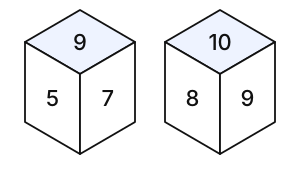
एक पासे के फलकों पर संख्याएँ 5, 6, 7, 8, 9 और 10 अंकित हैं। नीचे उसी पासे की दो स्थितियाँ दी गई हैं। फलक 6 के विपरीत कौन-सा फलक है?
- A10
- B9
- C8
- D5
Show answer
Concept: A face that touches four different faces in the views must be opposite the remaining sixth face.
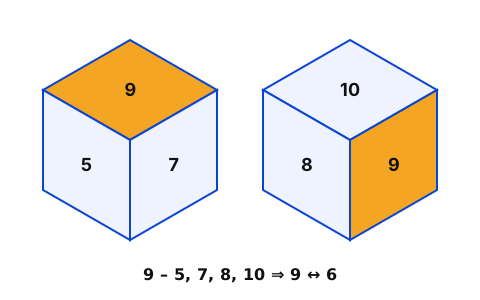
- Face 9 appears in both positions.
- With 9 we see 5 and 7 (first view) and 10 and 8 (second view) → 9 is adjacent to 5, 7, 8, 10.
- The only face not adjacent to 9 is 6 → 6 is opposite 9.
Trick: Common face + its four neighbours → the missing number is its opposite.
Answer: (B) 9
अवधारणा: जो फलक दोनों स्थितियों में चार अलग फलकों से सटा हो, वह बचे हुए छठे फलक के विपरीत होता है।
- फलक 9 दोनों स्थितियों में दिखता है।
- 9 के साथ 5, 7 (पहली स्थिति) और 10, 8 (दूसरी स्थिति) दिखते हैं → 9 के पड़ोसी 5, 7, 8, 10।
- केवल 6 ही 9 का पड़ोसी नहीं → 6 के विपरीत 9।
ट्रिक: उभयनिष्ठ फलक + उसके चार पड़ोसी → बची संख्या उसका विपरीत।
उत्तर: (B) 9
SSC CPO Paper IGeneral Intelligence and ReasoningDiceSSC CPO Paper I 2024 · 27 Jun Shift 2
Q1413.Select the correct mirror image of the given figure when the mirror is placed at MN as shown below.
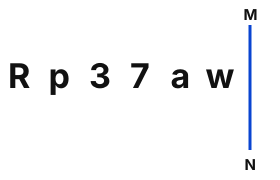
जब दर्पण को नीचे दर्शाए गए अनुसार MN पर रखा जाता है, तो दी गई आकृति के सही दर्पण प्रतिबिंब का चयन कीजिए।
- A

- B

- C

- D

Show answer
Concept: With the mirror on the right side (vertical line MN), left and right are swapped; top and bottom stay the same.
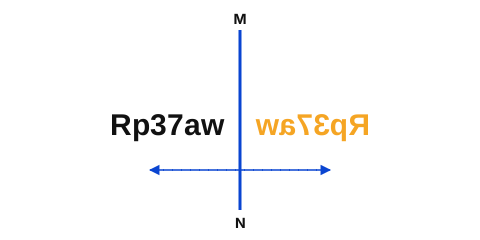
- The order of characters is reversed: the last character 'w' comes first and 'R' comes last.
- Every character is also flipped left-to-right (e.g. p looks like q, 3 looks like Ɛ, 7 faces the other way).
- Nothing turns upside-down, so options with inverted characters are wrong.
Trick: Vertical mirror: reverse the order AND flip each character sideways; the height-wise shape never changes.
Answer: (A)
अवधारणा: दर्पण दाईं ओर (ऊर्ध्वाधर रेखा MN) होने पर बायाँ–दायाँ बदल जाता है; ऊपर–नीचे वही रहता है।
- अक्षरों का क्रम उल्टा हो जाता है: अंतिम अक्षर 'w' पहले और 'R' अंत में आता है।
- हर अक्षर भी बाएँ-दाएँ पलटता है (जैसे p, q जैसा; 3, Ɛ जैसा; 7 दूसरी ओर मुड़ा)।
- कोई अक्षर उल्टा (ऊपर-नीचे) नहीं होता, अतः ऐसे विकल्प गलत हैं।
ट्रिक: ऊर्ध्वाधर दर्पण: क्रम उल्टा करें और हर अक्षर को sideways पलटें; ऊपर-नीचे आकृति नहीं बदलती।
उत्तर: (A)
SSC CPO Paper IGeneral Intelligence and ReasoningMirror ImageSSC CPO Paper I 2024 · 27 Jun Shift 2
Q1414.36 is related to 70 following a certain logic. Following the same logic, 41 is related to 80. Which of the following numbers is related to 76 related using the same logic?
एक निश्चित तर्क का अनुसरण करते हुए 36, 70 से संबंधित है। उसी तर्क का अनुसरण करते हुए 41, 80 से संबंधित है। उसी तर्क का उपयोग करते हुए निम्नलिखित में से कौन-सी संख्या 76 से संबंधित है?
- A39
- B38
- C37
- D42
Show answer
Concept: Find a single rule linking the first number to the second.
- ✓; ✓.
- So second . For 76: .
- Check: ✓.
Trick: Here the given number (76) is the second term, so reverse the rule: .
Answer: (A) 39
अवधारणा: पहली संख्या को दूसरी से जोड़ने वाला एक नियम खोजें।
- ✓; ✓।
- अतः दूसरी . 76 के लिए: ।
- जाँच: ✓।
ट्रिक: 76 दूसरा पद है, इसलिए नियम उल्टा लगाएँ: ।
उत्तर: (A) 39
SSC CPO Paper IGeneral Intelligence and ReasoningNumber AnalogySSC CPO Paper I 2024 · 27 Jun Shift 2
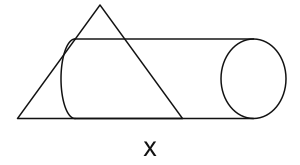
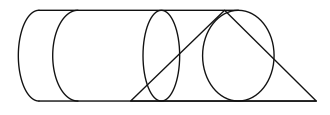
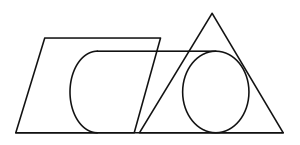
Q1415.Select the option in which the given figure (X) is embedded as its part. (Rotation is NOT allowed.)
उस विकल्प का चयन कीजिए जिसमें दी गई आकृति (X) उसके भाग के रूप में निहित है। (आकृति को घुमाने की अनुमति नहीं है।)
- A
- B
- C
- D
Show answer
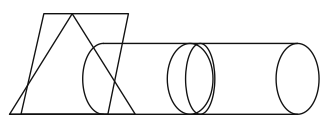
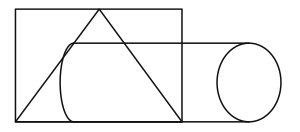
Concept: Figure X is a triangle standing over the left end of a horizontal cylinder; find it in the same size and orientation.
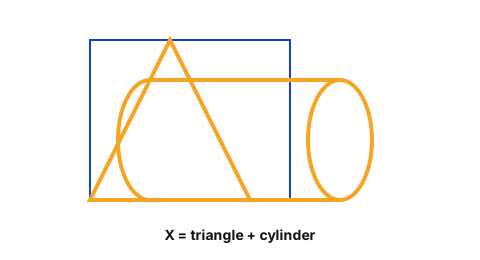
- In option (D) the triangle with its base on the cylinder's bottom edge and apex above the cylinder is present.
- The cylinder extends to the right with its elliptical end exactly as in X; the extra rectangle only surrounds it.
- In (A), (B), (C) the triangle is shifted or tilted relative to the cylinder, so X cannot be traced without rotation.
Trick: Check one fixed corner (the triangle's apex above the cylinder's left end) first — it quickly eliminates options.
Answer: (D)
अवधारणा: आकृति X एक त्रिभुज है जो क्षैतिज सिलिंडर के बाएँ सिरे पर खड़ा है; इसे उसी आकार व दिशा में खोजें।
- विकल्प (D) में त्रिभुज का आधार सिलिंडर की निचली रेखा पर और शीर्ष सिलिंडर के ऊपर है।
- सिलिंडर दाईं ओर उसी अंडाकार सिरे के साथ फैला है; अतिरिक्त आयत केवल चारों ओर बना है।
- (A), (B), (C) में त्रिभुज की स्थिति/झुकाव अलग है, इसलिए बिना घुमाए X नहीं मिलता।
ट्रिक: एक निश्चित बिंदु (सिलिंडर के बाएँ सिरे के ऊपर त्रिभुज का शीर्ष) पहले जाँचें।
उत्तर: (D)
SSC CPO Paper IGeneral Intelligence and ReasoningEmbedded FigureSSC CPO Paper I 2024 · 27 Jun Shift 2
Q1416.Select the set in which the numbers are related in the same way as are the numbers of the following sets.
(NOTE: Operations should be performed on the whole numbers, without breaking
down the numbers into its constituent digits. E.g. 13 – Operations on 13 such as
adding /deleting /multiplying etc. to 13 can be performed. Breaking down 13 into 1 and 3 and then performing mathematical operations on 1 and 3 is not allowed)
(108, 27, 9)
(132, 33, 11)
उस समुच्चय का चयन कीजिए जिसमें संख्याएँ उसी प्रकार संबंधित हैं, जिस प्रकार निम्नलिखित समुच्चयों की संख्याएँ संबंधित हैं।
(ध्यान दें: संक्रियाएँ संख्याओं को उनके घटक अंकों में तोड़े बिना, पूर्ण संख्याओं पर की जानी चाहिए। उदाहरण के लिए 13 – 13 पर की जाने वाली संक्रियाएँ, जैसे 13 में जोड़ना/घटाना/गुणा करना आदि की जा सकती हैं। 13 को 1 और 3 में तोड़कर फिर 1 और 3 पर गणितीय संक्रियाएँ करने की अनुमति नहीं है)
(108, 27, 9)
(132, 33, 11)
- A(180, 45, 10)
- B(190, 45, 15)
- C(180, 45, 15)
- D(180, 55, 15)
Show answer
Concept: Find how the second and third numbers come from the first.
- : , .
- : , ✓.
- : , ✓.
- (A) has ; (B) ; (D) .
Trick: First third, second third: , .
Answer: (C) (180, 45, 15)
अवधारणा: देखें दूसरी और तीसरी संख्या पहली से कैसे बनती हैं।
- : , ।
- : , ✓।
- : , ✓।
- (A) में ; (B) ; (D) ।
ट्रिक: पहली तीसरी, दूसरी तीसरी: , ।
उत्तर: (C) (180, 45, 15)
SSC CPO Paper IGeneral Intelligence and ReasoningNumber Set RelationSSC CPO Paper I 2024 · 27 Jun Shift 2
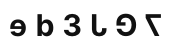
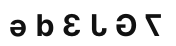
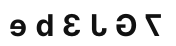
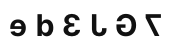
Q1417.Select the correct mirror image of the given figure when the mirror is placed at MN as shown below.
जब दर्पण को नीचे दर्शाए गए अनुसार MN पर रखा जाता है, तो दी गई आकृति के सही दर्पण प्रतिबिंब का चयन कीजिए।
- A
- B
- C
- D
Show answer
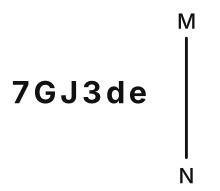
Concept: With the mirror on the right side (vertical line MN), left and right are swapped; top and bottom stay the same.
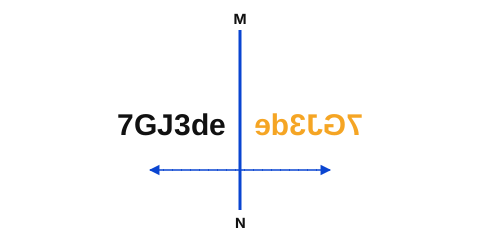
- The order of characters is reversed: the last character 'e' comes first and '7' comes last.
- Every character is also flipped left-to-right (e.g. p looks like q, 3 looks like Ɛ, 7 faces the other way).
- Nothing turns upside-down, so options with inverted characters are wrong.
Trick: Vertical mirror: reverse the order AND flip each character sideways; the height-wise shape never changes.
Answer: (D)
अवधारणा: दर्पण दाईं ओर (ऊर्ध्वाधर रेखा MN) होने पर बायाँ–दायाँ बदल जाता है; ऊपर–नीचे वही रहता है।
- अक्षरों का क्रम उल्टा हो जाता है: अंतिम अक्षर 'e' पहले और '7' अंत में आता है।
- हर अक्षर भी बाएँ-दाएँ पलटता है (जैसे p, q जैसा; 3, Ɛ जैसा; 7 दूसरी ओर मुड़ा)।
- कोई अक्षर उल्टा (ऊपर-नीचे) नहीं होता, अतः ऐसे विकल्प गलत हैं।
ट्रिक: ऊर्ध्वाधर दर्पण: क्रम उल्टा करें और हर अक्षर को sideways पलटें; ऊपर-नीचे आकृति नहीं बदलती।
उत्तर: (D)
SSC CPO Paper IGeneral Intelligence and ReasoningMirror ImageSSC CPO Paper I 2024 · 27 Jun Shift 2
Q1418.If ‘A’ stands for ‘÷’, ‘B’ stands for ‘×’, ‘C’ stands for ‘+’ and ‘D’ stands for ‘–’, what will come in place of the question mark (?) in the following equation?
70 D 11 B 5 C 45 A 9 = ?
यदि ‘A’ का अर्थ ‘÷’ है, ‘B’ का अर्थ ‘×’ है, ‘C’ का अर्थ ‘+’ है और ‘D’ का अर्थ ‘–’ है, तो निम्नलिखित समीकरण में प्रश्न चिह्न (?) के स्थान पर क्या आएगा?
70 D 11 B 5 C 45 A 9 = ?
- A10
- B25
- C15
- D20
Show answer
Concept: Replace letters by signs and apply BODMAS.
- A = , B = , C = , D = .
- .
Trick: Do and first: 55 and 5, then .
Answer: (D) 20
अवधारणा: अक्षरों के स्थान पर चिह्न रखें और BODMAS लगाएँ।
- A = , B = , C = , D = ।
- ।
ट्रिक: पहले और : 55 और 5, फिर ।
उत्तर: (D) 20
SSC CPO Paper IGeneral Intelligence and ReasoningMathematical OperationsSSC CPO Paper I 2024 · 27 Jun Shift 2
Q1419.What will come in place of the question mark (?) when + and − are interchanged and 5 and 18 are also interchanged?
5 − 18 + 12 = ?
यदि + और − को आपस में बदल दिया जाए तथा 5 और 18 को भी आपस में बदल दिया जाए, तो प्रश्न चिह्न (?) के स्थान पर क्या आएगा?
5 − 18 + 12 = ?
- A12
- B13
- C10
- D11
Show answer
Concept: Make both interchanges first, then calculate.
- Interchange + and −: .
- Interchange 5 and 18: .
- .
Trick: Addition is commutative, so swapping 5 and 18 does not change ; only the sign swap matters.
Answer: (D) 11
अवधारणा: पहले दोनों अदला-बदली करें, फिर गणना करें।
- + और − बदलें: ।
- 5 और 18 बदलें: ।
- ।
ट्रिक: योग में क्रम बदलने से अंतर नहीं पड़ता, इसलिए केवल चिह्न बदलना मायने रखता है।
उत्तर: (D) 11
SSC CPO Paper IGeneral Intelligence and ReasoningMathematical OperationsSSC CPO Paper I 2024 · 27 Jun Shift 2
Q1420.Select the correct mirror image of the given figure when the mirror is placed at MN as shown below.
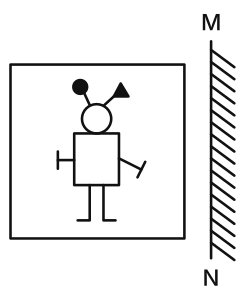
जब दर्पण को नीचे दर्शाए गए अनुसार MN पर रखा जाता है, तो दी गई आकृति के सही दर्पण प्रतिबिंब का चयन कीजिए।
- A
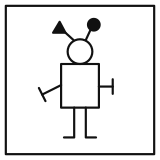
- B
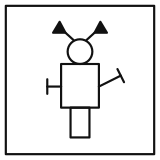
- C
- D
Show answer
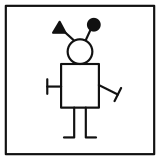
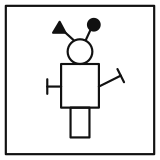
Concept: Vertical mirror MN on the right: every part swaps left ↔ right, nothing moves up or down.
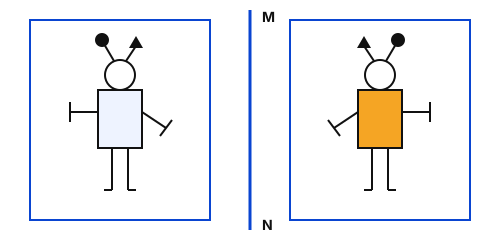
- The ball-antenna (left) goes to the right and the triangle-antenna (right) goes to the left.
- The straight horizontal arm on the left now points to the right; the bent, downward-slanting arm moves to the left side.
- The legs stay open at the bottom as two separate lines — option (A) shows all these changes.
Trick: Track two asymmetric features (antennae and the slanting arm); options that keep either on the same side are wrong.
Answer: (A)
अवधारणा: दाईं ओर ऊर्ध्वाधर दर्पण MN: हर भाग बाएँ ↔ दाएँ बदलता है, ऊपर-नीचे कुछ नहीं बदलता।
- गोल (ball) एंटीना बाएँ से दाएँ और त्रिभुज एंटीना दाएँ से बाएँ आ जाता है।
- बाईं सीधी क्षैतिज भुजा अब दाईं ओर; नीचे झुकी भुजा बाईं ओर चली जाती है।
- पैर नीचे दो अलग रेखाओं के रूप में ही रहते हैं — विकल्प (A) में ये सभी बदलाव हैं।
ट्रिक: दो असममित भाग (एंटीना और झुकी भुजा) देखें; जो विकल्प इन्हें उसी ओर रखे, वह गलत।
उत्तर: (A)
SSC CPO Paper IGeneral Intelligence and ReasoningMirror ImageSSC CPO Paper I 2024 · 27 Jun Shift 2

