Q1581.A total of 60 students are travelling in a bus. The ratio of the number of boys to that of girls is 2 : 1. Then, 15 boys get down and 5 girls get in the bus at the first stop, and 5 boys get in and 10 girls get down from the bus at the second stop. What is the ratio of the number of boys to that of girls in the bus after the second stop?
एक बस में कुल 60 विद्यार्थी यात्रा कर रहे हैं। लड़कों की संख्या का लड़कियों की संख्या से अनुपात 2 : 1 है। फिर, पहले पड़ाव पर 15 लड़के बस से उतर जाते हैं और 5 लड़कियाँ बस में चढ़ती हैं, तथा दूसरे पड़ाव पर 5 लड़के बस में चढ़ते हैं और 10 लड़कियाँ बस से उतर जाती हैं। दूसरे पड़ाव के बाद बस में लड़कों की संख्या का लड़कियों की संख्या से अनुपात क्या है?
- A3 : 2
- B2 : 1
- C2 : 3
- D3 : 1
Show answer
Concept: Find the actual numbers from the ratio, then apply the changes.
- Boys , girls .
- 1st stop: boys , girls .
- 2nd stop: boys , girls .
- Ratio .
Trick: Net change: boys , girls → .
Answer: (B) 2 : 1
अवधारणा: अनुपात से वास्तविक संख्या निकालें, फिर बदलाव लगाएँ।
- लड़के , लड़कियाँ ।
- पहला स्टॉप: लड़के , लड़कियाँ ।
- दूसरा स्टॉप: लड़के , लड़कियाँ ।
- अनुपात ।
ट्रिक: कुल बदलाव: लड़के , लड़कियाँ → ।
उत्तर: (B) 2 : 1
SSC CPO Paper IGeneral Intelligence and ReasoningRatio – Boys and GirlsSSC CPO Paper I 2020 · 23 Nov Shift 3
Q1582.Select the letter-cluster that can replace the question mark (?) in the given letter-cluster series.
ZBQS, WXLM, ?, QPBA, NLWU
उस अक्षर-समूह का चयन कीजिए जो दी गई अक्षर-समूह श्रृंखला में प्रश्न चिह्न (?) के स्थान पर आ सकता है।
ZBQS, WXLM, ?, QPBA, NLWU
- ATSHG
- BTTGH
- CTTGG
- DSTGG
Show answer
Concept: Each letter position follows its own backward step.
- 1st letters: Z, W, ?, Q, N — each → T.
- 2nd letters: B, X, ?, P, L — each → T.
- 3rd letters: Q, L, ?, B, W — each → G.
- 4th letters: S, M, ?, A, U — each → G. Answer TTGG.
Trick: Steps for the four positions.
Answer: (C) TTGG
अवधारणा: हर स्थान का अक्षर अपने-अपने अंतर से पीछे जाता है।
- पहला: Z, W, ?, Q, N — → T।
- दूसरा: B, X, ?, P, L — → T।
- तीसरा: Q, L, ?, B, W — → G।
- चौथा: S, M, ?, A, U — → G। उत्तर TTGG।
ट्रिक: चारों स्थानों पर ।
उत्तर: (C) TTGG
SSC CPO Paper IGeneral Intelligence and ReasoningLetter SeriesSSC CPO Paper I 2020 · 23 Nov Shift 3
Q1583.Study the given pattern carefully and select the number that can replace the question mark (?) in it.
| 4507 | 7077 | 37 |
| 2503 | 3067 | 26 |
| 3307 | 4061 | ? |
दिए गए पैटर्न का ध्यानपूर्वक अध्ययन कीजिए और उस संख्या का चयन कीजिए जो उसमें प्रश्न चिह्न (?) के स्थान पर आ सकती है।
| 4507 | 7077 | 37 |
| 2503 | 3067 | 26 |
| 3307 | 4061 | ? |
- A72
- B24
- C67
- D45
Show answer
Concept: Third number = sum of all digits of the first two numbers in the row.
- Row 1: ✓.
- Row 2: ✓.
- Row 3: .
Trick: Large 4-digit numbers giving a 2-digit result usually means digit sums.
Answer: (B) 24
अवधारणा: तीसरी संख्या = पंक्ति की पहली दो संख्याओं के सभी अंकों का योग।
- पंक्ति 1: ✓।
- पंक्ति 2: ✓।
- पंक्ति 3: ।
ट्रिक: बड़ी संख्याओं से छोटा परिणाम = प्रायः अंकों का योग।
उत्तर: (B) 24
SSC CPO Paper IGeneral Intelligence and ReasoningNumber MatrixSSC CPO Paper I 2020 · 23 Nov Shift 3
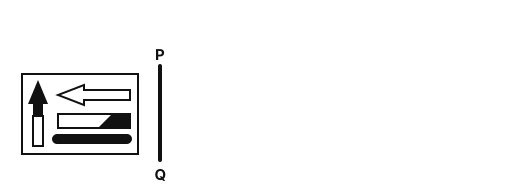
Q1584.Select the correct mirror image of the given combination when the mirror is placed at 'PQ' as shown below.
नीचे दर्शाए अनुसार दर्पण को 'PQ' पर रखे जाने पर दिए गए संयोजन की सही दर्पण छवि का चयन करें।
- A

- B

- C

- D

Show answer
Concept: A vertical mirror on the right swaps left and right; top and bottom stay the same.
- The upward black arrow on the left moves to the right side and still points up with its black head.
- The arrow pointing left now points right.
- The black shaded block and the thick bar at the bottom flip left–right, staying at the bottom.
- Option (B) shows all this; (C) has the arrow pointing down, (D) has the colours of the arrow swapped, (A) keeps the arrow pointing left.
Trick: Vertical mirror: ‘up/down’ never changes, only ‘left/right’.
Answer: (B) Option (B)
अवधारणा: दाईं ओर खड़ा दर्पण बाएँ-दाएँ बदलता है; ऊपर-नीचे वैसा ही रहता है।
- बाईं ओर का ऊपर जाता काला तीर दाईं ओर आएगा और ऊपर ही इशारा करेगा।
- बाईं ओर इशारा करता तीर अब दाईं ओर इशारा करेगा।
- काला भाग और नीचे की मोटी पट्टी बाएँ-दाएँ पलटेंगे, नीचे ही रहेंगे।
- यह विकल्प (B) है; (C) में तीर नीचे, (D) में तीर का रंग उल्टा, (A) में तीर बाईं ओर।
ट्रिक: खड़े दर्पण में ऊपर/नीचे नहीं बदलता, केवल बाएँ/दाएँ।
उत्तर: (B) विकल्प (B)
SSC CPO Paper IGeneral Intelligence and ReasoningMirror ImageSSC CPO Paper I 2020 · 23 Nov Shift 3
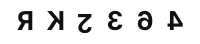
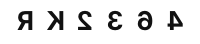
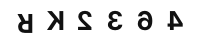
Q1585.Select the correct mirror image of the given combination when the mirror is placed at 'PQ' as shown below.

नीचे दर्शाए अनुसार दर्पण को 'PQ' पर रखे जाने पर दिए गए संयोजन की सही दर्पण छवि का चयन करें।
- A
- B

- C
- D
Show answer
Concept: For a vertical mirror on the right, the order of characters reverses and every character is laterally inverted; nothing turns upside down.
- 4632KR read in the mirror gives R, K, 2, 3, 6, 4 from left to right.
- Each is flipped left–right: reversed R, reversed K, reversed 2, reversed 3, reversed 6, reversed 4.
- In (A) and (B) some digits (the 2, 6 or 4) are not laterally inverted correctly, and in (D) the ‘R’ is wrong. Only option (C) shows every character correctly mirrored.
Trick: Check the asymmetric digits 2 and 4 first.
Answer: (C) Option (C)
अवधारणा: दाईं ओर खड़े दर्पण में अक्षरों का क्रम उल्टा हो जाता है और हर अक्षर बाएँ-दाएँ पलटता है; कोई उल्टा (ऊपर-नीचे) नहीं होता।
- 4632KR दर्पण में बाएँ से R, K, 2, 3, 6, 4 दिखेगा।
- हर अक्षर/अंक पार्श्व रूप से पलटा (laterally inverted) होगा।
- (A) और (B) में कुछ अंक (2, 6 या 4) सही से नहीं पलटे, (D) में ‘R’ गलत है। केवल (C) में सभी सही हैं।
ट्रिक: असममित अंक 2 और 4 पहले जाँचें।
उत्तर: (C) विकल्प (C)
SSC CPO Paper IGeneral Intelligence and ReasoningMirror Image (Alphanumeric)SSC CPO Paper I 2020 · 23 Nov Shift 3
Q1586.If 5 November 2019 was Tuesday, then what was the day of the week on 5 December 2011?
यदि 5 नवंबर 2019 को मंगलवार था, तो 5 दिसंबर 2011 को सप्ताह का कौन-सा दिन था?
- ATuesdayमंगलवार
- BSundayरविवार
- CMondayसोमवार
- DSaturdayशनिवार
Show answer
Concept: Count odd days between the two dates (ordinary year = 1 odd day, leap year = 2).
- 5 Dec 2011 → 5 Dec 2018: 7 years with leap days of 2012 and 2016 → odd days.
- 5 Dec 2018 → 5 Nov 2019: days, → 6 odd days.
- Total , leaves 1 odd day.
- So 5 Nov 2019 is 1 day ahead of 5 Dec 2011: Tuesday − 1 = Monday.
Trick: Going back in time, subtract the odd days from the known weekday.
Answer: (C) Monday
अवधारणा: दोनों तिथियों के बीच विषम दिन (odd days) गिनें (साधारण वर्ष = 1, लीप वर्ष = 2)।
- 5 दिसं 2011 → 5 दिसं 2018: 7 वर्ष, लीप दिन 2012 और 2016 → विषम दिन।
- 5 दिसं 2018 → 5 नवं 2019: दिन, → 6 विषम दिन।
- कुल → 1 विषम दिन।
- 5 नवं 2019 (मंगलवार) से 1 दिन पीछे = सोमवार।
ट्रिक: पीछे की तिथि के लिए विषम दिन घटाएँ।
उत्तर: (C) Monday (सोमवार)
SSC CPO Paper IGeneral Intelligence and ReasoningCalendarSSC CPO Paper I 2020 · 23 Nov Shift 3
Q1587.Which number will replace the question mark (?) in the following series?
58, 59, 51, 78, 14, ?
निम्नलिखित श्रृंखला में प्रश्न चिह्न (?) के स्थान पर कौन-सी संख्या आएगी?
58, 59, 51, 78, 14, ?
- A97
- B139
- C83
- D163
Show answer
Concept: Differences are cubes with alternating signs.
- , .
- , .
- Next difference .
- .
Trick: 1, 8, 27, 64 → cubes; signs alternate .
Answer: (B) 139
अवधारणा: अंतर बारी-बारी से धन/ऋण घन संख्याएँ हैं।
- , ।
- , ।
- अगला अंतर ।
- ।
ट्रिक: 1, 8, 27, 64 → घन; चिह्न बारी-बारी।
उत्तर: (B) 139
SSC CPO Paper IGeneral Intelligence and ReasoningNumber SeriesSSC CPO Paper I 2020 · 23 Nov Shift 3
Q1588.Select the figure that will replace the question mark (?) in the following figure series.
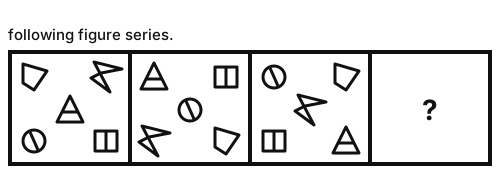
उस आकृति का चयन करें जो निम्नलिखित आकृति श्रृंखला में प्रश्न चिह्न (?) के स्थान पर आएगी।
- A

- B

- C

- D

Show answer
Concept: Five elements occupy five places (four corners and centre); each element moves along the same fixed cycle of places.
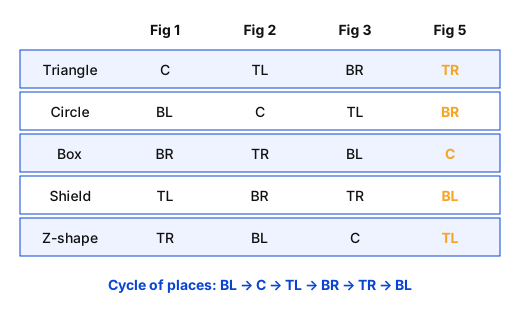
- Tracking the circle: BL → C → TL; the triangle: C → TL → BR; the box: BR → TR → BL.
- So the cycle of places is BL → C → TL → BR → TR → BL.
- Next step: triangle → TR, circle → BR, box → C, shield → BL, Z-shape → TL.
- Option (D) shows exactly this arrangement.
Trick: Follow just two elements to fix the cycle, then check the option.
Answer: (D) Option (D)
अवधारणा: पाँच तत्व पाँच स्थानों (चार कोने और केंद्र) पर हैं; हर तत्व एक ही निश्चित चक्र में खिसकता है।
- वृत्त: BL → C → TL; त्रिभुज: C → TL → BR; डिब्बा: BR → TR → BL।
- अतः स्थानों का चक्र: BL → C → TL → BR → TR → BL।
- अगला: त्रिभुज → TR, वृत्त → BR, डिब्बा → C, ढाल → BL, Z-आकृति → TL।
- यही विकल्प (D) है।
ट्रिक: दो तत्वों से चक्र तय करें, फिर विकल्प मिलाएँ।
उत्तर: (D) विकल्प (D)
SSC CPO Paper IGeneral Intelligence and ReasoningFigure SeriesSSC CPO Paper I 2020 · 23 Nov Shift 3
Q1589.In a code language, if 'she was working' is written as '592', 'I was curious' is written as '267', and 'she is curious' is written as '987', then what will be the code for the word 'she' in this language?
एक कूट भाषा में, यदि 'she was working' को '592' लिखा जाता है, 'I was curious' को '267' लिखा जाता है, और 'she is curious' को '987' लिखा जाता है, तो इस भाषा में 'she' शब्द का कूट क्या होगा?
- A9
- B5
- C8
- D2
Show answer
Concept: A word common to two sentences has the digit common to their codes.
- ‘was’ in sentences 1 and 2: common digit 2.
- ‘curious’ in sentences 2 and 3: common digit 7.
- ‘she’ in sentences 1 and 3: codes 592 and 987 share 9.
- So she = 9.
Trick: Intersect the two codes containing the word directly.
Answer: (A) 9
अवधारणा: दो वाक्यों में समान शब्द का कोड दोनों कोड में समान अंक होता है।
- ‘was’ वाक्य 1 और 2 में: समान अंक 2।
- ‘curious’ वाक्य 2 और 3 में: 7।
- ‘she’ वाक्य 1 और 3 में: 592 और 987 में समान 9।
- अतः she = 9।
ट्रिक: शब्द वाले दोनों कोड का समान अंक सीधे लें।
उत्तर: (A) 9
SSC CPO Paper IGeneral Intelligence and ReasoningCoding–Decoding (Word Codes)SSC CPO Paper I 2020 · 23 Nov Shift 3
Q1590.‘A % B’ means ‘A is the sister of B’.
‘A + B’ means ‘A is the father of B’.
‘A ! B’ means ‘A is the brother of B’.
If P ! H + Q % M + T % K ! J, then how is Q related to J?
‘A % B’ का अर्थ है ‘A, B की बहन है’।
‘A + B’ का अर्थ है ‘A, B का पिता है’।
‘A ! B’ का अर्थ है ‘A, B का भाई है’।
यदि P ! H + Q % M + T % K ! J है, तो Q का J से क्या संबंध है?
- ASister-in-lawभाभी/ननद
- BDaughter-in-lawबहू
- CMaternal auntमौसी
- DPaternal auntबुआ
Show answer
Concept: Decode each symbol and build the family tree.
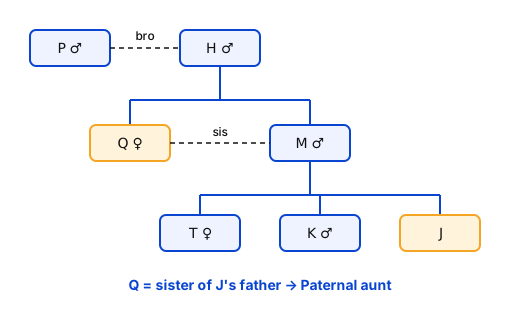
- P ! H: P is brother of H. H + Q: H is father of Q.
- Q % M: Q is sister of M. M + T: M is father of T.
- T % K: T is sister of K. K ! J: K is brother of J — so J is also M’s child.
- Q is the sister of J’s father M → Q is J’s paternal aunt.
Yaad rakhein: Father’s sister = paternal aunt (bua); mother’s sister = maternal aunt (mausi).
Answer: (D) Paternal aunt
अवधारणा: हर चिह्न का अर्थ लगाकर परिवार वृक्ष बनाएँ।
- P ! H: P, H का भाई। H + Q: H, Q का पिता।
- Q % M: Q, M की बहन। M + T: M, T का पिता।
- T % K: T, K की बहन। K ! J: K, J का भाई — अतः J भी M की संतान।
- Q, J के पिता M की बहन है → Q, J की बुआ (paternal aunt)।
याद रखें: पिता की बहन = बुआ (paternal aunt); माँ की बहन = मौसी (maternal aunt)।
उत्तर: (D) Paternal aunt (बुआ)
SSC CPO Paper IGeneral Intelligence and ReasoningCoded Blood RelationsSSC CPO Paper I 2020 · 23 Nov Shift 3
Q1591.Two statements are given, followed by three conclusions numbered I, II and III. Assuming the statements to be true, even if they seem to be at variance with commonly known facts, decide which of the conclusions logically follow(s) from the statements.
Statements:
All plums are pomegranates.
Some plums are lemons.
Conclusions:
I. Some pomegranates are lemons.
II. No lemon is a pomegranate.
III. Some pomegranates are plums.
दो कथन दिए गए हैं, जिनके बाद तीन निष्कर्ष I, II और III दिए गए हैं। कथनों को सत्य मानते हुए, भले ही वे सामान्यतः ज्ञात तथ्यों से भिन्न प्रतीत होते हों, निर्णय कीजिए कि कौन-सा/से निष्कर्ष कथनों का तार्किक रूप से अनुसरण करता है/करते हैं।
कथन:
सभी आलूबुखारे, अनार हैं।
कुछ आलूबुखारे, नींबू हैं।
निष्कर्ष:
I. कुछ अनार, नींबू हैं।
II. कोई नींबू, अनार नहीं है।
III. कुछ अनार, आलूबुखारे हैं।
- AOnly conclusion III followsकेवल निष्कर्ष III अनुसरण करता है
- BOnly conclusion I followsकेवल निष्कर्ष I अनुसरण करता है
- COnly conclusions I and III followकेवल निष्कर्ष I और III अनुसरण करते हैं
- DOnly conclusions I and II followकेवल निष्कर्ष I और II अनुसरण करते हैं
Show answer
Concept: Draw the least possible Venn diagram for the statements and test each conclusion.
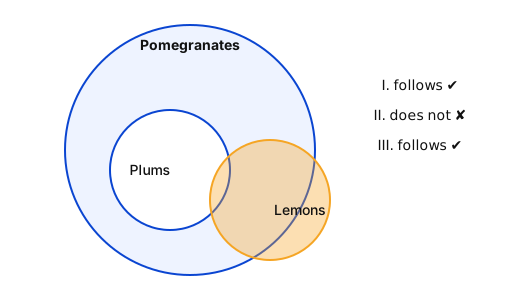
- All plums are pomegranates → Plums circle lies inside Pomegranates.
- Some plums are lemons → the lemons that are plums are also pomegranates, so ‘Some pomegranates are lemons’ (I) follows.
- II (No lemon is a pomegranate) contradicts I, so it does not follow.
- ‘All plums are pomegranates’ gives ‘Some pomegranates are plums’ (III) follows.
Trick: ‘All A are B’ always gives ‘Some B are A’.
Answer: (C) Only conclusions I and III follow
अवधारणा: कथनों का न्यूनतम वेन आरेख बनाकर हर निष्कर्ष जाँचें।
- All plums are pomegranates → Plums वृत्त Pomegranates के अंदर।
- Some plums are lemons → ये lemons pomegranates भी हैं, अतः I (Some pomegranates are lemons) सही।
- II (No lemon is a pomegranate) I के विपरीत है, अनुसरण नहीं करता।
- ‘All plums are pomegranates’ से III (Some pomegranates are plums) सही।
ट्रिक: ‘All A are B’ से हमेशा ‘Some B are A’ निकलता है।
उत्तर: (C) Only conclusions I and III follow
SSC CPO Paper IGeneral Intelligence and ReasoningSyllogismSSC CPO Paper I 2020 · 23 Nov Shift 3
Q1592.Select the option that is related to the third letter-cluster in the same way as the second letter-cluster is related to the first letter-cluster.
CROW : XILD :: SPONGE : ?
उस विकल्प का चयन कीजिए जो तीसरे अक्षर-समूह से उसी प्रकार संबंधित है, जिस प्रकार दूसरा अक्षर-समूह पहले अक्षर-समूह से संबंधित है।
CROW : XILD :: SPONGE : ?
- AHKLMTV
- BFJLMTV
- CHKLPRV
- DHKLMSY
Show answer
Concept: Each letter is replaced by its opposite letter (pairs whose positions add to 27).
- CROW: C↔X, R↔I, O↔L, W↔D → XILD ✓.
- SPONGE: S↔H, P↔K, O↔L, N↔M, G↔T, E↔V.
- Result: HKLMTV.
Trick: Opposite of a letter its position, e.g. S(19) → = H.
Answer: (A) HKLMTV
अवधारणा: हर अक्षर को उसके विपरीत अक्षर (स्थानों का योग 27) से बदला गया है।
- CROW: C↔X, R↔I, O↔L, W↔D → XILD ✓।
- SPONGE: S↔H, P↔K, O↔L, N↔M, G↔T, E↔V।
- परिणाम: HKLMTV।
ट्रिक: विपरीत अक्षर स्थान, जैसे S(19) → = H।
उत्तर: (A) HKLMTV
SSC CPO Paper IGeneral Intelligence and ReasoningLetter Analogy (Opposite Letters)SSC CPO Paper I 2020 · 23 Nov Shift 3
Q1593.In a code language, 'NIGHT' is written as ‘GHINT’. How will 'AMPLITUDE' be written in that language?
एक कूट भाषा में, 'NIGHT' को ‘GHINT’ लिखा जाता है। उसी भाषा में 'AMPLITUDE' को कैसे लिखा जाएगा?
- AADELPIMTU
- BPDEILMATU
- CADEILMPTU
- DPDEILMTPU
Show answer
Concept: The letters of the word are rearranged in alphabetical order.
- NIGHT → G, H, I, N, T → GHINT ✓.
- AMPLITUDE letters: A, M, P, L, I, T, U, D, E.
- In alphabetical order: A, D, E, I, L, M, P, T, U → ADEILMPTU.
Trick: Check the 4th letter: only option (C) has I before L.
Answer: (C) ADEILMPTU
अवधारणा: शब्द के अक्षर वर्णानुक्रम (alphabetical order) में लिखे गए हैं।
- NIGHT → G, H, I, N, T → GHINT ✓।
- AMPLITUDE के अक्षर: A, M, P, L, I, T, U, D, E।
- वर्णानुक्रम: A, D, E, I, L, M, P, T, U → ADEILMPTU।
ट्रिक: चौथा अक्षर देखें: केवल (C) में I, L से पहले है।
उत्तर: (C) ADEILMPTU
SSC CPO Paper IGeneral Intelligence and ReasoningCoding – Alphabetical ArrangementSSC CPO Paper I 2020 · 23 Nov Shift 3
Q1594.Two statements are given, followed by two conclusions numbered I and II. Assuming the statements to be true, even if they seem to be at variance with commonly known facts, decide which of the conclusions logically follow(s) from the statements.
Statements:
No actor is an engineer.
All engineers are magicians.
Conclusions:
I. No magician is an engineer.
II. Some magicians are engineers.
दो कथन दिए गए हैं, जिनके बाद दो निष्कर्ष I और II दिए गए हैं। कथनों को सत्य मानते हुए, भले ही वे सामान्यतः ज्ञात तथ्यों से भिन्न प्रतीत होते हों, निर्णय कीजिए कि कौन-सा/से निष्कर्ष कथनों का तार्किक रूप से अनुसरण करता है/करते हैं।
कथन:
कोई अभिनेता, इंजीनियर नहीं है।
सभी इंजीनियर, जादूगर हैं।
निष्कर्ष:
I. कोई जादूगर, इंजीनियर नहीं है।
II. कुछ जादूगर, इंजीनियर हैं।
- ABoth conclusions followदोनों निष्कर्ष अनुसरण करते हैं
- BEither conclusion I or II followsया तो निष्कर्ष I या II अनुसरण करता है
- COnly conclusion I followsकेवल निष्कर्ष I अनुसरण करता है
- DOnly conclusion II followsकेवल निष्कर्ष II अनुसरण करता है
Show answer
Concept: Draw the least possible Venn diagram and test the conclusions.
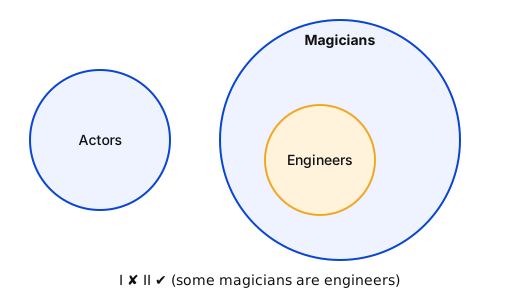
- No actor is an engineer → Actors and Engineers are separate.
- All engineers are magicians → Engineers lie inside Magicians.
- I: ‘No magician is an engineer’ is false — every engineer is a magician.
- II: ‘Some magicians are engineers’ follows from ‘All engineers are magicians’.
Trick: ‘All A are B’ → ‘Some B are A’ is always true.
Answer: (D) Only conclusion II follows
अवधारणा: न्यूनतम वेन आरेख बनाकर निष्कर्ष जाँचें।
- No actor is an engineer → Actors और Engineers अलग।
- All engineers are magicians → Engineers, Magicians के अंदर।
- I: ‘No magician is an engineer’ गलत — हर engineer magician है।
- II: ‘Some magicians are engineers’ सही, क्योंकि ‘All engineers are magicians’।
ट्रिक: ‘All A are B’ → ‘Some B are A’ सदा सत्य।
उत्तर: (D) Only conclusion II follows
SSC CPO Paper IGeneral Intelligence and ReasoningSyllogismSSC CPO Paper I 2020 · 23 Nov Shift 3
Q1595.Select the letter-cluster that can replace the question mark (?) in the given letter-cluster series.
YM, WO, UQ, ?, QU
उस अक्षर-समूह का चयन कीजिए जो दी गई अक्षर-समूह श्रृंखला में प्रश्न चिह्न (?) के स्थान पर आ सकता है।
YM, WO, UQ, ?, QU
- ATS
- BSS
- CST
- DRS
Show answer
Concept: Track the first and second letters separately.
- 1st letters: Y, W, U, ?, Q — each → S.
- 2nd letters: M, O, Q, ?, U — each → S.
- Missing cluster = SS.
Trick: One letter goes back by 2 while the other goes forward by 2, so they meet at S.
Answer: (B) SS
अवधारणा: पहला और दूसरा अक्षर अलग-अलग देखें।
- पहला अक्षर: Y, W, U, ?, Q — हर बार → S।
- दूसरा अक्षर: M, O, Q, ?, U — हर बार → S।
- लुप्त समूह = SS।
ट्रिक: एक अक्षर 2 पीछे, दूसरा 2 आगे — दोनों S पर मिलते हैं।
उत्तर: (B) SS
SSC CPO Paper IGeneral Intelligence and ReasoningLetter SeriesSSC CPO Paper I 2020 · 23 Nov Shift 3
Q1596.Select the dice that can be formed by folding the given sheet in the form of a cube.
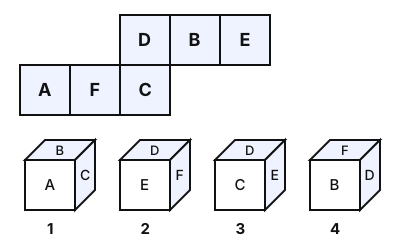
उस पासे का चयन कीजिए जिसे दी गई शीट को घन के रूप में मोड़कर बनाया जा सकता है।
- A1 and 4 can be formed.1 और 4 बनाए जा सकते हैं।
- BOnly 3 can be formed.केवल 3 बनाया जा सकता है।
- COnly 2 can be formed.केवल 2 बनाया जा सकता है।
- DNone can be formed.कोई भी नहीं बनाया जा सकता है।
Show answer
Concept: Find the three pairs of opposite faces; a die can never show two opposite faces together.
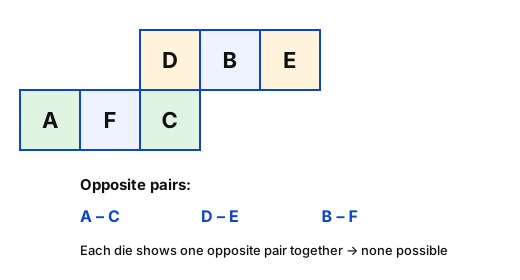
- Row A F C: A and C (one face between) are opposite.
- Row D B E: D and E are opposite.
- The remaining faces B and F are opposite.
- Die 1 shows A and C, die 2 and die 3 show D and E, die 4 shows B and F — each shows an opposite pair, so none can be formed.
Yaad rakhein: Two faces visible together on a die are always adjacent, never opposite.
Answer: (D) None can be formed.
अवधारणा: तीन विपरीत फलक-युग्म निकालें; पासे पर दो विपरीत फलक साथ नहीं दिख सकते।
- पंक्ति A F C: A और C विपरीत।
- पंक्ति D B E: D और E विपरीत।
- बचे B और F विपरीत।
- पासा 1 में A, C; पासा 2 और 3 में D, E; पासा 4 में B, F — सभी में विपरीत युग्म, अतः कोई नहीं बन सकता।
याद रखें: पासे पर साथ दिखने वाले फलक हमेशा आसन्न (adjacent) होते हैं।
उत्तर: (D) None can be formed.
SSC CPO Paper IGeneral Intelligence and ReasoningCube Net – Possible DiceSSC CPO Paper I 2020 · 23 Nov Shift 3
Q1597.Study the given pattern carefully and select the number that can replace the question mark (?) in it.
दिए गए पैटर्न का ध्यानपूर्वक अध्ययन कीजिए और उस संख्या का चयन कीजिए जो उसमें प्रश्न चिह्न (?) के स्थान पर आ सकती है।
- A280
- B258
- C320
- D240
Show answer
Concept: In each column, middle number = bottom number × (top number + 1).
- Column 1: ✓.
- Column 2: ✓.
- Column 3: .
Trick: Divide the big number by the bottom one: , — one more than the top.
Answer: (A) 280
अवधारणा: हर स्तंभ में बीच की संख्या = नीचे की संख्या × (ऊपर की संख्या + 1)।
- स्तंभ 1: ✓।
- स्तंभ 2: ✓।
- स्तंभ 3: ।
ट्रिक: बड़ी संख्या ÷ नीचे की संख्या: , — ऊपर वाली से 1 अधिक।
उत्तर: (A) 280
SSC CPO Paper IGeneral Intelligence and ReasoningNumber MatrixSSC CPO Paper I 2020 · 23 Nov Shift 3
Q1598.The sum of a number’s square, its cube and its next number’s cube is 205. What is the number?
किसी संख्या के वर्ग, उसके घन और उसकी अगली संख्या के घन का योग 205 है। वह संख्या क्या है?
- A3
- B5
- C4
- D6
Show answer
Concept: Form the equation and test the options.
- : ✓.
- : — too small.
- : — too large.
Trick: Start with the middle option; cubes grow fast so one test is often enough.
Answer: (C) 4
अवधारणा: समीकरण बनाकर विकल्प जाँचें।
- : ✓।
- : — कम।
- : — अधिक।
ट्रिक: घन तेजी से बढ़ते हैं; बीच वाले विकल्प से जाँच शुरू करें।
उत्तर: (C) 4
SSC CPO Paper IGeneral Intelligence and ReasoningNumber Puzzle – Squares and CubesSSC CPO Paper I 2020 · 23 Nov Shift 3
Q1599.A paper is folded and cut as shown below. How will it appear when unfolded?
एक कागज़ को नीचे दर्शाए अनुसार मोड़ा और काटा जाता है। खोलने पर यह कैसा दिखाई देगा?
- A
- B
- C
- D
Show answer
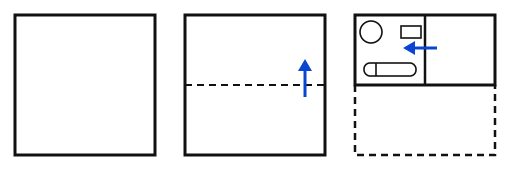
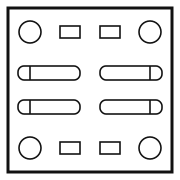
Concept: The sheet is folded twice (bottom half up, then right half to the left), so the cuts in the top-left quarter repeat in all four quarters as mirror images.
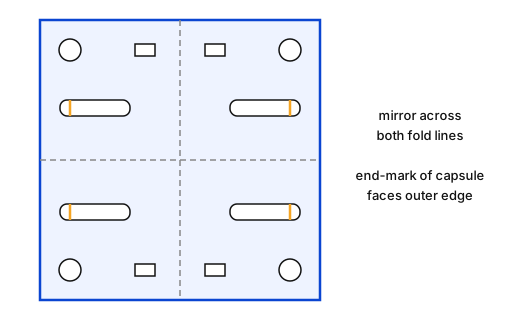
- Top-left quarter has: a circle at the corner, a small rectangle near the vertical fold, and a capsule whose marked end is at the left.
- Unfolding left–right mirrors them: circles at both outer corners, the two small rectangles side by side at the centre line, capsule marks on the outer ends.
- Unfolding top–bottom mirrors again: the same pattern appears in the lower half, upside-down, so circles and rectangles are in the top and bottom rows and capsules in the middle.
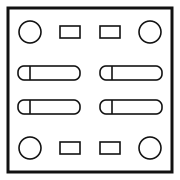
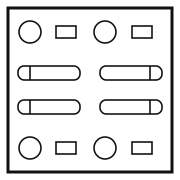
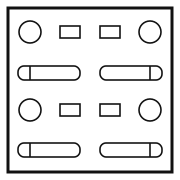
- Option (A) matches; (B) has the right-side capsule marks on the inner end.
Trick: After unfolding, every hole is symmetric about both fold lines.
Answer: (A) Option (A)
अवधारणा: कागज़ दो बार मोड़ा गया (नीचे का आधा ऊपर, फिर दायाँ आधा बाएँ), अतः ऊपरी-बाएँ चौथाई के कटाव चारों भागों में दर्पण रूप में आएँगे।
- ऊपरी-बाएँ भाग में: कोने पर वृत्त, खड़ी तह के पास छोटा आयत, और बाईं ओर निशान वाला कैप्सूल।
- बाएँ-दाएँ खोलने पर: दोनों बाहरी कोनों पर वृत्त, केंद्र रेखा पर दो छोटे आयत, कैप्सूल के निशान बाहरी सिरों पर।
- ऊपर-नीचे खोलने पर यही पैटर्न नीचे उल्टा आता है: वृत्त-आयत ऊपर और नीचे की पंक्ति में, कैप्सूल बीच में।
- यह विकल्प (A) है; (B) में दाएँ कैप्सूल का निशान अंदर की ओर है।
ट्रिक: खोलने के बाद हर छेद दोनों मोड़-रेखाओं के सापेक्ष सममित होता है।
उत्तर: (A) विकल्प (A)
SSC CPO Paper IGeneral Intelligence and ReasoningPaper Folding and CuttingSSC CPO Paper I 2020 · 23 Nov Shift 3
Q1600.Five persons Lopa, Kripa, Sumi, Jani and Sush are sitting in a straight line facing north. Sush is to the immediate left of Sumi. Jani is to the immediate right of Lopa. Kripa is between Sush and Jani. Who is sitting between Lopa and Kripa?
पाँच व्यक्ति लोपा, कृपा, सुमी, जानी और सुश, उत्तर की ओर मुख करके एक सीधी पंक्ति में बैठे हैं। सुश, सुमी के ठीक बाईं ओर है। जानी, लोपा के ठीक दाईं ओर है। कृपा, सुश और जानी के बीच में है। लोपा और कृपा के बीच में कौन बैठा है?
- AData is inadequateआँकड़े अपर्याप्त हैं
- BEither Sush or Sumiया तो सुश या सुमी
- CJaniजानी
- DSushसुश
Show answer
Concept: All face North, so their left and right are the same as ours.
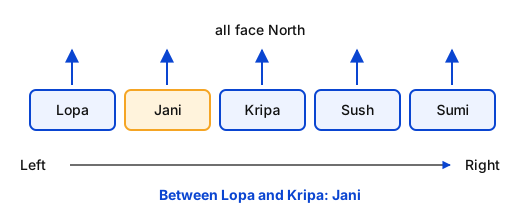
- Sush is immediate left of Sumi → Sush, Sumi.
- Jani is immediate right of Lopa → Lopa, Jani.
- Kripa sits between Sush and Jani → Lopa, Jani, Kripa, Sush, Sumi.
- Between Lopa and Kripa sits Jani.
Trick: Place the fixed pairs first, then fit the ‘between’ clue.
Answer: (C) Jani
अवधारणा: सभी उत्तर की ओर देख रहे हैं, इसलिए उनका बायाँ-दायाँ हमारे जैसा है।
- Sush, Sumi के ठीक बाएँ → Sush, Sumi।
- Jani, Lopa के ठीक दाएँ → Lopa, Jani।
- Kripa, Sush और Jani के बीच → Lopa, Jani, Kripa, Sush, Sumi।
- Lopa और Kripa के बीच Jani है।
ट्रिक: पहले तय जोड़े रखें, फिर ‘बीच में’ वाली शर्त लगाएँ।
उत्तर: (C) Jani
SSC CPO Paper IGeneral Intelligence and ReasoningLinear Seating ArrangementSSC CPO Paper I 2020 · 23 Nov Shift 3

