Q161.The simple interest on a certain sum for 4 years at 14% per annum is ₹6,160 less than the simple interest on the same sum at the same rate for 8 years. Find the sum.
किसी निश्चित राशि पर 14% वार्षिक दर से 4 वर्षों का साधारण ब्याज, उसी राशि पर उसी दर से 8 वर्षों के साधारण ब्याज से ₹6,160 कम है। राशि ज्ञात कीजिए।
- A₹9,000
- B₹12,000
- C₹11,000
- D₹10,000
Show answer
Concept: Simple interest ; the difference of 8 years and 4 years is the SI of 4 years.
- Extra years
Trick: 4 years at = of sum = ₹6,160 → sum .
Answer: (C) ₹11,000
अवधारणा: साधारण ब्याज ; 8 वर्ष और 4 वर्ष के ब्याज का अंतर = 4 वर्ष का ब्याज।
- अतिरिक्त वर्ष
ट्रिक: 4 वर्ष, = मूलधन का = ₹6,160 → मूलधन ।
उत्तर: (C) ₹11,000
SSC CPO Paper IQuantitative AptitudeSimple interestSSC CPO Paper I 2024 · 28 Jun Shift 3
Q162.Let a be a positive number and . What is the mean proportional of a and b?
मान लीजिए a एक धनात्मक संख्या है और है। a और b का मध्यानुपाती क्या है?
- Aa
- B3
- C2
- D4
Show answer
Concept: Mean proportional of and is .
- Mean proportional (positive since ).
Yaad rakhein: If , the mean proportional is always .
Answer: (C) 2
अवधारणा: और का मध्यानुपाती होता है।
- मध्यानुपाती ( होने से धनात्मक)।
याद रखें: यदि हो तो मध्यानुपाती हमेशा ।
उत्तर: (C) 2
SSC CPO Paper IQuantitative AptitudeMean proportionalSSC CPO Paper I 2024 · 28 Jun Shift 3
Q163.Simplify the given expression.
दिए गए व्यंजक को सरल कीजिए।
- A
- B13
- C39
- D
Show answer
Concept: Use BODMAS separately in numerator and denominator; 'of' is done before ÷.
- Numerator: ; ;
- ;
- Denominator: ; ;
- Value
Trick: 'of' binds tighter than ÷: , not .
Answer: (A)
अवधारणा: अंश और हर में अलग-अलग BODMAS लगाएँ; 'of' का हल ÷ से पहले।
- अंश: ; ;
- ;
- हर: ; ;
- मान
ट्रिक: 'of' ÷ से पहले: ।
उत्तर: (A)
SSC CPO Paper IQuantitative AptitudeSimplification (BODMAS)SSC CPO Paper I 2024 · 28 Jun Shift 3
Q164.If , then find the value of .
यदि है, तो का मान ज्ञात कीजिए।
- A3
- B2
- C−3
- D0
Show answer
Concept: Use .
- So
- Hence
Yaad rakhein: always gives (i.e. ).
Answer: (D) 0
अवधारणा: सूत्र लगाएँ।
- अतः
- इसलिए
याद रखें: से हमेशा ।
उत्तर: (D) 0
SSC CPO Paper IQuantitative AptitudeAlgebraic identitiesSSC CPO Paper I 2024 · 28 Jun Shift 3
Q165.Find the value of .
का मान ज्ञात कीजिए।
- A3
- B9
- C6
- D0
Show answer
Concept: Solve innermost brackets first, then ÷, ×, +, − (BODMAS).
- ; ;
- (twice)
- Inside :
- Value
Trick: Dividing by = multiplying by 4.
Answer: (B) 9
अवधारणा: सबसे अंदर के कोष्ठक से शुरू करें, फिर ÷, ×, +, − (BODMAS)।
- ; ;
- (दो बार)
- के अंदर:
- मान
ट्रिक: से भाग = 4 से गुणा।
उत्तर: (B) 9
SSC CPO Paper IQuantitative AptitudeSimplification (BODMAS)SSC CPO Paper I 2024 · 28 Jun Shift 3
Q166.In an election between P, R and S, of the total votes polled are invalid. Votes polled in favour of R and S are half of the total votes polled, and they get equal votes. Due to a fault in the machine, half of the votes of S and half of the invalid votes are counted additionally in favour of R. What is the overall percentage of votes secured by R due to the fault?
P, R और S के बीच एक चुनाव में, डाले गए कुल मतों में से मत अवैध हैं। R और S के पक्ष में डाले गए मत, कुल डाले गए मतों के आधे हैं, और उन्हें बराबर मत प्राप्त होते हैं। मशीन में खराबी के कारण, S के आधे मत और आधे अवैध मत अतिरिक्त रूप से R के पक्ष में गिन लिए जाते हैं। खराबी के कारण R द्वारा प्राप्त मतों का कुल प्रतिशत कितना है?
- A42.5%
- B38.5%
- C41.55%
- D37.55%
Show answer
Concept: Take total votes polled = 100 and track each share.
- Invalid
- R and S together , so R , S (P gets )
- Fault: R gets of S and of invalid
- R's votes , i.e. of votes polled
Trick: Assume total = 100 — the final count is directly the percentage.
Answer: (A) 42.5%
अवधारणा: कुल डाले गए मत = 100 मानें और हर हिस्से को देखें।
- अमान्य
- R और S मिलकर , अतः R , S (P को )
- गड़बड़ी से R को S का आधा और अमान्य का आधा मिला
- R के मत , यानी
ट्रिक: कुल = 100 मानें — अंतिम संख्या ही प्रतिशत है।
उत्तर: (A) 42.5%
SSC CPO Paper IQuantitative AptitudePercentage – electionsSSC CPO Paper I 2024 · 28 Jun Shift 3
Q167.If , then the value of is:
यदि है, तो का मान है:
- A14
- B9
- C8
- D10
Show answer
Concept: Write (since ) so the terms telescope.
Trick: When a coefficient is , rewrite it — almost every term cancels.
Answer: (D) 10
अवधारणा: है, इसलिए लिखें, पद आपस में कट जाएँगे।
ट्रिक: गुणांक के बराबर हो तो उसे बदलकर लिखें — लगभग सब पद कट जाते हैं।
उत्तर: (D) 10
SSC CPO Paper IQuantitative AptitudeAlgebraic expression valueSSC CPO Paper I 2024 · 28 Jun Shift 3
Q168.Three circles each of radius 5 cm touch one another. The area (in cm2) subtended
between them is:
5 cm त्रिज्या वाले तीन वृत्त एक-दूसरे को स्पर्श करते हैं। उनके बीच घिरा क्षेत्रफल
(cm2 में) है:
- A
- B
- C
- D
Show answer
Concept: Joining the centres gives an equilateral triangle; the enclosed region = triangle − three sectors.
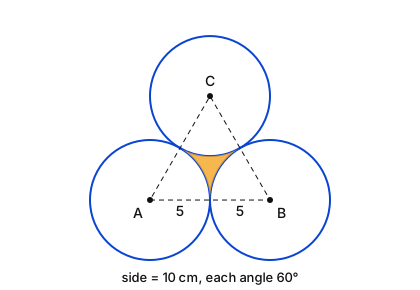
- Side cm; area
- Three sectors of = half a circle
- Required area
Yaad rakhein: Three sectors always add to = half circle.
Answer: (D)
अवधारणा: केंद्रों को जोड़ने से समबाहु त्रिभुज बनता है; बीच का भाग = त्रिभुज − तीन त्रिज्यखंड (sectors)।
- भुजा cm; क्षेत्रफल
- तीन त्रिज्यखंड = आधा वृत्त
- आवश्यक क्षेत्रफल
याद रखें: तीन त्रिज्यखंड मिलकर = आधा वृत्त।
उत्तर: (D)
SSC CPO Paper IQuantitative AptitudeMensuration – circlesSSC CPO Paper I 2024 · 28 Jun Shift 3
Q169.The value of is:
का मान है:
- A
- B
- C
- D
Show answer
Concept: Use , and .
- Numerator
- Denominator
- Ratio ( as )
Trick: Put : ratio , so .
Answer: (C)
अवधारणा: , और का प्रयोग करें।
- अंश
- हर
- अनुपात ( से )
ट्रिक: रखें: अनुपात , तो ।
उत्तर: (C)
SSC CPO Paper IQuantitative AptitudeTrigonometric identitiesSSC CPO Paper I 2024 · 28 Jun Shift 3
Q170.The cost of Compressed Natural Gas (CNG) per litre is increased by 65%. By what
percentage must Manish reduce his consumption of CNG so as not to increase his expenditure? (correct up to two decimal places)
संपीडित प्राकृतिक गैस (CNG) की प्रति लीटर कीमत में 65% की वृद्धि की जाती है। अपने व्यय में वृद्धि न होने देने के लिए
मनीष को CNG की अपनी खपत में कितने प्रतिशत की कमी करनी चाहिए? (दो दशमलव स्थानों तक सही)
- A25.39%
- B45.13%
- C39.39%
- D30.13%
Show answer
Concept: If price rises by , consumption must fall by to keep expenditure same.
- Reduction
Trick: Expenditure = price × consumption; , so cut .
Answer: (C) 39.39%
अवधारणा: मूल्य बढ़े तो खर्च समान रखने के लिए खपत घटानी होगी।
- कमी
ट्रिक: खर्च = मूल्य × खपत; कमी ।
उत्तर: (C) 39.39%
SSC CPO Paper IQuantitative AptitudePercentage – price and consumptionSSC CPO Paper I 2024 · 28 Jun Shift 3
Q171.Study the following table chart carefully and answer the question that follows.
The table given below shows the number of registered voters and the percentage of the people who voted among them in different voting centres.
| Centres | Total number of Registered Voters | Percentage of people who voted |
|---|
| Centre 1 | 26000 | 70% |
| Centre 2 | 28000 | 60% |
| Centre 3 | 25000 | 80% |
| Centre 4 | 30000 | 76% |
According to the table given above, which centre has the maximum number of voting?
निम्नलिखित तालिका का ध्यानपूर्वक अध्ययन कीजिए और उसके बाद दिए गए प्रश्न का उत्तर दीजिए।
नीचे दी गई तालिका विभिन्न मतदान केंद्रों में पंजीकृत मतदाताओं की संख्या और उनमें से मतदान करने वाले लोगों का प्रतिशत दर्शाती है।
| केंद्र | पंजीकृत मतदाताओं की कुल संख्या | मतदान करने वाले लोगों का प्रतिशत |
|---|
| केंद्र 1 | 26000 | 70% |
| केंद्र 2 | 28000 | 60% |
| केंद्र 3 | 25000 | 80% |
| केंद्र 4 | 30000 | 76% |
ऊपर दी गई तालिका के अनुसार, किस केंद्र में मतदान की संख्या अधिकतम है?
- ACentre 1केंद्र 1
- BCentre 3केंद्र 3
- CCentre 2केंद्र 2
- DCentre 4केंद्र 4
Show answer
Concept: Number of votes cast = registered voters × percentage who voted.
- Centre 1: ; Centre 2:
- Centre 3: ; Centre 4:
- Maximum = Centre 4 (22800)
Trick: Centre 4 has both the most voters and a high — check it against Centre 3 only.
Answer: (D) Centre 4
अवधारणा: डाले गए मत = पंजीकृत मतदाता × मतदान प्रतिशत।
- Centre 1: ; Centre 2:
- Centre 3: ; Centre 4:
- अधिकतम = Centre 4 (22800)
ट्रिक: Centre 4 में मतदाता सबसे अधिक और भी ऊँचा — केवल Centre 3 से तुलना काफी।
उत्तर: (D) Centre 4
SSC CPO Paper IQuantitative AptitudeData Interpretation – tableSSC CPO Paper I 2024 · 28 Jun Shift 3
Q172.Arrange the following ratios in ascending order.
3 : 4, 3 : 5, 2 : 11, 7 : 2
निम्नलिखित अनुपातों को आरोही क्रम में व्यवस्थित कीजिए।
3 : 4, 3 : 5, 2 : 11, 7 : 2
- A3 : 5 < 2 : 11 < 3 : 4 < 7 : 2
- B2:11 < 3: 5 < 3 : 4 < 7 : 2
- C7 : 2 < 3 : 4 < 3 : 5 < 2 : 11
- D3 : 4 < 3 : 5 < 2:11 < 7: 2
Show answer
Concept: Convert each ratio to a decimal (or fraction) and compare.
- ,
- ,
- Ascending:
Trick: Any ratio with first term bigger than second () exceeds 1 — it is the largest here.
Answer: (B) 2 : 11 < 3 : 5 < 3 : 4 < 7 : 2
अवधारणा: हर अनुपात को दशमलव (या भिन्न) में बदलकर तुलना करें।
- ,
- ,
- आरोही क्रम:
ट्रिक: पहला पद बड़ा हो () तो अनुपात 1 से अधिक — यही सबसे बड़ा।
उत्तर: (B) 2 : 11 < 3 : 5 < 3 : 4 < 7 : 2
SSC CPO Paper IQuantitative AptitudeComparison of ratiosSSC CPO Paper I 2024 · 28 Jun Shift 3
Q173.P can do a piece of work in 30 days and Q in 40 days. They work together for 4 days and then Q leaves. The number of days taken by P to finish the remaining work is:
P किसी काम को 30 दिनों में और Q उसे 40 दिनों में कर सकता है। वे 4 दिनों तक एक साथ काम करते हैं और फिर Q काम छोड़ देता है। शेष काम को पूरा करने में P द्वारा लिए गए दिनों की संख्या है:
- A28 days28 दिन
- B23 days23 दिन
- C30 days30 दिन
- D7 days7 दिन
Show answer
Concept: Take total work = LCM of days and use per-day efficiencies.
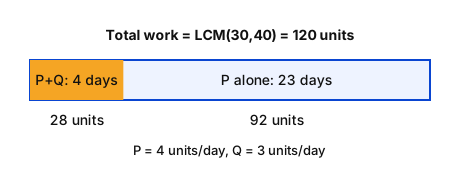
- Work units; P , Q units/day
- In 4 days together: units
- Remaining units
- P alone: days
Trick: Fraction method: done, left → P needs 23 days.
Answer: (B) 23 days
अवधारणा: कुल कार्य = दिनों का LCM मानें और प्रतिदिन की क्षमता लें।
- कार्य इकाई; P , Q इकाई/दिन
- 4 दिन साथ में: इकाई
- शेष इकाई
- P अकेला: दिन
ट्रिक: भिन्न विधि: , शेष → P को 23 दिन।
उत्तर: (B) 23 days
SSC CPO Paper IQuantitative AptitudeTime and workSSC CPO Paper I 2024 · 28 Jun Shift 3
Q174.Ashish covers 72 km at a speed of 45 km/h by bike, 28 km at a speed of 4 km/h by
bicycle, and another 160 km at a speed of 20 km/h by car. Find his average speed (in km/h) for the whole journey. (Rounded off to two decimal places)
आशीष 72 km की दूरी 45 km/h की चाल से बाइक द्वारा, 28 km की दूरी 4 km/h की चाल से
साइकिल द्वारा, और अन्य 160 km की दूरी 20 km/h की चाल से कार द्वारा तय करता है। पूरी यात्रा के लिए उसकी औसत चाल (km/h में) ज्ञात कीजिए। (दो दशमलव स्थानों तक पूर्णांकित)
- A15.66
- B28.33
- C25.25
- D27.65
Show answer
Concept: Average speed .
- Times: h, h, h
- Total time h; total distance
- Average
Trick: The slow 7-hour bicycle leg drags the average far below the bike/car speeds.
Answer: (A) 15.66
अवधारणा: औसत चाल ।
- समय: h, h, h
- कुल समय h; कुल दूरी
- औसत
ट्रिक: साइकिल के धीमे 7 घंटे औसत को बहुत नीचे ले आते हैं।
उत्तर: (A) 15.66
SSC CPO Paper IQuantitative AptitudeAverage speedSSC CPO Paper I 2024 · 28 Jun Shift 3
Q175.If 56 ÷ 4 + p × 3 – 24 ÷ 12 + 4 = 21 ÷ 3 + 3, then the value of p is:
यदि 56 ÷ 4 + p × 3 – 24 ÷ 12 + 4 = 21 ÷ 3 + 3 है, तो p का मान है:
- A2
- B1
- C−1
- D−2
Show answer
Concept: Apply BODMAS on both sides, then solve the linear equation.
- LHS:
- RHS:
Trick: Substitute options: gives ✓.
Answer: (D) −2
अवधारणा: दोनों पक्षों पर BODMAS लगाकर रैखिक समीकरण हल करें।
- बायाँ पक्ष:
- दायाँ पक्ष:
ट्रिक: विकल्प रखें: से ✓।
उत्तर: (D) −2
SSC CPO Paper IQuantitative AptitudeSimplification – find the unknownSSC CPO Paper I 2024 · 28 Jun Shift 3
Q176.The volume of a right circular cone is and its height is 18 cm. Find its slant height (in cm) (correct to 2 decimal places).
एक लंब वृत्तीय शंकु का आयतन है और उसकी ऊँचाई 18 cm है। इसकी तिर्यक ऊँचाई (cm में) ज्ञात कीजिए (2 दशमलव स्थानों तक सही)।
- A28.68
- B25.35
- C15.25
- D18.68
Show answer
Concept: Volume of cone and slant height .
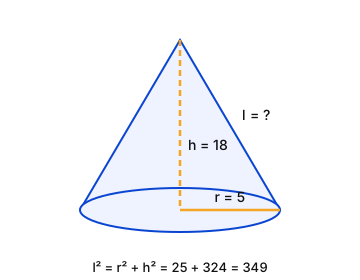
- cm
- cm
Trick: is just above — only 18.68 fits.
Answer: (D) 18.68
अवधारणा: शंकु का आयतन और तिर्यक ऊँचाई ।
- cm
- cm
ट्रिक: , से थोड़ा अधिक — केवल 18.68 उपयुक्त।
उत्तर: (D) 18.68
SSC CPO Paper IQuantitative AptitudeCone – slant heightSSC CPO Paper I 2024 · 28 Jun Shift 3
Q177.The curved surface area of a cone is , and its slant height is 28 cm. Find the radius of its base. (Use )
एक शंकु का वक्र पृष्ठीय क्षेत्रफल है, और उसकी तिर्यक ऊँचाई 28 cm है। इसके आधार की त्रिज्या ज्ञात कीजिए। ( का प्रयोग कीजिए)
- A3.5 cm
- B2.8 cm
- C3.0 cm
- D2.5 cm
Show answer
Concept: Curved surface area of a cone .
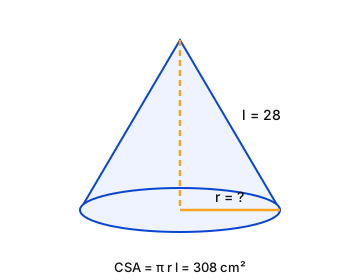
- cm
Yaad rakhein: ; then .
Answer: (A) 3.5 cm
अवधारणा: शंकु का वक्र पृष्ठीय क्षेत्रफल ।
- cm
याद रखें: ; फिर ।
उत्तर: (A) 3.5 cm
SSC CPO Paper IQuantitative AptitudeCone – curved surface areaSSC CPO Paper I 2024 · 28 Jun Shift 3
Q178.A school has four sections A, B, C, D of class X students. The results of half yearly and annual examinations are shown in the table given below:
| Result | Number of students |
|---|
| Section A | Section B | Section C | Section D |
|---|
| Students failed in both exams | 25 | 22 | 18 | 20 |
| Students failed in half yearly but passed in Annual exam | 20 | 25 | 24 | 12 |
| Students passed in half yearly but failed in Annual exam | 12 | 15 | 8 | 10 |
| Students passed in both exams | 15 | 20 | 22 | 18 |
How many students are there in class X in the school?
एक विद्यालय में कक्षा X के विद्यार्थियों के चार वर्ग A, B, C, D हैं। अर्धवार्षिक और वार्षिक परीक्षाओं के परिणाम नीचे दी गई तालिका में दर्शाए गए हैं:
| परिणाम | विद्यार्थियों की संख्या |
|---|
| वर्ग A | वर्ग B | वर्ग C | वर्ग D |
|---|
| दोनों परीक्षाओं में अनुत्तीर्ण विद्यार्थी | 25 | 22 | 18 | 20 |
| अर्धवार्षिक परीक्षा में अनुत्तीर्ण किंतु वार्षिक परीक्षा में उत्तीर्ण विद्यार्थी | 20 | 25 | 24 | 12 |
| अर्धवार्षिक परीक्षा में उत्तीर्ण किंतु वार्षिक परीक्षा में अनुत्तीर्ण विद्यार्थी | 12 | 15 | 8 | 10 |
| दोनों परीक्षाओं में उत्तीर्ण विद्यार्थी | 15 | 20 | 22 | 18 |
विद्यालय में कक्षा X में कितने विद्यार्थी हैं?
- A286
- B256
- C206
- D226
Show answer
Concept: The four result categories are mutually exclusive and cover every student, so total = sum of all entries.
- Section A:
- Section B:
- Section C: ; Section D:
- Total
Yaad rakhein: Fail-fail, fail-pass, pass-fail, pass-pass = all possibilities; no overlap, so just add.
Answer: (A) 286
अवधारणा: चारों परिणाम-श्रेणियाँ अलग-अलग हैं और हर छात्र किसी एक में है, अतः कुल = सभी संख्याओं का योग।
- Section A:
- Section B:
- Section C: ; Section D:
- कुल
याद रखें: फेल-फेल, फेल-पास, पास-फेल, पास-पास = सभी संभावनाएँ; कोई दोहराव नहीं।
उत्तर: (A) 286
SSC CPO Paper IQuantitative AptitudeData Interpretation – tableSSC CPO Paper I 2024 · 28 Jun Shift 3
Q179.A train covers a distance of 72 km in 40 minutes. Travelling at the same speed, how many metres will the train cover in 6 seconds?
एक रेलगाड़ी 72 km की दूरी 40 मिनट में तय करती है। समान चाल से चलते हुए, रेलगाड़ी 6 सेकंड में कितने मीटर की दूरी तय करेगी?
- A210
- B174
- C192
- D180
Show answer
Concept: Convert speed to m/s: .
- Speed
- Distance in 6 s m
Trick: 72 km in 2400 s → m per second directly.
Answer: (D) 180
अवधारणा: चाल को m/s में बदलें: ।
- चाल
- 6 सेकंड में दूरी m
ट्रिक: 72 km, 2400 सेकंड में → m प्रति सेकंड।
उत्तर: (D) 180
SSC CPO Paper IQuantitative AptitudeSpeed, distance and timeSSC CPO Paper I 2024 · 28 Jun Shift 3
Q180.If the number of school going children in a town is 64000 and it is increasing annually by 10%, then what will be the number of school going children in the town at the end of 3 years?
यदि किसी कस्बे में विद्यालय जाने वाले बच्चों की संख्या 64000 है और यह प्रतिवर्ष 10% की दर से बढ़ रही है, तो 3 वर्ष के अंत में कस्बे में विद्यालय जाने वाले बच्चों की संख्या कितनी होगी?
- A85000
- B85100
- C85184
- D80000
Show answer
Concept: Growth at per year: .
Trick: Year by year: .
Answer: (C) 85184
अवधारणा: वार्षिक वृद्धि: ।
ट्रिक: वर्षवार: ।
उत्तर: (C) 85184
SSC CPO Paper IQuantitative AptitudePopulation growthSSC CPO Paper I 2024 · 28 Jun Shift 3

