Q1901.Find the fourth proportional of 22, 66 and 11.
22, 66 और 11 का चतुर्थानुपाती ज्ञात कीजिए।
- A23
- B33
- C17
- D39
Show answer
Concept: If are in proportion, , so the fourth proportional .
Trick: is times , so is times .
Answer: (B)
अवधारणा: यदि समानुपात में हों तो , अतः चतुर्थानुपाती (fourth proportional) ।
ट्रिक: संख्या की गुनी है, तो भी का गुना होगा।
उत्तर: (B)
SSC CPO Paper IQuantitative AptitudeProportionSSC CPO Paper I 2023 · 5 Oct Shift 3
Q1902.An article is sold at a discount of 25% and an additional discount of 28% is allowed on cash payment. If Ramendra purchased the article by paying ₹10,800 in cash, then what was the marked price of the article?
एक वस्तु को 25% की छूट पर बेचा जाता है और नकद भुगतान पर 28% की अतिरिक्त छूट दी जाती है। यदि रमेंद्र ने ₹10,800 का नकद भुगतान करके वह वस्तु खरीदी, तो वस्तु का अंकित मूल्य क्या था?
- A₹19,800
- B₹20,800
- C₹20,000
- D₹18,000
Show answer
Concept: With successive discounts, the selling price .
- After and :
Trick: Net discount , so ₹10,800 is of MP.
Answer: (C) ₹20,000
अवधारणा: क्रमिक छूट में ।
- और छूट के बाद:
ट्रिक: कुल छूट , अतः ₹10,800 अंकित मूल्य का है।
उत्तर: (C) ₹20,000
SSC CPO Paper IQuantitative AptitudeSuccessive DiscountSSC CPO Paper I 2023 · 5 Oct Shift 3
Q1903.A shopkeeper marked the price as ₹15,000 on an article, and a successive discount of 5%, 10% and 20% was allowed on it. What is the selling price?
एक दुकानदार ने एक वस्तु पर ₹15,000 मूल्य अंकित किया, और उस पर 5%, 10% और 20% की क्रमिक छूट दी गई। विक्रय मूल्य क्या है?
- A₹10,260
- B₹13,520
- C₹11,520
- D₹9,850
Show answer
Concept: Successive discounts multiply: .
- ; ;
Trick: Apply each discount on the new price, never add them ( off would give ₹9,750, a trap).
Answer: (A) ₹10,260
अवधारणा: क्रमिक छूटें गुणा होती हैं: ।
- ; ;
ट्रिक: हर छूट नए मूल्य पर लगती है; छूटों को सीधे जोड़ें नहीं।
उत्तर: (A) ₹10,260
SSC CPO Paper IQuantitative AptitudeSuccessive DiscountSSC CPO Paper I 2023 · 5 Oct Shift 3
Q1904.The value of a washing machine depreciated from ₹40,960 to ₹21,970 in 3 years. Find the yearly rate of depreciation.
एक वाशिंग मशीन का मूल्य 3 वर्षों में ₹40,960 से घटकर ₹21,970 हो गया। मूल्यह्रास की वार्षिक दर ज्ञात कीजिए।
- A25%
- B16.25%
- C18.75%
- D20%
Show answer
Concept: Depreciated value .
Trick: Spot cubes: , .
Answer: (C)
अवधारणा: मूल्यह्रास के बाद मूल्य ।
ट्रिक: घन पहचानें: , ।
उत्तर: (C)
SSC CPO Paper IQuantitative AptitudeDepreciationSSC CPO Paper I 2023 · 5 Oct Shift 3
Q1905.A and B are equally efficient, and each can individually complete a piece of work in 36 days, if none takes any holiday. A and B started working together on this piece of
work, but A took a day off after every five days of work, while B took a day off after every seven days of work. If the duo had started work on 1 July 2021, on which date was the work completed?
A और B समान रूप से दक्ष हैं, और यदि कोई भी अवकाश न ले, तो प्रत्येक अकेले किसी कार्य को 36 दिनों में पूरा कर सकता है। A और B ने मिलकर इस
कार्य पर काम करना शुरू किया, लेकिन A ने प्रत्येक पाँच दिन के कार्य के बाद एक दिन का अवकाश लिया, जबकि B ने प्रत्येक सात दिन के कार्य के बाद एक दिन का अवकाश लिया। यदि दोनों ने 1 जुलाई 2021 को कार्य शुरू किया था, तो कार्य किस तिथि को पूरा हुआ?
- A22 July 202122 जुलाई 2021
- B19 July 202119 जुलाई 2021
- C21 July 202121 जुलाई 2021
- D20 July 202120 जुलाई 2021
Show answer
Concept: Each worker does unit a day; the whole work units (one person alone needs days). A rests every 6th day, B every 8th day.
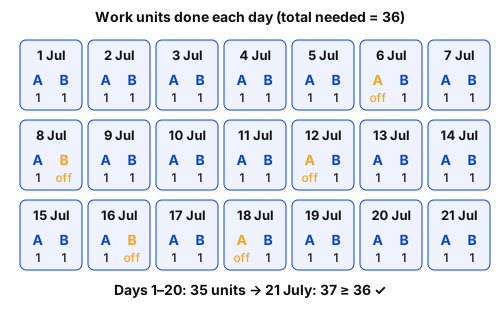
- In days 1 to 20, A is off on days ( units) and B on days ( units): total units.
- On day 21 both work, giving units – work ends on day 21.
- Day 1 = 1 July, so day 21 = 21 July 2021.
Trick: Without holidays the pair needs days; add the lost days ( in all) and stop as soon as units are reached.
Answer: (C) 21 July 2021
अवधारणा: हर व्यक्ति प्रतिदिन इकाई काम करता है; कुल काम इकाई। A हर 6वें दिन और B हर 8वें दिन छुट्टी लेता है।
- दिन 1 से 20 में A दिन को छुट्टी पर ( इकाई) और B दिन को ( इकाई): कुल इकाई।
- 21वें दिन दोनों काम करते हैं: , काम पूरा।
- दिन 1 = 1 July, अतः दिन 21 = 21 July 2021।
ट्रिक: बिना छुट्टी के दिन लगते; खोए दिनों की इकाइयाँ जोड़ते हुए इकाई तक गिनें।
उत्तर: (C) 21 July 2021
SSC CPO Paper IQuantitative AptitudeTime and Work – HolidaysSSC CPO Paper I 2023 · 5 Oct Shift 3
Q1906.The radius of a metallic spherical ball is 3 cm. If the metallic ball is melted and recast into x number of hemispheres of radius equal to half the radius of the metallic
spherical ball, then find the value of x.
एक धात्विक गोलाकार गेंद की त्रिज्या 3 cm है। यदि धात्विक गेंद को पिघलाकर, धात्विक
गोलाकार गेंद की त्रिज्या की आधी त्रिज्या वाले x अर्धगोलों में ढाला जाता है, तो x का मान ज्ञात कीजिए।
- A15
- B14
- C16
- D13
Show answer
Concept: When metal is recast, total volume stays the same: .
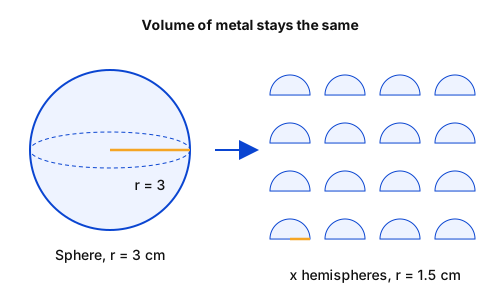
- Sphere:
- Hemisphere ():
Trick: Halving the radius gives the volume, and a hemisphere is half of that: .
Answer: (C)
अवधारणा: धातु को पिघलाकर दोबारा ढालने पर आयतन वही रहता है: ।
- गोला:
- अर्धगोला ():
ट्रिक: त्रिज्या आधी करने पर आयतन , और अर्धगोला उसका आधा: ।
उत्तर: (C)
SSC CPO Paper IQuantitative AptitudeMensuration – Sphere and HemisphereSSC CPO Paper I 2023 · 5 Oct Shift 3
Q1907.Some ice pieces, spherical in shape, of diameter 6 cm are dropped in a cylindrical
container containing some juice and are fully submerged. If the diameter of the
container is 18 cm and level of juice rises by 40 cm, then how many ice pieces are
dropped in the container?
6 cm व्यास वाले गोलाकार बर्फ़ के कुछ टुकड़ों को कुछ जूस से भरे एक बेलनाकार
पात्र में डाला जाता है और वे पूरी तरह डूब जाते हैं। यदि
पात्र का व्यास 18 cm है और जूस का स्तर 40 cm बढ़ जाता है, तो पात्र में बर्फ़ के कितने
टुकड़े डाले गए हैं?
- A95
- B85
- C80
- D90
Show answer
Concept: Volume of the submerged ice balls = volume of the juice that rises in the cylinder.
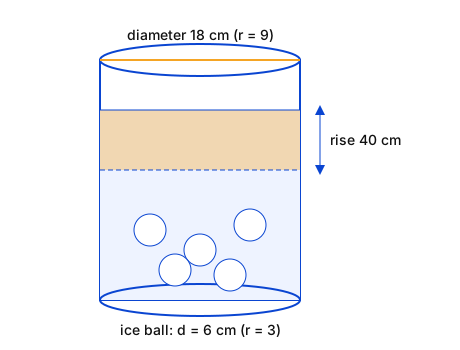
- Rise volume
- One ball ():
- Number
Trick: Work with radii (9 and 3), not diameters; cancels.
Answer: (D)
अवधारणा: डूबे हुए बर्फ के गोलों का आयतन = बेलन में बढ़े हुए जूस का आयतन।
- बढ़ा आयतन
- एक गोला ():
- संख्या
ट्रिक: व्यास नहीं, त्रिज्या (9 और 3) लें; कट जाता है।
उत्तर: (D)
SSC CPO Paper IQuantitative AptitudeMensuration – DisplacementSSC CPO Paper I 2023 · 5 Oct Shift 3
Q1908.If the slant height of a cone is 29 cm and its height is 20 cm, find the ratio between the magnitudes of total surface area and the volume.
यदि एक शंकु की तिर्यक ऊँचाई 29 cm और उसकी ऊँचाई 20 cm है, तो कुल पृष्ठीय क्षेत्रफल और आयतन के परिमाणों का अनुपात ज्ञात कीजिए।
- A5 : 14
- B7 : 15
- C3 : 7
- D3 : 14
Show answer
Concept: For a cone , and .
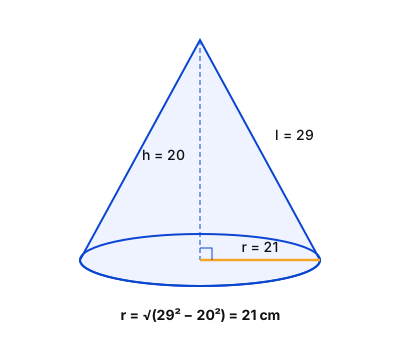
Trick: Ratio shortcut: .
Answer: (A)
अवधारणा: शंकु में , और ।
ट्रिक: सीधे: ।
उत्तर: (A)
SSC CPO Paper IQuantitative AptitudeMensuration – ConeSSC CPO Paper I 2023 · 5 Oct Shift 3
Q1909.In ∆ABC with sides 8 cm, 9 cm and 12 cm, the angle bisector of the largest angle
divides the opposite sides into two segments. What is the length of the shorter
segment?
8 cm, 9 cm और 12 cm भुजाओं वाले ∆ABC में, सबसे बड़े कोण का कोण समद्विभाजक
सम्मुख भुजा को दो खंडों में विभाजित करता है। छोटे
खंड की लंबाई कितनी है?
- A cm
- B cm
- C cm
- D cm
Show answer
Concept: The largest angle is opposite the largest side (). Its bisector divides that side in the ratio of the other two sides ().
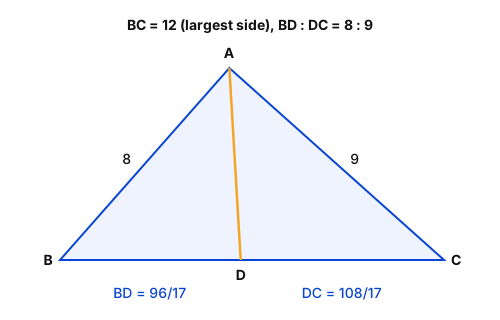
- with
- Shorter segment
Trick: Shorter segment lies next to the shorter adjacent side: .
Answer: (A)
अवधारणा: सबसे बड़ा कोण सबसे बड़ी भुजा () के सामने होता है। उसका समद्विभाजक (bisector) उस भुजा को शेष दो भुजाओं के अनुपात में बाँटता है।
- ,
- छोटा भाग
ट्रिक: छोटा भाग छोटी आसन्न भुजा की ओर होता है।
उत्तर: (A)
SSC CPO Paper IQuantitative AptitudeAngle Bisector TheoremSSC CPO Paper I 2023 · 5 Oct Shift 3
Q1910.If , then the value of is:
यदि है, तो का मान है:
- A
- B
- C
- D
Show answer
Concept: Write , then use .
Trick: Whenever appears, it is simply .
Answer: (D)
अवधारणा: ; फिर का प्रयोग करें।
ट्रिक: हमेशा के बराबर होता है।
उत्तर: (D)
SSC CPO Paper IQuantitative AptitudeTrigonometric IdentitiesSSC CPO Paper I 2023 · 5 Oct Shift 3
Q1911.If , then find the value of .
यदि है, तो का मान ज्ञात कीजिए।
- A
- B
- C
- D
Show answer
Concept: Cross-multiply to get a relation between and , then divide to get .
Trick: Ratio means numerator = denominator – just equate them.
Answer: (B)
अवधारणा: वज्र-गुणा करके और का संबंध निकालें, फिर निकालें।
ट्रिक: भिन्न हो तो अंश = हर रखें।
उत्तर: (B)
SSC CPO Paper IQuantitative AptitudeTrigonometric RatiosSSC CPO Paper I 2023 · 5 Oct Shift 3
Q1912.A, B and C can do a piece of work in 11 days, 20 days and 55 days respectively. How soon can the work be done if A works with B on first day, A works with C on second day and so on?
A, B और C किसी कार्य को क्रमशः 11 दिन, 20 दिन और 55 दिन में कर सकते हैं। यदि पहले दिन A, B के साथ कार्य करता है, दूसरे दिन A, C के साथ कार्य करता है और इसी प्रकार आगे भी, तो कार्य कितने समय में पूरा हो सकता है?
- A days दिन
- B days दिन
- C8 days8 दिन
- D9 days9 दिन
Show answer
Concept: Take total work units. Efficiencies: A , B , C units/day.
- Day 1 (A+B): units; Day 2 (A+C): units
- Every 2 days: units
- cycles days, work finishes exactly.
Trick: Check if the work divides exactly by the 2-day total – then no fractional day is needed.
Answer: (C) 8 days
अवधारणा: कुल काम इकाई लें। दक्षता: A , B , C इकाई/दिन।
- पहला दिन (A+B): इकाई; दूसरा दिन (A+C): इकाई
- हर 2 दिन में इकाई
- चक्र दिन, काम ठीक पूरा।
ट्रिक: यदि कुल काम 2-दिन के जोड़ से पूरा-पूरा बँट जाए तो भिन्नात्मक दिन नहीं आता।
उत्तर: (C) 8 days
SSC CPO Paper IQuantitative AptitudeTime and Work – Alternate DaysSSC CPO Paper I 2023 · 5 Oct Shift 3
Q1913.Study the given table and answer the question that follows.
| Number of children | Number of families |
|---|
| 0 | 4 |
| 1 | 22 |
| 2 | 15 |
| 3 | 6 |
| 4 | 2 |
The average number of children per family is:
दी गई तालिका का अध्ययन कीजिए और उसके बाद आने वाले प्रश्न का उत्तर दीजिए।
| बच्चों की संख्या | परिवारों की संख्या |
|---|
| 0 | 4 |
| 1 | 22 |
| 2 | 15 |
| 3 | 6 |
| 4 | 2 |
प्रति परिवार बच्चों की औसत संख्या है:
- A1.47
- B1.59
- C1.23
- D1.72
Show answer
Concept: Average .
- Children:
- Families:
- Average
Trick: Always divide by the number of families, not by the number of rows (5).
Answer: (B)
अवधारणा: औसत ।
- कुल बच्चे:
- कुल परिवार:
- औसत
ट्रिक: परिवारों की कुल संख्या से भाग दें, पंक्तियों (5) से नहीं।
उत्तर: (B)
SSC CPO Paper IQuantitative AptitudeAverage – Frequency TableSSC CPO Paper I 2023 · 5 Oct Shift 3
Q1914.A fast local of Mumbai takes 45 minutes less than a slow local for a journey of 150 km. If the speed of the fast local is 10 km/h more than that of the slow local, find the speed (in km/h) of the slow local train.
150 km की यात्रा के लिए मुंबई की एक फ़ास्ट लोकल, एक स्लो लोकल से 45 मिनट कम समय लेती है। यदि फ़ास्ट लोकल की चाल, स्लो लोकल की चाल से 10 km/h अधिक है, तो स्लो लोकल ट्रेन की चाल (km/h में) ज्ञात कीजिए।
- A30
- B35
- C45
- D40
Show answer
Concept: Time difference , with min h.
- (since )
Trick: Check options: gives h ✓.
Answer: (D)
अवधारणा: समय का अंतर , जहाँ मिनट घंटा।
- ()
ट्रिक: विकल्प जाँचें: घंटा ✓।
उत्तर: (D)
SSC CPO Paper IQuantitative AptitudeSpeed – Time DifferenceSSC CPO Paper I 2023 · 5 Oct Shift 3
Q1915.In a school of 720 students, the ratio of boys to girls is 3 : 5. Find how many new boys may be allowed to the school if 18 new girls are admitted, so that the ratio of boys to girls changes to 2 : 3.
720 विद्यार्थियों वाले एक विद्यालय में लड़कों और लड़कियों का अनुपात 3 : 5 है। ज्ञात कीजिए कि यदि 18 नई लड़कियों को प्रवेश दिया जाता है, तो कितने नए लड़कों को विद्यालय में प्रवेश दिया जा सकता है, ताकि लड़कों और लड़कियों का अनुपात बदलकर 2 : 3 हो जाए।
- A42
- B44
- C50
- D38
Show answer
Concept: Split the total in the given ratio, then make the new totals satisfy the new ratio.
- Boys , girls
- Girls now
- Required boys
- New boys
Trick: Fix the side whose change is known (girls) first.
Answer: (A)
अवधारणा: कुल को दिए अनुपात में बाँटें, फिर नए अनुपात के अनुसार संख्या निकालें।
- लड़के , लड़कियाँ
- अब लड़कियाँ
- आवश्यक लड़के
- नए लड़के
ट्रिक: जिसकी वृद्धि ज्ञात है (लड़कियाँ) उसे पहले तय करें।
उत्तर: (A)
SSC CPO Paper IQuantitative AptitudeRatio – AdmissionsSSC CPO Paper I 2023 · 5 Oct Shift 3
Q1916.The given graph shows the income and expenditure of a family.
Study the graph and answer the question that follows.
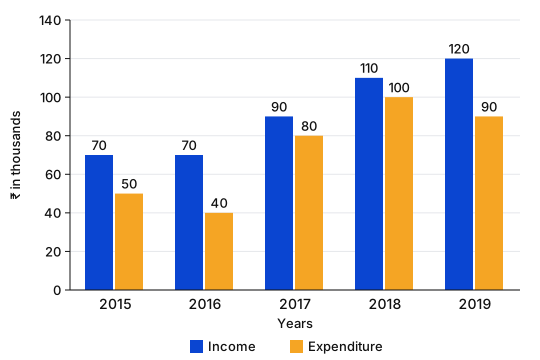
The expenditure of the family increased by _____ from 2017 to 2018.
दिया गया ग्राफ़ एक परिवार की आय और व्यय को दर्शाता है।
ग्राफ़ का अध्ययन कीजिए और उसके बाद आने वाले प्रश्न का उत्तर दीजिए।
2017 से 2018 तक परिवार के व्यय में _____ की वृद्धि हुई।
- A25%
- B11%
- C22%
- D20%
Show answer
Concept: Percentage increase .
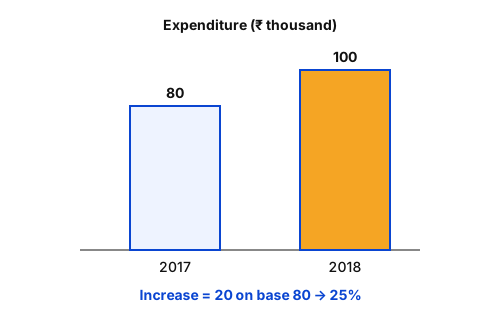
- Expenditure 2017 thousand, 2018 thousand
- Increase
Trick: Divide by the earlier year's value; is the common trap.
Answer: (A)
अवधारणा: प्रतिशत वृद्धि ।
- व्यय 2017 हज़ार, 2018 हज़ार
- वृद्धि
ट्रिक: पुराने वर्ष के मान से भाग दें; गलत विकल्प है।
उत्तर: (A)
SSC CPO Paper IQuantitative AptitudeData Interpretation – Bar GraphSSC CPO Paper I 2023 · 5 Oct Shift 3
Q1917.Which of the following is the greatest four-digit number that is divisible by 15, 25, 40, and 75?
निम्नलिखित में से कौन-सी चार अंकों की सबसे बड़ी संख्या है जो 15, 25, 40 और 75 से विभाज्य है?
- A9200
- B9500
- C9600
- D9000
Show answer
Concept: A number divisible by all of them is a multiple of their LCM.
- remainder
- Greatest 4-digit multiple
Trick: Check options: only .
Answer: (C)
अवधारणा: सभी से विभाज्य संख्या उनके LCM का गुणज होती है।
- का शेष
- सबसे बड़ी 4-अंकीय संख्या
ट्रिक: विकल्प जाँचें: केवल ।
उत्तर: (C)
SSC CPO Paper IQuantitative AptitudeLCM – Greatest NumberSSC CPO Paper I 2023 · 5 Oct Shift 3
Q1918.What is the average of the first six prime numbers?
पहली छह अभाज्य संख्याओं का औसत क्या है?
- A
- B
- C
- D
Show answer
Concept: First six primes: ( is not prime).
- Sum
- Average
Trick: Remember is the only even prime – don't miss it.
Answer: (B)
अवधारणा: पहली छह अभाज्य संख्याएँ (prime numbers): ( अभाज्य नहीं है)।
- योग
- औसत
ट्रिक: एकमात्र सम अभाज्य संख्या है – इसे न छोड़ें।
उत्तर: (B)
SSC CPO Paper IQuantitative AptitudeAverage – Prime NumbersSSC CPO Paper I 2023 · 5 Oct Shift 3
Q1919.Ayush spends 25% of an amount of money on an insurance policy, 26% on food, 23% on children’s education and 19% on recreation. He deposits the remaining amount of ₹26,600 in the bank. What is the total amount (in ₹) that he spends on food and
recreation together?
आयुष किसी धनराशि का 25% बीमा पॉलिसी पर, 26% भोजन पर, 23% बच्चों की शिक्षा पर और 19% मनोरंजन पर खर्च करता है। वह शेष ₹26,600 की राशि बैंक में जमा करता है। वह भोजन और
मनोरंजन पर मिलाकर कुल कितनी राशि (₹ में) खर्च करता है?
- A1,95,000
- B1,71,000
- C1,62,000
- D1,83,000
Show answer
Concept: Find the percentage left as savings, get the total, then take the required percentage.
- Spent , saved
- Food + recreation
Trick: Find once and multiply.
Answer: (B) 1,71,000
अवधारणा: बचत का प्रतिशत निकालें, उससे कुल राशि, फिर आवश्यक प्रतिशत।
- खर्च , बचत
- भोजन + मनोरंजन
ट्रिक: निकालकर गुणा करें।
उत्तर: (B) 1,71,000
SSC CPO Paper IQuantitative AptitudePercentage – ExpenditureSSC CPO Paper I 2023 · 5 Oct Shift 3
Q1920.Study the given pie-chart carefully and answer the question that follows.
Degree wise Break-up of Expenditure of a Family in a Month
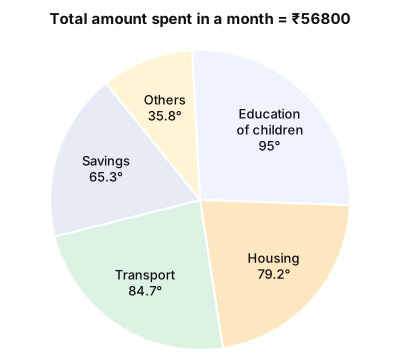
What is the amount spent by the family on housing?
दिए गए पाई-चार्ट का ध्यानपूर्वक अध्ययन कीजिए और उसके बाद आने वाले प्रश्न का उत्तर दीजिए।
एक महीने में एक परिवार के व्यय का डिग्री-वार विभाजन
परिवार द्वारा आवास पर खर्च की गई राशि कितनी है?
- A₹11,814
- B₹6,248
- C₹10,615
- D₹12,496
Show answer
Concept: Amount for a sector .
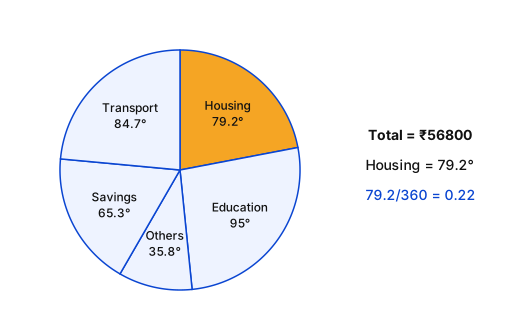
- Housing
Trick: is exactly of the circle ().
Answer: (D) ₹12,496
अवधारणा: किसी भाग की राशि ।
- आवास (Housing)
ट्रिक: , अतः ।
उत्तर: (D) ₹12,496
SSC CPO Paper IQuantitative AptitudeData Interpretation – Pie ChartSSC CPO Paper I 2023 · 5 Oct Shift 3

