Question bank

Q&A: practice questions with answers

Search questions on any topic. Filter by exam category, exam, subject and topic, try the question, then open the answer and explanation.

Courses – airGurukul

20,719 questions found.

Q2021.
Which of the following letter-number clusters will logically complete the series if placed in place of the question mark (?) in the given series?
KFU-15 IIQ-22 GLM-31 EOI-42 ?
दी गई श्रृंखला में प्रश्नचिह्न (?) के स्थान पर रखे जाने पर निम्नलिखित में से कौन-सा अक्षर-संख्या समूह श्रृंखला को तार्किक रूप से पूरा करेगा?
KFU-15 IIQ-22 GLM-31 EOI-42 ?
  1. ACRE-55
  2. BRES-54
  3. CRDG-55
  4. DGTR-54
Show answer

Concept: Handle each letter position and the number separately.

  1. 1st letters: K, I, G, E → −2 → C.
  2. 2nd letters: F, I, L, O → +3 → R. 3rd letters: U, Q, M, I → −4 → E.
  3. Numbers: 15, 22, 31, 42 → +7,+9,+11 → +13 → 55.

Trick: Number gap grows by 2 each time; only CRE has the right first letter C.

Answer: (A) CRE-55

अवधारणा: हर अक्षर-स्थान और संख्या को अलग-अलग देखें।

  1. पहले अक्षर: K, I, G, E → −2 → C।
  2. दूसरे अक्षर: F, I, L, O → +3 → R। तीसरे अक्षर: U, Q, M, I → −4 → E।
  3. संख्याएँ: 15, 22, 31, 42 → +7,+9,+11 → +13 → 55।

ट्रिक: संख्या का अंतर हर बार 2 बढ़ता है; केवल CRE का पहला अक्षर C सही है।

उत्तर: (A) CRE-55
RRB NTPC Undergraduate CBT 1General Intelligence and ReasoningAlpha-numeric seriesRRB NTPC Undergraduate CBT 1 2024 · 20 Aug Shift 3 →
Q2022.
If '+' and '−' are interchanged and '×' and '÷' are interchanged, then what will come in place of the question mark (?) in the following equation?
65 × 5 − 19 ÷ 3 + 25 = ?
यदि '+' और '−' को आपस में बदल दिया जाए तथा '×' और '÷' को आपस में बदल दिया जाए, तो निम्नलिखित समीकरण में प्रश्नचिह्न (?) के स्थान पर क्या आएगा?
65 × 5 − 19 ÷ 3 + 25 = ?
  1. A45
  2. B40
  3. C44
  4. D46
Show answer

Concept: Swap the signs, then apply BODMAS.

  1. After swapping: 65÷5+19×3−25
  2. 65÷5=13, 19×3=57
  3. 13+57−25=45

Trick: Rewrite the expression with new signs first — avoids sign mistakes.

Answer: (A) 45

अवधारणा: चिह्न बदलें, फिर BODMAS लगाएँ।

  1. चिह्न बदलने पर: 65÷5+19×3−25
  2. 65÷5=13, 19×3=57
  3. 13+57−25=45

ट्रिक: पहले नए चिह्नों के साथ व्यंजक लिखें — चिह्न की गलती नहीं होगी।

उत्तर: (A) 45

RRB NTPC Undergraduate CBT 1General Intelligence and ReasoningMathematical operationsRRB NTPC Undergraduate CBT 1 2024 · 20 Aug Shift 3 →
Q2023.
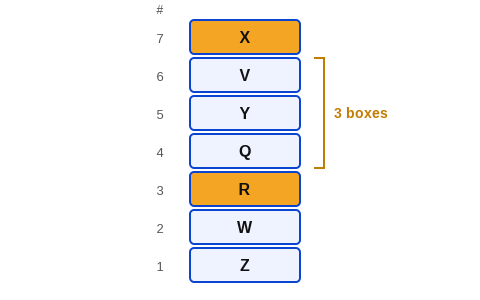
Seven boxes V, W, X, Y, Z, Q and R are placed one above the other, but not necessarily in the same order. Y is placed immediately above Q. W is placed immediately above Z. Only X is placed above V. Only two boxes are placed above Y. W is not placed third from the bottom. How many boxes are placed between R and X?
सात डिब्बे V, W, X, Y, Z, Q और R एक के ऊपर एक रखे गए हैं, लेकिन आवश्यक नहीं कि इसी क्रम में हों। Y को Q के ठीक ऊपर रखा गया है। W को Z के ठीक ऊपर रखा गया है। V के ऊपर केवल X रखा गया है। Y के ऊपर केवल दो डिब्बे रखे गए हैं। W को नीचे से तीसरे स्थान पर नहीं रखा गया है। R और X के बीच कितने डिब्बे रखे गए हैं?
  1. AOneएक
  2. BTwoदो
  3. CFourचार
  4. DThreeतीन
Show answer

Concept: Number positions from bottom =1 to top =7 and fix definite ones first.

  1. Only X above V → X =7, V =6.
  2. Only two above Y → Y =5; Q just below Y → Q =4.
  3. W just above Z in positions 3, 2, 1; W is not 3rd → W =2, Z =1, R =3.
  4. Between R (3) and X (7): Q, Y, V → 3 boxes.

Trick: Boxes between positions a and b =|a−b|−1=7−3−1=3.

Answer: (D) Three

अवधारणा: नीचे से 1 से ऊपर 7 तक स्थान गिनें और पहले निश्चित स्थान तय करें।

  1. V के ऊपर केवल X → X =7, V =6।
  2. Y के ऊपर केवल दो → Y =5; Q ठीक Y के नीचे → Q =4।
  3. W ठीक Z के ऊपर, स्थान 3, 2, 1 में; W तीसरे पर नहीं → W =2, Z =1, R =3।
  4. R (3) और X (7) के बीच: Q, Y, V → 3 बक्से।

ट्रिक: स्थान a और b के बीच बक्से =|a−b|−1=7−3−1=3।

उत्तर: (D) तीन

RRB NTPC Undergraduate CBT 1General Intelligence and ReasoningBox arrangementRRB NTPC Undergraduate CBT 1 2024 · 20 Aug Shift 3 →
Q2024.
Select the pair that follows the same pattern as that followed by the two pairs given below. Both pairs follow the same pattern.
VTM : ZQQ
DNU : HKY
उस युग्म का चयन कीजिए जो उसी पैटर्न का अनुसरण करता है जिसका अनुसरण नीचे दिए गए दो युग्म करते हैं। दोनों युग्म एक ही पैटर्न का अनुसरण करते हैं।
VTM : ZQQ
DNU : HKY
  1. AMHE : PCH
  2. BYFH : CAL
  3. CLHC : PEG
  4. DKZQ : PWL
Show answer

Concept: Compare letter-by-letter shifts.

  1. VTM → ZQQ: V+4=Z, T−3=Q, M+4=Q. DNU → HKY: D+4=H, N−3=K, U+4=Y.
  2. Pattern: (+4,−3,+4).
  3. LHC → L+4=P, H−3=E, C+4=G → PEG ✔.

Trick: Check the first letter (+4) of every option: M→Q (not P), Y→C ✔ but F−3=C not A, K→O (not P) — only LHC survives.

Answer: (C) LHC : PEG

अवधारणा: हर अक्षर का खिसकाव (shift) तुलना करें।

  1. VTM → ZQQ: V+4=Z, T−3=Q, M+4=Q। DNU → HKY: D+4=H, N−3=K, U+4=Y।
  2. पैटर्न: (+4,−3,+4)।
  3. LHC → L+4=P, H−3=E, C+4=G → PEG ✔।

ट्रिक: हर विकल्प का पहला अक्षर (+4) जाँचें: M→Q (P नहीं), Y→C ✔ पर F−3=C, A नहीं, K→O (P नहीं) — केवल LHC बचता है।

उत्तर: (C) LHC : PEG

RRB NTPC Undergraduate CBT 1General Intelligence and ReasoningLetter-pair analogyRRB NTPC Undergraduate CBT 1 2024 · 20 Aug Shift 3 →
Q2025.
In the series given below, what will come in place of the question mark (?)?
512 513 505 532 468 ?
नीचे दी गई श्रृंखला में, प्रश्नचिह्न (?) के स्थान पर क्या आएगा?
512 513 505 532 468 ?
  1. A587
  2. B597
  3. C583
  4. D593
Show answer

Concept: Differences are cubes with alternating signs.

  1. Differences: +1,−8,+27,−64 i.e. +13,−23,+33,−43.
  2. Next: +53=+125.
  3. 468+125=593

Trick: 1, 8, 27, 64 → spot cubes at once; signs alternate +,−.

Answer: (D) 593

अवधारणा: अंतर, घनों (cubes) के बराबर हैं और चिह्न बारी-बारी से बदलते हैं।

  1. अंतर: +1,−8,+27,−64 अर्थात् +13,−23,+33,−43।
  2. अगला: +53=+125।
  3. 468+125=593

ट्रिक: 1, 8, 27, 64 → तुरंत घन पहचानें; चिह्न +,− बारी-बारी से।

उत्तर: (D) 593

RRB NTPC Undergraduate CBT 1General Intelligence and ReasoningNumber seriesRRB NTPC Undergraduate CBT 1 2024 · 20 Aug Shift 3 →
Q2026.
In May 2025, which Indian organisation successfully completed the 'Har Shikhar Tiranga' mission by summiting Mt. Kangchenjunga?
मई 2025 में, किस भारतीय संगठन ने माउंट कंचनजंगा पर चढ़ाई करके ‘हर शिखर तिरंगा’ मिशन को सफलतापूर्वक पूरा किया?
  1. ANational Institute of Mountaineering and Adventure Sportsराष्ट्रीय पर्वतारोहण और साहसिक खेल संस्थान (National Institute of Mountaineering and Adventure Sports)
  2. BHimalayan Clubहिमालयन क्लब
  3. CIndian Mountaineering Foundationभारतीय पर्वतारोहण फाउंडेशन (Indian Mountaineering Foundation)
  4. DBorder Roads Organisationसीमा सड़क संगठन (Border Roads Organisation)
Show answer

Concept: Mission 'Har Shikhar Tiranga' aims to hoist the national flag on the highest peak of every state.

  1. The National Institute of Mountaineering and Adventure Sports (NIMAS), Dirang (Arunachal Pradesh), runs this mission under the Ministry of Defence.
  2. In May 2025, the NIMAS team summited Mt. Kangchenjunga (8,586 m), the highest peak of India (Sikkim), completing the mission.
  3. IMF and Himalayan Club are mountaineering bodies but did not lead this mission.

Yaad rakhein: Har Shikhar Tiranga → NIMAS Dirang → Kangchenjunga (Sikkim).

Answer: (A) National Institute of Mountaineering and Adventure Sports

अवधारणा: 'हर शिखर तिरंगा' मिशन का उद्देश्य हर राज्य की सबसे ऊँची चोटी पर तिरंगा फहराना है।

  1. यह मिशन रक्षा मंत्रालय के अधीन National Institute of Mountaineering and Adventure Sports (NIMAS), दिरांग (अरुणाचल प्रदेश) चलाता है।
  2. मई 2025 में NIMAS टीम ने भारत की सबसे ऊँची चोटी कंचनजंगा (8,586 m, सिक्किम) पर चढ़कर मिशन पूरा किया।
  3. IMF और हिमालयन क्लब पर्वतारोहण संस्थाएँ हैं, पर इस मिशन का नेतृत्व उन्होंने नहीं किया।

याद रखें: हर शिखर तिरंगा → NIMAS दिरांग → कंचनजंगा (सिक्किम)।

उत्तर: (A) National Institute of Mountaineering and Adventure Sports

RRB NTPC Undergraduate CBT 1General AwarenessCurrent Affairs – MountaineeringRRB NTPC Undergraduate CBT 1 2024 · 20 Aug Shift 2 →
Q2027.
Which strategy DOES NOT promote sustainable development in agriculture?
कौन-सी रणनीति कृषि में सतत विकास को बढ़ावा नहीं देती है?
  1. AEfficient irrigation systemsकुशल सिंचाई प्रणालियाँ
  2. BUse of drought-resistant cropsसूखा-प्रतिरोधी फसलों का उपयोग
  3. CExcessive use of chemical fertilizersरासायनिक उर्वरकों का अत्यधिक उपयोग
  4. DCrop rotation and organic farmingफसल चक्र और जैविक खेती
Show answer

Concept: Sustainable agriculture meets present food needs without damaging soil, water and future productivity.

  1. Efficient irrigation (drip/sprinkler) saves water – sustainable.
  2. Drought-resistant crops, crop rotation and organic farming conserve soil and resources – sustainable.
  3. Excessive chemical fertilizers degrade soil, cause eutrophication and groundwater pollution – NOT sustainable.

Trick: Look for the word 'excessive' – overuse of any input is never sustainable.

Answer: (C) Excessive use of chemical fertilizers

अवधारणा: सतत (sustainable) कृषि वह है जो मिट्टी, जल और भविष्य की उत्पादकता को नुकसान पहुँचाए बिना आज की खाद्य आवश्यकता पूरी करे।

  1. कुशल सिंचाई (ड्रिप/स्प्रिंकलर) जल बचाती है – सतत।
  2. सूखा-रोधी फसलें, फसल चक्र और जैविक खेती मिट्टी व संसाधन बचाती हैं – सतत।
  3. रासायनिक उर्वरकों का अत्यधिक उपयोग मिट्टी को खराब करता है तथा जल प्रदूषण (eutrophication) करता है – सतत नहीं।

ट्रिक: 'Excessive' (अत्यधिक) शब्द देखें – किसी भी चीज़ का अति-उपयोग सतत नहीं होता।

उत्तर: (C) Excessive use of chemical fertilizers

RRB NTPC Undergraduate CBT 1General AwarenessSustainable AgricultureRRB NTPC Undergraduate CBT 1 2024 · 20 Aug Shift 2 →
Q2028.
Where was rural development particularly emphasised in the Seventh Five-Year Plan?
सातवीं पंचवर्षीय योजना में ग्रामीण विकास पर विशेष रूप से कहाँ बल दिया गया था?
  1. AIndustrial zonesऔद्योगिक क्षेत्र
  2. BUrban centersशहरी केंद्र
  3. CForeign marketsविदेशी बाज़ार
  4. DRural capital formation areasग्रामीण पूँजी निर्माण क्षेत्र
Show answer

Concept: The Seventh Five-Year Plan (1985–90) focused on 'Food, Work and Productivity'.

  1. It stressed rural development through programmes like Jawahar Rozgar Yojana (1989) for rural employment.
  2. Investment was directed to rural capital formation – irrigation, rural roads, rural infrastructure – to raise rural productivity.
  3. Industrial zones, urban centres and foreign markets were not the area of special rural emphasis.

Yaad rakhein: 7th Plan = Food, Work, Productivity → rural employment + rural capital formation.

Answer: (D) Rural capital formation areas

अवधारणा: सातवीं पंचवर्षीय योजना (1985–90) का नारा 'भोजन, काम और उत्पादकता' था।

  1. इसमें जवाहर रोज़गार योजना (1989) जैसे कार्यक्रमों से ग्रामीण विकास पर ज़ोर दिया गया।
  2. निवेश ग्रामीण पूँजी निर्माण (rural capital formation) – सिंचाई, ग्रामीण सड़कें, ग्रामीण अवसंरचना – की ओर किया गया।
  3. औद्योगिक क्षेत्र, शहरी केंद्र या विदेशी बाज़ार ग्रामीण विकास के केंद्र नहीं थे।

याद रखें: 7वीं योजना = भोजन, काम, उत्पादकता → ग्रामीण रोज़गार + ग्रामीण पूँजी निर्माण।

उत्तर: (D) Rural capital formation areas

RRB NTPC Undergraduate CBT 1General AwarenessFive-Year PlansRRB NTPC Undergraduate CBT 1 2024 · 20 Aug Shift 2 →
Q2029.
During which era was the Hazara Rama Temple, situated in Hampi, India, first
established?
हम्पी, भारत में स्थित हज़ारा राम मंदिर की स्थापना पहली बार किस काल में
हुई थी?
  1. AEarly 11th century11वीं शताब्दी के प्रारंभ में
  2. BEarly 15th century15वीं शताब्दी के प्रारंभ में
  3. CEarly 13th century13वीं शताब्दी के प्रारंभ में
  4. DEarly 19th century19वीं शताब्दी के प्रारंभ में
Show answer

Concept: Hazara Rama Temple in Hampi was the royal chapel of the Vijayanagara kings.

  1. It was built by Devaraya I in the early 15th century (around 1410s).
  2. Its walls carry friezes of the Ramayana – 'Hazara' means 'thousand' (images of Rama).
  3. Vijayanagara itself was founded in 1336, so the 11th or 13th century is too early and the 19th far too late.

Yaad rakhein: Vijayanagara = 14th–16th century; Hazara Rama = Devaraya I, early 1400s.

Answer: (B) Early 15th century

अवधारणा: हम्पी का हज़ारा राम मंदिर विजयनगर राजाओं का शाही मंदिर था।

  1. इसे देवराय प्रथम ने 15वीं शताब्दी के आरंभ (लगभग 1410 के दशक) में बनवाया।
  2. इसकी दीवारों पर रामायण के दृश्य उकेरे हैं – 'हज़ारा' अर्थात हज़ार (राम-चित्र)।
  3. विजयनगर की स्थापना ही 1336 में हुई, अतः 11वीं/13वीं शताब्दी बहुत पहले और 19वीं बहुत बाद की है।

याद रखें: विजयनगर = 14वीं–16वीं शताब्दी; हज़ारा राम = देवराय प्रथम, 1400 का आरंभ।

उत्तर: (B) Early 15th century

RRB NTPC Undergraduate CBT 1General AwarenessArt & Culture – Vijayanagara TemplesRRB NTPC Undergraduate CBT 1 2024 · 20 Aug Shift 2 →
Q2030.
Which of the following schemes focuses on providing rural connectivity through all- weather roads?
निम्नलिखित में से कौन-सी योजना बारहमासी सड़कों के माध्यम से ग्रामीण संपर्क प्रदान करने पर केंद्रित है?
  1. APradhan Mantri Gram Sadak Yojanaप्रधानमंत्री ग्राम सड़क योजना
  2. BPradhan Mantri Awas Yojana–Graminप्रधानमंत्री आवास योजना–ग्रामीण
  3. CRURBAN Missionरुर्बन मिशन (RURBAN Mission)
  4. DSaansad Adarsh Gram Yojanaसांसद आदर्श ग्राम योजना
Show answer

Concept: PMGSY was launched on 25 December 2000 to give all-weather road connectivity to unconnected rural habitations.

  1. PMGSY = Pradhan Mantri Gram Sadak Yojana – 'Sadak' means road.
  2. PMAY-G gives rural housing; RURBAN Mission develops rural clusters; SAGY makes model villages through MPs.
  3. So only PMGSY is about all-weather rural roads.

Trick: Gram Sadak = village road → PMGSY.

Answer: (A) Pradhan Mantri Gram Sadak Yojana

अवधारणा: PMGSY 25 दिसंबर 2000 को असंबद्ध ग्रामीण बस्तियों को बारहमासी (all-weather) सड़क से जोड़ने हेतु शुरू हुई।

  1. PMGSY = प्रधानमंत्री ग्राम सड़क योजना – 'सड़क' नाम में ही है।
  2. PMAY-G ग्रामीण आवास देती है; रूर्बन मिशन ग्रामीण क्लस्टर विकसित करता है; SAGY सांसदों द्वारा आदर्श ग्राम बनाती है।
  3. अतः बारहमासी ग्रामीण सड़कें केवल PMGSY से संबंधित हैं।

ट्रिक: ग्राम सड़क = गाँव की सड़क → PMGSY।

उत्तर: (A) Pradhan Mantri Gram Sadak Yojana

RRB NTPC Undergraduate CBT 1General AwarenessGovernment SchemesRRB NTPC Undergraduate CBT 1 2024 · 20 Aug Shift 2 →
Q2031.
As per the PIB report published on 17 April 2025, India's defence production has reached a new milestone by increasing from ₹40,000 crore in 2014 to over how much in the financial year 2023-24?
17 अप्रैल 2025 को प्रकाशित PIB रिपोर्ट के अनुसार, भारत का रक्षा उत्पादन 2014 के ₹40,000 करोड़ से बढ़कर वित्तीय वर्ष 2023-24 में कितने से अधिक हो गया है, जो एक नई उपलब्धि है?
  1. A₹1.33 lakh crore₹1.33 लाख करोड़
  2. B₹1.11 lakh crore₹1.11 लाख करोड़
  3. C₹1.27 lakh crore₹1.27 लाख करोड़
  4. D₹1.19 lakh crore₹1.19 लाख करोड़
Show answer

Concept: India's indigenous defence production has grown sharply under Make in India / Aatmanirbhar Bharat.

  1. As per the PIB release of 17 April 2025, defence production rose from about ₹40,000 crore (2014) to over ₹1.27 lakh crore in 2023-24.
  2. This is roughly a 174% rise in a decade.
  3. Defence exports in 2024-25 also crossed ₹23,000 crore.

Yaad rakhein: Defence production 2023-24 ≈ ₹1.27 lakh crore.

Answer: (C) ₹1.27 lakh crore

अवधारणा: मेक इन इंडिया / आत्मनिर्भर भारत के अंतर्गत भारत का स्वदेशी रक्षा उत्पादन तेज़ी से बढ़ा है।

  1. 17 अप्रैल 2025 की PIB रिपोर्ट के अनुसार रक्षा उत्पादन 2014 के लगभग ₹40,000 करोड़ से बढ़कर 2023-24 में ₹1.27 लाख करोड़ से अधिक हो गया।
  2. यह एक दशक में लगभग 174% की वृद्धि है।
  3. 2024-25 में रक्षा निर्यात भी ₹23,000 करोड़ से ऊपर पहुँचा।

याद रखें: रक्षा उत्पादन 2023-24 ≈ ₹1.27 लाख करोड़।

उत्तर: (C) ₹1.27 lakh crore

RRB NTPC Undergraduate CBT 1General AwarenessCurrent Affairs – Defence ProductionRRB NTPC Undergraduate CBT 1 2024 · 20 Aug Shift 2 →
Q2032.
What is the primary aim of the National Urban Livelihoods Mission (NULM)?
राष्ट्रीय शहरी आजीविका मिशन (NULM) का प्राथमिक उद्देश्य क्या है?
  1. AEncouraging foreign investment in urban infrastructureशहरी अवसंरचना में विदेशी निवेश को प्रोत्साहित करना
  2. BReducing urban poverty through skill development and self-employmentकौशल विकास और स्वरोज़गार के माध्यम से शहरी गरीबी को कम करना
  3. CPromoting smart cities in Tier-2 townsटियर-2 शहरों में स्मार्ट सिटी को बढ़ावा देना
  4. DProviding subsidised housing to rural workersग्रामीण श्रमिकों को रियायती आवास प्रदान करना
Show answer

Concept: NULM (launched 2013, now DAY-NULM) is a scheme of the Ministry of Housing and Urban Affairs.

  1. Its aim is to reduce poverty and vulnerability of urban poor households.
  2. It does this through skill training and placement, self-employment loans, Self-Help Groups and shelters for the urban homeless.
  3. Smart cities, foreign investment and rural housing belong to other schemes.

Yaad rakhein: NULM = Urban poor → Skill + Self-employment + SHGs.

Answer: (B) Reducing urban poverty through skill development and self-employment

अवधारणा: NULM (2013, अब DAY-NULM) आवासन एवं शहरी कार्य मंत्रालय की योजना है।

  1. इसका उद्देश्य शहरी गरीब परिवारों की गरीबी और असुरक्षा कम करना है।
  2. इसके लिए कौशल प्रशिक्षण, स्वरोज़गार ऋण, स्वयं सहायता समूह (SHG) और शहरी बेघरों के लिए आश्रय दिए जाते हैं।
  3. स्मार्ट सिटी, विदेशी निवेश और ग्रामीण आवास अन्य योजनाओं के विषय हैं।

याद रखें: NULM = शहरी गरीब → कौशल + स्वरोज़गार + SHG।

उत्तर: (B) Reducing urban poverty through skill development and self-employment

RRB NTPC Undergraduate CBT 1General AwarenessGovernment Schemes – Urban PovertyRRB NTPC Undergraduate CBT 1 2024 · 20 Aug Shift 2 →
Q2033.
Which Article allows the President to appoint a Commission to investigate the condition of socially and educationally backward classes?
कौन-सा अनुच्छेद राष्ट्रपति को सामाजिक और शैक्षिक रूप से पिछड़े वर्गों की स्थिति की जाँच के लिए एक आयोग नियुक्त करने की अनुमति देता है?
  1. AArticle 330अनुच्छेद 330
  2. BArticle 332अनुच्छेद 332
  3. CArticle 340अनुच्छेद 340
  4. DArticle 342अनुच्छेद 342
Show answer

Concept: Article 340 empowers the President to appoint a Commission to investigate the conditions of socially and educationally backward classes.

  1. Commissions under Art. 340: Kaka Kalelkar (1953) and B.P. Mandal (1979).
  2. Art. 330 – reservation of SC/ST seats in Lok Sabha; Art. 332 – in State Assemblies.
  3. Art. 342 – President specifies Scheduled Tribes.

Yaad rakhein: 340 → Backward Classes Commission (Mandal); 341 → SC; 342 → ST.

Answer: (C) Article 340

अवधारणा: अनुच्छेद 340 राष्ट्रपति को सामाजिक व शैक्षिक रूप से पिछड़े वर्गों की स्थिति की जाँच हेतु आयोग नियुक्त करने का अधिकार देता है।

  1. अनु. 340 के अंतर्गत आयोग: काका कालेलकर (1953) और बी.पी. मंडल (1979)।
  2. अनु. 330 – लोकसभा में SC/ST सीटें आरक्षित; अनु. 332 – राज्य विधानसभाओं में।
  3. अनु. 342 – राष्ट्रपति अनुसूचित जनजातियाँ निर्दिष्ट करते हैं।

याद रखें: 340 → पिछड़ा वर्ग आयोग (मंडल); 341 → SC; 342 → ST।

उत्तर: (C) Article 340

RRB NTPC Undergraduate CBT 1General AwarenessIndian Polity – Constitutional ArticlesRRB NTPC Undergraduate CBT 1 2024 · 20 Aug Shift 2 →
Q2034.
What is the term used for the persistence of sound in a large hall due to repeated reflections from walls and other surfaces?
दीवारों और अन्य सतहों से बार-बार परावर्तन के कारण किसी बड़े हॉल में ध्वनि के बने रहने को क्या कहा जाता है?
  1. AReverberationअनुरणन (reverberation)
  2. BDiffractionविवर्तन (diffraction)
  3. CRefractionअपवर्तन (refraction)
  4. DInterferenceव्यतिकरण (interference)
Show answer

Concept: Reverberation is the persistence of sound after the source stops, caused by repeated reflections from walls, ceiling and floor.

  1. In large halls, multiple reflections keep reaching the listener, so the sound lingers.
  2. It is reduced using sound-absorbing materials like curtains, fibre boards and rough plaster.
  3. Diffraction is bending around obstacles; refraction is change of direction in a new medium; interference is superposition of waves.

Trick: Reverberation = repeated reflection → sound 'lingers'.

Answer: (A) Reverberation

अवधारणा: अनुरणन (Reverberation) वह स्थिति है जिसमें स्रोत रुकने के बाद भी दीवारों, छत आदि से बार-बार परावर्तन के कारण ध्वनि बनी रहती है।

  1. बड़े हॉल में अनेक परावर्तन श्रोता तक पहुँचते रहते हैं, इसलिए ध्वनि देर तक सुनाई देती है।
  2. इसे पर्दों, फाइबर बोर्ड जैसे ध्वनि-अवशोषक पदार्थों से कम किया जाता है।
  3. विवर्तन = अवरोध के किनारे मुड़ना; अपवर्तन = माध्यम बदलने पर दिशा बदलना; व्यतिकरण = तरंगों का अध्यारोपण।

ट्रिक: Reverberation = बार-बार परावर्तन → ध्वनि का 'टिके रहना'।

उत्तर: (A) Reverberation

RRB NTPC Undergraduate CBT 1General AwarenessPhysics – SoundRRB NTPC Undergraduate CBT 1 2024 · 20 Aug Shift 2 →
Q2035.
Bal Gangadhar Tilak gave which popular slogan to arouse nationalist sentiments among the Indians?
बाल गंगाधर तिलक ने भारतीयों में राष्ट्रवादी भावनाएँ जगाने के लिए कौन-सा लोकप्रिय नारा दिया था?
  1. AInquilab Zindabadइंकलाब ज़िंदाबाद
  2. BVande Mataramवंदे मातरम्
  3. CQuit Indiaभारत छोड़ो
  4. DSwaraj is my birthrightस्वराज मेरा जन्मसिद्ध अधिकार है
Show answer

Concept: Bal Gangadhar Tilak ('Lokmanya') was a leading Extremist (Garam Dal) leader.

  1. He gave the slogan 'Swaraj is my birthright and I shall have it'.
  2. 'Inquilab Zindabad' – coined by Maulana Hasrat Mohani, popularised by Bhagat Singh.
  3. 'Vande Mataram' – Bankim Chandra Chatterjee; 'Quit India' – Yusuf Meherally (1942).

Yaad rakhein: Tilak = Swaraj; Gandhi = Do or Die; Bose = Jai Hind.

Answer: (D) Swaraj is my birthright

अवधारणा: बाल गंगाधर तिलक ('लोकमान्य') गरम दल के प्रमुख नेता थे।

  1. उन्होंने नारा दिया – 'स्वराज मेरा जन्मसिद्ध अधिकार है और मैं इसे लेकर रहूँगा'।
  2. 'इंकलाब ज़िंदाबाद' – मौलाना हसरत मोहानी, जिसे भगत सिंह ने लोकप्रिय बनाया।
  3. 'वंदे मातरम्' – बंकिम चंद्र चटर्जी; 'क्विट इंडिया' – यूसुफ मेहरअली (1942)।

याद रखें: तिलक = स्वराज; गांधी = करो या मरो; बोस = जय हिंद।

उत्तर: (D) Swaraj is my birthright

RRB NTPC Undergraduate CBT 1General AwarenessModern History – Freedom StruggleRRB NTPC Undergraduate CBT 1 2024 · 20 Aug Shift 2 →
Q2036.
Which of the following acts was aimed at establishing a federal polity in India?
निम्नलिखित में से किस अधिनियम का उद्देश्य भारत में संघीय राज्य-व्यवस्था स्थापित करना था?
  1. AIndian Councils Act, 1892भारतीय परिषद अधिनियम, 1892
  2. BRowlatt Act, 1919रॉलेट अधिनियम, 1919
  3. CGovernment of India Act, 1935भारत सरकार अधिनियम, 1935
  4. DGovernment of India Act, 1858भारत सरकार अधिनियम, 1858
Show answer

Concept: The Government of India Act, 1935 provided for an All-India Federation of British provinces and princely states.

  1. It divided powers into Federal, Provincial and Concurrent lists and set up a Federal Court (1937).
  2. It gave provincial autonomy and proposed dyarchy at the Centre (the federation never came into being as princely states did not join).
  3. Act of 1858 transferred rule to the Crown; 1892 Act enlarged councils; Rowlatt Act (1919) was a repressive law.

Yaad rakhein: 1935 Act = Federation + 3 Lists + Federal Court + Provincial autonomy.

Answer: (C) Government of India Act, 1935

अवधारणा: भारत सरकार अधिनियम, 1935 ने ब्रिटिश प्रांतों और देशी रियासतों के अखिल भारतीय संघ (federation) का प्रावधान किया।

  1. इसने शक्तियों को संघ, प्रांतीय और समवर्ती सूची में बाँटा तथा संघीय न्यायालय (1937) बनाया।
  2. प्रांतीय स्वायत्तता दी और केंद्र में द्वैध शासन प्रस्तावित किया (रियासतों के न जुड़ने से संघ बना नहीं)।
  3. 1858 का अधिनियम – सत्ता क्राउन को; 1892 – परिषदों का विस्तार; रॉलेट एक्ट (1919) – दमनकारी कानून।

याद रखें: 1935 अधिनियम = संघ + 3 सूचियाँ + संघीय न्यायालय + प्रांतीय स्वायत्तता।

उत्तर: (C) Government of India Act, 1935

RRB NTPC Undergraduate CBT 1General AwarenessModern History – Constitutional DevelopmentRRB NTPC Undergraduate CBT 1 2024 · 20 Aug Shift 2 →
Q2037.
Which of the following classical dance forms is known for storytelling through facial expressions and hand gestures, and comes from Tamil Nadu?
निम्नलिखित में से कौन-सा शास्त्रीय नृत्य रूप चेहरे के भावों और हस्त मुद्राओं के माध्यम से कथा कहने के लिए जाना जाता है और तमिलनाडु से संबंधित है?
  1. ABharatanatyamभरतनाट्यम
  2. BKathakकथक
  3. COdissiओडिसी
  4. DKuchipudiकुचिपुड़ी
Show answer

Concept: Bharatanatyam is the classical dance of Tamil Nadu, rooted in the Natya Shastra and temple traditions.

  1. It tells stories through abhinaya (facial expressions) and mudras (hand gestures).
  2. Kathak – North India (Uttar Pradesh); Odissi – Odisha; Kuchipudi – Andhra Pradesh.
  3. Only Bharatanatyam originates from Tamil Nadu.

Yaad rakhein: Tamil Nadu → Bharatanatyam; Andhra → Kuchipudi; Kerala → Kathakali, Mohiniyattam.

Answer: (A) Bharatanatyam

अवधारणा: भरतनाट्यम तमिलनाडु का शास्त्रीय नृत्य है, जिसकी जड़ें नाट्यशास्त्र और मंदिर परंपरा में हैं।

  1. इसमें कथा अभिनय (चेहरे के भाव) और मुद्राओं (हाथ के संकेत) से कही जाती है।
  2. कथक – उत्तर भारत (उत्तर प्रदेश); ओडिसी – ओडिशा; कुचिपुड़ी – आंध्र प्रदेश।
  3. केवल भरतनाट्यम तमिलनाडु से है।

याद रखें: तमिलनाडु → भरतनाट्यम; आंध्र → कुचिपुड़ी; केरल → कथकली, मोहिनीअट्टम।

उत्तर: (A) Bharatanatyam

RRB NTPC Undergraduate CBT 1General AwarenessArt & Culture – Classical DancesRRB NTPC Undergraduate CBT 1 2024 · 20 Aug Shift 2 →
Q2038.
What is the correct way to rename a file or folder using the right mouse button?
माउस के दाएँ बटन का उपयोग करके किसी फ़ाइल या फ़ोल्डर का नाम बदलने का सही तरीका क्या है?
  1. ARight-click on the desktop → Select New → Renameडेस्कटॉप पर राइट-क्लिक करें → New चुनें → Rename
  2. BDouble-click on the file → Type new nameफ़ाइल पर डबल-क्लिक करें → नया नाम टाइप करें
  3. CRight-click on the file → Select Rename → Type new name → Press Enterफ़ाइल पर राइट-क्लिक करें → Rename चुनें → नया नाम टाइप करें → Enter दबाएँ
  4. DLeft-click on the file → Press Delete → Type new nameफ़ाइल पर लेफ्ट-क्लिक करें → Delete दबाएँ → नया नाम टाइप करें
Show answer

Concept: The right mouse button opens a context menu for the item clicked.

  1. Right-click the file/folder → choose Rename from the context menu.
  2. The name becomes editable – type the new name and press Enter to confirm.
  3. Desktop → New creates a new item; double-click opens the file; Delete removes it – none of these renames.

Trick: Keyboard shortcut for rename: select the item and press F2.

Answer: (C) Right-click on the file → Select Rename → Type new name → Press Enter

अवधारणा: माउस का दायाँ बटन (right-click) क्लिक की गई वस्तु का context menu खोलता है।

  1. फ़ाइल/फ़ोल्डर पर right-click → menu से Rename चुनें।
  2. नाम संपादन योग्य हो जाता है – नया नाम टाइप करें और Enter दबाएँ।
  3. Desktop → New नई वस्तु बनाता है; double-click फ़ाइल खोलता है; Delete उसे हटाता है – इनमें से कोई rename नहीं करता।

ट्रिक: Rename का shortcut: वस्तु चुनकर F2 दबाएँ।

उत्तर: (C) Right-click on the file → Select Rename → Type new name → Press Enter

RRB NTPC Undergraduate CBT 1General AwarenessComputer – Windows BasicsRRB NTPC Undergraduate CBT 1 2024 · 20 Aug Shift 2 →
Q2039.
Which is the first country to develop genome-based rice variety?
जीनोम-आधारित चावल की किस्म विकसित करने वाला पहला देश कौन-सा है?
  1. AChinaचीन
  2. BIndiaभारत
  3. CThe USअमेरिका
  4. DFranceफ्रांस
Show answer

Concept: Genome-edited rice varieties are made by precise changes in the plant's own genes (no foreign DNA).

  1. In May 2025, ICAR (India) released the world's first two genome-edited rice varieties – DRR Dhan 100 (Kamala) and Pusa DST Rice 1.
  2. They were developed using CRISPR-Cas based SDN-1 technology.
  3. They give higher yield, mature about 20 days earlier and tolerate salinity/drought.

Yaad rakhein: Kamala + Pusa DST Rice 1 → India, first genome-edited rice (2025).

Answer: (B) India

अवधारणा: जीनोम-संपादित धान की किस्में पौधे के अपने जीन में सटीक बदलाव से बनती हैं (बाहरी DNA नहीं)।

  1. मई 2025 में ICAR (भारत) ने विश्व की पहली दो जीनोम-संपादित धान किस्में जारी कीं – DRR धान 100 (कमला) और पूसा DST राइस 1।
  2. इन्हें CRISPR-Cas आधारित SDN-1 तकनीक से विकसित किया गया।
  3. ये अधिक उपज देती हैं, लगभग 20 दिन पहले पकती हैं और लवणता/सूखा सहती हैं।

याद रखें: कमला + पूसा DST राइस 1 → भारत, पहली जीनोम-संपादित धान (2025)।

उत्तर: (B) India

RRB NTPC Undergraduate CBT 1General AwarenessCurrent Affairs – Agriculture ScienceRRB NTPC Undergraduate CBT 1 2024 · 20 Aug Shift 2 →
Q2040.
Which of the following countries shares the longest land border with India?
निम्नलिखित में से कौन-सा देश भारत के साथ सबसे लंबी स्थलीय सीमा साझा करता है?
  1. APakistanपाकिस्तान
  2. BNepalनेपाल
  3. CBangladeshबांग्लादेश
  4. DChinaचीन
Show answer

Concept: India has a land border of about 15,200 km with seven countries.

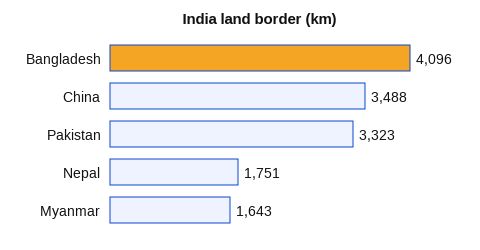
  1. Bangladesh – about 4,096 km, the longest (touching WB, Assam, Meghalaya, Tripura, Mizoram).
  2. China – about 3,488 km; Pakistan – about 3,323 km; Nepal – about 1,751 km.
  3. Shortest land border is with Afghanistan (about 106 km).

Yaad rakhein: Order: Bangladesh > China > Pakistan > Nepal > Myanmar > Bhutan > Afghanistan.

Answer: (C) Bangladesh

अवधारणा: भारत की लगभग 15,200 km स्थलीय सीमा सात देशों से लगती है।

  1. बांग्लादेश – लगभग 4,096 km, सबसे लंबी (पश्चिम बंगाल, असम, मेघालय, त्रिपुरा, मिज़ोरम)।
  2. चीन – लगभग 3,488 km; पाकिस्तान – लगभग 3,323 km; नेपाल – लगभग 1,751 km।
  3. सबसे छोटी सीमा अफ़गानिस्तान से (लगभग 106 km)।

याद रखें: क्रम: बांग्लादेश > चीन > पाकिस्तान > नेपाल > म्यांमार > भूटान > अफ़गानिस्तान।

उत्तर: (C) Bangladesh

RRB NTPC Undergraduate CBT 1General AwarenessGeography – India's BordersRRB NTPC Undergraduate CBT 1 2024 · 20 Aug Shift 2 →