Question bank

Q&A: practice questions with answers

Search questions on any topic. Filter by exam category, exam, subject and topic, try the question, then open the answer and explanation.

Courses – airGurukul

20,719 questions found.

Q2281.
Sapna invested ₹21,200 on simple interest, partly at the rate of 13% per annum and partly at the rate of 3% per annum. If she earns equal interests from the two
investments after 8 years, then find the sum invested at the rate of 13% per annum (in ₹).
सपना ने ₹21,200 साधारण ब्याज पर निवेश किए, जिसका कुछ भाग 13% वार्षिक की दर पर और कुछ भाग 3% वार्षिक की दर पर निवेश किया। यदि 8 वर्ष बाद उसे दोनों
निवेशों से समान ब्याज प्राप्त होता है, तो 13% वार्षिक की दर पर निवेश की गई राशि (₹ में) ज्ञात कीजिए।
  1. A3,975
  2. B3,972
  3. C3,973
  4. D3,976
Show answer

Concept: Equal SI for equal time ⇒ principal × rate is equal for both parts.

  1. Let ₹x be at 13%; then ₹(21200 − x) at 3%.
  2. x×13×8=(21200−x)×3×8 ⇒ 13x=63600−3x.
  3. 16x=63600 ⇒ x=3975.

Trick: Principals are in inverse ratio of rates =3:13; part at 13% =316×21200=3975.

Answer: (A) ₹3,975

अवधारणा: समान समय में समान साधारण ब्याज ⇒ मूलधन × दर दोनों भागों में बराबर।

  1. माना 13% पर ₹x; तो 3% पर ₹(21200 − x)।
  2. x×13×8=(21200−x)×3×8 ⇒ 13x=63600−3x।
  3. 16x=63600 ⇒ x=3975।

ट्रिक: मूलधन दरों के व्युत्क्रम अनुपात 3:13 में; 13% वाला भाग =316×21200=3975।

उत्तर: (A) ₹3,975

RRB NTPC Undergraduate CBT 1MathematicsSimple InterestRRB NTPC Undergraduate CBT 1 2024 · 19 Aug Shift 3 →
Q2282.
I bought two bicycles for ₹1,200. I sold the first one at a loss of 10% and the second at a gain of 20%. If, on the whole I made neither a loss nor a gain, find the cost price (in ₹) of the first bicycle.
मैंने दो साइकिलें ₹1,200 में खरीदीं। मैंने पहली साइकिल 10% की हानि पर और दूसरी 20% के लाभ पर बेची। यदि कुल मिलाकर मुझे न तो हानि हुई और न ही लाभ, तो पहली साइकिल का क्रय मूल्य (₹ में) ज्ञात कीजिए।
  1. A784
  2. B820
  3. C800
  4. D824
Show answer

Concept: No overall profit/loss ⇒ loss on one = gain on the other.

  1. Let CP of first =x, second =1200−x.
  2. 10% of x=20% of (1200−x) ⇒ 0.1x=240−0.2x.
  3. 0.3x=240 ⇒ x=800.

Trick: CPs are in ratio 20:10=2:1, so first =23×1200=800.

Answer: (C) ₹800

अवधारणा: कुल न लाभ न हानि ⇒ एक पर हानि = दूसरे पर लाभ।

  1. माना पहली साइकिल का क्रय मूल्य x, दूसरी का 1200−x।
  2. 0.1x=0.2(1200−x) ⇒ 0.1x=240−0.2x।
  3. 0.3x=240 ⇒ x=800।

ट्रिक: क्रय मूल्य का अनुपात 20:10=2:1, अतः पहली =23×1200=800।

उत्तर: (C) ₹800

RRB NTPC Undergraduate CBT 1MathematicsProfit and LossRRB NTPC Undergraduate CBT 1 2024 · 19 Aug Shift 3 →
Q2283.
The current population of a town is 10,630. It increases by 25% and 50% in two successive years but decreases by 68% in the third year. What is the population of the town at the end of the third year?
एक कस्बे की वर्तमान जनसंख्या 10,630 है। यह लगातार दो वर्षों में 25% और 50% बढ़ती है, लेकिन तीसरे वर्ष में 68% घट जाती है। तीसरे वर्ष के अंत में कस्बे की जनसंख्या कितनी है?
  1. A6376
  2. B6374
  3. C6380
  4. D6378
Show answer

Concept: Successive % changes multiply: P×(1+r1100)(1+r2100)(1−r3100).

  1. 10630×1.25=13287.5.
  2. 13287.5×1.5=19931.25.
  3. 19931.25×0.32=6378.

Trick: 1.25×1.5×0.32=0.6, so answer =10630×0.6=6378.

Answer: (D) 6378

अवधारणा: क्रमागत प्रतिशत परिवर्तन गुणा होते हैं: P×(1+r1100)(1+r2100)(1−r3100)।

  1. 10630×1.25=13287.5।
  2. 13287.5×1.5=19931.25।
  3. 19931.25×0.32=6378।

ट्रिक: 1.25×1.5×0.32=0.6, अतः उत्तर =10630×0.6=6378।

उत्तर: (D) 6378

RRB NTPC Undergraduate CBT 1MathematicsPopulation GrowthRRB NTPC Undergraduate CBT 1 2024 · 19 Aug Shift 3 →
Q2284.
If sinA+cosAcosA=1712, then find the value of sin A and cos A respectively.
यदि sinA+cosAcosA=1712 है, तो क्रमशः sin A और cos A का मान ज्ञात कीजिए।
  1. A135,1312
  2. B513,1213
  3. C517,516
  4. D175,165
Show answer

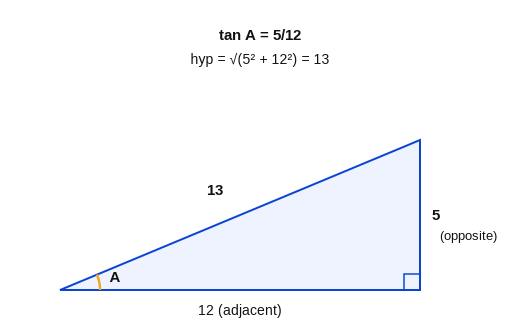
Concept: Split the fraction: sinA+cosAcosA=tanA+1.

  1. tanA+1=1712 ⇒ tanA=512.
  2. Opposite = 5, adjacent = 12 ⇒ hypotenuse =25+144=13.
  3. sinA=513, cosA=1213.

Trick: sin and cos can never exceed 1 — options (A) and (D) are out at once; 5-12-13 is a standard triplet.

Answer: (B) 513,1213

अवधारणा: भिन्न को तोड़ें: sinA+cosAcosA=tanA+1।

  1. tanA+1=1712 ⇒ tanA=512।
  2. लम्ब = 5, आधार = 12 ⇒ कर्ण =25+144=13।
  3. sinA=513, cosA=1213।

ट्रिक: sin और cos कभी 1 से बड़े नहीं होते — विकल्प (A) और (D) तुरंत बाहर; 5-12-13 मानक त्रिक है।

उत्तर: (B) 513,1213

RRB NTPC Undergraduate CBT 1MathematicsTrigonometric RatiosRRB NTPC Undergraduate CBT 1 2024 · 19 Aug Shift 3 →
Q2285.
A sum of money triples itself at a certain rate of compound interest in 8 years. In how many years will it amount to 9 times of itself?
चक्रवृद्धि ब्याज की एक निश्चित दर पर कोई धनराशि 8 वर्षों में तिगुनी हो जाती है। कितने वर्षों में यह स्वयं की 9 गुना हो जाएगी?
  1. A10 years10 वर्ष
  2. B17 years17 वर्ष
  3. C9 years9 वर्ष
  4. D16 years16 वर्ष
Show answer

Concept: Under CI, the multiplying factor grows as a power of time: factor =(1+r)t.

  1. (1+r)8=3.
  2. 9=32=((1+r)8)2=(1+r)16.
  3. So it takes 16 years.

Trick: 3 times in 8 yrs ⇒ 32 in 8×2, 33 in 8×3 years.

Answer: (D) 16 years

अवधारणा: चक्रवृद्धि में गुणक समय की घात के रूप में बढ़ता है: (1+r)t।

  1. (1+r)8=3।
  2. 9=32=((1+r)8)2=(1+r)16।
  3. अतः 16 वर्ष लगेंगे।

ट्रिक: 8 वर्ष में 3 गुना ⇒ 32 गुना 8×2 वर्ष में, 33 गुना 8×3 वर्ष में।

उत्तर: (D) 16 वर्ष

RRB NTPC Undergraduate CBT 1MathematicsCompound InterestRRB NTPC Undergraduate CBT 1 2024 · 19 Aug Shift 3 →
Q2286.
Given that 500.92 = x, 500.26= y and xz = y3, then the value of z is close to:
दिया गया है कि 500.92 = x, 500.26= y और xz = y3 है, तो z का मान लगभग है:
  1. A0.39
  2. B0.83
  3. C0.85
  4. D3.85
Show answer

Concept: Write both sides with base 50 and compare powers: (am)n=amn.

  1. xz=(500.92)z=500.92z.
  2. y3=(500.26)3=500.78.
  3. 0.92z=0.78 ⇒ z=0.780.92≈0.848≈0.85.

Trick: z=3×0.260.92=7892=3946, a little less than 0.85.

Answer: (C) 0.85

अवधारणा: दोनों पक्षों को आधार 50 में लिखें और घात मिलाएँ: (am)n=amn।

  1. xz=(500.92)z=500.92z।
  2. y3=(500.26)3=500.78।
  3. 0.92z=0.78 ⇒ z=0.780.92≈0.848≈0.85।

ट्रिक: z=7892=3946, जो लगभग 0.85 है।

उत्तर: (C) 0.85

RRB NTPC Undergraduate CBT 1MathematicsIndices (Exponents)RRB NTPC Undergraduate CBT 1 2024 · 19 Aug Shift 3 →
Q2287.
Which of the following numbers is divisible by 5?
निम्नलिखित में से कौन-सी संख्या 5 से विभाज्य है?
  1. A7132956
  2. B6175753
  3. C7048030
  4. D6567359
Show answer

Concept: A number is divisible by 5 only if its last digit is 0 or 5.

  1. 7132956 ends in 6, 6175753 in 3, 6567359 in 9 → not divisible.
  2. 7048030 ends in 0 → divisible by 5 (and by 10).

Yaad rakhein: For 5 just look at the unit digit: 0 or 5.

Answer: (C) 7048030

अवधारणा: कोई संख्या 5 से तभी विभाज्य है जब उसका इकाई अंक 0 या 5 हो।

  1. 7132956 का अंतिम अंक 6, 6175753 का 3, 6567359 का 9 → विभाज्य नहीं।
  2. 7048030 का अंतिम अंक 0 → 5 (और 10) से विभाज्य।

याद रखें: 5 के लिए केवल इकाई अंक देखें: 0 या 5।

उत्तर: (C) 7048030

RRB NTPC Undergraduate CBT 1MathematicsDivisibility Rule of 5RRB NTPC Undergraduate CBT 1 2024 · 19 Aug Shift 3 →
Q2288.
Abdul and Mohsin together invested ₹76,800 in a business. At the end of the year, out of a total profit of ₹19,000, Mohsin's share was ₹3,800. What was the difference between their investments?
अब्दुल और मोहसिन ने मिलकर एक व्यवसाय में ₹76,800 का निवेश किया। वर्ष के अंत में, ₹19,000 के कुल लाभ में से मोहसिन का हिस्सा ₹3,800 था। उनके निवेशों के बीच कितना अंतर था?
  1. A₹46,300
  2. B₹45,780
  3. C₹44,260
  4. D₹46,080
Show answer

Concept: For the same time period, profit is shared in the ratio of investments.

  1. Mohsin's share =380019000=15 of profit ⇒ Abdul : Mohsin =4:1.
  2. Mohsin's investment =15×76800=15360; Abdul's =61440.
  3. Difference =61440−15360=46080.

Trick: Difference =4−15×76800=35×76800=46080.

Answer: (D) ₹46,080

अवधारणा: समान अवधि में लाभ निवेश के अनुपात में बँटता है।

  1. मोहसिन का हिस्सा =380019000=15 ⇒ अब्दुल : मोहसिन =4:1।
  2. मोहसिन का निवेश =15×76800=15360; अब्दुल का =61440।
  3. अंतर =61440−15360=46080।

ट्रिक: अंतर =35×76800=46080।

उत्तर: (D) ₹46,080

RRB NTPC Undergraduate CBT 1MathematicsPartnershipRRB NTPC Undergraduate CBT 1 2024 · 19 Aug Shift 3 →
Q2289.
Which of the following ratios is the greatest?
निम्नलिखित में से कौन-सा अनुपात सबसे बड़ा है?
  1. A28 : 74
  2. B45 : 85
  3. C33 : 72
  4. D40 : 53
Show answer

Concept: Convert each ratio to a decimal (or compare with 12).

  1. 2874≈0.38, 3372≈0.46 — both below 12.
  2. 4585≈0.53.
  3. 4053≈0.75 — the greatest.

Trick: Only 40 : 53 has the first term close to the second; it is clearly above 0.7.

Answer: (D) 40 : 53

अवधारणा: हर अनुपात को दशमलव में बदलें (या 12 से तुलना करें)।

  1. 2874≈0.38, 3372≈0.46 — दोनों 12 से कम।
  2. 4585≈0.53।
  3. 4053≈0.75 — सबसे बड़ा।

ट्रिक: केवल 40 : 53 में पहला पद दूसरे के काफ़ी पास है, यह 0.7 से भी बड़ा है।

उत्तर: (D) 40 : 53

RRB NTPC Undergraduate CBT 1MathematicsComparison of RatiosRRB NTPC Undergraduate CBT 1 2024 · 19 Aug Shift 3 →
Q2290.
The average of first 153 even numbers is
प्रथम 153 सम संख्याओं का औसत है
  1. A153.5
  2. B154
  3. C155
  4. D154.5
Show answer

Concept: Sum of first n even numbers =n(n+1), so their average =n+1.

  1. Sum =153×154.
  2. Average =153×154153=154.

Yaad rakhein: Average of first n even numbers =n+1; of first n odd numbers =n; of first n natural numbers =n+12.

Answer: (B) 154

अवधारणा: प्रथम n सम संख्याओं का योग =n(n+1), अतः औसत =n+1।

  1. योग =153×154।
  2. औसत =153×154153=154।

याद रखें: प्रथम n सम संख्याओं का औसत =n+1; प्रथम n विषम का =n; प्रथम n प्राकृत का =n+12।

उत्तर: (B) 154

RRB NTPC Undergraduate CBT 1MathematicsAverageRRB NTPC Undergraduate CBT 1 2024 · 19 Aug Shift 3 →
Q2291.
Simplify the given expression.
x(7x − 5) + 7(x2 − 2) + 18
दिए गए व्यंजक को सरल कीजिए।
x(7x − 5) + 7(x2 − 2) + 18
  1. A14x2 − 5x − 4
  2. B−14x2 − 5x − 4
  3. C14x2 − 5x + 4
  4. D−14x2 − 5x + 4
Show answer

Concept: Expand the brackets and combine like terms.

  1. x(7x−5)=7x2−5x.
  2. 7(x2−2)=7x2−14.
  3. Total =7x2−5x+7x2−14+18=14x2−5x+4.

Trick: Put x=0: expression =−14+18=4; only options with +4 survive, and the x2 coefficient is clearly positive.

Answer: (C) 14x2−5x+4

अवधारणा: कोष्ठक खोलें और समान पदों को जोड़ें।

  1. x(7x−5)=7x2−5x।
  2. 7(x2−2)=7x2−14।
  3. कुल =7x2−5x+7x2−14+18=14x2−5x+4।

ट्रिक: x=0 रखें: मान =−14+18=4; केवल +4 वाले विकल्प बचते हैं, और x2 का गुणांक धनात्मक है।

उत्तर: (C) 14x2−5x+4

RRB NTPC Undergraduate CBT 1MathematicsAlgebraic SimplificationRRB NTPC Undergraduate CBT 1 2024 · 19 Aug Shift 3 →
Q2292.
6 men can complete a piece of work in 8 days, while 3 women can do it in 18 days. In how many days can 9 women and 8 men complete this work?
6 पुरुष किसी कार्य को 8 दिनों में पूरा कर सकते हैं, जबकि 3 महिलाएँ उसे 18 दिनों में कर सकती हैं। 9 महिलाएँ और 8 पुरुष मिलकर इस कार्य को कितने दिनों में पूरा कर सकते हैं?
  1. A8 days8 दिन
  2. B1 day1 दिन
  3. C3 days3 दिन
  4. D6 days6 दिन
Show answer

Concept: Convert to man-days and woman-days to find one person's daily work.

  1. Work =6×8=48 man-days ⇒ 1 man does 148 per day.
  2. Work =3×18=54 woman-days ⇒ 1 woman does 154 per day.
  3. 9 women + 8 men per day =954+848=16+16=13.
  4. Time =3 days.

Trick: 8 men alone need 488=6 days, 9 women alone need 549=6 days; together half of 6 = 3 days.

Answer: (C) 3 days

अवधारणा: पुरुष-दिवस और महिला-दिवस बनाकर एक व्यक्ति का एक दिन का काम निकालें।

  1. कार्य =6×8=48 पुरुष-दिवस ⇒ 1 पुरुष प्रतिदिन 148।
  2. कार्य =3×18=54 महिला-दिवस ⇒ 1 महिला प्रतिदिन 154।
  3. 9 महिला + 8 पुरुष प्रतिदिन =954+848=16+16=13।
  4. समय =3 दिन।

ट्रिक: 8 पुरुष अकेले 488=6 दिन, 9 महिलाएँ अकेले 549=6 दिन; साथ में 6 का आधा = 3 दिन।

उत्तर: (C) 3 दिन

RRB NTPC Undergraduate CBT 1MathematicsTime and WorkRRB NTPC Undergraduate CBT 1 2024 · 19 Aug Shift 3 →
Q2293.
The marked price of a watch is ₹3,480. It is sold for ₹2,958. The rate of discount is _____.
एक घड़ी का अंकित मूल्य ₹3,480 है। इसे ₹2,958 में बेचा जाता है। छूट की दर _____ है।
  1. A15%
  2. B17%
  3. C13%
  4. D10%
Show answer

Concept: Discount%=MP−SPMP×100.

  1. Discount =3480−2958=522.
  2. Rate =5223480×100=15%.

Trick: 10% of 3480 = 348, 5% = 174; 348+174=522 ⇒ 15%.

Answer: (A) 15%

अवधारणा: छूट%=अंकित मूल्य−विक्रय मूल्यअंकित मूल्य×100।

  1. छूट =3480−2958=522।
  2. दर =5223480×100=15%।

ट्रिक: 3480 का 10% = 348, 5% = 174; 348+174=522 ⇒ 15%।

उत्तर: (A) 15%

RRB NTPC Undergraduate CBT 1MathematicsDiscountRRB NTPC Undergraduate CBT 1 2024 · 19 Aug Shift 3 →
Q2294.
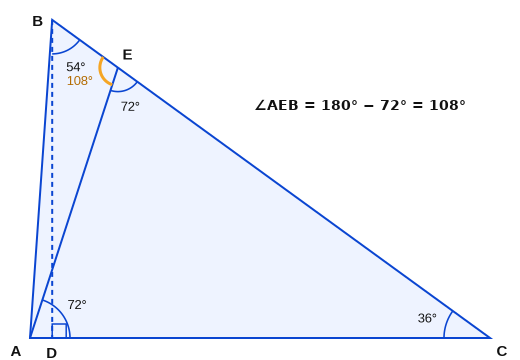
In △ABC, BD ⟂ AC at D and ∠DBC = 54°. E is a point on BC such that ∠CAE = 72°. What is the measure of ∠AEB?
△ABC में, BD ⟂ AC, D पर है और ∠DBC = 54° है। E, BC पर एक ऐसा बिंदु है कि ∠CAE = 72° है। ∠AEB की माप क्या है?
  1. A100°
  2. B98°
  3. C95°
  4. D108°
Show answer

Concept: Angle sum of a triangle is 180∘; an exterior (linear pair) angle is 180∘ minus the interior one.

  1. In right △BDC: ∠C=180∘−90∘−54∘=36∘.
  2. In △AEC: ∠AEC=180∘−72∘−36∘=72∘.
  3. B, E, C are collinear ⇒ ∠AEB=180∘−72∘=108∘.

Trick: Exterior angle of △AEC at E =∠CAE+∠C=72∘+36∘=108∘.

Answer: (D) 108∘

अवधारणा: त्रिभुज के कोणों का योग 180∘; रैखिक युग्म कोण = 180∘ − अंतः कोण।

  1. समकोण △BDC में: ∠C=180∘−90∘−54∘=36∘।
  2. △AEC में: ∠AEC=180∘−72∘−36∘=72∘।
  3. B, E, C एक रेखा पर ⇒ ∠AEB=180∘−72∘=108∘।

ट्रिक: △AEC का E पर बाह्य कोण =∠CAE+∠C=72∘+36∘=108∘।

उत्तर: (D) 108∘

RRB NTPC Undergraduate CBT 1MathematicsTriangles – AnglesRRB NTPC Undergraduate CBT 1 2024 · 19 Aug Shift 3 →
Q2295.
Evaluate: (−9) − (−60) ÷ (−6) + (−4) × 9
मान ज्ञात कीजिए: (−9) − (−60) ÷ (−6) + (−4) × 9
  1. A−57
  2. B−55
  3. C−58
  4. D−54
Show answer

Concept: BODMAS: division and multiplication before addition and subtraction; watch the signs.

  1. (−60)÷(−6)=10.
  2. (−4)×9=−36.
  3. −9−10+(−36)=−55.

Trick: Negative ÷ negative = positive, then the minus before it makes it −10.

Answer: (B) −55

अवधारणा: BODMAS: भाग और गुणा पहले, फिर जोड़-घटाव; चिह्नों पर ध्यान दें।

  1. (−60)÷(−6)=10।
  2. (−4)×9=−36।
  3. −9−10+(−36)=−55।

ट्रिक: ऋण ÷ ऋण = धन, फिर उससे पहले का ऋण चिह्न उसे −10 बना देता है।

उत्तर: (B) −55

RRB NTPC Undergraduate CBT 1MathematicsSimplification (BODMAS)RRB NTPC Undergraduate CBT 1 2024 · 19 Aug Shift 3 →
Q2296.
What should come in place of ? in the given series based on the English alphabetical order?
UXX VSU WNR ? YDL
अंग्रेज़ी वर्णमाला क्रम के आधार पर दी गई श्रृंखला में प्रश्न चिह्न (?) के स्थान पर क्या आना चाहिए?
UXX VSU WNR ? YDL
  1. AXLV
  2. BXIO
  3. CWLZ
  4. DPSL
Show answer

Concept: Track each letter position of the clusters separately.

  1. 1st letters: U, V, W, X, Y (+1).
  2. 2nd letters: X, S, N, I, D (−5).
  3. 3rd letters: X, U, R, O, L (−3).

Trick: First letter must be X — only XLV and XIO remain; N − 5 = I settles it.

Answer: (B) XIO

अवधारणा: हर समूह के प्रत्येक स्थान के अक्षर अलग-अलग देखें।

  1. पहले अक्षर: U, V, W, X, Y (+1)।
  2. दूसरे अक्षर: X, S, N, I, D (−5)।
  3. तीसरे अक्षर: X, U, R, O, L (−3)।

ट्रिक: पहला अक्षर X होना चाहिए — केवल XLV और XIO बचते हैं; N − 5 = I से उत्तर तय।

उत्तर: (B) XIO

RRB NTPC Undergraduate CBT 1General Intelligence and ReasoningLetter SeriesRRB NTPC Undergraduate CBT 1 2024 · 19 Aug Shift 3 →
Q2297.
Refer to the following number and symbol series and answer the question that follows. Counting to be done from left to right only.
(Left) + @ & ? % \ ? + < # 8 $ 1 % % 5 2 4 9 ^ 7 (Right)
How many such numbers are there, each of which is immediately preceded by a symbol and also immediately followed by a symbol?
निम्नलिखित संख्या और प्रतीक श्रृंखला को देखिए और उसके बाद आने वाले प्रश्न का उत्तर दीजिए। गिनती केवल बाएँ से दाएँ की जानी है।
(बाएँ) + @ & ? % \ ? + < # 8 $ 1 % % 5 2 4 9 ^ 7 (दाएँ)
ऐसी कितनी संख्याएँ हैं, जिनमें से प्रत्येक के ठीक पहले एक प्रतीक है और ठीक बाद में भी एक प्रतीक है?
  1. AThreeतीन
  2. BFiveपाँच
  3. COneएक
  4. DTwoदो
Show answer

Concept: Check each number's left and right neighbour.

  1. 8: preceded by #, followed by $ → both symbols ✔.
  2. 1: preceded by $, followed by % ✔.
  3. 5, 2, 4, 9 have a number on at least one side ✘; 7 is the last element (nothing after it) ✘.

Trick: Numbers inside a run of digits (5 2 4 9) can never qualify — skip them.

Answer: (D) Two

अवधारणा: हर संख्या का बायाँ और दायाँ पड़ोसी जाँचें।

  1. 8: पहले #, बाद में $ → दोनों प्रतीक ✔।
  2. 1: पहले $, बाद में % ✔।
  3. 5, 2, 4, 9 के कम से कम एक ओर संख्या ✘; 7 अंतिम है (बाद में कुछ नहीं) ✘।

ट्रिक: लगातार अंकों के समूह (5 2 4 9) के भीतर की संख्याएँ कभी शर्त पूरी नहीं करतीं — उन्हें छोड़ दें।

उत्तर: (D) दो

RRB NTPC Undergraduate CBT 1General Intelligence and ReasoningSymbol–Number SeriesRRB NTPC Undergraduate CBT 1 2024 · 19 Aug Shift 3 →
Q2298.
In a certain code language, ‘LUMA’ is coded as ‘5796’ and ‘MALI’ is coded as ‘8569’. What is the code for ‘I’ in that language?
एक निश्चित कूट भाषा में, ‘LUMA’ को ‘5796’ लिखा जाता है और ‘MALI’ को ‘8569’ लिखा जाता है। उस भाषा में ‘I’ के लिए कूट क्या है?
  1. A8
  2. B9
  3. C5
  4. D6
Show answer

Concept: Letters common to both words share the common digits; the leftover letter takes the leftover digit.

  1. LUMA → 5, 7, 9, 6; MALI → 8, 5, 6, 9.
  2. Common letters L, M, A ↔ common digits 5, 6, 9.
  3. LUMA's extra U = 7; MALI's extra I = 8.

Trick: Find the unmatched letter and unmatched digit — they pair up.

Answer: (A) 8

अवधारणा: दोनों शब्दों के समान अक्षर समान अंकों से कोडित; बचा अक्षर बचे अंक से।

  1. LUMA → 5, 7, 9, 6; MALI → 8, 5, 6, 9।
  2. समान अक्षर L, M, A ↔ समान अंक 5, 6, 9।
  3. LUMA में अतिरिक्त U = 7; MALI में अतिरिक्त I = 8।

ट्रिक: बेमेल अक्षर और बेमेल अंक ढूँढें — वही जोड़ी है।

उत्तर: (A) 8

RRB NTPC Undergraduate CBT 1General Intelligence and ReasoningCoding–DecodingRRB NTPC Undergraduate CBT 1 2024 · 19 Aug Shift 3 →
Q2299.
In the following triads, each group of letters is related to the subsequent one following a certain logic. Select from the given options, the one which follows the same logic. GULF – FLGU – GLUF
ALTS – STAL – ATLS
निम्नलिखित त्रिकों में, अक्षरों का प्रत्येक समूह एक निश्चित तर्क का पालन करते हुए अगले समूह से संबंधित है। दिए गए विकल्पों में से उसका चयन कीजिए जो समान तर्क का पालन करता है। GULF – FLGU – GLUF
ALTS – STAL – ATLS
  1. ASICK – KCSI – SCIK
  2. BLIMB – IMLB – IMBL
  3. CCALF – FLCA – ALCF
  4. DFINE – FNIE – ENIF
Show answer

Concept: Number the letters of the first word 1-2-3-4 and track the order.

  1. GULF (1234) → FLGU = 4-3-1-2 → GLUF = 1-3-2-4.
  2. Check ALTS: STAL (4312), ATLS (1324) ✔.
  3. SICK: 4312 = KCSI ✔; 1324 = SCIK ✔.

Trick: Third word = first word with middle two letters swapped — test this first.

Answer: (A) SICK – KCSI – SCIK

अवधारणा: पहले शब्द के अक्षरों को 1-2-3-4 क्रमांक देकर क्रम देखें।

  1. GULF (1234) → FLGU = 4-3-1-2 → GLUF = 1-3-2-4।
  2. ALTS जाँचें: STAL (4312), ATLS (1324) ✔।
  3. SICK: 4312 = KCSI ✔; 1324 = SCIK ✔।

ट्रिक: तीसरा शब्द = पहला शब्द, बीच के दो अक्षर आपस में बदले हुए — पहले यही जाँचें।

उत्तर: (A) SICK – KCSI – SCIK

RRB NTPC Undergraduate CBT 1General Intelligence and ReasoningLetter Position RearrangementRRB NTPC Undergraduate CBT 1 2024 · 19 Aug Shift 3 →
Q2300.
Read the given statement(s) and conclusions carefully. Assuming that the information given in the statements is true, even if it appears to be at variance with commonly known facts, decide which of the given conclusion(s) logically follow(s) from the statement(s).
Statements:
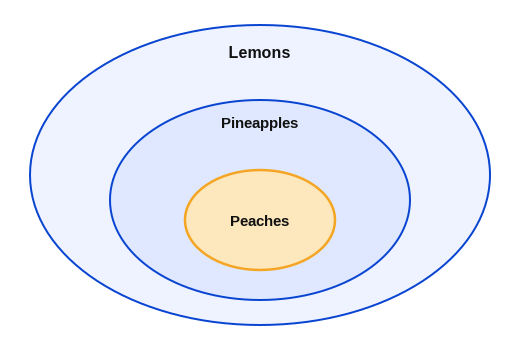
All Peaches are Pineapples.
All Pineapples are Lemons.
Conclusions:
I. No Lemons are Peaches.
II. Some Lemons are Peaches.
दिए गए कथन/कथनों और निष्कर्षों को ध्यानपूर्वक पढ़िए। यह मानते हुए कि कथनों में दी गई जानकारी सत्य है, भले ही वह सामान्यतः ज्ञात तथ्यों से भिन्न प्रतीत होती हो, निर्णय कीजिए कि दिए गए निष्कर्षों में से कौन-सा/कौन-से निष्कर्ष तार्किक रूप से कथन/कथनों का अनुसरण करता है/करते हैं।
कथन:
सभी आड़ू, अनानास हैं।
सभी अनानास, नींबू हैं।
निष्कर्ष:
I. कोई भी नींबू, आड़ू नहीं है।
II. कुछ नींबू, आड़ू हैं।
  1. AOnly conclusion (II) follows.केवल निष्कर्ष (II) अनुसरण करता है।
  2. BBoth conclusions (I) and (II) follow.निष्कर्ष (I) और (II) दोनों अनुसरण करते हैं।
  3. CNeither conclusion (I) nor (II) follows.न तो निष्कर्ष (I) और न ही (II) अनुसरण करता है।
  4. DOnly conclusion (I) follows.केवल निष्कर्ष (I) अनुसरण करता है।
Show answer

Concept: All A are B + All B are C ⇒ All A are C, so some C are A.

  1. Peaches ⊂ Pineapples ⊂ Lemons.
  2. All Peaches are Lemons ⇒ Some Lemons are Peaches (II) ✔.
  3. No Lemons are Peaches (I) contradicts this ✘.

Yaad rakhein: 'All A are B' always gives 'Some B are A' (conversion).

Answer: (A) Only conclusion (II) follows.

अवधारणा: सभी A, B हैं + सभी B, C हैं ⇒ सभी A, C हैं, अतः कुछ C, A हैं।

  1. Peaches ⊂ Pineapples ⊂ Lemons।
  2. सभी Peaches, Lemons हैं ⇒ कुछ Lemons, Peaches हैं (II) ✔।
  3. कोई Lemon, Peach नहीं (I) इसका उल्टा है ✘।

याद रखें: 'सभी A, B हैं' से हमेशा 'कुछ B, A हैं' निकलता है (परिवर्तन)।

उत्तर: (A) केवल निष्कर्ष (II) अनुसरण करता है।

RRB NTPC Undergraduate CBT 1General Intelligence and ReasoningSyllogismRRB NTPC Undergraduate CBT 1 2024 · 19 Aug Shift 3 →