Question bank

Q&A: practice questions with answers

Search questions on any topic. Filter by exam category, exam, subject and topic, try the question, then open the answer and explanation.

Courses – airGurukul

20,719 questions found.

Q221.
Why does the palm feel cool when acetone is poured on it?
हथेली पर ऐसीटोन डालने पर हथेली ठंडी क्यों महसूस होती है?
  1. AParticles remain still and reflect the surrounding heat.कण स्थिर रहते हैं और आसपास की ऊष्मा को परावर्तित करते हैं।
  2. BParticles absorb energy from the palm and evaporate.कण हथेली से ऊर्जा अवशोषित करते हैं और वाष्पित हो जाते हैं।
  3. CParticles release energy to the palm and condense.कण हथेली को ऊर्जा देते हैं और संघनित हो जाते हैं।
  4. DParticles expand and trap air between skin layers.कण फैलते हैं और त्वचा की परतों के बीच हवा को रोक लेते हैं।
Show answer

Concept: Evaporation needs latent heat, which is taken from the surroundings.

  1. Acetone is highly volatile and evaporates quickly.
  2. Its particles absorb energy (latent heat of vaporisation) from the palm to escape as vapour.
  3. The palm loses heat and feels cool.

Short trick: Memory hook: "Evaporation steals heat" — same reason sweat or a matka cools.

Answer: (B) Particles absorb energy from the palm and evaporate.

अवधारणा: वाष्पन के लिए गुप्त ऊष्मा चाहिए, जो आसपास से ली जाती है।

  1. ऐसीटोन अत्यधिक वाष्पशील है और तेज़ी से वाष्पित होता है।
  2. इसके कण वाष्प बनने के लिए हथेली से ऊर्जा (वाष्पन की गुप्त ऊष्मा) अवशोषित करते हैं।
  3. हथेली ऊष्मा खोती है और ठंडी लगती है।

शॉर्ट ट्रिक: याद रखें: "वाष्पन ऊष्मा चुराता है" — पसीने और मटके के ठंडे होने का भी यही कारण।

उत्तर: (B) कण हथेली से ऊर्जा अवशोषित करते हैं और वाष्पित हो जाते हैं।
RRB ALP CBT 1General ScienceMatter – evaporation causes coolingRRB ALP CBT 1 2025 · 18 Feb Shift 1 →
Q222.
A car falls off a ledge and drops to the ground in 0.8 s. Take g = 10 m/s² (for simplifying the calculations). How high is the ledge from the ground?
एक कार किसी कगार (ledge) से गिरती है और 0.8 s में भूमि पर पहुँच जाती है। g = 10 m/s² लीजिए (गणना को सरल बनाने के लिए)। कगार भूमि से कितनी ऊँचाई पर है?
  1. A4.0 m
  2. B2.0 m
  3. C6.4 m
  4. D3.2 m
Show answer

Concept: Starting from rest: h=12gt2.

  1. h=12×10×(0.8)2
  2. =5×0.64=3.2 m

Short trick: With g = 10, h=5t2: 5×0.64=3.2.

Answer: (D) 3.2 m

अवधारणा: विराम से गिरने पर: h=12gt2।

  1. h=12×10×(0.8)2
  2. =5×0.64=3.2 m

शॉर्ट ट्रिक: g = 10 पर h=5t2: 5×0.64=3.2।

उत्तर: (D) 3.2 m

RRB ALP CBT 1General ScienceMotion – free fallRRB ALP CBT 1 2025 · 18 Feb Shift 1 →
Q223.
Which of the following hybridisation crossing is NOT used for the improvement in crop varieties?
निम्नलिखित में से कौन-सा संकरण (hybridisation) संकरण-क्रॉस, फसल की किस्मों में सुधार के लिए उपयोग नहीं किया जाता है?
  1. AIntergenericअंतरवंशीय (Intergeneric)
  2. BIntraspecificअंतःजातीय (Intraspecific)
  3. CInterspecificअंतरजातीय (Interspecific)
  4. DIntervarietalअंतरकिस्मीय (Intervarietal)
Show answer

Concept: Hybridisation = crossing genetically dissimilar plants (NCERT Class 9).

  1. The crosses used for crop improvement are intervarietal (between varieties), interspecific (between species of the same genus) and intergeneric (between genera).
  2. "Intraspecific" is not listed among these hybridisation types.

Short trick: Memory hook: "Varieties – Species – Genera" (V-S-G) are the three crosses; intra- is not in the list.

Answer: (B) Intraspecific

अवधारणा: संकरण = आनुवंशिक रूप से भिन्न पौधों का संकरण (NCERT कक्षा 9)।

  1. फसल सुधार के लिए प्रयुक्त संकरण हैं — अंतरकिस्मीय (किस्मों के बीच), अंतरजातीय (एक ही वंश की जातियों के बीच) और अंतरवंशीय (वंशों के बीच)।
  2. "अंतःजातीय" इन संकरण प्रकारों में शामिल नहीं है।

शॉर्ट ट्रिक: याद रखें: "किस्म – जाति – वंश" ये तीन संकरण हैं; "अंतः" इनमें नहीं है।

उत्तर: (B) अंतःजातीय (Intraspecific)

RRB ALP CBT 1General ScienceCrop improvement – hybridisationRRB ALP CBT 1 2025 · 18 Feb Shift 1 →
Q224.
Which Act does the Digital Personal Data Protection Rules, 2025, facilitate the implementation of?
डिजिटल व्यक्तिगत डेटा संरक्षण नियम, 2025 किस अधिनियम के कार्यान्वयन को सुगम बनाते हैं?
  1. ADigital Personal Data Protection Act, 2023डिजिटल व्यक्तिगत डेटा संरक्षण अधिनियम, 2023
  2. BInformation Technology and Cybersecurity Act, 2023सूचना प्रौद्योगिकी और साइबर सुरक्षा अधिनियम, 2023
  3. CDigital Privacy Act, 2023डिजिटल गोपनीयता अधिनियम, 2023
  4. DData Protection Act, 2023डेटा संरक्षण अधिनियम, 2023
Show answer

Concept: The Digital Personal Data Protection (DPDP) Rules, 2025 were notified to operationalise the Digital Personal Data Protection Act, 2023.

  1. The DPDP Act, 2023 sets out rights of data principals and duties of data fiduciaries and creates the Data Protection Board of India.
  2. The Rules, 2025 give the procedures (consent managers, breach intimation, Board functioning) needed to implement the Act.

Short trick: Rules always carry the same name as their parent Act: DPDP Rules → DPDP Act, 2023.

Answer: (A) Digital Personal Data Protection Act, 2023

अवधारणा: डिजिटल व्यक्तिगत डेटा संरक्षण (DPDP) नियम, 2025, डिजिटल व्यक्तिगत डेटा संरक्षण अधिनियम, 2023 को लागू करने के लिए अधिसूचित किए गए।

  1. DPDP अधिनियम, 2023 डेटा प्रधान के अधिकार, डेटा न्यासी के कर्तव्य तय करता है और भारतीय डेटा संरक्षण बोर्ड बनाता है।
  2. नियम, 2025 अधिनियम को लागू करने की प्रक्रियाएँ (सहमति प्रबंधक, उल्लंघन की सूचना, बोर्ड का कार्य) देते हैं।

शॉर्ट ट्रिक: नियमों का नाम मूल अधिनियम जैसा ही होता है: DPDP नियम → DPDP अधिनियम, 2023।

उत्तर: (A) डिजिटल व्यक्तिगत डेटा संरक्षण अधिनियम, 2023

RRB ALP CBT 1General AwarenessPolity / current affairs – data protectionRRB ALP CBT 1 2025 · 18 Feb Shift 1 →
Q225.
Which of the following officially determines the constitutional validity of any legislation?
निम्नलिखित में से कौन किसी विधान (कानून) की संवैधानिक वैधता को आधिकारिक रूप से निर्धारित करता है?
  1. AThe Parliament of India through a special resolutionविशेष संकल्प के माध्यम से भारत की संसद
  2. BThe Supreme Court of India through judicial reviewन्यायिक पुनरावलोकन के माध्यम से भारत का सर्वोच्च न्यायालय
  3. CThe President of India through constitutional discretionसंवैधानिक विवेकाधिकार के माध्यम से भारत के राष्ट्रपति
  4. DThe Union Cabinet through executive interpretationकार्यकारी व्याख्या के माध्यम से केंद्रीय मंत्रिमंडल
Show answer

Concept: Judicial review is the power of courts to examine whether a law is consistent with the Constitution.

  1. Articles 13, 32 and 226 empower the Supreme Court (and High Courts) to strike down unconstitutional laws.
  2. The Supreme Court is the final interpreter and guardian of the Constitution, so it finally decides constitutional validity.

Short trick: Memory hook: "Parliament makes, Executive implements, Supreme Court reviews".

Answer: (B) The Supreme Court of India through judicial review

अवधारणा: न्यायिक पुनरावलोकन न्यायालयों की वह शक्ति है जिससे वे जाँचते हैं कि कोई कानून संविधान के अनुरूप है या नहीं।

  1. अनुच्छेद 13, 32 और 226 सर्वोच्च न्यायालय (और उच्च न्यायालयों) को असंवैधानिक कानून रद्द करने की शक्ति देते हैं।
  2. सर्वोच्च न्यायालय संविधान का अंतिम व्याख्याकार और संरक्षक है, अतः संवैधानिक वैधता का अंतिम निर्णय वही करता है।

शॉर्ट ट्रिक: याद रखें: "संसद बनाती है, कार्यपालिका लागू करती है, सर्वोच्च न्यायालय समीक्षा करता है"।

उत्तर: (B) न्यायिक पुनरावलोकन के माध्यम से भारत का सर्वोच्च न्यायालय

RRB ALP CBT 1General AwarenessPolity – judicial reviewRRB ALP CBT 1 2025 · 18 Feb Shift 1 →
Q226.
A trader marked the price of an item 40% above the cost price. He allowed two successive discounts of 20% and 25% to a customer. If he incurred a loss of ₹224, at what price did he sell the item to that customer?
एक व्यापारी ने एक वस्तु का अंकित मूल्य क्रय मूल्य से 40% अधिक रखा। उसने एक ग्राहक को 20% और 25% की दो क्रमागत छूटें दीं। यदि उसे ₹224 की हानि हुई, तो उसने वह वस्तु उस ग्राहक को किस मूल्य पर बेची?
  1. A₹1,276
  2. B₹1,167
  3. C₹1,176
  4. D₹1,166
Show answer

Concept: After successive changes, SP = CP × product of multipliers.

  1. Let CP = 100. MP = 140.
  2. SP = 140×0.8×0.75=84 → loss = 16 per 100.
  3. 16% of CP = ₹224 ⇒ CP = 2240.16 = ₹1,400.
  4. SP = 0.84 × 1400 = ₹1,176.

Short trick: SP : Loss = 84 : 16 = 21 : 4 ⇒ SP = 2244×21 = ₹1,176.

Answer: (C) ₹1,176

अवधारणा: क्रमागत परिवर्तनों के बाद, विक्रय मूल्य = क्रय मूल्य × सभी गुणकों का गुणनफल।

  1. माना क्रय मूल्य = 100, तो अंकित मूल्य = 140।
  2. विक्रय मूल्य = 140×0.8×0.75=84 → हानि = 16 प्रति 100।
  3. क्रय मूल्य का 16% = ₹224 ⇒ क्रय मूल्य = ₹1,400।
  4. विक्रय मूल्य = 0.84 × 1400 = ₹1,176।

शॉर्ट ट्रिक: विक्रय मूल्य : हानि = 84 : 16 = 21 : 4 ⇒ विक्रय मूल्य = 2244×21 = ₹1,176।

उत्तर: (C) ₹1,176

RRB ALP CBT 1MathematicsProfit and loss – successive discountsRRB ALP CBT 1 2025 · 17 Feb Shift 3 →
Q227.
A number is decreased by 18% and then increased by 22%. Find the net increase or decrease percentage (correct to two places of decimals).
एक संख्या को 18% घटाया जाता है और फिर 22% बढ़ाया जाता है। निवल वृद्धि या कमी प्रतिशत ज्ञात कीजिए (दशमलव के दो स्थानों तक सही)।
  1. ADecreased 0.04%0.04% की कमी
  2. BDecreased 1.2%1.2% की कमी
  3. CIncreased 0.04%0.04% की वृद्धि
  4. DIncreased 1.2%1.2% की वृद्धि
Show answer

Concept: Net change for a% and b% = a+b+ab100 (use signs).

  1. a=−18, b=+22.
  2. Net = −18+22+(−18)(22)100=4−3.96=+0.04%.

Short trick: Multiplier: 0.82×1.22=1.0004 → +0.04%.

Answer: (C) Increased 0.04%

अवधारणा: a% और b% के क्रमागत परिवर्तन का निवल प्रभाव = a+b+ab100 (चिह्न सहित)।

  1. a=−18, b=+22।
  2. निवल = −18+22−3.96=+0.04%।

शॉर्ट ट्रिक: गुणक: 0.82×1.22=1.0004 → 0.04% वृद्धि।

उत्तर: (C) 0.04% की वृद्धि

RRB ALP CBT 1MathematicsPercentage – successive changeRRB ALP CBT 1 2025 · 17 Feb Shift 3 →
Q228.
If volume of a sphere is numerically equal to the surface area of the sphere, then find the radius and surface area of the sphere. (Correct to 3 decimal places) (Use π=227)
यदि किसी गोले का आयतन संख्यात्मक रूप से उस गोले के पृष्ठीय क्षेत्रफल के बराबर है, तो गोले की त्रिज्या और पृष्ठीय क्षेत्रफल ज्ञात कीजिए। (दशमलव के 3 स्थानों तक सही) (π=227 का प्रयोग करें)
  1. A2 unit and 113.143 unit22 इकाई और 113.143 वर्ग इकाई
  2. B3 unit and 113.143 unit23 इकाई और 113.143 वर्ग इकाई
  3. C3 unit and 131.143 unit23 इकाई और 131.143 वर्ग इकाई
  4. D3 unit and 112.143 unit23 इकाई और 112.143 वर्ग इकाई
Show answer

Concept: Volume =43πr3, surface area =4πr2.

  1. 43πr3=4πr2⇒r=3 units.
  2. SA =4×227×9=7927=113.143 sq units.

Short trick: Volume/SA = r3 for any sphere, so equal ⇒ r=3. Then only options B, C, D remain; 7927 ≈ 113.14.

Answer: (B) 3 unit and 113.143 unit²

अवधारणा: आयतन =43πr3, पृष्ठीय क्षेत्रफल =4πr2।

  1. 43πr3=4πr2⇒r=3 इकाई।
  2. पृष्ठीय क्षेत्रफल =4×227×9=113.143 वर्ग इकाई।

शॉर्ट ट्रिक: किसी भी गोले के लिए आयतन/पृष्ठीय क्षेत्रफल = r3; बराबर ⇒ r=3।

उत्तर: (B) 3 इकाई और 113.143 वर्ग इकाई

RRB ALP CBT 1MathematicsMensuration – sphereRRB ALP CBT 1 2025 · 17 Feb Shift 3 →
Q229.
Simplify: sin⁡A1−cos⁡A+1−cos⁡Asin⁡A.
सरल कीजिए: sin⁡A1−cos⁡A+1−cos⁡Asin⁡A
  1. Asec⁡A
  2. B2sec⁡A
  3. CcosecA
  4. D2cosecA
Show answer

Concept: Take LCM and use sin2⁡A+cos2⁡A=1.

  1. Numerator =sin2⁡A+(1−cos⁡A)2=sin2⁡A+1−2cos⁡A+cos2⁡A=2(1−cos⁡A).
  2. Expression =2(1−cos⁡A)(1−cos⁡A)sin⁡A=2sin⁡A=2cosecA.

Short trick: Put A=90∘: 11+11=2; only 2cosec90∘=2 (sec 90° undefined, cosec 90° = 1).

Answer: (D) 2cosecA

अवधारणा: LCM लेकर sin2⁡A+cos2⁡A=1 का प्रयोग करें।

  1. अंश =sin2⁡A+(1−cos⁡A)2=2(1−cos⁡A)।
  2. व्यंजक =2(1−cos⁡A)(1−cos⁡A)sin⁡A=2cosecA।

शॉर्ट ट्रिक: A=90∘ रखें: मान = 2; केवल 2cosec90∘=2 मेल खाता है।

उत्तर: (D) 2cosecA

RRB ALP CBT 1MathematicsTrigonometry – simplificationRRB ALP CBT 1 2025 · 17 Feb Shift 3 →
Q230.
On a certain sum, if at the same rate of interest, in 2 years, the simple interest is ₹64 and the compound interest is ₹72, then what is the sum (in ₹)?
किसी निश्चित धनराशि पर, समान ब्याज दर से, 2 वर्षों में साधारण ब्याज ₹64 और चक्रवृद्धि ब्याज ₹72 है, तो धनराशि (₹ में) कितनी है?
  1. A121
  2. B132
  3. C128
  4. D123
Show answer

Concept: For 2 years: SI per year = Pr, and CI − SI = Pr2.

  1. SI for 1 year = 64 ÷ 2 = ₹32.
  2. CI − SI = 72 − 64 = ₹8 = interest on ₹32 for 1 year ⇒ r=832=25%.
  3. P=320.25 = ₹128.

Short trick: P=(SI/2)2CI−SI=3228=128.

Answer: (C) 128

अवधारणा: 2 वर्ष के लिए: एक वर्ष का साधारण ब्याज = Pr, और CI − SI = Pr2।

  1. 1 वर्ष का SI = 64 ÷ 2 = ₹32।
  2. CI − SI = ₹8 = ₹32 पर 1 वर्ष का ब्याज ⇒ r=25%।
  3. P=320.25 = ₹128।

शॉर्ट ट्रिक: P=(SI/2)2CI−SI=3228=128।

उत्तर: (C) 128

RRB ALP CBT 1MathematicsSimple and compound interest – 2 yearsRRB ALP CBT 1 2025 · 17 Feb Shift 3 →
Q231.
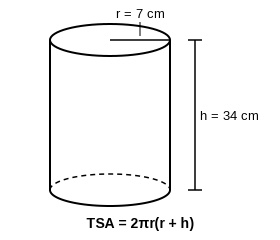
The volume of a solid cylinder is 5,236 cm3 and its height is 34 cm. What is the total surface area of the solid cylinder?
(Use π=227)
एक ठोस बेलन का आयतन 5,236 cm3 है और इसकी ऊँचाई 34 cm है। ठोस बेलन का कुल पृष्ठीय क्षेत्रफल कितना है?
(π=227 का प्रयोग करें)
  1. A1804 cm2
  2. B1841 cm2
  3. C1823 cm2
  4. D1831 cm2
Show answer

Concept: Volume =πr2h; TSA =2πr(r+h).

  1. 227r2×34=5236⇒r2=5236×722×34=49⇒r=7 cm.
  2. TSA =2×227×7×(7+34)=44×41=1804 cm².

Short trick: With r=7, 2πr=44: TSA = 44 × (r + h) = 44 × 41 – only 1804 is a multiple of 44.

Answer: (A) 1804 cm²

अवधारणा: आयतन =πr2h; कुल पृष्ठीय क्षेत्रफल =2πr(r+h)।

  1. 227r2×34=5236⇒r2=49⇒r=7 cm।
  2. कुल पृष्ठीय क्षेत्रफल =44×(7+34)=1804 cm²।

शॉर्ट ट्रिक: r=7 पर 2πr=44; विकल्पों में केवल 1804 ही 44 का गुणज है।

उत्तर: (A) 1804 cm²

RRB ALP CBT 1MathematicsMensuration – cylinderRRB ALP CBT 1 2025 · 17 Feb Shift 3 →
Q232.
A car travels x km at 40 km/hr, another x km at 60 km/hr and 2x km at 80 km/hr. Find the average speed for the whole journey.
एक कार x km की दूरी 40 km/hr की चाल से, अगली x km की दूरी 60 km/hr की चाल से और 2x km की दूरी 80 km/hr की चाल से तय करती है। पूरी यात्रा के लिए औसत चाल ज्ञात कीजिए।
  1. A60 km/hr
  2. B55 km/hr
  3. C65 km/hr
  4. D58 km/hr
Show answer

Concept: Average speed = total distance ÷ total time.

  1. Distance = 4x.
  2. Time = x40+x60+2x80=3x+2x+3x120=x15.
  3. Average = 4x÷x15=60 km/hr.

Short trick: Take x = 120 (LCM): times 3 + 2 + 3 = 8 h for 480 km ⇒ 60 km/hr.

Answer: (A) 60 km/hr

अवधारणा: औसत चाल = कुल दूरी ÷ कुल समय।

  1. दूरी = 4x।
  2. समय = x40+x60+2x80=x15।
  3. औसत = 4x÷x15=60 km/hr।

शॉर्ट ट्रिक: x = 120 लें: समय 3 + 2 + 3 = 8 घंटे, दूरी 480 km ⇒ 60 km/hr।

उत्तर: (A) 60 km/hr

RRB ALP CBT 1MathematicsSpeed – average speedRRB ALP CBT 1 2025 · 17 Feb Shift 3 →
Q233.
If the median and mode of a data of 20 numbers are 250 and 295, respectively, then find the sum of the 20 numbers.
यदि 20 संख्याओं वाले एक आँकड़े की माध्यिका और बहुलक क्रमशः 250 और 295 हैं, तो 20 संख्याओं का योग ज्ञात कीजिए।
  1. A4050
  2. B4005
  3. C4500
  4. D4550
Show answer

Concept: Empirical relation: Mode = 3 Median − 2 Mean.

  1. 295 = 3(250) − 2 Mean ⇒ 2 Mean = 455 ⇒ Mean = 227.5.
  2. Sum = 20 × 227.5 = 4550.

Short trick: Sum = 10 × (3 Median − Mode) = 10 × (750 − 295) = 4550.

Answer: (D) 4550

अवधारणा: आनुभविक संबंध: बहुलक = 3 माध्यिका − 2 माध्य।

  1. 295 = 750 − 2 माध्य ⇒ माध्य = 227.5।
  2. योग = 20 × 227.5 = 4550।

शॉर्ट ट्रिक: योग = 10 × (3 माध्यिका − बहुलक) = 10 × 455 = 4550।

उत्तर: (D) 4550

RRB ALP CBT 1MathematicsStatistics – empirical relationRRB ALP CBT 1 2025 · 17 Feb Shift 3 →
Q234.
What sum (in ₹) will earn an interest of ₹480 in 2 years at 8% simple interest per year?
कौन-सी धनराशि (₹ में) 8% वार्षिक साधारण ब्याज की दर से 2 वर्षों में ₹480 का ब्याज अर्जित करेगी?
  1. A3150
  2. B2800
  3. C3200
  4. D3000
Show answer

Concept: P=SI×100R×T.

  1. P=480×1008×2=3000.

Short trick: 2 years at 8% = 16% of P = 480 ⇒ P = 30 × 100 = ₹3000.

Answer: (D) 3000

अवधारणा: P=SI×100R×T।

  1. P=480×1008×2=3000।

शॉर्ट ट्रिक: 2 वर्ष में 16% = 480 ⇒ 1% = 30 ⇒ P = ₹3000।

उत्तर: (D) 3000

RRB ALP CBT 1MathematicsSimple interestRRB ALP CBT 1 2025 · 17 Feb Shift 3 →
Q235.
Which of the following ratios is the smallest?
निम्नलिखित में से कौन-सा अनुपात सबसे छोटा है?
  1. A4 : 7
  2. B7 : 10
  3. C5 : 8
  4. D6 : 9
Show answer

Concept: Convert each ratio to a decimal.

  1. 4 : 7 ≈ 0.571; 7 : 10 = 0.7; 5 : 8 = 0.625; 6 : 9 ≈ 0.667.
  2. Smallest = 4 : 7.

Short trick: Cross-multiply pairs: 4×8 = 32 < 5×7 = 35 ⇒ 4/7 < 5/8, and 5/8 is less than the others.

Answer: (A) 4 : 7

अवधारणा: प्रत्येक अनुपात को दशमलव में बदलें।

  1. 4 : 7 ≈ 0.571; 7 : 10 = 0.7; 5 : 8 = 0.625; 6 : 9 ≈ 0.667।
  2. सबसे छोटा = 4 : 7।

शॉर्ट ट्रिक: वज्र-गुणन: 4×8 = 32 < 5×7 = 35 ⇒ 4/7 < 5/8।

उत्तर: (A) 4 : 7

RRB ALP CBT 1MathematicsRatio – comparisonRRB ALP CBT 1 2025 · 17 Feb Shift 3 →
Q236.
A and B start a business by investing ₹93,000 and ₹54,000, respectively. B leaves the business after 3 months, and then C joins with an investment of ₹28,000 for the remaining period of the year. If 11% of the total profit is ₹61,336, what is B’s share of the profit?
A और B ने क्रमशः ₹93,000 और ₹54,000 का निवेश करके एक व्यवसाय शुरू किया। B, 3 महीने बाद व्यवसाय छोड़ देता है, और फिर C वर्ष की शेष अवधि के लिए ₹28,000 के निवेश के साथ जुड़ता है। यदि कुल लाभ का 11% ₹61,336 है, तो लाभ में B का हिस्सा कितना है?
  1. A₹59,070
  2. B₹59,059
  3. C₹59,040
  4. D₹58,951
Show answer

Concept: Profit share ∝ capital × time.

  1. A : B : C = 93000×12 : 54000×3 : 28000×9 = 1116 : 162 : 252 (in thousands) = 62 : 9 : 14.
  2. Total profit = 613360.11 = ₹5,57,600.
  3. B = 985×557600 = ₹59,040.

Short trick: Ratio sum 85; ₹5,57,600 ÷ 85 = 6560 per part ⇒ B = 9 × 6560 = ₹59,040.

Answer: (C) ₹59,040

अवधारणा: लाभ का हिस्सा ∝ पूँजी × समय।

  1. A : B : C = 93000×12 : 54000×3 : 28000×9 = 62 : 9 : 14।
  2. कुल लाभ = 613360.11 = ₹5,57,600।
  3. B = 985×557600 = ₹59,040।

शॉर्ट ट्रिक: 1 भाग = 557600 ÷ 85 = 6560 ⇒ B = 9 × 6560 = ₹59,040।

उत्तर: (C) ₹59,040

RRB ALP CBT 1MathematicsPartnership – unequal periodsRRB ALP CBT 1 2025 · 17 Feb Shift 3 →
Q237.
Find the simplified value of the following expression:
(8.40.7+2.44)÷(9.68−35)
निम्नलिखित व्यंजक का सरलीकृत मान ज्ञात कीजिए:
(8.40.7+2.44)÷(9.68−35)
  1. A21
  2. B30
  3. C2.4
  4. D2.1
Show answer

Concept: Simplify each bracket first (BODMAS).

  1. 8.40.7=12, 2.44=0.6 ⇒ first bracket = 12.6.
  2. 9.68=1.2, 35=0.6 ⇒ second bracket = 0.6.
  3. 12.6 ÷ 0.6 = 21.

Short trick: Both brackets contain 0.6: 12+0.61.2−0.6=12.60.6=21.

Answer: (A) 21

अवधारणा: पहले प्रत्येक कोष्ठक सरल करें (BODMAS)।

  1. 8.40.7=12, 2.44=0.6 ⇒ पहला कोष्ठक = 12.6।
  2. 9.68=1.2, 35=0.6 ⇒ दूसरा कोष्ठक = 0.6।
  3. 12.6 ÷ 0.6 = 21।

शॉर्ट ट्रिक: 12.60.6=21।

उत्तर: (A) 21

RRB ALP CBT 1MathematicsSimplification – decimals and fractionsRRB ALP CBT 1 2025 · 17 Feb Shift 3 →
Q238.
The value of 92+82−1049−20=
92+82−1049−20 का मान है:
  1. A3
  2. B-6
  3. C-1
  4. D-8
Show answer

Concept: Evaluate powers and roots first.

  1. 92=81, 82=8, 1049=70.
  2. 81 + 8 − 70 − 20 = −1.

Short trick: 89 − 90 = −1.

Answer: (C) -1

अवधारणा: पहले घात और मूल निकालें।

  1. 92=81, 82=8, 1049=70।
  2. 81 + 8 − 70 − 20 = −1।

शॉर्ट ट्रिक: 89 − 90 = −1।

उत्तर: (C) -1

RRB ALP CBT 1MathematicsSimplification – squares and rootsRRB ALP CBT 1 2025 · 17 Feb Shift 3 →
Q239.
20 people can do a piece of work in 15 days. After 5 days, 5 people left. How many more days will it take to complete the work? (Rounded off to two decimal places)
20 व्यक्ति किसी कार्य को 15 दिनों में पूरा कर सकते हैं। 5 दिनों के बाद, 5 व्यक्ति काम छोड़कर चले गए। कार्य को पूरा करने में और कितने दिन लगेंगे? (दशमलव के दो स्थानों तक पूर्णांकित)
  1. A12.25 days12.25 दिन
  2. B14.15 days14.15 दिन
  3. C13.33 days13.33 दिन
  4. D10.5 days10.5 दिन
Show answer

Concept: Total work in man-days.

  1. Total = 20 × 15 = 300 man-days.
  2. Done in 5 days = 20 × 5 = 100 ⇒ left = 200.
  3. 15 people: 200 ÷ 15 = 13.33 days.

Short trick: Remaining 10 days of work for 20 men ⇒ for 15 men: 10×2015=13.33.

Answer: (C) 13.33 days

अवधारणा: कुल कार्य मानव-दिवस में।

  1. कुल = 20 × 15 = 300 मानव-दिवस।
  2. 5 दिन में = 100 ⇒ शेष = 200।
  3. 15 व्यक्ति: 200 ÷ 15 = 13.33 दिन।

शॉर्ट ट्रिक: 20 व्यक्तियों के लिए शेष 10 दिन ⇒ 15 के लिए 10×2015=13.33।

उत्तर: (C) 13.33 दिन

RRB ALP CBT 1MathematicsTime and work – workers leavingRRB ALP CBT 1 2025 · 17 Feb Shift 3 →
Q240.
The ratio of prices of three gift articles is 2 : 5 : 8. If the difference of the prices of the second and third articles is ₹5,055, then find the sum of the prices of three articles.
तीन उपहार वस्तुओं की कीमतों का अनुपात 2 : 5 : 8 है। यदि दूसरी और तीसरी वस्तुओं की कीमतों का अंतर ₹5,055 है, तो तीनों वस्तुओं की कीमतों का योग ज्ञात कीजिए।
  1. A₹25,275
  2. B₹26,200
  3. C₹31,500
  4. D₹29,090
Show answer

Concept: Use one-part value.

  1. 8 − 5 = 3 parts = ₹5,055 ⇒ 1 part = ₹1,685.
  2. Sum = (2 + 5 + 8) = 15 parts = ₹25,275.

Short trick: Sum = 5 × difference (15/3) = 5 × 5055 = ₹25,275.

Answer: (A) ₹25,275

अवधारणा: एक भाग का मान निकालें।

  1. 3 भाग = ₹5,055 ⇒ 1 भाग = ₹1,685।
  2. योग = 15 भाग = ₹25,275।

शॉर्ट ट्रिक: योग = 5 × अंतर = ₹25,275।

उत्तर: (A) ₹25,275

RRB ALP CBT 1MathematicsRatio – sum from differenceRRB ALP CBT 1 2025 · 17 Feb Shift 3 →