Question bank

Q&A: practice questions with answers

Search questions on any topic. Filter by exam category, exam, subject and topic, try the question, then open the answer and explanation.

Courses – airGurukul

20,719 questions found.

Q241.
An article is sold at a profit of 38%. If the cost price is increased by ₹68 and the selling price is reduced by ₹54, then the profit would be 37.5%. What is the original cost price (in ₹) of the article?
एक वस्तु को 38% लाभ पर बेचा जाता है। यदि क्रय मूल्य में ₹68 की वृद्धि की जाए और विक्रय मूल्य में ₹54 की कमी की जाए, तो लाभ 37.5% होगा। वस्तु का मूल क्रय मूल्य (₹ में) कितना है?
  1. A29,500
  2. B29,400
  3. C29,700
  4. D29,300
Show answer

Concept: Form one equation in CP = x.

  1. SP = 1.38x. New: 1.38x − 54 = 1.375(x + 68).
  2. 1.38x − 1.375x = 54 + 93.5 ⇒ 0.005x = 147.5.
  3. x = ₹29,500.

Short trick: Check option: 29500 × 1.38 − 54 = 40656 and 29568 × 1.375 = 40656 ✓.

Answer: (A) 29,500

अवधारणा: क्रय मूल्य = x मानकर एक समीकरण बनाएँ।

  1. विक्रय मूल्य = 1.38x। नया: 1.38x − 54 = 1.375(x + 68)।
  2. 0.005x = 54 + 93.5 = 147.5।
  3. x = ₹29,500।

शॉर्ट ट्रिक: विकल्प जाँच: 29500 × 1.38 − 54 = 40656 = 29568 × 1.375 ✓।

उत्तर: (A) 29,500
RRB ALP CBT 1MathematicsProfit and loss – changed CP and SPRRB ALP CBT 1 2025 · 17 Feb Shift 3 →
Q242.
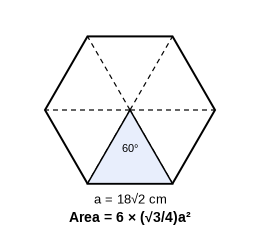
Find the area of a regular hexagon whose side measures 182 cm. (Use 3=1.73)
उस सम षट्भुज का क्षेत्रफल ज्ञात कीजिए जिसकी भुजा 182 cm है। (3=1.73 का प्रयोग करें)
  1. A1681.56 cm2
  2. B1691.56 cm2
  3. C1671.56 cm2
  4. D1661.56 cm2
Show answer

Concept: A regular hexagon = 6 equilateral triangles: Area =332a2.

  1. a2=(182)2=648.
  2. Area =3×1.732×648=2.595×648=1681.56 cm².

Short trick: 332a2=9723=972×1.73=1681.56.

Answer: (A) 1681.56 cm²

अवधारणा: सम षट्भुज = 6 समबाहु त्रिभुज: क्षेत्रफल =332a2।

  1. a2=(182)2=648।
  2. क्षेत्रफल =3×1.732×648=1681.56 cm²।

शॉर्ट ट्रिक: 9723=972×1.73=1681.56।

उत्तर: (A) 1681.56 cm²

RRB ALP CBT 1MathematicsMensuration – regular hexagonRRB ALP CBT 1 2025 · 17 Feb Shift 3 →
Q243.
100 bananas were bought at the rate of ₹1,200 per hundred and were sold at a profit of ₹1,100. Find the selling price (in ₹) per dozen bananas.
100 केले ₹1,200 प्रति सैकड़ा की दर से खरीदे गए और ₹1,100 के लाभ पर बेचे गए। प्रति दर्जन केलों का विक्रय मूल्य (₹ में) ज्ञात कीजिए।
  1. A281
  2. B276
  3. C271
  4. D286
Show answer

Concept: SP of 100 = CP + profit.

  1. SP of 100 bananas = 1200 + 1100 = ₹2,300.
  2. SP of 1 = ₹23 ⇒ SP of 12 = ₹276.

Short trick: Per dozen = 2300 × 12 / 100 = 23 × 12 = 276.

Answer: (B) 276

अवधारणा: 100 का विक्रय मूल्य = क्रय मूल्य + लाभ।

  1. 100 केलों का विक्रय मूल्य = ₹2,300।
  2. 1 का ₹23 ⇒ 12 का ₹276।

शॉर्ट ट्रिक: 23 × 12 = 276।

उत्तर: (B) 276

RRB ALP CBT 1MathematicsProfit and loss – rate per dozenRRB ALP CBT 1 2025 · 17 Feb Shift 3 →
Q244.
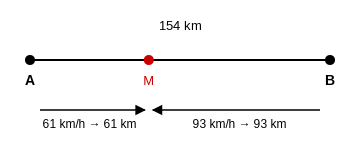
A goods train and a superfast train started running from station A and station B, respectively, at the same time towards each other on parallel tracks. If the distance between station A and station B is 154 km and trains are running at speeds of 61 km/h and 93 km/h, respectively, then at how much distance (in km) from station B will the trains meet?
एक मालगाड़ी और एक सुपरफास्ट ट्रेन क्रमशः स्टेशन A और स्टेशन B से एक ही समय पर समानांतर पटरियों पर एक-दूसरे की ओर चलना शुरू करती हैं। यदि स्टेशन A और स्टेशन B के बीच की दूरी 154 km है और ट्रेनें क्रमशः 61 km/h और 93 km/h की चाल से चल रही हैं, तो ट्रेनें स्टेशन B से कितनी दूरी (km में) पर मिलेंगी?
  1. A88
  2. B93
  3. C112
  4. D86
Show answer

Concept: Opposite directions: relative speed = sum of speeds.

  1. Relative speed = 61 + 93 = 154 km/h.
  2. Meeting time = 154 ÷ 154 = 1 hour.
  3. Distance from B = distance covered by the superfast train = 93 × 1 = 93 km.

Short trick: Distances are in the ratio of speeds: from B = 154×93154=93 km.

Answer: (B) 93

अवधारणा: विपरीत दिशा: सापेक्ष चाल = चालों का योग।

  1. सापेक्ष चाल = 61 + 93 = 154 km/h।
  2. मिलने का समय = 1 घंटा।
  3. B से दूरी = सुपरफास्ट ट्रेन द्वारा तय दूरी = 93 km।

शॉर्ट ट्रिक: दूरियाँ चालों के अनुपात में: B से = 154×93154=93 km।

उत्तर: (B) 93

RRB ALP CBT 1MathematicsTrains – meeting pointRRB ALP CBT 1 2025 · 17 Feb Shift 3 →
Q245.
A shopkeeper fixes the marked price of an item 40% above its cost price. What percentage of discount should he offer to gain 26%?
एक दुकानदार किसी वस्तु का अंकित मूल्य उसके क्रय मूल्य से 40% अधिक निर्धारित करता है। 26% लाभ प्राप्त करने के लिए उसे कितने प्रतिशत छूट देनी चाहिए?
  1. A12%
  2. B9%
  3. C0.11%
  4. D10%
Show answer

Concept: Let CP = 100.

  1. MP = 140, required SP = 126.
  2. Discount = 14 on 140 = 10%.

Short trick: Discount % = 40−26140×100=10%.

Answer: (D) 10%

अवधारणा: क्रय मूल्य = 100 मानें।

  1. अंकित मूल्य = 140, आवश्यक विक्रय मूल्य = 126।
  2. छूट = 140 पर 14 = 10%।

शॉर्ट ट्रिक: छूट % = 40−26140×100=10%।

उत्तर: (D) 10%

RRB ALP CBT 1MathematicsDiscount – required discountRRB ALP CBT 1 2025 · 17 Feb Shift 3 →
Q246.
What is the mode of the following data?
70, 70, 73, 71, 74, 69, 80, 68, 66, 66, 89, 83, 81, 86, 82, 74, 86, 87, 67, 72, 62, 76, 86, 65, 62
निम्नलिखित आँकड़ों का बहुलक क्या है?
70, 70, 73, 71, 74, 69, 80, 68, 66, 66, 89, 83, 81, 86, 82, 74, 86, 87, 67, 72, 62, 76, 86, 65, 62
  1. A66
  2. B70
  3. C86
  4. D74
Show answer

Concept: Mode = the most frequent value.

  1. Tally: 86 appears 3 times.
  2. 70, 66, 74, 62 appear twice each; others once.
  3. Mode = 86.

Short trick: Check only the options: 66 (2), 70 (2), 86 (3), 74 (2) ⇒ 86.

Answer: (C) 86

अवधारणा: बहुलक = सबसे अधिक बार आने वाला मान।

  1. 86 तीन बार आता है।
  2. 70, 66, 74, 62 दो-दो बार; बाकी एक बार।
  3. बहुलक = 86।

शॉर्ट ट्रिक: केवल विकल्प गिनें: 66 (2), 70 (2), 86 (3), 74 (2) ⇒ 86।

उत्तर: (C) 86

RRB ALP CBT 1MathematicsStatistics – modeRRB ALP CBT 1 2025 · 17 Feb Shift 3 →
Q247.
The sum of the present ages of Bunty and Bubbly is 64 years. After 2 years from now, Bunty's age will be three times that of Bubbly's age. Bunty's present age (in years) is:
बंटी और बबली की वर्तमान आयु का योग 64 वर्ष है। अब से 2 वर्ष बाद, बंटी की आयु बबली की आयु की तीन गुनी होगी। बंटी की वर्तमान आयु (वर्षों में) कितनी है?
  1. A49
  2. B43
  3. C39
  4. D56
Show answer

Concept: Use the sum after 2 years.

  1. After 2 years sum = 64 + 4 = 68.
  2. Ratio 3 : 1 ⇒ Bunty then = 34×68=51.
  3. Present age = 51 − 2 = 49.

Short trick: Option check: 49 + 2 = 51 and (64 − 49) + 2 = 17; 51 = 3 × 17 ✓.

Answer: (A) 49

अवधारणा: 2 वर्ष बाद का योग लें।

  1. 2 वर्ष बाद योग = 68।
  2. अनुपात 3 : 1 ⇒ तब बंटी = 34×68=51।
  3. वर्तमान आयु = 49।

शॉर्ट ट्रिक: विकल्प जाँच: 51 = 3 × 17 ✓।

उत्तर: (A) 49

RRB ALP CBT 1MathematicsProblems on agesRRB ALP CBT 1 2025 · 17 Feb Shift 3 →
Q248.
A can complete a job in 10 days and B in 15 days. They started working together, but after 4 days, B fell sick and left. A continued and finished the remaining work. Later, it was found that A had also been working at only 80% efficiency throughout. How many total days did it take to complete the entire work?
A किसी कार्य को 10 दिनों में और B उसे 15 दिनों में पूरा कर सकता है। उन्होंने एक साथ काम करना शुरू किया, लेकिन 4 दिनों के बाद B बीमार हो गया और चला गया। A ने काम जारी रखा और शेष काम पूरा किया। बाद में पता चला कि A भी पूरे समय केवल 80% दक्षता से काम कर रहा था। पूरा काम पूरा करने में कुल कितने दिन लगे?
  1. A956
  2. B916
  3. C516
  4. D815
Show answer

Concept: Use total work = LCM.

  1. Total work = 30 units. A = 3 units/day, at 80% ⇒ 2.4 units/day. B = 2 units/day.
  2. First 4 days: (2.4 + 2) × 4 = 17.6 units.
  3. Left = 12.4 units ⇒ A alone: 12.42.4=516 days.
  4. Total = 4+516=916 days.

Short trick: Fraction check: remaining time ends in 16 (12.4/2.4 = 31/6) ⇒ total 916.

Answer: (B) 916

अवधारणा: कुल कार्य = LCM लें।

  1. कुल कार्य = 30 इकाई। A = 3 इकाई/दिन, 80% पर ⇒ 2.4 इकाई/दिन। B = 2 इकाई/दिन।
  2. पहले 4 दिन: (2.4 + 2) × 4 = 17.6 इकाई।
  3. शेष = 12.4 इकाई ⇒ A अकेले: 12.42.4=516 दिन।
  4. कुल = 916 दिन।

शॉर्ट ट्रिक: 12.4/2.4 = 31/6 ⇒ कुल 916।

उत्तर: (B) 916

RRB ALP CBT 1MathematicsTime and work – efficiencyRRB ALP CBT 1 2025 · 17 Feb Shift 3 →
Q249.
A student's marks were incorrectly entered as 21 instead of 69. Due to this, the average marks of the class got decreased by 65. What is the number of students in the class?
किसी छात्र के अंक गलती से 69 के स्थान पर 21 दर्ज कर दिए गए। इसके कारण, कक्षा के औसत अंक 65 कम हो गए। कक्षा में छात्रों की संख्या कितनी है?
  1. A42
  2. B50
  3. C37
  4. D40
Show answer

Concept: Change in average = change in total ÷ number of students.

  1. Total fell by 69 − 21 = 48.
  2. 48n=65⇒n=48×56=40.

Short trick: n = error ÷ change in average = 48 ÷ 1.2 = 40.

Answer: (D) 40

अवधारणा: औसत में परिवर्तन = योग में परिवर्तन ÷ छात्रों की संख्या।

  1. योग में कमी = 69 − 21 = 48।
  2. 48n=65⇒n=40।

शॉर्ट ट्रिक: n = 48 ÷ 1.2 = 40।

उत्तर: (D) 40

RRB ALP CBT 1MathematicsAverage – wrong entryRRB ALP CBT 1 2025 · 17 Feb Shift 3 →
Q250.
In an election, there were four candidates, and they received 4500, 1260, 240 and 2000 votes, respectively. If all eligible voters voted, all votes polled were valid and were in favour of one of the four candidates, then the difference between the vote percentages of the winning candidate and the runner up candidate was:
एक चुनाव में चार उम्मीदवार थे, और उन्हें क्रमशः 4500, 1260, 240 और 2000 मत प्राप्त हुए। यदि सभी पात्र मतदाताओं ने मतदान किया, सभी डाले गए मत वैध थे और चारों उम्मीदवारों में से किसी एक के पक्ष में थे, तो विजेता उम्मीदवार और उपविजेता उम्मीदवार के मत प्रतिशत के बीच का अंतर कितना था?
  1. A31.25%
  2. B25%
  3. C27.5%
  4. D30.75%
Show answer

Concept: Percentage difference = vote difference ÷ total × 100.

  1. Total = 4500 + 1260 + 240 + 2000 = 8000.
  2. Winner 4500, runner-up 2000 ⇒ difference 2500.
  3. 25008000×100=31.25%.

Short trick: 2580=516=31.25%.

Answer: (A) 31.25%

अवधारणा: प्रतिशत अंतर = मतों का अंतर ÷ कुल मत × 100।

  1. कुल = 8000।
  2. विजेता 4500, उपविजेता 2000 ⇒ अंतर 2500।
  3. 25008000×100=31.25%।

शॉर्ट ट्रिक: 516=31.25%।

उत्तर: (A) 31.25%

RRB ALP CBT 1MathematicsPercentage – electionsRRB ALP CBT 1 2025 · 17 Feb Shift 3 →
Q251.
Based on the English alphabetical order, three of the following four letter-clusters are alike in a certain way and thus form a group. Which letter-cluster DOES NOT belong to that group? (Note: The odd one out is not based on the number of consonants/vowels or their position in the letter-cluster.)
अंग्रेजी वर्णमाला क्रम के आधार पर, निम्नलिखित चार अक्षर-समूहों में से तीन किसी प्रकार से एक समान हैं और इस प्रकार एक समूह बनाते हैं। कौन-सा अक्षर-समूह उस समूह से संबंधित नहीं है? (नोट: असंगत अक्षर-समूह, उस अक्षर-समूह में व्यंजनों/स्वरों की संख्या या उनके स्थान पर आधारित नहीं है।)
  1. AYAC
  2. BPRU
  3. CNPS
  4. DJLO
Show answer

Concept: Check the gaps between consecutive letters (with wrap-around Z→A).

  1. ClusterGaps
    YAC+2, +2
    PRU+2, +3
    NPS+2, +3
    JLO+2, +3
  2. Three clusters follow +2, +3; YAC follows +2, +2.

Short trick: Only the last gap differs – check just 2nd→3rd letter: C−A = 2 while U−R = S−P = O−L = 3.

Answer: (A) YAC

अवधारणा: क्रमागत अक्षरों के बीच का अंतर देखें (Z के बाद A)।

  1. समूहअंतर
    YAC+2, +2
    PRU+2, +3
    NPS+2, +3
    JLO+2, +3
  2. तीन समूह +2, +3 का पालन करते हैं; YAC में +2, +2 है।

शॉर्ट ट्रिक: केवल दूसरे→तीसरे अक्षर का अंतर देखें: C−A = 2 जबकि बाकी में 3।

उत्तर: (A) YAC

RRB ALP CBT 1General Intelligence and ReasoningClassification – letter clustersRRB ALP CBT 1 2025 · 17 Feb Shift 3 →
Q252.
A question is followed by two statements numbered (I) and (II). You have to decide whether the data provided in the statements are sufficient to answer the question. Read both the statements and select the most appropriate answer.
Question:
Among 5 poles, I, L, O, M and D each having a different height, which pole is the tallest? Statements:
(I) I is taller than M but shorter than D. I is shorter than only one pole.
(II) M is taller than L.
एक प्रश्न के बाद दो कथन (I) और (II) दिए गए हैं। आपको यह निर्णय लेना है कि कथनों में दिए गए आँकड़े प्रश्न का उत्तर देने के लिए पर्याप्त हैं या नहीं। दोनों कथनों को पढ़िए और सबसे उपयुक्त उत्तर चुनिए।
प्रश्न:
5 खंभों I, L, O, M और D में से प्रत्येक की ऊँचाई अलग-अलग है। सबसे ऊँचा खंभा कौन-सा है?
कथन:
(I) I, M से ऊँचा है लेकिन D से छोटा है। I केवल एक खंभे से छोटा है।
(II) M, L से ऊँचा है।
  1. AData in both statements I and II together are not sufficient to answer the question.कथन I और II दोनों के आँकड़े मिलकर भी प्रश्न का उत्तर देने के लिए पर्याप्त नहीं हैं।
  2. BData in statement I alone is sufficient to answer the question while data in statement II is not.केवल कथन I के आँकड़े प्रश्न का उत्तर देने के लिए पर्याप्त हैं, जबकि कथन II के आँकड़े पर्याप्त नहीं हैं।
  3. CData in statement II alone is sufficient to answer the question while data in statement I is not.केवल कथन II के आँकड़े प्रश्न का उत्तर देने के लिए पर्याप्त हैं, जबकि कथन I के आँकड़े पर्याप्त नहीं हैं।
  4. DData in both statements I and II together (and not statement I alone or statement II alone) are sufficient to answer the question.कथन I और II दोनों के आँकड़े मिलकर (न कि केवल कथन I या केवल कथन II) प्रश्न का उत्तर देने के लिए पर्याप्त हैं।
Show answer

Concept: Check each statement alone first.

  1. (I): I is shorter than only one pole ⇒ I is 2nd tallest. D is taller than I ⇒ D is that one pole ⇒ D is the tallest. Sufficient.
  2. (II): only M > L – nothing about the tallest. Not sufficient.

Short trick: "Shorter than only one" = 2nd rank; whoever is taller than it is the top.

Answer: (B) Statement I alone is sufficient

अवधारणा: पहले प्रत्येक कथन को अकेले जाँचें।

  1. (I): I केवल एक खंभे से छोटा है ⇒ I दूसरा सबसे ऊँचा है। D, I से ऊँचा है ⇒ D सबसे ऊँचा। पर्याप्त।
  2. (II): केवल M > L – सबसे ऊँचे के बारे में कुछ नहीं। पर्याप्त नहीं।

शॉर्ट ट्रिक: "केवल एक से छोटा" = दूसरा स्थान; उससे ऊँचा = सबसे ऊँचा।

उत्तर: (B) केवल कथन I पर्याप्त है

RRB ALP CBT 1General Intelligence and ReasoningData sufficiency – rankingRRB ALP CBT 1 2025 · 17 Feb Shift 3 →
Q253.
Based on the English alphabetical order, three of the following four letter-cluster pairs are alike in a certain way and thus form a group. Which letter-cluster pair DOES NOT belong to that group? (Note: The odd one out is not based on the number of consonants/vowels or their position in the letter-cluster.)
अंग्रेजी वर्णमाला क्रम के आधार पर, निम्नलिखित चार अक्षर-समूह युग्मों में से तीन किसी प्रकार से एक समान हैं और इस प्रकार एक समूह बनाते हैं। कौन-सा अक्षर-समूह युग्म उस समूह से संबंधित नहीं है? (नोट: असंगत अक्षर-समूह, उस अक्षर-समूह में व्यंजनों/स्वरों की संख्या या उनके स्थान पर आधारित नहीं है।)
  1. APL - KG
  2. BMI - LP
  3. COK - JF
  4. DKG - FB
Show answer

Concept: Compare each letter of the first cluster with the matching letter of the second.

  1. Pair1st letter2nd letter
    PL - KGP−5=KL−5=G
    MI - LPM−1=LI+7=P
    OK - JFO−5=JK−5=F
    KG - FBK−5=FG−5=B
  2. Three pairs follow −5, −5; MI - LP does not.

Short trick: Odd one is the only pair whose second cluster moves the opposite way (I→P goes forward).

Answer: (B) MI - LP

अवधारणा: पहले समूह के प्रत्येक अक्षर की तुलना दूसरे समूह के संगत अक्षर से करें।

  1. युग्मपहला अक्षरदूसरा अक्षर
    PL - KGP−5=KL−5=G
    MI - LPM−1=LI+7=P
    OK - JFO−5=JK−5=F
    KG - FBK−5=FG−5=B
  2. तीन युग्म −5, −5 का पालन करते हैं; MI - LP नहीं।

शॉर्ट ट्रिक: केवल MI - LP में दूसरा अक्षर आगे बढ़ता है (I→P)।

उत्तर: (B) MI - LP

RRB ALP CBT 1General Intelligence and ReasoningClassification – letter pairsRRB ALP CBT 1 2025 · 17 Feb Shift 3 →
Q254.
S, T, U, V, W, X and Y live on seven different floors of the same building. The lowermost floor in the building is numbered 1, the floor above it is numbered 2 and so on till the topmost floor is numbered 7. U lives on the fourth floor. Only two persons live between U and V. T lives immediately below V. W lives immediately above X but X does not live on the lowermost floor. S does not live on the lowermost floor. On which floor number does S live?
S, T, U, V, W, X और Y एक ही इमारत की सात अलग-अलग मंजिलों पर रहते हैं। इमारत की सबसे निचली मंजिल की संख्या 1 है, उसके ऊपर वाली मंजिल की संख्या 2 है और इसी प्रकार सबसे ऊपरी मंजिल की संख्या 7 है। U चौथी मंजिल पर रहता है। U और V के बीच केवल दो व्यक्ति रहते हैं। T, V के ठीक नीचे रहता है। W, X के ठीक ऊपर रहता है लेकिन X सबसे निचली मंजिल पर नहीं रहता है। S सबसे निचली मंजिल पर नहीं रहता है। S किस मंजिल पर रहता है?
  1. AFloor Number 3मंजिल संख्या 3
  2. BFloor Number 5मंजिल संख्या 5
  3. CFloor Number 1मंजिल संख्या 1
  4. DFloor Number 2मंजिल संख्या 2
Show answer

Concept: Fix the definite person first, then the "only two between" cases.

  1. U = 4 ⇒ V = 1 or 7. T is immediately below V ⇒ V cannot be 1 ⇒ V = 7, T = 6.
  2. X–W pair (W just above X), X ≠ 1: only free consecutive floors are 2–3 ⇒ X = 2, W = 3.
  3. Floors 1 and 5 left for S and Y; S ≠ 1 ⇒ S = 5, Y = 1.
  4. 7V
    6T
    5S
    4U
    3W
    2X
    1Y

Short trick: "Immediately below V" kills V = 1 at once – always test the extreme floor first.

Answer: (B) Floor Number 5

अवधारणा: पहले निश्चित व्यक्ति रखें, फिर "केवल दो के बीच" वाले मामले।

  1. U = 4 ⇒ V = 1 या 7। T, V के ठीक नीचे ⇒ V = 1 संभव नहीं ⇒ V = 7, T = 6।
  2. X–W युग्म (W, X के ठीक ऊपर), X ≠ 1: खाली लगातार मंजिलें केवल 2–3 ⇒ X = 2, W = 3।
  3. मंजिल 1 और 5 पर S और Y; S ≠ 1 ⇒ S = 5, Y = 1।
  4. 7V
    6T
    5S
    4U
    3W
    2X
    1Y

शॉर्ट ट्रिक: "V के ठीक नीचे" से V = 1 तुरंत बाहर – हमेशा पहले छोर वाली मंजिल जाँचें।

उत्तर: (B) मंजिल संख्या 5

RRB ALP CBT 1General Intelligence and ReasoningFloor puzzle – 7 floorsRRB ALP CBT 1 2025 · 17 Feb Shift 3 →
Q255.
In a certain code language,
'S + T' means ‘S is the father of T’,
'S - T' means ‘S is the brother of T’,
'S x T' means ‘S is the wife of T’ and
'S ÷ T' means ‘S is the sister of T’.
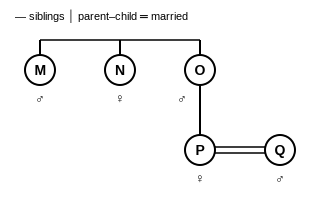
Based on the above, how is M related to Q if ‘M - N ÷ O + P x Q’?
एक निश्चित कूट भाषा में,
'S + T' का अर्थ है 'S, T का पिता है',
'S - T' का अर्थ है 'S, T का भाई है',
'S x T' का अर्थ है 'S, T की पत्नी है' और
'S ÷ T' का अर्थ है 'S, T की बहन है'।
उपरोक्त के आधार पर, यदि 'M - N ÷ O + P x Q' है, तो M का Q से क्या संबंध है?
  1. AWife's mother's brotherपत्नी की माँ का भाई
  2. BMother's brotherमाँ का भाई
  3. CWife's father's brotherपत्नी के पिता का भाई
  4. DFatherपिता
Show answer

Concept: Decode left to right and draw the tree.

  1. M − N: M is brother of N.
  2. N ÷ O: N is sister of O ⇒ M is also brother of O.
  3. O + P: O is father of P.
  4. P × Q: P is wife of Q ⇒ O is Q's wife's father.
  5. M = brother of Q's wife's father.

Short trick: Read from Q backwards: Q → wife (P) → her father (O) → his brother (M).

Answer: (C) Wife's father's brother

अवधारणा: बाएँ से दाएँ कूट खोलें और वंश-वृक्ष बनाएँ।

  1. M − N: M, N का भाई है।
  2. N ÷ O: N, O की बहन है ⇒ M, O का भी भाई है।
  3. O + P: O, P का पिता है।
  4. P × Q: P, Q की पत्नी है ⇒ O, Q की पत्नी का पिता है।
  5. M = Q की पत्नी के पिता का भाई।

शॉर्ट ट्रिक: Q से उल्टा पढ़ें: Q → पत्नी (P) → उसके पिता (O) → उनके भाई (M)।

उत्तर: (C) पत्नी के पिता का भाई

RRB ALP CBT 1General Intelligence and ReasoningBlood relation – codedRRB ALP CBT 1 2025 · 17 Feb Shift 3 →
Q256.
MXEL is related to OZHP in a certain way based on the English alphabetical order. In the same way, VRHB is related to XTKF. To which of the given options is QOJA related, following the same logic?
अंग्रेजी वर्णमाला क्रम के आधार पर MXEL एक निश्चित प्रकार से OZHP से संबंधित है। उसी प्रकार, VRHB, XTKF से संबंधित है। समान तर्क का अनुसरण करते हुए, QOJA दिए गए विकल्पों में से किससे संबंधित है?
  1. ATQLF
  2. BSQME
  3. CSOME
  4. DTRLE
Show answer

Concept: Find the shift for each position.

  1. M→O +2, X→Z +2, E→H +3, L→P +4.
  2. V→X +2, R→T +2, H→K +3, B→F +4 (same).
  3. Q+2 = S, O+2 = Q, J+3 = M, A+4 = E ⇒ SQME.

Short trick: Use only the 2nd letter: O+2 = Q ⇒ options B/D; 1st letter Q+2 = S ⇒ B.

Answer: (B) SQME

अवधारणा: प्रत्येक स्थान का विस्थापन ज्ञात करें।

  1. M→O +2, X→Z +2, E→H +3, L→P +4।
  2. VRHB→XTKF में भी +2, +2, +3, +4।
  3. Q+2 = S, O+2 = Q, J+3 = M, A+4 = E ⇒ SQME।

शॉर्ट ट्रिक: दूसरा अक्षर O+2 = Q ⇒ B/D; पहला अक्षर Q+2 = S ⇒ B।

उत्तर: (B) SQME

RRB ALP CBT 1General Intelligence and ReasoningAnalogy – letter shiftRRB ALP CBT 1 2025 · 17 Feb Shift 3 →
Q257.
Based on the English alphabetical order, three of the following four letter-clusters are alike in a certain way and thus form a group. Which letter-cluster DOES NOT belong to that group? (Note: The odd one out is not based on the number of consonants/vowels or their position in the letter-cluster.)
अंग्रेजी वर्णमाला क्रम के आधार पर, निम्नलिखित चार अक्षर-समूहों में से तीन किसी प्रकार से एक समान हैं और इस प्रकार एक समूह बनाते हैं। कौन-सा अक्षर-समूह उस समूह से संबंधित नहीं है? (नोट: असंगत अक्षर-समूह, उस अक्षर-समूह में व्यंजनों/स्वरों की संख्या या उनके स्थान पर आधारित नहीं है।)
  1. AOGD
  2. BJBY
  3. CASP
  4. DRIF
Show answer

Concept: Find the gaps (moving backward, with wrap-around).

  1. ClusterGaps
    OGD−8, −3
    JBY−8, −3 (B→Y wraps)
    ASP−8 (A→S wraps), −3
    RIF−9, −3
  2. RIF breaks the −8 step.

Short trick: Last gap is −3 in all; just check 1st→2nd: only R→I is −9.

Answer: (D) RIF

अवधारणा: अंतर ज्ञात करें (पीछे की ओर, Z↔A घुमाव सहित)।

  1. समूहअंतर
    OGD−8, −3
    JBY−8, −3
    ASP−8, −3
    RIF−9, −3
  2. RIF में −8 का नियम टूटता है।

शॉर्ट ट्रिक: सब में अंतिम अंतर −3 है; केवल पहला अंतर देखें: R→I = −9।

उत्तर: (D) RIF

RRB ALP CBT 1General Intelligence and ReasoningClassification – letter clustersRRB ALP CBT 1 2025 · 17 Feb Shift 3 →
Q258.
Two sets of numbers are given below. In each set of numbers, certain mathematical operation(s) on the first number result(s) in the second number. Similarly, certain mathematical operation(s) on the second number result(s) in the third number and so on. Which of the given options follows the same set of operations as in the given sets? (NOTE: Operations should be performed on the whole numbers, without breaking down the numbers into their constituent digits. E.g. 13 – Operations on 13 such as adding to/subtracting from/multiplying with 13 can be performed. Breaking down 13 into 1 and 3 and then performing mathematical operations on 1 and 3 is not allowed.)
3 – 9 – 81 – 66 ; 5 – 25 – 625 – 610
नीचे संख्याओं के दो समुच्चय दिए गए हैं। संख्याओं के प्रत्येक समुच्चय में, पहली संख्या पर निश्चित गणितीय संक्रिया(एँ) करने पर दूसरी संख्या प्राप्त होती है। इसी प्रकार, दूसरी संख्या पर निश्चित गणितीय संक्रिया(एँ) करने पर तीसरी संख्या प्राप्त होती है और इसी प्रकार आगे भी। दिए गए विकल्पों में से कौन-सा विकल्प, दिए गए समुच्चयों के समान संक्रियाओं के समुच्चय का अनुसरण करता है? (नोट: संख्याओं को उनके घटक अंकों में तोड़े बिना, पूर्ण संख्याओं पर संक्रियाएँ की जानी चाहिए। उदाहरण के लिए, 13 – 13 पर संक्रियाएँ जैसे 13 में जोड़ना/घटाना/गुणा करना आदि किया जा सकता है। 13 को 1 और 3 में तोड़कर फिर 1 और 3 पर गणितीय संक्रियाएँ करने की अनुमति नहीं है।)
3 – 9 – 81 – 66 ; 5 – 25 – 625 – 610
  1. A2 – 4 – 16 – 21
  2. B9 – 81 – 6588 – 6573
  3. C4 – 16 – 256 – 241
  4. D7 – 49 – 2150 – 2250
Show answer

Concept: Find the rule from the given sets.

  1. 3 → 9 (square) → 81 (square) → 66 (−15).
  2. 5 → 25 → 625 → 610: same rule.
  3. Check C: 4² = 16, 16² = 256, 256 − 15 = 241 ✓.
  4. A: 16 − 15 ≠ 21; B: 81² = 6561 ≠ 6588; D: 49² = 2401 ≠ 2150.

Short trick: Last step is always −15: only C has 3rd − 4th = 15 (256 − 241).

Answer: (C) 4 – 16 – 256 – 241

अवधारणा: दिए गए समुच्चयों से नियम ज्ञात करें।

  1. 3 → 9 (वर्ग) → 81 (वर्ग) → 66 (−15)।
  2. 5 → 25 → 625 → 610: वही नियम।
  3. C जाँचें: 4² = 16, 16² = 256, 256 − 15 = 241 ✓।
  4. A: 16 − 15 ≠ 21; B: 81² = 6561 ≠ 6588; D: 49² = 2401 ≠ 2150।

शॉर्ट ट्रिक: अंतिम चरण हमेशा −15: केवल C में तीसरी − चौथी = 15।

उत्तर: (C) 4 – 16 – 256 – 241

RRB ALP CBT 1General Intelligence and ReasoningNumber operations – setsRRB ALP CBT 1 2025 · 17 Feb Shift 3 →
Q259.
In a certain code language,
'A - B' means 'A is the daughter of B',
'A / B' means 'A is the son of B',
'A * B' means 'A is the wife of B' and
'A + B' means 'A is the husband of B'.
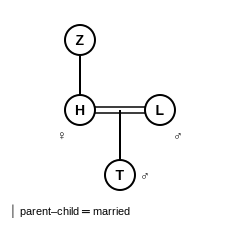
Based on the above, how is T related to Z if 'T / L + H - Z'?
एक निश्चित कूट भाषा में,
'A - B' का अर्थ है 'A, B की पुत्री है',
'A / B' का अर्थ है 'A, B का पुत्र है',
'A * B' का अर्थ है 'A, B की पत्नी है' और
'A + B' का अर्थ है 'A, B का पति है'।
उपरोक्त के आधार पर, यदि 'T / L + H - Z' है, तो T का Z से क्या संबंध है?
  1. ADaughter's daughterपुत्री की पुत्री
  2. BDaughter's sonपुत्री का पुत्र
  3. CFatherपिता
  4. DMotherमाता
Show answer

Concept: Decode and draw the tree.

  1. T / L: T is son of L.
  2. L + H: L is husband of H ⇒ T is son of H too.
  3. H − Z: H is daughter of Z.
  4. So T is the son of Z's daughter.

Short trick: Chain: Z → daughter H → her son T = daughter's son (grandson).

Answer: (B) Daughter's son

अवधारणा: कूट खोलें और वंश-वृक्ष बनाएँ।

  1. T / L: T, L का पुत्र है।
  2. L + H: L, H का पति है ⇒ T, H का भी पुत्र है।
  3. H − Z: H, Z की पुत्री है।
  4. अतः T, Z की पुत्री का पुत्र है।

शॉर्ट ट्रिक: श्रृंखला: Z → पुत्री H → उसका पुत्र T = पुत्री का पुत्र (नाती)।

उत्तर: (B) पुत्री का पुत्र

RRB ALP CBT 1General Intelligence and ReasoningBlood relation – codedRRB ALP CBT 1 2025 · 17 Feb Shift 3 →
Q260.
In a certain code language, ‘TRAP’ is coded as ‘7486’ and ‘CART’ is coded as ‘8274’. What is the code for ‘C’ in the given code language?
एक निश्चित कूट भाषा में, 'TRAP' को '7486' लिखा जाता है और 'CART' को '8274' लिखा जाता है। उस कूट भाषा में 'C' का कूट क्या है?
  1. A7
  2. B2
  3. C4
  4. D8
Show answer

Concept: Common letters share common digits (order is jumbled).

  1. TRAP = 7486, CART = 8274.
  2. Common letters T, R, A ↔ common digits 7, 4, 8.
  3. Leftover in CART: C ↔ leftover digit 2.

Short trick: Cancel common digits: {8,2,7,4} − {7,4,8} = 2.

Answer: (B) 2

अवधारणा: उभयनिष्ठ अक्षरों के कूट भी उभयनिष्ठ अंक होते हैं (क्रम बदला हुआ)।

  1. TRAP = 7486, CART = 8274।
  2. उभयनिष्ठ अक्षर T, R, A ↔ उभयनिष्ठ अंक 7, 4, 8।
  3. CART में बचा C ↔ बचा अंक 2।

शॉर्ट ट्रिक: उभयनिष्ठ अंक काटें: {8,2,7,4} − {7,4,8} = 2।

उत्तर: (B) 2

RRB ALP CBT 1General Intelligence and ReasoningCoding – common lettersRRB ALP CBT 1 2025 · 17 Feb Shift 3 →