Question bank

Q&A: practice questions with answers

Search questions on any topic. Filter by exam category, exam, subject and topic, try the question, then open the answer and explanation.

Courses – airGurukul

20,719 questions found.

Q2781.
A company earns a profit (in ₹) that is distributed among the company's three partners in the ratio of 13 : 3 : 9. If the difference between the smallest and the largest shares is ₹36,846, the total profit (in ₹) of the company is:
एक कंपनी लाभ (₹ में) अर्जित करती है जिसे कंपनी के तीन साझेदारों में 13 : 3 : 9 के अनुपात में बाँटा जाता है। यदि सबसे छोटे और सबसे बड़े हिस्से का अंतर ₹36,846 है, तो कंपनी का कुल लाभ (₹ में) है:
  1. A92,051
  2. B92,110
  3. C92,167
  4. D92,115
Show answer

Concept: Difference of ratio parts gives one part's value.

  1. Largest − smallest =13−3=10 parts =36846
  2. 1 part =3684.6
  3. Total =13+3+9=25 parts =25×3684.6=92115

Trick: Total =36846×2510=36846×2.5.

Answer: (D) 92,115

अवधारणा: अनुपात के भागों का अंतर एक भाग का मान देता है।

  1. सबसे बड़ा − सबसे छोटा =10 भाग =36846
  2. 1 भाग =3684.6
  3. कुल =25 भाग =92115

ट्रिक: कुल =36846×2.5।

उत्तर: (D) 92,115

RRB NTPC Undergraduate CBT 1MathematicsRatio – profit sharingRRB NTPC Undergraduate CBT 1 2024 · 18 Aug Shift 1 →
Q2782.
The number 267533 is divisible by which of the following?
संख्या 267533 निम्नलिखित में से किससे विभाज्य है?
  1. A5
  2. B7
  3. C6
  4. D12
Show answer

Concept: Test each option.

  1. Ends in 3 → not divisible by 5; odd → not by 6 or 12
  2. Rule of 7: 26753−2×3=26747; 2674−14=2660; 266−0=266=7×38 ✓
  3. Direct: 267533=7×38219

Trick: Odd number kills 6 and 12 at once; last digit kills 5 — only 7 is left.

Answer: (B) 7

अवधारणा: हर विकल्प की जाँच करें।

  1. अंतिम अंक 3 → 5 से नहीं; विषम → 6, 12 से नहीं
  2. 7 का नियम: 26753−6=26747; 2674−14=2660; 266=7×38 ✓
  3. सीधे: 267533=7×38219

ट्रिक: विषम संख्या 6 व 12 हटा देती है, अंतिम अंक 5 हटा देता है — बचा 7।

उत्तर: (B) 7

RRB NTPC Undergraduate CBT 1MathematicsDivisibilityRRB NTPC Undergraduate CBT 1 2024 · 18 Aug Shift 1 →
Q2783.
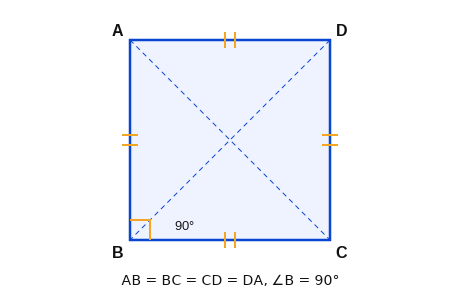
ABCD is a quadrilateral whose sides are equal and ∠ABC=90∘. If the opposite sides are parallel and opposite angles are equal, then ABCD is a:
ABCD एक चतुर्भुज है जिसकी भुजाएँ बराबर हैं और ∠ABC=90∘ है। यदि सम्मुख भुजाएँ समांतर हैं और सम्मुख कोण बराबर हैं, तो ABCD एक:
  1. Arectangleआयत है
  2. Bsquareवर्ग है
  3. Crhombusसमचतुर्भुज है
  4. Dkiteपतंग है
Show answer

Concept: All sides equal + one right angle + parallelogram ⇒ square.

  1. Opposite sides parallel and opposite angles equal → parallelogram
  2. All sides equal → rhombus
  3. One angle 90∘ → every angle 90∘ → square

Trick: Rhombus + right angle = square; rectangle needs only opposite sides equal.

Answer: (B) square

अवधारणा: सभी भुजाएँ बराबर + एक समकोण + समांतर चतुर्भुज ⇒ वर्ग।

  1. सम्मुख भुजाएँ समांतर, सम्मुख कोण बराबर → समांतर चतुर्भुज
  2. सभी भुजाएँ बराबर → समचतुर्भुज (rhombus)
  3. एक कोण 90∘ → सभी 90∘ → वर्ग

ट्रिक: समचतुर्भुज + समकोण = वर्ग; आयत में केवल सम्मुख भुजाएँ बराबर होती हैं।

उत्तर: (B) square (वर्ग)

RRB NTPC Undergraduate CBT 1MathematicsQuadrilateralsRRB NTPC Undergraduate CBT 1 2024 · 18 Aug Shift 1 →
Q2784.
A wholesaler offers a trade discount of 15% on a product with a marked price of ₹12,000. After the trade discount, a scheme discount of 10% is applied on the reduced price. What is the final price the customer has to pay?
एक थोक विक्रेता ₹12,000 अंकित मूल्य वाले एक उत्पाद पर 15% की व्यापारिक छूट देता है। व्यापारिक छूट के बाद, घटे हुए मूल्य पर 10% की योजना छूट लागू की जाती है। ग्राहक को अंतिम रूप से कितना मूल्य चुकाना होगा?
  1. A₹9,520
  2. B₹8,400
  3. C₹9,180
  4. D₹8,750
Show answer

Concept: Apply discounts one after another.

  1. After 15%: 12000×0.85=10200
  2. After 10%: 10200×0.9=9180

Trick: Net discount =15+10−15×10100=23.5%; 12000×0.765=9180.

Answer: (C) ₹9,180

अवधारणा: छूट एक के बाद एक लगाएँ।

  1. 15% के बाद: 12000×0.85=10200
  2. 10% के बाद: 10200×0.9=9180

ट्रिक: शुद्ध छूट =23.5%; 12000×0.765=9180।

उत्तर: (C) ₹9,180

RRB NTPC Undergraduate CBT 1MathematicsSuccessive discountRRB NTPC Undergraduate CBT 1 2024 · 18 Aug Shift 1 →
Q2785.
The average weight (in kg) of a family of five members whose weights are 40 kg, 49 kg, 56 kg, 74 kg and 37 kg is:
पाँच सदस्यों वाले एक परिवार, जिनके भार 40 kg, 49 kg, 56 kg, 74 kg और 37 kg हैं, का औसत भार (kg में) है:
  1. A52.2
  2. B53.2
  3. C50.2
  4. D51.2
Show answer

Concept: Average =sumnumber.

  1. Sum =40+49+56+74+37=256
  2. Average =2565=51.2

Trick: Take 50 as base: deviations −10,−1,+6,+24,−13=+6; 50+65=51.2.

Answer: (D) 51.2

अवधारणा: औसत =योगसंख्या।

  1. योग =256
  2. औसत =2565=51.2

ट्रिक: 50 को आधार लें: विचलन का योग +6; 50+1.2=51.2।

उत्तर: (D) 51.2

RRB NTPC Undergraduate CBT 1MathematicsAverageRRB NTPC Undergraduate CBT 1 2024 · 18 Aug Shift 1 →
Q2786.
Veer bought some pens at the rate of ₹180/dozen. He sold them for ₹22 each. His profit percentage is ______% (rounded off to two decimal places).
वीर ने ₹180/दर्जन की दर से कुछ पेन खरीदे। उसने उन्हें ₹22 प्रति पेन की दर से बेचा। उसका लाभ प्रतिशत ______% है (दशमलव के दो स्थानों तक पूर्णांकित)।
  1. A46.67
  2. B44.67
  3. C50.67
  4. D48.67
Show answer

Concept: Profit%=SP−CPCP×100.

  1. CP per pen =18012=15
  2. SP =22, profit =7
  3. Profit%=715×100=46.67%

Trick: 715=13+215=33.33+13.33=46.67.

Answer: (A) 46.67

अवधारणा: लाभ%=लाभक्रय मूल्य×100।

  1. प्रति पेन क्रय मूल्य =18012=15
  2. विक्रय मूल्य =22, लाभ =7
  3. लाभ%=715×100=46.67%

ट्रिक: 715=33.33+13.33=46.67।

उत्तर: (A) 46.67

RRB NTPC Undergraduate CBT 1MathematicsProfit & lossRRB NTPC Undergraduate CBT 1 2024 · 18 Aug Shift 1 →
Q2787.
A can do a work in 16 days and B can do the same work in 22 days. If they work on it together for 2 days, then what fraction of the work is left?
A किसी कार्य को 16 दिनों में कर सकता है और B उसी कार्य को 22 दिनों में कर सकता है। यदि वे 2 दिनों तक एक साथ कार्य करते हैं, तो कार्य का कितना भाग शेष रह जाता है?
  1. A7388
  2. B6988
  3. C7188
  4. D7988
Show answer

Concept: Total work = LCM of days; find units done.

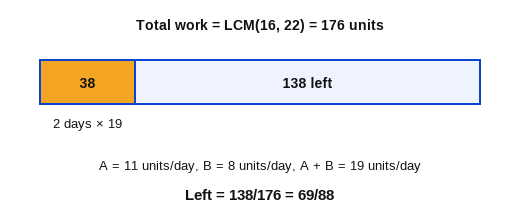
  1. Total =LCM(16,22)=176 units; A =11, B =8 units/day
  2. Together in 2 days: 2×19=38 units
  3. Left =176−38=138 units =138176=6988

Trick: Done =2(116+122)=1988, left =1−1988.

Answer: (B) 6988

अवधारणा: कुल कार्य = दिनों का LCM; इकाइयों में हल करें।

  1. कुल =176 इकाई; A =11, B =8 इकाई/दिन
  2. 2 दिन में: 2×19=38 इकाई
  3. शेष =138 इकाई =6988

ट्रिक: किया गया =1988, शेष =1−1988।

उत्तर: (B) 6988

RRB NTPC Undergraduate CBT 1MathematicsTime & workRRB NTPC Undergraduate CBT 1 2024 · 18 Aug Shift 1 →
Q2788.
A sum of ₹625 is invested in a bank at 16% interest per annum compounded annually. On maturity, the amount payable becomes ₹841. Find the time period of the investment.
₹625 की राशि एक बैंक में 16% वार्षिक चक्रवृद्धि ब्याज (वार्षिक रूप से संयोजित) पर निवेश की जाती है। परिपक्वता पर देय मिश्रधन ₹841 हो जाता है। निवेश की समयावधि ज्ञात कीजिए।
  1. A1.5 years1.5 वर्ष
  2. B2.5 years2.5 वर्ष
  3. C2 years2 वर्ष
  4. D1 year1 वर्ष
Show answer

Concept: A=P(1+r100)n.

  1. 841625=(1.16)n
  2. 841625=(2925)2 and 2925=1.16
  3. So n=2 years

Trick: 841=292, 625=252 — the squares give the time instantly.

Answer: (C) 2 years

अवधारणा: A=P(1+r100)n।

  1. 841625=(1.16)n
  2. 841625=(2925)2, 2925=1.16
  3. अतः n=2 वर्ष

ट्रिक: 841=292, 625=252 — वर्ग देखते ही समय मिल जाता है।

उत्तर: (C) 2 वर्ष

RRB NTPC Undergraduate CBT 1MathematicsCompound interestRRB NTPC Undergraduate CBT 1 2024 · 18 Aug Shift 1 →
Q2789.
Find the difference between a single discount of 20% and two successive discounts of 10% and 10% on a gift of ₹600.
₹600 के एक उपहार पर 20% की एकल छूट और 10% तथा 10% की दो क्रमिक छूटों के बीच का अंतर ज्ञात कीजिए।
  1. A₹5
  2. B₹1
  3. C₹3
  4. D₹6
Show answer

Concept: Two successive 10% discounts =10+10−10×10100=19%.

  1. Single 20%: 0.20×600=120
  2. Successive: 0.19×600=114
  3. Difference =120−114=6

Trick: Difference =10×10100%=1% of 600 =6.

Answer: (D) ₹6

अवधारणा: दो क्रमिक 10% छूट =19%।

  1. एकल 20%: 120
  2. क्रमिक: 0.19×600=114
  3. अंतर =6

ट्रिक: अंतर =1% of 600 =6।

उत्तर: (D) ₹6

RRB NTPC Undergraduate CBT 1MathematicsSuccessive discountRRB NTPC Undergraduate CBT 1 2024 · 18 Aug Shift 1 →
Q2790.
Pipe P can fill 49 part of a tank in 20 hours, and pipe Q can fill 29 part of the same tank in 30 hours. Both P and Q were kept open for 3 hours, then both were closed. Pipe R alone was then opened and it emptied the water in the tank in 4 hours. Pipes P, Q and R together can fill the empty tank in:
पाइप P किसी टंकी का 49 भाग 20 घंटे में भर सकता है, और पाइप Q उसी टंकी का 29 भाग 30 घंटे में भर सकता है। P और Q दोनों को 3 घंटे के लिए खुला रखा गया, फिर दोनों को बंद कर दिया गया। इसके बाद केवल पाइप R को खोला गया और उसने टंकी का पानी 4 घंटे में खाली कर दिया। पाइप P, Q और R एक साथ खाली टंकी को कितने समय में भर सकते हैं?
  1. A117 hours117 घंटे
  2. B135 hours135 घंटे
  3. C115 hours115 घंटे
  4. D147 hours147 घंटे
Show answer

Concept: Find each pipe's full-tank time, then net rate.

  1. P: 49 in 20 h → full in 20×94=45 h; Q: 29 in 30 h → full in 135 h
  2. In 3 h: 3(145+1135)=3×4135=445 filled
  3. R empties 445 in 4 h → empties full tank in 45 h
  4. Together: 145+1135−145=1135 → 135 h

Trick: R cancels P exactly (both 45 h), so the net is just Q: 135 h.

Answer: (B) 135 hours

अवधारणा: हर पाइप का पूरा भरने/खाली करने का समय निकालें।

  1. P: 45 घंटे; Q: 135 घंटे
  2. 3 घंटे में भरा: 3×4135=445
  3. R, 445 को 4 घंटे में खाली करता है → पूरा 45 घंटे में
  4. मिलकर: 145+1135−145=1135 → 135 घंटे

ट्रिक: R और P दोनों 45 घंटे — एक-दूसरे को काट देते हैं, बचा Q: 135 घंटे।

उत्तर: (B) 135 hours

RRB NTPC Undergraduate CBT 1MathematicsPipes & cisternsRRB NTPC Undergraduate CBT 1 2024 · 18 Aug Shift 1 →
Q2791.
The value of 32+(11+58)−43 is
32+(11+58)−43 का मान है
  1. A5279
  2. B5485
  3. C6178
  4. D6871
Show answer

Concept: Simplify the complex fraction first, then take LCM.

  1. 1+58=138, so 113/8=813
  2. 32+813−43, LCM =78
  3. =117+48−10478=6178

Trick: Denominator must contain 13 and 6 → only 78 fits.

Answer: (C) 6178

अवधारणा: पहले जटिल भिन्न सरल करें, फिर LCM लें।

  1. 1+58=138, अतः 813
  2. 32+813−43, LCM =78
  3. =117+48−10478=6178

ट्रिक: हर में 13 और 6 दोनों चाहिए → केवल 78।

उत्तर: (C) 6178

RRB NTPC Undergraduate CBT 1MathematicsSimplification – fractionsRRB NTPC Undergraduate CBT 1 2024 · 18 Aug Shift 1 →
Q2792.
Five solid cubes, each of volume 15625 cm3, are joined end to end to form a cuboid. What is the lateral surface area (in cm2) of the cuboid?
प्रत्येक 15625 cm3 आयतन वाले पाँच ठोस घनों को सिरे से सिरा मिलाकर एक घनाभ बनाया जाता है। घनाभ का पार्श्व पृष्ठीय क्षेत्रफल (cm2 में) कितना है?
  1. A7593
  2. B7500
  3. C7591
  4. D7280
Show answer

Concept: Lateral surface area of cuboid =2h(l+b).

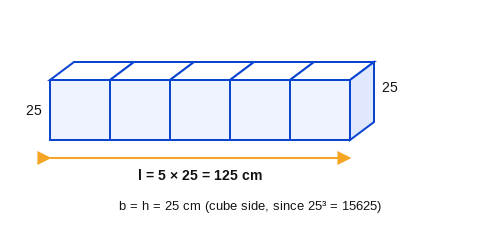
  1. Cube side =156253=25cm
  2. Cuboid: l=5×25=125, b=h=25
  3. LSA =2×25×(125+25)=7500cm2

Trick: LSA = 4 long faces =4×(125×25)=7500.

Answer: (B) 7500

अवधारणा: घनाभ का पार्श्व पृष्ठ क्षेत्रफल =2h(l+b)।

  1. घन की भुजा =156253=25cm
  2. घनाभ: l=125, b=h=25
  3. LSA =2×25×150=7500cm2

ट्रिक: 4 लंबे फलक =4×125×25=7500।

उत्तर: (B) 7500

RRB NTPC Undergraduate CBT 1MathematicsMensuration – cube & cuboidRRB NTPC Undergraduate CBT 1 2024 · 18 Aug Shift 1 →
Q2793.
In covering a distance of 112 km, Salaj takes 3 hours more than Kevin. If Salaj doubles his speed, then he would take 5 hours less than Kevin. Salaj's speed is:
112 km की दूरी तय करने में सलज, केविन से 3 घंटे अधिक लेता है। यदि सलज अपनी चाल दोगुनी कर दे, तो वह केविन से 5 घंटे कम लेगा। सलज की चाल है:
  1. A5 km/hr
  2. B7 km/hr
  3. C10 km/hr
  4. D6 km/hr
Show answer

Concept: Form two equations in Salaj's speed s and Kevin's time t.

  1. 112s=t+3
  2. 1122s=t−5
  3. Subtract: 56s=8⇒s=7km/h

Trick: Halving the time saves 8 h, so normal time =16 h; 11216=7.

Answer: (B) 7km/hr

अवधारणा: सलज की चाल s, केविन का समय t लेकर दो समीकरण।

  1. 112s=t+3
  2. 1122s=t−5
  3. घटाएँ: 56s=8⇒s=7km/h

ट्रिक: चाल दोगुनी → आधा समय बचा =8 घंटे, पूरा समय 16; 11216=7।

उत्तर: (B) 7km/hr

RRB NTPC Undergraduate CBT 1MathematicsSpeed, time & distanceRRB NTPC Undergraduate CBT 1 2024 · 18 Aug Shift 1 →
Q2794.
Simplify: 3((63)x2−22x+14)−6(x2+6x−15)
सरल कीजिए: 3((63)x2−22x+14)−6(x2+6x−15)
  1. A102x − 132
  2. B−102x + 132
  3. C−102x − 132
  4. D102x + 132
Show answer

Concept: Expand and collect like terms.

  1. 63=2: 3(2x2−22x+14)=6x2−66x+42
  2. −6(x2+6x−15)=−6x2−36x+90
  3. Sum =−102x+132

Trick: x2 terms cancel (6−6=0); just add x terms and constants.

Answer: (B) −102x+132

अवधारणा: कोष्ठक खोलकर समान पद जोड़ें।

  1. 3(2x2−22x+14)=6x2−66x+42
  2. −6(x2+6x−15)=−6x2−36x+90
  3. योग =−102x+132

ट्रिक: x2 पद कट जाते हैं; केवल x और अचर जोड़ें।

उत्तर: (B) −102x+132

RRB NTPC Undergraduate CBT 1MathematicsAlgebraic simplificationRRB NTPC Undergraduate CBT 1 2024 · 18 Aug Shift 1 →
Q2795.
If 3 times Mary’s present age is 29 years more than 5 times Diya's present age, and 2 times Diya's present age is 9 years less than Mary's present age, then what is the difference (in years) between the ages of Mary and Diya?
यदि मैरी की वर्तमान आयु का 3 गुना, दीया की वर्तमान आयु के 5 गुने से 29 वर्ष अधिक है, और दीया की वर्तमान आयु का 2 गुना, मैरी की वर्तमान आयु से 9 वर्ष कम है, तो मैरी और दीया की आयु में अंतर (वर्षों में) कितना है?
  1. A11
  2. B9
  3. C7
  4. D8
Show answer

Concept: Translate statements into equations.

  1. 3M=5D+29
  2. 2D=M−9⇒M=2D+9
  3. 3(2D+9)=5D+29⇒D=2, M=13
  4. Difference =13−2=11

Trick: Check: 3×13=39=5×2+29 ✓.

Answer: (A) 11

अवधारणा: कथनों को समीकरण में बदलें।

  1. 3M=5D+29
  2. M=2D+9
  3. 6D+27=5D+29⇒D=2, M=13
  4. अंतर =11

ट्रिक: जाँच: 39=10+29 ✓।

उत्तर: (A) 11

RRB NTPC Undergraduate CBT 1MathematicsProblems on agesRRB NTPC Undergraduate CBT 1 2024 · 18 Aug Shift 1 →
Q2796.
Select the pair that follows the same pattern as that followed by the two set of pairs given below. Both pairs follow the same pattern.
PFI : NGE
GKJ : ELF
उस युग्म का चयन कीजिए जो उसी पैटर्न का अनुसरण करता है जिसका अनुसरण नीचे दिए गए दो युग्मों द्वारा किया जाता है। दोनों युग्म एक ही पैटर्न का अनुसरण करते हैं।
PFI : NGE
GKJ : ELF
  1. AEEI : CGE
  2. BIDO : GEK
  3. CNCH : LDE
  4. DRNQ : PON
Show answer

Concept: Find the letter-shift pattern.

  1. PFI → NGE: P−2=N, F+1=G, I−4=E
  2. GKJ → ELF: −2,+1,−4 ✓
  3. IDO → GEK: I−2=G, D+1=E, O−4=K ✓

Trick: Check only the first letter (−2) to drop options, then verify the rest.

Answer: (B) IDO : GEK

अवधारणा: अक्षरों का खिसकाव (shift) पैटर्न देखें।

  1. PFI → NGE: −2,+1,−4
  2. GKJ → ELF: −2,+1,−4 ✓
  3. IDO → GEK: −2,+1,−4 ✓

ट्रिक: पहले अक्षर (−2) से विकल्प छाँटें, फिर बाकी जाँचें।

उत्तर: (B) IDO : GEK

RRB NTPC Undergraduate CBT 1General Intelligence and ReasoningLetter analogyRRB NTPC Undergraduate CBT 1 2024 · 18 Aug Shift 1 →
Q2797.
Based on the English alphabetical order, three of the following four letter-clusters are alike in a certain way and thus form a group. Which letter-cluster DOES NOT belong to that group?
(Note: The odd one out is not based on the number of consonants/vowels or their position in the letter-cluster.)
अंग्रेज़ी वर्णमाला क्रम के आधार पर, निम्नलिखित चार अक्षर-समूहों में से तीन किसी निश्चित प्रकार से एकसमान हैं और इस प्रकार एक समूह बनाते हैं। कौन-सा अक्षर-समूह उस समूह से संबंधित नहीं है?
(नोट: असंगत अक्षर-समूह, व्यंजनों/स्वरों की संख्या या अक्षर-समूह में उनके स्थान पर आधारित नहीं है।)
  1. AJCH
  2. BUNR
  3. CNGL
  4. DQJO
Show answer

Concept: Check gaps between consecutive letters.

  1. JCH: J−7=C, C+5=H; NGL: −7,+5; QJO: −7,+5
  2. UNR: U−7=N, but N+4=R ✗

Trick: Pattern is (−7,+5); UNR breaks it with +4.

Answer: (B) UNR

अवधारणा: क्रमागत अक्षरों का अंतर देखें।

  1. JCH, NGL, QJO: −7,+5
  2. UNR: −7, पर N+4=R ✗

ट्रिक: पैटर्न (−7,+5); UNR में +4 है।

उत्तर: (B) UNR

RRB NTPC Undergraduate CBT 1General Intelligence and ReasoningOdd one out – lettersRRB NTPC Undergraduate CBT 1 2024 · 18 Aug Shift 1 →
Q2798.
Aditya ranked 34th from the top and 44th from the bottom in his class. How many students are there in his class?
आदित्य अपनी कक्षा में ऊपर से 34वें और नीचे से 44वें स्थान पर है। उसकी कक्षा में कितने विद्यार्थी हैं?
  1. A76
  2. B78
  3. C77
  4. D79
Show answer

Concept: Total = rank from top + rank from bottom −1.

  1. Total =34+44−1=77

Yaad rakhein: The person is counted twice, so subtract 1.

Answer: (C) 77

अवधारणा: कुल = ऊपर से रैंक + नीचे से रैंक −1।

  1. कुल =34+44−1=77

याद रखें: व्यक्ति दो बार गिना जाता है, इसलिए 1 घटाएँ।

उत्तर: (C) 77

RRB NTPC Undergraduate CBT 1General Intelligence and ReasoningRankingRRB NTPC Undergraduate CBT 1 2024 · 18 Aug Shift 1 →
Q2799.
What should come in place of the question mark (?) in the given series?
451 450 442 415 351 ?
दी गई श्रृंखला में प्रश्न चिह्न (?) के स्थान पर क्या आना चाहिए?
451 450 442 415 351 ?
  1. A226
  2. B228
  3. C236
  4. D232
Show answer

Concept: Differences are cubes.

  1. 451−13=450, 450−23=442, 442−33=415, 415−43=351
  2. Next: 351−53=351−125=226

Trick: Differences 1, 8, 27, 64 → cubes; next is 125.

Answer: (A) 226

अवधारणा: अंतर घन (cubes) संख्याएँ हैं।

  1. −13,−23,−33,−43
  2. अगला: 351−125=226

ट्रिक: अंतर 1, 8, 27, 64 → घन; अगला 125।

उत्तर: (A) 226

RRB NTPC Undergraduate CBT 1General Intelligence and ReasoningNumber seriesRRB NTPC Undergraduate CBT 1 2024 · 18 Aug Shift 1 →
Q2800.
Pratik ranked 14th from the bottom and 27th from the top in his class. How many students are there in his class?
प्रतीक अपनी कक्षा में नीचे से 14वें और ऊपर से 27वें स्थान पर है। उसकी कक्षा में कितने विद्यार्थी हैं?
  1. A39
  2. B38
  3. C37
  4. D40
Show answer

Concept: Total = rank from top + rank from bottom −1.

  1. Total =27+14−1=40

Yaad rakhein: Never forget the −1; 41 is the common trap.

Answer: (D) 40

अवधारणा: कुल = ऊपर से रैंक + नीचे से रैंक −1।

  1. कुल =27+14−1=40

याद रखें: −1 कभी न भूलें।

उत्तर: (D) 40

RRB NTPC Undergraduate CBT 1General Intelligence and ReasoningRankingRRB NTPC Undergraduate CBT 1 2024 · 18 Aug Shift 1 →