Question bank

Q&A: practice questions with answers

Search questions on any topic. Filter by exam category, exam, subject and topic, try the question, then open the answer and explanation.

Courses – airGurukul

20,719 questions found.

Q281.
If 2 is added to each odd digit and 1 is subtracted from each even digit in the number 2741586, how many digits will appear more than once in the new number thus formed?
यदि संख्या 2741586 के प्रत्येक विषम अंक में 2 जोड़ा जाए और प्रत्येक सम अंक में से 1 घटाया जाए, तो इस प्रकार बनी नई संख्या में कितने अंक एक से अधिक बार आएँगे?
  1. AOneएक
  2. BNoneकोई नहीं
  3. CTwoदो
  4. DThreeतीन
Show answer

Concept: Apply the rule digit by digit.

  1. 2741586
    1933775
  2. New number: 1933775.
  3. Repeated digits: 3 and 7 ⇒ two.

Short trick: Odd+2 and even−1 both give odd results, so only odd digits remain – pair 4→3 with 1→3 and 8→7 with 5→7.

Answer: (C) Two

अवधारणा: नियम हर अंक पर लगाएँ।

  1. 2741586
    1933775
  2. नई संख्या: 1933775।
  3. दोहराए गए अंक: 3 और 7 ⇒ दो।

शॉर्ट ट्रिक: 4→3 और 1→3, 8→7 और 5→7 – दो अंक दोहराए।

उत्तर: (C) दो
RRB ALP CBT 1General Intelligence and ReasoningDigit operationsRRB ALP CBT 1 2025 · 17 Feb Shift 3 →
Q282.
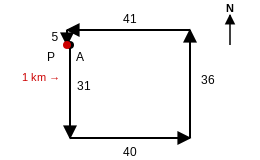
Puja starts from Point A and drives 31 km towards the south. He then takes a left turn, drives 40 km, turns left and drives 36 km. He then takes a left turn and drives 41 km. He takes a final left turn, drives 5 km and stops at Point P. How far (shortest distance) and towards which direction should he drive in order to reach Point A again? (All turns are 90-degree turns only unless specified.)
पूजा बिंदु A से शुरू करके दक्षिण की ओर 31 km गाड़ी चलाती है। फिर वह बाएँ मुड़ती है, 40 km गाड़ी चलाती है, बाएँ मुड़ती है और 36 km गाड़ी चलाती है। फिर वह बाएँ मुड़ती है और 41 km गाड़ी चलाती है। वह अंतिम बार बाएँ मुड़ती है, 5 km गाड़ी चलाती है और बिंदु P पर रुक जाती है। बिंदु A पर फिर से पहुँचने के लिए उसे कितनी दूरी (न्यूनतम दूरी) तक और किस दिशा में गाड़ी चलानी चाहिए? (जब तक निर्दिष्ट न हो, सभी मोड़ केवल 90 डिग्री के मोड़ हैं।)
  1. A2 km to the east2 km पूर्व की ओर
  2. B3 km to the North3 km उत्तर की ओर
  3. C4 km to the South4 km दक्षिण की ओर
  4. D1 km to the east1 km पूर्व की ओर
Show answer

Concept: Left turns from south: S → E → N → W → S.

  1. y: −31 + 36 − 5 = 0.
  2. x: +40 − 41 = −1 ⇒ P is 1 km west of A.
  3. To return: 1 km towards east.

Short trick: North–south cancels (31 + 5 = 36) ⇒ only E − W: 40 − 41 = −1 ⇒ go 1 km east.

Answer: (D) 1 km to the east

अवधारणा: दक्षिण से बाएँ मोड़: दक्षिण → पूर्व → उत्तर → पश्चिम → दक्षिण।

  1. y: −31 + 36 − 5 = 0।
  2. x: +40 − 41 = −1 ⇒ P, A से 1 km पश्चिम में।
  3. वापस जाने के लिए: 1 km पूर्व की ओर।

शॉर्ट ट्रिक: उत्तर–दक्षिण बराबर (31 + 5 = 36) ⇒ केवल 40 − 41 = −1 ⇒ 1 km पूर्व।

उत्तर: (D) 1 km पूर्व की ओर

RRB ALP CBT 1General Intelligence and ReasoningDirection sense – shortest distanceRRB ALP CBT 1 2025 · 17 Feb Shift 3 →
Q283.
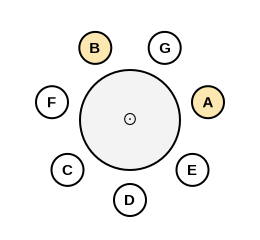
A, B, C, D, E, F and G are sitting around a circular table, facing the centre.
Only two people sit between D and G when counted from the right of D. Only two people sit between G and C. Only three people sit between D and B. E sits to the immediate left of A.
How many people sit between A and B when counted from the right of A?
A, B, C, D, E, F और G एक वृत्ताकार मेज के चारों ओर केंद्र की ओर मुख करके बैठे हैं।
D के दाएँ से गिनने पर D और G के बीच केवल दो व्यक्ति बैठे हैं। G और C के बीच केवल दो व्यक्ति बैठे हैं। D और B के बीच केवल तीन व्यक्ति बैठे हैं। E, A के ठीक बाएँ बैठा है।
A के दाएँ से गिनने पर A और B के बीच कितने व्यक्ति बैठे हैं?
  1. A1
  2. B3
  3. C2
  4. D4
Show answer

Concept: Facing the centre: moving to the right = anticlockwise. Fix D.

  1. G is 3rd to the right of D (two between).
  2. B with three between it and D ⇒ B is 4th to the right of D (immediately right of G).
  3. C with two between it and G (on the other side) ⇒ C is 3rd to the right of G, i.e. immediately left of D.
  4. Left seats: 1st and 2nd to the right of D and the seat after B. E–A adjacent (E to A's left) ⇒ E, A at 1st and 2nd right of D; F after B.
  5. Order to the right from D: D, E, A, G, B, F, C. From A rightwards: G, then B ⇒ 1 person.

Short trick: After fixing D-G-B, the only adjacent free pair is right after D, so A sits two seats before B ⇒ one person between.

Answer: (A) 1

अवधारणा: केंद्र की ओर मुख: दाएँ जाना = वामावर्त। D को स्थिर करें।

  1. G, D के दाएँ से तीसरा (बीच में दो)।
  2. B और D के बीच तीन ⇒ B, D के दाएँ से चौथा (G के ठीक दाएँ)।
  3. C और G के बीच दो (दूसरी ओर से) ⇒ C, G के दाएँ से तीसरा।
  4. खाली स्थान: D के दाएँ पहला और दूसरा, और B के बाद। E–A साथ-साथ (E, A के बाएँ) ⇒ E, A, D के ठीक दाएँ; F, B के बाद।
  5. D से दाएँ क्रम: D, E, A, G, B, F, C। A से दाएँ: G फिर B ⇒ 1 व्यक्ति।

शॉर्ट ट्रिक: D-G-B तय होने के बाद केवल D के बाद की जोड़ी खाली है, अतः A और B के बीच एक व्यक्ति।

उत्तर: (A) 1

RRB ALP CBT 1General Intelligence and ReasoningCircular seating – 7 personsRRB ALP CBT 1 2025 · 17 Feb Shift 3 →
Q284.
Manan, Kiran, Aditi, Isha, Trisha and Arya live on six different floors of the same building. The lowermost floor in the building is numbered 1, the floor above it is numbered 2 and so on till the topmost floor is numbered 6. Trisha lives immediately above Arya. Only one person lives between Arya and Aditi. Only two people live between Isha and Arya. Arya lives on an odd-numbered floor but not on the lowermost floor. Kiran lives immediately above Trisha. Who lives on floor number 2?
मनन, किरण, अदिति, ईशा, तृषा और आर्या एक ही इमारत की छह अलग-अलग मंजिलों पर रहते हैं। इमारत की सबसे निचली मंजिल की संख्या 1 है, उसके ऊपर वाली मंजिल की संख्या 2 है और इसी प्रकार सबसे ऊपरी मंजिल की संख्या 6 है। तृषा, आर्या के ठीक ऊपर रहती है। आर्या और अदिति के बीच केवल एक व्यक्ति रहता है। ईशा और आर्या के बीच केवल दो व्यक्ति रहते हैं। आर्या एक विषम संख्या वाली मंजिल पर रहती है लेकिन सबसे निचली मंजिल पर नहीं। किरण, तृषा के ठीक ऊपर रहती है। मंजिल संख्या 2 पर कौन रहता है?
  1. AKiranकिरण
  2. BMananमनन
  3. CAditiअदिति
  4. DIshaईशा
Show answer

Concept: Arya is on 3 or 5.

  1. Arya = 5 ⇒ Trisha = 6 and Kiran = 7 ✗. So Arya = 3, Trisha = 4, Kiran = 5.
  2. Isha: 3 floors from Arya ⇒ 6. Aditi: 2 floors from Arya ⇒ 1 (5 is taken).
  3. Manan gets floor 2.
  4. 6Isha
    5Kiran
    4Trisha
    3Arya
    2Manan
    1Aditi

Short trick: Arya–Trisha–Kiran is a block of 3 upward; Arya = 5 overflows ⇒ Arya = 3 instantly.

Answer: (B) Manan

अवधारणा: आर्या मंजिल 3 या 5 पर।

  1. आर्या = 5 ⇒ तृषा = 6, किरण = 7 ✗। अतः आर्या = 3, तृषा = 4, किरण = 5।
  2. ईशा: आर्या से 3 मंजिल दूर ⇒ 6। अदिति: 2 मंजिल दूर ⇒ 1।
  3. मनन = मंजिल 2।
  4. 6ईशा
    5किरण
    4तृषा
    3आर्या
    2मनन
    1अदिति

शॉर्ट ट्रिक: आर्या–तृषा–किरण ऊपर की ओर 3 का खंड; आर्या = 5 पर जगह नहीं ⇒ आर्या = 3।

उत्तर: (B) मनन

RRB ALP CBT 1General Intelligence and ReasoningFloor puzzle – 6 floorsRRB ALP CBT 1 2025 · 17 Feb Shift 3 →
Q285.
Refer to the following letter series and answer the question that follows. Counting to be done from left to right only.
(Left) P Q W T A V A B T A X H L T O K W L X T S (Right)
How many such vowels are there, each of which is immediately preceded by a consonant and also immediately followed by a vowel?
निम्नलिखित अक्षर श्रृंखला को देखिए और उसके बाद दिए गए प्रश्न का उत्तर दीजिए। गिनती केवल बाएँ से दाएँ की जानी है।
(बाएँ) P Q W T A V A B T A X H L T O K W L X T S (दाएँ)
ऐसे कितने स्वर हैं, जिनमें से प्रत्येक के ठीक पहले एक व्यंजन है और ठीक बाद में भी एक स्वर है?
  1. ANoneकोई नहीं
  2. BTwoदो
  3. CThreeतीन
  4. DOneएक
Show answer

Concept: Pattern needed: consonant – vowel – vowel.

  1. Vowels in the series: A (T A V), A (V A B), A (T A X), O (T O K).
  2. Each of them is followed by a consonant (V, B, X, K).
  3. No vowel is followed by a vowel ⇒ count = 0.

Short trick: The series has no two vowels side by side, so the pattern is impossible ⇒ None.

Answer: (A) None

अवधारणा: आवश्यक पैटर्न: व्यंजन – स्वर – स्वर।

  1. श्रृंखला के स्वर: A (T A V), A (V A B), A (T A X), O (T O K)।
  2. प्रत्येक के बाद व्यंजन (V, B, X, K) है।
  3. किसी स्वर के बाद स्वर नहीं ⇒ संख्या = 0।

शॉर्ट ट्रिक: श्रृंखला में कहीं भी दो स्वर साथ-साथ नहीं हैं ⇒ कोई नहीं।

उत्तर: (A) कोई नहीं

RRB ALP CBT 1General Intelligence and ReasoningLetter series – countingRRB ALP CBT 1 2025 · 17 Feb Shift 3 →
Q286.
What should come in place of the question mark (?) in the given series based on the English alphabetical order?
FVM ITK LRI OPG ?
अंग्रेजी वर्णमाला क्रम के आधार पर दी गई श्रृंखला में प्रश्न चिह्न (?) के स्थान पर क्या आना चाहिए?
FVM ITK LRI OPG ?
  1. ASNE
  2. BRNF
  3. CSNT
  4. DRNE
Show answer

Concept: Position-wise pattern.

  1. 1st: F, I, L, O → +3 ⇒ R.
  2. 2nd: V, T, R, P → −2 ⇒ N.
  3. 3rd: M, K, I, G → −2 ⇒ E.
  4. Answer: RNE.

Short trick: 1st letter +3 = R ⇒ B or D; 3rd letter G − 2 = E ⇒ D.

Answer: (D) RNE

अवधारणा: स्थान-वार पैटर्न।

  1. पहला: F, I, L, O → +3 ⇒ R।
  2. दूसरा: V, T, R, P → −2 ⇒ N।
  3. तीसरा: M, K, I, G → −2 ⇒ E।
  4. उत्तर: RNE।

शॉर्ट ट्रिक: पहला अक्षर R ⇒ B या D; तीसरा G − 2 = E ⇒ D।

उत्तर: (D) RNE

RRB ALP CBT 1General Intelligence and ReasoningLetter seriesRRB ALP CBT 1 2025 · 17 Feb Shift 3 →
Q287.
What should come in place of the question mark (?) in the given series?
207 194 181 168 155 ?
दी गई श्रृंखला में प्रश्न चिह्न (?) के स्थान पर क्या आना चाहिए?
207 194 181 168 155 ?
  1. A147
  2. B140
  3. C145
  4. D142
Show answer

Concept: Constant difference.

  1. Each term decreases by 13.
  2. 155 − 13 = 142.

Short trick: Unit digits go 7, 4, 1, 8, 5 → next 2 ⇒ 142.

Answer: (D) 142

अवधारणा: अचर अंतर।

  1. प्रत्येक पद 13 घटता है।
  2. 155 − 13 = 142।

शॉर्ट ट्रिक: इकाई अंक 7, 4, 1, 8, 5 → अगला 2 ⇒ 142।

उत्तर: (D) 142

RRB ALP CBT 1General Intelligence and ReasoningNumber series – constant differenceRRB ALP CBT 1 2025 · 17 Feb Shift 3 →
Q288.
EG 13 is related to FI 65 in a certain way. In the same way, JL 41 is related to KN 205. To which of the given options is RT 25 related, following the same logic?
EG 13 एक निश्चित प्रकार से FI 65 से संबंधित है। उसी प्रकार, JL 41, KN 205 से संबंधित है। समान तर्क का अनुसरण करते हुए, RT 25 दिए गए विकल्पों में से किससे संबंधित है?
  1. ASU 135
  2. BPV 135
  3. CPU 145
  4. DSV 125
Show answer

Concept: Letters and number change separately.

  1. 1st letter +1 (E→F, J→K), 2nd letter +2 (G→I, L→N).
  2. Number × 5 (13→65, 41→205).
  3. RT 25 → S V 125.

Short trick: Number ×5 = 125 gives only option D directly.

Answer: (D) SV 125

अवधारणा: अक्षर और संख्या अलग-अलग बदलते हैं।

  1. पहला अक्षर +1, दूसरा अक्षर +2।
  2. संख्या × 5 (13→65, 41→205)।
  3. RT 25 → SV 125।

शॉर्ट ट्रिक: 25 × 5 = 125 केवल विकल्प D में है।

उत्तर: (D) SV 125

RRB ALP CBT 1General Intelligence and ReasoningAlphanumeric analogyRRB ALP CBT 1 2025 · 17 Feb Shift 3 →
Q289.
Each letter in the word DUSTING is changed to the letter immediately following it in the English alphabetical order and then all the letters thus formed are arranged in alphabetical order. Which of the following letters will be third from the right in the new group of letters thus formed?
शब्द DUSTING के प्रत्येक अक्षर को अंग्रेजी वर्णमाला क्रम में उसके ठीक बाद वाले अक्षर से बदल दिया जाता है और फिर इस प्रकार बने सभी अक्षरों को वर्णमाला क्रम में व्यवस्थित किया जाता है। अक्षरों के इस नए समूह में दाएँ से तीसरा अक्षर निम्नलिखित में से कौन-सा होगा?
  1. AU
  2. BO
  3. CT
  4. DH
Show answer

Concept: Shift +1 then sort.

  1. D→E, U→V, S→T, T→U, I→J, N→O, G→H ⇒ E V T U J O H.
  2. Sorted: E H J O T U V.
  3. 3rd from right = T.

Short trick: Sorting before shifting gives the same order: D G I N S T U → 3rd from right S → +1 = T.

Answer: (C) T

अवधारणा: +1 करें फिर क्रम में लगाएँ।

  1. D→E, U→V, S→T, T→U, I→J, N→O, G→H ⇒ E V T U J O H।
  2. क्रम में: E H J O T U V।
  3. दाएँ से तीसरा = T।

शॉर्ट ट्रिक: पहले क्रम में लगाकर भी वही: D G I N S T U → दाएँ से तीसरा S → +1 = T।

उत्तर: (C) T

RRB ALP CBT 1General Intelligence and ReasoningLetter shifting and arrangementRRB ALP CBT 1 2025 · 17 Feb Shift 3 →
Q290.
If ‘A’ stands for ‘÷’, ‘B’ stands for ‘x’, ‘C’ stands for ‘+’ and ‘D’ stands for ‘-’, what will come in place of the question mark (?) in the following equation?
13 A 43 B 43 C 1 D 43 = ?
यदि 'A' का अर्थ '÷', 'B' का अर्थ '×', 'C' का अर्थ '+' और 'D' का अर्थ '-' है, तो निम्नलिखित समीकरण में प्रश्न चिह्न (?) के स्थान पर क्या आएगा?
13 A 43 B 43 C 1 D 43 = ?
  1. A-28
  2. B-31
  3. C-29
  4. D-27
Show answer

Concept: Decode then BODMAS.

  1. 13 ÷ 43 × 43 + 1 − 43.
  2. 13 ÷ 43 × 43 = 13.
  3. 13 + 1 − 43 = −29.

Short trick: ÷43 and ×43 cancel ⇒ 13 + 1 − 43 = −29.

Answer: (C) -29

अवधारणा: कूट खोलें फिर BODMAS।

  1. 13 ÷ 43 × 43 + 1 − 43।
  2. 13 ÷ 43 × 43 = 13।
  3. 13 + 1 − 43 = −29।

शॉर्ट ट्रिक: ÷43 और ×43 कट जाते हैं ⇒ −29।

उत्तर: (C) -29

RRB ALP CBT 1General Intelligence and ReasoningMathematical operations – coded symbolsRRB ALP CBT 1 2025 · 17 Feb Shift 3 →
Q291.
Consider the following chemical reactions:
I: BaCl2 (aq) + Na2SO4 (aq) → BaSO4 (s) + 2NaCl (aq)
II: Pb(NO3)2 (aq) + KI (aq) → PbI2 (s) + 2KNO3(aq)
Which of the following correctly classifies these reactions?
निम्नलिखित रासायनिक अभिक्रियाओं पर विचार कीजिए:
I: BaCl2 (aq) + Na2SO4 (aq) → BaSO4 (s) + 2NaCl (aq)
II: Pb(NO3)2 (aq) + KI (aq) → PbI2 (s) + 2KNO3(aq)
निम्नलिखित में से कौन-सा विकल्प इन अभिक्रियाओं का सही वर्गीकरण करता है?
  1. AI: Double displacement reaction; II: Displacement reactionI: द्वि-विस्थापन अभिक्रिया; II: विस्थापन अभिक्रिया
  2. BI: Double displacement reaction; II: Neutralisation reactionI: द्वि-विस्थापन अभिक्रिया; II: उदासीनीकरण अभिक्रिया
  3. CI: Displacement reaction; II: Double displacement reactionI: विस्थापन अभिक्रिया; II: द्वि-विस्थापन अभिक्रिया
  4. DBoth are double displacement reactionsदोनों द्वि-विस्थापन अभिक्रियाएँ हैं
Show answer

Concept: In a double displacement reaction two compounds exchange ions (AB + CD → AD + CB), usually forming a precipitate.

  1. I: Ba²⁺ and Na⁺ swap partners → white precipitate BaSO4.
  2. II: Pb²⁺ and K⁺ swap partners → yellow precipitate PbI2 (balanced form uses 2KI).
  3. Both are double displacement (precipitation) reactions; no free element displaces another, and no acid + base.

Short trick: "Two compounds in → two compounds out + (s) precipitate" = double displacement. Single displacement always has a free element on the left.

Answer: (D) Both are double displacement reactions

अवधारणा: द्वि-विस्थापन अभिक्रिया में दो यौगिक आपस में आयनों का आदान-प्रदान करते हैं (AB + CD → AD + CB), प्रायः अवक्षेप बनता है।

  1. I: Ba²⁺ और Na⁺ साथी बदलते हैं → सफेद अवक्षेप BaSO4।
  2. II: Pb²⁺ और K⁺ साथी बदलते हैं → पीला अवक्षेप PbI2 (संतुलित रूप में 2KI)।
  3. दोनों द्वि-विस्थापन (अवक्षेपण) अभिक्रियाएँ हैं।

शॉर्ट ट्रिक: "दो यौगिक अंदर → दो यौगिक बाहर + (s) अवक्षेप" = द्वि-विस्थापन। एकल विस्थापन में बाईं ओर एक स्वतंत्र तत्व होता है।

उत्तर: (D) दोनों द्वि-विस्थापन अभिक्रियाएँ हैं

RRB ALP CBT 1General ScienceChemical reactions – double displacementRRB ALP CBT 1 2025 · 17 Feb Shift 3 →
Q292.
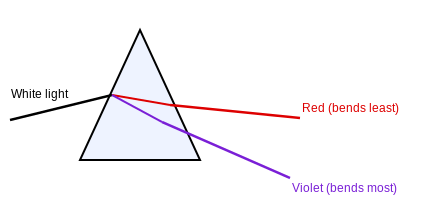
When white light passes through a prism, different colours of light bend through different angles. Which colour bends the least and which bends the most?
जब श्वेत प्रकाश प्रिज्म से होकर गुजरता है, तो प्रकाश के विभिन्न रंग विभिन्न कोणों पर मुड़ते हैं। कौन-सा रंग सबसे कम मुड़ता है और कौन-सा सबसे अधिक मुड़ता है?
  1. ABlue bends the least, yellow bends the mostनीला सबसे कम मुड़ता है, पीला सबसे अधिक मुड़ता है
  2. BRed bends the most, violet bends the leastलाल सबसे अधिक मुड़ता है, बैंगनी सबसे कम मुड़ता है
  3. CRed bends the least, violet bends the mostलाल सबसे कम मुड़ता है, बैंगनी सबसे अधिक मुड़ता है
  4. DBoth red and violet bend equallyलाल और बैंगनी दोनों समान रूप से मुड़ते हैं
Show answer

Concept: Dispersion: the refractive index of glass is highest for the shortest wavelength.

  1. Red has the longest wavelength → lowest refractive index → least deviation.
  2. Violet has the shortest wavelength → highest refractive index → maximum deviation.
  3. Spectrum order from top: VIBGYOR read as ROYGBIV from least to most bent.

Short trick: "Red Rests, Violet Veers" – red bends least, violet bends most.

Answer: (C) Red bends the least, violet bends the most

अवधारणा: विक्षेपण: काँच का अपवर्तनांक सबसे छोटी तरंगदैर्ध्य के लिए सबसे अधिक होता है।

  1. लाल की तरंगदैर्ध्य सबसे अधिक → अपवर्तनांक सबसे कम → सबसे कम विचलन।
  2. बैंगनी की तरंगदैर्ध्य सबसे कम → अपवर्तनांक सबसे अधिक → सबसे अधिक विचलन।
  3. कम से अधिक मुड़ने का क्रम: लाल, नारंगी, पीला, हरा, नीला, जामुनी, बैंगनी।

शॉर्ट ट्रिक: "लाल लेटा, बैंगनी बेहद झुका" – लाल सबसे कम, बैंगनी सबसे अधिक मुड़ता है।

उत्तर: (C) लाल सबसे कम मुड़ता है, बैंगनी सबसे अधिक मुड़ता है

RRB ALP CBT 1General ScienceLight – dispersion by a prismRRB ALP CBT 1 2025 · 17 Feb Shift 3 →
Q293.
Which of the following hormones is secreted by the pituitary gland?
निम्नलिखित में से कौन-सा हॉर्मोन पीयूष ग्रंथि (पिट्यूटरी ग्रंथि) द्वारा स्रावित होता है?
  1. AGrowth hormoneवृद्धि हॉर्मोन
  2. BInsulinइंसुलिन
  3. CAdrenalineएड्रेनालाईन
  4. DThyroxineथायरॉक्सिन
Show answer

Concept: Each gland has its signature hormones.

  1. Pituitary → growth hormone (GH), TSH, ACTH, FSH, LH, prolactin, ADH, oxytocin.
  2. Insulin → pancreas (islets of Langerhans); adrenaline → adrenal medulla; thyroxine → thyroid.
  3. Deficiency of GH in childhood causes dwarfism; excess causes gigantism.

Short trick: "Pituitary = Pillar of growth" – the master gland makes Growth Hormone.

Answer: (A) Growth hormone

अवधारणा: प्रत्येक ग्रंथि के अपने विशेष हॉर्मोन होते हैं।

  1. पीयूष ग्रंथि → वृद्धि हॉर्मोन (GH), TSH, ACTH, FSH, LH, प्रोलैक्टिन, ADH, ऑक्सीटोसिन।
  2. इंसुलिन → अग्न्याशय; एड्रेनालाईन → अधिवृक्क मध्यांश; थायरॉक्सिन → थायरॉयड।
  3. बचपन में GH की कमी से बौनापन, अधिकता से भीमकायता होती है।

शॉर्ट ट्रिक: "मास्टर ग्रंथि = ग्रोथ (वृद्धि) हॉर्मोन" – पीयूष ग्रंथि शरीर की वृद्धि नियंत्रित करती है।

उत्तर: (A) वृद्धि हॉर्मोन

RRB ALP CBT 1General ScienceEndocrine system – pituitary glandRRB ALP CBT 1 2025 · 17 Feb Shift 3 →
Q294.
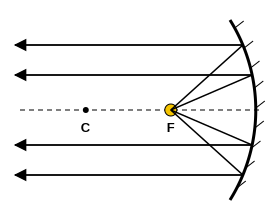
A concave mirror is used in torches and car headlights because it:
टॉर्च और कार की हेडलाइट में अवतल दर्पण का उपयोग किया जाता है क्योंकि यह:
  1. AAlways forms virtual imagesहमेशा आभासी प्रतिबिंब बनाता है
  2. BReduces the brightness of lightप्रकाश की चमक को कम करता है
  3. CCan produce a parallel beam of lightप्रकाश की समानांतर किरण-पुंज उत्पन्न कर सकता है
  4. DScatters light in all directionsप्रकाश को सभी दिशाओं में बिखेरता है
Show answer

Concept: A ray from the focus of a concave mirror reflects parallel to the principal axis.

  1. The bulb is placed at the focus F of the concave reflector.
  2. All rays from F reflect as a strong parallel beam that travels far without spreading.
  3. Concave mirrors form real images for objects beyond F, so "always virtual" is wrong.

Short trick: "Focus in → Parallel out" – headlights, torches, searchlights all use this.

Answer: (C) Can produce a parallel beam of light

अवधारणा: अवतल दर्पण के फोकस से आने वाली किरण परावर्तन के बाद मुख्य अक्ष के समानांतर जाती है।

  1. बल्ब को अवतल परावर्तक के फोकस F पर रखा जाता है।
  2. F से निकली सभी किरणें परावर्तित होकर शक्तिशाली समानांतर किरण-पुंज बनाती हैं, जो दूर तक फैले बिना जाता है।
  3. अवतल दर्पण F से दूर रखी वस्तु का वास्तविक प्रतिबिंब बनाता है, अतः "हमेशा आभासी" गलत है।

शॉर्ट ट्रिक: "फोकस पर बल्ब → समानांतर पुंज" – हेडलाइट, टॉर्च, सर्चलाइट।

उत्तर: (C) प्रकाश की समानांतर किरण-पुंज उत्पन्न कर सकता है

RRB ALP CBT 1General ScienceLight – uses of concave mirrorRRB ALP CBT 1 2025 · 17 Feb Shift 3 →
Q295.
Which chamber of the heart sends deoxygenated blood to the lungs for oxygenation?
हृदय का कौन-सा कक्ष विऑक्सीजनित रक्त को ऑक्सीजनीकरण के लिए फेफड़ों में भेजता है?
  1. ALeft ventricleबायाँ निलय
  2. BRight atriumदायाँ आलिंद
  3. CRight ventricleदायाँ निलय
  4. DLeft atriumबायाँ आलिंद
Show answer

Concept: Right side of the heart handles deoxygenated blood; ventricles pump blood out.

  1. Body → vena cava → right atrium → right ventricle.
  2. Right ventricle → pulmonary artery → lungs (oxygenation).
  3. Lungs → pulmonary vein → left atrium → left ventricle → aorta → body.

Short trick: "Right = Return of used blood; Ventricle = Vent out" ⇒ right ventricle sends it to lungs.

Answer: (C) Right ventricle

अवधारणा: हृदय का दायाँ भाग विऑक्सीजनित रक्त संभालता है; निलय रक्त को बाहर पंप करते हैं।

  1. शरीर → महाशिरा → दायाँ आलिंद → दायाँ निलय।
  2. दायाँ निलय → फुफ्फुस धमनी → फेफड़े (ऑक्सीजनीकरण)।
  3. फेफड़े → फुफ्फुस शिरा → बायाँ आलिंद → बायाँ निलय → महाधमनी → शरीर।

शॉर्ट ट्रिक: "दायाँ = दूषित रक्त, निलय = निकास" ⇒ दायाँ निलय रक्त फेफड़ों को भेजता है।

उत्तर: (C) दायाँ निलय

RRB ALP CBT 1General ScienceHuman heart – circulationRRB ALP CBT 1 2025 · 17 Feb Shift 3 →
Q296.
Which of the following events happens when lysosomes in a cell burst?
जब किसी कोशिका में लाइसोसोम फट जाते हैं, तो निम्नलिखित में से कौन-सी घटना होती है?
  1. AEnzymes digest foreign particles onlyएंजाइम केवल बाहरी कणों को पचाते हैं
  2. BCell division increasesकोशिका विभाजन बढ़ जाता है
  3. CCell becomes more activeकोशिका अधिक सक्रिय हो जाती है
  4. DEnzymes digest the cell’s own componentsएंजाइम कोशिका के अपने घटकों को पचा लेते हैं
Show answer

Concept: Lysosomes are membrane sacs full of powerful digestive (hydrolytic) enzymes.

  1. Normally they digest worn-out organelles and foreign particles inside the sac.
  2. When a lysosome bursts (e.g. in damaged cells), enzymes leak out and digest the cell itself (autolysis).
  3. Hence lysosomes are called the "suicide bags" of the cell.

Short trick: "Lysosome = Lethal sac" – burst ⇒ self-digestion.

Answer: (D) Enzymes digest the cell’s own components

अवधारणा: लाइसोसोम शक्तिशाली पाचक (हाइड्रोलाइटिक) एंजाइमों से भरी झिल्ली-युक्त थैलियाँ हैं।

  1. सामान्यतः ये पुराने कोशिकांगों और बाहरी कणों को पचाते हैं।
  2. लाइसोसोम फटने पर एंजाइम बाहर आकर कोशिका को ही पचा देते हैं (स्वलयन)।
  3. इसलिए लाइसोसोम को कोशिका की "आत्मघाती थैली" कहते हैं।

शॉर्ट ट्रिक: "लाइसोसोम = आत्मघाती थैली" – फटे तो कोशिका का स्व-पाचन।

उत्तर: (D) एंजाइम कोशिका के अपने घटकों को पचा लेते हैं

RRB ALP CBT 1General ScienceCell – lysosomesRRB ALP CBT 1 2025 · 17 Feb Shift 3 →
Q297.
LPG (Liquefied Petroleum Gas) is stored in cylinders in liquid form because:
LPG (द्रवीकृत पेट्रोलियम गैस) को सिलेंडरों में द्रव रूप में संग्रहित किया जाता है क्योंकि:
  1. AIt reacts with air to form liquidयह वायु के साथ अभिक्रिया करके द्रव बनाती है
  2. BIt is cooled and compressed under high pressureइसे ठंडा करके उच्च दाब पर संपीडित किया जाता है
  3. CIt is solidified before useउपयोग से पहले इसे ठोस बना दिया जाता है
  4. DIt is heated and expanded under low pressureइसे निम्न दाब पर गर्म और प्रसारित किया जाता है
Show answer

Concept: Gases liquefy when the particles are pushed close together – by increasing pressure and/or lowering temperature.

  1. LPG (mainly butane + propane) is compressed under high pressure (and cooled), so it becomes liquid.
  2. A liquid occupies far less volume, so much more gas fits in a cylinder.
  3. When the valve opens, pressure drops and it turns back to gas.

Short trick: "High P + Low T ⇒ Liquid" (same idea as CNG/LPG, dry ice).

Answer: (B) It is cooled and compressed under high pressure

अवधारणा: दाब बढ़ाने और/या ताप घटाने पर गैस के कण पास आ जाते हैं और गैस द्रव बन जाती है।

  1. LPG (मुख्यतः ब्यूटेन + प्रोपेन) को उच्च दाब पर संपीडित (और ठंडा) किया जाता है, जिससे वह द्रव बन जाती है।
  2. द्रव बहुत कम आयतन घेरता है, इसलिए सिलेंडर में अधिक गैस भरी जा सकती है।
  3. वाल्व खोलने पर दाब घटता है और वह फिर गैस बन जाती है।

शॉर्ट ट्रिक: "उच्च दाब + निम्न ताप ⇒ द्रव"।

उत्तर: (B) इसे ठंडा करके उच्च दाब पर संपीडित किया जाता है

RRB ALP CBT 1General ScienceEveryday chemistry – LPGRRB ALP CBT 1 2025 · 17 Feb Shift 3 →
Q298.
A force acts on a 4 kg body at rest and produces an acceleration of 3 m/s². The final velocity after 5 seconds is:
एक बल, विरामावस्था में स्थित 4 kg के पिंड पर कार्य करता है और 3 m/s² का त्वरण उत्पन्न करता है। 5 सेकंड बाद अंतिम वेग कितना होगा?
  1. A20 m/s
  2. B10 m/s
  3. C12 m/s
  4. D15 m/s
Show answer

Concept: First equation of motion: v=u+at.

  1. u=0 (at rest), a=3 m/s², t=5 s.
  2. v=0+3×5=15 m/s.
  3. Mass (4 kg) only gives the force F = ma = 12 N – not needed for v.

Short trick: From rest, v=at – ignore the mass, it is a distractor.

Answer: (D) 15 m/s

अवधारणा: गति का प्रथम समीकरण: v=u+at।

  1. u=0 (विराम), a=3 m/s², t=5 s।
  2. v=0+3×5=15 m/s।
  3. द्रव्यमान (4 kg) केवल बल F = ma = 12 N देता है – v के लिए आवश्यक नहीं।

शॉर्ट ट्रिक: विराम से v=at – द्रव्यमान केवल भ्रमित करने के लिए है।

उत्तर: (D) 15 m/s

RRB ALP CBT 1General ScienceMotion – equations of motionRRB ALP CBT 1 2025 · 17 Feb Shift 3 →
Q299.
Exercise Varuna 2025 was conducted between India and which country?
वरुण 2025 अभ्यास भारत और किस देश के बीच आयोजित किया गया था?
  1. AJapanजापान
  2. BRussiaरूस
  3. CUSAअमेरिका
  4. DFranceफ्रांस
Show answer

Concept: Varuna is the bilateral naval exercise between the Indian Navy and the French Navy.

  1. Started in 1993 (named "Varuna" since 2001).
  2. The 2025 edition was held in March 2025 off the west coast of India, with carrier groups of both navies.
  3. Other pairs: JIMEX – Japan, INDRA – Russia, Malabar – USA (with Japan, Australia).

Short trick: "Varuna – French vRance": Varuna ↔ France; Indra ↔ Russia.

Answer: (D) France

अवधारणा: वरुण भारतीय नौसेना और फ्रांसीसी नौसेना के बीच द्विपक्षीय नौसैनिक अभ्यास है।

  1. 1993 में शुरू (2001 से "वरुण" नाम)।
  2. 2025 संस्करण मार्च 2025 में भारत के पश्चिमी तट के पास आयोजित हुआ।
  3. अन्य: JIMEX – जापान, इंद्र – रूस, मालाबार – अमेरिका (जापान, ऑस्ट्रेलिया सहित)।

शॉर्ट ट्रिक: "वरुण – फ्रांस, इंद्र – रूस" याद रखें।

उत्तर: (D) फ्रांस

RRB ALP CBT 1General AwarenessCurrent affairs – defence exercisesRRB ALP CBT 1 2025 · 17 Feb Shift 3 →
Q300.
Which of the following is a type of ‘urban local government’ according to the Constitution of India?
भारत के संविधान के अनुसार निम्नलिखित में से कौन-सा 'शहरी स्थानीय शासन' का एक प्रकार है?
  1. AGram Sabhaग्राम सभा
  2. BZila Panchayatजिला पंचायत
  3. CMunicipalityनगरपालिका
  4. DBlock Panchayatप्रखंड (ब्लॉक) पंचायत
Show answer

Concept: The 74th Constitutional Amendment Act, 1992 (Part IXA, Articles 243P–243ZG) deals with urban local bodies.

  1. Article 243Q: three types – Nagar Panchayat (transitional area), Municipal Council (smaller urban area) and Municipal Corporation (larger urban area).
  2. Gram Sabha, Zila Panchayat and Block Panchayat belong to rural Panchayati Raj (73rd Amendment, Part IX).

Short trick: "73 = Village (Panchayat), 74 = Town (Municipality)" – 4 comes after 3, town comes after village.

Answer: (C) Municipality

अवधारणा: 74वाँ संविधान संशोधन अधिनियम, 1992 (भाग IXA, अनुच्छेद 243P–243ZG) शहरी स्थानीय निकायों से संबंधित है।

  1. अनुच्छेद 243Q: तीन प्रकार – नगर पंचायत, नगर परिषद (नगरपालिका) और नगर निगम।
  2. ग्राम सभा, जिला पंचायत और प्रखंड पंचायत ग्रामीण पंचायती राज (73वाँ संशोधन, भाग IX) के अंग हैं।

शॉर्ट ट्रिक: "73 = गाँव (पंचायत), 74 = शहर (नगरपालिका)"।

उत्तर: (C) नगरपालिका

RRB ALP CBT 1General AwarenessPolity – urban local governmentRRB ALP CBT 1 2025 · 17 Feb Shift 3 →