Question bank

Q&A: practice questions with answers

Search questions on any topic. Filter by exam category, exam, subject and topic, try the question, then open the answer and explanation.

Courses – airGurukul

20,719 questions found.

Q3161.
Which of the following correctly describes a key function of Subordinate Courts in India?
निम्नलिखित में से कौन-सा भारत में अधीनस्थ न्यायालयों के एक प्रमुख कार्य का सही वर्णन करता है?
  1. AResolve civil and criminal disputes at the district levelज़िला स्तर पर दीवानी और आपराधिक विवादों का समाधान करना
  2. BInterpret international treatiesअंतर्राष्ट्रीय संधियों की व्याख्या करना
  3. CReview decisions of High Courtsउच्च न्यायालयों के निर्णयों की समीक्षा करना
  4. DDraft laws for the Stateराज्य के लिए कानूनों का प्रारूप तैयार करना
Show answer

Concept: Subordinate courts (Articles 233–237) work below the High Court at district and lower levels.

  1. The District and Sessions Judge hears civil suits (as District Judge) and criminal cases (as Sessions Judge); lower civil and magistrate courts work below.
  2. So their key job is to resolve civil and criminal disputes at the district level.
  3. Reviewing High Court decisions is the Supreme Court's job; drafting laws is the legislature's job.

Trick: Subordinate court = first door of justice at the district.

Answer: (A) Resolve civil and criminal disputes at the district level

अवधारणा: अधीनस्थ न्यायालय (अनुच्छेद 233–237) उच्च न्यायालय के नीचे ज़िला व निचले स्तर पर कार्य करते हैं।

  1. ज़िला एवं सत्र न्यायाधीश दीवानी मामले (ज़िला न्यायाधीश के रूप में) और फ़ौजदारी मामले (सत्र न्यायाधीश के रूप में) सुनते हैं; उनके नीचे अन्य दीवानी व मजिस्ट्रेट अदालतें हैं।
  2. अतः इनका मुख्य कार्य ज़िला स्तर पर दीवानी और फ़ौजदारी विवादों का निपटारा है।
  3. उच्च न्यायालय के निर्णयों की समीक्षा सर्वोच्च न्यायालय करता है; कानून बनाना विधायिका का कार्य है।

ट्रिक: अधीनस्थ न्यायालय = ज़िले में न्याय का पहला द्वार।

उत्तर: (A) ज़िला स्तर पर दीवानी और फ़ौजदारी विवादों का निपटारा
RRB NTPC Undergraduate CBT 1General AwarenessPolity – judiciaryRRB NTPC Undergraduate CBT 1 2024 · 13 Aug Shift 3 →
Q3162.
The National eCourts Project, launched by the Department of Justice, is primarily aimed at:
न्याय विभाग द्वारा शुरू की गई राष्ट्रीय ई-कोर्ट्स परियोजना का मुख्य उद्देश्य है:
  1. Acreating new Central Administrative Tribunalsनए केंद्रीय प्रशासनिक अधिकरण बनाना
  2. Bbuilding new court complexes in rural areasग्रामीण क्षेत्रों में नए न्यायालय परिसर बनाना
  3. Cestablishing a nationwide telecom system for policeपुलिस के लिए राष्ट्रव्यापी दूरसंचार प्रणाली स्थापित करना
  4. Ddigitising and upgrading district and subordinate courtsज़िला और अधीनस्थ न्यायालयों का डिजिटलीकरण और उन्नयन करना
Show answer

Concept: The eCourts Mission Mode Project is run by the Department of Justice with the eCommittee of the Supreme Court.

  1. Its main aim is ICT enablement – digitising and upgrading district and subordinate courts (e-filing, virtual courts, case status online, digitised records).
  2. Phase III (2023–27) aims at paperless, digital courts.
  3. It does not create tribunals or build telecom systems for police.

Trick: eCourts = digital district courts (e-filing, NJDG, virtual courts).

Answer: (D) digitising and upgrading district and subordinate courts

अवधारणा: ई-कोर्ट्स मिशन मोड परियोजना न्याय विभाग द्वारा सर्वोच्च न्यायालय की ई-कमेटी के साथ चलाई जाती है।

  1. इसका मुख्य उद्देश्य ICT के माध्यम से ज़िला व अधीनस्थ न्यायालयों का डिजिटलीकरण और उन्नयन है (ई-फ़ाइलिंग, वर्चुअल कोर्ट, ऑनलाइन केस स्थिति, डिजिटल रिकॉर्ड)।
  2. चरण III (2023–27) का लक्ष्य कागज़रहित, डिजिटल अदालतें हैं।
  3. यह न्यायाधिकरण बनाने या पुलिस के लिए दूरसंचार प्रणाली बनाने से संबंधित नहीं है।

ट्रिक: ई-कोर्ट्स = डिजिटल ज़िला अदालतें (ई-फ़ाइलिंग, NJDG, वर्चुअल कोर्ट)।

उत्तर: (D) ज़िला और अधीनस्थ न्यायालयों का डिजिटलीकरण और उन्नयन

RRB NTPC Undergraduate CBT 1General AwarenessPolity – e-governance in judiciaryRRB NTPC Undergraduate CBT 1 2024 · 13 Aug Shift 3 →
Q3163.
What is the correct order of arrival of seismic waves at a seismograph after an earthquake?
भूकंप के बाद भूकंपलेखी (seismograph) पर भूकंपीय तरंगों के पहुँचने का सही क्रम क्या है?
  1. ASurface waves, P-waves, S-wavesपृष्ठीय तरंगें, P-तरंगें, S-तरंगें
  2. BP-waves, surface waves, S-wavesP-तरंगें, पृष्ठीय तरंगें, S-तरंगें
  3. CS-waves, P-waves, surface wavesS-तरंगें, P-तरंगें, पृष्ठीय तरंगें
  4. DP-waves, S-waves, surface wavesP-तरंगें, S-तरंगें, पृष्ठीय तरंगें
Show answer

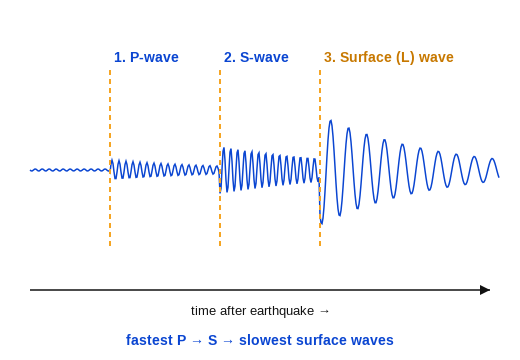
Concept: Seismic waves reach a seismograph in order of their speed – the fastest arrive first.

  1. P-waves (primary, longitudinal) are fastest and travel through solids, liquids and gases – they arrive first.
  2. S-waves (secondary, transverse) are slower and travel only through solids – they arrive second.
  3. Surface (L) waves are slowest but cause the most damage – they arrive last.

Trick: Alphabet order of speed: Primary → Secondary → Surface (last, most destructive).

Answer: (D) P-waves, S-waves, surface waves

अवधारणा: भूकंपीय तरंगें अपनी गति के क्रम में सिस्मोग्राफ़ तक पहुँचती हैं – सबसे तेज़ पहले।

  1. P-तरंगें (प्राथमिक, अनुदैर्ध्य) सबसे तेज़ हैं और ठोस, द्रव, गैस सभी में चलती हैं – सबसे पहले पहुँचती हैं।
  2. S-तरंगें (द्वितीयक, अनुप्रस्थ) धीमी हैं और केवल ठोस में चलती हैं – दूसरे स्थान पर।
  3. सतही (L) तरंगें सबसे धीमी पर सबसे विनाशकारी – सबसे अंत में पहुँचती हैं।

ट्रिक: Primary → Secondary → Surface (अंत में, सबसे विनाशकारी)।

उत्तर: (D) P-तरंगें, S-तरंगें, सतही तरंगें

RRB NTPC Undergraduate CBT 1General AwarenessGeography – seismic wavesRRB NTPC Undergraduate CBT 1 2024 · 13 Aug Shift 3 →
Q3164.
Which of the following Buddhist texts is often called the 'Gita of Buddhism' for its importance and teachings?
निम्नलिखित में से किस बौद्ध ग्रंथ को उसके महत्व और शिक्षाओं के कारण प्रायः 'बौद्ध धर्म की गीता' कहा जाता है?
  1. AMahayana Sutraमहायान सूत्र
  2. BDhammapadaधम्मपद
  3. CVamsathapakasiniवंसत्थप्पकासिनी
  4. DSaddharmapundarīka Sūtraसद्धर्मपुण्डरीक सूत्र
Show answer

Concept: The Dhammapada is a collection of 423 verses of the Buddha's sayings in Pali, part of the Khuddaka Nikaya of the Sutta Pitaka.

  1. Because it gives the essence of Buddhist ethics in short verses, it is called the 'Gita of Buddhism'.
  2. The Saddharmapundarika (Lotus) Sutra is a key Mahayana text; Vamsatthappakasini is a commentary on the Mahavamsa.
  3. 'Mahayana Sutra' is a general category, not one text.

Yaad rakhein: Gita of Hinduism ↔ Dhammapada of Buddhism (verses on dhamma).

Answer: (B) Dhammapada

अवधारणा: धम्मपद पालि में बुद्ध के 423 वचनों (गाथाओं) का संग्रह है, जो सुत्त पिटक के खुद्दक निकाय का भाग है।

  1. संक्षिप्त गाथाओं में बौद्ध नैतिकता का सार होने के कारण इसे 'बौद्ध धर्म की गीता' कहते हैं।
  2. सद्धर्मपुंडरीक (लोटस) सूत्र महायान का प्रमुख ग्रंथ है; वंसत्थप्पकासिनी महावंश की टीका है।
  3. 'महायान सूत्र' एक सामान्य श्रेणी है, कोई एक ग्रंथ नहीं।

याद रखें: हिंदू धर्म की गीता ↔ बौद्ध धर्म का धम्मपद।

उत्तर: (B) धम्मपद

RRB NTPC Undergraduate CBT 1General AwarenessAncient history – Buddhist textsRRB NTPC Undergraduate CBT 1 2024 · 13 Aug Shift 3 →
Q3165.
Which Fundamental Right protects citizens from being forced into labour or human trafficking?
कौन-सा मौलिक अधिकार नागरिकों को बलात् श्रम या मानव तस्करी से सुरक्षा प्रदान करता है?
  1. ARight to Freedomस्वतंत्रता का अधिकार
  2. BRight to Equalityसमानता का अधिकार
  3. CRight to Constitutional Remediesसंवैधानिक उपचारों का अधिकार
  4. DRight against Exploitationशोषण के विरुद्ध अधिकार
Show answer

Concept: Articles 23–24 form the Right against Exploitation.

  1. Article 23 prohibits traffic in human beings, begar and other forms of forced labour.
  2. Article 24 prohibits employment of children below 14 years in factories, mines and hazardous work.
  3. Right to Freedom is Articles 19–22; Right to Equality is Articles 14–18.

Yaad rakhein: Articles 23–24 = Exploitation: trafficking, forced labour, child labour.

Answer: (D) Right against Exploitation

अवधारणा: अनुच्छेद 23–24 मिलकर शोषण के विरुद्ध अधिकार बनाते हैं।

  1. अनुच्छेद 23 मानव तस्करी, बेगार और अन्य प्रकार के बलात् श्रम (forced labour) पर रोक लगाता है।
  2. अनुच्छेद 24 कारखानों, खानों और खतरनाक कार्यों में 14 वर्ष से कम आयु के बच्चों के नियोजन पर रोक लगाता है।
  3. स्वतंत्रता का अधिकार अनु. 19–22; समानता का अधिकार अनु. 14–18।

याद रखें: अनु. 23–24 = शोषण: तस्करी, बलात् श्रम, बाल श्रम।

उत्तर: (D) शोषण के विरुद्ध अधिकार

RRB NTPC Undergraduate CBT 1General AwarenessPolity – fundamental rightsRRB NTPC Undergraduate CBT 1 2024 · 13 Aug Shift 3 →
Q3166.
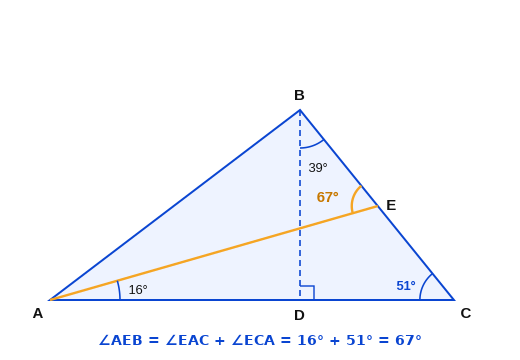
In △ABC, BD ⟂ AC at D and ∠DBC = 39°. E is a point on BC such that ∠CAE = 16°. What is the measure of ∠AEB?
△ABC में, BD ⟂ AC, D पर है और ∠DBC = 39° है। E, BC पर एक ऐसा बिंदु है कि ∠CAE = 16° है। ∠AEB की माप क्या है?
  1. A82°
  2. B66°
  3. C67°
  4. D74°
Show answer

Concept: Angle sum of a triangle is 180∘, and an exterior angle equals the sum of the two interior opposite angles.

  1. In right △BDC: ∠BDC=90∘, ∠DBC=39∘, so ∠C=180∘−90∘−39∘=51∘.
  2. In △AEC: ∠EAC=16∘ and ∠ECA=51∘.
  3. ∠AEB is the exterior angle of △AEC at E: ∠AEB=16∘+51∘=67∘.

Trick: ∠AEB=∠CAE+(90∘−∠DBC)=16∘+90∘−39∘=67∘.

Answer: (C) 67∘

अवधारणा: त्रिभुज के कोणों का योग 180∘ होता है और बहिष्कोण दोनों अभिमुख अंतःकोणों के योग के बराबर होता है।

  1. समकोण △BDC में: ∠BDC=90∘, ∠DBC=39∘, अतः ∠C=180∘−90∘−39∘=51∘।
  2. △AEC में: ∠EAC=16∘ और ∠ECA=51∘।
  3. ∠AEB, △AEC का E पर बहिष्कोण है: ∠AEB=16∘+51∘=67∘।

ट्रिक: ∠AEB=∠CAE+(90∘−∠DBC)=16∘+90∘−39∘=67∘।

उत्तर: (C) 67∘

RRB NTPC Undergraduate CBT 1MathematicsGeometry – triangles (angles)RRB NTPC Undergraduate CBT 1 2024 · 13 Aug Shift 3 →
Q3167.
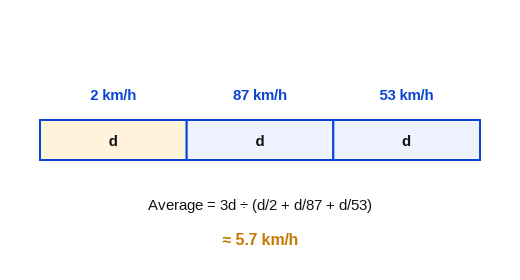
One-third of a journey is covered at a speed of 2 km/hr, the next one-third of the journey is covered at a speed of 87 km/hr and the remaining journey is covered at a speed of 53 km/hr. The average speed (in km/hr, rounded off to 1 decimal place) for the entire journey is:
किसी यात्रा का एक-तिहाई भाग 2 km/hr की चाल से, अगला एक-तिहाई भाग 87 km/hr की चाल से और शेष यात्रा 53 km/hr की चाल से तय की जाती है। संपूर्ण यात्रा की औसत चाल (km/hr में, 1 दशमलव स्थान तक पूर्णांकित) है:
  1. A2.7
  2. B5.7
  3. C8.3
  4. D5
Show answer

Concept: For three equal distances at speeds a,b,c: Average speed=31a+1b+1c (harmonic mean).

  1. 12+187+153=0.5+0.01149+0.01887=0.53036
  2. Average=30.53036≈5.656km/h
  3. Rounded to 1 decimal place: 5.7km/h.

Trick: The slow third alone takes d2 hours, so the average is a little below 3×2=6km/h (the fast parts add very little time) – hence 5.7.

Answer: (B) 5.7

अवधारणा: तीन बराबर दूरियाँ a,b,c चाल से: औसत चाल=31a+1b+1c (हरात्मक माध्य)।

  1. 12+187+153=0.5+0.01149+0.01887=0.53036
  2. औसत=30.53036≈5.656km/h
  3. एक दशमलव तक: 5.7km/h।

ट्रिक: केवल धीमा एक-तिहाई भाग ही d2 घंटे लेता है, इसलिए औसत 3×2=6km/h से थोड़ा कम होगा (तेज़ भाग बहुत कम समय जोड़ते हैं) – अतः 5.7।

उत्तर: (B) 5.7

RRB NTPC Undergraduate CBT 1MathematicsSpeed – average speedRRB NTPC Undergraduate CBT 1 2024 · 13 Aug Shift 3 →
Q3168.
Find the value of 5−23× 16−23× 21−23.
5−23× 16−23× 21−23 का मान ज्ञात कीजिए।
  1. A1172523
  2. B1168023
  3. C1172623
  4. D1163423
Show answer

Concept: Same power: am×bm×cm=(abc)m, and x−m=1xm.

  1. 5−23×16−23×21−23=(5×16×21)−23
  2. 5×16×21=80×21=1680
  3. 1680−23=1168023

Trick: Only the base product matters: 5×16=80, 80×21=1680 – match it with the denominators.

Answer: (B) 1168023

अवधारणा: समान घात: am×bm×cm=(abc)m, तथा x−m=1xm।

  1. 5−23×16−23×21−23=(5×16×21)−23
  2. 5×16×21=80×21=1680
  3. 1680−23=1168023

ट्रिक: केवल आधारों का गुणनफल देखें: 5×16=80, 80×21=1680 – हर (denominator) से मिलाएँ।

उत्तर: (B) 1168023

RRB NTPC Undergraduate CBT 1MathematicsIndices – laws of exponentsRRB NTPC Undergraduate CBT 1 2024 · 13 Aug Shift 3 →
Q3169.
The number 814242541 is divisible by which of the following?
संख्या 814242541 निम्नलिखित में से किससे विभाज्य है?
  1. A8
  2. B12
  3. C7
  4. D15
Show answer

Concept: Test each option with its divisibility rule.

  1. By 8: last three digits 541 is odd, so not divisible by 8 (nor by 2, so not by 12).
  2. By 15: last digit is 1, not 0 or 5, so not divisible by 5 or 15.
  3. By 7: 814242541÷7=116320363 exactly (7×116320363=814242541), so it is divisible by 7.

Trick: An odd number ending in 1 cannot be divisible by 8, 12 or 15 – so eliminate them and 7 is left.

Answer: (C) 7

अवधारणा: हर विकल्प को उसके विभाज्यता नियम से जाँचें।

  1. 8 से: अंतिम तीन अंक 541 विषम है, अतः 8 से नहीं (और 2 से भी नहीं, इसलिए 12 से भी नहीं)।
  2. 15 से: अंतिम अंक 1 है, 0 या 5 नहीं, अतः 5 और 15 से नहीं।
  3. 7 से: 814242541÷7=116320363 पूर्ण (7×116320363=814242541), अतः 7 से विभाज्य।

ट्रिक: 1 पर समाप्त विषम संख्या 8, 12 या 15 से विभाज्य नहीं हो सकती – इन्हें हटाएँ, 7 बचता है।

उत्तर: (C) 7

RRB NTPC Undergraduate CBT 1MathematicsNumber system – divisibilityRRB NTPC Undergraduate CBT 1 2024 · 13 Aug Shift 3 →
Q3170.
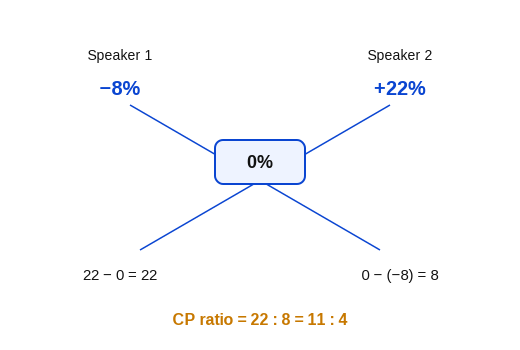
I bought two speakers for ₹1,200. I sold the first one at a loss of 8% and the second at a gain of 22%. If, on the whole I made neither a loss nor a gain, find the cost price (in ₹) of the first speaker.
मैंने दो स्पीकर ₹1,200 में खरीदे। मैंने पहला स्पीकर 8% की हानि पर और दूसरा 22% के लाभ पर बेचा। यदि कुल मिलाकर मुझे न तो लाभ हुआ और न ही हानि, तो पहले स्पीकर का क्रय मूल्य (₹ में) ज्ञात कीजिए।
  1. A864
  2. B900
  3. C880
  4. D904
Show answer

Concept: No overall profit/loss means the loss on one equals the gain on the other in rupees.

  1. Let CP of first =x; second =1200−x.
  2. 0.08x=0.22(1200−x)⇒0.30x=264⇒x=880
  3. Check: loss =0.08×880=70.4; gain =0.22×320=70.4 – equal.

Trick: Alligation: −8% and +22% around 0% give ratio 22:8=11:4; first =1115×1200=880.

Answer: (C) ₹880

अवधारणा: कुल न लाभ न हानि का अर्थ है – एक पर हानि (₹ में) = दूसरे पर लाभ (₹ में)।

  1. पहले का क्रय मूल्य =x; दूसरे का =1200−x।
  2. 0.08x=0.22(1200−x)⇒0.30x=264⇒x=880
  3. जाँच: हानि =0.08×880=70.4; लाभ =0.22×320=70.4 – बराबर।

ट्रिक: एलिगेशन: 0% के दोनों ओर −8% और +22% से अनुपात 22:8=11:4; पहला =1115×1200=880।

उत्तर: (C) ₹880

RRB NTPC Undergraduate CBT 1MathematicsProfit and loss – alligationRRB NTPC Undergraduate CBT 1 2024 · 13 Aug Shift 3 →
Q3171.
Pipe A can fill a tank in 17 hours, pipe B can fill the same tank in 21 hours and pipe C can fill the same tank in 19 hours. The time taken by them to fill the same tank if they operate together is::
पाइप A किसी टंकी को 17 घंटे में, पाइप B उसी टंकी को 21 घंटे में और पाइप C उसी टंकी को 19 घंटे में भर सकता है। यदि तीनों एक साथ चलाए जाएँ, तो उसी टंकी को भरने में लगने वाला समय है:
  1. A133091079 hours133091079 घंटे
  2. B53091079 hours53091079 घंटे
  3. C63091079 hours63091079 घंटे
  4. D113091079 hours113091079 घंटे
Show answer

Concept: Pipes working together: add their one-hour work, 1T=1a+1b+1c.

  1. 117+121+119=399+323+3576783=10796783 (LCM =17×21×19=6783)
  2. T=67831079 hours
  3. 6783=6×1079+309, so T=63091079 hours.

Trick: All three pipes take about 19 h each, so together roughly 193≈6.3 h – only 63091079 fits.

Answer: (C) 63091079 hours

अवधारणा: एक साथ चलने वाले पाइप: एक घंटे का कार्य जोड़ें, 1T=1a+1b+1c।

  1. 117+121+119=399+323+3576783=10796783 (LCM =17×21×19=6783)
  2. T=67831079 घंटे
  3. 6783=6×1079+309, अतः T=63091079 घंटे।

ट्रिक: तीनों पाइप लगभग 19 घंटे लेते हैं, तो साथ में लगभग 193≈6.3 घंटे – केवल 63091079 उपयुक्त।

उत्तर: (C) 63091079 घंटे

RRB NTPC Undergraduate CBT 1MathematicsPipes and cisternsRRB NTPC Undergraduate CBT 1 2024 · 13 Aug Shift 3 →
Q3172.
By selling an article at 414 of its actual selling price, Akash incurs a loss of 30%.
If he sells it at 54% of its actual selling price, then the profit percentage is:
किसी वस्तु को उसके वास्तविक विक्रय मूल्य के 414 पर बेचने पर आकाश को 30% की हानि होती है।
यदि वह इसे उसके वास्तविक विक्रय मूल्य के 54% पर बेचता है, तो लाभ प्रतिशत है:
  1. A34.8%
  2. B32.6%
  3. C33.8%
  4. D32.3%
Show answer

Concept: Express everything in terms of CP: a loss of 30% means SP=0.7CP.

  1. Let actual SP =S, CP =C. Then 414S=27S=0.7C.
  2. S=0.7×72C=2.45C
  3. New SP =54% of S=0.54×2.45C=1.323C
  4. Profit%=(1.323−1)×100=32.3%

Trick: Take C=100: 27S=70⇒S=245; 54% of 245=132.3 → profit 32.3%.

Answer: (D) 32.3%

अवधारणा: सब कुछ क्रय मूल्य (CP) में लिखें: 30% हानि का अर्थ SP=0.7CP।

  1. वास्तविक SP =S, CP =C। तब 414S=27S=0.7C।
  2. S=0.7×72C=2.45C
  3. नया SP =S का 54%=0.54×2.45C=1.323C
  4. लाभ%=(1.323−1)×100=32.3%

ट्रिक: C=100 लें: 27S=70⇒S=245; 245 का 54%=132.3 → लाभ 32.3%।

उत्तर: (D) 32.3%

RRB NTPC Undergraduate CBT 1MathematicsProfit and lossRRB NTPC Undergraduate CBT 1 2024 · 13 Aug Shift 3 →
Q3173.
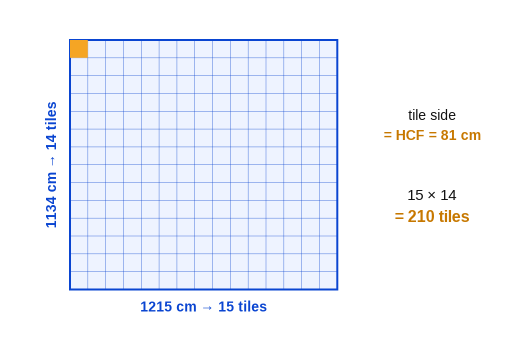
Find the least number of square tiles required to completely cover a floor of dimensions 12.15 m by 11.34 m.
12.15 m × 11.34 m विमाओं वाले फ़र्श को पूरी तरह ढकने के लिए आवश्यक वर्गाकार टाइलों की न्यूनतम संख्या ज्ञात कीजिए।
  1. A230
  2. B150
  3. C210
  4. D250
Show answer

Concept: Least number of square tiles: tile side =HCF of length and breadth; number =Area of floorArea of tile.

  1. 12.15m=1215cm, 11.34m=1134cm.
  2. HCF(1215,1134): 1215−1134=81 and 1134=81×14, so HCF =81cm.
  3. Tiles =121581×113481=15×14=210

Trick: Difference 1215−1134=81 – check if it divides both: 81×15 and 81×14 ✔.

Answer: (C) 210

अवधारणा: न्यूनतम वर्गाकार टाइलें: टाइल की भुजा = लंबाई व चौड़ाई का HCF; संख्या =फ़र्श का क्षेत्रफलटाइल का क्षेत्रफल।

  1. 12.15m=1215cm, 11.34m=1134cm।
  2. HCF(1215,1134): 1215−1134=81 और 1134=81×14, अतः HCF =81cm।
  3. टाइलें =121581×113481=15×14=210

ट्रिक: अंतर 1215−1134=81 – जाँचें कि यह दोनों को विभाजित करता है: 81×15 और 81×14 ✔।

उत्तर: (C) 210

RRB NTPC Undergraduate CBT 1MathematicsHCF – tiles problemRRB NTPC Undergraduate CBT 1 2024 · 13 Aug Shift 3 →
Q3174.
Sapna invested ₹22,400 on simple interest, partly at 13% per annum and partly at 3% per annum. If she earns equal interests from the two investments after 7 years, then find the sum invested at 13% per annum (in ₹).
सपना ने ₹22,400 साधारण ब्याज पर निवेश किए, कुछ भाग 13% वार्षिक दर पर और शेष 3% वार्षिक दर पर। यदि 7 वर्ष बाद उसे दोनों निवेशों से समान ब्याज प्राप्त होता है, तो 13% वार्षिक दर पर निवेश की गई राशि (₹ में) ज्ञात कीजिए।
  1. A4,198
  2. B4,200
  3. C4,203
  4. D4,197
Show answer

Concept: Same time, equal interest: P1R1=P2R2, so principals are in the inverse ratio of rates.

  1. P1×13×7=P2×3×7⇒P1:P2=3:13
  2. Sum at 13% =316×22400=4200
  3. Check: 4200×13×7100=3822 and 18200×3×7100=3822 – equal.

Trick: Equal SI → swap the rates: amounts in ratio 3:13 (the higher rate gets the smaller sum).

Answer: (B) ₹4,200

अवधारणा: समान समय, समान ब्याज: P1R1=P2R2, अर्थात् मूलधन दरों के व्युत्क्रम अनुपात में।

  1. P1×13×7=P2×3×7⇒P1:P2=3:13
  2. 13% पर राशि =316×22400=4200
  3. जाँच: 4200×13×7100=3822 और 18200×3×7100=3822 – बराबर।

ट्रिक: समान ब्याज → दरें उलट दें: राशियाँ 3:13 में (अधिक दर पर कम राशि)।

उत्तर: (B) ₹4,200

RRB NTPC Undergraduate CBT 1MathematicsSimple interestRRB NTPC Undergraduate CBT 1 2024 · 13 Aug Shift 3 →
Q3175.
What is the median of the following data?
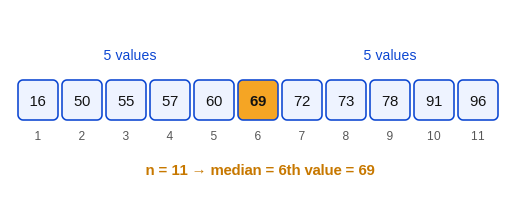
57, 96, 60, 91, 69, 50, 72, 16, 78, 73, 55
निम्नलिखित आँकड़ों की माध्यिका क्या है?
57, 96, 60, 91, 69, 50, 72, 16, 78, 73, 55
  1. A70
  2. B69.5
  3. C69
  4. D68.5
Show answer

Concept: Median: arrange data in order; for odd n, median =(n+12)th value.

  1. Ascending order: 16, 50, 55, 57, 60, 69, 72, 73, 78, 91, 96.
  2. n=11, so median =(11+12)th=6th value.
  3. The 6th value is 69.

Trick: Never take the middle of the unsorted list (that would be 50) – always sort first.

Answer: (C) 69

अवधारणा: माध्यिका: आँकड़ों को क्रम में रखें; विषम n के लिए माध्यिका =(n+12)th मान।

  1. आरोही क्रम: 16, 50, 55, 57, 60, 69, 72, 73, 78, 91, 96।
  2. n=11, अतः माध्यिका =(11+12)th=6th मान।
  3. छठा मान 69 है।

ट्रिक: बिना क्रम लगाए बीच का मान (यहाँ 50) न लें – पहले क्रम में रखें।

उत्तर: (C) 69

RRB NTPC Undergraduate CBT 1MathematicsStatistics – medianRRB NTPC Undergraduate CBT 1 2024 · 13 Aug Shift 3 →
Q3176.
If the third proportional of 9 and 57 be x, then what is the value of x?
यदि 9 और 57 का तृतीयानुपाती x हो, तो x का मान क्या है?
  1. A363
  2. B361
  3. C358
  4. D364
Show answer

Concept: If a:b=b:x, then x is the third proportional of a and b, so x=b2a.

  1. 9:57=57:x
  2. x=5729=32499
  3. x=361

Trick: 5729=(573)2=192=361 – divide first, then square.

Answer: (B) 361

अवधारणा: यदि a:b=b:x हो, तो x को a और b का तृतीय समानुपाती (third proportional) कहते हैं: x=b2a।

  1. 9:57=57:x
  2. x=5729=32499
  3. x=361

ट्रिक: 5729=(573)2=192=361 – पहले भाग दें, फिर वर्ग करें।

उत्तर: (B) 361

RRB NTPC Undergraduate CBT 1MathematicsThird ProportionalRRB NTPC Undergraduate CBT 1 2024 · 13 Aug Shift 3 →
Q3177.
An item is marked at ₹8,000. Two successive discounts of 10% and 15% are allowed. Find the equivalent single discount rate.
एक वस्तु का अंकित मूल्य ₹8,000 है। उस पर 10% और 15% की दो क्रमिक छूटें दी जाती हैं। समतुल्य एकल छूट दर ज्ञात कीजिए।
  1. A23.5%
  2. B22.5%
  3. C25.5%
  4. D24.5%
Show answer

Concept: Two successive discounts a% and b% equal a single discount of (a+b−ab100)%. The marked price does not matter.

  1. a=10, b=15
  2. Single discount =10+15−10×15100=25−1.5
  3. =23.5%

Trick: Multiplier method: 0.90×0.85=0.765, so discount =1−0.765=23.5%.

Answer: (A) 23.5%

अवधारणा: दो क्रमिक छूट a% और b% = एकल छूट (a+b−ab100)%। अंकित मूल्य (₹8,000) का कोई असर नहीं।

  1. a=10, b=15
  2. एकल छूट =10+15−10×15100=25−1.5
  3. =23.5%

ट्रिक: गुणक विधि: 0.90×0.85=0.765, अतः छूट =1−0.765=23.5%।

उत्तर: (A) 23.5%

RRB NTPC Undergraduate CBT 1MathematicsSuccessive DiscountRRB NTPC Undergraduate CBT 1 2024 · 13 Aug Shift 3 →
Q3178.
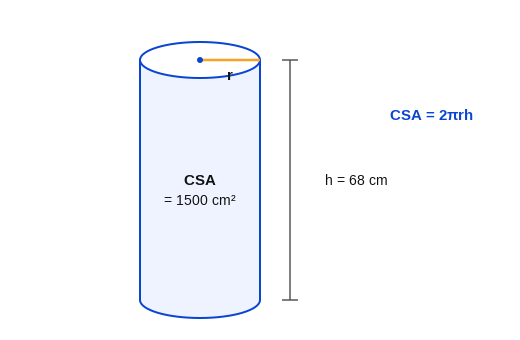
A cylindrical rod has an outer curved surface area of 1500 cm2. If the length of the rod is 68 cm, then the outer radius (in cm) of the rod, correct to two places of decimal, is:
(Take π=227)
एक बेलनाकार छड़ का बाहरी वक्र पृष्ठीय क्षेत्रफल 1500 cm2 है। यदि छड़ की लंबाई 68 cm है, तो दो दशमलव स्थानों तक सही, छड़ की बाहरी त्रिज्या (cm में) है:
(π=227 लीजिए)
  1. A3.51
  2. B6.61
  3. C3.87
  4. D3.69
Show answer

Concept: Curved surface area of a cylinder =2πrh, so r=CSA2πh.

  1. 2×227×r×68=1500
  2. r=1500×72×22×68=105002992
  3. r≈3.509≈3.51cm

Trick: 2πh≈447×68≈427.4; 1500427.4 is a little above 3.5 → only 3.51 fits.

Answer: (A) 3.51

अवधारणा: बेलन का वक्र पृष्ठीय क्षेत्रफल (CSA) =2πrh, अतः r=CSA2πh।

  1. 2×227×r×68=1500
  2. r=1500×72×22×68=105002992
  3. r≈3.509≈3.51cm

ट्रिक: 2πh≈427.4; 1500427.4 लगभग 3.5 से थोड़ा अधिक → केवल 3.51 सही बैठता है।

उत्तर: (A) 3.51

RRB NTPC Undergraduate CBT 1MathematicsCylinder – Curved Surface AreaRRB NTPC Undergraduate CBT 1 2024 · 13 Aug Shift 3 →
Q3179.
A sum of ₹625 amounts to ₹841 in 2 years at a certain rate of interest per annum, compounded annually. The rate of interest per annum is:
₹625 की राशि वार्षिक रूप से संयोजित चक्रवृद्धि ब्याज की एक निश्चित वार्षिक दर पर 2 वर्ष में ₹841 हो जाती है। वार्षिक ब्याज दर है:
  1. A18%
  2. B19%
  3. C16%
  4. D17%
Show answer

Concept: Compound amount A=P(1+r100)n. Take the ratio AP and find its n-th root.

  1. (1+r100)2=841625
  2. 1+r100=841625=2925
  3. r100=425⇒r=16%

Trick: 625=252 and 841=292; rate =29−2525×100=16%.

Answer: (C) 16%

अवधारणा: चक्रवृद्धि मिश्रधन A=P(1+r100)n। AP का n-वाँ मूल लें।

  1. (1+r100)2=841625
  2. 1+r100=841625=2925
  3. r100=425⇒r=16%

ट्रिक: 625=252, 841=292; दर =29−2525×100=16%।

उत्तर: (C) 16%

RRB NTPC Undergraduate CBT 1MathematicsCompound Interest – RateRRB NTPC Undergraduate CBT 1 2024 · 13 Aug Shift 3 →
Q3180.
A man driving a car at a speed of 84 km/hr crosses a bridge in 1.6 minutes. Find the length of the bridge.
84 km/hr की चाल से कार चलाता हुआ एक व्यक्ति एक पुल को 1.6 मिनट में पार करता है। पुल की लंबाई ज्ञात कीजिए।
  1. A2.24 km
  2. B1.81 km
  3. C2.46 km
  4. D1.82 km
Show answer

Concept: Distance = Speed × Time (units must match). Ignoring the car's length, the distance covered while crossing is the bridge length.

  1. Time =1.6min=1.660h
  2. Distance =84×1.660
  3. =1.4×1.6=2.24km

Trick: 84km/h=8460=1.4km per minute; 1.4×1.6=2.24.

Answer: (A) 2.24km

अवधारणा: दूरी = चाल × समय (इकाइयाँ समान रखें)। कार की लंबाई नगण्य मानें, तो तय दूरी = पुल की लंबाई।

  1. समय =1.6min=1.660h
  2. दूरी =84×1.660
  3. =1.4×1.6=2.24km

ट्रिक: 84km/h = प्रति मिनट 1.4km; 1.4×1.6=2.24।

उत्तर: (A) 2.24km

RRB NTPC Undergraduate CBT 1MathematicsSpeed, Time and DistanceRRB NTPC Undergraduate CBT 1 2024 · 13 Aug Shift 3 →