Question bank

Q&A: practice questions with answers

Search questions on any topic. Filter by exam category, exam, subject and topic, try the question, then open the answer and explanation.

Courses – airGurukul

20,719 questions found.

Q4061.
Why are tribal settlements usually located in remote and forested areas of India?
भारत में जनजातीय बस्तियाँ प्रायः सुदूर और वनाच्छादित क्षेत्रों में क्यों स्थित होती हैं?
  1. ABecause they are not allowed to enter citiesक्योंकि उन्हें शहरों में प्रवेश करने की अनुमति नहीं है
  2. BBecause forests provide natural resources and livelihoodक्योंकि वन प्राकृतिक संसाधन और आजीविका प्रदान करते हैं
  3. CDue to easy access to modern infrastructureआधुनिक अवसंरचना तक आसान पहुँच के कारण
  4. DBecause government policies force them to live thereक्योंकि सरकारी नीतियाँ उन्हें वहाँ रहने के लिए विवश करती हैं
Show answer

Concept: Tribal communities have traditionally depended on forests for their way of life.

  1. Forests provide food, fuel, timber, medicinal plants, minor forest produce and land for shifting cultivation – natural resources and livelihood.
  2. They also preserve their culture and traditions there; the other options are not the real reason.

Yaad rakhein: Tribal life = Jal, Jangal, Zameen.

Answer: (B) Because forests provide natural resources and livelihood

अवधारणा: जनजातीय समुदाय पारंपरिक रूप से जीवनयापन के लिए वनों पर निर्भर रहे हैं।

  1. वन भोजन, ईंधन, लकड़ी, औषधीय पौधे, लघु वनोपज और झूम खेती हेतु भूमि देते हैं – प्राकृतिक संसाधन व आजीविका।
  2. यहीं उनकी संस्कृति सुरक्षित रहती है; अन्य विकल्प वास्तविक कारण नहीं हैं।

याद रखें: जनजातीय जीवन = जल, जंगल, ज़मीन।

उत्तर: (B) क्योंकि वन प्राकृतिक संसाधन और आजीविका देते हैं
RRB NTPC Undergraduate CBT 1General AwarenessGeography – Human settlementsRRB NTPC Undergraduate CBT 1 2024 · 9 Sep Shift 3 →
Q4062.
What type of rocks mainly compose the Peninsular Plateau of India?
भारत का प्रायद्वीपीय पठार मुख्य रूप से किस प्रकार की चट्टानों से बना है?
  1. ARecent volcanic lava deposits from plate marginsप्लेट किनारों से निकले हाल के ज्वालामुखीय लावा निक्षेप
  2. BLayers of limestone and sandstone from marine originसमुद्री उत्पत्ति वाली चूना पत्थर और बलुआ पत्थर की परतें
  3. COld crystalline, igneous and metamorphic rocksप्राचीन क्रिस्टलीय, आग्नेय और कायांतरित चट्टानें
  4. DYoung sedimentary rocks formed in coastal plainsतटीय मैदानों में निर्मित नवीन अवसादी चट्टानें
Show answer

Concept: The Peninsular Plateau is a part of the ancient Gondwana landmass – the oldest and most stable landmass of India.

  1. It is made mainly of old crystalline, igneous and metamorphic rocks (granite, gneiss, schist).
  2. The Deccan Traps (basalt) cover part of it, but they are not 'recent lava from plate margins'; young sediments belong to the plains.

Yaad rakhein: Plateau = Old + Hard (Gondwana); Himalaya = Young fold; Plains = Alluvium.

Answer: (C) Old crystalline, igneous and metamorphic rocks

अवधारणा: प्रायद्वीपीय पठार प्राचीन गोंडवाना भूभाग का हिस्सा है – भारत का सबसे पुराना और स्थिर भूभाग।

  1. यह मुख्यतः पुरानी क्रिस्टलीय, आग्नेय और कायांतरित चट्टानों (ग्रेनाइट, नीस, शिस्ट) से बना है।
  2. दक्कन ट्रैप (बेसाल्ट) इसका एक भाग ढकता है; नई अवसादी चट्टानें मैदानों में मिलती हैं।

याद रखें: पठार = पुराना + कठोर (गोंडवाना); हिमालय = नवीन वलित; मैदान = जलोढ़।

उत्तर: (C) पुरानी क्रिस्टलीय, आग्नेय और कायांतरित चट्टानें

RRB NTPC Undergraduate CBT 1General AwarenessGeography – Physiography of IndiaRRB NTPC Undergraduate CBT 1 2024 · 9 Sep Shift 3 →
Q4063.
When did John Dalton publish his atomic theory that holds that all elements are made up of tiny, indivisible particles?
जॉन डाल्टन ने अपना परमाणु सिद्धांत, जिसके अनुसार सभी तत्व सूक्ष्म, अविभाज्य कणों से बने होते हैं, कब प्रकाशित किया था?
  1. A1808
  2. B1798
  3. C1803
  4. D1800
Show answer

Concept: John Dalton proposed that all matter is made of tiny indivisible atoms, atoms of one element are identical, and they combine in simple whole-number ratios.

  1. He first presented the ideas around 1803, but published the theory in his book A New System of Chemical Philosophy in 1808.
  2. 1803 is the tempting option – that was a lecture, not the publication.

Yaad rakhein: Dalton's book = 1808.

Answer: (A) 1808

अवधारणा: जॉन डाल्टन के अनुसार सभी पदार्थ अविभाज्य परमाणुओं से बने हैं, एक तत्व के परमाणु समान होते हैं और सरल पूर्ण-संख्या अनुपात में जुड़ते हैं।

  1. उन्होंने 1803 के आसपास विचार रखे, पर सिद्धांत अपनी पुस्तक A New System of Chemical Philosophy में 1808 में प्रकाशित किया।
  2. 1803 भ्रमित करने वाला विकल्प है – वह व्याख्यान था, प्रकाशन नहीं।

याद रखें: डाल्टन की पुस्तक = 1808।

उत्तर: (A) 1808

RRB NTPC Undergraduate CBT 1General AwarenessChemistry – Atomic theoryRRB NTPC Undergraduate CBT 1 2024 · 9 Sep Shift 3 →
Q4064.
Where was India’s first solar-powered airport terminal inaugurated in early 2025?
2025 की शुरुआत में भारत के पहले सौर ऊर्जा-संचालित हवाई अड्डा टर्मिनल का उद्घाटन कहाँ किया गया था?
  1. ADehradunदेहरादून
  2. BBhubaneswarभुवनेश्वर
  3. CKeralaकेरल
  4. DGoaगोवा
Show answer

Concept: Kerala's Cochin International Airport (CIAL) is the pioneer of solar-powered aviation in India.

  1. CIAL became the world's first fully solar-powered airport (2015) and runs its terminals on its own solar plants.
  2. Among the options, the solar-powered airport terminal belongs to Kerala; Dehradun, Bhubaneswar and Goa are not associated with this first.

Yaad rakhein: Solar airport = Kochi (CIAL), Kerala.

Answer: (C) Kerala

अवधारणा: केरल का कोचीन अंतरराष्ट्रीय हवाई अड्डा (CIAL) भारत में सौर-ऊर्जा चालित विमानन का अग्रणी है।

  1. CIAL 2015 में विश्व का पहला पूर्णतः सौर-ऊर्जा चालित हवाई अड्डा बना और अपने टर्मिनल अपने सौर संयंत्रों से चलाता है।
  2. विकल्पों में सौर-ऊर्जा चालित टर्मिनल केरल से जुड़ा है; देहरादून, भुवनेश्वर, गोवा नहीं।

याद रखें: सौर हवाई अड्डा = कोच्चि (CIAL), केरल।

उत्तर: (C) केरल

RRB NTPC Undergraduate CBT 1General AwarenessCurrent Affairs – InfrastructureRRB NTPC Undergraduate CBT 1 2024 · 9 Sep Shift 3 →
Q4065.
In June 2025, Garden Reach Shipbuilders & Engineers Limited (GRSE) signed an MoU with Norway’s Kongsberg to build India’s first vessel in which category?
जून 2025 में, गार्डन रीच शिपबिल्डर्स एंड इंजीनियर्स लिमिटेड (GRSE) ने किस श्रेणी में भारत का पहला पोत बनाने के लिए नॉर्वे की कोंग्सबर्ग (Kongsberg) के साथ एक समझौता ज्ञापन (MoU) पर हस्ताक्षर किए?
  1. AAircraft carrierविमानवाहक पोत
  2. BDeep-submergence rescue vesselगहन-जलमग्न बचाव पोत (Deep-submergence rescue vessel)
  3. CPolar research vesselध्रुवीय अनुसंधान पोत
  4. DHospital shipअस्पताल जहाज़
Show answer

Concept: In June 2025, at Nor-Shipping in Oslo, Kolkata-based GRSE signed an MoU with Norway's Kongsberg.

  1. It is for building India's first indigenously built Polar Research Vessel (PRV) for the National Centre for Polar and Ocean Research (NCPOR).
  2. It will support India's Arctic and Antarctic research missions.

Yaad rakhein: Norway (polar nation) + GRSE = Polar Research Vessel.

Answer: (C) Polar research vessel

अवधारणा: जून 2025 में ओस्लो के Nor-Shipping में कोलकाता की GRSE ने नॉर्वे की Kongsberg के साथ MoU किया।

  1. यह राष्ट्रीय ध्रुवीय एवं महासागर अनुसंधान केंद्र (NCPOR) के लिए भारत के पहले स्वदेशी ध्रुवीय अनुसंधान पोत के निर्माण हेतु है।
  2. यह आर्कटिक और अंटार्कटिक मिशनों में सहायक होगा।

याद रखें: नॉर्वे (ध्रुवीय देश) + GRSE = ध्रुवीय अनुसंधान पोत।

उत्तर: (C) ध्रुवीय अनुसंधान पोत

RRB NTPC Undergraduate CBT 1General AwarenessCurrent Affairs – Defence & shipbuildingRRB NTPC Undergraduate CBT 1 2024 · 9 Sep Shift 3 →
Q4066.
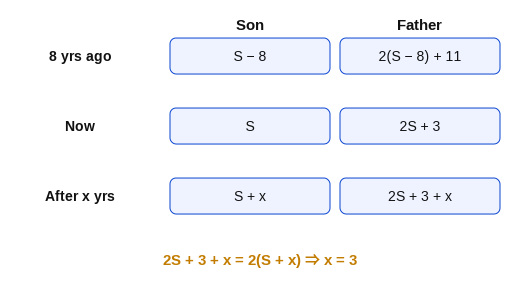
8 years ago, the age of a father was 11 years more than twice his son's age. After how many years, from now, will he be twice his son's age?
8 वर्ष पहले, पिता की आयु उसके पुत्र की आयु के दोगुने से 11 वर्ष अधिक थी। अब से कितने वर्ष बाद, वह अपने पुत्र की आयु का दोगुना होगा?
  1. A3
  2. B7
  3. C4
  4. D2
Show answer

Concept: Write both present ages with one variable and use the given condition.

  1. Let son's present age =S. Eight years ago: F−8=2(S−8)+11⇒F=2S+3.
  2. After x years: F+x=2(S+x)⇒2S+3+x=2S+2x.
  3. ⇒x=3 years.

Trick: If F=2S+k now, the father becomes exactly twice the son after k years. Here k=3.

Answer: (A) 3

अवधारणा: दोनों की वर्तमान आयु एक चर में लिखकर शर्त लगाएँ।

  1. पुत्र की वर्तमान आयु =S। 8 वर्ष पहले: F−8=2(S−8)+11⇒F=2S+3।
  2. x वर्ष बाद: F+x=2(S+x)⇒2S+3+x=2S+2x।
  3. ⇒x=3 वर्ष।

ट्रिक: यदि अभी F=2S+k है, तो k वर्ष बाद पिता ठीक दोगुना होगा। यहाँ k=3।

उत्तर: (A) 3

RRB NTPC Undergraduate CBT 1MathematicsAgesRRB NTPC Undergraduate CBT 1 2024 · 9 Sep Shift 3 →
Q4067.
Find the simple interest (in ₹) if a sum of ₹400 is borrowed for 6.5 years at 4% per annum rate of interest.
यदि ₹400 की राशि 4% वार्षिक ब्याज दर पर 6.5 वर्ष के लिए उधार ली जाती है, तो साधारण ब्याज (₹ में) ज्ञात कीजिए।
  1. A154
  2. B84
  3. C204
  4. D104
Show answer

Concept: SI=P×R×T100

  1. P=400, R=4%, T=6.5 years.
  2. SI=400×4×6.5100=4×26=104.

Trick: 4% of ₹400 = ₹16 per year; 16×6.5=104.

Answer: (D) ₹104

अवधारणा: साधारण ब्याज=P×R×T100

  1. P=400, R=4%, T=6.5 वर्ष।
  2. SI=400×4×6.5100=4×26=104।

ट्रिक: ₹400 का 4% = ₹16 प्रति वर्ष; 16×6.5=104।

उत्तर: (D) ₹104

RRB NTPC Undergraduate CBT 1MathematicsSimple InterestRRB NTPC Undergraduate CBT 1 2024 · 9 Sep Shift 3 →
Q4068.
9 men can complete a piece of work in 16 days, while 5 women can do it in 18 days. In how many days can 2 women and 4 men complete the work?
9 पुरुष एक कार्य को 16 दिनों में पूरा कर सकते हैं, जबकि 5 महिलाएँ उसे 18 दिनों में कर सकती हैं। 2 महिलाएँ और 4 पुरुष उस कार्य को कितने दिनों में पूरा कर सकते हैं?
  1. A18 days18 दिन
  2. B16 days16 दिन
  3. C15 days15 दिन
  4. D20 days20 दिन
Show answer

Concept: Convert everything into one day's work of one person.

  1. Total work =9×16=144 man-days =5×18=90 woman-days.
  2. 1 man's 1-day work =1144, 1 woman's =190.
  3. 2 women +4 men per day =290+4144=145+136=4+5180=120.
  4. Time =20 days.

Trick: Take total work =LCM(144,90)=720: man =5, woman =8 units/day; 4×5+2×8=36; 720÷36=20.

Answer: (D) 20 days

अवधारणा: सब कुछ एक व्यक्ति के एक दिन के कार्य में बदलें।

  1. कुल कार्य =9×16=144 पुरुष-दिवस =5×18=90 महिला-दिवस।
  2. 1 पुरुष का 1 दिन का कार्य =1144, 1 महिला का =190।
  3. 2 महिलाएँ +4 पुरुष प्रतिदिन =290+4144=145+136=120।
  4. समय =20 दिन।

ट्रिक: कुल कार्य =720 इकाई: पुरुष =5, महिला =8 इकाई/दिन; 4×5+2×8=36; 720÷36=20।

उत्तर: (D) 20 दिन

RRB NTPC Undergraduate CBT 1MathematicsTime and WorkRRB NTPC Undergraduate CBT 1 2024 · 9 Sep Shift 3 →
Q4069.
The current population of a town is 15,250. It increases by 25% and 60% in two successive years but decreases by 57% in the third year. What is the population of the town at the end of the third year?
एक कस्बे की वर्तमान जनसंख्या 15,250 है। यह लगातार दो वर्षों में 25% और 60% बढ़ती है, लेकिन तीसरे वर्ष में 57% घट जाती है। तीसरे वर्ष के अंत में कस्बे की जनसंख्या कितनी है?
  1. A13,115
  2. B13,118
  3. C13,110
  4. D13,111
Show answer

Concept: Successive percentage changes multiply: P3=P×(1+r1100)(1+r2100)(1−r3100).

  1. After year 1: 15250×1.25=19062.5.
  2. After year 2: 19062.5×1.6=30500.
  3. After year 3: 30500×0.43=13115.

Trick: 1.25×1.6=2, so just do 15250×2×0.43=13115.

Answer: (A) 13,115

अवधारणा: क्रमिक प्रतिशत परिवर्तन गुणा होते हैं: P3=P×(1+r1100)(1+r2100)(1−r3100)।

  1. पहले वर्ष बाद: 15250×1.25=19062.5।
  2. दूसरे वर्ष बाद: 19062.5×1.6=30500।
  3. तीसरे वर्ष बाद: 30500×0.43=13115।

ट्रिक: 1.25×1.6=2, अतः सीधे 15250×2×0.43=13115।

उत्तर: (A) 13,115

RRB NTPC Undergraduate CBT 1MathematicsPopulation – successive changeRRB NTPC Undergraduate CBT 1 2024 · 9 Sep Shift 3 →
Q4070.
The value of 25+(11+49)−45 is
25+(11+49)−45 का मान है
  1. A1965
  2. B2073
  3. C2467
  4. D1259
Show answer

Concept: Simplify the complex fraction (inner bracket) first, then add/subtract.

  1. 1+49=139, so 1139=913.
  2. 25−45=−25.
  3. 913−25=45−2665=1965.

Trick: Denominators 13 and 5 → answer must have 65 below; only option (A) has it.

Answer: (A) 1965

अवधारणा: पहले भीतर की जटिल भिन्न सरल करें, फिर जोड़-घटाव करें।

  1. 1+49=139, अतः 1139=913।
  2. 25−45=−25।
  3. 913−25=45−2665=1965।

ट्रिक: हर 13 और 5 → उत्तर का हर 65 होगा; केवल (A) में है।

उत्तर: (A) 1965

RRB NTPC Undergraduate CBT 1MathematicsSimplification – fractionsRRB NTPC Undergraduate CBT 1 2024 · 9 Sep Shift 3 →
Q4071.
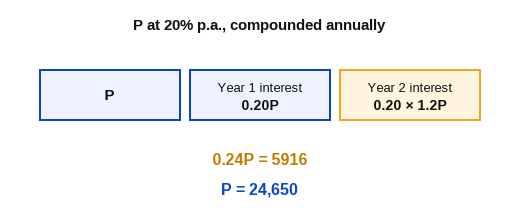
If the interest earned during the 2nd year on a certain sum is ₹5,916, and the rate of interest is 20% per annum compounded annually, then the sum is:
यदि किसी निश्चित राशि पर दूसरे वर्ष के दौरान अर्जित ब्याज ₹5,916 है, और ब्याज दर 20% वार्षिक, वार्षिक रूप से चक्रवृद्धि है, तो राशि है:
  1. A₹24,650
  2. B₹23,995
  3. C₹24,870
  4. D₹25,540
Show answer

Concept: In compound interest, the 2nd year's interest is earned on (principal + 1st year's interest).

  1. 1st year interest =20% of P=0.2P; amount =1.2P.
  2. 2nd year interest =20% of 1.2P=0.24P.
  3. 0.24P=5916⇒P=59160.24=24650.

Trick: 2nd-year CI =P×R100×(1+R100); check options: 24650×0.24=5916.

Answer: (A) ₹24,650

अवधारणा: चक्रवृद्धि ब्याज में दूसरे वर्ष का ब्याज (मूलधन + पहले वर्ष का ब्याज) पर लगता है।

  1. पहले वर्ष का ब्याज =P का 20%=0.2P; मिश्रधन =1.2P।
  2. दूसरे वर्ष का ब्याज =1.2P का 20%=0.24P।
  3. 0.24P=5916⇒P=59160.24=24650।

ट्रिक: दूसरे वर्ष का CI =P×R100×(1+R100); जाँच: 24650×0.24=5916।

उत्तर: (A) ₹24,650

RRB NTPC Undergraduate CBT 1MathematicsCompound InterestRRB NTPC Undergraduate CBT 1 2024 · 9 Sep Shift 3 →
Q4072.
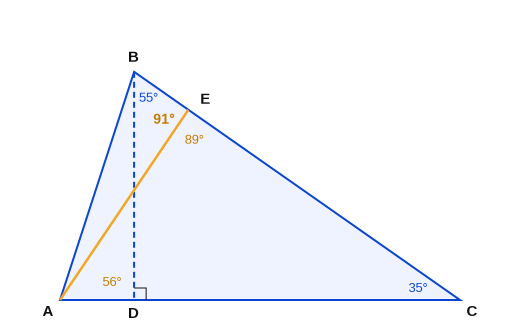
In △ABC, BD ⟂ AC at D and ∠DBC = 55°. E is a point on BC such that ∠CAE = 56°. What is the measure of ∠AEB?
△ABC में, BD ⟂ AC, D पर है और ∠DBC = 55° है। E, BC पर एक बिंदु इस प्रकार है कि ∠CAE = 56° है। ∠AEB का माप क्या है?
  1. A88°
  2. B90°
  3. C85°
  4. D91°
Show answer

Concept: Angle sum of a triangle =180∘; an exterior angle equals the sum of the two opposite interior angles.

  1. In right △BDC: ∠C=180∘−90∘−55∘=35∘.
  2. In △AEC: ∠AEC=180∘−56∘−35∘=89∘.
  3. ∠AEB=180∘−89∘=91∘ (linear pair on BC).

Trick: Exterior angle: ∠AEB=∠EAC+∠C=56∘+35∘=91∘.

Answer: (D) 91∘

अवधारणा: त्रिभुज के कोणों का योग =180∘; बहिष्कोण = दो सम्मुख अंतःकोणों का योग।

  1. समकोण △BDC में: ∠C=180∘−90∘−55∘=35∘।
  2. △AEC में: ∠AEC=180∘−56∘−35∘=89∘।
  3. ∠AEB=180∘−89∘=91∘ (BC पर रैखिक युग्म)।

ट्रिक: बहिष्कोण: ∠AEB=∠EAC+∠C=56∘+35∘=91∘।

उत्तर: (D) 91∘

RRB NTPC Undergraduate CBT 1MathematicsGeometry – TrianglesRRB NTPC Undergraduate CBT 1 2024 · 9 Sep Shift 3 →
Q4073.
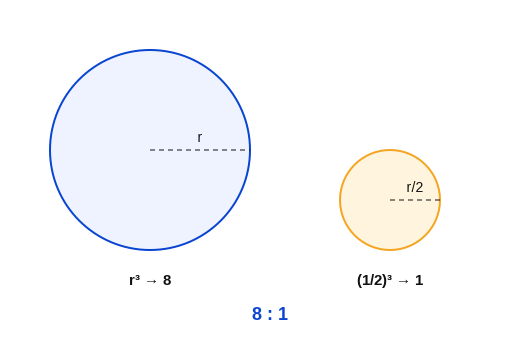
If the radius of a sphere is halved, then find the ratio of volume of the original sphere with that of the new sphere.
यदि किसी गोले की त्रिज्या आधी कर दी जाए, तो मूल गोले के आयतन का नए गोले के आयतन से अनुपात ज्ञात कीजिए।
  1. A4 : 1
  2. B8 : 1
  3. C16 : 1
  4. D2 : 1
Show answer

Concept: V=43πr3, so volume is proportional to r3.

  1. New radius =r2.
  2. V1V2=r3(r2)3=r3r38=8.
  3. Ratio =8:1.

Trick: Radius ratio a:b → volume ratio a3:b3; 2:1⇒8:1.

Answer: (B) 8:1

अवधारणा: V=43πr3, अतः आयतन r3 के समानुपाती है।

  1. नई त्रिज्या =r2।
  2. V1V2=r3(r2)3=8।
  3. अनुपात =8:1।

ट्रिक: त्रिज्या अनुपात a:b → आयतन अनुपात a3:b3; 2:1⇒8:1।

उत्तर: (B) 8:1

RRB NTPC Undergraduate CBT 1MathematicsMensuration – SphereRRB NTPC Undergraduate CBT 1 2024 · 9 Sep Shift 3 →
Q4074.
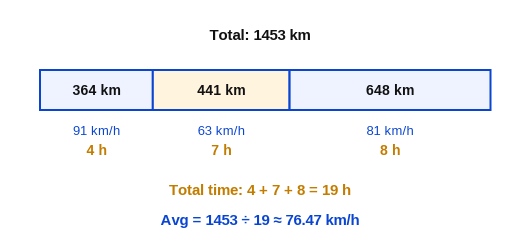
Zeeshan travels 364 km at 91 km/hr, the next 441 km at 63 km/hr and the next 648 km at 81 km/hr. What is his average speed (in km/hr) for the whole journey? (Round off your answer to two decimal places)
ज़ीशान 364 km की दूरी 91 km/hr की चाल से, अगली 441 km की दूरी 63 km/hr की चाल से और अगली 648 km की दूरी 81 km/hr की चाल से तय करता है। पूरी यात्रा के लिए उसकी औसत चाल (km/hr में) क्या है? (अपने उत्तर को दशमलव के दो स्थानों तक पूर्णांकित कीजिए)
  1. A76.47
  2. B69.95
  3. C72.94
  4. D79.14
Show answer

Concept: Average speed=Total distanceTotal time

  1. Times: 36491=4 h, 44163=7 h, 64881=8 h; total =19 h.
  2. Total distance =364+441+648=1453km.
  3. Average speed =145319≈76.47km/h.

Trick: Every distance divides exactly by its speed – find the hours first, never average the speeds.

Answer: (A) 76.47

अवधारणा: औसत चाल=कुल दूरीकुल समय

  1. समय: 36491=4 घंटे, 44163=7 घंटे, 64881=8 घंटे; कुल =19 घंटे।
  2. कुल दूरी =364+441+648=1453km।
  3. औसत चाल =145319≈76.47km/h।

ट्रिक: हर दूरी अपनी चाल से पूरी विभाजित है – पहले घंटे निकालें, चालों का सीधा औसत कभी न लें।

उत्तर: (A) 76.47

RRB NTPC Undergraduate CBT 1MathematicsSpeed – Average speedRRB NTPC Undergraduate CBT 1 2024 · 9 Sep Shift 3 →
Q4075.
Given that 730.51 = x, 730.73= y and xz = y10, then the value of z is close to:
यदि 730.51 = x, 730.73= y और xz = y10 है, तो z का मान लगभग है:
  1. A14.22
  2. B13.77
  3. C14.31
  4. D16.92
Show answer

Concept: (am)n=amn; equal bases ⇒ equal exponents.

  1. xz=(730.51)z=730.51z.
  2. y10=(730.73)10=737.3.
  3. 0.51z=7.3⇒z=7.30.51≈14.31.

Trick: z=73051; 51×14=714, remainder 16 → 14.31.

Answer: (C) 14.31

अवधारणा: (am)n=amn; आधार समान ⇒ घातांक समान।

  1. xz=(730.51)z=730.51z।
  2. y10=(730.73)10=737.3।
  3. 0.51z=7.3⇒z=7.30.51≈14.31।

ट्रिक: z=73051; 51×14=714, शेष 16 → 14.31।

उत्तर: (C) 14.31

RRB NTPC Undergraduate CBT 1MathematicsIndicesRRB NTPC Undergraduate CBT 1 2024 · 9 Sep Shift 3 →
Q4076.
The LCM of the numbers 3.9 and 0.169 is:
संख्याओं 3.9 और 0.169 का LCM है:
  1. A5.07
  2. B507
  3. C0.507
  4. D50.7
Show answer

Concept: Make the decimal places equal, find the LCM of the whole numbers, then put the decimal back.

  1. Write both with 3 decimal places: 3.900 and 0.169 → 3900 and 169 (thousandths).
  2. 3900=22×3×52×13, 169=132.
  3. LCM=22×3×52×132=50700.
  4. Put back 3 decimal places: 50700÷1000=50.7.

Trick: LCM of decimals is a multiple of both numbers – check: 50.7÷3.9=13 and 50.7÷0.169=300 ✓.

Answer: (D) 50.7

अवधारणा: दशमलव स्थान बराबर करें, पूर्णांकों का LCM निकालें, फिर दशमलव वापस लगाएँ।

  1. दोनों को 3 दशमलव स्थान तक लिखें: 3.900 और 0.169 → 3900 और 169 (हज़ारवाँ भाग)।
  2. 3900=22×3×52×13, 169=132।
  3. LCM=22×3×52×132=50700।
  4. 3 दशमलव स्थान वापस: 50700÷1000=50.7।

ट्रिक: जाँच: 50.7÷3.9=13 और 50.7÷0.169=300 – दोनों पूर्ण विभाज्य ✓।

उत्तर: (D) 50.7

RRB NTPC Undergraduate CBT 1MathematicsLCM of DecimalsRRB NTPC Undergraduate CBT 1 2024 · 9 Sep Shift 3 →
Q4077.
Find the value of 1sec2A+11+cot2A.
1sec2A+11+cot2A का मान ज्ञात कीजिए।
  1. A0
  2. B1
  3. Ctan2A
  4. D12
Show answer

Concept: Use sec2A=1cos2A and 1+cot2A=csc2A.

  1. 1sec2A=cos2A.
  2. 11+cot2A=1csc2A=sin2A.
  3. Sum =cos2A+sin2A=1.

Trick: Put A=45∘: 12+12=1 instantly.

Answer: (B) 1

अवधारणा: sec2A=1cos2A तथा 1+cot2A=csc2A का प्रयोग करें।

  1. 1sec2A=cos2A।
  2. 11+cot2A=1csc2A=sin2A।
  3. योग =cos2A+sin2A=1।

ट्रिक: A=45∘ रखें: 12+12=1।

उत्तर: (B) 1

RRB NTPC Undergraduate CBT 1MathematicsTrigonometric IdentitiesRRB NTPC Undergraduate CBT 1 2024 · 9 Sep Shift 3 →
Q4078.
A can lay railway track between two given stations in 17 days and B can do the same job in 12 days. With the help of C, they did the job in 2 days only. Then, C alone can do the job in
A दो दिए गए स्टेशनों के बीच रेल पटरी 17 दिनों में बिछा सकता है और B यही कार्य 12 दिनों में कर सकता है। C की सहायता से, उन्होंने यह कार्य केवल 2 दिनों में कर दिया। तो, C अकेले यह कार्य कितने समय में कर सकता है?
  1. A75873 days75873 दिन
  2. B105873 days105873 दिन
  3. C65873 days65873 दिन
  4. D25873 days25873 दिन
Show answer

Concept: One-day work of C = combined one-day work − (A's + B's one-day work).

  1. One-day work: A =117, B =112, A+B+C =12.
  2. C =12−117−112=102−12−17204=73204.
  3. Days for C =20473=25873 days.

Trick: All three together take 2 days, so C alone must take a little more than 2 days – only option (D) fits.

Answer: (D) 25873 days

अवधारणा: C का एक दिन का काम = तीनों का एक दिन का काम − (A + B का एक दिन का काम)।

  1. एक दिन का काम: A =117, B =112, A+B+C =12।
  2. C =12−117−112=102−12−17204=73204।
  3. C के दिन =20473=25873 दिन।

ट्रिक: तीनों मिलकर 2 दिन लेते हैं, तो C अकेला 2 दिन से थोड़ा अधिक लेगा – केवल (D) सही बैठता है।

उत्तर: (D) 25873 दिन

RRB NTPC Undergraduate CBT 1MathematicsTime and WorkRRB NTPC Undergraduate CBT 1 2024 · 9 Sep Shift 3 →
Q4079.
Find the difference between a discount of 32% on an item marked for ₹1,000 and two successive discounts of 20% and 12% on the same item.
₹1,000 अंकित मूल्य वाली एक वस्तु पर 32% की छूट तथा उसी वस्तु पर 20% और 12% की दो क्रमिक छूटों के बीच का अंतर ज्ञात कीजिए।
  1. A₹20
  2. B₹24
  3. C₹22
  4. D₹26
Show answer

Concept: Successive discounts a% and b% = single discount a+b−ab100 %.

  1. Single 32% discount on ₹1000 = ₹320.
  2. Successive: 20+12−20×12100=29.6% → ₹296.
  3. Difference =320−296= ₹24.

Trick: Difference = ab100% of MP =2.4% of ₹1000 = ₹24.

Answer: (B) ₹24

अवधारणा: क्रमागत छूट a% व b% = एकल छूट a+b−ab100 %।

  1. ₹1000 पर एकल 32% छूट = ₹320।
  2. क्रमागत: 20+12−20×12100=29.6% → ₹296।
  3. अंतर =320−296= ₹24।

ट्रिक: अंतर = अंकित मूल्य का ab100%=2.4% = ₹24।

उत्तर: (B) ₹24

RRB NTPC Undergraduate CBT 1MathematicsSuccessive DiscountsRRB NTPC Undergraduate CBT 1 2024 · 9 Sep Shift 3 →
Q4080.
The average runs scored by a batsman in 23 matches is 42. In the next 10 matches, the batsman scored an average of 16 runs. Find his average runs scored (rounded off to two decimal places) in all the 33 matches.
एक बल्लेबाज़ द्वारा 23 मैचों में बनाए गए औसत रन 42 हैं। अगले 10 मैचों में, बल्लेबाज़ ने औसतन 16 रन बनाए। सभी 33 मैचों में उसके द्वारा बनाए गए औसत रन (दशमलव के दो स्थानों तक पूर्णांकित) ज्ञात कीजिए।
  1. A35.12
  2. B34.12
  3. C33.12
  4. D36.12
Show answer

Concept: Overall average = total runs ÷ total matches.

  1. First 23 matches: 23×42=966.
  2. Next 10 matches: 10×16=160.
  3. Average =966+16033=112633=34.12.

Trick: Deviation method: 42−10×(42−16)33=42−7.88=34.12.

Answer: (B) 34.12

अवधारणा: कुल औसत = कुल रन ÷ कुल मैच।

  1. पहले 23 मैच: 23×42=966।
  2. अगले 10 मैच: 10×16=160।
  3. औसत =966+16033=112633=34.12।

ट्रिक: विचलन विधि: 42−10×(42−16)33=42−7.88=34.12।

उत्तर: (B) 34.12

RRB NTPC Undergraduate CBT 1MathematicsAverageRRB NTPC Undergraduate CBT 1 2024 · 9 Sep Shift 3 →