Question bank

Q&A: practice questions with answers

Search questions on any topic. Filter by exam category, exam, subject and topic, try the question, then open the answer and explanation.

Courses – airGurukul

20,719 questions found.

Q4101.
YELP is related to BZOK in a certain way based on the English alphabetical order. In the same way, EURF is related to HPUA. To which of the given options is KKXV related, following the same logic?
अंग्रेज़ी वर्णमाला क्रम के आधार पर YELP एक निश्चित प्रकार से BZOK से संबंधित है। उसी प्रकार, EURF, HPUA से संबंधित है। समान तर्क का अनुसरण करते हुए, KKXV दिए गए विकल्पों में से किससे संबंधित है?
  1. AMDAP
  2. BNFAQ
  3. CMEBR
  4. DOGZP
Show answer

Concept: Find the shift of each letter using place values (A = 1 … Z = 26).

  1. YELP → BZOK: Y+3 = B, E−5 = Z, L+3 = O, P−5 = K.
  2. EURF → HPUA: E+3 = H, U−5 = P, R+3 = U, F−5 = A ✓.
  3. KKXV: K+3 = N, K−5 = F, X+3 = A, V−5 = Q → NFAQ.

Trick: Pattern +3, −5, +3, −5; wrap around after Z (X+3 = A).

Answer: (B) NFAQ

अवधारणा: स्थानीय मान (A = 1 … Z = 26) से हर अक्षर का खिसकाव देखें।

  1. YELP → BZOK: Y+3 = B, E−5 = Z, L+3 = O, P−5 = K।
  2. EURF → HPUA: E+3 = H, U−5 = P, R+3 = U, F−5 = A ✓।
  3. KKXV: K+3 = N, K−5 = F, X+3 = A, V−5 = Q → NFAQ।

ट्रिक: पैटर्न +3, −5, +3, −5; Z के बाद फिर A से गिनें (X+3 = A)।

उत्तर: (B) NFAQ
RRB NTPC Undergraduate CBT 1General Intelligence and ReasoningLetter CodingRRB NTPC Undergraduate CBT 1 2024 · 9 Sep Shift 3 →
Q4102.
Each of the digits in the number 257146983 is arranged in ascending order from left to right. What will be the sum of the digits which are third from the left and second from the right in the new number thus formed?
संख्या 257146983 के प्रत्येक अंक को बाएँ से दाएँ आरोही क्रम में व्यवस्थित किया जाता है। इस प्रकार बनी नई संख्या में बाएँ से तीसरे और दाएँ से दूसरे अंकों का योग क्या होगा?
  1. A13
  2. B12
  3. C11
  4. D10
Show answer

Concept: Arrange the digits in ascending order and pick positions.

  1. 257146983 → 123456789.
  2. Third from left = 3; second from right = 8.
  3. Sum =3+8=11.

Trick: Digits 1–9 each once → position from left equals the digit itself.

Answer: (C) 11

अवधारणा: अंकों को आरोही क्रम में लगाएँ और स्थान चुनें।

  1. 257146983 → 123456789।
  2. बाएँ से तीसरा = 3; दाएँ से दूसरा = 8।
  3. योग =3+8=11।

ट्रिक: 1–9 प्रत्येक एक बार → बाएँ से स्थान = वही अंक।

उत्तर: (C) 11

RRB NTPC Undergraduate CBT 1General Intelligence and ReasoningDigit ArrangementRRB NTPC Undergraduate CBT 1 2024 · 9 Sep Shift 3 →
Q4103.
JGCK is related to HEAI in a certain way based on the English alphabetical order. In the same way, MJFN is related to KHDL. To which of the given options is PMIQ related, following the same logic?
अंग्रेज़ी वर्णमाला क्रम के आधार पर JGCK एक निश्चित प्रकार से HEAI से संबंधित है। उसी प्रकार, MJFN, KHDL से संबंधित है। समान तर्क का अनुसरण करते हुए, PMIQ दिए गए विकल्पों में से किससे संबंधित है?
  1. ANKHO
  2. BNKHP
  3. CNKGO
  4. DNKGP
Show answer

Concept: Compare each letter with its code letter.

  1. JGCK → HEAI: each letter −2.
  2. MJFN → KHDL: each letter −2 ✓.
  3. PMIQ → N K G O.

Trick: Uniform shift: just move every letter two steps back.

Answer: (C) NKGO

अवधारणा: हर अक्षर की उसके कोड से तुलना करें।

  1. JGCK → HEAI: हर अक्षर −2।
  2. MJFN → KHDL: हर अक्षर −2 ✓।
  3. PMIQ → N K G O।

ट्रिक: समान खिसकाव: हर अक्षर दो स्थान पीछे।

उत्तर: (C) NKGO

RRB NTPC Undergraduate CBT 1General Intelligence and ReasoningLetter CodingRRB NTPC Undergraduate CBT 1 2024 · 9 Sep Shift 3 →
Q4104.
Seven people, B, C, D, E, F, G and L, are sitting in a row facing North. Only three people sit between D and G. C sits to the immediate left of G. No one sits to the right of L. Only two people sit between L and C. B sits to the immediate right of E. How many people sit between F and B?
सात व्यक्ति B, C, D, E, F, G और L एक पंक्ति में उत्तर की ओर मुख करके बैठे हैं। D और G के बीच केवल तीन व्यक्ति बैठे हैं। C, G के ठीक बाएँ बैठा है। L के दाएँ कोई नहीं बैठा है। L और C के बीच केवल दो व्यक्ति बैठे हैं। B, E के ठीक दाएँ बैठा है। F और B के बीच कितने व्यक्ति बैठे हैं?
  1. ATwoदो
  2. BThreeतीन
  3. COneएक
  4. DFourचार
Show answer

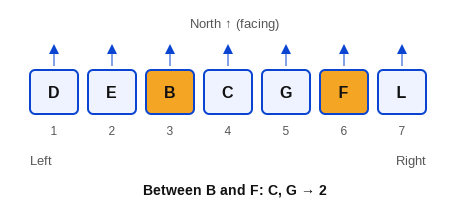
Concept: Facing north, left/right are the viewer's left/right. Fix the end person first.

  1. No one right of L → L = 7. Two between L and C → C = 4; G immediately right of C → G = 5.
  2. Three between D and G → D = 1.
  3. E–B pair (B immediately right of E) fits only 2–3 → E = 2, B = 3; F = 6.
  4. Between B (3) and F (6): C, G → two.

Trick: Place the end person and the fixed pair; the rest drops into the gaps.

Answer: (A) Two

अवधारणा: उत्तर की ओर मुख होने पर बायाँ/दायाँ हमारे बायाँ/दायाँ ही है। पहले छोर वाले व्यक्ति को रखें।

  1. L के दाएँ कोई नहीं → L = 7। L और C के बीच दो → C = 4; G, C के ठीक दाएँ → G = 5।
  2. D और G के बीच तीन → D = 1।
  3. E–B जोड़ा (B, E के ठीक दाएँ) केवल 2–3 पर → E = 2, B = 3; F = 6।
  4. B (3) और F (6) के बीच: C, G → दो।

ट्रिक: छोर वाला व्यक्ति और निश्चित जोड़ा पहले रखें; बाकी खाली स्थानों में आ जाते हैं।

उत्तर: (A) दो

RRB NTPC Undergraduate CBT 1General Intelligence and ReasoningLinear SeatingRRB NTPC Undergraduate CBT 1 2024 · 9 Sep Shift 3 →
Q4105.
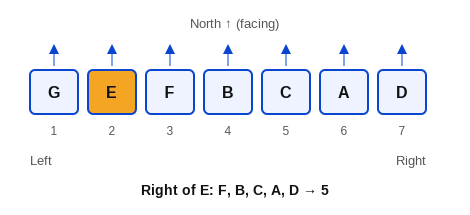
Seven people A, B, C, D, E, F and G are sitting in a row, facing north.
No one sits to the right of D. Only three people sit between D and F. Only two people sit between F and A. G sits third to the left of B. C sits to the immediate right of B. How many people sit to the right of E?
सात व्यक्ति A, B, C, D, E, F और G एक पंक्ति में उत्तर की ओर मुख करके बैठे हैं।
D के दाएँ कोई नहीं बैठा है। D और F के बीच केवल तीन व्यक्ति बैठे हैं। F और A के बीच केवल दो व्यक्ति बैठे हैं। G, B के बाएँ से तीसरे स्थान पर बैठा है। C, B के ठीक दाएँ बैठा है। E के दाएँ कितने व्यक्ति बैठे हैं?
  1. A2
  2. B3
  3. C4
  4. D5
Show answer

Concept: Facing north; number seats 1 (left) to 7 (right).

  1. No one right of D → D = 7. Three between D and F → F = 3. Two between F and A → A = 6.
  2. G third to the left of B and C immediately right of B → G = 1, B = 4, C = 5.
  3. E takes the remaining seat 2.
  4. Right of E: F, B, C, A, D → 5 people.

Trick: Seat 2 means 7−2=5 people to the right.

Answer: (D) 5

अवधारणा: उत्तर की ओर मुख; सीटें 1 (बाएँ) से 7 (दाएँ)।

  1. D के दाएँ कोई नहीं → D = 7। D और F के बीच तीन → F = 3। F और A के बीच दो → A = 6।
  2. G, B के बाएँ से तीसरा और C, B के ठीक दाएँ → G = 1, B = 4, C = 5।
  3. E शेष सीट 2 पर।
  4. E के दाएँ: F, B, C, A, D → 5 लोग।

ट्रिक: सीट 2 पर बैठे व्यक्ति के दाएँ 7−2=5 लोग।

उत्तर: (D) 5

RRB NTPC Undergraduate CBT 1General Intelligence and ReasoningLinear SeatingRRB NTPC Undergraduate CBT 1 2024 · 9 Sep Shift 3 →
Q4106.
If ‘A’ stands for ‘÷’, ‘B’ stands for ‘×’, ‘C’ stands for ‘+’ and ‘D’ stands for ‘−’, what will come in place of the question mark (?) in the following equation?
23 D 16 A 4 C 6 B 2 = ?
यदि 'A' का अर्थ '÷', 'B' का अर्थ '×', 'C' का अर्थ '+' और 'D' का अर्थ '−' है, तो निम्नलिखित समीकरण में प्रश्न चिह्न (?) के स्थान पर क्या आएगा?
23 D 16 A 4 C 6 B 2 = ?
  1. A14
  2. B37
  3. C31
  4. D26
Show answer

Concept: Replace the letters by signs and apply BODMAS.

  1. 23 D 16 A 4 C 6 B 2 → 23−16÷4+6×2.
  2. =23−4+12.
  3. =31.

Trick: Do ÷ and × first, then + and −.

Answer: (C) 31

अवधारणा: अक्षरों के स्थान पर चिह्न रखें और BODMAS लगाएँ।

  1. 23 D 16 A 4 C 6 B 2 → 23−16÷4+6×2।
  2. =23−4+12।
  3. =31।

ट्रिक: पहले ÷ और ×, फिर + और −।

उत्तर: (C) 31

RRB NTPC Undergraduate CBT 1General Intelligence and ReasoningMathematical OperationsRRB NTPC Undergraduate CBT 1 2024 · 9 Sep Shift 3 →
Q4107.
Each of the digits in the number 7452318 is arranged in ascending order from left to right. What will be the sum of the digits which are second from the left and second from the right in the new number thus formed?
संख्या 7452318 के प्रत्येक अंक को बाएँ से दाएँ आरोही क्रम में व्यवस्थित किया जाता है। इस प्रकार बनी नई संख्या में बाएँ से दूसरे और दाएँ से दूसरे अंकों का योग क्या होगा?
  1. A9
  2. B8
  3. C10
  4. D11
Show answer

Concept: Arrange digits in ascending order and pick positions.

  1. 7452318 → 1234578.
  2. Second from left = 2; second from right = 7.
  3. Sum =2+7=9.

Trick: Note 6 is missing, so don't assume position = digit on the right side.

Answer: (A) 9

अवधारणा: अंकों को आरोही क्रम में लगाएँ और स्थान चुनें।

  1. 7452318 → 1234578।
  2. बाएँ से दूसरा = 2; दाएँ से दूसरा = 7।
  3. योग =2+7=9।

ट्रिक: 6 नहीं है, इसलिए दाएँ ओर स्थान = अंक मत मानें।

उत्तर: (A) 9

RRB NTPC Undergraduate CBT 1General Intelligence and ReasoningDigit ArrangementRRB NTPC Undergraduate CBT 1 2024 · 9 Sep Shift 3 →
Q4108.
Which of the following letter-number clusters will replace the question mark (?) in the given series to make it logically complete?
EXN 12, IBR 23, MFV 34, QJZ 45, ?
दी गई श्रृंखला को तार्किक रूप से पूर्ण बनाने के लिए निम्नलिखित में से कौन-सा अक्षर-संख्या समूह प्रश्न चिह्न (?) का स्थान लेगा?
EXN 12, IBR 23, MFV 34, QJZ 45, ?
  1. AUND 56
  2. BSNB 57
  3. CTMC 54
  4. DUMB 56
Show answer

Concept: Check each letter position and the number separately.

  1. 1st letters: E, I, M, Q, U (+4).
  2. 2nd letters: X, B, F, J, N (+4); 3rd letters: N, R, V, Z, D (+4).
  3. Numbers: 12, 23, 34, 45, 56 (+11). → UND 56.

Trick: Every letter moves +4; wrap Z+4 = D.

Answer: (A) UND 56

अवधारणा: हर अक्षर स्थान और संख्या को अलग-अलग देखें।

  1. पहले अक्षर: E, I, M, Q, U (+4)।
  2. दूसरे अक्षर: X, B, F, J, N (+4); तीसरे: N, R, V, Z, D (+4)।
  3. संख्याएँ: 12, 23, 34, 45, 56 (+11)। → UND 56।

ट्रिक: हर अक्षर +4; Z+4 = D (फिर से A से गिनें)।

उत्तर: (A) UND 56

RRB NTPC Undergraduate CBT 1General Intelligence and ReasoningAlphanumeric SeriesRRB NTPC Undergraduate CBT 1 2024 · 9 Sep Shift 3 →
Q4109.
In a certain code language, ‘DIRT’ is coded as ‘5274’ and ‘TIDY’ is coded as ‘4352’. What is the code for ‘Y’ in the given code language?
एक निश्चित कूट भाषा में, 'DIRT' को '5274' के रूप में कूटबद्ध किया जाता है और 'TIDY' को '4352' के रूप में कूटबद्ध किया जाता है। दी गई कूट भाषा में 'Y' के लिए कूट क्या है?
  1. A2
  2. B5
  3. C4
  4. D3
Show answer

Concept: Letters common to both words share the common digits; the extra letter gets the extra digit.

  1. DIRT → {5, 2, 7, 4}; TIDY → {4, 3, 5, 2}.
  2. Common letters D, I, T ↔ common digits 2, 4, 5.
  3. DIRT's extra R = 7; TIDY's extra Y = 3.

Trick: Cancel common letters and digits – what remains pairs up.

Answer: (D) 3

अवधारणा: दोनों शब्दों के समान अक्षरों के कोड भी समान अंक होंगे; बचा अक्षर = बचा अंक।

  1. DIRT → {5, 2, 7, 4}; TIDY → {4, 3, 5, 2}।
  2. समान अक्षर D, I, T ↔ समान अंक 2, 4, 5।
  3. DIRT का अतिरिक्त R = 7; TIDY का अतिरिक्त Y = 3।

ट्रिक: समान अक्षर व अंक काट दें – जो बचे वे आपस में जोड़ी बनाते हैं।

उत्तर: (D) 3

RRB NTPC Undergraduate CBT 1General Intelligence and ReasoningCoding-DecodingRRB NTPC Undergraduate CBT 1 2024 · 9 Sep Shift 3 →
Q4110.
What should come in place of the question mark (?) in the given series based on the English alphabetical order?
LRY, SQA, ZPC, ?, NNG
अंग्रेज़ी वर्णमाला क्रम के आधार पर दी गई श्रृंखला में प्रश्न चिह्न (?) के स्थान पर क्या आना चाहिए?
LRY, SQA, ZPC, ?, NNG
  1. AJOF
  2. BGOE
  3. CGOF
  4. DJOE
Show answer

Concept: Treat each letter position as its own series.

  1. 1st: L, S, Z, G, N (+7, wrapping Z+7 = G).
  2. 2nd: R, Q, P, O, N (−1).
  3. 3rd: Y, A, C, E, G (+2). → G O E.

Trick: Use the given last term NNG to confirm each position's step.

Answer: (B) GOE

अवधारणा: हर अक्षर स्थान को अलग श्रृंखला मानें।

  1. पहला: L, S, Z, G, N (+7, Z+7 = G)।
  2. दूसरा: R, Q, P, O, N (−1)।
  3. तीसरा: Y, A, C, E, G (+2)। → G O E।

ट्रिक: दिए गए अंतिम पद NNG से हर स्थान का अंतर जाँच लें।

उत्तर: (B) GOE

RRB NTPC Undergraduate CBT 1General Intelligence and ReasoningLetter SeriesRRB NTPC Undergraduate CBT 1 2024 · 9 Sep Shift 3 →
Q4111.
Based on the English alphabetical order, three of the following four letter-cluster pairs are alike in a certain way and thus form a group. Which letter-cluster pair DOES NOT belong to that group?
(Note: The odd one out is not based on the number of consonants/vowels or their position in the letter-cluster pair.)
अंग्रेज़ी वर्णमाला क्रम के आधार पर, निम्नलिखित चार अक्षर-समूह युग्मों में से तीन किसी निश्चित प्रकार से एकसमान हैं और इस प्रकार एक समूह बनाते हैं। कौन-सा अक्षर-समूह युग्म उस समूह से संबंधित नहीं है?
(ध्यान दें: असंगत युग्म, व्यंजनों/स्वरों की संख्या या अक्षर-समूह युग्म में उनके स्थान पर आधारित नहीं है।)
  1. ANR-IA
  2. BCG-XP
  3. CWA-RI
  4. DHL-CU
Show answer

Concept: Compare letter 1 with letter 3 and letter 2 with letter 4 in each pair.

  1. NR-IA: N−5 = I, R+9 = A.
  2. CG-XP: C−5 = X, G+9 = P; HL-CU: H−5 = C, L+9 = U.
  3. WA-RI: W−5 = R, but A+8 = I (not +9) → odd.

Trick: Also first pair has gap +4 in all (NR, CG, WA, HL) – so check the second cluster.

Answer: (C) WA-RI

अवधारणा: हर युग्म में अक्षर 1 की अक्षर 3 से और अक्षर 2 की अक्षर 4 से तुलना करें।

  1. NR-IA: N−5 = I, R+9 = A।
  2. CG-XP: C−5 = X, G+9 = P; HL-CU: H−5 = C, L+9 = U।
  3. WA-RI: W−5 = R, पर A+8 = I (+9 नहीं) → विषम।

ट्रिक: पहले समूह में सबका अंतर +4 है (NR, CG, WA, HL) – इसलिए दूसरा समूह जाँचें।

उत्तर: (C) WA-RI

RRB NTPC Undergraduate CBT 1General Intelligence and ReasoningOdd One Out (Letter Pairs)RRB NTPC Undergraduate CBT 1 2024 · 9 Sep Shift 3 →
Q4112.
What should come in place of the question mark (?) in the given series?
5 7 11 17 25 ?
दी गई श्रृंखला में प्रश्न चिह्न (?) के स्थान पर क्या आना चाहिए?
5 7 11 17 25 ?
  1. A30
  2. B40
  3. C25
  4. D35
Show answer

Concept: Differences increase by 2.

  1. Differences: 2, 4, 6, 8.
  2. Next difference = 10.
  3. 25+10=35.

Trick: Terms =n2−n+5: 62−6+5=35.

Answer: (D) 35

अवधारणा: अंतर 2-2 बढ़ते हैं।

  1. अंतर: 2, 4, 6, 8।
  2. अगला अंतर = 10।
  3. 25+10=35।

ट्रिक: पद =n2−n+5: 62−6+5=35।

उत्तर: (D) 35

RRB NTPC Undergraduate CBT 1General Intelligence and ReasoningNumber SeriesRRB NTPC Undergraduate CBT 1 2024 · 9 Sep Shift 3 →
Q4113.
Read the given statements and conclusions carefully. Assuming that the information given in the statements is true, even if it appears to be at variance with commonly known facts, decide which of the given conclusion(s) logically follow(s) from the statements.
Statements:
All cartons are boxes.
No box is a sheet.
Conclusions:
(I) No carton is a sheet.
(II) Some sheets are boxes.
दिए गए कथनों और निष्कर्षों को ध्यानपूर्वक पढ़िए। यह मानते हुए कि कथनों में दी गई जानकारी सत्य है, भले ही वह सामान्य रूप से ज्ञात तथ्यों से भिन्न प्रतीत होती हो, निर्णय कीजिए कि दिए गए निष्कर्षों में से कौन-सा/कौन-से निष्कर्ष कथनों का तार्किक रूप से अनुसरण करता है/करते हैं।
कथन:
सभी कार्टन, बक्से हैं।
कोई भी बक्सा, शीट नहीं है।
निष्कर्ष:
(I) कोई भी कार्टन, शीट नहीं है।
(II) कुछ शीट, बक्से हैं।
  1. AOnly conclusion (I) follows.केवल निष्कर्ष (I) अनुसरण करता है।
  2. BOnly conclusion (II) follows.केवल निष्कर्ष (II) अनुसरण करता है।
  3. CBoth conclusions (I) and (II) follow.निष्कर्ष (I) और (II) दोनों अनुसरण करते हैं।
  4. DNeither conclusion (I) nor (II) follows.न तो निष्कर्ष (I) और न ही (II) अनुसरण करता है।
Show answer

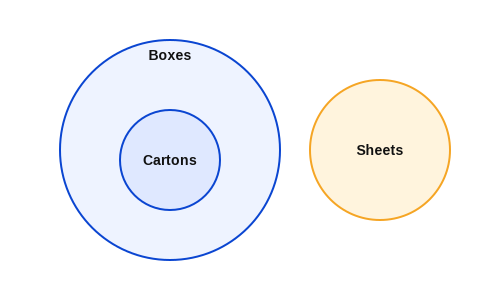
Concept: Draw the least-overlap Venn diagram consistent with the statements.

  1. Cartons lie fully inside Boxes; Boxes and Sheets are separate.
  2. So no carton can be a sheet → I follows.
  3. No box is a sheet, so 'Some sheets are boxes' is false → II does not follow.

Yaad rakhein: All A are B + No B is C ⇒ No A is C (always).

Answer: (A) Only conclusion (I) follows.

अवधारणा: कथनों के अनुसार न्यूनतम ओवरलैप वाला वेन आरेख बनाएँ।

  1. Cartons पूरी तरह Boxes के अंदर; Boxes और Sheets अलग।
  2. अतः कोई carton, sheet नहीं → I अनुसरण करता है।
  3. कोई box, sheet नहीं, अतः 'कुछ sheets, boxes हैं' गलत → II अनुसरण नहीं करता।

याद रखें: सभी A, B हैं + कोई B, C नहीं ⇒ कोई A, C नहीं (हमेशा)।

उत्तर: (A) केवल निष्कर्ष (I) अनुसरण करता है।

RRB NTPC Undergraduate CBT 1General Intelligence and ReasoningSyllogismRRB NTPC Undergraduate CBT 1 2024 · 9 Sep Shift 3 →
Q4114.
Wasim ranked 24th from the top and 29th from the bottom in his class. How many students are there in his class?
वसीम अपनी कक्षा में ऊपर से 24वें और नीचे से 29वें स्थान पर है। उसकी कक्षा में कितने विद्यार्थी हैं?
  1. A53
  2. B50
  3. C51
  4. D52
Show answer

Concept: Total = rank from top + rank from bottom − 1.

  1. Total =24+29−1.
  2. =52.

Trick: Subtract 1 because Wasim is counted in both ranks.

Answer: (D) 52

अवधारणा: कुल = ऊपर से रैंक + नीचे से रैंक − 1।

  1. कुल =24+29−1।
  2. =52।

ट्रिक: 1 घटाते हैं क्योंकि वसीम दोनों रैंकों में गिना गया है।

उत्तर: (D) 52

RRB NTPC Undergraduate CBT 1General Intelligence and ReasoningRankingRRB NTPC Undergraduate CBT 1 2024 · 9 Sep Shift 3 →
Q4115.
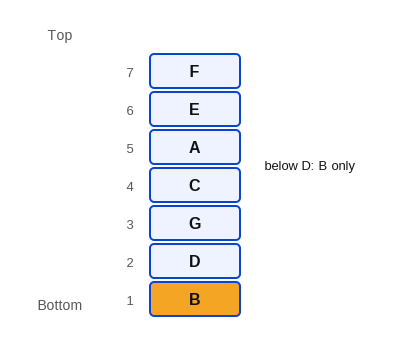
Seven boxes A, B, C, D, E, F and G are kept one over the other but not necessarily in the same order. D is kept second from the bottom. Only three boxes are kept between D and E. B is kept at one of the positions below D. Only A is kept between E and C. F is kept at one of the positions above E. How many boxes are kept below D?
सात बक्से A, B, C, D, E, F और G एक के ऊपर एक रखे गए हैं, लेकिन आवश्यक नहीं कि इसी क्रम में हों। D को नीचे से दूसरे स्थान पर रखा गया है। D और E के बीच केवल तीन बक्से रखे गए हैं। B को D के नीचे के किसी एक स्थान पर रखा गया है। E और C के बीच केवल A रखा गया है। F को E के ऊपर के किसी एक स्थान पर रखा गया है। D के नीचे कितने बक्से रखे गए हैं?
  1. A2
  2. B4
  3. C3
  4. D1
Show answer

Concept: Number positions 1 (bottom) to 7 (top).

  1. D = 2; three between D and E → E = 6.
  2. B below D → B = 1. Only A between E and C → A = 5, C = 4.
  3. F above E → F = 7; G = 3.
  4. Below D: only B → 1 box.

Trick: D is second from bottom, so exactly 1 box is below it – no further work needed.

Answer: (D) 1

अवधारणा: स्थान 1 (नीचे) से 7 (ऊपर)।

  1. D = 2; D और E के बीच तीन → E = 6।
  2. B, D से नीचे → B = 1। E और C के बीच केवल A → A = 5, C = 4।
  3. F, E से ऊपर → F = 7; G = 3।
  4. D से नीचे: केवल B → 1 बॉक्स।

ट्रिक: D नीचे से दूसरा है, तो उसके नीचे ठीक 1 बॉक्स – आगे हल करने की ज़रूरत नहीं।

उत्तर: (D) 1

RRB NTPC Undergraduate CBT 1General Intelligence and ReasoningBox ArrangementRRB NTPC Undergraduate CBT 1 2024 · 9 Sep Shift 3 →
Q4116.
In a certain code language,
'A % B' means ‘A is the daughter of B’,
'A = B' means ‘A is the wife of B’,
'A ¥ B' means ‘A is the father of B’ and
'A # B' means ‘A is the brother of B’.
How is W related to S if 'W % A # K = E ¥ S'?
एक निश्चित कूट भाषा में,
'A % B' का अर्थ है 'A, B की पुत्री है',
'A = B' का अर्थ है 'A, B की पत्नी है',
'A ¥ B' का अर्थ है 'A, B का पिता है' और
'A # B' का अर्थ है 'A, B का भाई है'।
यदि 'W % A # K = E ¥ S' है, तो W का S से क्या संबंध है?
  1. AMother's brother's daughterमाँ के भाई की पुत्री
  2. BMother's brother's sonमाँ के भाई का पुत्र
  3. CMother's brother's wifeमाँ के भाई की पत्नी
  4. DMother's brother's sisterमाँ के भाई की बहन
Show answer

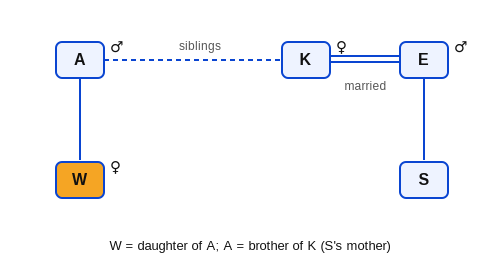
Concept: Decode each symbol and build the family tree.

  1. W % A: W is the daughter of A. A # K: A is the brother of K.
  2. K = E: K is the wife of E. E ¥ S: E is the father of S → K is S's mother.
  3. A is S's mother's brother; W is his daughter.

Trick: Read the chain from S's side: mother (K) → her brother (A) → his daughter (W).

Answer: (A) Mother's brother's daughter

अवधारणा: हर चिह्न का अर्थ लगाकर वंश-वृक्ष बनाएँ।

  1. W % A: W, A की बेटी है। A # K: A, K का भाई है।
  2. K = E: K, E की पत्नी है। E ¥ S: E, S का पिता → K, S की माँ।
  3. A = S की माँ का भाई (मामा); W उसकी बेटी।

ट्रिक: S की ओर से पढ़ें: माँ (K) → उसका भाई (A) → उसकी बेटी (W)।

उत्तर: (A) माँ के भाई की बेटी (Mother's brother's daughter)

RRB NTPC Undergraduate CBT 1General Intelligence and ReasoningBlood Relation (Coded)RRB NTPC Undergraduate CBT 1 2024 · 9 Sep Shift 3 →
Q4117.
What should come in place of the question mark (?) in the given series?
26 38 46 58 66 78 ?
दी गई श्रृंखला में प्रश्न चिह्न (?) के स्थान पर क्या आना चाहिए?
26 38 46 58 66 78 ?
  1. A88
  2. B86
  3. C84
  4. D82
Show answer

Concept: Alternate differences.

  1. Differences: +12, +8, +12, +8, +12.
  2. Next difference = +8.
  3. 78+8=86.

Trick: Two alternating steps: +12, +8.

Answer: (B) 86

अवधारणा: एकांतर अंतर।

  1. अंतर: +12, +8, +12, +8, +12।
  2. अगला अंतर = +8।
  3. 78+8=86।

ट्रिक: दो बारी-बारी चरण: +12, +8।

उत्तर: (B) 86

RRB NTPC Undergraduate CBT 1General Intelligence and ReasoningNumber SeriesRRB NTPC Undergraduate CBT 1 2024 · 9 Sep Shift 3 →
Q4118.
Based on the English alphabetical order, three of the following four letter-cluster pairs are alike in a certain way and thus form a group. Which letter-cluster pair DOES NOT belong to that group?
(Note: The odd one out is not based on the number of consonants/vowels or their position in the letter-cluster.)
अंग्रेज़ी वर्णमाला क्रम के आधार पर, निम्नलिखित चार अक्षर-समूह युग्मों में से तीन किसी निश्चित प्रकार से एकसमान हैं और इस प्रकार एक समूह बनाते हैं। कौन-सा अक्षर-समूह युग्म उस समूह से संबंधित नहीं है?
(ध्यान दें: असंगत युग्म, व्यंजनों/स्वरों की संख्या या अक्षर-समूह में उनके स्थान पर आधारित नहीं है।)
  1. AZC-EH
  2. BFI-KM
  3. CTW-YB
  4. DJM-OR
Show answer

Concept: Check the gap within each cluster and between the clusters.

  1. ZC-EH: Z+3 = C, Z+5 = E, C+5 = H.
  2. TW-YB: +3, +5, +5; JM-OR: +3, +5, +5.
  3. FI-KM: F+3 = I, F+5 = K, but I+4 = M → odd.

Trick: Look at the last letter: H, B, R follow +5 but M breaks it.

Answer: (B) FI-KM

अवधारणा: हर समूह के भीतर और समूहों के बीच का अंतर देखें।

  1. ZC-EH: Z+3 = C, Z+5 = E, C+5 = H।
  2. TW-YB: +3, +5, +5; JM-OR: +3, +5, +5।
  3. FI-KM: F+3 = I, F+5 = K, पर I+4 = M → विषम।

ट्रिक: अंतिम अक्षर देखें: H, B, R में +5, पर M में नहीं।

उत्तर: (B) FI-KM

RRB NTPC Undergraduate CBT 1General Intelligence and ReasoningOdd One Out (Letter Pairs)RRB NTPC Undergraduate CBT 1 2024 · 9 Sep Shift 3 →
Q4119.
Read the given statement(s) and conclusions carefully. Assuming that the information given in the statements is true, even if it appears to be at variance with commonly known facts, decide which of the given conclusion(s) logically follow(s) from the statement(s).
Statements:
No Buffaloes are Cats.
Some Cats are Turkeys.
Conclusions:
I. No Buffaloes are Turkeys.
II. Some Buffaloes are Turkeys.
दिए गए कथन/कथनों और निष्कर्षों को ध्यानपूर्वक पढ़िए। यह मानते हुए कि कथनों में दी गई जानकारी सत्य है, भले ही वह सामान्य रूप से ज्ञात तथ्यों से भिन्न प्रतीत होती हो, निर्णय कीजिए कि दिए गए निष्कर्षों में से कौन-सा/कौन-से निष्कर्ष कथन/कथनों का तार्किक रूप से अनुसरण करता है/करते हैं।
कथन:
कोई भी भैंस, बिल्ली नहीं है।
कुछ बिल्लियाँ, टर्की हैं।
निष्कर्ष:
I. कोई भी भैंस, टर्की नहीं है।
II. कुछ भैंसें, टर्की हैं।
  1. ABoth conclusions (I) and (II) follow.निष्कर्ष (I) और (II) दोनों अनुसरण करते हैं।
  2. BOnly conclusion (II) follows.केवल निष्कर्ष (II) अनुसरण करता है।
  3. CNeither conclusion (I) nor (II) follows.न तो निष्कर्ष (I) और न ही (II) अनुसरण करता है।
  4. DOnly conclusion (I) follows.केवल निष्कर्ष (I) अनुसरण करता है।
Show answer

Concept: A conclusion follows only if it is true in every possible Venn diagram.

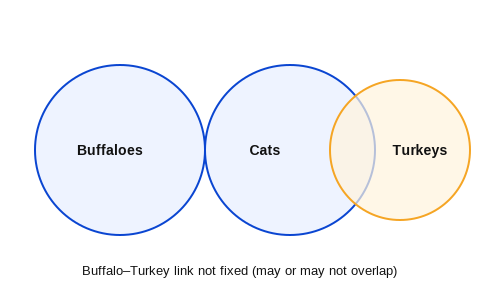
  1. Buffaloes and Cats are separate; Cats and Turkeys overlap partly.
  2. Buffaloes and Turkeys have no direct link – they may or may not overlap.
  3. So neither 'No B is T' nor 'Some B are T' is certain.

Yaad rakhein: 'No B is C' + 'Some C are T' gives no definite B–T relation; each conclusion alone is uncertain.

Answer: (C) Neither conclusion (I) nor (II) follows.

अवधारणा: निष्कर्ष तभी अनुसरण करता है जब वह हर संभव वेन आरेख में सत्य हो।

  1. Buffaloes और Cats अलग; Cats और Turkeys आंशिक रूप से जुड़े।
  2. Buffaloes और Turkeys का कोई सीधा संबंध नहीं – जुड़ सकते हैं, नहीं भी।
  3. अतः न 'कोई B, T नहीं' निश्चित है, न 'कुछ B, T हैं'।

याद रखें: मध्य पद से अंतिम पदों का संबंध तय नहीं होता; अलग-अलग दोनों निष्कर्ष विफल।

उत्तर: (C) न तो निष्कर्ष (I) और न ही (II) अनुसरण करता है।

RRB NTPC Undergraduate CBT 1General Intelligence and ReasoningSyllogismRRB NTPC Undergraduate CBT 1 2024 · 9 Sep Shift 3 →
Q4120.
If + means −, − means ×, × means ÷ and ÷ means +, then what will come in place of the question mark (?) in the following equation?
9 − 4 + 24 ÷ 21 × 3 = ?
यदि + का अर्थ −, − का अर्थ ×, × का अर्थ ÷ और ÷ का अर्थ + है, तो निम्नलिखित समीकरण में प्रश्न चिह्न (?) के स्थान पर क्या आएगा?
9 − 4 + 24 ÷ 21 × 3 = ?
  1. A19
  2. B12
  3. C26
  4. D4
Show answer

Concept: Interchange the signs as given, then use BODMAS.

  1. 9 − 4 + 24 ÷ 21 × 3 → 9×4−24+21÷3.
  2. =36−24+7.
  3. =19.

Trick: Write the converted expression fully before calculating.

Answer: (A) 19

अवधारणा: दिए अनुसार चिह्न बदलें, फिर BODMAS लगाएँ।

  1. 9 − 4 + 24 ÷ 21 × 3 → 9×4−24+21÷3।
  2. =36−24+7।
  3. =19।

ट्रिक: गणना से पहले बदला हुआ व्यंजक पूरा लिख लें।

उत्तर: (A) 19

RRB NTPC Undergraduate CBT 1General Intelligence and ReasoningMathematical OperationsRRB NTPC Undergraduate CBT 1 2024 · 9 Sep Shift 3 →