Question bank

Q&A: practice questions with answers

Search questions on any topic. Filter by exam category, exam, subject and topic, try the question, then open the answer and explanation.

Courses – airGurukul

20,719 questions found.

Q5081.
Ishaan and Meghna have to travel from Delhi to Kanpur in their respective cars. Ishaan is driving at 77 km/hr while Meghna is driving at 33 km/hr. Find the time taken by Meghna to reach Kanpur if Ishaan takes 12 hours.
ईशान और मेघना को अपनी-अपनी कारों से दिल्ली से कानपुर तक यात्रा करनी है। ईशान 77 km/hr की चाल से गाड़ी चला रहा है जबकि मेघना 33 km/hr की चाल से गाड़ी चला रही है। यदि ईशान को 12 घंटे लगते हैं, तो मेघना द्वारा कानपुर पहुँचने में लिया गया समय ज्ञात कीजिए।
  1. A28 hours28 घंटे
  2. B34 hours34 घंटे
  3. C33 hours33 घंटे
  4. D29 hours29 घंटे
Show answer

Concept: For the same distance, time is inversely proportional to speed.

  1. Distance =77×12=924km.
  2. Meghna's time =92433=28 hours.

Trick: t2=t1×s1s2=12×7733=12×73=28.

Answer: (A) 28 hours

अवधारणा: समान दूरी के लिए समय, चाल के व्युत्क्रमानुपाती होता है।

  1. दूरी =77×12=924km।
  2. मेघना का समय =92433=28 घंटे।

ट्रिक: t2=t1×s1s2=12×73=28।

उत्तर: (A) 28 घंटे

RRB NTPC Undergraduate CBT 1MathematicsSpeed, time and distanceRRB NTPC Undergraduate CBT 1 2024 · 7 Aug Shift 2 →
Q5082.
X, Y and Z invested a sum in the ratio of 86 : 60 : 24, respectively. If they earned a total profit of ₹4,590 at the end of the year, what is the difference between the shares of Y and Z?
X, Y और Z ने क्रमशः 86 : 60 : 24 के अनुपात में एक राशि का निवेश किया। यदि उन्होंने वर्ष के अंत में ₹4,590 का कुल लाभ अर्जित किया, तो Y और Z के हिस्सों के बीच का अंतर क्या है?
  1. A₹1,065
  2. B₹994
  3. C₹864
  4. D₹972
Show answer

Concept: Profit is divided in the ratio of investment.

  1. Total parts =86+60+24=170.
  2. 1 part =4590170=27.
  3. Y − Z =(60−24)×27=36×27=972.

Trick: Find only the difference of parts and multiply by the value of one part.

Answer: (D) ₹972

अवधारणा: लाभ, निवेश के अनुपात में बँटता है।

  1. कुल भाग =86+60+24=170।
  2. 1 भाग =4590170=27।
  3. Y − Z =(60−24)×27=36×27=972।

ट्रिक: केवल भागों का अंतर निकालकर एक भाग के मान से गुणा करें।

उत्तर: (D) ₹972

RRB NTPC Undergraduate CBT 1MathematicsRatio and profit sharingRRB NTPC Undergraduate CBT 1 2024 · 7 Aug Shift 2 →
Q5083.
Which of the following numbers is divisible by 24?
निम्नलिखित में से कौन-सी संख्या 24 से विभाज्य है?
  1. A7991987
  2. B7340390
  3. C6830904
  4. D7132978
Show answer

Concept: 24=3×8 (co-prime), so the number must be divisible by both 3 and 8.

  1. Odd numbers (A) are out; for 8 check the last three digits.
  2. B: 390, D: 978 are not divisible by 8; C: 904=8×113 ✓.
  3. C digit sum =6+8+3+0+9+0+4=30, divisible by 3 ✓.

Trick: Test 8 first (last three digits) – it removes most options quickly.

Answer: (C) 6830904

अवधारणा: 24=3×8 (सह-अभाज्य), अतः संख्या 3 और 8 दोनों से विभाज्य होनी चाहिए।

  1. विषम संख्या (A) बाहर; 8 के लिए अंतिम तीन अंक देखें।
  2. B: 390, D: 978 8 से विभाज्य नहीं; C: 904=8×113 ✓।
  3. C के अंकों का योग =30, जो 3 से विभाज्य ✓।

ट्रिक: पहले 8 की जाँच (अंतिम तीन अंक) करें – अधिकतर विकल्प तुरंत हट जाते हैं।

उत्तर: (C) 6830904

RRB NTPC Undergraduate CBT 1MathematicsDivisibility rulesRRB NTPC Undergraduate CBT 1 2024 · 7 Aug Shift 2 →
Q5084.
A product is sold for ₹3,400 after a 15% discount. What was the original marked price?
एक उत्पाद 15% की छूट के बाद ₹3,400 में बेचा जाता है। मूल अंकित मूल्य क्या था?
  1. A₹4,100
  2. B₹3,900
  3. C₹4,000
  4. D₹3,800
Show answer

Concept: SP=MP×100−d100.

  1. 3400=MP×0.85.
  2. MP=34000.85=4000.

Trick: 85%→3400 ⇒ 1%→40 ⇒ 100%→4000.

Answer: (C) ₹4,000

अवधारणा: SP=MP×100−d100।

  1. 3400=MP×0.85।
  2. MP=34000.85=4000।

ट्रिक: 85%→3400 ⇒ 1%→40 ⇒ 100%→4000।

उत्तर: (C) ₹4,000

RRB NTPC Undergraduate CBT 1MathematicsDiscountRRB NTPC Undergraduate CBT 1 2024 · 7 Aug Shift 2 →
Q5085.
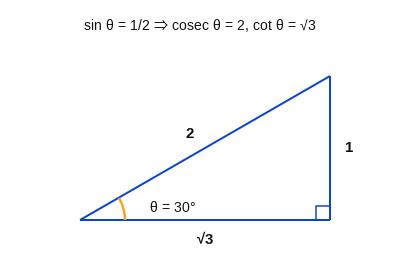
If sinθ=12, then 13×cosec2θ−3×cot2θ−15 is equal to:
यदि sinθ=12 है, तो 13×cosec2θ−3×cot2θ−15 का मान किसके बराबर है:
  1. A68
  2. B56
  3. C26
  4. D28
Show answer

Concept: sinθ=12 ⇒ θ=30∘; use cosec2θ and cot2θ values.

  1. cosecθ=2 ⇒ cosec2θ=4.
  2. cotθ=3 ⇒ cot2θ=3.
  3. 13×4−3×3−15=52−9−15=28.

Trick: Write 13cosec2θ−3cot2θ=10cosec2θ+3 (since cosec2θ−cot2θ=1): 40+3−15=28.

Answer: (D) 28

अवधारणा: sinθ=12 ⇒ θ=30∘; cosec2θ और cot2θ के मान रखें।

  1. cosecθ=2 ⇒ cosec2θ=4।
  2. cotθ=3 ⇒ cot2θ=3।
  3. 13×4−3×3−15=52−9−15=28।

ट्रिक: cosec2θ−cot2θ=1 से: 13cosec2θ−3cot2θ=10cosec2θ+3=43; 43−15=28।

उत्तर: (D) 28

RRB NTPC Undergraduate CBT 1MathematicsTrigonometric valuesRRB NTPC Undergraduate CBT 1 2024 · 7 Aug Shift 2 →
Q5086.
Naman and Omar can complete a certain piece of work in 13 and 4 days, respectively. They started to work together, and after 2 days, Omar left. In how many days will Naman complete the remaining work?
नमन और उमर किसी कार्य को क्रमशः 13 और 4 दिनों में पूरा कर सकते हैं। उन्होंने एक साथ कार्य करना शुरू किया, और 2 दिनों के बाद उमर ने कार्य छोड़ दिया। नमन शेष कार्य को कितने दिनों में पूरा करेगा?
  1. A4.5
  2. B6
  3. C6.5
  4. D5
Show answer

Concept: Work per day =1days; subtract the joint work, then divide the rest by the remaining worker's rate.

  1. Together in 2 days: 2(113+14)=2×1752=1726.
  2. Remaining work =1−1726=926.
  3. Naman alone: 926×13=4.5 days.

Trick: Total work =LCM(13,4)=52 units; rates 4 and 13; 2 days =34 units; left 18; 184=4.5.

Answer: (A) 4.5

अवधारणा: प्रतिदिन कार्य =1दिन; साथ किया कार्य घटाकर शेष को बचे व्यक्ति की दर से भाग दें।

  1. 2 दिन में साथ: 2(113+14)=1726।
  2. शेष कार्य =1−1726=926।
  3. नमन अकेले: 926×13=4.5 दिन।

ट्रिक: कुल कार्य =52 इकाई; दरें 4 और 13; 2 दिन में 34; शेष 18; 184=4.5।

उत्तर: (A) 4.5

RRB NTPC Undergraduate CBT 1MathematicsTime and workRRB NTPC Undergraduate CBT 1 2024 · 7 Aug Shift 2 →
Q5087.
Find the value of: 83−6÷ 8316× 83−8
83−6÷ 8316× 83−8 का मान ज्ञात कीजिए
  1. A83−26
  2. B83−40
  3. C83−30
  4. D83−20
Show answer

Concept: am÷an=am−n and am×an=am+n; work left to right.

  1. 83−6÷8316=83−6−16=83−22.
  2. 83−22×83−8=83−30.

Trick: Just combine the powers: −6−16+(−8)=−30.

Answer: (C) 83−30

अवधारणा: am÷an=am−n तथा am×an=am+n; बाएँ से दाएँ हल करें।

  1. 83−6÷8316=83−22।
  2. 83−22×83−8=83−30।

ट्रिक: केवल घातें जोड़ें-घटाएँ: −6−16−8=−30।

उत्तर: (C) 83−30

RRB NTPC Undergraduate CBT 1MathematicsLaws of exponentsRRB NTPC Undergraduate CBT 1 2024 · 7 Aug Shift 2 →
Q5088.
The average weight (in kg) of a family of five members whose weights are 40 kg, 49 kg, 56 kg, 73 kg and 38 kg is:
पाँच सदस्यों वाले एक परिवार, जिनका भार 40 kg, 49 kg, 56 kg, 73 kg और 38 kg है, का औसत भार (kg में) है:
  1. A51.2
  2. B52.2
  3. C50.2
  4. D53.2
Show answer

Concept: Average =sumcount.

  1. Sum =40+49+56+73+38=256.
  2. Average =2565=51.2 kg.

Trick: Assume 50: deviations −10,−1,+6,+23,−12 total +6; 50+65=51.2.

Answer: (A) 51.2

अवधारणा: औसत =योगसंख्या।

  1. योग =40+49+56+73+38=256।
  2. औसत =2565=51.2 kg।

ट्रिक: 50 मानें: विचलन का योग +6; 50+65=51.2।

उत्तर: (A) 51.2

RRB NTPC Undergraduate CBT 1MathematicsAverageRRB NTPC Undergraduate CBT 1 2024 · 7 Aug Shift 2 →
Q5089.
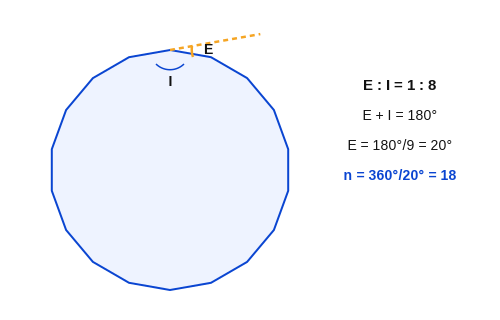
An exterior angle and an interior angle of a regular polygon are in the ratio of 1 : 8. What is the number of sides of the polygon?
एक सम बहुभुज के बाह्य कोण और अंतः कोण का अनुपात 1 : 8 है। बहुभुज की भुजाओं की संख्या कितनी है?
  1. A12
  2. B24
  3. C18
  4. D6
Show answer

Concept: Exterior + interior angle =180∘; number of sides n=360∘exterior angle.

  1. Ratio 1:8 ⇒ exterior =180∘9=20∘.
  2. n=360∘20∘=18.

Trick: If E : I =1:k, then n=2(k+1) ⇒ 2×9=18.

Answer: (C) 18

अवधारणा: बाह्य + आंतरिक कोण =180∘; भुजाओं की संख्या n=360∘बाह्य कोण।

  1. अनुपात 1:8 ⇒ बाह्य कोण =180∘9=20∘।
  2. n=360∘20∘=18।

ट्रिक: यदि बाह्य : आंतरिक =1:k, तो n=2(k+1)=18।

उत्तर: (C) 18

RRB NTPC Undergraduate CBT 1MathematicsPolygonsRRB NTPC Undergraduate CBT 1 2024 · 7 Aug Shift 2 →
Q5090.
Find the simple interest (in ₹) on ₹1,200 at an interest rate of 3% per month for 12 months.
₹1,200 पर 3% प्रति माह की ब्याज दर से 12 महीने का साधारण ब्याज (₹ में) ज्ञात कीजिए।
  1. A₹36
  2. B₹56
  3. C₹432
  4. D₹72
Show answer

Concept: SI=P×R×T100 with rate and time in the same unit.

  1. Rate 3% per month, time 12 months ⇒ total rate =36%.
  2. SI=1200×36100=432.

Trick: 3% per month =36% per year – do not take it as 3% per annum (that gives ₹36).

Answer: (C) ₹432

अवधारणा: SI=P×R×T100, दर और समय एक ही इकाई में।

  1. दर 3% प्रति माह, समय 12 माह ⇒ कुल दर =36%।
  2. SI=1200×36100=432।

ट्रिक: 3% प्रति माह =36% प्रति वर्ष – इसे वार्षिक 3% न लें (₹36 गलत उत्तर)।

उत्तर: (C) ₹432

RRB NTPC Undergraduate CBT 1MathematicsSimple interestRRB NTPC Undergraduate CBT 1 2024 · 7 Aug Shift 2 →
Q5091.
The number of prime numbers lying between 303 and 311, both included, is:
303 और 311 (दोनों सम्मिलित) के बीच स्थित अभाज्य संख्याओं की संख्या है:
  1. A5
  2. B2
  3. C7
  4. D3
Show answer

Concept: Check each odd number for divisibility by primes up to 311≈17.

  1. 303=3×101, 305=5×61, 309=3×10³ – composite.
  2. 307 and 311 are not divisible by 2, 3, 5, 7, 11, 13, 17 – prime.
  3. Even numbers are composite. Count =2.

Trick: Test only up to the square root; 3 divides 303 and 309 (digit sums 6 and 12).

Answer: (B) 2

अवधारणा: 311≈17 तक के अभाज्यों से प्रत्येक विषम संख्या जाँचें।

  1. 303=3×101, 305=5×61, 309=3×10³ – भाज्य।
  2. 307 और 311 किसी से विभाज्य नहीं – अभाज्य।
  3. सम संख्याएँ भाज्य हैं। कुल =2।

ट्रिक: केवल वर्गमूल तक जाँचें; अंकों का योग 3 से विभाज्य हो तो संख्या 3 से विभाज्य।

उत्तर: (B) 2

RRB NTPC Undergraduate CBT 1MathematicsPrime numbersRRB NTPC Undergraduate CBT 1 2024 · 7 Aug Shift 2 →
Q5092.
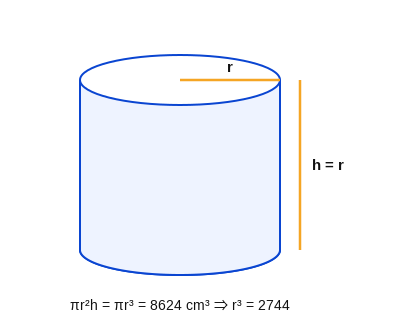
The volume of a right circular cylinder is 8624 cm3. If the radius and height of the cylinder are equal, then find the height of the cylinder. (Use π=227)
एक लंब वृत्तीय बेलन का आयतन 8624 cm3 है। यदि बेलन की त्रिज्या और ऊँचाई बराबर हैं, तो बेलन की ऊँचाई ज्ञात कीजिए। (π=227 का प्रयोग कीजिए)
  1. A12 cm
  2. B15 cm
  3. C14 cm
  4. D13 cm
Show answer

Concept: V=πr2h; with h=r, V=πr3.

  1. 227r3=8624.
  2. r3=8624×722=392×7=2744.
  3. r=27443=14, so h=14 cm.

Trick: 2744=143 – remember cubes up to 20.

Answer: (C) 14 cm

अवधारणा: V=πr2h; h=r होने पर V=πr3।

  1. 227r3=8624।
  2. r3=8624×722=2744।
  3. r=27443=14, अतः h=14 cm।

ट्रिक: 2744=143 – 20 तक के घन याद रखें।

उत्तर: (C) 14 cm

RRB NTPC Undergraduate CBT 1MathematicsVolume of cylinderRRB NTPC Undergraduate CBT 1 2024 · 7 Aug Shift 2 →
Q5093.
Find the simple interest (in ₹) on ₹4,000 at 7.5% per annum rate of interest deposited on 7 February 2024 and withdrawn on 8 April 2024.
7 फरवरी 2024 को जमा किए गए और 8 अप्रैल 2024 को निकाले गए ₹4,000 पर 7.5% वार्षिक ब्याज दर से साधारण ब्याज (₹ में) ज्ञात कीजिए।
  1. A49
  2. B50
  3. C51
  4. D48
Show answer

Concept: Count days excluding the deposit day and including the withdrawal day; 2024 is a leap year (366 days).

  1. Feb: 29−7=22, March: 31, April: 8 ⇒ 61 days.
  2. SI=4000×7.5100×61366=300×16=50.

Trick: 61366=16 exactly in a leap year – a common exam pairing.

Answer: (B) 50

अवधारणा: जमा वाला दिन छोड़कर और निकासी वाला दिन जोड़कर दिन गिनें; 2024 लीप वर्ष (366 दिन) है।

  1. फ़रवरी: 29−7=22, मार्च: 31, अप्रैल: 8 ⇒ 61 दिन।
  2. SI=4000×7.5100×61366=300×16=50।

ट्रिक: लीप वर्ष में 61366=16 ठीक बैठता है।

उत्तर: (B) 50

RRB NTPC Undergraduate CBT 1MathematicsSimple interest (days)RRB NTPC Undergraduate CBT 1 2024 · 7 Aug Shift 2 →
Q5094.
If 3 times the mother's age is 26 years more than 5 times her daughter's age, and 2 times the daughter's age is 2 years less than the mother's age, then what is the difference (in years) between the ages of the mother and the daughter?
यदि माँ की आयु का 3 गुना, उसकी बेटी की आयु के 5 गुने से 26 वर्ष अधिक है, और बेटी की आयु का 2 गुना, माँ की आयु से 2 वर्ष कम है, तो माँ और बेटी की आयु के बीच का अंतर (वर्षों में) क्या है?
  1. A25
  2. B20
  3. C23
  4. D22
Show answer

Concept: Form two linear equations in mother's age M and daughter's age D.

  1. 3M=5D+26 and M=2D+2.
  2. 3(2D+2)=5D+26 ⇒ D=20.
  3. M=42; difference =42−20=22.

Trick: Check options: M−D=22 with M=2D+2 gives D=20, M=42; 3×42=126=5×20+26 ✓.

Answer: (D) 22

अवधारणा: माँ की आयु M और बेटी की आयु D में दो रैखिक समीकरण बनाएँ।

  1. 3M=5D+26 तथा M=2D+2।
  2. 3(2D+2)=5D+26 ⇒ D=20।
  3. M=42; अंतर =42−20=22।

ट्रिक: विकल्प जाँच: D=20, M=42 ⇒ 3×42=126=5×20+26 ✓।

उत्तर: (D) 22

RRB NTPC Undergraduate CBT 1MathematicsProblems on agesRRB NTPC Undergraduate CBT 1 2024 · 7 Aug Shift 2 →
Q5095.
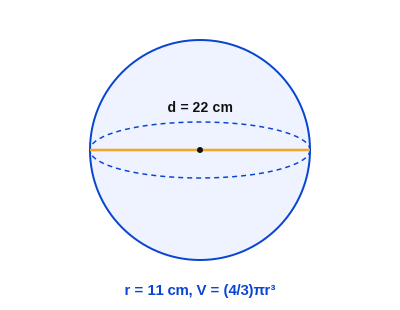
Find the volume (in cm3) of a sphere having a diameter of 22 cm, giving your answer correct to two places of decimal.
Take π=227.
22 cm व्यास वाले एक गोले का आयतन (cm3 में) ज्ञात कीजिए, अपना उत्तर दशमलव के दो स्थानों तक सही दीजिए।
π=227 लीजिए।
  1. A5567.52
  2. B5587.52
  3. C5597.52
  4. D5577.52
Show answer

Concept: V=43πr3, with r=d2.

  1. r=11 cm, r3=1331.
  2. V=43×227×1331=11712821.
  3. V≈5577.52cm3.

Trick: 8821≈4.1905; 4.1905×1331≈5577.5.

Answer: (D) 5577.52

अवधारणा: V=43πr3, जहाँ r=d2।

  1. r=11 cm, r3=1331।
  2. V=43×227×1331=11712821।
  3. V≈5577.52cm3।

ट्रिक: 8821≈4.1905; 4.1905×1331≈5577.5।

उत्तर: (D) 5577.52

RRB NTPC Undergraduate CBT 1MathematicsVolume of sphereRRB NTPC Undergraduate CBT 1 2024 · 7 Aug Shift 2 →
Q5096.
Refer to the following number and symbol series and answer the question that follows. Counting to be done from left to right only.
(Left) 9 6 $ $ 7 © £ $ 1 * 5 4 3 3 $ 6 @ # # # 8 % (Right)
How many such symbols are there each of which is immediately preceded by a number and also immediately followed by a number?
निम्नलिखित संख्या और प्रतीक श्रृंखला को देखिए और उसके बाद आने वाले प्रश्न का उत्तर दीजिए। गिनती केवल बाएँ से दाएँ की जानी है।
(बाएँ) 9 6 $ $ 7 © £ $ 1 * 5 4 3 3 $ 6 @ # # # 8 % (दाएँ)
ऐसे कितने प्रतीक हैं जिनमें से प्रत्येक के ठीक पहले एक संख्या है और ठीक बाद भी एक संख्या है?
  1. A4
  2. B1
  3. C2
  4. D3
Show answer

Concept: Check every symbol: the element just before it and just after it must both be numbers.

  1. Series: 9 6 $ $ 7 © £ $ 1 * 5 4 3 3 $ 6 @ # # # 8 %.
  2. 1 * 5 ✓ and 3 $ 6 ✓.
  3. Others fail, e.g. 6 $ $, 7 © £, 6 @ #. Count =2.

Trick: Scan for the pattern “number – symbol – number” in one pass.

Answer: (C) 2

अवधारणा: हर प्रतीक के ठीक पहले और ठीक बाद वाला तत्व संख्या होना चाहिए।

  1. श्रृंखला: 9 6 $ $ 7 © £ $ 1 * 5 4 3 3 $ 6 @ # # # 8 %।
  2. 1 * 5 ✓ और 3 $ 6 ✓।
  3. बाकी नहीं, जैसे 6 $ $, 7 © £, 6 @ #। कुल =2।

ट्रिक: एक बार में “संख्या – प्रतीक – संख्या” पैटर्न खोजें।

उत्तर: (C) 2

RRB NTPC Undergraduate CBT 1General Intelligence and ReasoningNumber-symbol seriesRRB NTPC Undergraduate CBT 1 2024 · 7 Aug Shift 2 →
Q5097.
Read the given statements and conclusions carefully. Assuming that the information given in the statements is true, even if it appears to be at variance with commonly known facts, decide which of the given conclusion(s) logically follow(s) from the statements.
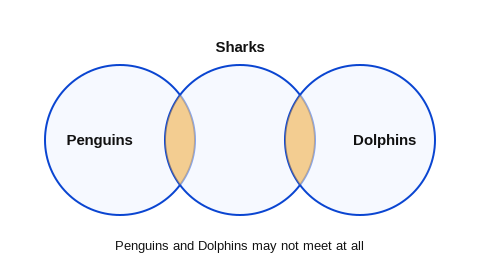
Statements: Some penguins are sharks. Some sharks are dolphins.
Conclusions (I): No shark is a penguin.
Conclusions (II): Some penguins are dolphins.
दिए गए कथनों और निष्कर्षों को ध्यानपूर्वक पढ़िए। कथनों में दी गई जानकारी को सत्य मानते हुए, भले ही वह सामान्यतः ज्ञात तथ्यों से भिन्न प्रतीत होती हो, निर्णय लीजिए कि दिए गए निष्कर्षों में से कौन-सा/से निष्कर्ष तार्किक रूप से कथनों का अनुसरण करता है/करते हैं।
कथन: कुछ पेंगुइन, शार्क हैं। कुछ शार्क, डॉल्फ़िन हैं।
निष्कर्ष (I): कोई भी शार्क, पेंगुइन नहीं है।
निष्कर्ष (II): कुछ पेंगुइन, डॉल्फ़िन हैं।
  1. ANeither conclusion (I) nor (II) follows.न तो निष्कर्ष (I) और न ही (II) अनुसरण करता है।
  2. BBoth conclusions (I) and (II) follow.निष्कर्ष (I) और (II) दोनों अनुसरण करते हैं।
  3. COnly conclusion (I) follows.केवल निष्कर्ष (I) अनुसरण करता है।
  4. DOnly conclusion (II) follows.केवल निष्कर्ष (II) अनुसरण करता है।
Show answer

Concept: Two “some” statements give no definite link between the outer terms.

  1. Some penguins are sharks ⇒ conclusion I (No shark is a penguin) directly contradicts it – false.
  2. Penguins and dolphins are connected only through “some” sharks – they may not overlap, so II is not certain.

Trick: Some + Some ⇒ no conclusion about the end terms.

Answer: (A) Neither conclusion (I) nor (II) follows.

अवधारणा: दो “कुछ” कथनों से बाहरी पदों के बीच निश्चित संबंध नहीं बनता।

  1. कुछ पेंगुइन शार्क हैं ⇒ निष्कर्ष I (कोई शार्क पेंगुइन नहीं) इसका सीधा विरोधी – असत्य।
  2. पेंगुइन और डॉल्फ़िन केवल “कुछ” शार्क से जुड़े हैं – ओवरलैप ज़रूरी नहीं, अतः II निश्चित नहीं।

ट्रिक: कुछ + कुछ ⇒ अंतिम पदों पर कोई निष्कर्ष नहीं।

उत्तर: (A) न तो निष्कर्ष (I) और न ही (II) अनुसरण करता है।

RRB NTPC Undergraduate CBT 1General Intelligence and ReasoningSyllogismRRB NTPC Undergraduate CBT 1 2024 · 7 Aug Shift 2 →
Q5098.
KGDL is related to IEBJ in a certain way based on the English alphabetical order. In the same way, NJGO is related to LHEM. To which of the given options is QMJR related, following the same logic?
अंग्रेज़ी वर्णमाला क्रम के आधार पर KGDL एक निश्चित प्रकार से IEBJ से संबंधित है। उसी प्रकार, NJGO, LHEM से संबंधित है। समान तर्क का अनुसरण करते हुए, QMJR दिए गए विकल्पों में से किससे संबंधित है?
  1. AOKPH
  2. BKOHP
  3. CKOPH
  4. DOKHP
Show answer

Concept: Compare positions letter by letter.

  1. K→I, G→E, D→B, L→J: each −2.
  2. N→L, J→H, G→E, O→M: each −2.
  3. Q→O, M→K, J→H, R→P ⇒ OKHP.

Trick: Same shift on every letter – apply it in order.

Answer: (D) OKHP

अवधारणा: अक्षरों के स्थान एक-एक करके मिलाएँ।

  1. K→I, G→E, D→B, L→J: प्रत्येक −2।
  2. N→L, J→H, G→E, O→M: प्रत्येक −2।
  3. Q→O, M→K, J→H, R→P ⇒ OKHP।

ट्रिक: हर अक्षर पर एक जैसा खिसकाव – क्रम से लगाएँ।

उत्तर: (D) OKHP

RRB NTPC Undergraduate CBT 1General Intelligence and ReasoningLetter analogyRRB NTPC Undergraduate CBT 1 2024 · 7 Aug Shift 2 →
Q5099.
If 2 is added to each even digit and 1 is subtracted from each odd digit in the number 7364592, what will be the sum of the digits which are first from the left and first from the right in the new number thus formed?
यदि संख्या 7364592 में प्रत्येक सम अंक में 2 जोड़ दिया जाए और प्रत्येक विषम अंक में से 1 घटा दिया जाए, तो इस प्रकार बनी नई संख्या में बाएँ से पहले और दाएँ से पहले अंकों का योग क्या होगा?
  1. A9
  2. B12
  3. C10
  4. D8
Show answer

Concept: Change each digit as per the rule, then read the required positions.

  1. 7364592 → 7→6, 3→2, 6→8, 4→6, 5→4, 9→8, 2→4.
  2. New number: 6286484.
  3. First from left 6 + first from right 4 =10.

Trick: Only the first and last digits are needed: 7→6 and 2→4.

Answer: (C) 10

अवधारणा: नियम के अनुसार हर अंक बदलें, फिर माँगे गए स्थान पढ़ें।

  1. 7364592 → 7→6, 3→2, 6→8, 4→6, 5→4, 9→8, 2→4।
  2. नई संख्या: 6286484।
  3. बाएँ से पहला 6 + दाएँ से पहला 4 =10।

ट्रिक: केवल पहला और अंतिम अंक चाहिए: 7→6 और 2→4।

उत्तर: (C) 10

RRB NTPC Undergraduate CBT 1General Intelligence and ReasoningDigit operationsRRB NTPC Undergraduate CBT 1 2024 · 7 Aug Shift 2 →
Q5100.
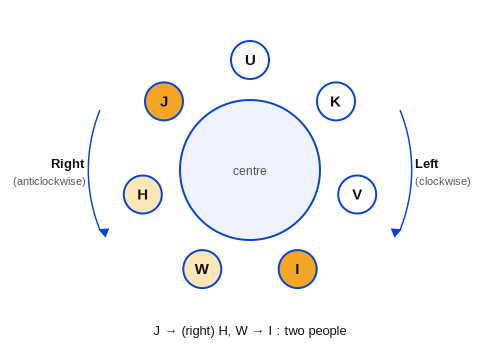
H, I, J, K, U, V and W are sitting around a circular table facing the centre of the table. Only four people sit between U and V when counted from the right of U. U sits third to the left of W. K sits third to the left of H. I is an immediate neighbour of both V and W. How many people sit between J and I when counted from the right of J?
H, I, J, K, U, V और W एक वृत्ताकार मेज़ के चारों ओर मेज़ के केंद्र की ओर मुख करके बैठे हैं। U के दाएँ से गिनने पर U और V के बीच केवल चार व्यक्ति बैठे हैं। U, W के बाएँ से तीसरे स्थान पर बैठा है। K, H के बाएँ से तीसरे स्थान पर बैठा है। I, V और W दोनों का निकटतम पड़ोसी है। J के दाएँ से गिनने पर J और I के बीच कितने व्यक्ति बैठे हैं?
  1. ATwoदो
  2. BOneएक
  3. CThreeतीन
  4. DFourचार
Show answer

Concept: Facing the centre: left = clockwise, right = anticlockwise.

  1. Fix U. W is 3rd to the right of U (U is 3rd to the left of W).
  2. V is 5th to the right of U (four between); I sits between V and W.
  3. Remaining 3 seats: only H = 3rd to the right of K fits; J takes the last seat.
  4. From J moving right: H, W, then I ⇒ two people.

Trick: Place the fixed-gap pairs first, then the neighbour clue.

Answer: (A) Two

अवधारणा: केंद्र की ओर मुख: बायाँ = दक्षिणावर्त (clockwise), दायाँ = वामावर्त (anticlockwise)।

  1. U को स्थिर करें। W, U के दाएँ तीसरा (U, W के बाएँ तीसरा)।
  2. V, U के दाएँ पाँचवाँ (बीच में चार); I, V और W के बीच।
  3. बचे 3 स्थानों में केवल K के दाएँ तीसरा H बैठता है; J अंतिम स्थान पर।
  4. J से दाईं ओर: H, W, फिर I ⇒ दो व्यक्ति।

ट्रिक: पहले निश्चित दूरी वाले जोड़े बैठाएँ, फिर पड़ोसी वाला संकेत।

उत्तर: (A) दो

RRB NTPC Undergraduate CBT 1General Intelligence and ReasoningCircular seating arrangementRRB NTPC Undergraduate CBT 1 2024 · 7 Aug Shift 2 →