Question bank

Q&A: practice questions with answers

Search questions on any topic. Filter by exam category, exam, subject and topic, try the question, then open the answer and explanation.

Courses – airGurukul

20,719 questions found.

Q5661.
What does the Constitution of India stipulate regarding the composition of the Election Commission of India (ECI)?
भारत के संविधान में भारत निर्वाचन आयोग (ECI) की संरचना के संबंध में क्या प्रावधान है?
  1. AIt is constitutionally fixed as a single-member body headed by the Chief Election Commissioner (CEC) only.यह संवैधानिक रूप से केवल मुख्य निर्वाचन आयुक्त (CEC) की अध्यक्षता वाला एक-सदस्यीय निकाय निर्धारित है।
  2. BIt must always be a three-member body (one Chief Election Commissioner and two Election Commissioners).यह सदैव तीन-सदस्यीय निकाय (एक मुख्य निर्वाचन आयुक्त और दो निर्वाचन आयुक्त) होना चाहिए।
  3. CIt must include one Election Commissioner from each major state to ensure federal balanceसंघीय संतुलन सुनिश्चित करने के लिए इसमें प्रत्येक प्रमुख राज्य से एक निर्वाचन आयुक्त होना चाहिए
  4. DIt may be single or multi-member; initially, there was only a Chief Election Commissioner until 1989.यह एक-सदस्यीय या बहु-सदस्यीय हो सकता है; प्रारंभ में, 1989 तक केवल एक मुख्य निर्वाचन आयुक्त था।
Show answer

Concept: Article 324 says the ECI shall consist of the CEC and "such number of other Election Commissioners, if any, as the President may fix".

  1. So the Constitution does not fix its size – it may be single-member or multi-member.
  2. From 1950 it functioned with only the CEC; two ECs were first appointed in October 1989 (removed in 1990), and since 1993 it has been a three-member body.

Yaad rakhein: Art. 324: "if any" → size decided by the President.

Answer: (D) It may be single or multi-member; initially, there was only a Chief Election Commissioner until 1989.

अवधारणा: अनुच्छेद 324 के अनुसार निर्वाचन आयोग में CEC और "उतने अन्य निर्वाचन आयुक्त, यदि कोई हों, जितने राष्ट्रपति तय करें" होंगे।

  1. अतः संविधान इसका आकार तय नहीं करता – यह एक-सदस्यीय या बहु-सदस्यीय हो सकता है।
  2. 1950 से केवल CEC था; अक्टूबर 1989 में पहली बार दो EC नियुक्त हुए (1990 में हटे) और 1993 से यह तीन-सदस्यीय है।

याद रखें: अनु. 324: "यदि कोई हों" → आकार राष्ट्रपति तय करते हैं।

उत्तर: (D) यह एक या बहु-सदस्यीय हो सकता है; 1989 तक केवल मुख्य निर्वाचन आयुक्त था।
RRB NTPC Undergraduate CBT 1General AwarenessPolity – Election CommissionRRB NTPC Undergraduate CBT 1 2024 · 3 Sep Shift 2 →
Q5662.
What does the abbreviation ASCII stand for?
संक्षिप्त नाम ASCII का पूर्ण रूप क्या है?
  1. AAutomated System Code for International Interfacing
  2. BAmerican Standard Code for Information Interchange
  3. CAdvanced Standard Communication for Information Integration
  4. DAmerican Standard Code for Internet Information
Show answer

Concept: ASCII is the most widely used character-encoding standard for text in computers.

  1. ASCII = American Standard Code for Information Interchange; it is a 7-bit code representing 128 characters (extended ASCII uses 8 bits, 256 characters).
  2. Example: "A" = 65, "a" = 97.

Yaad rakhein: ASCII and EBCDIC both end in "Interchange Code".

Answer: (B) American Standard Code for Information Interchange

अवधारणा: ASCII कंप्यूटर में टेक्स्ट के लिए सबसे प्रचलित कैरेक्टर-एन्कोडिंग मानक है।

  1. ASCII = American Standard Code for Information Interchange; यह 7-bit कोड है जो 128 कैरेक्टर दर्शाता है (extended ASCII 8-bit, 256 कैरेक्टर)।
  2. उदाहरण: "A" = 65, "a" = 97।

याद रखें: ASCII और EBCDIC दोनों "Interchange Code" पर खत्म होते हैं।

उत्तर: (B) American Standard Code for Information Interchange

RRB NTPC Undergraduate CBT 1General AwarenessComputer Awareness – CodesRRB NTPC Undergraduate CBT 1 2024 · 3 Sep Shift 2 →
Q5663.
Which of the following Biosphere Reserves is located in Madhya Pradesh?
निम्नलिखित में से कौन-सा जीवमंडल आरक्षित क्षेत्र (Biosphere Reserve) मध्य प्रदेश में स्थित है?
  1. AManas Biosphere Reserveमानस जीवमंडल आरक्षित क्षेत्र
  2. BNanda Biosphere Reserveनंदा जीवमंडल आरक्षित क्षेत्र
  3. CSimilipal Biosphere Reserveसिमलीपाल जीवमंडल आरक्षित क्षेत्र
  4. DPanna Biosphere Reserveपन्ना जीवमंडल आरक्षित क्षेत्र
Show answer

Concept: India has 18 biosphere reserves; MP has three – Pachmarhi, Panna and Amarkantak (shared with Chhattisgarh).

  1. Panna Biosphere Reserve (Madhya Pradesh) was notified in 2011 and added to UNESCO’s MAB network in 2020; it includes Panna Tiger Reserve on the Ken river.
  2. Manas – Assam; Nanda Devi – Uttarakhand; Similipal – Odisha.

Yaad rakhein: MP biosphere reserves: Panna, Pachmarhi, Amarkantak.

Answer: (D) Panna Biosphere Reserve

अवधारणा: भारत में 18 जैवमंडल आरक्षित क्षेत्र हैं; मध्य प्रदेश में तीन – पचमढ़ी, पन्ना और अमरकंटक (छत्तीसगढ़ के साथ)।

  1. पन्ना जैवमंडल आरक्षित क्षेत्र (मध्य प्रदेश) 2011 में अधिसूचित हुआ और 2020 में UNESCO MAB नेटवर्क में शामिल हुआ; इसमें केन नदी पर पन्ना टाइगर रिज़र्व है।
  2. मानस – असम; नंदा देवी – उत्तराखंड; सिमलीपाल – ओडिशा।

याद रखें: MP के जैवमंडल: पन्ना, पचमढ़ी, अमरकंटक।

उत्तर: (D) पन्ना जैवमंडल आरक्षित क्षेत्र

RRB NTPC Undergraduate CBT 1General AwarenessEnvironment – Biosphere ReservesRRB NTPC Undergraduate CBT 1 2024 · 3 Sep Shift 2 →
Q5664.
Which of the following leaders is associated with the concept of ‘Drain of Wealth’ theory?
निम्नलिखित में से कौन-सा नेता 'धन निष्कासन (Drain of Wealth)' सिद्धांत की अवधारणा से संबंधित है?
  1. ASubhash Chandra Boseसुभाष चंद्र बोस
  2. BMG Ranadeएम.जी. रानाडे
  3. CDadabhai Naorojiदादाभाई नौरोजी
  4. DC Rajagopalachariसी. राजगोपालाचारी
Show answer

Concept: The Drain of Wealth theory explains how India’s wealth was transferred to Britain without equivalent return.

  1. Dadabhai Naoroji propounded it in his book "Poverty and Un-British Rule in India" (1901).
  2. Home charges, salaries and pensions of British officials and profits of British firms were the main channels of drain. R C Dutt and M G Ranade supported the critique, but the theory is Naoroji’s.

Yaad rakhein: Drain theory – Naoroji, "Grand Old Man of India".

Answer: (C) Dadabhai Naoroji

अवधारणा: धन निष्कासन सिद्धांत बताता है कि भारत की संपत्ति बिना समतुल्य प्रतिफल के ब्रिटेन चली गई।

  1. दादाभाई नौरोजी ने इसे अपनी पुस्तक "Poverty and Un-British Rule in India" (1901) में प्रस्तुत किया।
  2. होम चार्जेज़, ब्रिटिश अधिकारियों के वेतन-पेंशन और ब्रिटिश कंपनियों के लाभ निष्कासन के मुख्य माध्यम थे; आर.सी. दत्त और रानाडे ने भी आलोचना की, पर सिद्धांत नौरोजी का है।

याद रखें: धन निष्कासन – नौरोजी, "भारत के वयोवृद्ध पुरुष"।

उत्तर: (C) दादाभाई नौरोजी

RRB NTPC Undergraduate CBT 1General AwarenessModern History – Economic NationalismRRB NTPC Undergraduate CBT 1 2024 · 3 Sep Shift 2 →
Q5665.
As per the Ministry of Ports, Shipping and Waterways of the Government of India, which port is known as the largest container port in India (as of May 2025)?
भारत सरकार के पत्तन, पोत परिवहन और जलमार्ग मंत्रालय के अनुसार, किस बंदरगाह को भारत का सबसे बड़ा कंटेनर बंदरगाह माना जाता है (मई 2025 तक)?
  1. ANhava Shevaन्हावा शेवा
  2. BChennaiचेन्नई
  3. CKandlaकांडला
  4. DParadipपारादीप
Show answer

Concept: Container ports handle standardised cargo boxes measured in TEUs (twenty-foot equivalent units).

  1. Jawaharlal Nehru Port Authority (JNPA), Nhava Sheva in Navi Mumbai (Maharashtra) is India’s largest container port, handling about half of the country’s container traffic.
  2. Kandla (Deendayal) is the largest by total cargo; Paradip leads in dry bulk on the east coast.

Yaad rakhein: Largest container port – Nhava Sheva (JNPA); largest cargo – Deendayal (Kandla).

Answer: (A) Nhava Sheva

अवधारणा: कंटेनर बंदरगाह मानक बक्सों वाले माल को संभालते हैं, जिसे TEU में मापा जाता है।

  1. नवी मुंबई (महाराष्ट्र) स्थित जवाहरलाल नेहरू पोर्ट अथॉरिटी (JNPA), न्हावा शेवा भारत का सबसे बड़ा कंटेनर बंदरगाह है।
  2. कुल माल में कांडला (दीनदयाल) सबसे बड़ा है; पूर्वी तट पर पारादीप शुष्क थोक माल में अग्रणी है।

याद रखें: सबसे बड़ा कंटेनर पोर्ट – न्हावा शेवा (JNPA); कुल माल – दीनदयाल (कांडला)।

उत्तर: (A) न्हावा शेवा

RRB NTPC Undergraduate CBT 1General AwarenessCurrent Affairs – PortsRRB NTPC Undergraduate CBT 1 2024 · 3 Sep Shift 2 →
Q5666.
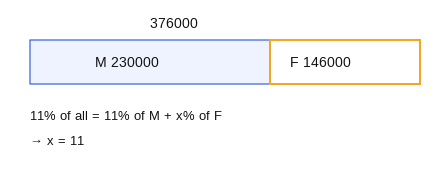
The population of a district is 376000, out of which 230000 are males. 11% of the population is literate. If 11% males are literate, then what percentage of females are literate?
एक जिले की जनसंख्या 376000 है, जिसमें से 230000 पुरुष हैं। जनसंख्या का 11% साक्षर है। यदि 11% पुरुष साक्षर हैं, तो कितने प्रतिशत महिलाएँ साक्षर हैं?
  1. A12%
  2. B8%
  3. C9%
  4. D11%
Show answer

Concept: If the whole group and one part have the same percentage, the remaining part must also have that percentage.

  1. Females =376000−230000=146000.
  2. Literate total =11%×376000=41360; literate males =11%×230000=25300.
  3. Literate females =41360−25300=16060, so 16060146000×100=11%.

Trick: Total 11% and males 11% ⇒ females also 11% – no calculation needed.

Answer: (D) 11%

अवधारणा: यदि पूरे समूह और एक भाग का प्रतिशत समान हो तो शेष भाग का प्रतिशत भी वही होगा।

  1. महिलाएँ =376000−230000=146000।
  2. कुल साक्षर =11%×376000=41360; साक्षर पुरुष =11%×230000=25300।
  3. साक्षर महिलाएँ =41360−25300=16060, अतः 16060146000×100=11%।

ट्रिक: कुल 11% और पुरुष 11% ⇒ महिलाएँ भी 11%।

उत्तर: (D) 11%

RRB NTPC Undergraduate CBT 1MathematicsPercentage – PopulationRRB NTPC Undergraduate CBT 1 2024 · 3 Sep Shift 2 →
Q5667.
Praveen and Hemant start a business. Praveen invests ₹16,000 more than Hemant for 7 months and Hemant invests for 6 months. Praveen's share is ₹1,007 more than that of Hemant, out of a total profit of ₹7,049. Find the capital contributed by Praveen.
प्रवीण और हेमंत एक व्यवसाय शुरू करते हैं। प्रवीण, हेमंत से ₹16,000 अधिक राशि 7 महीने के लिए निवेश करता है और हेमंत 6 महीने के लिए निवेश करता है। ₹7,049 के कुल लाभ में से प्रवीण का हिस्सा हेमंत के हिस्से से ₹1,007 अधिक है। प्रवीण द्वारा लगाई गई पूंजी ज्ञात कीजिए।
  1. A₹1,28,142
  2. B₹1,27,842
  3. C₹1,28,112
  4. D₹1,28,000
Show answer

Concept: Profit is shared in the ratio of capital×time.

  1. Shares: P+H=7049, P−H=1007 ⇒ P=4028, H=3021; ratio =4028:3021=4:3.
  2. Let Hemant’s capital =x; Praveen’s =x+16000. Then 7(x+16000)6x=43.
  3. 21(x+16000)=24x ⇒ 3x=336000 ⇒ x=112000.
  4. Praveen’s capital =112000+16000=128000.

Trick: Check options: ₹1,28,000 − 16,000 = ₹1,12,000; 7×1286×112=43 ✓.

Answer: (D) ₹1,28,000

अवधारणा: लाभ पूँजी×समय के अनुपात में बँटता है।

  1. हिस्से: P+H=7049, P−H=1007 ⇒ P=4028, H=3021; अनुपात =4:3।
  2. माना हेमंत की पूँजी =x, प्रवीण की =x+16000; तब 7(x+16000)6x=43।
  3. 21(x+16000)=24x ⇒ 3x=336000 ⇒ x=112000।
  4. प्रवीण की पूँजी =112000+16000=128000।

ट्रिक: विकल्प जाँचें: 7×1286×112=43 ✓।

उत्तर: (D) ₹1,28,000

RRB NTPC Undergraduate CBT 1MathematicsPartnershipRRB NTPC Undergraduate CBT 1 2024 · 3 Sep Shift 2 →
Q5668.
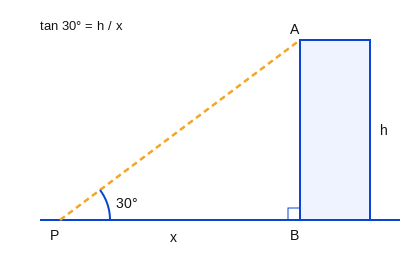
The angle made by a point on the ground and the top of a building with ground is 30∘.
If the point is x units distance away from the bottom of the building, then the height of the building (in units) is:
जमीन पर स्थित एक बिंदु और एक भवन के शीर्ष को मिलाने वाली रेखा द्वारा जमीन के साथ बनाया गया कोण 30∘ है।
यदि वह बिंदु भवन के आधार से x इकाई की दूरी पर है, तो भवन की ऊँचाई (इकाई में) है:
  1. Ax2
  2. Bx3
  3. Cx2
  4. Dx3
Show answer

Concept: In a right triangle, tanθ=oppositeadjacent; here the height is opposite to the angle at the point.

  1. Let the building be AB with height h and the point P at distance x from the foot B.
  2. tan30∘=hx and tan30∘=13.
  3. So h=x3.

Trick: Angle 30∘ ⇒ height is the smaller side: h=x3; at 60∘ it would be x3.

Answer: (D) x3

अवधारणा: समकोण त्रिभुज में tanθ=लंबआधार; यहाँ ऊँचाई कोण के सामने की भुजा है।

  1. माना भवन AB की ऊँचाई h है और बिंदु P आधार B से x दूरी पर है।
  2. tan30∘=hx तथा tan30∘=13।
  3. अतः h=x3।

ट्रिक: कोण 30∘ ⇒ ऊँचाई छोटी भुजा: h=x3; 60∘ पर x3 होती।

उत्तर: (D) x3

RRB NTPC Undergraduate CBT 1MathematicsHeights and DistancesRRB NTPC Undergraduate CBT 1 2024 · 3 Sep Shift 2 →
Q5669.
Sapna invested ₹21,100 on simple interest, partly at the rate of 6% per annum and partly at the rate of 14% per annum. If she earns equal interests from the two investments after 3 years, then find the sum invested at the rate of 6% per annum (in ₹).
सपना ने ₹21,100 साधारण ब्याज पर निवेश किए, जिसका एक भाग 6% वार्षिक की दर से और शेष भाग 14% वार्षिक की दर से। यदि 3 वर्ष बाद उसे दोनों निवेशों से समान ब्याज प्राप्त होता है, तो 6% वार्षिक की दर पर निवेश की गई राशि (₹ में) ज्ञात कीजिए।
  1. A14,768
  2. B14,773
  3. C14,770
  4. D14,767
Show answer

Concept: Equal SI for the same time ⇒ principal×rate is equal, so principals are in the inverse ratio of rates.

  1. x×6×3=(21100−x)×14×3.
  2. 6x=14(21100−x) ⇒ 20x=295400 ⇒ x=14770.
  3. Check: ratio =14:6=7:3; 710×21100=14770.

Trick: Sums ∝ 1rate: 6%:14% ⇒ 7:3; amount at 6% =710 of total.

Answer: (C) 14,770

अवधारणा: समान समय में समान साधारण ब्याज ⇒ मूलधन×दर बराबर, अतः मूलधन दरों के व्युत्क्रम अनुपात में।

  1. x×6×3=(21100−x)×14×3।
  2. 6x=14(21100−x) ⇒ 20x=295400 ⇒ x=14770।
  3. जाँच: अनुपात =14:6=7:3; 710×21100=14770।

ट्रिक: मूलधन ∝ 1दर: 6%:14% ⇒ 7:3।

उत्तर: (C) 14,770

RRB NTPC Undergraduate CBT 1MathematicsSimple InterestRRB NTPC Undergraduate CBT 1 2024 · 3 Sep Shift 2 →
Q5670.
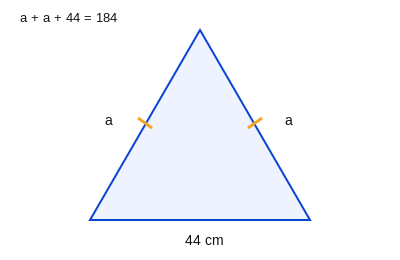
The perimeter of an isosceles triangle is 184 cm. If the base is 44 cm, find the length of the equal sides (in cm).
एक समद्विबाहु त्रिभुज का परिमाप 184 cm है। यदि आधार 44 cm है, तो समान भुजाओं की लंबाई (cm में) ज्ञात कीजिए।
  1. A72
  2. B75
  3. C78
  4. D70
Show answer

Concept: An isosceles triangle has two equal sides; perimeter =2a+b.

  1. 2a+44=184.
  2. 2a=140 ⇒ a=70cm.

Trick: Equal side =perimeter−base2=184−442.

Answer: (D) 70

अवधारणा: समद्विबाहु त्रिभुज की दो भुजाएँ बराबर होती हैं; परिमाप =2a+b।

  1. 2a+44=184।
  2. 2a=140 ⇒ a=70cm।

ट्रिक: समान भुजा =परिमाप−आधार2।

उत्तर: (D) 70

RRB NTPC Undergraduate CBT 1MathematicsMensuration – TriangleRRB NTPC Undergraduate CBT 1 2024 · 3 Sep Shift 2 →
Q5671.
If the interest earned during the 2nd year on a certain sum is ₹2,508, and the rate of interest is 20% per annum compounded annually, then the sum is:
यदि किसी निश्चित राशि पर 2रे वर्ष के दौरान अर्जित ब्याज ₹2,508 है, और ब्याज की दर वार्षिक रूप से संयोजित 20% प्रति वर्ष है, तो राशि है:
  1. A₹9,695
  2. B₹10,315
  3. C₹10,450
  4. D₹10,005
Show answer

Concept: Under annual compounding, interest of the 2nd year =P×R100×(1+R100).

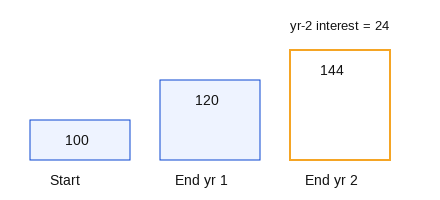
  1. Take P=100: after year 1 amount =120; year-2 interest =20% of 120=24.
  2. So year-2 interest =24% of P: 0.24P=2508.
  3. P=25080.24=10450.

Trick: 2nd-year CI at 20% is 24% of the sum ⇒ 2508×10024.

Answer: (C) ₹10,450

अवधारणा: वार्षिक चक्रवृद्धि में दूसरे वर्ष का ब्याज =P×R100×(1+R100)।

  1. P=100 लें: पहले वर्ष बाद मिश्रधन =120; दूसरे वर्ष का ब्याज =120 का 20%=24।
  2. अतः दूसरे वर्ष का ब्याज =P का 24%: 0.24P=2508।
  3. P=25080.24=10450।

ट्रिक: 20% पर दूसरे वर्ष का CI मूलधन का 24% ⇒ 2508×10024।

उत्तर: (C) ₹10,450

RRB NTPC Undergraduate CBT 1MathematicsCompound InterestRRB NTPC Undergraduate CBT 1 2024 · 3 Sep Shift 2 →
Q5672.
Simplify: x(3x − 9) + 3(x2 − 2) + 14
सरल कीजिए: x(3x − 9) + 3(x2 − 2) + 14
  1. A6x2 − 9x + 8
  2. B−6x2 − 9x − 8
  3. C−6x2 − 9x + 8
  4. D6x2 − 9x − 8
Show answer

Concept: Expand each bracket, then add like terms.

  1. x(3x−9)=3x2−9x.
  2. 3(x2−2)=3x2−6.
  3. Sum: 3x2−9x+3x2−6+14=6x2−9x+8.

Trick: Sign check: constant =−6+14=+8 and x2 coefficient is positive ⇒ only option (A) fits.

Answer: (A) 6x2−9x+8

अवधारणा: हर कोष्ठक खोलें, फिर समान पद जोड़ें।

  1. x(3x−9)=3x2−9x।
  2. 3(x2−2)=3x2−6।
  3. योग: 3x2−9x+3x2−6+14=6x2−9x+8।

ट्रिक: चिह्न जाँच: अचर =−6+14=+8 और x2 का गुणांक धनात्मक ⇒ केवल (A)।

उत्तर: (A) 6x2−9x+8

RRB NTPC Undergraduate CBT 1MathematicsAlgebra – SimplificationRRB NTPC Undergraduate CBT 1 2024 · 3 Sep Shift 2 →
Q5673.
I bought two bicycles for ₹1,200. I sold the first one at a loss of 8% and the second at a gain of 17%. If, on the whole I made neither a loss nor a gain, find the cost price (in ₹) of the first bicycle.
मैंने दो साइकिलें ₹1,200 में खरीदीं। मैंने पहली साइकिल 8% की हानि पर और दूसरी 17% के लाभ पर बेची। यदि कुल मिलाकर मुझे न तो हानि हुई और न ही लाभ, तो पहली साइकिल का क्रय मूल्य (₹ में) ज्ञात कीजिए।
  1. A840
  2. B836
  3. C816
  4. D800
Show answer

Concept: No overall profit/loss ⇒ loss on the first equals gain on the second.

  1. Let CP of first =x; then 8% of x=17% of (1200−x).
  2. 8x=20400−17x ⇒ 25x=20400 ⇒ x=816.
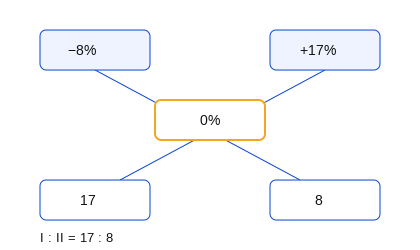
  3. Alligation: −8 and +17 around 0 ⇒ ratio 17:8; first =1725×1200=816.

Trick: Mean 0%: CP ratio = opposite differences 17:8.

Answer: (C) 816

अवधारणा: कुल लाभ/हानि शून्य ⇒ पहली पर हानि = दूसरी पर लाभ।

  1. माना पहली का क्रय मूल्य =x; तब x का 8%=(1200−x) का 17%।
  2. 8x=20400−17x ⇒ 25x=20400 ⇒ x=816।
  3. एलिगेशन: −8 और +17, माध्य 0 ⇒ अनुपात 17:8; पहली =1725×1200=816।

ट्रिक: माध्य 0%: क्रय मूल्य का अनुपात = विपरीत अंतर 17:8।

उत्तर: (C) 816

RRB NTPC Undergraduate CBT 1MathematicsProfit and Loss – AlligationRRB NTPC Undergraduate CBT 1 2024 · 3 Sep Shift 2 →
Q5674.
The cost of 7 pens and 17 pencils is ₹92. If the cost of a pen decreases by ₹0.50 and the cost of a pencil increases by ₹8, then the cost of 8 pens and 14 pencils is ₹186. What is the original cost of 9 pens and 6 pencils?
7 पेन और 17 पेंसिलों का मूल्य ₹92 है। यदि एक पेन का मूल्य ₹0.50 घट जाए और एक पेंसिल का मूल्य ₹8 बढ़ जाए, तो 8 पेन और 14 पेंसिलों का मूल्य ₹186 हो जाता है। 9 पेन और 6 पेंसिलों का मूल मूल्य क्या है?
  1. A₹35
  2. B₹43
  3. C₹41
  4. D₹39
Show answer

Concept: Form two equations in pen price a and pencil price b and solve by elimination.

  1. 7a+17b=92 … (1)
  2. 8(a−0.5)+14(b+8)=186 ⇒ 8a+14b=78 … (2)
  3. (1)×8−(2)×7: 136b−98b=736−546 ⇒ 38b=190 ⇒ b=5; then 7a=92−85 ⇒ a=1.
  4. 9a+6b=9+30=39.

Trick: Check (1): 7×1+17×5=92 ✓.

Answer: (D) ₹39

अवधारणा: पेन का मूल्य a और पेंसिल का b मानकर दो समीकरण बनाएँ और विलोपन से हल करें।

  1. 7a+17b=92 … (1)
  2. 8(a−0.5)+14(b+8)=186 ⇒ 8a+14b=78 … (2)
  3. (1)×8−(2)×7: 38b=190 ⇒ b=5; फिर 7a=92−85 ⇒ a=1।
  4. 9a+6b=9+30=39।

ट्रिक: जाँच (1): 7×1+17×5=92 ✓।

उत्तर: (D) ₹39

RRB NTPC Undergraduate CBT 1MathematicsLinear EquationsRRB NTPC Undergraduate CBT 1 2024 · 3 Sep Shift 2 →
Q5675.
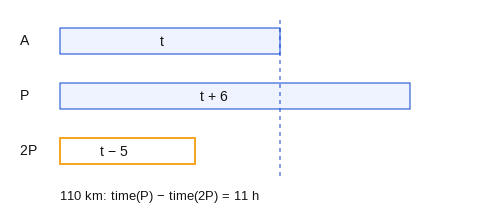
In covering a distance of 110 km, Pranay takes 6 hours more than Aman. If Pranay doubles his speed, then he would take 5 hours less than Aman. Pranay's speed is:
110 km की दूरी तय करने में, प्रणय, अमन से 6 घंटे अधिक लेता है। यदि प्रणय अपनी चाल दोगुनी कर दे, तो वह अमन से 5 घंटे कम समय लेगा। प्रणय की चाल है:
  1. A6 km/hr
  2. B5 km/hr
  3. C11 km/hr
  4. D14 km/hr
Show answer

Concept: Time=DistanceSpeed; doubling speed halves time.

  1. Let Pranay’s speed =p, Aman’s time =t: 110p=t+6 and 1102p=t−5.
  2. Subtract: 110p−55p=11 ⇒ 55p=11.
  3. p=5km/h (Pranay takes 22 h, Aman 16 h, doubled speed 11 h).

Trick: Doubling speed saves half the time: 12T=6+5=11 ⇒ T=22 h ⇒ p=11022=5.

Answer: (B) 5km/hr

अवधारणा: समय=दूरीचाल; चाल दोगुनी करने पर समय आधा।

  1. माना प्रणय की चाल =p, अमन का समय =t: 110p=t+6 और 1102p=t−5।
  2. घटाने पर: 110p−55p=11 ⇒ 55p=11।
  3. p=5km/h (प्रणय 22 घंटे, अमन 16 घंटे, दोगुनी चाल पर 11 घंटे)।

ट्रिक: दोगुनी चाल से आधा समय बचता है: 12T=11 ⇒ T=22 ⇒ p=5।

उत्तर: (B) 5km/hr

RRB NTPC Undergraduate CBT 1MathematicsTime and DistanceRRB NTPC Undergraduate CBT 1 2024 · 3 Sep Shift 2 →
Q5676.
An amount of ₹785 is divided among three persons in the ratio of 2 : 6 : 17. The difference between the largest and the smallest shares (in ₹) in the distribution is:
₹785 की राशि को तीन व्यक्तियों में 2 : 6 : 17 के अनुपात में विभाजित किया जाता है। इस वितरण में सबसे बड़े और सबसे छोटे हिस्सों के बीच का अंतर (₹ में) है:
  1. A471
  2. B496
  3. C566
  4. D434
Show answer

Concept: Total parts = sum of ratio terms; each part = total ÷ parts.

  1. Total parts =2+6+17=25.
  2. One part =78525=31.4.
  3. Largest − smallest =(17−2) parts =15×31.4=471.

Trick: Difference of shares =difference of ratio termssum of terms×total=1525×785.

Answer: (A) ₹471

अवधारणा: कुल भाग = अनुपात के पदों का योग; एक भाग = कुल राशि ÷ भाग।

  1. कुल भाग =2+6+17=25।
  2. एक भाग =78525=31.4।
  3. सबसे बड़ा − सबसे छोटा =15×31.4=471।

ट्रिक: अंतर =1525×785=471 सीधे लिखें।

उत्तर: (A) ₹471

RRB NTPC Undergraduate CBT 1MathematicsRatio and ProportionRRB NTPC Undergraduate CBT 1 2024 · 3 Sep Shift 2 →
Q5677.
The sum of all interior angles of a regular polygon is 1620°. What is the measure (in degrees) of its each exterior angle?
एक सम बहुभुज के सभी अंतः कोणों का योग 1620° है। इसके प्रत्येक बाह्य कोण का माप (डिग्री में) क्या है?
  1. A32811
  2. B31811
  3. C33811
  4. D34811
Show answer

Concept: Sum of interior angles of an n-sided polygon =(n−2)×180∘; each exterior angle of a regular polygon =360∘n.

  1. (n−2)×180=1620⇒n−2=9⇒n=11.
  2. Exterior angle =36011=32811∘.

Yaad rakhein: Exterior angles of any polygon always add up to 360∘.

Answer: (A) 32811

अवधारणा: n भुजाओं वाले बहुभुज के अंतः कोणों का योग =(n−2)×180∘; सम बहुभुज का प्रत्येक बाह्य कोण =360∘n।

  1. (n−2)×180=1620⇒n−2=9⇒n=11।
  2. बाह्य कोण =36011=32811∘।

याद रखें: किसी भी बहुभुज के बाह्य कोणों का योग सदा 360∘ होता है।

उत्तर: (A) 32811

RRB NTPC Undergraduate CBT 1MathematicsPolygons – AnglesRRB NTPC Undergraduate CBT 1 2024 · 3 Sep Shift 2 →
Q5678.
The number 578289151 is divisible by which of the following?
संख्या 578289151 निम्नलिखित में से किससे विभाज्य है?
  1. A11
  2. B6
  3. C4
  4. D10
Show answer

Concept: Divisibility by 11: (sum of digits at odd places) − (sum at even places) must be 0 or a multiple of 11.

  1. Digits of 578289151 from the right: odd places 1+1+8+8+5=23, even places 5+9+2+7=23.
  2. Difference =23−23=0 → divisible by 11.
  3. Not by 6 or 10 (odd, ends in 1) and not by 4 (51 is not a multiple of 4).

Trick: Last digit odd → straight away rule out 4, 6 and 10.

Answer: (A) 11

अवधारणा: 11 से विभाज्यता: विषम स्थानों के अंकों का योग − सम स्थानों के अंकों का योग = 0 या 11 का गुणज।

  1. दाएँ से: विषम स्थान 1+1+8+8+5=23, सम स्थान 5+9+2+7=23।
  2. अंतर =0 → 11 से विभाज्य।
  3. संख्या विषम है (अंत में 1), अतः 4, 6, 10 से नहीं।

ट्रिक: अंतिम अंक विषम → 4, 6, 10 तुरंत हटाएँ।

उत्तर: (A) 11

RRB NTPC Undergraduate CBT 1MathematicsDivisibility RulesRRB NTPC Undergraduate CBT 1 2024 · 3 Sep Shift 2 →
Q5679.
If 2 times Mary’s present age is 16 years more than 3 times Diya's present age, and 2 times Diya's present age is 2 years less than Mary's present age, then what is the difference (in years) between the ages of Mary and Diya?
यदि मैरी की वर्तमान आयु का 2 गुना, दीया की वर्तमान आयु के 3 गुने से 16 वर्ष अधिक है, और दीया की वर्तमान आयु का 2 गुना, मैरी की वर्तमान आयु से 2 वर्ष कम है, तो मैरी और दीया की आयु के बीच का अंतर (वर्षों में) क्या है?
  1. A14
  2. B10
  3. C17
  4. D15
Show answer

Concept: Form two linear equations from the statements and solve.

  1. 2M=3D+16 and 2D=M−2⇒M=2D+2.
  2. Substitute: 2(2D+2)=3D+16⇒4D+4=3D+16⇒D=12.
  3. M=2(12)+2=26; difference =26−12=14.

Trick: Check: 2×26=52=3×12+16 ✔.

Answer: (A) 14

अवधारणा: कथनों से दो रैखिक समीकरण बनाकर हल करें।

  1. 2M=3D+16 तथा 2D=M−2⇒M=2D+2।
  2. 2(2D+2)=3D+16⇒D=12।
  3. M=26; अंतर =26−12=14 वर्ष।

ट्रिक: जाँच: 2×26=52=36+16 ✔।

उत्तर: (A) 14

RRB NTPC Undergraduate CBT 1MathematicsProblems on AgesRRB NTPC Undergraduate CBT 1 2024 · 3 Sep Shift 2 →
Q5680.
A book with a printed price of ₹4,500 is available on successive discounts of 10%, 20% and 25%. Find the selling price of the book.
₹4,500 के अंकित मूल्य वाली एक पुस्तक पर 10%, 20% और 25% की क्रमिक छूट उपलब्ध है। पुस्तक का विक्रय मूल्य ज्ञात कीजिए।
  1. A₹2,420
  2. B₹2,430
  3. C₹2,440
  4. D₹2,410
Show answer

Concept: After successive discounts, SP = MP × product of (1 − each rate).

  1. SP=4500×0.90×0.80×0.75.
  2. 4500×0.9=4050; 4050×0.8=3240; 3240×0.75=2430.

Trick: Apply the 25% first: 4500×34=3375, then ×0.9×0.8 – order does not matter.

Answer: (B) ₹2,430

अवधारणा: क्रमिक छूट के बाद विक्रय मूल्य = अंकित मूल्य × प्रत्येक (1 − दर) का गुणनफल।

  1. SP=4500×0.90×0.80×0.75।
  2. 4050→3240→2430।

ट्रिक: छूटों का क्रम बदलने से उत्तर नहीं बदलता।

उत्तर: (B) ₹2,430

RRB NTPC Undergraduate CBT 1MathematicsSuccessive DiscountsRRB NTPC Undergraduate CBT 1 2024 · 3 Sep Shift 2 →