Question bank

Q&A: practice questions with answers

Search questions on any topic. Filter by exam category, exam, subject and topic, try the question, then open the answer and explanation.

Courses – airGurukul

20,719 questions found.

Q561.
Two sets of numbers are given below. In each set of numbers, certain mathematical operation(s) on the first number result(s) in the second number. Similarly, certain mathematical operation(s) on the second number result(s) in the third number and so on. Which of the given options follows the same set of operations as in the given sets? (NOTE: Operations should be performed on the whole numbers, without breaking down the numbers into their constituent digits. E.g. 13 – Operations on 13 such as adding to/subtracting from/multiplying with 13 can be performed. Breaking down 13 into 1 and 3 and then performing mathematical operations on 1 and 3 is not allowed.)
6 – 36 – 72 – 144 ; 7 – 49 – 98 – 196
नीचे संख्याओं के दो समुच्चय दिए गए हैं। प्रत्येक समुच्चय में, पहली संख्या पर कुछ गणितीय संक्रिया(एँ) करने पर दूसरी संख्या प्राप्त होती है। इसी प्रकार, दूसरी संख्या पर कुछ गणितीय संक्रिया(एँ) करने पर तीसरी संख्या प्राप्त होती है, और इसी तरह आगे भी। दिए गए विकल्पों में से कौन-सा विकल्प दिए गए समुच्चयों की तरह संक्रियाओं के समान समुच्चय का अनुसरण करता है? (ध्यान दें: संक्रियाएँ पूर्ण संख्याओं पर की जानी चाहिए, संख्याओं को उनके घटक अंकों में विभाजित किए बिना। उदाहरण के लिए 13 – 13 पर संक्रियाएँ जैसे 13 में जोड़ना/घटाना/गुणा करना की जा सकती हैं। 13 को 1 और 3 में विभाजित करके फिर 1 और 3 पर गणितीय संक्रियाएँ करने की अनुमति नहीं है।)
6 – 36 – 72 – 144 ; 7 – 49 – 98 – 196
  1. A12 – 144 – 288 – 576
  2. B5 – 25 – 50 – 110
  3. C15 – 225 – 625 – 676
  4. D8 – 64 – 128 – 226
Show answer

Concept: Find the rule: square, then ×2, then ×2.

  1. 6 → 36 (6²) → 72 (×2) → 144 (×2); 7 → 49 → 98 → 196.
  2. A: 12 → 144 → 288 → 576 ✔
  3. B: 50 × 2 = 100 ≠ 110; C: 225 × 2 ≠ 625; D: 128 × 2 = 256 ≠ 226.

Short trick: Last number must be 4 × second number: 4 × 144 = 576 ✔ — check only this.

Answer: (A) 12 – 144 – 288 – 576

अवधारणा: नियम: वर्ग, फिर ×2, फिर ×2।

  1. 6 → 36 → 72 → 144; 7 → 49 → 98 → 196।
  2. A: 12 → 144 → 288 → 576 ✔
  3. B: 50 × 2 ≠ 110; C: 225 × 2 ≠ 625; D: 128 × 2 ≠ 226।

शॉर्ट ट्रिक: अंतिम संख्या = दूसरी संख्या × 4: 144 × 4 = 576 ✔।

उत्तर: (A) 12 – 144 – 288 – 576
RRB ALP CBT 1General Intelligence and ReasoningNumber sets – operationsRRB ALP CBT 1 2025 · 16 Feb Shift 2 →
Q562.
A question is followed by two statements numbered (I) and (II). You have to decide whether the data provided in the statements are sufficient to answer the question. Read both the statements and select the most appropriate answer.
Question:
Among 5 poles, I, L, O, M and D each having a different height, which pole is the tallest?
Statements:
(I) M is taller than L. L is taller than D.
(II) D is shorter than I but taller than O.
एक प्रश्न के बाद दो कथन (I) और (II) दिए गए हैं। आपको यह तय करना है कि कथनों में दिए गए आँकड़े प्रश्न का उत्तर देने के लिए पर्याप्त हैं या नहीं। दोनों कथनों को पढ़ें और सबसे उपयुक्त उत्तर चुनें।
प्रश्न:
5 खंभों I, L, O, M और D में से प्रत्येक की ऊँचाई भिन्न है, कौन-सा खंभा सबसे ऊँचा है?
कथन:
(I) M, L से ऊँचा है। L, D से ऊँचा है।
(II) D, I से छोटा है परंतु O से ऊँचा है।
  1. AData in both statements I and II together are not sufficient to answer the question.कथन I और II दोनों के आँकड़े एक साथ भी प्रश्न का उत्तर देने के लिए पर्याप्त नहीं हैं।
  2. BData in both statements I and II together (and not statement I alone or statement II alone) are sufficient to answer the question.कथन I और II दोनों के आँकड़े एक साथ (और न तो अकेले कथन I और न ही अकेले कथन II) प्रश्न का उत्तर देने के लिए पर्याप्त हैं।
  3. CData in statement I alone is sufficient to answer the question while data in statement II is not.अकेले कथन I के आँकड़े प्रश्न का उत्तर देने के लिए पर्याप्त हैं, जबकि कथन II के आँकड़े नहीं।
  4. DData in statement II alone is sufficient to answer the question while data in statement I is not.अकेले कथन II के आँकड़े प्रश्न का उत्तर देने के लिए पर्याप्त हैं, जबकि कथन I के आँकड़े नहीं।
Show answer

Concept: Combine the statements and see if one pole is above all others.

  1. I: M > L > D (I and O unknown).
  2. II: I > D > O.
  3. Together: M > L > D > O and I > D — M vs I unknown, so tallest may be M or I.

Short trick: Two poles (M and I) both have nobody above them → two candidates → not sufficient.

Answer: (A) Both statements together are not sufficient

अवधारणा: कथनों को मिलाकर देखें कि कोई एक खंभा सबसे ऊपर है या नहीं।

  1. I: M > L > D।
  2. II: I > D > O।
  3. मिलाकर: M > L > D > O और I > D — M और I की तुलना अज्ञात।

शॉर्ट ट्रिक: M और I दोनों के ऊपर कोई नहीं → दो विकल्प → पर्याप्त नहीं।

उत्तर: (A) दोनों कथन मिलकर भी पर्याप्त नहीं

RRB ALP CBT 1General Intelligence and ReasoningData sufficiency – rankingRRB ALP CBT 1 2025 · 16 Feb Shift 2 →
Q563.
Read the given statements and conclusions carefully. Assuming that the information given in the statements is true, even if it appears to be at variance with commonly known facts, decide which of the given conclusions logically follow(s) from the statements.
Statements:
All angry are birds.
Some angry are pigs.
Conclusion (I): Some birds are pigs.
Conclusion (II): All pigs are birds.
दिए गए कथनों और निष्कर्षों को ध्यानपूर्वक पढ़ें। यह मानते हुए कि कथनों में दी गई जानकारी सत्य है, भले ही वह सामान्य रूप से ज्ञात तथ्यों से भिन्न प्रतीत होती हो, निर्णय लें कि दिए गए निष्कर्षों में से कौन-सा/कौन-से निष्कर्ष तार्किक रूप से कथनों का अनुसरण करता है/करते हैं।
कथन:
सभी क्रोधी, पक्षी हैं।
कुछ क्रोधी, सूअर हैं।
निष्कर्ष (I): कुछ पक्षी, सूअर हैं।
निष्कर्ष (II): सभी सूअर, पक्षी हैं।
  1. AOnly conclusion (II) followsकेवल निष्कर्ष (II) अनुसरण करता है
  2. BBoth conclusion (I) and (II) followनिष्कर्ष (I) और (II) दोनों अनुसरण करते हैं
  3. COnly conclusion (I) followsकेवल निष्कर्ष (I) अनुसरण करता है
  4. DNeither conclusion (I) and (II) followsन तो निष्कर्ष (I) और न ही (II) अनुसरण करता है
Show answer

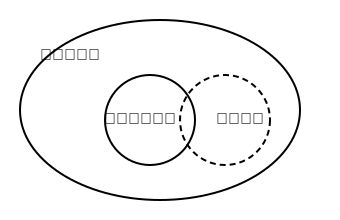
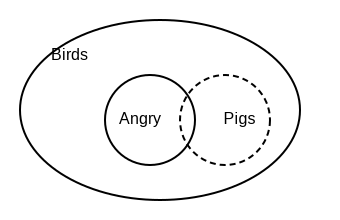
Concept: Draw the least-overlap Venn diagram.

  1. All angry are birds → Angry circle inside Birds.
  2. Some angry are pigs → Pigs overlaps Angry, hence also overlaps Birds → “Some birds are pigs” ✔.
  3. Pigs may extend outside Birds → “All pigs are birds” ✘.

Short trick: “All A are B” + “Some A are C” ⇒ always “Some B are C” (the common A part is both B and C).

Answer: (C) Only conclusion (I) follows

अवधारणा: न्यूनतम अधिव्यापन वाला वेन आरेख बनाएँ।

  1. सभी क्रोधी पक्षी हैं → क्रोधी वृत्त पक्षी के अंदर।
  2. कुछ क्रोधी सूअर हैं → सूअर, क्रोधी को काटता है, अतः पक्षी को भी → “कुछ पक्षी सूअर हैं” ✔।
  3. सूअर पक्षी के बाहर भी हो सकता है → “सभी सूअर पक्षी हैं” ✘।

शॉर्ट ट्रिक: “सभी A, B हैं” + “कुछ A, C हैं” ⇒ हमेशा “कुछ B, C हैं”।

उत्तर: (C) केवल निष्कर्ष (I) अनुसरण करता है

RRB ALP CBT 1General Intelligence and ReasoningSyllogismRRB ALP CBT 1 2025 · 16 Feb Shift 2 →
Q564.
Among five people named V, W, X, Y and Z, each has a different age. Z is older than Y but younger than W. X is older than V but younger than Y. Who among them is the second oldest?
V, W, X, Y और Z नाम के पाँच व्यक्तियों में से प्रत्येक की आयु भिन्न है। Z, Y से बड़ा है परंतु W से छोटा है। X, V से बड़ा है परंतु Y से छोटा है। उनमें से दूसरा सबसे बड़ा कौन है?
  1. AW
  2. BX
  3. CZ
  4. DV
Show answer

Concept: Chain the inequalities.

  1. W > Z > Y (Z older than Y, younger than W).
  2. Y > X > V.
  3. Order: W > Z > Y > X > V → second oldest = Z.

Short trick: W is above Z and nobody is above W → W 1st, Z 2nd.

Answer: (C) Z

अवधारणा: असमताओं को जोड़ें।

  1. W > Z > Y।
  2. Y > X > V।
  3. क्रम: W > Z > Y > X > V → दूसरा सबसे बड़ा = Z।

शॉर्ट ट्रिक: W सबसे ऊपर, उसके बाद Z।

उत्तर: (C) Z

RRB ALP CBT 1General Intelligence and ReasoningRanking – ageRRB ALP CBT 1 2025 · 16 Feb Shift 2 →
Q565.
If ‘A’ stands for ‘÷’, ‘B’ stands for ‘×’, ‘C’ stands for ‘+’ and ‘D’ stands for ‘−’, what will come in place of the question mark (?) in the following equation?
159 C 60 A 12 B 11 D 203 = ?
यदि ‘A’ का अर्थ ‘÷’, ‘B’ का अर्थ ‘×’, ‘C’ का अर्थ ‘+’ और ‘D’ का अर्थ ‘−’ है, तो निम्नलिखित समीकरण में प्रश्न चिह्न (?) के स्थान पर क्या आएगा?
159 C 60 A 12 B 11 D 203 = ?
  1. A10
  2. B12
  3. C11
  4. D14
Show answer

Concept: Replace and solve with BODMAS.

  1. 159 + 60 ÷ 12 × 11 − 203
  2. = 159 + 5 × 11 − 203 = 159 + 55 − 203 = 11

Short trick: Do ÷ and × first: 60 ÷ 12 × 11 = 55; 214 − 203 = 11.

Answer: (C) 11

अवधारणा: प्रतिस्थापन करके BODMAS लगाएँ।

  1. 159 + 60 ÷ 12 × 11 − 203
  2. = 159 + 55 − 203 = 11

शॉर्ट ट्रिक: पहले ÷ और ×: 55; 214 − 203 = 11।

उत्तर: (C) 11

RRB ALP CBT 1General Intelligence and ReasoningSymbol substitution – BODMASRRB ALP CBT 1 2025 · 16 Feb Shift 2 →
Q566.
Each of P, Q, R, S, T, U and V has an exam on a different day of a week starting from Monday and ending on Sunday of the same week. R has an exam on Friday. Only 2 people have an exam between R and Q. S has an exam immediately before U and P has an exam immediately after V. Only 2 people have an exam between T and U.
Who has an exam on Monday?
P, Q, R, S, T, U और V में से प्रत्येक की परीक्षा एक ही सप्ताह के सोमवार से शुरू होकर रविवार को समाप्त होने वाले सप्ताह के अलग-अलग दिन है। R की परीक्षा शुक्रवार को है। R और Q के बीच केवल 2 व्यक्तियों की परीक्षा है। S की परीक्षा U से ठीक पहले है और P की परीक्षा V के ठीक बाद है। T और U के बीच केवल 2 व्यक्तियों की परीक्षा है।
सोमवार को किसकी परीक्षा है?
  1. AS
  2. BP
  3. CT
  4. DU
Show answer

Concept: Place R, then Q, then the consecutive pairs.

  1. R = Friday; two people between R and Q → Q = Tuesday (Monday-start week has no day after Sunday).
  2. Free: Mon, Wed, Thu, Sat, Sun. Pairs S–U and V–P need consecutive days → (Wed, Thu) and (Sat, Sun).
  3. T and U have two between: if U = Thu, T = Mon ✔. So S = Wed, U = Thu, V = Sat, P = Sun, T = Mon.
  4. MonTueWedThuFriSatSun
    TQSURVP

Short trick: Two consecutive pairs fill the only two free blocks of two days, leaving Monday for T.

Answer: (C) T

अवधारणा: पहले R, फिर Q, फिर क्रमागत जोड़े रखें।

  1. R = शुक्रवार; R और Q के बीच दो → Q = मंगलवार।
  2. खाली: सोम, बुध, गुरु, शनि, रवि। S–U और V–P जोड़े → (बुध, गुरु) और (शनि, रवि)।
  3. T और U के बीच दो: U = गुरु, T = सोम ✔।
  4. सोममंगलबुधगुरुशुक्रशनिरवि
    TQSURVP

शॉर्ट ट्रिक: दो क्रमागत जोड़े दो खाली दो-दिनी खंड भरते हैं, सोमवार T के लिए बचता है।

उत्तर: (C) T

RRB ALP CBT 1General Intelligence and ReasoningScheduling puzzle – daysRRB ALP CBT 1 2025 · 16 Feb Shift 2 →
Q567.
BE 11 is related to AI 33 in a certain way. In the same way, HK 16 is related to GO 48. To which of the given options is SV 18 related, following the same logic?
BE 11 किसी निश्चित प्रकार से AI 33 से संबंधित है। उसी प्रकार, HK 16, GO 48 से संबंधित है। समान तर्क का अनुसरण करते हुए, SV 18 दिए गए विकल्पों में से किससे संबंधित है?
  1. ATY 55
  2. BRZ 54
  3. CTZ 65
  4. DRY 55
Show answer

Concept: Find separate rules for each part.

  1. 1st letter −1: B→A, H→G, S→R.
  2. 2nd letter +4: E→I, K→O, V→Z.
  3. Number ×3: 11→33, 16→48, 18→54.

Short trick: Number ×3 → 54 kills A, C, D at once → RZ 54.

Answer: (B) RZ 54

अवधारणा: हर भाग के लिए अलग नियम।

  1. पहला अक्षर −1: B→A, H→G, S→R।
  2. दूसरा अक्षर +4: E→I, K→O, V→Z।
  3. संख्या ×3: 18→54।

शॉर्ट ट्रिक: संख्या ×3 = 54 से ही A, C, D हट जाते हैं → RZ 54।

उत्तर: (B) RZ 54

RRB ALP CBT 1General Intelligence and ReasoningAnalogy – letters and numbersRRB ALP CBT 1 2025 · 16 Feb Shift 2 →
Q568.
Refer to the following letter series and answer the question that follows. Counting to be done from left to right only.
(Left) O K A E K J E E K R Y U V J M W O F E O Y A (Right)
How many such vowel are there, each of which is immediately preceded by a consonant and also immediately followed by a vowel?
निम्नलिखित अक्षर श्रृंखला को देखें और नीचे दिए गए प्रश्न का उत्तर दें। गिनती केवल बाएँ से दाएँ की जानी है।
(बाएँ) O K A E K J E E K R Y U V J M W O F E O Y A (दाएँ)
ऐसे कितने स्वर हैं, जिनमें से प्रत्येक के ठीक पहले एक व्यंजन है और ठीक बाद एक स्वर है?
  1. A3
  2. B5
  3. C4
  4. D2
Show answer

Concept: Pattern needed: consonant – vowel – vowel.

  1. O K A E K J E E K R Y U V J M W O F E O Y A
  2. K A E ✔, J E E ✔, F E O ✔
  3. (Y U V, W O F, Y A end ✘) → 3.

Short trick: Look only at vowel pairs (AE, EE, EO): count those whose left neighbour is a consonant → 3.

Answer: (A) 3

अवधारणा: पैटर्न: व्यंजन – स्वर – स्वर।

  1. O K A E K J E E K R Y U V J M W O F E O Y A
  2. K A E ✔, J E E ✔, F E O ✔
  3. कुल = 3।

शॉर्ट ट्रिक: केवल स्वर-युग्म (AE, EE, EO) देखें जिनके पहले व्यंजन है → 3।

उत्तर: (A) 3

RRB ALP CBT 1General Intelligence and ReasoningLetter series – consonant–vowel–vowelRRB ALP CBT 1 2025 · 16 Feb Shift 2 →
Q569.
Refer to the following series and answer the question (All numbers are single digit numbers only. Counting to be done from left to right.)
(Left) 9 1 7 5 1 1 4 7 2 1 9 5 4 8 5 6 6 8 7 6 8 1 5 7 6 2 8 (Right)
How many such odd numbers are there each of which is immediately preceded by an even number and also immediately followed by an even number?
निम्नलिखित श्रृंखला को देखें और प्रश्न का उत्तर दें (सभी संख्याएँ केवल एक अंक वाली हैं। गिनती बाएँ से दाएँ की जानी है।)
(बाएँ) 9 1 7 5 1 1 4 7 2 1 9 5 4 8 5 6 6 8 7 6 8 1 5 7 6 2 8 (दाएँ)
ऐसी कितनी विषम संख्याएँ हैं जिनमें से प्रत्येक के ठीक पहले एक सम संख्या है और ठीक बाद भी एक सम संख्या है?
  1. A5
  2. B3
  3. C4
  4. D2
Show answer

Concept: Pattern: even – odd – even.

  1. 9 1 7 5 1 1 4 7 2 1 9 5 4 8 5 6 6 8 7 6 8 1 5 7 6 2 8
  2. 4 7 2 ✔, 8 5 6 ✔, 8 7 6 ✔
  3. Total = 3.

Short trick: Scan only for isolated odd digits (an odd digit with no odd neighbour).

Answer: (B) 3

अवधारणा: पैटर्न: सम – विषम – सम।

  1. 9 1 7 5 1 1 4 7 2 1 9 5 4 8 5 6 6 8 7 6 8 1 5 7 6 2 8
  2. 4 7 2 ✔, 8 5 6 ✔, 8 7 6 ✔
  3. कुल = 3।

शॉर्ट ट्रिक: केवल अकेले विषम अंक खोजें (जिनके दोनों पड़ोसी विषम न हों)।

उत्तर: (B) 3

RRB ALP CBT 1General Intelligence and ReasoningNumber series – odd between evensRRB ALP CBT 1 2025 · 16 Feb Shift 2 →
Q570.
In a certain code language,
'A + B' means 'A is the son of B',
'A – B' means 'A is the brother of B',
'A × B' means 'A is the wife of B' and
'A ÷ B' means 'A is the father of B'.
Based on the above, how is T related to M if 'T × R – Y + G ÷ M'?
एक निश्चित कूट भाषा में,
'A + B' का अर्थ है 'A, B का पुत्र है',
'A – B' का अर्थ है 'A, B का भाई है',
'A × B' का अर्थ है 'A, B की पत्नी है' और
'A ÷ B' का अर्थ है 'A, B का पिता है'।
उपरोक्त के आधार पर, यदि 'T × R – Y + G ÷ M' है, तो T, M से किस प्रकार संबंधित है?
  1. ABrother's wifeभाई की पत्नी
  2. BMotherमाता
  3. CSisterबहन
  4. DBrother's daughterभाई की पुत्री
Show answer

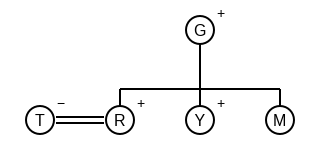
Concept: Decode left to right and draw the tree.

  1. T × R: T is wife of R.
  2. R − Y: R is brother of Y; Y + G: Y is son of G.
  3. G ÷ M: G is father of M → R, Y, M are siblings.
  4. T is the wife of M’s brother.

Short trick: Read the chain as a path T → R → (G) → M: wife of → brother of → sibling ⇒ T = brother’s wife.

Answer: (A) Brother's wife

अवधारणा: बाएँ से दाएँ कूट खोलें और वंश-वृक्ष बनाएँ।

  1. T × R: T, R की पत्नी है।
  2. R − Y: R, Y का भाई; Y + G: Y, G का पुत्र।
  3. G ÷ M: G, M का पिता → R, Y, M भाई-बहन।
  4. T, M के भाई की पत्नी है।

शॉर्ट ट्रिक: शृंखला T → R → M पढ़ें: पत्नी → भाई ⇒ T = भाई की पत्नी।

उत्तर: (A) भाई की पत्नी

RRB ALP CBT 1General Intelligence and ReasoningCoded blood relationRRB ALP CBT 1 2025 · 16 Feb Shift 2 →
Q571.
Based on the English alphabetical order, three of the following four letter-cluster pairs are alike in a certain way and thus form a group. Which letter-cluster pair DOES NOT belong to that group? (Note: The odd one out is not based on the number of consonants/vowels or their position in the letter-cluster.)
अंग्रेजी वर्णमाला क्रम के आधार पर, निम्नलिखित चार अक्षर-समूह युग्मों में से तीन किसी प्रकार से एकसमान हैं और इस प्रकार एक समूह बनाते हैं। कौन-सा अक्षर-समूह युग्म उस समूह से संबंधित नहीं है? (ध्यान दें: असंगत का निर्धारण व्यंजनों/स्वरों की संख्या या अक्षर-समूह में उनके स्थान के आधार पर नहीं है।)
  1. AXY−ZA
  2. BLM−MQ
  3. CNO−PQ
  4. DQR−ST
Show answer

Concept: In each pair the four letters run consecutively.

  1. XY−ZA: X, Y, Z, A (wrap-around) ✔
  2. NO−PQ ✔, QR−ST ✔
  3. LM−MQ: after M should come N, O → breaks.

Short trick: Check whether the 3rd letter = 2nd letter + 1: Y→Z, O→P, R→S, but M→M ✘.

Answer: (B) LM−MQ

अवधारणा: प्रत्येक युग्म में चारों अक्षर क्रमागत हैं।

  1. XY−ZA ✔ (Z के बाद A)
  2. NO−PQ ✔, QR−ST ✔
  3. LM−MQ: M के बाद N, O आना चाहिए ✘।

शॉर्ट ट्रिक: तीसरा अक्षर = दूसरा + 1? Y→Z, O→P, R→S, पर M→M ✘।

उत्तर: (B) LM−MQ

RRB ALP CBT 1General Intelligence and ReasoningOdd one out – letter pairsRRB ALP CBT 1 2025 · 16 Feb Shift 2 →
Q572.
Based on the English alphabetical order, three of the following four letter-cluster pairs are alike in a certain way and thus form a group. Which letter-cluster pair DOES NOT belong to that group?
(Note: The odd one out is not based on the number of consonants/vowels or their position in the letter-cluster.)
अंग्रेजी वर्णमाला क्रम के आधार पर, निम्नलिखित चार अक्षर-समूह युग्मों में से तीन किसी प्रकार से एकसमान हैं और इस प्रकार एक समूह बनाते हैं। कौन-सा अक्षर-समूह युग्म उस समूह से संबंधित नहीं है? (ध्यान दें: असंगत का निर्धारण व्यंजनों/स्वरों की संख्या या अक्षर-समूह में उनके स्थान के आधार पर नहीं है।)
  1. AMJ - NK
  2. BTQ - JI
  3. COL - PM
  4. DVS - WT
Show answer

Concept: First pair: letter, letter −3; second pair = first pair each +1.

  1. MJ − NK: M−3 = J; M+1 = N, J+1 = K ✔
  2. OL − PM ✔, VS − WT ✔
  3. TQ − JI: J, I is not T+1, Q+1 ✘

Short trick: Second cluster should simply be the next letters of the first (MJ→NK); TQ→UR, not JI.

Answer: (B) TQ - JI

अवधारणा: पहला युग्म: अक्षर, अक्षर −3; दूसरा युग्म = पहले के प्रत्येक अक्षर +1।

  1. MJ − NK ✔
  2. OL − PM ✔, VS − WT ✔
  3. TQ − JI ✘ (होना चाहिए UR)

शॉर्ट ट्रिक: दूसरा समूह पहले का अगला अक्षर होना चाहिए: TQ→UR, JI नहीं।

उत्तर: (B) TQ - JI

RRB ALP CBT 1General Intelligence and ReasoningOdd one out – letter pairsRRB ALP CBT 1 2025 · 16 Feb Shift 2 →
Q573.
WURT is related to RPMZ in a certain way based on the English alphabetical order. In the same way, QNLG is related to LIGM. To which of the following is SPMH related, following the same logic?
अंग्रेजी वर्णमाला क्रम के आधार पर WURT किसी निश्चित प्रकार से RPMZ से संबंधित है। उसी प्रकार, QNLG, LIGM से संबंधित है। समान तर्क का अनुसरण करते हुए, SPMH निम्नलिखित में से किससे संबंधित है?
  1. ANKHN
  2. BNLIM
  3. CMLHM
  4. DMKIN
Show answer

Concept: Find the shift for each position.

  1. W→R, U→P, R→M: −5 each; T→Z: +6.
  2. Check: Q→L, N→I, L→G (−5), G→M (+6) ✔.
  3. SPMH → N K H N.

Short trick: First letter S − 5 = N removes C, D; second P − 5 = K → NKHN.

Answer: (A) NKHN

अवधारणा: हर स्थान का अंतर निकालें।

  1. W→R, U→P, R→M: −5; T→Z: +6।
  2. जाँच: QNLG → LIGM ✔।
  3. SPMH → N K H N।

शॉर्ट ट्रिक: S − 5 = N (C, D हटे); P − 5 = K → NKHN।

उत्तर: (A) NKHN

RRB ALP CBT 1General Intelligence and ReasoningLetter analogy – shiftsRRB ALP CBT 1 2025 · 16 Feb Shift 2 →
Q574.
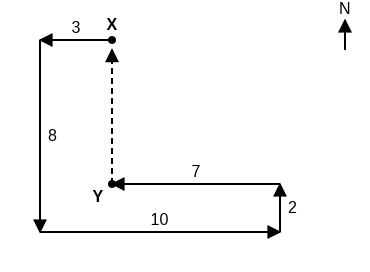
Kamal starts from point X and walks for 3 m towards west. Then he takes a left turn and walks for 8 m. Then he takes a left turn again and walks for 10 m. Then, again, he takes a left turn and walks for 2 m. Once more he takes a left turn and walks for 7 m and stops at a point Y. Towards which direction should he walk in order to reach point A again? (All turns are 90-degree turns only unless specified.)
कमल बिंदु X से शुरू करता है और पश्चिम की ओर 3 m चलता है। फिर वह बाएँ मुड़ता है और 8 m चलता है। फिर वह पुनः बाएँ मुड़ता है और 10 m चलता है। फिर, एक बार और, वह बाएँ मुड़ता है और 2 m चलता है। एक बार फिर वह बाएँ मुड़ता है और 7 m चलकर बिंदु Y पर रुक जाता है। फिर से बिंदु A पर पहुँचने के लिए उसे किस दिशा में चलना चाहिए? (जब तक निर्दिष्ट न हो, सभी मोड़ केवल 90 डिग्री के मोड़ हैं।)
  1. AWestपश्चिम
  2. BEastपूर्व
  3. CNorthउत्तर
  4. DSouthदक्षिण
Show answer

Concept: Trace the path on axes (start X at origin).

  1. 3 W → (−3, 0); left (face S) 8 → (−3, −8); left (face E) 10 → (7, −8).
  2. left (face N) 2 → (7, −6); left (face W) 7 → Y (0, −6).
  3. Y is directly 6 m south of the start, so he must walk North to return.

Short trick: Net east–west: −3 + 10 − 7 = 0; net north–south: −8 + 2 = −6 → he is due south of start → go North.

Answer: (C) North

अवधारणा: पथ को अक्षों पर बनाएँ (प्रारंभ X मूल बिंदु पर)।

  1. 3 पश्चिम → (−3, 0); बाएँ (दक्षिण) 8 → (−3, −8); बाएँ (पूर्व) 10 → (7, −8)।
  2. बाएँ (उत्तर) 2 → (7, −6); बाएँ (पश्चिम) 7 → Y (0, −6)।
  3. Y प्रारंभ बिंदु से ठीक 6 m दक्षिण में है → उत्तर की ओर चलना होगा।

शॉर्ट ट्रिक: पूर्व–पश्चिम: −3 + 10 − 7 = 0; उत्तर–दक्षिण: −8 + 2 = −6 → प्रारंभ के दक्षिण में → उत्तर जाएँ।

उत्तर: (C) उत्तर

RRB ALP CBT 1General Intelligence and ReasoningDirection senseRRB ALP CBT 1 2025 · 16 Feb Shift 2 →
Q575.
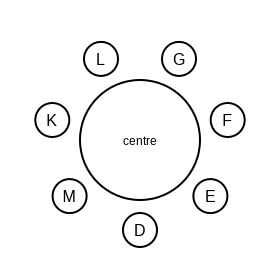
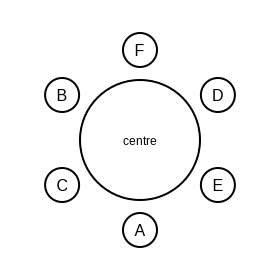
D, E, F, G, K, L and M are sitting around a circular table, facing the centre of the table. F sits third to the left of K. Only one person sits between K and D when counted from the left of D. Only two people sit between L and E when counted from the right of E. G is an immediate neighbour of L.
Who sits third to the right of M?
D, E, F, G, K, L और M एक वृत्ताकार मेज़ के चारों ओर मेज़ के केंद्र की ओर मुख करके बैठे हैं। F, K के बाएँ से तीसरे स्थान पर बैठा है। D के बाएँ से गिनने पर K और D के बीच केवल एक व्यक्ति बैठा है। E के दाएँ से गिनने पर L और E के बीच केवल दो व्यक्ति बैठे हैं। G, L का निकटतम पड़ोसी है।
M के दाएँ से तीसरे स्थान पर कौन बैठा है?
  1. AG
  2. BD
  3. CL
  4. DF
Show answer

Concept: Facing the centre: left = clockwise, right = anticlockwise.

  1. Only one person between K and D counting from D’s left → K is 2nd to the left of D.
  2. F is 3rd to the left of K.
  3. Two people between E and L from E’s right → L is 3rd to the right of E; G next to L → remaining seat for M.
  4. Clockwise from D: D, M, K, L, G, F, E.
  5. 3rd to the right of M: M → D → E → F.

Short trick: With 7 seats, 3rd to the right = 4th to the left: from M go clockwise 4 → K, L, G, F.

Answer: (D) F

अवधारणा: केंद्र की ओर मुख: बायाँ = दक्षिणावर्त, दायाँ = वामावर्त।

  1. D के बाएँ से गिनने पर K और D के बीच एक → K, D के बाएँ दूसरा।
  2. F, K के बाएँ तीसरा।
  3. E के दाएँ से L और E के बीच दो → L, E के दाएँ तीसरा; G, L के पास → M शेष स्थान पर।
  4. दक्षिणावर्त D से: D, M, K, L, G, F, E।
  5. M के दाएँ तीसरा: M → D → E → F।

शॉर्ट ट्रिक: 7 सीटों में दाएँ तीसरा = बाएँ चौथा: M से दक्षिणावर्त 4 → F।

उत्तर: (D) F

RRB ALP CBT 1General Intelligence and ReasoningCircular seating – facing centreRRB ALP CBT 1 2025 · 16 Feb Shift 2 →
Q576.
A, G, H, P, S, and Y live on six different floors of the same building. The lowermost floor in the building is numbered 1, the floor above it is numbered 2, and so on, until the topmost floor is numbered 6. H lives immediately above Y. Only two people live between P and Y. P lives on an odd-numbered floor. S lives immediately below G. Who lives on the topmost floor?
A, G, H, P, S और Y एक ही इमारत की छह अलग-अलग मंज़िलों पर रहते हैं। इमारत की सबसे निचली मंज़िल की संख्या 1 है, उसके ऊपर की मंज़िल की संख्या 2 है, और इसी प्रकार सबसे ऊपरी मंज़िल की संख्या 6 है। H, Y के ठीक ऊपर रहता है। P और Y के बीच केवल दो व्यक्ति रहते हैं। P एक विषम संख्या वाली मंज़िल पर रहता है। S, G के ठीक नीचे रहता है। सबसे ऊपरी मंज़िल पर कौन रहता है?
  1. AH
  2. BP
  3. CA
  4. DS
Show answer

Concept: Use the pair conditions and P’s odd floor.

  1. H directly above Y; P and Y have two floors between.
  2. P odd: P = 1 → Y = 4, H = 5 (P = 3 → Y = 6, no room for H; P = 5 → Y = 2, H = 3, but then S–G pair cannot fit with A left alone).
  3. S directly below G → S = 2, G = 3; A = 6.
  4. Floor654321
    PersonAHYGSP

Short trick: Only P = 1 leaves two consecutive free floors (2, 3) for S–G.

Answer: (C) A

अवधारणा: जोड़ी वाली शर्तें और P की विषम मंज़िल का प्रयोग करें।

  1. H, Y के ठीक ऊपर; P और Y के बीच दो मंज़िलें।
  2. P = 1 → Y = 4, H = 5 (अन्य स्थितियों में S–G का जोड़ा नहीं बैठता)।
  3. S, G के ठीक नीचे → S = 2, G = 3; A = 6।
  4. मंज़िल654321
    व्यक्तिAHYGSP

शॉर्ट ट्रिक: केवल P = 1 पर S–G के लिए दो क्रमागत खाली मंज़िलें (2, 3) बचती हैं।

उत्तर: (C) A

RRB ALP CBT 1General Intelligence and ReasoningFloor puzzleRRB ALP CBT 1 2025 · 16 Feb Shift 2 →
Q577.
Based on the English alphabetical order, three of the following four letter-cluster pairs are alike in a certain way and thus form a group. Which letter-cluster pair DOES NOT belong to that group? (Note: The odd one out is not based on the number of consonants/vowels or their position in the letter-cluster.)
अंग्रेजी वर्णमाला क्रम के आधार पर, निम्नलिखित चार अक्षर-समूह युग्मों में से तीन किसी प्रकार से एकसमान हैं और इस प्रकार एक समूह बनाते हैं। कौन-सा अक्षर-समूह युग्म उस समूह से संबंधित नहीं है? (ध्यान दें: असंगत का निर्धारण व्यंजनों/स्वरों की संख्या या अक्षर-समूह में उनके स्थान के आधार पर नहीं है।)
  1. AFG-HI
  2. BOP-IJ
  3. CST-UV
  4. DWX-YZ
Show answer

Concept: In the group, the four letters are consecutive in forward order.

  1. FG-HI, ST-UV, WX-YZ: F G H I, S T U V, W X Y Z ✔
  2. OP-IJ: I J comes before O P ✘

Short trick: Check 3rd letter = 2nd + 1: G→H, T→U, X→Y, but P→I ✘.

Answer: (B) OP-IJ

अवधारणा: समूह में चारों अक्षर आगे के क्रम में क्रमागत हैं।

  1. FG-HI, ST-UV, WX-YZ ✔
  2. OP-IJ: IJ, OP से पहले आता है ✘

शॉर्ट ट्रिक: तीसरा अक्षर = दूसरा + 1? P→I ✘।

उत्तर: (B) OP-IJ

RRB ALP CBT 1General Intelligence and ReasoningOdd one out – letter pairsRRB ALP CBT 1 2025 · 16 Feb Shift 2 →
Q578.
Each of G, J, M, O, R, S and T has an exam on a different day of a week, starting from Monday and ending on Sunday of the same week.
Only three people have exams between O and S. Only three people have exams between G and J. T has an exam on some day before R and on some day after M. Only J has an exam after S.
Who has an exam on Thursday?
G, J, M, O, R, S और T में से प्रत्येक की परीक्षा एक ही सप्ताह के सोमवार से शुरू होकर रविवार को समाप्त होने वाले सप्ताह के अलग-अलग दिन है।
O और S के बीच केवल तीन व्यक्तियों की परीक्षा है। G और J के बीच केवल तीन व्यक्तियों की परीक्षा है। T की परीक्षा R से पहले किसी दिन और M के बाद किसी दिन है। S के बाद केवल J की परीक्षा है।
गुरुवार को किसकी परीक्षा है?
  1. AM
  2. BO
  3. CG
  4. DT
Show answer

Concept: Start with the fixed end: only J after S.

  1. J = Sunday, S = Saturday.
  2. Three between O and S → O = Tuesday; three between G and J → G = Wednesday.
  3. Left: Mon, Thu, Fri for M, T, R with M before T before R → M = Mon, T = Thu, R = Fri.
  4. MonTueWedThuFriSatSun
    MOGTRSJ

Short trick: “Only J after S” pins the last two days; the rest falls in place with the ±4 gaps.

Answer: (D) T

अवधारणा: निश्चित छोर से शुरू करें: S के बाद केवल J।

  1. J = रविवार, S = शनिवार।
  2. O और S के बीच तीन → O = मंगलवार; G और J के बीच तीन → G = बुधवार।
  3. शेष सोम, गुरु, शुक्र: M, T, R क्रम में → T = गुरुवार।
  4. सोममंगलबुधगुरुशुक्रशनिरवि
    MOGTRSJ

शॉर्ट ट्रिक: “S के बाद केवल J” से अंतिम दो दिन तय, बाकी ±4 के अंतर से।

उत्तर: (D) T

RRB ALP CBT 1General Intelligence and ReasoningScheduling puzzle – daysRRB ALP CBT 1 2025 · 16 Feb Shift 2 →
Q579.
A, B, C, D, E and F are sitting around a circular table, facing the centre. D sits to the immediate right of E. B sits to the immediate right of F. C sits second to the left of E. What is the position of A with respect to C?
A, B, C, D, E और F एक वृत्ताकार मेज़ के चारों ओर केंद्र की ओर मुख करके बैठे हैं। D, E के ठीक दाएँ बैठा है। B, F के ठीक दाएँ बैठा है। C, E के बाएँ से दूसरे स्थान पर बैठा है। C के सापेक्ष A का स्थान क्या है?
  1. AImmediate rightठीक दाएँ
  2. BSecond to the leftबाएँ से दूसरा
  3. CThird to the leftबाएँ से तीसरा
  4. DThird to the rightदाएँ से तीसरा
Show answer

Concept: Facing the centre: left = clockwise, right = anticlockwise.

  1. D immediate right of E; C second to the left of E.
  2. B immediate right of F → F, B fill two remaining adjacent seats, A the last.
  3. Clockwise: A, C, B, F, D, E → A is to the immediate right of C.

Short trick: C is 2nd left of E and D is right of E → the seat between C and the E–D block goes to B/F pair, leaving A next to C on its right.

Answer: (A) Immediate right

अवधारणा: केंद्र की ओर मुख: बायाँ = दक्षिणावर्त, दायाँ = वामावर्त।

  1. D, E के ठीक दाएँ; C, E के बाएँ दूसरा।
  2. B, F के ठीक दाएँ → F, B बचे दो सटे स्थानों पर, A अंतिम पर।
  3. दक्षिणावर्त: A, C, B, F, D, E → A, C के ठीक दाएँ है।

शॉर्ट ट्रिक: आरेख से सीधे: C के दाएँ पड़ोसी A।

उत्तर: (A) ठीक दाएँ

RRB ALP CBT 1General Intelligence and ReasoningCircular seating – six personsRRB ALP CBT 1 2025 · 16 Feb Shift 2 →
Q580.
What will come in the place of ‘?’ in the following equation, if ‘+’ and ‘-‘ are interchanged and ‘×’ and ‘÷’ are interchanged?
33 + 31 × 31 ÷ 2 - 49 = ?
यदि ‘+’ और ‘-’ को आपस में बदल दिया जाए तथा ‘×’ और ‘÷’ को आपस में बदल दिया जाए, तो निम्नलिखित समीकरण में ‘?’ के स्थान पर क्या आएगा?
33 + 31 × 31 ÷ 2 - 49 = ?
  1. A82
  2. B81
  3. C78
  4. D80
Show answer

Concept: Swap + ↔ − and × ↔ ÷, then BODMAS.

  1. 33 − 31 ÷ 31 × 2 + 49
  2. = 33 − 1 × 2 + 49 = 33 − 2 + 49 = 80

Short trick: 31 ÷ 31 = 1 instantly; 33 + 49 − 2 = 80.

Answer: (D) 80

अवधारणा: + ↔ − और × ↔ ÷ बदलें, फिर BODMAS।

  1. 33 − 31 ÷ 31 × 2 + 49
  2. = 33 − 2 + 49 = 80

शॉर्ट ट्रिक: 31 ÷ 31 = 1; 82 − 2 = 80।

उत्तर: (D) 80

RRB ALP CBT 1General Intelligence and ReasoningOperator interchangeRRB ALP CBT 1 2025 · 16 Feb Shift 2 →