Question bank

Q&A: practice questions with answers

Search questions on any topic. Filter by exam category, exam, subject and topic, try the question, then open the answer and explanation.

Courses – airGurukul

20,719 questions found.

Q5881.
A person makes a monthly payment equal to 20% of his monthly salary to repay a loan. He spends 25% of the remaining salary and saves ₹780. Find his monthly salary (in ₹).
एक व्यक्ति ऋण चुकाने के लिए अपने मासिक वेतन के 20% के बराबर मासिक भुगतान करता है। वह शेष वेतन का 25% खर्च करता है और ₹780 बचाता है। उसका मासिक वेतन (₹ में) ज्ञात कीजिए।
  1. A1,388
  2. B1,300
  3. C1,383
  4. D1,366
Show answer

Concept: Successive percentages of a salary are applied on the remaining amount, so multiply the fractions left.

  1. Let salary =S. After loan payment (20%), left =0.8S
  2. He spends 25% of this, so savings =0.75×0.8S=0.6S
  3. 0.6S=780⇒S=7800.6=1300

Trick: Savings fraction =45×34=35; 780÷3×5=1300.

Answer: (B) ₹1300

अवधारणा: वेतन पर क्रमिक प्रतिशत शेष राशि पर लगते हैं, इसलिए बचे भागों को गुणा करें।

  1. माना वेतन =S। ऋण भुगतान (20%) के बाद शेष =0.8S
  2. इसका 25% खर्च, अतः बचत =0.75×0.8S=0.6S
  3. 0.6S=780⇒S=7800.6=1300

ट्रिक: बचत भाग =45×34=35; 780÷3×5=1300।

उत्तर: (B) ₹1300

RRB NTPC Undergraduate CBT 1MathematicsPercentage – income and savingsRRB NTPC Undergraduate CBT 1 2024 · 2 Sep Shift 3 →
Q5882.
In covering a distance of 198 km, Amit takes 4 hours more than Vinay. If Amit doubles his speed, then he would take 5 hours less than Vinay. Amit's speed is:
198 km की दूरी तय करने में अमित, विनय से 4 घंटे अधिक लेता है। यदि अमित अपनी चाल दोगुनी कर दे, तो वह विनय से 5 घंटे कम समय लेगा। अमित की चाल है:
  1. A20 km/hr
  2. B10 km/hr
  3. C11 km/hr
  4. D12 km/hr
Show answer

Concept: Time =DistanceSpeed. Doubling the speed halves the time.

  1. Let Amit’s time =tA=198a, Vinay’s time =tV. Then tA=tV+4
  2. With double speed Amit takes tA2=tV−5
  3. Subtract: tA−tA2=9⇒tA=18 h
  4. a=19818=11km/h

Trick: Check: Vinay =14 h; Amit doubled =9 h =14−5 ✓

Answer: (C) 11km/h

अवधारणा: समय =दूरीचाल। चाल दोगुनी करने पर समय आधा हो जाता है।

  1. माना अमित का समय tA=198a, विनय का tV। तब tA=tV+4
  2. दोगुनी चाल से अमित का समय tA2=tV−5
  3. घटाने पर: tA−tA2=9⇒tA=18 घंटे
  4. a=19818=11km/h

ट्रिक: जाँच: विनय =14 घंटे; अमित (दोगुनी चाल) =9 घंटे =14−5 ✓

उत्तर: (C) 11km/h

RRB NTPC Undergraduate CBT 1MathematicsTime and distanceRRB NTPC Undergraduate CBT 1 2024 · 2 Sep Shift 3 →
Q5883.
The marked price of an article is ₹2,500. A shopkeeper gives three successive discounts of 25%, 20% and K%, and sells the article at ₹1,380. Find the value of K.
एक वस्तु का अंकित मूल्य ₹2,500 है। एक दुकानदार 25%, 20% और K% की तीन क्रमिक छूटें देता है, और वस्तु को ₹1,380 में बेचता है। K का मान ज्ञात कीजिए।
  1. A7
  2. B7.6
  3. C6.5
  4. D8
Show answer

Concept: Successive discounts multiply: SP=MP×(1−d1)(1−d2)(1−d3).

  1. After 25%: 2500×0.75=1875
  2. After 20%: 1875×0.8=1500
  3. 1500×(1−K100)=1380⇒1−K100=0.92⇒K=8

Trick: Last step: discount =1500−1380=120, and 1201500×100=8%.

Answer: (D) 8

अवधारणा: क्रमिक छूट गुणा होती हैं: विक्रय मूल्य=अंकित मूल्य×(1−d1)(1−d2)(1−d3)।

  1. 25% के बाद: 2500×0.75=1875
  2. 20% के बाद: 1875×0.8=1500
  3. 1500×(1−K100)=1380⇒K=8

ट्रिक: अंतिम चरण: छूट =1500−1380=120, और 1201500×100=8%।

उत्तर: (D) 8

RRB NTPC Undergraduate CBT 1MathematicsSuccessive discountsRRB NTPC Undergraduate CBT 1 2024 · 2 Sep Shift 3 →
Q5884.
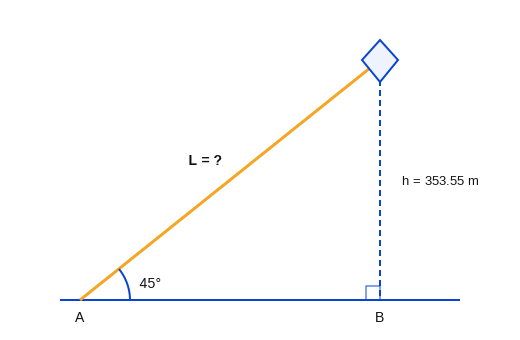
A kite is flying at the height of 353.55 m above the ground. It is attached to a string inclined at an angle of 45° to the horizontal. What is the approximate length of the string?
एक पतंग जमीन से 353.55 m की ऊँचाई पर उड़ रही है। वह एक डोरी से बँधी है जो क्षैतिज से 45° के कोण पर झुकी हुई है। डोरी की लगभग लंबाई कितनी है?
  1. A300 m
  2. B250 m
  3. C500 m
  4. D375 m
Show answer

Concept: The string is the hypotenuse: sinθ=heightstring.

  1. sin45∘=353.55L
  2. L=353.55×2=353.55×1.4142≈500m

Trick: 353.55=5002 – at 45∘, hypotenuse =side×2.

Answer: (C) 500m

अवधारणा: डोरी कर्ण है: sinθ=ऊँचाईडोरी।

  1. sin45∘=353.55L
  2. L=353.55×2=353.55×1.4142≈500m

ट्रिक: 353.55=5002 – 45∘ पर कर्ण =भुजा×2।

उत्तर: (C) 500m

RRB NTPC Undergraduate CBT 1MathematicsHeights and distancesRRB NTPC Undergraduate CBT 1 2024 · 2 Sep Shift 3 →
Q5885.
What is the median of the following data?
49, 96, 59, 54, 97, 30, 44, 46, 36, 55, 23
निम्नलिखित आँकड़ों की माध्यिका क्या है?
49, 96, 59, 54, 97, 30, 44, 46, 36, 55, 23
  1. A49
  2. B49.5
  3. C50
  4. D48.5
Show answer

Concept: Arrange the data in order; for odd n the median is the (n+12)th value.

  1. Ascending: 23,30,36,44,46,49,54,55,59,96,97
  2. n=11, median =6th value =49

Trick: Median ignores extreme values like 96,97 – only the middle position matters.

Answer: (A) 49

अवधारणा: आँकड़ों को क्रम में लगाएँ; विषम n पर माध्यिका (n+12)वाँ मान होती है।

  1. आरोही क्रम: 23,30,36,44,46,49,54,55,59,96,97
  2. n=11, माध्यिका =6वाँ मान =49

ट्रिक: माध्यिका पर 96,97 जैसे चरम मानों का असर नहीं – केवल बीच का स्थान देखें।

उत्तर: (A) 49

RRB NTPC Undergraduate CBT 1MathematicsMedianRRB NTPC Undergraduate CBT 1 2024 · 2 Sep Shift 3 →
Q5886.
Pipe P can fill 29 part of a tank in 28 hours, and pipe Q can fill 27 part of the same tank in 12 hours. Both P and Q were kept open for 6 hours, then both were closed. Pipe R alone was then opened and it emptied the water in the tank in 8 hours. Pipes P, Q and R together can fill the empty tank in:
पाइप P किसी टंकी का 29 भाग 28 घंटे में भर सकता है, और पाइप Q उसी टंकी का 27 भाग 12 घंटे में भर सकता है। P और Q दोनों को 6 घंटे तक खुला रखा गया, फिर दोनों को बंद कर दिया गया। इसके बाद केवल पाइप R को खोला गया और उसने टंकी का पानी 8 घंटे में खाली कर दिया। पाइप P, Q और R एक साथ खाली टंकी को कितने समय में भर सकते हैं?
  1. A117 hours117 घंटे
  2. B137 hours137 घंटे
  3. C126 hours126 घंटे
  4. D145 hours145 घंटे
Show answer

Concept: Find each pipe’s full-tank time; filling rates add, emptying rate subtracts.

  1. P fills 29 in 28 h ⇒ full in 28×92=126 h; Q: 12×72=42 h
  2. In 6 h: 6(1126+142)=6×4126=421 filled
  3. R empties 421 in 8 h ⇒ full tank in 8×214=42 h
  4. Together: 1126+142−142=1126 ⇒ 126 h

Trick: R empties exactly as fast as Q fills (42 h each), so they cancel and only P works.

Answer: (C) 126 hours

अवधारणा: हर पाइप का पूरा भरने का समय निकालें; भरने की दरें जुड़ती हैं, खाली करने की दर घटती है।

  1. P, 29 भाग 28 घंटे में ⇒ पूरा 28×92=126 घंटे; Q: 12×72=42 घंटे
  2. 6 घंटे में: 6(1126+142)=421 भरा
  3. R, 421 को 8 घंटे में खाली करता है ⇒ पूरा 8×214=42 घंटे
  4. तीनों साथ: 1126+142−142=1126 ⇒ 126 घंटे

ट्रिक: R उतनी ही तेज़ी से खाली करता है जितनी तेज़ी से Q भरता है (42 घंटे), इसलिए केवल P का काम बचता है।

उत्तर: (C) 126 घंटे

RRB NTPC Undergraduate CBT 1MathematicsPipes and cisternsRRB NTPC Undergraduate CBT 1 2024 · 2 Sep Shift 3 →
Q5887.
The ratio of an interior angle to its corresponding exterior angle in a regular polygon is 3 : 2. Determine the number of sides of the polygon.
एक सम बहुभुज में एक अंतः कोण और उसके संगत बाह्य कोण का अनुपात 3 : 2 है। बहुभुज की भुजाओं की संख्या ज्ञात कीजिए।
  1. A8
  2. B7
  3. C5
  4. D6
Show answer

Concept: Interior + exterior =180∘, and exterior angle of a regular n-gon =360∘n.

  1. Exterior =25×180∘=72∘
  2. n=360∘72∘=5

Trick: Interior : exterior =3:2 ⇒ n=2(3+2)2=5 (formula: n=2(a+b)b).

Answer: (C) 5

अवधारणा: आंतरिक + बाह्य कोण =180∘, और सम n-भुज का बाह्य कोण =360∘n।

  1. बाह्य कोण =25×180∘=72∘
  2. n=360∘72∘=5

ट्रिक: आंतरिक : बाह्य =a:b हो तो n=2(a+b)b=2×52=5।

उत्तर: (C) 5

RRB NTPC Undergraduate CBT 1MathematicsPolygons – anglesRRB NTPC Undergraduate CBT 1 2024 · 2 Sep Shift 3 →
Q5888.
The HCF and the LCM of two numbers are 29 and 174, respectively. If one of the numbers is 58, find the other one.
दो संख्याओं का HCF और LCM क्रमशः 29 और 174 है। यदि उनमें से एक संख्या 58 है, तो दूसरी संख्या ज्ञात कीजिए।
  1. A116
  2. B174
  3. C145
  4. D87
Show answer

Concept: For two numbers: HCF×LCM=product of the numbers.

  1. Other number =29×17458
  2. =504658=87

Trick: Check: 58=29×2, 87=29×3 ⇒ HCF 29, LCM 29×6=174 ✓

Answer: (D) 87

अवधारणा: दो संख्याओं के लिए: HCF×LCM=संख्याओं का गुणनफल।

  1. दूसरी संख्या =29×17458
  2. =504658=87

ट्रिक: जाँच: 58=29×2, 87=29×3 ⇒ HCF 29, LCM 174 ✓

उत्तर: (D) 87

RRB NTPC Undergraduate CBT 1MathematicsHCF and LCMRRB NTPC Undergraduate CBT 1 2024 · 2 Sep Shift 3 →
Q5889.
₹32,100 were divided among A, B and C, such that 2 times of A = 7 times of B = 4 times of C. Find the share of A.
₹32,100 को A, B और C में इस प्रकार बाँटा गया कि A का 2 गुना = B का 7 गुना = C का 4 गुना। A का हिस्सा ज्ञात कीजिए।
  1. A₹17,976
  2. B₹17,815
  3. C₹18,091
  4. D₹17,847
Show answer

Concept: If 2A=7B=4C, then A:B:C=12:17:14.

  1. Multiply by LCM 28: A:B:C=14:4:7, total 25 parts
  2. 1 part =3210025=1284
  3. A=14×1284=17976

Trick: Ratio is the reciprocal of the multipliers: 12,17,14.

Answer: (A) ₹17976

अवधारणा: यदि 2A=7B=4C, तो A:B:C=12:17:14।

  1. LCM 28 से गुणा: A:B:C=14:4:7, कुल 25 भाग
  2. 1 भाग =3210025=1284
  3. A=14×1284=17976

ट्रिक: अनुपात गुणकों का व्युत्क्रम होता है: 12,17,14।

उत्तर: (A) ₹17976

RRB NTPC Undergraduate CBT 1MathematicsRatio – division of moneyRRB NTPC Undergraduate CBT 1 2024 · 2 Sep Shift 3 →
Q5890.
The average of first 151 odd natural numbers, is:
प्रथम 151 विषम प्राकृत संख्याओं का औसत है:
  1. A151
  2. B151.5
  3. C152
  4. D150.5
Show answer

Concept: Sum of first n odd natural numbers =n2, so their average =n.

  1. Sum =1512
  2. Average =1512151=151

Yaad rakhein: Average of first n odd numbers =n; of first n even numbers =n+1.

Answer: (A) 151

अवधारणा: प्रथम n विषम प्राकृत संख्याओं का योग =n2, अतः औसत =n।

  1. योग =1512
  2. औसत =1512151=151

याद रखें: प्रथम n विषम संख्याओं का औसत =n; प्रथम n सम संख्याओं का औसत =n+1।

उत्तर: (A) 151

RRB NTPC Undergraduate CBT 1MathematicsAverage of odd numbersRRB NTPC Undergraduate CBT 1 2024 · 2 Sep Shift 3 →
Q5891.
Sapna invested ₹22,800 on simple interest, partly at 6% per annum and partly at 4% per annum. If she earns equal interests from the two investments after 8 years, then find the sum invested at 6% per annum (in ₹).
सपना ने ₹22,800 साधारण ब्याज पर निवेश किए, जिसका कुछ भाग 6% वार्षिक दर पर और कुछ भाग 4% वार्षिक दर पर था। यदि 8 वर्ष बाद उसे दोनों निवेशों से समान ब्याज प्राप्त होता है, तो 6% वार्षिक दर पर निवेश की गई राशि (₹ में) ज्ञात कीजिए।
  1. A9,123
  2. B9,120
  3. C9,117
  4. D9,122
Show answer

Concept: With the same time, equal SI means P1R1=P2R2, so sums are in inverse ratio of rates.

  1. P1:P2=4:6=2:3 (at 6% : at 4%)
  2. Sum at 6%=25×22800=9120

Trick: Time (8 years) cancels out – it is not needed.

Answer: (B) ₹9120

अवधारणा: समय समान हो तो बराबर साधारण ब्याज के लिए P1R1=P2R2, अर्थात् मूलधन दरों के व्युत्क्रम अनुपात में।

  1. P1:P2=4:6=2:3 (6% : 4%)
  2. 6% पर राशि =25×22800=9120

ट्रिक: समय (8 वर्ष) कट जाता है – उसकी ज़रूरत नहीं।

उत्तर: (B) ₹9120

RRB NTPC Undergraduate CBT 1MathematicsSimple interest – equal interestRRB NTPC Undergraduate CBT 1 2024 · 2 Sep Shift 3 →
Q5892.
P, Q and R invest sum in the ratio of 2 : 22 : 70, respectively. If they earned a total profit of ₹4,700 at the end of the year, then what is the difference between share of Q and R?
P, Q और R क्रमशः 2 : 22 : 70 के अनुपात में राशि निवेश करते हैं। यदि वर्ष के अंत में उन्होंने कुल ₹4,700 का लाभ अर्जित किया, तो Q और R के हिस्सों का अंतर क्या है?
  1. A₹2,447
  2. B₹2,430
  3. C₹2,306
  4. D₹2,400
Show answer

Concept: For the same period, profit is shared in the ratio of investments.

  1. Total parts =2+22+70=94; 1 part =470094=50
  2. Difference R − Q =70−22=48 parts =48×50=2400

Trick: Find value of one part first, then multiply by the difference of parts.

Answer: (D) ₹2400

अवधारणा: समान अवधि में लाभ निवेश के अनुपात में बँटता है।

  1. कुल भाग =2+22+70=94; 1 भाग =470094=50
  2. अंतर R − Q =70−22=48 भाग =48×50=2400

ट्रिक: पहले एक भाग का मान निकालें, फिर भागों के अंतर से गुणा करें।

उत्तर: (D) ₹2400

RRB NTPC Undergraduate CBT 1MathematicsPartnershipRRB NTPC Undergraduate CBT 1 2024 · 2 Sep Shift 3 →
Q5893.
Which of the following ratios is the greatest?
निम्नलिखित में से कौन-सा अनुपात सबसे बड़ा है?
  1. A30 : 53
  2. B48 : 55
  3. C22 : 51
  4. D40 : 90
Show answer

Concept: Convert each ratio to a decimal (or compare with 12) to find the greatest.

  1. 3053≈0.57, 4855≈0.87
  2. 2251≈0.43, 4090≈0.44
  3. Greatest: 4855

Trick: Only 48:55 has the antecedent very close to the consequent.

Answer: (B) 48:55

अवधारणा: हर अनुपात को दशमलव में बदलें (या 12 से तुलना करें)।

  1. 3053≈0.57, 4855≈0.87
  2. 2251≈0.43, 4090≈0.44
  3. सबसे बड़ा: 4855

ट्रिक: केवल 48:55 में पूर्ववर्ती पद, उत्तरवर्ती के बहुत पास है।

उत्तर: (B) 48:55

RRB NTPC Undergraduate CBT 1MathematicsComparison of ratiosRRB NTPC Undergraduate CBT 1 2024 · 2 Sep Shift 3 →
Q5894.
Find the surface area of the cuboid with dimensions 3 cm, 5 cm and 8 cm.
3 cm, 5 cm और 8 cm विमाओं वाले घनाभ का पृष्ठीय क्षेत्रफल ज्ञात कीजिए।
  1. A79 square cm.79 वर्ग cm
  2. B158 square cm.158 वर्ग cm
  3. C60 square cm.60 वर्ग cm
  4. D120 square cm.120 वर्ग cm
Show answer

Concept: Total surface area of a cuboid =2(lb+bh+hl).

  1. lb+bh+hl=3×5+5×8+8×3=15+40+24=79
  2. TSA =2×79=158cm2

Trick: 79 (option A) is only half – don’t forget the factor 2.

Answer: (B) 158 square cm

अवधारणा: घनाभ का कुल पृष्ठीय क्षेत्रफल =2(lb+bh+hl)।

  1. lb+bh+hl=15+40+24=79
  2. TSA =2×79=158cm2

ट्रिक: 79 (विकल्प A) केवल आधा है – 2 से गुणा करना न भूलें।

उत्तर: (B) 158 वर्ग cm

RRB NTPC Undergraduate CBT 1MathematicsCuboid surface areaRRB NTPC Undergraduate CBT 1 2024 · 2 Sep Shift 3 →
Q5895.
The product of two consecutive natural numbers is 90. The greater of the two numbers is:
दो क्रमागत प्राकृत संख्याओं का गुणनफल 90 है। दोनों में से बड़ी संख्या है:
  1. A6
  2. B10
  3. C11
  4. D21
Show answer

Concept: Take numbers n and n+1: n(n+1)=90.

  1. n2+n−90=0⇒(n+10)(n−9)=0
  2. n=9; numbers 9 and 10; greater =10

Trick: 90≈9.5 – the two numbers lie on either side: 9×10.

Answer: (B) 10

अवधारणा: संख्याएँ n और n+1 लें: n(n+1)=90।

  1. n2+n−90=0⇒(n+10)(n−9)=0
  2. n=9; संख्याएँ 9 और 10; बड़ी =10

ट्रिक: 90≈9.5 – दोनों संख्याएँ इसके दोनों ओर: 9×10।

उत्तर: (B) 10

RRB NTPC Undergraduate CBT 1MathematicsConsecutive numbersRRB NTPC Undergraduate CBT 1 2024 · 2 Sep Shift 3 →
Q5896.
In the following number-pairs, the second number is obtained by applying certain mathematical operation(s) to the first number. Select the number-pair in which the numbers are related in the same way as are the numbers of the following pairs. (NOTE: Operations should be performed on the whole numbers, without breaking down the numbers into their constituent digits. E.g. 13 – Operations on 13 such as adding to/subtracting from/multiplying with 13 can be performed. Breaking down 13 into 1 and 3 and then performing mathematical operations on 1 and 3 is not allowed.)
45, 165
24, 144
निम्नलिखित संख्या-युग्मों में, पहली संख्या पर कुछ गणितीय संक्रिया/संक्रियाएँ करके दूसरी संख्या प्राप्त की जाती है। उस संख्या-युग्म का चयन कीजिए जिसमें संख्याएँ उसी प्रकार संबंधित हैं जिस प्रकार निम्नलिखित युग्मों की संख्याएँ संबंधित हैं। (नोट: संख्याओं को उनके घटक अंकों में विभाजित किए बिना, पूर्ण संख्याओं पर संक्रियाएँ की जानी चाहिए। उदाहरण 13 – 13 पर संक्रियाएँ जैसे 13 में जोड़ना/घटाना/गुणा करना आदि की जा सकती हैं। 13 को 1 और 3 में विभाजित करके फिर 1 और 3 पर गणितीय संक्रियाएँ करने की अनुमति नहीं है।)
45, 165
24, 144
  1. A42, 172
  2. B18, 142
  3. C38, 158
  4. D21, 131
Show answer

Concept: Find the common operation between the two given pairs.

  1. 45+120=165, 24+120=144 ⇒ rule: add 120
  2. A: 42+130 ✗, B: 18+124 ✗, C: 38+120=158 ✓, D: 21+110 ✗

Trick: Just subtract: second − first =120 in each valid pair.

Answer: (C) 38, 158

अवधारणा: दिए गए दोनों युग्मों में सामान्य संक्रिया खोजें।

  1. 45+120=165, 24+120=144 ⇒ नियम: 120 जोड़ें
  2. A: 42+130 ✗, B: 18+124 ✗, C: 38+120=158 ✓, D: 21+110 ✗

ट्रिक: बस घटाएँ: दूसरी − पहली =120।

उत्तर: (C) 38, 158

RRB NTPC Undergraduate CBT 1General Intelligence and ReasoningNumber pair analogyRRB NTPC Undergraduate CBT 1 2024 · 2 Sep Shift 3 →
Q5897.
SPLT is related to QNJR in a certain way based on the English alphabetical order. In the same way, OLHP is related to MJFN. To which of the given options is KHDL related, following the same logic?
अंग्रेज़ी वर्णमाला क्रम के आधार पर SPLT एक निश्चित प्रकार से QNJR से संबंधित है। उसी प्रकार, OLHP, MJFN से संबंधित है। समान तर्क का अनुसरण करते हुए, KHDL दिए गए विकल्पों में से किससे संबंधित है?
  1. AIFBJ
  2. BIFJB
  3. CFIJB
  4. DFIBJ
Show answer

Concept: Compare each letter with its counterpart using alphabet positions.

  1. SPLT → QNJR: S−2=Q, P−2=N, L−2=J, T−2=R
  2. OLHP → MJFN: each −2 ✓
  3. KHDL: K→I, H→F, D→B, L→J ⇒ IFBJ

Trick: Every letter moves 2 steps back, order unchanged.

Answer: (A) IFBJ

अवधारणा: अक्षरों की वर्णमाला स्थिति से तुलना करें।

  1. SPLT → QNJR: S−2=Q, P−2=N, L−2=J, T−2=R
  2. OLHP → MJFN: हर अक्षर −2 ✓
  3. KHDL: K→I, H→F, D→B, L→J ⇒ IFBJ

ट्रिक: हर अक्षर 2 कदम पीछे, क्रम वही।

उत्तर: (A) IFBJ

RRB NTPC Undergraduate CBT 1General Intelligence and ReasoningLetter analogyRRB NTPC Undergraduate CBT 1 2024 · 2 Sep Shift 3 →
Q5898.
What will come in the place of the question mark (?) in the following equation, if ‘+’ and ‘÷’ are interchanged, and ‘−’ and ‘×’ are interchanged?
6 − 4 × 85 + 5 ÷ 22 = ?
यदि ‘+’ और ‘÷’ को आपस में बदल दिया जाए, तथा ‘−’ और ‘×’ को आपस में बदल दिया जाए, तो निम्नलिखित समीकरण में प्रश्नवाचक चिह्न (?) के स्थान पर क्या आएगा?
6 − 4 × 85 + 5 ÷ 22 = ?
  1. A29
  2. B22
  3. C42
  4. D36
Show answer

Concept: Swap the signs first, then apply BODMAS.

  1. Swap +↔÷ and −↔×: 6×4−85÷5+22
  2. =24−17+22=29

Trick: Rewrite the whole expression first; don’t swap and solve at the same time.

Answer: (A) 29

अवधारणा: पहले चिह्न बदलें, फिर BODMAS लगाएँ।

  1. +↔÷ और −↔×: 6×4−85÷5+22
  2. =24−17+22=29

ट्रिक: पहले पूरा व्यंजक दोबारा लिखें, फिर हल करें।

उत्तर: (A) 29

RRB NTPC Undergraduate CBT 1General Intelligence and ReasoningSymbol interchangeRRB NTPC Undergraduate CBT 1 2024 · 2 Sep Shift 3 →
Q5899.
Which of the following letter-number clusters will replace the question mark (?) in the given series to make it logically complete?
LIG 1, NKI 4, ?, ROM 16, TQO 25
निम्नलिखित में से कौन-सा अक्षर-संख्या समूह दी गई श्रृंखला में प्रश्नवाचक चिह्न (?) का स्थान लेकर उसे तार्किक रूप से पूर्ण करेगा?
LIG 1, NKI 4, ?, ROM 16, TQO 25
  1. APMK 9
  2. BQNL 9
  3. CPNL 9
  4. DQNK 12
Show answer

Concept: Track letters and numbers separately.

  1. 1st letters: L, N, P, R, T (+2); 2nd: I, K, M, O, Q (+2); 3rd: G, I, K, M, O (+2)
  2. Numbers: 12,22,32,42,52 ⇒ 9
  3. Missing term: PMK 9

Trick: Numbers are squares 1,4,9,16,25.

Answer: (A) PMK 9

अवधारणा: अक्षरों और संख्याओं को अलग-अलग देखें।

  1. पहले अक्षर: L, N, P, R, T (+2); दूसरे: I, K, M, O, Q (+2); तीसरे: G, I, K, M, O (+2)
  2. संख्याएँ: 12,22,32,42,52 ⇒ 9
  3. लुप्त पद: PMK 9

ट्रिक: संख्याएँ वर्ग हैं 1,4,9,16,25।

उत्तर: (A) PMK 9

RRB NTPC Undergraduate CBT 1General Intelligence and ReasoningLetter-number seriesRRB NTPC Undergraduate CBT 1 2024 · 2 Sep Shift 3 →
Q5900.
What should come in place of the question mark (?) in the given series based on the English alphabetical order?
ZMB JXN TIZ DTL ?
अंग्रेज़ी वर्णमाला क्रम के आधार पर दी गई श्रृंखला में प्रश्नवाचक चिह्न (?) के स्थान पर क्या आना चाहिए?
ZMB JXN TIZ DTL ?
  1. ANEY
  2. BNXE
  3. CNEX
  4. DNYE
Show answer

Concept: Each letter position moves +10 (wrapping after Z).

  1. 1st: Z, J, T, D, N (26→10→20→4→14)
  2. 2nd: M, X, I, T, E (13→24→9→20→5)
  3. 3rd: B, N, Z, L, X (2→14→26→12→24)
  4. Next term: NEX

Trick: +10 with wrap = −16: e.g. D(4)+10=N(14).

Answer: (C) NEX

अवधारणा: हर स्थान का अक्षर +10 बढ़ता है (Z के बाद फिर A से)।

  1. पहला: Z, J, T, D, N (26→10→20→4→14)
  2. दूसरा: M, X, I, T, E (13→24→9→20→5)
  3. तीसरा: B, N, Z, L, X (2→14→26→12→24)
  4. अगला पद: NEX

ट्रिक: +10 (चक्रीय) =−16: जैसे D(4)+10=N(14)।

उत्तर: (C) NEX

RRB NTPC Undergraduate CBT 1General Intelligence and ReasoningLetter seriesRRB NTPC Undergraduate CBT 1 2024 · 2 Sep Shift 3 →