Question bank

Q&A: practice questions with answers

Search questions on any topic. Filter by exam category, exam, subject and topic, try the question, then open the answer and explanation.

Courses – airGurukul

20,719 questions found.

Q5981.
Simplify:
289+0.04−5.76
सरल कीजिए:
289+0.04−5.76
  1. A1.78
  2. B11.65
  3. C14.8
  4. D3.07
Show answer

Concept: 0.04=0.2 because 0.22=0.04; decimal places in the root = half of those in the number.

  1. 289=17.
  2. 0.04=0.2.
  3. 5.76=2.4 (since 242=576).
  4. 17+0.2−2.4=14.8.

Trick: Remove decimals: 576=24, then put back one decimal place → 2.4.

Answer: (C) 14.8

अवधारणा: 0.04=0.2 क्योंकि 0.22=0.04; मूल में दशमलव स्थान संख्या के आधे होते हैं।

  1. 289=17।
  2. 0.04=0.2।
  3. 5.76=2.4 (क्योंकि 242=576)।
  4. 17+0.2−2.4=14.8।

ट्रिक: दशमलव हटाकर 576=24, फिर एक दशमलव स्थान → 2.4।

उत्तर: (C) 14.8
RRB NTPC Undergraduate CBT 1MathematicsSquare roots of decimalsRRB NTPC Undergraduate CBT 1 2024 · 2 Sep Shift 2 →
Q5982.
A bus travelling at 99 km/hr completes a journey in 20 hours. What should its speed be to cover the same distance in 12 hours?
99 km/hr की चाल से चल रही एक बस 20 घंटे में एक यात्रा पूरी करती है। उसी दूरी को 12 घंटे में तय करने के लिए उसकी चाल कितनी होनी चाहिए?
  1. A165 km/hr
  2. B159 km/hr
  3. C168 km/hr
  4. D156 km/hr
Show answer

Concept: For a fixed distance, speed ∝ 1time.

  1. Distance =99×20=1980 km.
  2. Required speed =198012=165 km/hr.

Trick: 99×2012=99×53=165.

Answer: (A) 165 km/hr

अवधारणा: स्थिर दूरी के लिए चाल ∝ 1समय।

  1. दूरी =99×20=1980 km।
  2. आवश्यक चाल =198012=165 km/hr।

ट्रिक: 99×2012=165।

उत्तर: (A) 165 km/hr

RRB NTPC Undergraduate CBT 1MathematicsSpeed, time and distanceRRB NTPC Undergraduate CBT 1 2024 · 2 Sep Shift 2 →
Q5983.
8 years ago, the age of a father was 21 years more than twice his son's age. After how many years, from now, will he be twice his son's age?
8 वर्ष पहले, एक पिता की आयु उसके पुत्र की आयु के दोगुने से 21 वर्ष अधिक थी। अब से कितने वर्ष बाद, उसकी आयु उसके पुत्र की आयु की दोगुनी होगी?
  1. A13
  2. B11
  3. C8
  4. D17
Show answer

Concept: Form an equation from the past condition, then use it for the future.

  1. 8 years ago: F−8=2(S−8)+21⇒F=2S+13.
  2. After x years: F+x=2(S+x)⇒x=F−2S.
  3. x=13 years.

Trick: "Twice" condition: years needed =F−2S; here F−2S=13 directly.

Answer: (A) 13

अवधारणा: बीते समय की शर्त से समीकरण बनाएँ, फिर भविष्य के लिए प्रयोग करें।

  1. 8 वर्ष पहले: F−8=2(S−8)+21⇒F=2S+13।
  2. x वर्ष बाद: F+x=2(S+x)⇒x=F−2S।
  3. x=13 वर्ष।

ट्रिक: "दोगुना" शर्त में आवश्यक वर्ष =F−2S=13।

उत्तर: (A) 13

RRB NTPC Undergraduate CBT 1MathematicsProblems on agesRRB NTPC Undergraduate CBT 1 2024 · 2 Sep Shift 2 →
Q5984.
By how much is 65% of 55 greater than 25 of 25?
55 का 65%, 25 के 25 से कितना अधिक है?
  1. A19.75
  2. B25.75
  3. C22.75
  4. D23.75
Show answer

Concept: Convert both to numbers and subtract.

  1. 65% of 55=65×55100=35.75.
  2. 25 of 25=10.
  3. Difference =35.75−10=25.75.

Trick: 65% of 55=55% of 65: 0.65×55=35.75.

Answer: (B) 25.75

अवधारणा: दोनों को संख्या में बदलकर घटाएँ।

  1. 65% of 55=35.75।
  2. 25 of 25=10।
  3. अंतर =35.75−10=25.75।

ट्रिक: x% of y=y% of x।

उत्तर: (B) 25.75

RRB NTPC Undergraduate CBT 1MathematicsPercentages and fractionsRRB NTPC Undergraduate CBT 1 2024 · 2 Sep Shift 2 →
Q5985.
The H.C.F. and the L.C.M. of two numbers are 3 and 276 respectively. If one of the numbers is 69, find the other one.
दो संख्याओं का महत्तम समापवर्तक (H.C.F.) और लघुत्तम समापवर्त्य (L.C.M.) क्रमशः 3 और 276 हैं। यदि उनमें से एक संख्या 69 है, तो दूसरी संख्या ज्ञात कीजिए।
  1. A12
  2. B35
  3. C100
  4. D110
Show answer

Concept: Product of two numbers = HCF × LCM.

  1. Other number =3×27669=82869=12.
  2. Check: HCF(69, 12) = 3 and LCM = 276 ✓.

Trick: Other number =HCF×LCMgiven number.

Answer: (A) 12

अवधारणा: दो संख्याओं का गुणनफल = म.स. × ल.स.।

  1. दूसरी संख्या =3×27669=12।
  2. जाँच: HCF(69, 12) = 3, LCM = 276 ✓।

ट्रिक: दूसरी संख्या =HCF×LCMदी गई संख्या।

उत्तर: (A) 12

RRB NTPC Undergraduate CBT 1MathematicsHCF and LCMRRB NTPC Undergraduate CBT 1 2024 · 2 Sep Shift 2 →
Q5986.
What smallest number should be added to 15335 so that the sum is completely divisible by 79?
15335 में कौन-सी सबसे छोटी संख्या जोड़ी जाए ताकि योगफल 79 से पूर्णतः विभाज्य हो जाए?
  1. A71
  2. B68
  3. C70
  4. D65
Show answer

Concept: Number to add = divisor − remainder.

  1. 79×194=15326, so remainder =15335−15326=9.
  2. Number to add =79−9=70.

Trick: Check: 15335+70=15405=79×195 ✓.

Answer: (C) 70

अवधारणा: जोड़ी जाने वाली संख्या = भाजक − शेषफल।

  1. 79×194=15326, शेषफल =9।
  2. जोड़ें =79−9=70।

ट्रिक: जाँच: 15405=79×195 ✓।

उत्तर: (C) 70

RRB NTPC Undergraduate CBT 1MathematicsDivision and remaindersRRB NTPC Undergraduate CBT 1 2024 · 2 Sep Shift 2 →
Q5987.
If the shape of a water pipe is a rectangle with dimensions 5 m and 3 m and if water runs out of it at the speed of 36 km/hr, then what is the volume (in m3) of the water that passed through the pipe in 12 minutes?
यदि एक जल पाइप का आकार 5 m और 3 m विमाओं वाला एक आयत है और उसमें से पानी 36 km/hr की चाल से बाहर निकलता है, तो 12 मिनट में पाइप से होकर गुज़रे पानी का आयतन (m3 में) कितना है?
  1. A216000
  2. B108000
  3. C5400
  4. D54000
Show answer

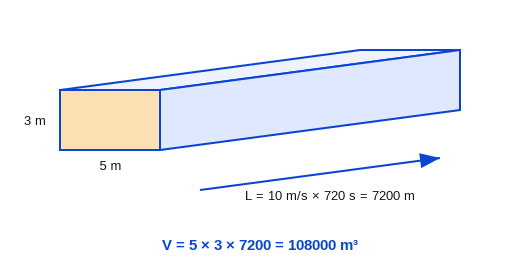
Concept: Volume of water = cross-section area × length of water column (speed × time).

  1. Area =5×3=15m2.
  2. Speed =36km/h=10m/s; time =12×60=720 s.
  3. Length =10×720=7200 m.
  4. Volume =15×7200=108000m3.

Trick: 36km/h×1260h=7.2km=7200m.

Answer: (B) 108000

अवधारणा: पानी का आयतन = अनुप्रस्थ क्षेत्रफल × पानी की लंबाई (चाल × समय)।

  1. क्षेत्रफल =15m2।
  2. चाल =10m/s; समय =720 s।
  3. लंबाई =7200 m।
  4. आयतन =15×7200=108000m3।

ट्रिक: 36×1260=7.2km।

उत्तर: (B) 108000

RRB NTPC Undergraduate CBT 1MathematicsMensuration – flow through a pipeRRB NTPC Undergraduate CBT 1 2024 · 2 Sep Shift 2 →
Q5988.
Two pipes can fill a cistern, individually, in 40 minutes and 14 minutes, respectively. There is a pipe located at the bottom of the cistern to empty it. If all the three pipes are opened simultaneously, then the empty cistern gets filled in 20 minutes. How long will the pipe at the bottom of the tank take to empty the completely filled cistern if no other pipe is then open?
दो पाइप अलग-अलग एक टंकी को क्रमशः 40 मिनट और 14 मिनट में भर सकते हैं। टंकी को खाली करने के लिए उसके तल पर एक पाइप लगा है। यदि तीनों पाइप एक साथ खोल दिए जाएँ, तो खाली टंकी 20 मिनट में भर जाती है। यदि कोई अन्य पाइप खुला न हो, तो टंकी के तल पर लगा पाइप पूरी भरी हुई टंकी को खाली करने में कितना समय लेगा?
  1. A20713 minutes20713 मिनट
  2. B21713 minutes21713 मिनट
  3. C19713 minutes19713 मिनट
  4. D22713 minutes22713 मिनट
Show answer

Concept: Net filling rate = sum of inlet rates − outlet rate (part per minute).

  1. 140+114−1x=120.
  2. 140+114=7+20280=27280; 120=14280.
  3. 1x=13280⇒x=28013=21713 min.

Trick: Capacity = LCM(40, 14, 20) = 280 units: rates 7 + 20 − e = 14 → e = 13; time =28013.

Answer: (B) 21713 minutes

अवधारणा: शुद्ध भरने की दर = भरने वाले नलों की दर − खाली करने वाले नल की दर।

  1. 140+114−1x=120।
  2. 27280−1x=14280।
  3. 1x=13280⇒x=21713 मिनट।

ट्रिक: टंकी = LCM = 280 इकाई: 7 + 20 − e = 14 → e = 13; समय =28013।

उत्तर: (B) 21713 मिनट

RRB NTPC Undergraduate CBT 1MathematicsPipes and cisternsRRB NTPC Undergraduate CBT 1 2024 · 2 Sep Shift 2 →
Q5989.
I bought two toy guns for ₹1,200. I sold the first one at a loss of 9% and the second at a gain of 16%. If, on the whole I made neither a loss nor a gain, find the cost price (in ₹) of the first toy gun.
मैंने दो खिलौना बंदूकें ₹1,200 में खरीदीं। मैंने पहली को 9% की हानि पर और दूसरी को 16% के लाभ पर बेचा। यदि कुल मिलाकर मुझे न तो हानि हुई और न ही लाभ, तो पहली खिलौना बंदूक का क्रय मूल्य (₹ में) ज्ञात कीजिए।
  1. A788
  2. B792
  3. C768
  4. D752
Show answer

Concept: No overall gain/loss ⇒ loss on first = gain on second.

  1. Let first CP =x, second =1200−x.
  2. 0.09x=0.16(1200−x)⇒0.25x=192.
  3. x=768.

Trick: CPs are in inverse ratio of %: x:(1200−x)=16:9 → x=1625×1200=768.

Answer: (C) 768

अवधारणा: कुल न लाभ न हानि ⇒ पहले की हानि = दूसरे का लाभ।

  1. पहले का क्रय मूल्य =x, दूसरे का =1200−x।
  2. 0.09x=0.16(1200−x)⇒0.25x=192।
  3. x=768।

ट्रिक: अनुपात 16:9 → 1625×1200=768।

उत्तर: (C) 768

RRB NTPC Undergraduate CBT 1MathematicsProfit and loss – no profit no lossRRB NTPC Undergraduate CBT 1 2024 · 2 Sep Shift 2 →
Q5990.
Successive discounts of 5% and 40% are equivalent to a single discount of:
5% और 40% की क्रमिक छूटें किस एकल छूट के समतुल्य हैं?
  1. A41%
  2. B45%
  3. C43%
  4. D42%
Show answer

Concept: Two successive discounts a% and b% = (a+b−ab100)%.

  1. 5+40−5×40100=45−2=43%.
  2. Check: ₹100 → ₹95 → ₹57; discount ₹43.

Trick: Take ₹100 and apply discounts one by one.

Answer: (C) 43%

अवधारणा: क्रमिक छूट a% और b% = (a+b−ab100)%।

  1. 5+40−2=43%।
  2. जाँच: ₹100 → ₹95 → ₹57; छूट ₹43।

ट्रिक: ₹100 लेकर एक-एक छूट लगाएँ।

उत्तर: (C) 43%

RRB NTPC Undergraduate CBT 1MathematicsSuccessive discountsRRB NTPC Undergraduate CBT 1 2024 · 2 Sep Shift 2 →
Q5991.
A can lay railway track between two given stations in 20 days and B can do the same job in 16 days. With the help of C, they did the job in 3 days only. Then, C alone can do the job in
A दो दिए गए स्टेशनों के बीच रेल पटरी 20 दिनों में बिछा सकता है और B वही कार्य 16 दिनों में कर सकता है। C की सहायता से, उन्होंने वह कार्य केवल 3 दिनों में पूरा कर लिया। तो, C अकेले वह कार्य कितने दिनों में कर सकता है?
  1. A42853 days42853 दिन
  2. B112853 days112853 दिन
  3. C122853 days122853 दिन
  4. D142853 days142853 दिन
Show answer

Concept: One-day work adds up: C\'s rate = total rate − A\'s rate − B\'s rate.

  1. 13−120−116=80−12−15240=53240.
  2. C alone =24053=42853 days.

Trick: Total work = LCM(20, 16, 3) = 240 units: A 12, B 15, all 80 → C = 53 units/day.

Answer: (A) 42853 days

अवधारणा: एक दिन का कार्य जुड़ता है: C की दर = कुल दर − A की दर − B की दर।

  1. 13−120−116=53240।
  2. C अकेले =24053=42853 दिन।

ट्रिक: कुल कार्य = 240 इकाई: A 12, B 15, सभी 80 → C = 53 इकाई/दिन।

उत्तर: (A) 42853 दिन

RRB NTPC Undergraduate CBT 1MathematicsTime and workRRB NTPC Undergraduate CBT 1 2024 · 2 Sep Shift 2 →
Q5992.
Sapna invested ₹22,500 on simple interest, partly at 7% per annum and partly at 5% per annum. If she earns equal interests from the two investments after 3 years, then find the sum invested at 7% per annum (in ₹).
सपना ने ₹22,500 साधारण ब्याज पर निवेश किए, जिसका एक भाग 7% वार्षिक दर पर और शेष भाग 5% वार्षिक दर पर था। यदि 3 वर्ष बाद उसे दोनों निवेशों से समान ब्याज प्राप्त होता है, तो 7% वार्षिक दर पर निवेश की गई राशि (₹ में) ज्ञात कीजिए।
  1. A9,373
  2. B9,374
  3. C9,376
  4. D9,375
Show answer

Concept: Equal SI for the same time ⇒ principal × rate is equal for both parts.

  1. Let sum at 7% =x: x×7×3=(22500−x)×5×3.
  2. 7x=112500−5x⇒12x=112500.
  3. x=9375.

Trick: Principals are in inverse ratio of rates: 5:7 → 512×22500=9375.

Answer: (D) 9,375

अवधारणा: समान समय में समान ब्याज ⇒ दोनों भागों में मूलधन × दर बराबर।

  1. 7% पर राशि =x: 7x=5(22500−x)।
  2. 12x=112500।
  3. x=9375।

ट्रिक: मूलधन दरों के व्युत्क्रम अनुपात में: 5:7 → 512×22500=9375।

उत्तर: (D) 9,375

RRB NTPC Undergraduate CBT 1MathematicsSimple interest – equal interestRRB NTPC Undergraduate CBT 1 2024 · 2 Sep Shift 2 →
Q5993.
Ravi started a business by investing ₹50,000. After six months, Raju joined him and invested an amount of ₹1,00,000. In one year since Ravi invested, they earned a profit of ₹63,000. What is Raju’s share of the profit?
रवि ने ₹50,000 का निवेश करके एक व्यवसाय शुरू किया। छह महीने बाद, राजू उसके साथ शामिल हुआ और ₹1,00,000 की राशि निवेश की। रवि के निवेश के एक वर्ष में, उन्होंने ₹63,000 का लाभ अर्जित किया। लाभ में राजू का हिस्सा कितना है?
  1. A₹32,500
  2. B₹31,000
  3. C₹31,500
  4. D₹32,000
Show answer

Concept: Profit is shared in the ratio of (capital × time).

  1. Ravi: 50000×12=600000.
  2. Raju: 100000×6=600000.
  3. Ratio 1:1 → Raju gets 630002=31500.

Trick: Double the money for half the time = equal share.

Answer: (C) ₹31,500

अवधारणा: लाभ (पूँजी × समय) के अनुपात में बँटता है।

  1. रवि: 50000×12=600000।
  2. राजू: 100000×6=600000।
  3. अनुपात 1:1 → राजू =31500।

ट्रिक: दोगुनी पूँजी, आधा समय = बराबर हिस्सा।

उत्तर: (C) ₹31,500

RRB NTPC Undergraduate CBT 1MathematicsPartnershipRRB NTPC Undergraduate CBT 1 2024 · 2 Sep Shift 2 →
Q5994.
Find the value of sec4A−sec2Acot2A+cot4A×csc4A−csc2Atan2A+tan4A+cot2A.
sec4A−sec2Acot2A+cot4A×csc4A−csc2Atan2A+tan4A+cot2A का मान ज्ञात कीजिए।
  1. Acot2A
  2. B0
  3. C1
  4. Dcsc2A
Show answer

Concept: sec2A−1=tan2A, 1+cot2A=csc2A.

  1. sec4A−sec2A=sec2Atan2A; cot2A+cot4A=cot2Acsc2A.
  2. csc4A−csc2A=csc2Acot2A; tan2A+tan4A=tan2Asec2A.
  3. Product =sec2Atan2Acot2Acsc2A×csc2Acot2Atan2Asec2A=1.
  4. Value =1+cot2A=csc2A.

Trick: Put A=45∘: 4−22×4−22+1=2=csc245∘.

Answer: (D) csc2A

अवधारणा: sec2A−1=tan2A, 1+cot2A=csc2A।

  1. sec4A−sec2A=sec2Atan2A; cot2A+cot4A=cot2Acsc2A।
  2. csc4A−csc2A=csc2Acot2A; tan2A+tan4A=tan2Asec2A।
  3. गुणनफल =1 (सब कट जाते हैं)।
  4. मान =1+cot2A=csc2A।

ट्रिक: A=45∘ रखें: 1×1+1=2=csc245∘।

उत्तर: (D) csc2A

RRB NTPC Undergraduate CBT 1MathematicsTrigonometric identitiesRRB NTPC Undergraduate CBT 1 2024 · 2 Sep Shift 2 →
Q5995.
Find the value of 24−10÷ 2416× 24−7.
24−10÷ 2416× 24−7 का मान ज्ञात कीजिए।
  1. A24 −43
  2. B24−33
  3. C24−38
  4. D24−31
Show answer

Concept: am÷an=am−n, am×an=am+n.

  1. 24−10÷2416=24−26.
  2. 24−26×24−7=24−33.

Trick: Just add/subtract powers: −10−16−7=−33.

Answer: (B) 24−33

अवधारणा: am÷an=am−n, am×an=am+n।

  1. 24−10÷2416=24−26।
  2. 24−26×24−7=24−33।

ट्रिक: घातें जोड़ें/घटाएँ: −10−16−7=−33।

उत्तर: (B) 24−33

RRB NTPC Undergraduate CBT 1MathematicsLaws of exponentsRRB NTPC Undergraduate CBT 1 2024 · 2 Sep Shift 2 →
Q5996.
In a certain code language, ‘SAID’ is coded as ‘3517’ and ‘AERO’ is coded as ‘2146’. What is the code for ‘A’ in the given code language?
एक निश्चित कूट भाषा में, ‘SAID’ को ‘3517’ के रूप में कूटबद्ध किया जाता है और ‘AERO’ को ‘2146’ के रूप में कूटबद्ध किया जाता है। दी गई कूट भाषा में ‘A’ के लिए कूट क्या है?
  1. A5
  2. B2
  3. C1
  4. D6
Show answer

Concept: A letter common to two words gets the digit common to both codes.

  1. SAID → 3517, AERO → 2146.
  2. Common letter: A; common digit: 1.

Trick: Match common letters with common digits.

Answer: (C) 1

अवधारणा: दो शब्दों में साझा अक्षर का कोड दोनों कोडों में साझा अंक होता है।

  1. SAID → 3517, AERO → 2146।
  2. साझा अक्षर A; साझा अंक 1।

ट्रिक: साझा अक्षर ↔ साझा अंक।

उत्तर: (C) 1

RRB NTPC Undergraduate CBT 1General Intelligence and ReasoningCoding-decoding – common letterRRB NTPC Undergraduate CBT 1 2024 · 2 Sep Shift 2 →
Q5997.
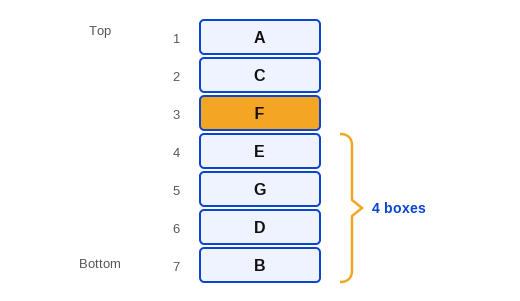
Seven boxes A, B, C, D, E, F and G are kept one over the other but not necessarily in the same order. Only two boxes are kept between E and B. Only A is kept above C. No box is kept below B. G is kept at some place below F but at some place above D. How many boxes are kept below F?
सात बक्से A, B, C, D, E, F और G एक के ऊपर एक रखे गए हैं, लेकिन यह आवश्यक नहीं है कि वे इसी क्रम में हों। E और B के बीच केवल दो बक्से रखे गए हैं। C के ऊपर केवल A रखा गया है। B के नीचे कोई बक्सा नहीं रखा गया है। G को F के नीचे किसी स्थान पर, लेकिन D के ऊपर किसी स्थान पर रखा गया है। F के नीचे कितने बक्से रखे गए हैं?
  1. A2
  2. B4
  3. C3
  4. D1
Show answer

Concept: Fix the certain positions first (top/bottom), then the relative clues.

  1. No box below B → B at 7 (bottom). Two boxes between E and B → E at 4.
  2. Only A above C → A at 1, C at 2.
  3. F above G above D in places 3, 5, 6 → F 3, G 5, D 6.
  4. Below F: E, G, D, B → 4 boxes.

Trick: Start with words "only" and "no box below" – they fix exact positions.

Answer: (B) 4

अवधारणा: पहले निश्चित स्थान (ऊपर/नीचे) तय करें, फिर सापेक्ष संकेत।

  1. B के नीचे कोई नहीं → B स्थान 7 पर; E और B के बीच दो → E स्थान 4।
  2. केवल A, C के ऊपर → A 1, C 2।
  3. F, G के ऊपर, G, D के ऊपर → F 3, G 5, D 6।
  4. F के नीचे: E, G, D, B → 4 बॉक्स।

ट्रिक: "केवल" और "नीचे कोई नहीं" वाले संकेत पहले लगाएँ।

उत्तर: (B) 4

RRB NTPC Undergraduate CBT 1General Intelligence and ReasoningBox stacking puzzleRRB NTPC Undergraduate CBT 1 2024 · 2 Sep Shift 2 →
Q5998.
Based on the English alphabetical order, three of the following four letter-clusters are alike in a certain way and thus form a group. Which letter-cluster DOES NOT belong to that group?
(Note: The odd one out is not based on the number of consonants/vowels or their position in the letter-cluster.)
अंग्रेज़ी वर्णमाला क्रम के आधार पर, निम्नलिखित चार अक्षर-समूहों में से तीन किसी निश्चित प्रकार से एकसमान हैं और इस प्रकार एक समूह बनाते हैं। कौन-सा अक्षर-समूह उस समूह से संबंधित नहीं है?
(ध्यान दें: असंगत का निर्धारण व्यंजनों/स्वरों की संख्या या अक्षर-समूह में उनके स्थान के आधार पर नहीं है।)
  1. AKMH
  2. BIKE
  3. CGIC
  4. DMOI
Show answer

Concept: Check the gaps between letters using positions (A = 1 … Z = 26).

  1. IKE: I+2 = K, K−6 = E. GIC: G+2 = I, I−6 = C. MOI: M+2 = O, O−6 = I.
  2. KMH: K+2 = M, but M−5 = H (not −6).

Trick: Write the pattern of the first cluster and test the rest.

Answer: (A) KMH

अवधारणा: अक्षरों की स्थिति (A = 1 … Z = 26) से अंतर देखें।

  1. IKE, GIC, MOI: पहला +2, फिर −6।
  2. KMH: K+2 = M, पर M−5 = H (−6 नहीं)।

ट्रिक: एक समूह का पैटर्न लिखकर बाकी जाँचें।

उत्तर: (A) KMH

RRB NTPC Undergraduate CBT 1General Intelligence and ReasoningOdd one out – letter clustersRRB NTPC Undergraduate CBT 1 2024 · 2 Sep Shift 2 →
Q5999.
Read the given statement(s) and conclusions carefully. Assuming that the information given in the statements is true, even if it appears to be at variance with commonly known facts, decide which of the given conclusions logically follow(s) from the statement(s).
Statements:
Some Circular Saws are Trowels.
Some Trowels are Power Saws.
Conclusions:
I: Some Circular Saws are Power Saws.
II: No Circular Saws are Power Saws.
दिए गए कथनों और निष्कर्षों को ध्यानपूर्वक पढ़िए। यह मानते हुए कि कथनों में दी गई जानकारी सत्य है, भले ही वह सामान्यतः ज्ञात तथ्यों से भिन्न प्रतीत होती हो, निर्णय लीजिए कि दिए गए निष्कर्षों में से कौन-सा/से निष्कर्ष कथनों का तार्किक रूप से अनुसरण करता है/करते हैं।
कथन:
कुछ सर्कुलर सॉ (Circular Saws), ट्रॉवेल (Trowels) हैं।
कुछ ट्रॉवेल, पावर सॉ (Power Saws) हैं।
निष्कर्ष:
I: कुछ सर्कुलर सॉ, पावर सॉ हैं।
II: कोई सर्कुलर सॉ, पावर सॉ नहीं है।
  1. AOnly conclusion (I) follows.केवल निष्कर्ष (I) अनुसरण करता है।
  2. BNeither conclusion (I) nor (II) follows.न तो निष्कर्ष (I) और न ही (II) अनुसरण करता है।
  3. CBoth conclusions (I) and (II) follow.निष्कर्ष (I) और (II) दोनों अनुसरण करते हैं।
  4. DOnly conclusion (II) follows.केवल निष्कर्ष (II) अनुसरण करता है।
Show answer

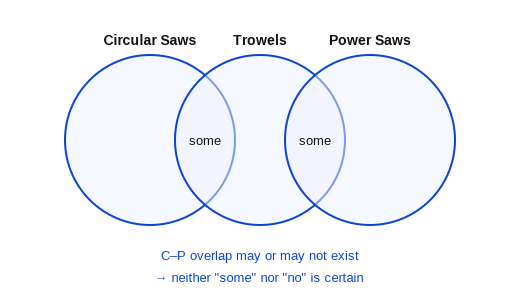
Concept: Two "some" statements through a middle term give no definite link between the end terms.

  1. Some Circular Saws are Trowels; some Trowels are Power Saws.
  2. Circular Saws and Power Saws may or may not overlap.
  3. So neither I ("some are") nor II ("none are") is certain.

Trick: Some + Some → no conclusion. I and II form an either-or pair, but "either-or" is not among the options, so neither follows definitely.

Answer: (B) Neither conclusion (I) nor (II) follows.

अवधारणा: मध्य पद से जुड़े दो "कुछ" कथनों से अंतिम पदों में कोई निश्चित संबंध नहीं बनता।

  1. कुछ Circular Saws, Trowels हैं; कुछ Trowels, Power Saws हैं।
  2. Circular Saws और Power Saws का मेल हो भी सकता है, नहीं भी।
  3. अतः I और II में से कोई भी निश्चित नहीं।

ट्रिक: कुछ + कुछ → कोई निष्कर्ष नहीं।

उत्तर: (B) न तो (I) और न ही (II) अनुसरण करता है।

RRB NTPC Undergraduate CBT 1General Intelligence and ReasoningSyllogismRRB NTPC Undergraduate CBT 1 2024 · 2 Sep Shift 2 →
Q6000.
Read the given statements and conclusions carefully. Assuming that the information given in the statements is true, even if it appears to be at variance with commonly known facts, decide which of the given conclusion(s) logically follow(s) from the statements.
Statements:
All soaps are gels.
All soaps are conditioners.
Conclusions:
(I) Some gels are conditioners.
(II) All conditioners are soaps.
दिए गए कथनों और निष्कर्षों को ध्यानपूर्वक पढ़िए। यह मानते हुए कि कथनों में दी गई जानकारी सत्य है, भले ही वह सामान्यतः ज्ञात तथ्यों से भिन्न प्रतीत होती हो, निर्णय लीजिए कि दिए गए निष्कर्षों में से कौन-सा/से निष्कर्ष कथनों का तार्किक रूप से अनुसरण करता है/करते हैं।
कथन:
सभी साबुन, जेल हैं।
सभी साबुन, कंडीशनर हैं।
निष्कर्ष:
(I) कुछ जेल, कंडीशनर हैं।
(II) सभी कंडीशनर, साबुन हैं।
  1. ABoth conclusions (I) and (II) follow.निष्कर्ष (I) और (II) दोनों अनुसरण करते हैं।
  2. BNeither conclusion (I) nor (II) follows.न तो निष्कर्ष (I) और न ही (II) अनुसरण करता है।
  3. COnly conclusion (II) follows.केवल निष्कर्ष (II) अनुसरण करता है।
  4. DOnly conclusion (I) follows.केवल निष्कर्ष (I) अनुसरण करता है।
Show answer

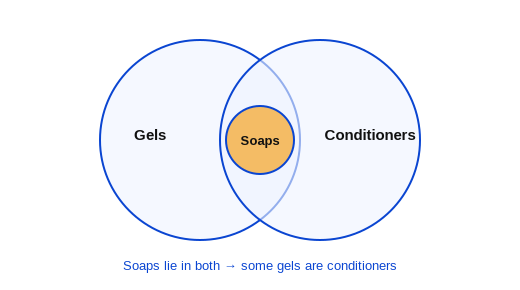
Concept: If all X are Y and all X are Z, then some Y are Z.

  1. Soaps lie inside Gels and inside Conditioners.
  2. So the soap region is common → Some gels are conditioners (I follows).
  3. Conditioners may contain more than soaps → II does not follow.

Trick: All + All with the same subject → "Some" conclusion between the two predicates.

Answer: (D) Only conclusion (I) follows.

अवधारणा: यदि सभी X, Y हैं और सभी X, Z हैं, तो कुछ Y, Z हैं।

  1. Soaps, Gels और Conditioners दोनों के अंदर।
  2. अतः कुछ Gels, Conditioners हैं (I सही)।
  3. सभी Conditioners, Soaps हों – आवश्यक नहीं (II गलत)।

ट्रिक: समान विषय वाले दो "सभी" → विधेयों में "कुछ" संबंध।

उत्तर: (D) केवल निष्कर्ष (I) अनुसरण करता है।

RRB NTPC Undergraduate CBT 1General Intelligence and ReasoningSyllogismRRB NTPC Undergraduate CBT 1 2024 · 2 Sep Shift 2 →