Question bank

Q&A: practice questions with answers

Search questions on any topic. Filter by exam category, exam, subject and topic, try the question, then open the answer and explanation.

Courses – airGurukul

20,719 questions found.

Q6061.
Which of the following was the biggest armed resistance to colonialism in the 19th century in India?
निम्नलिखित में से कौन-सा 19वीं शताब्दी में भारत में उपनिवेशवाद के विरुद्ध सबसे बड़ा सशस्त्र प्रतिरोध था?
  1. ASepoy Mutinyसिपाही विद्रोह
  2. BFirst Anglo-Maratha Warप्रथम आंग्ल-मराठा युद्ध
  3. CQuit India Movementभारत छोड़ो आंदोलन
  4. DBattle of Buxarबक्सर का युद्ध
Show answer

Concept: The Revolt of 1857 (Sepoy Mutiny) began at Meerut on 10 May 1857 and spread across north and central India.

  1. Sepoys, peasants, artisans and rulers (Bahadur Shah Zafar, Rani Lakshmibai, Nana Saheb) joined – the biggest armed resistance to British rule in the 19th century.
  2. Quit India was in 1942 (20th century); Buxar (1764) and the First Anglo-Maratha War (1775–82) were 18th-century wars.

Yaad rakhein: 19th century + biggest armed revolt = 1857.

Answer: (A) Sepoy Mutiny

अवधारणा: 1857 का विद्रोह (सिपाही विद्रोह) 10 मई 1857 को मेरठ से शुरू होकर उत्तर व मध्य भारत में फैला।

  1. सिपाही, किसान, कारीगर और शासक (बहादुर शाह ज़फ़र, रानी लक्ष्मीबाई, नाना साहब) शामिल हुए – यह 19वीं सदी में ब्रिटिश शासन के विरुद्ध सबसे बड़ा सशस्त्र प्रतिरोध था।
  2. भारत छोड़ो 1942 (20वीं सदी) में; बक्सर (1764) और प्रथम आंग्ल-मराठा युद्ध (1775–82) 18वीं सदी के थे।

याद रखें: 19वीं सदी + सबसे बड़ा सशस्त्र विद्रोह = 1857।

उत्तर: (A) Sepoy Mutiny (सिपाही विद्रोह)
RRB NTPC Undergraduate CBT 1General AwarenessModern history – Revolt of 1857RRB NTPC Undergraduate CBT 1 2024 · 2 Sep Shift 1 →
Q6062.
Among which of the following powers did the ‘Tripartite Struggle’ take place during the 8th and 9th centuries?
8वीं और 9वीं शताब्दी के दौरान 'त्रिपक्षीय संघर्ष' निम्नलिखित में से किन शक्तियों के बीच हुआ था?
  1. ACholas, Chalukyas and Satavahanasचोल, चालुक्य और सातवाहन
  2. BPandyas, Pallavas and Cholasपांड्य, पल्लव और चोल
  3. CRashtrakutas, Cholas and Vardhanasराष्ट्रकूट, चोल और वर्धन
  4. DPalas, Pratiharas and Rashtrakutasपाल, प्रतिहार और राष्ट्रकूट
Show answer

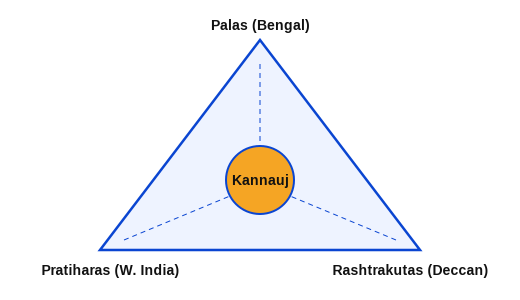
Concept: The Tripartite Struggle (8th–9th centuries) was the contest for control of Kannauj, the symbol of supremacy in north India.

  1. Palas of Bengal (Dharmapala), Gurjara-Pratiharas of western India (Vatsaraja, Nagabhata II) and Rashtrakutas of the Deccan (Dhruva, Govinda III) fought it.
  2. The Pratiharas finally won Kannauj under Nagabhata II.

Yaad rakhein: PPR – Pala, Pratihara, Rashtrakuta for Kannauj.

Answer: (D) Palas, Pratiharas and Rashtrakutas

अवधारणा: त्रिपक्षीय संघर्ष (8वीं–9वीं सदी) उत्तर भारत में प्रभुत्व के प्रतीक कन्नौज पर नियंत्रण के लिए था।

  1. बंगाल के पाल (धर्मपाल), पश्चिम भारत के गुर्जर-प्रतिहार (वत्सराज, नागभट्ट द्वितीय) और दक्कन के राष्ट्रकूट (ध्रुव, गोविंद तृतीय) इसमें शामिल थे।
  2. अंततः नागभट्ट द्वितीय के समय प्रतिहारों ने कन्नौज जीता।

याद रखें: PPR – पाल, प्रतिहार, राष्ट्रकूट; लक्ष्य कन्नौज।

उत्तर: (D) Palas, Pratiharas and Rashtrakutas (पाल, प्रतिहार और राष्ट्रकूट)

RRB NTPC Undergraduate CBT 1General AwarenessEarly medieval history – Tripartite StruggleRRB NTPC Undergraduate CBT 1 2024 · 2 Sep Shift 1 →
Q6063.
In 2025, India assumed the chairmanship of which international body focused on productivity and sustainability during a meeting held in Jakarta?
2025 में, जकार्ता में आयोजित एक बैठक के दौरान भारत ने उत्पादकता और संधारणीयता पर केंद्रित किस अंतर्राष्ट्रीय निकाय की अध्यक्षता ग्रहण की?
  1. AAsia-Pacific Economic Cooperation (APEC) for the 2025–26 termएशिया-प्रशांत आर्थिक सहयोग (APEC), 2025–26 कार्यकाल के लिए
  2. BASEAN Council for Economic Growth (ACEG) for a two-year termआसियान आर्थिक विकास परिषद (ACEG), दो वर्ष के कार्यकाल के लिए
  3. CAsian Productivity Organisation (APO) for the 2025–26 termएशियाई उत्पादकता संगठन (APO), 2025–26 कार्यकाल के लिए
  4. DSouth Asian Association for Productivity (SAAP) till the 2026 termदक्षिण एशियाई उत्पादकता संघ (SAAP), 2026 कार्यकाल तक
Show answer

Concept: The Asian Productivity Organization (APO), Tokyo (est. 1961), promotes productivity in the Asia-Pacific; India is a founder member.

  1. At its Governing Body meeting in Jakarta (2025), India took over the APO chairmanship for 2025–26.
  2. The National Productivity Council (NPC) under DPIIT represents India in APO.
  3. APEC does not include India; ACEG and SAAP do not exist as such.

Yaad rakhein: Productivity + Asia = APO (Tokyo); India is chair for 2025–26.

Answer: (C) Asian Productivity Organisation (APO) for the 2025–26 term

अवधारणा: एशियाई उत्पादकता संगठन (APO), टोक्यो (स्थापना 1961) एशिया-प्रशांत में उत्पादकता बढ़ाता है; भारत संस्थापक सदस्य है।

  1. जकार्ता (2025) में इसकी गवर्निंग बॉडी बैठक में भारत ने 2025–26 के लिए APO की अध्यक्षता संभाली।
  2. DPIIT के अधीन राष्ट्रीय उत्पादकता परिषद (NPC) APO में भारत का प्रतिनिधित्व करती है।
  3. APEC में भारत सदस्य नहीं है; ACEG व SAAP ऐसे संगठन नहीं हैं।

याद रखें: उत्पादकता + एशिया = APO (टोक्यो); भारत 2025–26 का अध्यक्ष।

उत्तर: (C) Asian Productivity Organisation (APO) for the 2025–26 term

RRB NTPC Undergraduate CBT 1General AwarenessCurrent affairs – international organisationsRRB NTPC Undergraduate CBT 1 2024 · 2 Sep Shift 1 →
Q6064.
Which gas was least abundant in the early atmosphere?
प्रारंभिक वायुमंडल में कौन-सी गैस सबसे कम मात्रा में थी?
  1. AWater vapourजलवाष्प
  2. BFree oxygenमुक्त ऑक्सीजन
  3. CCarbon dioxideकार्बन डाइऑक्साइड
  4. DNitrogenनाइट्रोजन
Show answer

Concept: The early atmosphere formed by degassing from the Earth’s interior (volcanic outgassing).

  1. It was rich in water vapour, nitrogen, carbon dioxide, methane and ammonia.
  2. Free oxygen was almost absent; it built up only later through photosynthesis by early organisms (cyanobacteria).
  3. So free oxygen was the least abundant gas.

Yaad rakhein: Early air: lots of H2O, CO2, N2; O2 came later with life.

Answer: (B) Free oxygen

अवधारणा: प्रारंभिक वायुमंडल पृथ्वी के भीतर से गैसों के निकलने (degassing / ज्वालामुखी) से बना।

  1. इसमें जलवाष्प, नाइट्रोजन, कार्बन डाइऑक्साइड, मीथेन और अमोनिया प्रचुर थीं।
  2. मुक्त ऑक्सीजन लगभग नहीं थी; यह बाद में प्रारंभिक जीवों (साइनोबैक्टीरिया) के प्रकाश-संश्लेषण से बढ़ी।
  3. अतः मुक्त ऑक्सीजन सबसे कम थी।

याद रखें: प्रारंभिक वायु: H2O, CO2, N2 अधिक; O2 जीवन के साथ बाद में आई।

उत्तर: (B) Free oxygen (मुक्त ऑक्सीजन)

RRB NTPC Undergraduate CBT 1General AwarenessGeography – evolution of atmosphereRRB NTPC Undergraduate CBT 1 2024 · 2 Sep Shift 1 →
Q6065.
What was the official mascot of the 2025 National Games?
2025 राष्ट्रीय खेलों का आधिकारिक शुभंकर (mascot) क्या था?
  1. ATejaswiniतेजस्विनी
  2. BMauliमौली
  3. CGajasimhaगजसिंह
  4. DShikharशिखर
Show answer

Concept: The 38th National Games were held in Uttarakhand (January–February 2025).

  1. Their official mascot was Mauli, based on the Himalayan Monal – the state bird of Uttarakhand.
  2. Services Sports Control Board topped the medal table.

Yaad rakhein: Uttarakhand state bird Monal → mascot Mauli.

Answer: (B) Mauli

अवधारणा: 38वें राष्ट्रीय खेल उत्तराखंड में (जनवरी–फ़रवरी 2025) हुए।

  1. इनका आधिकारिक शुभंकर (mascot) मौली था, जो उत्तराखंड के राज्य पक्षी हिमालयन मोनाल पर आधारित है।
  2. सर्विसेज़ स्पोर्ट्स कंट्रोल बोर्ड पदक तालिका में शीर्ष पर रहा।

याद रखें: उत्तराखंड का राज्य पक्षी मोनाल → शुभंकर मौली।

उत्तर: (B) Mauli (मौली)

RRB NTPC Undergraduate CBT 1General AwarenessSports – National GamesRRB NTPC Undergraduate CBT 1 2024 · 2 Sep Shift 1 →
Q6066.
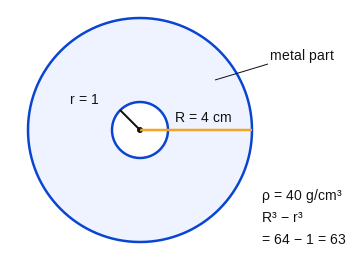
A hollow spherical shell is made of a metal of density 40 g/cm3. Its internal and external radii are 1 cm and 4 cm, respectively. What is the mass (in kg) of the shell? (Take π=227.)
एक खोखला गोलीय कोश 40 g/cm3 घनत्व वाली धातु से बना है। इसकी आंतरिक और बाहरी त्रिज्याएँ क्रमशः 1 cm और 4 cm हैं। कोश का द्रव्यमान (kg में) कितना है? (π=227 लीजिए।)
  1. A11.65
  2. B12.35
  3. C7.56
  4. D10.56
Show answer

Concept: Volume of shell =43π(R3−r3); mass = density × volume.

  1. R3−r3=43−13=64−1=63
  2. V=43×227×63=264cm3
  3. Mass =40×264=10560g
  4. 10560g=10.56kg

Trick: 227×63=198, then 198×43=264 – pick R3−r3 as a multiple of 7 to cancel fast.

Answer: (D) 10.56

अवधारणा: कोश का आयतन =43π(R3−r3); द्रव्यमान = घनत्व × आयतन।

  1. R3−r3=43−13=64−1=63
  2. V=43×227×63=264cm3
  3. द्रव्यमान =40×264=10560g
  4. 10560g=10.56kg

ट्रिक: 227×63=198, फिर 198×43=264।

उत्तर: (D) 10.56

RRB NTPC Undergraduate CBT 1MathematicsMensuration – sphere (hollow shell)RRB NTPC Undergraduate CBT 1 2024 · 2 Sep Shift 1 →
Q6067.
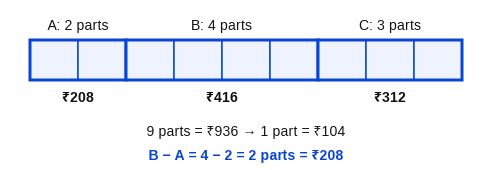
An amount of ₹936 is divided among three persons in the ratio of 2 : 4 : 3. The difference between the largest and the smallest shares (in ₹) in the distribution is:
₹936 की एक राशि को तीन व्यक्तियों में 2 : 4 : 3 के अनुपात में विभाजित किया जाता है। इस वितरण में सबसे बड़े और सबसे छोटे हिस्सों (₹ में) के बीच का अंतर कितना है?
  1. A235
  2. B132
  3. C151
  4. D208
Show answer

Concept: Share =ratio partsum of parts×total.

  1. Sum of parts =2+4+3=9; 1 part =9369=104
  2. Largest share =4×104=416, smallest =2×104=208
  3. Difference =(4−2)×104=208

Trick: Difference = (largest part − smallest part) × one part = 2×10⁴.

Answer: (D) 208

अवधारणा: हिस्सा =अनुपात भागभागों का योग×कुल।

  1. भागों का योग =2+4+3=9; 1 भाग =9369=104
  2. सबसे बड़ा हिस्सा =4×104=416, सबसे छोटा =2×104=208
  3. अंतर =(4−2)×104=208

ट्रिक: अंतर = (बड़ा भाग − छोटा भाग) × एक भाग = 2×10⁴।

उत्तर: (D) 208

RRB NTPC Undergraduate CBT 1MathematicsRatio and proportionRRB NTPC Undergraduate CBT 1 2024 · 2 Sep Shift 1 →
Q6068.
By how much is 65% of 75 greater than 35 of 15?
75 का 65%, 15 के 35 से कितना अधिक है?
  1. A33.75
  2. B37.75
  3. C39.75
  4. D36.75
Show answer

Concept: x% of N=x100×N.

  1. 65% of 75=65×75100=48.75
  2. 35 of 15=9
  3. Difference =48.75−9=39.75

Trick: 65% of 75 = 75% of 65 = 34×65=48.75.

Answer: (C) 39.75

अवधारणा: N का x%=x100×N।

  1. 75 का 65%=65×75100=48.75
  2. 15 का 35=9
  3. अंतर =48.75−9=39.75

ट्रिक: 75 का 65% = 65 का 75% = 34×65=48.75।

उत्तर: (C) 39.75

RRB NTPC Undergraduate CBT 1MathematicsPercentage and fractionsRRB NTPC Undergraduate CBT 1 2024 · 2 Sep Shift 1 →
Q6069.
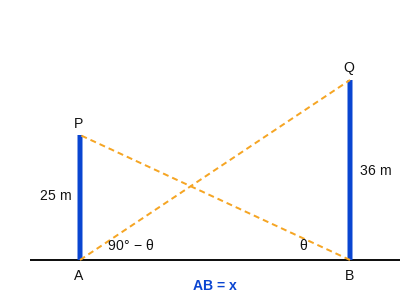
The distance between two electric poles of length 25 metres and 36 metres is x metres. If the two angles of elevation of their respective top from the bottom of the other are complementary to each other, then the value of x (in metres) is:
25 मीटर और 36 मीटर लंबे दो बिजली के खंभों के बीच की दूरी x मीटर है। यदि एक खंभे के तल से दूसरे खंभे के शीर्ष के दोनों उन्नयन कोण एक-दूसरे के पूरक हैं, तो x का मान (मीटर में) कितना है?
  1. A28
  2. B30
  3. C26
  4. D32
Show answer

Concept: If angles of elevation from the foot of each pole to the top of the other are complementary, then x2=h1×h2.

  1. From B to top P of pole A: tanθ=25x
  2. From A to top Q of pole B: tan(90∘−θ)=cotθ=36x
  3. Multiply: tanθ·cotθ=1=25×36x2
  4. x2=900⇒x=30m

Trick: Distance =h1h2=25×36=5×6=30.

Answer: (B) 30

अवधारणा: यदि प्रत्येक खंभे के पाद से दूसरे के शीर्ष के उन्नयन कोण पूरक हों, तो x2=h1×h2।

  1. B से खंभे A के शीर्ष P तक: tanθ=25x
  2. A से खंभे B के शीर्ष Q तक: tan(90∘−θ)=cotθ=36x
  3. गुणा करें: tanθ·cotθ=1=25×36x2
  4. x2=900⇒x=30m

ट्रिक: दूरी =h1h2=25×36=5×6=30।

उत्तर: (B) 30

RRB NTPC Undergraduate CBT 1MathematicsHeights and distancesRRB NTPC Undergraduate CBT 1 2024 · 2 Sep Shift 1 →
Q6070.
A supplier offers a trade discount of 20% on a product priced at ₹5,000. Additionally, there is a scheme discount of 10% on the already discounted price. What is the final price of the product after both discounts?
एक आपूर्तिकर्ता ₹5,000 मूल्य वाले एक उत्पाद पर 20% की व्यापारिक छूट देता है। इसके अतिरिक्त, पहले से छूट वाले मूल्य पर 10% की योजना छूट है। दोनों छूटों के बाद उत्पाद का अंतिम मूल्य कितना है?
  1. A₹3,800
  2. B₹4,000
  3. C₹4,500
  4. D₹3,600
Show answer

Concept: Successive discounts are applied one after another: SP=MP×100−d1100×100−d2100.

  1. After 20%: 5000×80100=4000
  2. After 10% on 4000: 4000×90100=3600
  3. Final price = ₹3,600

Trick: Net discount =20+10−20×10100=28%; 72% of 5000 = 3600.

Answer: (D) ₹3,600

अवधारणा: क्रमिक छूट एक के बाद एक लगती है: SP=MP×100−d1100×100−d2100।

  1. 20% के बाद: 5000×80100=4000
  2. 4000 पर 10% के बाद: 4000×90100=3600
  3. अंतिम मूल्य = ₹3,600

ट्रिक: शुद्ध छूट =20+10−20×10100=28%; 5000 का 72% = 3600।

उत्तर: (D) ₹3,600

RRB NTPC Undergraduate CBT 1MathematicsDiscount – successiveRRB NTPC Undergraduate CBT 1 2024 · 2 Sep Shift 1 →
Q6071.
If the third proportional of 9 and 30 be x, then what is the value of x?
यदि 9 और 30 का तृतीयानुपाती x है, तो x का मान क्या है?
  1. A101
  2. B102
  3. C99
  4. D100
Show answer

Concept: Third proportional of a and b is x where a:b=b:x, i.e. x=b2a.

  1. 9:30=30:x
  2. x=3029=9009=100

Trick: Third proportional =(second)2first.

Answer: (D) 100

अवधारणा: a और b का तृतीयानुपाती x हो तो a:b=b:x, अर्थात x=b2a।

  1. 9:30=30:x
  2. x=3029=9009=100

ट्रिक: तृतीयानुपाती =(दूसरा)2पहला।

उत्तर: (D) 100

RRB NTPC Undergraduate CBT 1MathematicsProportion – third proportionalRRB NTPC Undergraduate CBT 1 2024 · 2 Sep Shift 1 →
Q6072.
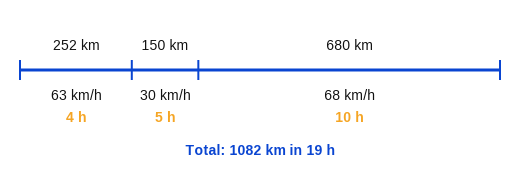
Zeeshan travels 252 km at 63 km/hr, the next 150 km at 30 km/hr and the next 680 km at 68 km/hr. What is his average speed (in km/hr, rounded off to two decimal places) for the whole journey?
ज़ीशान 252 km की दूरी 63 km/hr की चाल से, अगली 150 km की दूरी 30 km/hr की चाल से और अगली 680 km की दूरी 68 km/hr की चाल से तय करता है। पूरी यात्रा के लिए उसकी औसत चाल (km/hr में, दशमलव के दो स्थानों तक पूर्णांकित) कितनी है?
  1. A58.05
  2. B62.09
  3. C54.95
  4. D56.95
Show answer

Concept: Average speed=Total distanceTotal time (not the average of speeds).

  1. Times: 25263=4h, 15030=5h, 68068=10h
  2. Total distance =252+150+680=1082km; total time =19h
  3. Average speed =108219≈56.95km/h

Trick: 19×57=1083, so the answer is just below 57 → 56.95.

Answer: (D) 56.95

अवधारणा: औसत चाल=कुल दूरीकुल समय (चालों का औसत नहीं)।

  1. समय: 25263=4h, 15030=5h, 68068=10h
  2. कुल दूरी =252+150+680=1082km; कुल समय =19h
  3. औसत चाल =108219≈56.95km/h

ट्रिक: 19×57=1083, अतः उत्तर 57 से थोड़ा कम → 56.95।

उत्तर: (D) 56.95

RRB NTPC Undergraduate CBT 1MathematicsSpeed – average speedRRB NTPC Undergraduate CBT 1 2024 · 2 Sep Shift 1 →
Q6073.
What is the difference between a single discount of 48% on ₹1,450 and two successive discounts of 10% and 40% on the same amount?
₹1,450 पर 48% की एकल छूट और उसी राशि पर 10% और 40% की दो क्रमिक छूटों के बीच का अंतर कितना है?
  1. A₹28
  2. B₹29
  3. C₹32
  4. D₹31
Show answer

Concept: Two successive discounts a% and b% equal a single discount of (a+b−ab100)%.

  1. Equivalent of 10% and 40%: 10+40−10×40100=46%
  2. Single discount 48% vs 46%: gap =2%
  3. 2% of 1450=2×1450100=29

Trick: Find only the % gap and apply it to the price – no need to compute both selling prices (754 and 667).

Answer: (B) ₹29

अवधारणा: क्रमिक छूट a% व b% = एकल छूट (a+b−ab100)%।

  1. 10% व 40% का समतुल्य: 10+40−10×40100=46%
  2. एकल छूट 48% बनाम 46%: अंतर =2%
  3. 1450 का 2%=2×1450100=29

ट्रिक: केवल % अंतर निकालें और मूल्य पर लगाएँ – दोनों विक्रय मूल्य (754 और 667) निकालने की ज़रूरत नहीं।

उत्तर: (B) ₹29

RRB NTPC Undergraduate CBT 1MathematicsDiscount – single vs successiveRRB NTPC Undergraduate CBT 1 2024 · 2 Sep Shift 1 →
Q6074.
Simplify: 4(34x2−25x+17)−3(x2+8x−13)
सरल कीजिए: 4(34x2−25x+17)−3(x2+8x−13)
  1. A124x − 107
  2. B124x + 107
  3. C−124x − 107
  4. D−124x + 107
Show answer

Concept: Open brackets by distributing, then combine like terms.

  1. 4(34x2−25x+17)=3x2−100x+68
  2. −3(x2+8x−13)=−3x2−24x+39
  3. Add: (3x2−3x2)+(−100x−24x)+(68+39)=−124x+107

Trick: The x2 terms cancel (4×34=3), so only the x and constant terms need checking: sign of x is −, constant is +.

Answer: (D) −124x+107

अवधारणा: कोष्ठक खोलकर (वितरण नियम) समान पदों को जोड़ें।

  1. 4(34x2−25x+17)=3x2−100x+68
  2. −3(x2+8x−13)=−3x2−24x+39
  3. जोड़ें: (3x2−3x2)+(−100x−24x)+(68+39)=−124x+107

ट्रिक: x2 पद कट जाते हैं (4×34=3); x का चिह्न −, अचर +।

उत्तर: (D) −124x+107

RRB NTPC Undergraduate CBT 1MathematicsAlgebra – simplificationRRB NTPC Undergraduate CBT 1 2024 · 2 Sep Shift 1 →
Q6075.
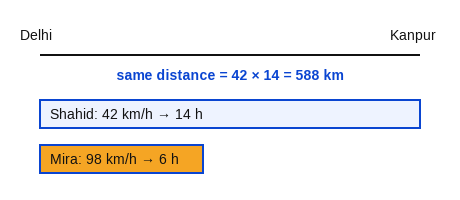
Shahid and Mira have to travel from Delhi to Kanpur in their respective cars. Shahid is driving at 42 km/hr while Mira is driving at 98 km/hr. Find the time taken by Mira to reach Kanpur if Shahid takes 14 hours.
शाहिद और मीरा को अपनी-अपनी कारों से दिल्ली से कानपुर तक यात्रा करनी है। शाहिद 42 km/hr की चाल से गाड़ी चला रहा है, जबकि मीरा 98 km/hr की चाल से गाड़ी चला रही है। यदि शाहिद को 14 घंटे लगते हैं, तो मीरा द्वारा कानपुर पहुँचने में लिया गया समय ज्ञात कीजिए।
  1. A5 hours5 घंटे
  2. B2 hours2 घंटे
  3. C6 hours6 घंटे
  4. D12 hours12 घंटे
Show answer

Concept: For the same distance, time is inversely proportional to speed: t1t2=s2s1.

  1. Distance =42×14=588km
  2. Mira’s time =58898=6h
  3. Check: tM14=4298=37⇒tM=6

Trick: Speed ratio 42:98=3:7, so time ratio =7:3; 14→6.

Answer: (C) 6 hours

अवधारणा: समान दूरी के लिए समय, चाल के व्युत्क्रमानुपाती होता है: t1t2=s2s1।

  1. दूरी =42×14=588km
  2. मीरा का समय =58898=6h
  3. जाँच: tM14=4298=37⇒tM=6

ट्रिक: चाल अनुपात 42:98=3:7, अतः समय अनुपात =7:3; 14→6।

उत्तर: (C) 6 hours (6 घंटे)

RRB NTPC Undergraduate CBT 1MathematicsSpeed, time and distanceRRB NTPC Undergraduate CBT 1 2024 · 2 Sep Shift 1 →
Q6076.
A sum of ₹400 amounts to ₹529 in 2 years at a certain rate of interest per annum, compounded annually. The rate of interest per annum is:
₹400 की एक राशि वार्षिक रूप से संयोजित होने वाली एक निश्चित वार्षिक ब्याज दर पर 2 वर्षों में ₹529 हो जाती है। वार्षिक ब्याज दर कितनी है?
  1. A11%
  2. B15%
  3. C18%
  4. D16%
Show answer

Concept: For CI compounded annually, A=P(1+r100)n.

  1. AP=529400=(1+r100)2
  2. 529400=2320=1+r100
  3. r100=320⇒r=15%

Trick: 529 and 400 are perfect squares (232,202): rate =23−2020×100=15%.

Answer: (B) 15%

अवधारणा: वार्षिक चक्रवृद्धि में A=P(1+r100)n।

  1. AP=529400=(1+r100)2
  2. 529400=2320=1+r100
  3. r100=320⇒r=15%

ट्रिक: 529 और 400 पूर्ण वर्ग हैं (232,202): दर =23−2020×100=15%।

उत्तर: (B) 15%

RRB NTPC Undergraduate CBT 1MathematicsCompound InterestRRB NTPC Undergraduate CBT 1 2024 · 2 Sep Shift 1 →
Q6077.
A trader claims to sell flour at a profit of 58%, but also dishonestly uses a weight which is 8% less than what is mentioned on it. Find the total percentage of profit earned by the trader. (Round off the answer to the nearest whole number.)
एक व्यापारी 58% के लाभ पर आटा बेचने का दावा करता है, लेकिन बेईमानी से ऐसे बाट का भी उपयोग करता है जो उस पर अंकित भार से 8% कम है। व्यापारी द्वारा अर्जित कुल लाभ प्रतिशत ज्ञात कीजिए। (उत्तर को निकटतम पूर्ण संख्या तक पूर्णांकित कीजिए।)
  1. A71%
  2. B76%
  3. C72%
  4. D74%
Show answer

Concept: With a false weight, Selling price per real unit rises; Profit%=(SPCP of goods actually given−1)×100.

  1. Let CP of 1 kg = ₹100; claimed SP = ₹158.
  2. He actually gives only 0.92kg, costing ₹92.
  3. Profit%=158−9292×100=660092≈71.74%
  4. Rounded: 72%.

Trick: Overall gain =100+gain100−error×100−100=15892×100−100.

Answer: (C) 72%

अवधारणा: गलत बाट से वास्तविक दिया गया माल कम होता है; लाभ%=(विक्रय मूल्यदिए गए माल का क्रय मूल्य−1)×100।

  1. मान लें 1 kg का क्रय मूल्य ₹100; दावा किया विक्रय मूल्य ₹158।
  2. वास्तव में वह केवल 0.92kg देता है, जिसकी लागत ₹92।
  3. लाभ%=158−9292×100≈71.74%
  4. निकटतम पूर्णांक: 72%।

ट्रिक: कुल लाभ =15892×100−100 (यानी 100+लाभ100−कमी)।

उत्तर: (C) 72%

RRB NTPC Undergraduate CBT 1MathematicsProfit and Loss – False WeightRRB NTPC Undergraduate CBT 1 2024 · 2 Sep Shift 1 →
Q6078.
The product of two positive numbers is 80. If the first number is five times of the second number, then the sum of the two numbers is:
दो धनात्मक संख्याओं का गुणनफल 80 है। यदि पहली संख्या, दूसरी संख्या की पाँच गुनी है, तो दोनों संख्याओं का योग कितना है?
  1. A29
  2. B24
  3. C33
  4. D27
Show answer

Concept: Write both numbers in one variable and use the product.

  1. Let second number =x, first =5x.
  2. 5x×x=80⇒x2=16⇒x=4
  3. Numbers: 20 and 4; sum =24.

Trick: Check options: 20×4=80 and 20=5×4 ✓.

Answer: (B) 24

अवधारणा: दोनों संख्याओं को एक चर में लिखकर गुणनफल का प्रयोग करें।

  1. दूसरी संख्या =x, पहली =5x।
  2. 5x×x=80⇒x2=16⇒x=4
  3. संख्याएँ 20 और 4; योग =24।

ट्रिक: जाँच: 20×4=80 और 20=5×4 ✓।

उत्तर: (B) 24

RRB NTPC Undergraduate CBT 1MathematicsNumbers – Product and SumRRB NTPC Undergraduate CBT 1 2024 · 2 Sep Shift 1 →
Q6079.
The LCM of the numbers 15.4 and 0.006 is:
संख्याओं 15.4 और 0.006 का LCM (लघुत्तम समापवर्त्य) कितना है?
  1. A4.62
  2. B46.2
  3. C462
  4. D0.462
Show answer

Concept: Make decimal places equal, find LCM of the whole numbers, then put back the decimal places.

  1. 15.4=15.400=154001000, 0.006=61000
  2. LCM(15400,6): 15400=23×52×7×11, 6=2×3 → LCM =46200
  3. Put back 3 decimal places: 46.200=46.2

Trick: LCM of decimals = LCM of numerators ÷ common denominator.

Answer: (B) 46.2

अवधारणा: दशमलव स्थान बराबर करें, पूर्ण संख्याओं का LCM निकालें, फिर दशमलव वापस लगाएँ।

  1. 15.4=154001000, 0.006=61000
  2. LCM(15400,6): 15400=23×52×7×11, 6=2×3 → LCM =46200
  3. 3 दशमलव स्थान: 46.200=46.2

ट्रिक: दशमलव का LCM = अंशों का LCM ÷ समान हर।

उत्तर: (B) 46.2

RRB NTPC Undergraduate CBT 1MathematicsLCM of DecimalsRRB NTPC Undergraduate CBT 1 2024 · 2 Sep Shift 1 →
Q6080.
Find the simple interest (in ₹) if a sum of ₹400 is borrowed for 3.5 years at 16% per annum rate of interest.
यदि ₹400 की राशि 16% वार्षिक ब्याज दर पर 3.5 वर्ष के लिए उधार ली जाती है, तो साधारण ब्याज (₹ में) ज्ञात कीजिए।
  1. A324
  2. B274
  3. C224
  4. D204
Show answer

Concept: SI=P×R×T100.

  1. P=400,R=16,T=3.5
  2. SI=400×16×3.5100=4×56=224

Trick: 16×3.5=56% of ₹400 = ₹224.

Answer: (C) 224

अवधारणा: साधारण ब्याज=P×R×T100।

  1. P=400,R=16,T=3.5
  2. SI=400×16×3.5100=4×56=224

ट्रिक: कुल दर 16×3.5=56%; ₹400 का 56% = ₹224।

उत्तर: (C) 224

RRB NTPC Undergraduate CBT 1MathematicsSimple InterestRRB NTPC Undergraduate CBT 1 2024 · 2 Sep Shift 1 →