Question bank

Q&A: practice questions with answers

Search questions on any topic. Filter by exam category, exam, subject and topic, try the question, then open the answer and explanation.

Courses – airGurukul

20,719 questions found.

Q621.
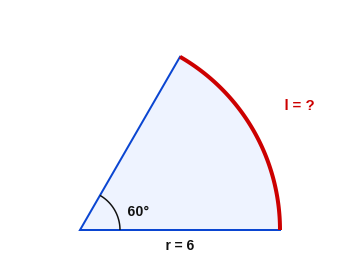
Determine the arc length (in units) of a sector, if the angle of the sector with radius 6 units is 60∘. (Take π=227)
यदि 6 इकाई त्रिज्या वाले त्रिज्यखंड का कोण 60∘ है, तो त्रिज्यखंड के चाप की लंबाई (इकाई में) ज्ञात कीजिए। (π=227 लें)
  1. A227
  2. B447
  3. C117
  4. D337
Show answer

Concept: Arc length l=θ360∘×2πr.

  1. l=60360×2×227×6.
  2. =16×2647=447 units.

Short trick: 60° sector with r = 6: l=πr3=2π=447.

Answer: (B) 447

अवधारणा: चाप की लंबाई l=θ360∘×2πr।

  1. l=60360×2×227×6।
  2. =16×2647=447 इकाई।

शॉर्ट ट्रिक: 60° का त्रिज्यखंड, r = 6: l=πr3=2π=447।

उत्तर: (B) 447

RRB ALP CBT 1MathematicsArc length of a sectorRRB ALP CBT 1 2025 · 16 Feb Shift 1 →
Q622.
5 printers can print 9,000 pages in 6 hours. How many printers are needed to print 28,800 pages in 8 hours at the same rate?
5 प्रिंटर 6 घंटे में 9,000 पृष्ठ छाप सकते हैं। उसी दर से 8 घंटे में 28,800 पृष्ठ छापने के लिए कितने प्रिंटरों की आवश्यकता होगी?
  1. A11
  2. B12
  3. C13
  4. D10
Show answer

Concept: Work ∝ machines × hours: M1H1W1=M2H2W2.

  1. 5×69000=M×828800.
  2. M=5×6×288009000×8=12.

Short trick: One printer prints 9000 ÷ 30 = 300 pages/hour; need 28800 ÷ 8 = 3600 pages/hour → 3600 ÷ 300 = 12.

Answer: (B) 12

अवधारणा: कार्य ∝ मशीनें × घंटे: M1H1W1=M2H2W2।

  1. 5×69000=M×828800।
  2. M=5×6×288009000×8=12।

शॉर्ट ट्रिक: एक प्रिंटर 9000 ÷ 30 = 300 पृष्ठ/घंटा; आवश्यकता 28800 ÷ 8 = 3600 पृष्ठ/घंटा → 3600 ÷ 300 = 12।

उत्तर: (B) 12

RRB ALP CBT 1MathematicsWork and time – machinesRRB ALP CBT 1 2025 · 16 Feb Shift 1 →
Q623.
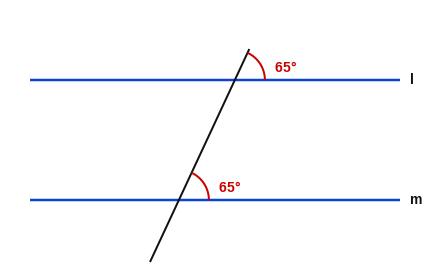
If two lines are parallel and a transversal makes an angle of 65∘ with one line, what is the measure of the corresponding angle on the other line?
यदि दो रेखाएँ समांतर हैं और एक तिर्यक रेखा एक रेखा के साथ 65∘ का कोण बनाती है, तो दूसरी रेखा पर संगत कोण की माप क्या है?
  1. A65∘
  2. B115∘
  3. C25∘
  4. D55∘
Show answer

Concept: When a transversal cuts two parallel lines, corresponding angles are equal.

  1. The angle with the first line is 65∘.
  2. The corresponding angle (same position) on the other line is also 65∘.
  3. (Co-interior angles would be 180∘−65∘=115∘ – a trap option.)

Short trick: Corresponding = 'F' shape = equal; co-interior = 'C/U' shape = supplementary.

Answer: (A) 65∘

अवधारणा: जब एक तिर्यक रेखा दो समांतर रेखाओं को काटती है, तो संगत कोण बराबर होते हैं।

  1. पहली रेखा के साथ कोण 65∘ है।
  2. दूसरी रेखा पर संगत कोण (समान स्थिति) भी 65∘ है।
  3. (अंतः कोण 180∘−65∘=115∘ होते – यह जाल विकल्प है।)

शॉर्ट ट्रिक: संगत = 'F' आकृति = बराबर; एक ही ओर के अंतः कोण = 'C/U' आकृति = संपूरक।

उत्तर: (A) 65∘

RRB ALP CBT 1MathematicsParallel lines – corresponding anglesRRB ALP CBT 1 2025 · 16 Feb Shift 1 →
Q624.
What sum (in ₹) will earn an interest of ₹460 in 4 years at 10% simple interest per year?
कितनी राशि (₹ में) पर 10% वार्षिक साधारण ब्याज की दर से 4 वर्षों में ₹460 का ब्याज मिलेगा?
  1. A1300
  2. B1150
  3. C950
  4. D1350
Show answer

Concept: P=SI×100R×T.

  1. P=460×10010×4.
  2. =4600040=1150.

Short trick: 4 years at 10% = 40% of P = 460 → P = 460 × 2.5 = 1150.

Answer: (B) 1150

अवधारणा: P=SI×100R×T।

  1. P=460×10010×4।
  2. =4600040=1150।

शॉर्ट ट्रिक: 4 वर्ष 10% पर = P का 40% = 460 → P = 460 × 2.5 = 1150।

उत्तर: (B) 1150

RRB ALP CBT 1MathematicsSimple interest – principalRRB ALP CBT 1 2025 · 16 Feb Shift 1 →
Q625.
Arvind bought an article for ₹x. He sold it to Biru at a loss of 30%. Biru spent ₹198 on its transportation and sold it to Minu at a profit of 50%. If Minu bought it for ₹1,053, then what is the value of x?
अरविंद ने एक वस्तु ₹x में खरीदी। उसने उसे 30% हानि पर बीरू को बेच दिया। बीरू ने उसके परिवहन पर ₹198 खर्च किए और उसे 50% लाभ पर मीनू को बेच दिया। यदि मीनू ने उसे ₹1,053 में खरीदा, तो x का मान क्या है?
  1. A671
  2. B696
  3. C715
  4. D720
Show answer

Concept: Work backwards from Minu's price.

  1. Biru's total cost = 1053 ÷ 1.5 = 702.
  2. Price Biru paid = 702 − 198 = 504.
  3. Arvind sold at 30% loss: 0.7x = 504 ⇒ x = 720.

Short trick: Option check: 720 × 0.7 = 504; (504 + 198) × 1.5 = 1053 ✓.

Answer: (D) 720

अवधारणा: मीनू के मूल्य से पीछे की ओर गणना करें।

  1. बीरू की कुल लागत = 1053 ÷ 1.5 = 702।
  2. बीरू द्वारा चुकाया गया मूल्य = 702 − 198 = 504।
  3. अरविंद ने 30% हानि पर बेचा: 0.7x = 504 ⇒ x = 720।

शॉर्ट ट्रिक: विकल्प जाँच: 720 × 0.7 = 504; (504 + 198) × 1.5 = 1053 ✓।

उत्तर: (D) 720

RRB ALP CBT 1MathematicsProfit and loss – chain sellingRRB ALP CBT 1 2025 · 16 Feb Shift 1 →
Q626.
What should come in place of ? in the given series?
39 51 68 90 117 ?
दी गई श्रृंखला में ? के स्थान पर क्या आना चाहिए?
39 51 68 90 117 ?
  1. A150
  2. B149
  3. C148
  4. D151
Show answer

Concept: Find the differences between consecutive terms.

  1. Differences: 51−39 = 12, 68−51 = 17, 90−68 = 22, 117−90 = 27.
  2. The differences increase by 5 each time, so the next difference = 27 + 5 = 32.
  3. Next term = 117 + 32 = 149.

Short trick: Second difference constant (+5) → just add the next difference: 117 + 32.

Answer: (B) 149

अवधारणा: क्रमागत पदों के बीच अंतर ज्ञात करें।

  1. अंतर: 51−39 = 12, 68−51 = 17, 90−68 = 22, 117−90 = 27।
  2. अंतर हर बार 5 बढ़ रहा है, अतः अगला अंतर = 27 + 5 = 32।
  3. अगला पद = 117 + 32 = 149।

शॉर्ट ट्रिक: द्वितीय अंतर स्थिर (+5) है → अगला अंतर सीधे जोड़ें: 117 + 32।

उत्तर: (B) 149

RRB ALP CBT 1General Intelligence and ReasoningNumber series – increasing differencesRRB ALP CBT 1 2025 · 16 Feb Shift 1 →
Q627.
HEVO is related to WTKD in a certain way based on the English alphabetical order. In the same way, PMDW is related to EBSL. To which of the given options is IFWP related, following the same logic?
अंग्रेज़ी वर्णमाला क्रम के आधार पर HEVO एक निश्चित प्रकार से WTKD से संबंधित है। उसी प्रकार, PMDW, EBSL से संबंधित है। समान तर्क का अनुसरण करते हुए, IFWP दिए गए विकल्पों में से किससे संबंधित है?
  1. AXLOE
  2. BXEDS
  3. CXULE
  4. DXIOP
Show answer

Concept: Each letter moves forward by the same number of places (+15, cyclic).

  1. H(8)+15 = W(23), E(5)+15 = T(20), V(22)+15 = 37−26 = K(11), O(15)+15 = 30−26 = D(4).
  2. Check: P+15 = E, M+15 = B, D+15 = S, W+15 = L ✓.
  3. IFWP: I+15 = X, F+15 = U, W+15 = L, P+15 = E → XULE.

Short trick: +15 is the same as −11: W−11 = L, P−11 = E – faster for letters in the second half of the alphabet.

Answer: (C) XULE

अवधारणा: प्रत्येक अक्षर समान स्थान (+15, चक्रीय) आगे बढ़ता है।

  1. H(8)+15 = W(23), E(5)+15 = T(20), V(22)+15 = 37−26 = K(11), O(15)+15 = 30−26 = D(4)।
  2. जाँच: P+15 = E, M+15 = B, D+15 = S, W+15 = L ✓।
  3. IFWP: I+15 = X, F+15 = U, W+15 = L, P+15 = E → XULE।

शॉर्ट ट्रिक: +15 और −11 समान हैं: W−11 = L, P−11 = E – वर्णमाला के उत्तरार्ध के अक्षरों के लिए तेज़।

उत्तर: (C) XULE

RRB ALP CBT 1General Intelligence and ReasoningLetter analogy – fixed shiftRRB ALP CBT 1 2025 · 16 Feb Shift 1 →
Q628.
In a code language, 'DEAR' is coded as 16 and 'ANGEL' is coded as 25. How will 'BEHAVIOR' be coded in the same language?
एक कूट भाषा में, 'DEAR' को 16 और 'ANGEL' को 25 के रूप में कूटबद्ध किया जाता है। उसी भाषा में 'BEHAVIOR' को किस प्रकार कूटबद्ध किया जाएगा?
  1. A64
  2. B36
  3. C18
  4. D49
Show answer

Concept: Code = (number of letters)².

  1. DEAR has 4 letters → 42=16 ✓.
  2. ANGEL has 5 letters → 52=25 ✓.
  3. BEHAVIOR has 8 letters → 82=64.

Short trick: 16 and 25 are perfect squares of 4 and 5 – the word lengths. Count letters and square.

Answer: (A) 64

अवधारणा: कोड = (अक्षरों की संख्या)²।

  1. DEAR में 4 अक्षर → 42=16 ✓।
  2. ANGEL में 5 अक्षर → 52=25 ✓।
  3. BEHAVIOR में 8 अक्षर → 82=64।

शॉर्ट ट्रिक: 16 और 25 पूर्ण वर्ग हैं (4 और 5 = शब्द की लंबाई)। अक्षर गिनें और वर्ग करें।

उत्तर: (A) 64

RRB ALP CBT 1General Intelligence and ReasoningCoding – square of letter countRRB ALP CBT 1 2025 · 16 Feb Shift 1 →
Q629.
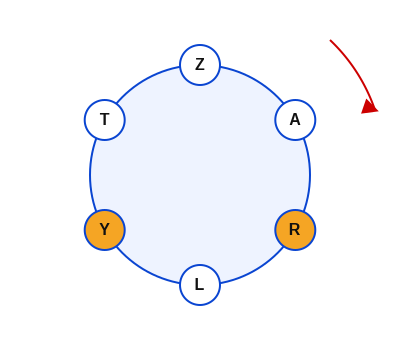
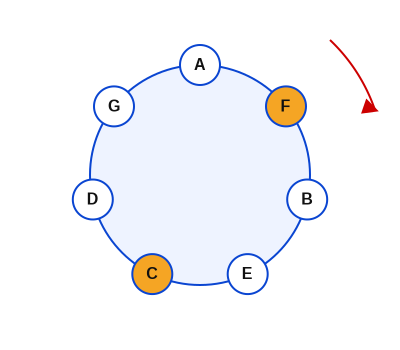
A, T, Z, R, Y and L are sitting around a circular table facing the centre. T sits second to the left of L. Only two people sit between Z and L when counted from the left of Z. A sits to the immediate left of Z and to the immediate right of R. Who is sitting second to the left of R?
A, T, Z, R, Y और L एक वृत्ताकार मेज़ के चारों ओर केंद्र की ओर मुख करके बैठे हैं। T, L के बाईं ओर दूसरे स्थान पर बैठा है। Z के बाईं ओर से गिनने पर Z और L के बीच केवल दो व्यक्ति बैठे हैं। A, Z के ठीक बाईं ओर तथा R के ठीक दाईं ओर बैठा है। R के बाईं ओर दूसरे स्थान पर कौन बैठा है?
  1. AY
  2. BZ
  3. CL
  4. DT
Show answer

Concept: Facing the centre, 'left' means clockwise (red arrow) and 'right' means anticlockwise.

  1. A is immediate left of Z and immediate right of R → Z, A, R are consecutive clockwise.
  2. Two people between Z and L counting from Z's left → L is 3rd after Z clockwise, i.e. right after R.
  3. T is second to the left of L → T sits two seats clockwise from L; Y takes the remaining seat between L and T.
  4. Clockwise order: Z, A, R, L, Y, T. Second to the left of R → skip L → Y.

Short trick: Fix Z first; the 'A between R and Z' block plus 'L three seats from Z' locks the circle immediately.

Answer: (A) Y

अवधारणा: केंद्र की ओर मुख होने पर 'बाएँ' = दक्षिणावर्त (लाल तीर) तथा 'दाएँ' = वामावर्त।

  1. A, Z के ठीक बाएँ और R के ठीक दाएँ है → Z, A, R दक्षिणावर्त क्रमागत हैं।
  2. Z के बाएँ से गिनने पर Z और L के बीच दो व्यक्ति → L, Z से दक्षिणावर्त तीसरा, यानी R के ठीक बाद।
  3. T, L के बाएँ दूसरा → T, L से दो स्थान दक्षिणावर्त; Y, L और T के बीच के शेष स्थान पर।
  4. दक्षिणावर्त क्रम: Z, A, R, L, Y, T। R के बाएँ दूसरा → L को छोड़कर → Y।

शॉर्ट ट्रिक: पहले Z तय करें; 'R और Z के बीच A' और 'Z से तीसरा L' से वृत्त तुरंत तय हो जाता है।

उत्तर: (A) Y

RRB ALP CBT 1General Intelligence and ReasoningCircular seating arrangementRRB ALP CBT 1 2025 · 16 Feb Shift 1 →
Q630.
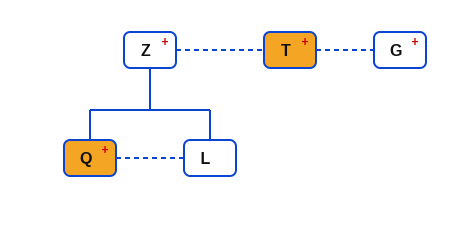
In a certain code language,
'A + B' means 'A is the brother of B',
'A * B' means 'B is the father of A',
'A / B' means 'A is the sister of B' and
'A - B' means 'A is the mother of B'.
Based on the above, how is T related to Q if 'Q + L * Z + T + G'?
एक निश्चित कूट भाषा में,
'A + B' का अर्थ है 'A, B का भाई है',
'A * B' का अर्थ है 'B, A का पिता है',
'A / B' का अर्थ है 'A, B की बहन है' और
'A - B' का अर्थ है 'A, B की माता है'।
उपरोक्त के आधार पर, यदि 'Q + L * Z + T + G' है, तो T, Q से किस प्रकार संबंधित है?
  1. ASisterबहन
  2. BSister's sonबहन का बेटा
  3. CMotherमाता
  4. DBrother's sonभाई का बेटा
Show answer

Concept: Decode each symbol pair from left to right and build the family tree (+ = male).

  1. Q + L → Q is the brother of L (Q is male).
  2. L * Z → Z is the father of L, so Z is also the father of Q.
  3. Z + T → Z is the brother of T; T + G → T is the brother of G (T is male).
  4. So T is the brother of Q's father = Q's paternal uncle. None of Sister, Sister's son, Mother or Brother's son describes this; 'Brother's son' is how Q is related to T (the reverse relation).

Short trick: Read the question direction carefully: 'T related to Q' – start the sentence from T. Reversing it gives Q = T's brother's son, which is a trap.

Answer: None of the options is correct – T is Q's father's brother (paternal uncle).

अवधारणा: प्रत्येक प्रतीक-युग्म को बाएँ से दाएँ डिकोड करें और वंश-वृक्ष बनाएँ (+ = पुरुष)।

  1. Q + L → Q, L का भाई है (Q पुरुष)।
  2. L * Z → Z, L का पिता है, अतः Z, Q का भी पिता है।
  3. Z + T → Z, T का भाई है; T + G → T, G का भाई है (T पुरुष)।
  4. अतः T, Q के पिता का भाई = Q का चाचा/ताऊ है। बहन, बहन का बेटा, माता या भाई का बेटा – कोई भी विकल्प यह संबंध नहीं दर्शाता; 'भाई का बेटा' तो Q का T से संबंध है (उल्टा संबंध)।

शॉर्ट ट्रिक: प्रश्न की दिशा ध्यान से पढ़ें: 'T का Q से संबंध' – वाक्य T से शुरू करें। उल्टा पढ़ने पर Q = T के भाई का बेटा मिलता है, जो एक जाल है।

उत्तर: कोई भी विकल्प सही नहीं है – T, Q के पिता का भाई (चाचा/ताऊ) है।

RRB ALP CBT 1General Intelligence and ReasoningCoded blood relationsRRB ALP CBT 1 2025 · 16 Feb Shift 1 →
Q631.
What should come in place of the question mark (?) in the given series based on the English alphabetical order?
GKB IMF KOJ MQN ?
अंग्रेज़ी वर्णमाला क्रम के आधार पर दी गई श्रृंखला में प्रश्न चिह्न (?) के स्थान पर क्या आना चाहिए?
GKB IMF KOJ MQN ?
  1. APSR
  2. BPTR
  3. COSR
  4. DOSS
Show answer

Concept: Track each position of the clusters separately.

  1. 1st letters: G, I, K, M, O (+2).
  2. 2nd letters: K, M, O, Q, S (+2).
  3. 3rd letters: B, F, J, N, R (+4).
  4. Next cluster: OSR.

Short trick: Every position moves the same way each step: add +2, +2, +4 to the last cluster MQN → O S R.

Answer: (C) OSR

अवधारणा: समूहों के प्रत्येक स्थान को अलग-अलग देखें।

  1. पहले अक्षर: G, I, K, M, O (+2)।
  2. दूसरे अक्षर: K, M, O, Q, S (+2)।
  3. तीसरे अक्षर: B, F, J, N, R (+4)।
  4. अगला समूह: OSR।

शॉर्ट ट्रिक: हर स्थान हर बार समान रूप से बढ़ता है: अंतिम समूह MQN में +2, +2, +4 जोड़ें → O S R।

उत्तर: (C) OSR

RRB ALP CBT 1General Intelligence and ReasoningLetter series – three positionsRRB ALP CBT 1 2025 · 16 Feb Shift 1 →
Q632.
Refer to the given letter and symbol series and answer the question that follows. Counting to be done from left to right only.
(Left) T O © L L $ G £ L D V & & N * M @ J X © B K (Right)
How many such letters are there, each of which is immediately preceded by a letter and also immediately followed by a symbol?
दी गई अक्षर और प्रतीक श्रृंखला को देखें और उसके बाद आने वाले प्रश्न का उत्तर दें। गिनती केवल बाएँ से दाएँ की जानी है।
(बाएँ) T O © L L $ G £ L D V & & N * M @ J X © B K (दाएँ)
ऐसे कितने अक्षर हैं, जिनमें से प्रत्येक के ठीक पहले एक अक्षर है और ठीक बाद एक प्रतीक है?
  1. A4
  2. B3
  3. C6
  4. D5
Show answer

Concept: Pattern needed: Letter – Letter – Symbol.

  1. T O © → O ✓
  2. L L $ → L ✓
  3. D V & → V ✓
  4. J X © → X ✓
  5. No other letter has a letter before it and a symbol after it. Total = 4.

Short trick: Scan only the symbols: for each symbol check whether the two items before it are both letters (©, $, &, ©).

Answer: (A) 4

अवधारणा: आवश्यक पैटर्न: अक्षर – अक्षर – प्रतीक।

  1. T O © → O ✓
  2. L L $ → L ✓
  3. D V & → V ✓
  4. J X © → X ✓
  5. किसी अन्य अक्षर के पहले अक्षर और बाद में प्रतीक नहीं है। कुल = 4।

शॉर्ट ट्रिक: केवल प्रतीकों को देखें: प्रत्येक प्रतीक से पहले के दो पद अक्षर हैं या नहीं, जाँचें (©, $, &, ©)।

उत्तर: (A) 4

RRB ALP CBT 1General Intelligence and ReasoningLetter-symbol seriesRRB ALP CBT 1 2025 · 16 Feb Shift 1 →
Q633.
Each of A, B, C, D, S, T and U has an exam on a different day of a week starting from Monday and ending on Sunday of the same week. Only two people have their exams before D. Only one person has the exam after U. Only three people have their exams between D and B. Only one person has the exam between C and S. A has the exam immediately before C. How many people have exams between T and C?
A, B, C, D, S, T और U में से प्रत्येक की परीक्षा एक ही सप्ताह के सोमवार से शुरू होकर रविवार को समाप्त होने वाले अलग-अलग दिन है। D से पहले केवल दो लोगों की परीक्षा है। U के बाद केवल एक व्यक्ति की परीक्षा है। D और B के बीच केवल तीन लोगों की परीक्षा है। C और S के बीच केवल एक व्यक्ति की परीक्षा है। A की परीक्षा C से ठीक पहले है। T और C के बीच कितने लोगों की परीक्षा है?
  1. AOneएक
  2. BThreeतीन
  3. CFourचार
  4. DTwoदो
Show answer

Concept: Fix the definite positions first (D and U), then place the pairs.

  1. Only two before D → D = Wednesday. Only one after U → U = Saturday.
  2. Three between D and B → B = Sunday (Wed + 4).
  3. A immediately before C and one person between C and S: the free days are Mon, Tue, Thu, Fri → A = Mon, C = Tue, S = Thu, T = Fri.
  4. Between T (Fri) and C (Tue): D, S → two people.
MonA
TueC
WedD
ThuS
FriT
SatU
SunB

Short trick: Lock D (3rd) and U (6th) at once from 'only two before' and 'only one after'; B then has only Sunday.

Answer: (D) Two

अवधारणा: पहले निश्चित स्थान (D और U) तय करें, फिर युग्म रखें।

  1. D से पहले केवल दो → D = बुधवार। U के बाद केवल एक → U = शनिवार।
  2. D और B के बीच तीन → B = रविवार (बुध + 4)।
  3. A, C से ठीक पहले और C व S के बीच एक व्यक्ति: खाली दिन सोम, मंगल, गुरु, शुक्र → A = सोम, C = मंगल, S = गुरु, T = शुक्र।
  4. T (शुक्र) और C (मंगल) के बीच: D, S → दो व्यक्ति।
सोमA
मंगलC
बुधD
गुरुS
शुक्रT
शनिU
रविB

शॉर्ट ट्रिक: 'केवल दो पहले' और 'केवल एक बाद' से D (तीसरा) और U (छठा) तुरंत तय; तब B के लिए केवल रविवार बचता है।

उत्तर: (D) दो

RRB ALP CBT 1General Intelligence and ReasoningScheduling puzzle – days of weekRRB ALP CBT 1 2025 · 16 Feb Shift 1 →
Q634.
A, B, C, D, E, F and G are sitting around a circular table facing the centre.
Only three people sit between A and C when counted from the left of A. Only three people sit between B and G when counted from the right of G. F sits to the immediate right of B. D is an immediate neighbour of G as well as C.
How many people sit between C and F when counted from the left of F?
A, B, C, D, E, F और G एक वृत्ताकार मेज़ के चारों ओर केंद्र की ओर मुख करके बैठे हैं।
A के बाईं ओर से गिनने पर A और C के बीच केवल तीन व्यक्ति बैठे हैं। G के दाईं ओर से गिनने पर B और G के बीच केवल तीन व्यक्ति बैठे हैं। F, B के ठीक दाईं ओर बैठा है। D, G के साथ-साथ C का भी निकटतम पड़ोसी है।
F के बाईं ओर से गिनने पर C और F के बीच कितने व्यक्ति बैठे हैं?
  1. A4
  2. B3
  3. C2
  4. D1
Show answer

Concept: Facing the centre: left = clockwise, right = anticlockwise. With 7 seats, 'three between' means the 4th seat away.

  1. Place A. Three between A and C from A's left → C is 4 seats clockwise from A.
  2. D neighbours both G and C, and B is 4 seats to the right of G with F immediately right of B; the only fit is clockwise A, F, B, E, C, D, G.
  3. Check: F is immediately right (anticlockwise) of B ✓; G→(right) D, C, E → B ✓.
  4. From F going left (clockwise): B, E, then C → 2 people between.

Short trick: D must sit between G and C (common neighbour) – that triplet G-D-C fixes the rest.

Answer: (C) 2

अवधारणा: केंद्र की ओर मुख होने पर: बाएँ = दक्षिणावर्त, दाएँ = वामावर्त। 7 स्थानों में 'तीन बीच में' का अर्थ चौथा स्थान है।

  1. A रखें। A के बाएँ से A और C के बीच तीन → C, A से 4 स्थान दक्षिणावर्त।
  2. D, G और C दोनों का पड़ोसी है, तथा B, G के दाएँ 4 स्थान पर है और F, B के ठीक दाएँ; एकमात्र हल दक्षिणावर्त A, F, B, E, C, D, G है।
  3. जाँच: F, B के ठीक दाएँ (वामावर्त) ✓; G से दाएँ: D, C, E → B ✓।
  4. F से बाएँ (दक्षिणावर्त) चलने पर: B, E, फिर C → बीच में 2 व्यक्ति।

शॉर्ट ट्रिक: D को G और C के बीच ही बैठना होगा (साझा पड़ोसी) – G-D-C त्रिक बाकी सब तय कर देता है।

उत्तर: (C) 2

RRB ALP CBT 1General Intelligence and ReasoningCircular seating arrangement (7 persons)RRB ALP CBT 1 2025 · 16 Feb Shift 1 →
Q635.
In this question, a question is followed by two statements numbered (I) and (II). You have to decide whether the data provided in the statements are sufficient to answer the question. Read both the statements and decide the appropriate answer.
Among the five poles—I, N, C, H, and L—each having a different height, which pole is the shortest?
(I) L is taller than H.
(II) Only one pole is shorter than I. I is shorter than H but taller than N.
इस प्रश्न में, एक प्रश्न के बाद (I) और (II) क्रमांकित दो कथन दिए गए हैं। आपको यह तय करना है कि कथनों में दिया गया डेटा प्रश्न का उत्तर देने के लिए पर्याप्त है या नहीं। दोनों कथनों को पढ़ें और उपयुक्त उत्तर चुनें।
पाँच खंभों—I, N, C, H और L—में से प्रत्येक की ऊँचाई अलग-अलग है, सबसे छोटा खंभा कौन-सा है?
(I) L, H से ऊँचा है।
(II) केवल एक खंभा I से छोटा है। I, H से छोटा है लेकिन N से ऊँचा है।
  1. ABoth statements I and II together (and not statement I alone or statement II alone) are sufficient to answer the questionकथन I और II दोनों मिलकर (न कि अकेले कथन I या अकेले कथन II) प्रश्न का उत्तर देने के लिए पर्याप्त हैं
  2. BBoth statements I and II together are NOT sufficient to answer the questionकथन I और II दोनों मिलकर भी प्रश्न का उत्तर देने के लिए पर्याप्त नहीं हैं
  3. CData in statement II alone is sufficient to answer the question while data in statement I is notअकेले कथन II का डेटा प्रश्न का उत्तर देने के लिए पर्याप्त है, जबकि कथन I का डेटा पर्याप्त नहीं है
  4. DData in statement I alone is sufficient to answer the question while data in statement II is notअकेले कथन I का डेटा प्रश्न का उत्तर देने के लिए पर्याप्त है, जबकि कथन II का डेटा पर्याप्त नहीं है
Show answer

Concept: Check each statement alone before combining.

  1. Statement I: L > H only – says nothing about the shortest. Not sufficient.
  2. Statement II: only one pole is shorter than I, and N is shorter than I → that one pole is N, so N is the shortest. Sufficient.
  3. Hence II alone is sufficient.

Short trick: 'Only one is shorter than I' + 'I is taller than N' → N is that one: the shortest. No need for statement I.

Answer: (C) Data in statement II alone is sufficient to answer the question while data in statement I is not

अवधारणा: मिलाने से पहले प्रत्येक कथन को अकेले जाँचें।

  1. कथन I: केवल L > H – सबसे छोटे के बारे में कुछ नहीं। पर्याप्त नहीं।
  2. कथन II: केवल एक खंभा I से छोटा है, और N, I से छोटा है → वही खंभा N है, अतः N सबसे छोटा। पर्याप्त।
  3. अतः अकेले कथन II पर्याप्त है।

शॉर्ट ट्रिक: 'केवल एक I से छोटा' + 'I, N से ऊँचा' → वही N है: सबसे छोटा। कथन I की ज़रूरत नहीं।

उत्तर: (C) अकेले कथन II का डेटा प्रश्न का उत्तर देने के लिए पर्याप्त है, जबकि कथन I का डेटा पर्याप्त नहीं है

RRB ALP CBT 1General Intelligence and ReasoningData sufficiency – rankingRRB ALP CBT 1 2025 · 16 Feb Shift 1 →
Q636.
This question is based on the following words:
SUN RAT HIT BEG
In each of the words, each vowel is changed to the letter immediately following it in the English alphabetical order and each consonant is changed to the letter immediately preceding it in the English alphabetical order. In how many letter-clusters thus formed, will no vowel appear?
यह प्रश्न निम्नलिखित शब्दों पर आधारित है:
SUN RAT HIT BEG
प्रत्येक शब्द में, प्रत्येक स्वर को अंग्रेज़ी वर्णमाला क्रम में उसके ठीक बाद वाले अक्षर से और प्रत्येक व्यंजन को उसके ठीक पहले वाले अक्षर से बदल दिया जाता है। इस प्रकार बने कितने अक्षर-समूहों में कोई स्वर नहीं आएगा?
  1. ANoneकोई नहीं
  2. BTwoदो
  3. CThreeतीन
  4. DOneएक
Show answer

Concept: Vowel → next letter, consonant → previous letter; then check for vowels.

  1. SUN → R V M (no vowel).
  2. RAT → Q B S (no vowel).
  3. HIT → G J S (no vowel).
  4. BEG → A F F (A is a vowel).
  5. Clusters with no vowel = 3.

Short trick: A vowel can only come from a consonant just after a vowel (B→A, F→E, J→I, P→O, V→U). Only BEG has B → only one cluster gets a vowel; 4 − 1 = 3.

Answer: (C) Three

अवधारणा: स्वर → अगला अक्षर, व्यंजन → पिछला अक्षर; फिर स्वर जाँचें।

  1. SUN → R V M (कोई स्वर नहीं)।
  2. RAT → Q B S (कोई स्वर नहीं)।
  3. HIT → G J S (कोई स्वर नहीं)।
  4. BEG → A F F (A स्वर है)।
  5. बिना स्वर वाले समूह = 3।

शॉर्ट ट्रिक: स्वर केवल स्वर के ठीक बाद वाले व्यंजन से बन सकता है (B→A, F→E, J→I, P→O, V→U)। केवल BEG में B है → 4 − 1 = 3।

उत्तर: (C) तीन

RRB ALP CBT 1General Intelligence and ReasoningLetter change – vowels and consonantsRRB ALP CBT 1 2025 · 16 Feb Shift 1 →
Q637.
Refer to the following number, symbol series and answer the question that follows. Counting to be done from left to right only. All numbers are single-digit numbers.
(Left) ^ @ 4 > ? & % 2 ^ 5 * 7 3 6 ^ ? 8 6 & * 5 (Right)
How many such numbers are there, each of which is immediately preceded by a symbol and also immediately followed by another number?
निम्नलिखित संख्या, प्रतीक श्रृंखला को देखें और उसके बाद आने वाले प्रश्न का उत्तर दें। गिनती केवल बाएँ से दाएँ की जानी है। सभी संख्याएँ एक-अंकीय संख्याएँ हैं।
(बाएँ) ^ @ 4 > ? & % 2 ^ 5 * 7 3 6 ^ ? 8 6 & * 5 (दाएँ)
ऐसी कितनी संख्याएँ हैं, जिनमें से प्रत्येक के ठीक पहले एक प्रतीक है और ठीक बाद एक अन्य संख्या है?
  1. ATwoदो
  2. BOneएक
  3. CFourचार
  4. DThreeतीन
Show answer

Concept: Pattern needed: Symbol – Number – Number.

  1. * 7 3 → 7 ✓
  2. ? 8 6 → 8 ✓
  3. Others fail: @ 4 > and % 2 ^ and ^ 5 * (followed by a symbol), * 5 (last item).
  4. Total = 2.

Short trick: Look only at pairs of adjacent numbers (7 3, 3 6, 8 6) and check whether a symbol stands before the first of them.

Answer: (A) Two

अवधारणा: आवश्यक पैटर्न: प्रतीक – संख्या – संख्या।

  1. * 7 3 → 7 ✓
  2. ? 8 6 → 8 ✓
  3. अन्य असफल: @ 4 >, % 2 ^ और ^ 5 * (बाद में प्रतीक), * 5 (अंतिम पद)।
  4. कुल = 2।

शॉर्ट ट्रिक: केवल आसन्न संख्या-युग्म (7 3, 3 6, 8 6) देखें और जाँचें कि पहली संख्या से पहले प्रतीक है या नहीं।

उत्तर: (A) दो

RRB ALP CBT 1General Intelligence and ReasoningNumber-symbol seriesRRB ALP CBT 1 2025 · 16 Feb Shift 1 →
Q638.
Refer to the following series and answer the question that follows. Counting to be done from left to right. All numbers are single-digit numbers only.
(Left) 3 8 5 4 3 7 6 5 5 3 2 6 9 1 9 7 5 4 2 4 6 7 (Right)
How many such odd digits are there, each of which is immediately preceded by an even digit and also immediately followed by an odd digit?
निम्नलिखित श्रृंखला को देखें और उसके बाद आने वाले प्रश्न का उत्तर दें। गिनती बाएँ से दाएँ की जानी है। सभी संख्याएँ केवल एक-अंकीय हैं।
(बाएँ) 3 8 5 4 3 7 6 5 5 3 2 6 9 1 9 7 5 4 2 4 6 7 (दाएँ)
ऐसे कितने विषम अंक हैं, जिनमें से प्रत्येक के ठीक पहले एक सम अंक है और ठीक बाद एक विषम अंक है?
  1. ATHREEतीन
  2. BNONEकोई नहीं
  3. CONEएक
  4. DTWOदो
Show answer

Concept: Pattern needed: Even – Odd – Odd.

  1. 4 3 7 ✓
  2. 6 5 5 ✓
  3. 6 9 1 ✓
  4. No other odd digit has an even digit before it and an odd digit after it (e.g. 8 5 4, 4 7 end).
  5. Total = 3.

Short trick: Mark every even digit, then check the next two digits for 'odd, odd'.

Answer: (A) THREE

अवधारणा: आवश्यक पैटर्न: सम – विषम – विषम।

  1. 4 3 7 ✓
  2. 6 5 5 ✓
  3. 6 9 1 ✓
  4. किसी अन्य विषम अंक के पहले सम और बाद में विषम अंक नहीं है (जैसे 8 5 4, अंत में 4 7)।
  5. कुल = 3।

शॉर्ट ट्रिक: प्रत्येक सम अंक को चिह्नित करें, फिर अगले दो अंकों में 'विषम, विषम' जाँचें।

उत्तर: (A) तीन

RRB ALP CBT 1General Intelligence and ReasoningDigit series – odd/even conditionsRRB ALP CBT 1 2025 · 16 Feb Shift 1 →
Q639.
Based on the English alphabetical order, three of the following four letter-clusters are alike in a certain way and thus form a group. Which letter-cluster DOES NOT belong to that group?
(Note: The odd one out is not based on the number of consonants/vowels or their position in the letter-cluster.)
अंग्रेज़ी वर्णमाला क्रम के आधार पर, निम्नलिखित चार अक्षर-समूहों में से तीन किसी निश्चित प्रकार से समान हैं और इस प्रकार एक समूह बनाते हैं। कौन-सा अक्षर-समूह उस समूह से संबंधित नहीं है?
(ध्यान दें: असंगत अक्षर-समूह, उस अक्षर-समूह में व्यंजनों/स्वरों की संख्या या उनके स्थान पर आधारित नहीं है।)
  1. ABDF
  2. BPRT
  3. CHJL
  4. DQSV
Show answer

Concept: Check the gaps between consecutive letters.

  1. BDF: B +2 D +2 F.
  2. PRT: P +2 R +2 T.
  3. HJL: H +2 J +2 L.
  4. QSV: Q +2 S +3 V ✗ – odd one.

Short trick: Three clusters are 'skip one letter' patterns; spot the one where the last gap differs.

Answer: (D) QSV

अवधारणा: क्रमागत अक्षरों के बीच का अंतर जाँचें।

  1. BDF: B +2 D +2 F।
  2. PRT: P +2 R +2 T।
  3. HJL: H +2 J +2 L।
  4. QSV: Q +2 S +3 V ✗ – असंगत।

शॉर्ट ट्रिक: तीन समूह 'एक अक्षर छोड़कर' पैटर्न हैं; जिसका अंतिम अंतर अलग है, वही उत्तर।

उत्तर: (D) QSV

RRB ALP CBT 1General Intelligence and ReasoningOdd one out – letter clustersRRB ALP CBT 1 2025 · 16 Feb Shift 1 →
Q640.
What should come in place of the question mark (?) in the given series based on the English alphabetical order?
ACG IKO QSW YAE ?
अंग्रेज़ी वर्णमाला क्रम के आधार पर दी गई श्रृंखला में प्रश्न चिह्न (?) के स्थान पर क्या आना चाहिए?
ACG IKO QSW YAE ?
  1. AGMJ
  2. BGMI
  3. CGIM
  4. DGYT
Show answer

Concept: Each cluster has gaps +2, +4; first letters move +8.

  1. Inside each cluster: A→C (+2)→G (+4); I→K→O; Q→S→W; Y→A→E.
  2. First letters: A, I, Q, Y → +8 each; Y + 8 = 25 + 8 = 33 − 26 = 7 → G.
  3. Next cluster: G, G+2 = I, I+4 = M → GIM.

Short trick: Every letter of a cluster also moves +8 to the next cluster: Y A E + 8 = G I M.

Answer: (C) GIM

अवधारणा: प्रत्येक समूह में अंतर +2, +4 है; पहले अक्षर +8 बढ़ते हैं।

  1. प्रत्येक समूह में: A→C (+2)→G (+4); I→K→O; Q→S→W; Y→A→E।
  2. पहले अक्षर: A, I, Q, Y → +8; Y + 8 = 25 + 8 = 33 − 26 = 7 → G।
  3. अगला समूह: G, G+2 = I, I+4 = M → GIM।

शॉर्ट ट्रिक: समूह का हर अक्षर अगले समूह में +8 बढ़ता है: Y A E + 8 = G I M।

उत्तर: (C) GIM

RRB ALP CBT 1General Intelligence and ReasoningLetter series – cyclic shiftRRB ALP CBT 1 2025 · 16 Feb Shift 1 →