Question bank

Q&A: practice questions with answers

Search questions on any topic. Filter by exam category, exam, subject and topic, try the question, then open the answer and explanation.

Courses – airGurukul

20,719 questions found.

Q641.
Select the set in which the numbers are related in the same way as are the numbers of the given sets.
(NOTE: Operations should be performed on the whole numbers, without breaking down the numbers into their constituent digits. E.g. 13 – Operations on 13 such as adding to/subtracting from/multiplying with 13 can be performed. Breaking down 13 into 1 and 3 and then performing mathematical operations on 1 and 3 is not allowed.)
(153, 228, 303)
(129, 204, 279)
उस समुच्चय का चयन करें जिसमें संख्याएँ उसी प्रकार संबंधित हैं जिस प्रकार दिए गए समुच्चयों की संख्याएँ संबंधित हैं।
(ध्यान दें: संक्रियाएँ संख्याओं को उनके घटक अंकों में तोड़े बिना, पूर्ण संख्याओं पर की जानी चाहिए। उदाहरण के लिए, 13 – 13 पर संक्रियाएँ जैसे 13 में जोड़ना/घटाना/गुणा करना आदि की जा सकती हैं। 13 को 1 और 3 में तोड़ना और फिर 1 और 3 पर गणितीय संक्रियाएँ करना वर्जित है।)
(153, 228, 303)
(129, 204, 279)
  1. A(172, 237, 322)
  2. B(168, 247, 342)
  3. C(191, 266, 381)
  4. D(113, 188, 263)
Show answer

Concept: Find the operation linking the numbers in each set.

  1. 153 + 75 = 228, 228 + 75 = 303.
  2. 129 + 75 = 204, 204 + 75 = 279.
  3. Options: (172, 237, 322) +65, +85 ✗; (168, 247, 342) +79 ✗; (191, 266, 381) +75, +115 ✗; (113, 188, 263) +75, +75 ✓.

Short trick: Last digits: 3→8→3 and 9→4→9 (adding 75 alternates the last digit by 5); only 113, 188, 263 shows 3→8→3.

Answer: (D) (113, 188, 263)

अवधारणा: प्रत्येक समुच्चय की संख्याओं को जोड़ने वाली संक्रिया ज्ञात करें।

  1. 153 + 75 = 228, 228 + 75 = 303।
  2. 129 + 75 = 204, 204 + 75 = 279।
  3. विकल्प: (172, 237, 322) +65, +85 ✗; (168, 247, 342) +79 ✗; (191, 266, 381) +75, +115 ✗; (113, 188, 263) +75, +75 ✓।

शॉर्ट ट्रिक: इकाई अंक: 3→8→3 और 9→4→9 (75 जोड़ने पर इकाई अंक 5 से बदलता है); केवल 113, 188, 263 में 3→8→3।

उत्तर: (D) (113, 188, 263)
RRB ALP CBT 1General Intelligence and ReasoningNumber sets – common differenceRRB ALP CBT 1 2025 · 16 Feb Shift 1 →
Q642.
Each of Aditi, Aryan, Rahul, Kirti, Riya, Tanvi and Mia has an exam on a different day of a week starting from Monday and ending on Sunday of the same week. Aryan has an exam on Wednesday. Aditi has exam on the day immediately after Riya. Only two people have exams between Aryan and Riya. Rahul has exam on the day immediately after Kirti. Aryan has exam on the day immediately before Tanvi. How many people have exams after Mia?
अदिति, आर्यन, राहुल, कीर्ति, रिया, तन्वी और मिया में से प्रत्येक की परीक्षा एक ही सप्ताह के सोमवार से शुरू होकर रविवार को समाप्त होने वाले अलग-अलग दिन है। आर्यन की परीक्षा बुधवार को है। अदिति की परीक्षा रिया के ठीक बाद वाले दिन है। आर्यन और रिया के बीच केवल दो लोगों की परीक्षा है। राहुल की परीक्षा कीर्ति के ठीक बाद वाले दिन है। आर्यन की परीक्षा तन्वी से ठीक पहले वाले दिन है। मिया के बाद कितने लोगों की परीक्षा है?
  1. A5
  2. B2
  3. C4
  4. D1
Show answer

Concept: Start from the fixed day (Aryan = Wednesday).

  1. Tanvi is the day after Aryan → Thursday.
  2. Two people between Aryan and Riya → Riya = Saturday (Sunday not possible because Aditi must follow Riya).
  3. Aditi = Sunday. Kirti–Rahul consecutive → Monday–Tuesday.
  4. Mia = Friday; after Mia: Riya, Aditi → 2.
MonKirti
TueRahul
WedAryan
ThuTanvi
FriMia
SatRiya
SunAditi

Short trick: Riya cannot be Sunday (Aditi comes after her) and Wednesday − 3 is impossible → Riya = Saturday at once.

Answer: (B) 2

अवधारणा: निश्चित दिन (आर्यन = बुधवार) से शुरू करें।

  1. तन्वी, आर्यन के अगले दिन → गुरुवार।
  2. आर्यन और रिया के बीच दो लोग → रिया = शनिवार (रविवार संभव नहीं क्योंकि अदिति रिया के बाद है)।
  3. अदिति = रविवार। कीर्ति–राहुल क्रमागत → सोमवार–मंगलवार।
  4. मिया = शुक्रवार; मिया के बाद: रिया, अदिति → 2।
सोमकीर्ति
मंगलराहुल
बुधआर्यन
गुरुतन्वी
शुक्रमिया
शनिरिया
रविअदिति

शॉर्ट ट्रिक: रिया रविवार नहीं हो सकती (अदिति उसके बाद है) और बुधवार − 3 असंभव → रिया = शनिवार तुरंत।

उत्तर: (B) 2

RRB ALP CBT 1General Intelligence and ReasoningScheduling puzzle – days of weekRRB ALP CBT 1 2025 · 16 Feb Shift 1 →
Q643.
Each vowel in the word PRODUCT is changed to the letter immediately following it in the English alphabetical order and each consonant is changed to the letter immediately preceding it in the English alphabetical order. Which of the following letters will be third from the left?
शब्द PRODUCT में प्रत्येक स्वर को अंग्रेज़ी वर्णमाला क्रम में उसके ठीक बाद वाले अक्षर से और प्रत्येक व्यंजन को उसके ठीक पहले वाले अक्षर से बदल दिया जाता है। बाएँ से तीसरा अक्षर कौन-सा होगा?
  1. AC
  2. BB
  3. CQ
  4. DP
Show answer

Concept: Vowel → next letter, consonant → previous letter.

  1. P→O, R→Q, O→P, D→C, U→V, C→B, T→S.
  2. New group: O Q P C V B S.
  3. Third from the left = P.

Short trick: Only the 3rd letter matters: it is O (a vowel) → next letter P.

Answer: (D) P

अवधारणा: स्वर → अगला अक्षर, व्यंजन → पिछला अक्षर।

  1. P→O, R→Q, O→P, D→C, U→V, C→B, T→S।
  2. नया समूह: O Q P C V B S।
  3. बाएँ से तीसरा = P।

शॉर्ट ट्रिक: केवल तीसरा अक्षर बदलें: O (स्वर) → अगला अक्षर P।

उत्तर: (D) P

RRB ALP CBT 1General Intelligence and ReasoningLetter change – vowels and consonantsRRB ALP CBT 1 2025 · 16 Feb Shift 1 →
Q644.
A question is followed by two statements numbered (I) and (II). You have to decide whether the data provided in the statements are sufficient to answer the question. Read both the statements and decide the appropriate answer.
Q. Four people – Mehul, Nitin, Prakash, and Sandeep – are sitting in a straight line facing north.
Who is sitting at the extreme left end?
(I) Nitin is sitting immediately to the right of Mehul.
(II) Prakash is sitting immediately to the left of Sandeep.
एक प्रश्न के बाद (I) और (II) क्रमांकित दो कथन दिए गए हैं। आपको यह तय करना है कि कथनों में दिया गया डेटा प्रश्न का उत्तर देने के लिए पर्याप्त है या नहीं। दोनों कथनों को पढ़ें और उपयुक्त उत्तर चुनें।
प्रश्न: चार व्यक्ति – मेहुल, नितिन, प्रकाश और संदीप – उत्तर की ओर मुख करके एक सीधी पंक्ति में बैठे हैं।
बाएँ छोर पर कौन बैठा है?
(I) नितिन, मेहुल के ठीक दाईं ओर बैठा है।
(II) प्रकाश, संदीप के ठीक बाईं ओर बैठा है।
  1. AData in both statements I and II together are NOT sufficient to answer the questionकथन I और II दोनों मिलकर भी प्रश्न का उत्तर देने के लिए पर्याप्त नहीं हैं
  2. BData in both statements I and II together (and not statement I alone or statement II alone) are sufficient to answer the questionकथन I और II दोनों मिलकर (न कि अकेले कथन I या अकेले कथन II) प्रश्न का उत्तर देने के लिए पर्याप्त हैं
  3. CData in Statement II alone is sufficient to answer the question while data in Statement I is notअकेले कथन II का डेटा प्रश्न का उत्तर देने के लिए पर्याप्त है, जबकि कथन I का डेटा पर्याप्त नहीं है
  4. DData in Statement I alone is sufficient to answer the question while data in Statement II is notअकेले कथन I का डेटा प्रश्न का उत्तर देने के लिए पर्याप्त है, जबकि कथन II का डेटा पर्याप्त नहीं है
Show answer

Concept: Facing north, left of the line = west end. Try all arrangements allowed by the statements.

  1. I: Mehul–Nitin form an adjacent block (M N).
  2. II: Prakash–Sandeep form an adjacent block (P S).
  3. Together: M N P S or P S M N – the extreme left could be Mehul or Prakash.
  4. Not unique → even both together are not sufficient.

Short trick: Two independent blocks can always be swapped – the order between blocks is never fixed.

Answer: (A) Data in both statements I and II together are NOT sufficient to answer the question

अवधारणा: उत्तर की ओर मुख होने पर पंक्ति का बायाँ छोर = पश्चिमी सिरा। कथनों से संभव सभी व्यवस्थाएँ देखें।

  1. I: मेहुल–नितिन एक साथ (M N)।
  2. II: प्रकाश–संदीप एक साथ (P S)।
  3. दोनों मिलाकर: M N P S या P S M N – बायाँ छोर मेहुल या प्रकाश हो सकता है।
  4. अद्वितीय नहीं → दोनों मिलकर भी पर्याप्त नहीं।

शॉर्ट ट्रिक: दो स्वतंत्र खंडों को हमेशा आपस में बदला जा सकता है – खंडों का क्रम कभी तय नहीं होता।

उत्तर: (A) कथन I और II दोनों मिलकर भी प्रश्न का उत्तर देने के लिए पर्याप्त नहीं हैं

RRB ALP CBT 1General Intelligence and ReasoningData sufficiency – linear seatingRRB ALP CBT 1 2025 · 16 Feb Shift 1 →
Q645.
In a certain code language,
‘A + B’ means ‘A is the mother of B’,
‘A − B’ means ‘A is the brother of B’,
‘A × B’ means ‘A is the wife of B’ and
‘A ÷ B’ means ‘A is the father of B’.
How is M related to P if ‘M + N ÷ O × P − Q’?
एक निश्चित कूट भाषा में,
‘A + B’ का अर्थ है ‘A, B की माता है’,
‘A − B’ का अर्थ है ‘A, B का भाई है’,
‘A × B’ का अर्थ है ‘A, B की पत्नी है’ और
‘A ÷ B’ का अर्थ है ‘A, B का पिता है’।
यदि ‘M + N ÷ O × P − Q’ है, तो M, P से किस प्रकार संबंधित है?
  1. AMother’s husbandमाता का पति
  2. BDaughterपुत्री
  3. CBrother’s wifeभाई की पत्नी
  4. DWife’s father's motherपत्नी के पिता की माता
Show answer

Concept: Decode left to right and build the tree (+ male, − female).

  1. M + N → M is the mother of N.
  2. N ÷ O → N is the father of O.
  3. O × P → O is the wife of P.
  4. P − Q → P is the brother of Q.
  5. So P's wife is O, O's father is N, and N's mother is M → M is P's wife's father's mother.

Short trick: Walk back from P: P → wife (O) → her father (N) → his mother (M).

Answer: (D) Wife’s father's mother

अवधारणा: बाएँ से दाएँ डिकोड करें और वंश-वृक्ष बनाएँ (+ पुरुष, − स्त्री)।

  1. M + N → M, N की माता है।
  2. N ÷ O → N, O का पिता है।
  3. O × P → O, P की पत्नी है।
  4. P − Q → P, Q का भाई है।
  5. अतः P की पत्नी O, O का पिता N, और N की माता M → M, P की पत्नी के पिता की माता है।

शॉर्ट ट्रिक: P से पीछे चलें: P → पत्नी (O) → उसके पिता (N) → उनकी माता (M)।

उत्तर: (D) पत्नी के पिता की माता

RRB ALP CBT 1General Intelligence and ReasoningCoded blood relationsRRB ALP CBT 1 2025 · 16 Feb Shift 1 →
Q646.
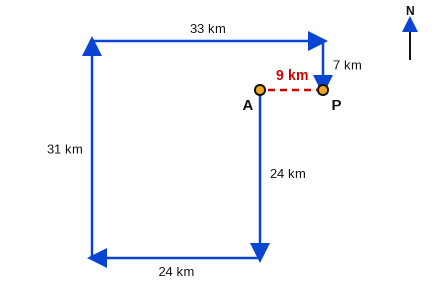
Wasim starts from Point A and drives 24 km towards the south. He then takes a right turn, drives 24 km, turns right and drives 31 km. He then takes a right turn and drives 33 km. He takes a final right turn, drives 7 km and stops at Point P. How far (shortest distance) and towards which direction should he drive in order to reach Point A again? (All turns are 90-degree turns only unless specified.)
वसीम बिंदु A से शुरू करके दक्षिण की ओर 24 km गाड़ी चलाता है। फिर वह दाएँ मुड़ता है, 24 km चलाता है, दाएँ मुड़ता है और 31 km चलाता है। फिर वह दाएँ मुड़ता है और 33 km चलाता है। वह अंतिम बार दाएँ मुड़ता है, 7 km चलाता है और बिंदु P पर रुक जाता है। बिंदु A पर फिर से पहुँचने के लिए उसे कितनी दूरी (न्यूनतम दूरी) और किस दिशा में गाड़ी चलानी चाहिए? (जब तक निर्दिष्ट न हो, सभी मोड़ केवल 90 डिग्री के हैं।)
  1. A6 km to the east6 km पूर्व की ओर
  2. B8 km to the west8 km पश्चिम की ओर
  3. C9 km to the west9 km पश्चिम की ओर
  4. D7 km to the east7 km पूर्व की ओर
Show answer

Concept: Track net east-west and north-south displacement (take A as origin).

  1. South 24 → (0, −24). Right turn (facing south) = west 24 → (−24, −24).
  2. Right = north 31 → (−24, 7). Right = east 33 → (9, 7). Right = south 7 → (9, 0) = P.
  3. P is 9 km east of A on the same line → drive 9 km west.

Short trick: N−S: −24 + 31 − 7 = 0; E−W: −24 + 33 = +9 east → go 9 km west.

Answer: (C) 9 km to the west

अवधारणा: कुल पूर्व-पश्चिम और उत्तर-दक्षिण विस्थापन ज्ञात करें (A को मूल बिंदु मानें)।

  1. दक्षिण 24 → (0, −24)। दाएँ मोड़ (दक्षिण मुख) = पश्चिम 24 → (−24, −24)।
  2. दाएँ = उत्तर 31 → (−24, 7)। दाएँ = पूर्व 33 → (9, 7)। दाएँ = दक्षिण 7 → (9, 0) = P।
  3. P, A से 9 km पूर्व में एक ही रेखा पर → 9 km पश्चिम की ओर चलना होगा।

शॉर्ट ट्रिक: उ−द: −24 + 31 − 7 = 0; पू−प: −24 + 33 = +9 पूर्व → 9 km पश्चिम जाएँ।

उत्तर: (C) 9 km पश्चिम की ओर

RRB ALP CBT 1General Intelligence and ReasoningDirection sense – right turnsRRB ALP CBT 1 2025 · 16 Feb Shift 1 →
Q647.
If ‘A’ stands for ‘÷’, ‘B’ stands for ‘×’, ‘C’ stands for ‘+’ and ‘D’ stands for ‘−’, what will come in place of the question mark (?) in the following equation?
45 C 9 B 7 D 195 A 13 = ?
यदि ‘A’ का अर्थ ‘÷’, ‘B’ का अर्थ ‘×’, ‘C’ का अर्थ ‘+’ और ‘D’ का अर्थ ‘−’ है, तो निम्नलिखित समीकरण में प्रश्न चिह्न (?) के स्थान पर क्या आएगा?
45 C 9 B 7 D 195 A 13 = ?
  1. A93
  2. B94
  3. C95
  4. D90
Show answer

Concept: Replace letters by operators, then apply BODMAS.

  1. 45 C 9 B 7 D 195 A 13 → 45 + 9 × 7 − 195 ÷ 13.
  2. = 45 + 63 − 15.
  3. = 93.

Short trick: Units-digit check: 5 + 3 − 5 = 3 → only 93 ends in 3.

Answer: (A) 93

अवधारणा: अक्षरों को संक्रियाओं से बदलें, फिर BODMAS लगाएँ।

  1. 45 C 9 B 7 D 195 A 13 → 45 + 9 × 7 − 195 ÷ 13।
  2. = 45 + 63 − 15।
  3. = 93।

शॉर्ट ट्रिक: इकाई अंक जाँच: 5 + 3 − 5 = 3 → केवल 93 का इकाई अंक 3 है।

उत्तर: (A) 93

RRB ALP CBT 1General Intelligence and ReasoningSymbol substitution – BODMASRRB ALP CBT 1 2025 · 16 Feb Shift 1 →
Q648.
Based on the English alphabetical order, three of the following four letter-cluster pairs are alike in a certain way and thus form a group. Which letter-cluster pair DOES NOT belong to that group? (Note: The odd one out is not based on the number of consonants/vowels or their position in the letter-cluster.)
अंग्रेज़ी वर्णमाला क्रम के आधार पर, निम्नलिखित चार अक्षर-समूह युग्मों में से तीन किसी निश्चित प्रकार से समान हैं और इस प्रकार एक समूह बनाते हैं। कौन-सा अक्षर-समूह युग्म उस समूह से संबंधित नहीं है? (ध्यान दें: असंगत अक्षर-समूह युग्म, उस अक्षर-समूह में व्यंजनों/स्वरों की संख्या या उनके स्थान पर आधारित नहीं है।)
  1. ARS-VW
  2. BTZ-AB
  3. CGH-KL
  4. DAB-EF
Show answer

Concept: In each pair, check (i) letters within a cluster and (ii) the jump between clusters.

  1. RS-VW: RS, VW consecutive; R +4 = V.
  2. GH-KL: consecutive; G +4 = K.
  3. AB-EF: consecutive; A +4 = E.
  4. TZ-AB: T and Z are not consecutive (and T +4 = X, not A) ✗.

Short trick: Three pairs are 'two consecutive letters, then skip three'; TZ breaks the consecutive rule at a glance.

Answer: (B) TZ-AB

अवधारणा: प्रत्येक युग्म में (i) समूह के अंदर के अक्षर और (ii) समूहों के बीच की छलाँग जाँचें।

  1. RS-VW: RS, VW क्रमागत; R +4 = V।
  2. GH-KL: क्रमागत; G +4 = K।
  3. AB-EF: क्रमागत; A +4 = E।
  4. TZ-AB: T और Z क्रमागत नहीं (और T +4 = X, A नहीं) ✗।

शॉर्ट ट्रिक: तीन युग्म 'दो क्रमागत अक्षर, फिर तीन छोड़कर' हैं; TZ पहली नज़र में ही नियम तोड़ता है।

उत्तर: (B) TZ-AB

RRB ALP CBT 1General Intelligence and ReasoningOdd one out – letter-cluster pairsRRB ALP CBT 1 2025 · 16 Feb Shift 1 →
Q649.
In a certain code language, ‘HAST’ is coded as ‘3586’ and ‘DAHS’ is coded as ‘6357’. What is the code for ‘D’ in the given code language?
एक निश्चित कूट भाषा में, ‘HAST’ को ‘3586’ और ‘DAHS’ को ‘6357’ के रूप में कूटबद्ध किया जाता है। दी गई कूट भाषा में ‘D’ का कूट क्या है?
  1. A5
  2. B6
  3. C3
  4. D7
Show answer

Concept: Letter codes are jumbled; compare common letters and common digits.

  1. HAST → {3, 5, 8, 6}; DAHS → {6, 3, 5, 7}.
  2. Common letters A, H, S ↔ common digits 3, 5, 6.
  3. Left over in DAHS: letter D ↔ digit 7 (and T ↔ 8).

Short trick: Uncommon letter ↔ uncommon digit: D is the only new letter, 7 the only new digit.

Answer: (D) 7

अवधारणा: अक्षरों के कोड क्रम में नहीं हैं; उभयनिष्ठ अक्षरों और अंकों की तुलना करें।

  1. HAST → {3, 5, 8, 6}; DAHS → {6, 3, 5, 7}।
  2. उभयनिष्ठ अक्षर A, H, S ↔ उभयनिष्ठ अंक 3, 5, 6।
  3. DAHS में शेष: अक्षर D ↔ अंक 7 (और T ↔ 8)।

शॉर्ट ट्रिक: अलग अक्षर ↔ अलग अंक: D ही नया अक्षर है, 7 ही नया अंक।

उत्तर: (D) 7

RRB ALP CBT 1General Intelligence and ReasoningCoding – common lettersRRB ALP CBT 1 2025 · 16 Feb Shift 1 →
Q650.
Select the pair which follows the same pattern as that followed by the two pairs given below. Both pairs follow the same pattern.
VQG : WNJ
DUN : ERQ
उस युग्म का चयन करें जो उसी पैटर्न का अनुसरण करता है जिसका अनुसरण नीचे दिए गए दो युग्म करते हैं। दोनों युग्म समान पैटर्न का अनुसरण करते हैं।
VQG : WNJ
DUN : ERQ
  1. ANPL : OLO
  2. BIRI : JOL
  3. CPNQ : QKS
  4. DKRG : LOI
Show answer

Concept: Find the shift for each position: +1, −3, +3.

  1. VQG : WNJ → V+1 = W, Q−3 = N, G+3 = J.
  2. DUN : ERQ → D+1 = E, U−3 = R, N+3 = Q ✓.
  3. IRI : JOL → I+1 = J, R−3 = O, I+3 = L ✓.
  4. Others fail: NPL → O M O (not OLO), PNQ → Q K T (not QKS), KRG → L O J (not LOI).

Short trick: Check only the 3rd letter (+3): NPL gives L→O, PNQ gives Q→T, KRG gives G→J – only IRI gives I→L as printed.

Answer: (B) IRI : JOL

अवधारणा: प्रत्येक स्थान का खिसकाव: +1, −3, +3।

  1. VQG : WNJ → V+1 = W, Q−3 = N, G+3 = J।
  2. DUN : ERQ → D+1 = E, U−3 = R, N+3 = Q ✓।
  3. IRI : JOL → I+1 = J, R−3 = O, I+3 = L ✓।
  4. अन्य असफल: NPL → O M O (OLO नहीं), PNQ → Q K T (QKS नहीं), KRG → L O J (LOI नहीं)।

शॉर्ट ट्रिक: केवल तीसरा अक्षर (+3) जाँचें: NPL में L→O, PNQ में Q→T, KRG में G→J – केवल IRI में I→L मुद्रित से मेल खाता है।

उत्तर: (B) IRI : JOL

RRB ALP CBT 1General Intelligence and ReasoningLetter-pair analogyRRB ALP CBT 1 2025 · 16 Feb Shift 1 →
Q651.
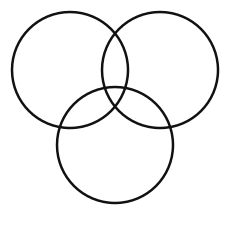
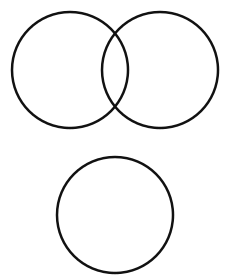
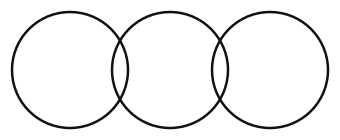
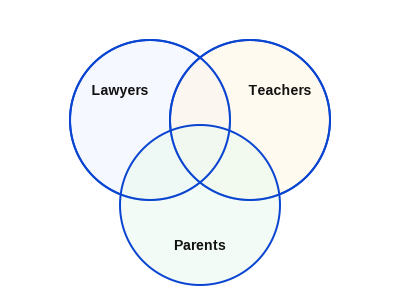
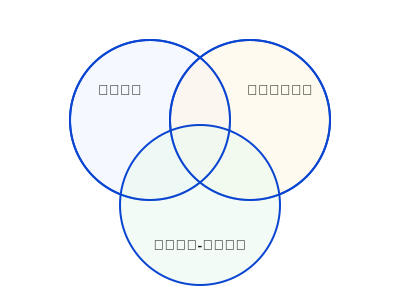
Select the Venn diagram that best illustrates the relationship between the following classes.
Lawyers, Teachers, Parents
उस वेन आरेख का चयन करें जो निम्नलिखित वर्गों के बीच संबंध को सर्वोत्तम रूप से दर्शाता है।
वकील, शिक्षक, माता-पिता
  1. A
  2. B
  3. C
  4. D
Show answer

Concept: Lawyers, teachers and parents are independent categories that can overlap with one another.

  1. A lawyer can be a parent, a teacher can be a parent, and a person can be both a lawyer and a teacher (e.g. a law lecturer).
  2. Someone can even be all three.
  3. So all three circles must overlap each other – option B.

Short trick: Profession + profession + family role: every pair can share members → all three intersect.

Answer: (B) Three mutually overlapping circles

अवधारणा: वकील, शिक्षक और माता-पिता स्वतंत्र वर्ग हैं जो एक-दूसरे से प्रतिच्छेद कर सकते हैं।

  1. एक वकील माता-पिता हो सकता है, एक शिक्षक माता-पिता हो सकता है, और कोई व्यक्ति वकील और शिक्षक दोनों हो सकता है (जैसे विधि व्याख्याता)।
  2. कोई व्यक्ति तीनों भी हो सकता है।
  3. अतः तीनों वृत्त परस्पर प्रतिच्छेद करेंगे – विकल्प B।

शॉर्ट ट्रिक: पेशा + पेशा + पारिवारिक भूमिका: हर युग्म में साझा सदस्य संभव → तीनों प्रतिच्छेदी।

उत्तर: (B) तीन परस्पर प्रतिच्छेदी वृत्त

RRB ALP CBT 1General Intelligence and ReasoningVenn diagram – classificationRRB ALP CBT 1 2025 · 16 Feb Shift 1 →
Q652.
Select the set in which the numbers are related in the same way as are the numbers of the following sets.
(NOTE : Operations should be performed on the whole numbers, without breaking down the numbers into its constituent digits. E.g. 13 – Operations on 13 such as adding / subtracting /multiplying etc. to 13 can be performed. Breaking down 13 into 1 and 3 and then performing mathematical operations on 1 and 3 is not allowed)
(24,8,384)
(18,6,216)
उस समुच्चय का चयन करें जिसमें संख्याएँ उसी प्रकार संबंधित हैं जिस प्रकार निम्नलिखित समुच्चयों की संख्याएँ संबंधित हैं।
(ध्यान दें: संक्रियाएँ संख्याओं को उनके घटक अंकों में तोड़े बिना, पूर्ण संख्याओं पर की जानी चाहिए। उदाहरण के लिए, 13 – 13 पर संक्रियाएँ जैसे 13 में जोड़ना/घटाना/गुणा करना आदि की जा सकती हैं। 13 को 1 और 3 में तोड़ना और फिर 1 और 3 पर गणितीय संक्रियाएँ करना वर्जित है।)
(24,8,384)
(18,6,216)
  1. A(15,9,240)
  2. B(17,6,204)
  3. C(13,10,130)
  4. D(24,3,240)
Show answer

Concept: Third number = 2 × first × second.

  1. 24 × 8 × 2 = 384 ✓; 18 × 6 × 2 = 216 ✓.
  2. (15, 9): 15 × 9 × 2 = 270 ≠ 240; (17, 6): 17 × 6 × 2 = 204 ✓.
  3. (13, 10): 260 ≠ 130; (24, 3): 144 ≠ 240.

Short trick: Third ÷ (first × second) must be 2: 204 ÷ 102 = 2 ✓.

Answer: (B) (17,6,204)

अवधारणा: तीसरी संख्या = 2 × पहली × दूसरी।

  1. 24 × 8 × 2 = 384 ✓; 18 × 6 × 2 = 216 ✓।
  2. (15, 9): 15 × 9 × 2 = 270 ≠ 240; (17, 6): 17 × 6 × 2 = 204 ✓।
  3. (13, 10): 260 ≠ 130; (24, 3): 144 ≠ 240।

शॉर्ट ट्रिक: तीसरी ÷ (पहली × दूसरी) = 2 होना चाहिए: 204 ÷ 102 = 2 ✓।

उत्तर: (B) (17,6,204)

RRB ALP CBT 1General Intelligence and ReasoningNumber sets – product ruleRRB ALP CBT 1 2025 · 16 Feb Shift 1 →
Q653.
Based on the English alphabetical order, three of the following four letter-cluster pairs are alike in a certain way and thus form a group. Which letter-cluster pair DOES NOT belong to that group? (Note: The odd one out is not based on the number of consonants/vowels or their position in the letter-cluster.)
अंग्रेज़ी वर्णमाला क्रम के आधार पर, निम्नलिखित चार अक्षर-समूह युग्मों में से तीन किसी निश्चित प्रकार से समान हैं और इस प्रकार एक समूह बनाते हैं। कौन-सा अक्षर-समूह युग्म उस समूह से संबंधित नहीं है? (ध्यान दें: असंगत अक्षर-समूह युग्म, उस अक्षर-समूह में व्यंजनों/स्वरों की संख्या या उनके स्थान पर आधारित नहीं है।)
  1. ANO−ST
  2. BRS−WX
  3. CYZ−DE
  4. DMN−QU
Show answer

Concept: Each pair: two consecutive letters, then the first letter +5 starts another consecutive pair.

  1. NO−ST: N +5 = S, ST consecutive ✓.
  2. RS−WX: R +5 = W ✓.
  3. YZ−DE: Y +5 = D (cyclic) ✓.
  4. MN−QU: M +4 = Q, and Q, U are not consecutive ✗.

Short trick: Second cluster must be two neighbours – QU is not, so it is out instantly.

Answer: (D) MN−QU

अवधारणा: प्रत्येक युग्म: दो क्रमागत अक्षर, फिर पहले अक्षर +5 से दूसरा क्रमागत युग्म।

  1. NO−ST: N +5 = S, ST क्रमागत ✓।
  2. RS−WX: R +5 = W ✓।
  3. YZ−DE: Y +5 = D (चक्रीय) ✓।
  4. MN−QU: M +4 = Q, और Q, U क्रमागत नहीं ✗।

शॉर्ट ट्रिक: दूसरा समूह दो पड़ोसी अक्षर होने चाहिए – QU नहीं है, अतः तुरंत बाहर।

उत्तर: (D) MN−QU

RRB ALP CBT 1General Intelligence and ReasoningOdd one out – letter-cluster pairsRRB ALP CBT 1 2025 · 16 Feb Shift 1 →
Q654.
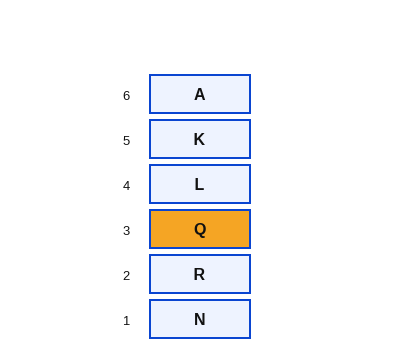
A, Q, N, L, R and K live on six different floors of the same building. The lowermost floor in the building is numbered 1, the floor above it is numbered 2 and so on till the topmost floor is numbered 6. L lives on an even-numbered floor but not on the topmost floor. Only three people live between K and N. R lives immediately below Q. K lives immediately above L. A lives on the topmost floor. Who lives on floor number 3?
A, Q, N, L, R और K एक ही इमारत की छह अलग-अलग मंज़िलों पर रहते हैं। इमारत की सबसे निचली मंज़िल की संख्या 1 है, उसके ऊपर वाली मंज़िल की संख्या 2 है और इसी प्रकार सबसे ऊपरी मंज़िल की संख्या 6 है। L एक सम संख्या वाली मंज़िल पर रहता है, लेकिन सबसे ऊपरी मंज़िल पर नहीं। K और N के बीच केवल तीन व्यक्ति रहते हैं। R, Q के ठीक नीचे रहता है। K, L के ठीक ऊपर रहता है। A सबसे ऊपरी मंज़िल पर रहता है। मंज़िल संख्या 3 पर कौन रहता है?
  1. AK
  2. BA
  3. CR
  4. DQ
Show answer

Concept: Place the definite people first: A on floor 6, L on an even floor other than 6.

  1. L = 2 or 4 and K is just above L.
  2. If L = 2, K = 3 and N must be 7 (three between) – impossible. So L = 4, K = 5, N = 1.
  3. R immediately below Q → floors 2 and 3: R = 2, Q = 3.
  4. Floor 3 → Q.

Short trick: K−N gap of 4 floors with K ≤ 5 forces K = 5, N = 1 straight away.

Answer: (D) Q

अवधारणा: पहले निश्चित व्यक्ति रखें: A मंज़िल 6 पर, L 6 के अलावा किसी सम मंज़िल पर।

  1. L = 2 या 4 और K, L के ठीक ऊपर।
  2. यदि L = 2, K = 3 तो N = 7 (बीच में तीन) – असंभव। अतः L = 4, K = 5, N = 1।
  3. R, Q के ठीक नीचे → मंज़िल 2 और 3: R = 2, Q = 3।
  4. मंज़िल 3 → Q।

शॉर्ट ट्रिक: K और N के बीच 4 मंज़िल का अंतर और K ≤ 5 से तुरंत K = 5, N = 1।

उत्तर: (D) Q

RRB ALP CBT 1General Intelligence and ReasoningFloor puzzleRRB ALP CBT 1 2025 · 16 Feb Shift 1 →
Q655.
Below are given two sets of numbers. In each set of numbers, a certain mathematical operation on the first number results in the second number. Similarly, certain mathematical operation on the second number results in the third number and so on. Which of the given options follows the same set of operations as in the given sets?
(NOTE – A two/three digit number cannot be broken into individual digits for operations e.g. if 37 is followed by 10, the operation cannot be 3+7 as a two digit number cannot be broken into individual digits)
10 - 5 - 25 - 30 ; 4 - 2 - 4 - 9
नीचे संख्याओं के दो समुच्चय दिए गए हैं। संख्याओं के प्रत्येक समुच्चय में, पहली संख्या पर एक निश्चित गणितीय संक्रिया करने से दूसरी संख्या प्राप्त होती है। इसी प्रकार, दूसरी संख्या पर एक निश्चित गणितीय संक्रिया करने से तीसरी संख्या प्राप्त होती है और इसी प्रकार आगे भी। दिए गए विकल्पों में से कौन-सा विकल्प दिए गए समुच्चयों के समान संक्रियाओं के समुच्चय का अनुसरण करता है?
(ध्यान दें – दो/तीन अंकों वाली संख्या को संक्रियाओं के लिए अलग-अलग अंकों में नहीं तोड़ा जा सकता, उदाहरण के लिए यदि 37 के बाद 10 आता है, तो संक्रिया 3+7 नहीं हो सकती क्योंकि दो अंकों वाली संख्या को अलग-अलग अंकों में नहीं तोड़ा जा सकता)
10 - 5 - 25 - 30 ; 4 - 2 - 4 - 9
  1. A12 - 6 - 36 - 40
  2. B7 - 49 - 54 - 60
  3. C10 - 20 - 40 - 50
  4. D8 - 4 - 16 - 21
Show answer

Concept: Find one rule set that fits both given chains.

  1. 10 → 5 (÷2) → 25 (square) → 30 (+5).
  2. 4 → 2 (÷2) → 4 (square) → 9 (+5) ✓.
  3. 8 → 4 (÷2) → 16 (square) → 21 (+5) ✓.

Short trick: Check the first step (÷2) and the last step (+5) – only 12-6-… and 8-4-… halve; 40 − 36 = 4 rejects the first.

Answer: (D) 8 - 4 - 16 - 21

अवधारणा: दोनों दी गई श्रृंखलाओं में फिट होने वाला एक नियम ज्ञात करें।

  1. 10 → 5 (÷2) → 25 (वर्ग) → 30 (+5)।
  2. 4 → 2 (÷2) → 4 (वर्ग) → 9 (+5) ✓।
  3. 8 → 4 (÷2) → 16 (वर्ग) → 21 (+5) ✓।

शॉर्ट ट्रिक: पहला चरण (÷2) और अंतिम चरण (+5) जाँचें – केवल 12-6-… और 8-4-… आधे होते हैं; 40 − 36 = 4 से पहला बाहर।

उत्तर: (D) 8 - 4 - 16 - 21

RRB ALP CBT 1General Intelligence and ReasoningNumber operations – chainRRB ALP CBT 1 2025 · 16 Feb Shift 1 →
Q656.
Among five people named V, W, X, Y and Z, each have a certain age. X is thrice the age of Y. The age of V is 3. Y is half the age of Z. W is twice the age of V. If Z is four times the age of W, what is the age of X?
V, W, X, Y और Z नाम के पाँच व्यक्तियों में से प्रत्येक की एक निश्चित आयु है। X की आयु Y की आयु की तीन गुनी है। V की आयु 3 है। Y की आयु Z की आयु की आधी है। W की आयु V की आयु की दोगुनी है। यदि Z की आयु W की आयु की चार गुनी है, तो X की आयु कितनी है?
  1. A38
  2. B34
  3. C40
  4. D36
Show answer

Concept: Start from the only known value (V) and follow the chain.

  1. V = 3 → W = 2 × 3 = 6.
  2. Z = 4 × W = 24 → Y = 24 ÷ 2 = 12.
  3. X = 3 × Y = 36.

Short trick: X = 3 × ½ × 4 × 2 × 3 = 36 – multiply the chain factors directly.

Answer: (D) 36

अवधारणा: एकमात्र ज्ञात मान (V) से शुरू करके श्रृंखला का अनुसरण करें।

  1. V = 3 → W = 2 × 3 = 6।
  2. Z = 4 × W = 24 → Y = 24 ÷ 2 = 12।
  3. X = 3 × Y = 36।

शॉर्ट ट्रिक: X = 3 × ½ × 4 × 2 × 3 = 36 – श्रृंखला के गुणकों को सीधे गुणा करें।

उत्तर: (D) 36

RRB ALP CBT 1General Intelligence and ReasoningAge puzzle – chained ratiosRRB ALP CBT 1 2025 · 16 Feb Shift 1 →
Q657.
If 1 is added to each odd digit and 2 is subtracted from each even digit in the number 7531468, how many digits will appear more than once in the new number thus formed?
यदि संख्या 7531468 में प्रत्येक विषम अंक में 1 जोड़ा जाए और प्रत्येक सम अंक में से 2 घटाया जाए, तो इस प्रकार बनी नई संख्या में कितने अंक एक से अधिक बार आएँगे?
  1. AOneएक
  2. BThreeतीन
  3. CNoneकोई नहीं
  4. DTwoदो
Show answer

Concept: Odd digit +1, even digit −2.

  1. 7531468 → 7→8, 5→6, 3→4, 1→2, 4→2, 6→4, 8→6.
  2. New number: 8642246.
  3. Repeated digits: 2 (twice), 4 (twice), 6 (twice) → three digits.

Short trick: Odd digits become 8, 6, 4, 2; even digits become 2, 4, 6 – the three overlaps 2, 4, 6 are the repeats.

Answer: (B) Three

अवधारणा: विषम अंक +1, सम अंक −2।

  1. 7531468 → 7→8, 5→6, 3→4, 1→2, 4→2, 6→4, 8→6।
  2. नई संख्या: 8642246।
  3. दोहराए अंक: 2 (दो बार), 4 (दो बार), 6 (दो बार) → तीन अंक।

शॉर्ट ट्रिक: विषम अंक 8, 6, 4, 2 बनते हैं; सम अंक 2, 4, 6 बनते हैं – साझा 2, 4, 6 ही दोहराए अंक हैं।

उत्तर: (B) तीन

RRB ALP CBT 1General Intelligence and ReasoningDigit operationsRRB ALP CBT 1 2025 · 16 Feb Shift 1 →
Q658.
What will come in the place of ‘?’ in the following equation, if ‘+’ and ‘-‘ are interchanged and ‘×’ and ‘÷’ are interchanged?
31 - 26 × 1 ÷ 24 + 45 = ?
यदि ‘+’ और ‘−’ को आपस में बदल दिया जाए तथा ‘×’ और ‘÷’ को आपस में बदल दिया जाए, तो निम्नलिखित समीकरण में ‘?’ के स्थान पर क्या आएगा?
31 - 26 × 1 ÷ 24 + 45 = ?
  1. A612
  2. B608
  3. C611
  4. D610
Show answer

Concept: Swap the signs first, then apply BODMAS.

  1. 31 − 26 × 1 ÷ 24 + 45 → 31 + 26 ÷ 1 × 24 − 45.
  2. = 31 + 26 × 24 − 45 = 31 + 624 − 45.
  3. = 610.

Short trick: Units digit: 1 + 4 − 5 = 0 → only 610 ends in 0.

Answer: (D) 610

अवधारणा: पहले चिह्न बदलें, फिर BODMAS लगाएँ।

  1. 31 − 26 × 1 ÷ 24 + 45 → 31 + 26 ÷ 1 × 24 − 45।
  2. = 31 + 26 × 24 − 45 = 31 + 624 − 45।
  3. = 610।

शॉर्ट ट्रिक: इकाई अंक: 1 + 4 − 5 = 0 → केवल 610 का इकाई अंक 0 है।

उत्तर: (D) 610

RRB ALP CBT 1General Intelligence and ReasoningInterchanging signsRRB ALP CBT 1 2025 · 16 Feb Shift 1 →
Q659.
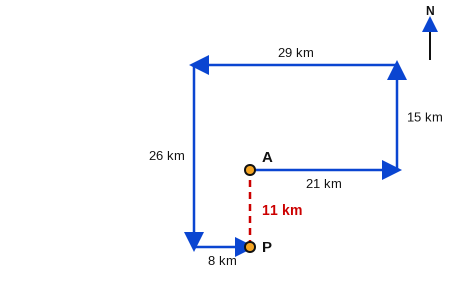
Yatin starts from Point A and drives 21 km towards East. He then takes a left turn, drives 15 km, turns left and drives 29 km. He then takes a left turn and drives 26 km. He takes a final left turn, drives 8 km and stops at Point P. How far (shortest distance) and towards which direction should he drive in order to reach Point A again? (All turns are 90-degree turns only, unless specified.)
यतिन बिंदु A से शुरू करके पूर्व की ओर 21 km गाड़ी चलाता है। फिर वह बाएँ मुड़ता है, 15 km चलाता है, बाएँ मुड़ता है और 29 km चलाता है। फिर वह बाएँ मुड़ता है और 26 km चलाता है। वह अंतिम बार बाएँ मुड़ता है, 8 km चलाता है और बिंदु P पर रुक जाता है। बिंदु A पर फिर से पहुँचने के लिए उसे कितनी दूरी (न्यूनतम दूरी) और किस दिशा में गाड़ी चलानी चाहिए? (जब तक निर्दिष्ट न हो, सभी मोड़ केवल 90 डिग्री के हैं।)
  1. A10 km to the North10 km उत्तर की ओर
  2. B9 km to the South9 km दक्षिण की ओर
  3. C9 km to the North9 km उत्तर की ओर
  4. D11 km to the North11 km उत्तर की ओर
Show answer

Concept: Track net displacement with A as origin.

  1. East 21 → (21, 0). Left (facing east) = north 15 → (21, 15).
  2. Left = west 29 → (−8, 15). Left = south 26 → (−8, −11). Left = east 8 → (0, −11) = P.
  3. P is 11 km directly south of A → drive 11 km north.

Short trick: E−W: 21 − 29 + 8 = 0; N−S: 15 − 26 = −11 → go 11 km north.

Answer: (D) 11 km to the North

अवधारणा: A को मूल बिंदु मानकर कुल विस्थापन ज्ञात करें।

  1. पूर्व 21 → (21, 0)। बाएँ (पूर्व मुख) = उत्तर 15 → (21, 15)।
  2. बाएँ = पश्चिम 29 → (−8, 15)। बाएँ = दक्षिण 26 → (−8, −11)। बाएँ = पूर्व 8 → (0, −11) = P।
  3. P, A से ठीक 11 km दक्षिण में → 11 km उत्तर की ओर चलना होगा।

शॉर्ट ट्रिक: पू−प: 21 − 29 + 8 = 0; उ−द: 15 − 26 = −11 → 11 km उत्तर जाएँ।

उत्तर: (D) 11 km उत्तर की ओर

RRB ALP CBT 1General Intelligence and ReasoningDirection sense – left turnsRRB ALP CBT 1 2025 · 16 Feb Shift 1 →
Q660.
Select the triad which follows the same pattern as that followed by the two triads given below. Both triads follow the same pattern.
LHC – PLG – TPK
SOJ – WSN – AWR
उस त्रिक का चयन करें जो उसी पैटर्न का अनुसरण करता है जिसका अनुसरण नीचे दिए गए दो त्रिक करते हैं। दोनों त्रिक समान पैटर्न का अनुसरण करते हैं।
LHC – PLG – TPK
SOJ – WSN – AWR
  1. AUQL – YUP – CYU
  2. BUHK – XTP – FBX
  3. CVRM – ZVQ – DZU
  4. DRNI – XTP – AVQ
Show answer

Concept: Every letter moves +4 from one cluster to the next.

  1. LHC → PLG → TPK (+4 each); SOJ → WSN → AWR (+4, cyclic).
  2. VRM +4 → ZVQ, +4 → DZU (Z+4 = D) ✓.
  3. UQL → YUP ✓ but YUP → CYT (not CYU) ✗; others also break the +4 rule.

Short trick: Also inside each cluster: 1st −4 = 2nd, 2nd −5 = 3rd (L,H,C). V,R,M fits; then just add 4.

Answer: (C) VRM – ZVQ – DZU

अवधारणा: प्रत्येक अक्षर एक समूह से अगले समूह में +4 बढ़ता है।

  1. LHC → PLG → TPK (+4 प्रत्येक); SOJ → WSN → AWR (+4, चक्रीय)।
  2. VRM +4 → ZVQ, +4 → DZU (Z+4 = D) ✓।
  3. UQL → YUP ✓ पर YUP → CYT (CYU नहीं) ✗; अन्य भी +4 नियम तोड़ते हैं।

शॉर्ट ट्रिक: हर समूह के अंदर भी: पहला −4 = दूसरा, दूसरा −5 = तीसरा (L,H,C)। V,R,M फिट; फिर बस 4 जोड़ें।

उत्तर: (C) VRM – ZVQ – DZU

RRB ALP CBT 1General Intelligence and ReasoningLetter triads – constant shiftRRB ALP CBT 1 2025 · 16 Feb Shift 1 →