Question bank

Q&A: practice questions with answers

Search questions on any topic. Filter by exam category, exam, subject and topic, try the question, then open the answer and explanation.

Courses – airGurukul

20,719 questions found.

Q661.
Refer to the following letter, symbol series and answer the question that follows. Counting to be done from left to right only.
(Left) F Y $ F O € Z # J © G * U N @ M $ N © £ © & (Right)
How many such letter are there, each of which is immediately preceded by a symbol and also immediately followed by a symbol?
निम्नलिखित अक्षर, प्रतीक श्रृंखला को देखें और उसके बाद आने वाले प्रश्न का उत्तर दें। गिनती केवल बाएँ से दाएँ की जानी है।
(बाएँ) F Y $ F O € Z # J © G * U N @ M $ N © £ © & (दाएँ)
ऐसे कितने अक्षर हैं, जिनमें से प्रत्येक के ठीक पहले एक प्रतीक है और ठीक बाद भी एक प्रतीक है?
  1. A5
  2. B4
  3. C6
  4. D7
Show answer

Concept: Pattern needed: Symbol – Letter – Symbol.

  1. € Z # ✓
  2. # J © ✓
  3. © G * ✓
  4. @ M $ ✓
  5. $ N © ✓
  6. Total = 5.

Short trick: Look for single letters 'sandwiched' between symbols – they stand alone in the series.

Answer: (A) 5

अवधारणा: आवश्यक पैटर्न: प्रतीक – अक्षर – प्रतीक।

  1. € Z # ✓
  2. # J © ✓
  3. © G * ✓
  4. @ M $ ✓
  5. $ N © ✓
  6. कुल = 5।

शॉर्ट ट्रिक: दो प्रतीकों के बीच 'सैंडविच' अकेले अक्षर खोजें।

उत्तर: (A) 5
RRB ALP CBT 1General Intelligence and ReasoningLetter-symbol seriesRRB ALP CBT 1 2025 · 16 Feb Shift 1 →
Q662.
What should come in place of the question mark (?) in the given series?
145 132 120 109 99 90 ?
दी गई श्रृंखला में प्रश्न चिह्न (?) के स्थान पर क्या आना चाहिए?
145 132 120 109 99 90 ?
  1. A78
  2. B80
  3. C82
  4. D84
Show answer

Concept: Differences decrease by 1.

  1. 145 − 13 = 132, − 12 = 120, − 11 = 109, − 10 = 99, − 9 = 90.
  2. Next: 90 − 8 = 82.

Short trick: Subtractors run 13, 12, 11, … → the next one is 8.

Answer: (C) 82

अवधारणा: अंतर 1-1 से घट रहे हैं।

  1. 145 − 13 = 132, − 12 = 120, − 11 = 109, − 10 = 99, − 9 = 90।
  2. अगला: 90 − 8 = 82।

शॉर्ट ट्रिक: घटाए जाने वाले अंक 13, 12, 11, … → अगला 8 है।

उत्तर: (C) 82

RRB ALP CBT 1General Intelligence and ReasoningNumber series – decreasing differencesRRB ALP CBT 1 2025 · 16 Feb Shift 1 →
Q663.
Read the given statements and conclusions carefully. Assuming that the information given in the statements is true, even if it appears to be at variance with commonly known facts, decide which of the given conclusions logically follow(s) from the statements.
Statements:
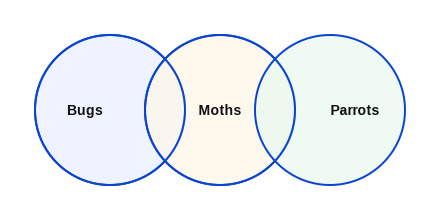
Some bugs are moths.
Some moths are parrots.
Conclusions:
(I) Some parrots are bugs.
(II) All moths are bugs.
दिए गए कथनों और निष्कर्षों को ध्यानपूर्वक पढ़ें। यह मानते हुए कि कथनों में दी गई जानकारी सत्य है, भले ही वह सामान्यतः ज्ञात तथ्यों से भिन्न प्रतीत होती हो, निर्णय लें कि दिए गए निष्कर्षों में से कौन-सा/से निष्कर्ष कथनों का तार्किक रूप से अनुसरण करता है/करते हैं।
कथन:
कुछ कीड़े, पतंगे हैं।
कुछ पतंगे, तोते हैं।
निष्कर्ष:
(I) कुछ तोते, कीड़े हैं।
(II) सभी पतंगे, कीड़े हैं।
  1. AOnly conclusion (II) follows.केवल निष्कर्ष (II) अनुसरण करता है।
  2. BOnly conclusion (I) follows.केवल निष्कर्ष (I) अनुसरण करता है।
  3. CBoth conclusions (I) and (II) follow.निष्कर्ष (I) और (II) दोनों अनुसरण करते हैं।
  4. DNeither conclusion (I) nor (II) follows.न तो निष्कर्ष (I) और न ही (II) अनुसरण करता है।
Show answer

Concept: Two 'some' statements give no definite link between the end terms.

  1. Draw the least-overlap diagram: Bugs ∩ Moths and Moths ∩ Parrots, with Bugs and Parrots not touching.
  2. I: 'Some parrots are bugs' – not necessary (they may not touch) ✗.
  3. II: 'All moths are bugs' – only some moths are bugs ✗.

Short trick: Some + Some → no conclusion between the end terms. 'All' never follows from 'some'.

Answer: (D) Neither conclusion (I) nor (II) follows.

अवधारणा: दो 'कुछ' कथनों से अंतिम पदों के बीच कोई निश्चित संबंध नहीं बनता।

  1. न्यूनतम-अतिव्यापन आरेख बनाएँ: कीड़े ∩ पतंगे और पतंगे ∩ तोते, कीड़े और तोते आपस में नहीं मिलते।
  2. I: 'कुछ तोते, कीड़े हैं' – आवश्यक नहीं (वे न मिलें) ✗।
  3. II: 'सभी पतंगे, कीड़े हैं' – केवल कुछ पतंगे कीड़े हैं ✗।

शॉर्ट ट्रिक: कुछ + कुछ → अंतिम पदों में कोई निष्कर्ष नहीं। 'कुछ' से 'सभी' कभी नहीं निकलता।

उत्तर: (D) न तो निष्कर्ष (I) और न ही (II) अनुसरण करता है।

RRB ALP CBT 1General Intelligence and ReasoningSyllogismRRB ALP CBT 1 2025 · 16 Feb Shift 1 →
Q664.
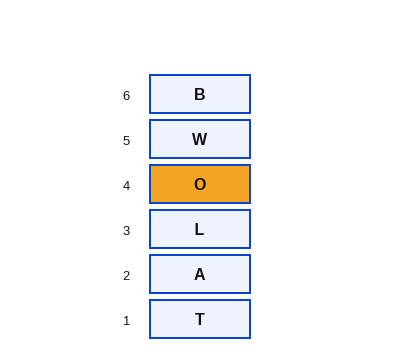
T, W, A, L, O and B live on six different floors of the same building. The lowermost floor in the building is numbered 1, the floor above it is numbered 2 and so on till the topmost floor is numbered 6. A lives on an even-numbered floor. T lives immediately below A. Exactly one person lives between T and L. Exactly one person lives between W and L. W lives immediately above O. O does not live on the lowermost floor. Who lives immediately above L?
T, W, A, L, O और B एक ही इमारत की छह अलग-अलग मंज़िलों पर रहते हैं। इमारत की सबसे निचली मंज़िल की संख्या 1 है, उसके ऊपर वाली मंज़िल की संख्या 2 है और इसी प्रकार सबसे ऊपरी मंज़िल की संख्या 6 है। A एक सम संख्या वाली मंज़िल पर रहता है। T, A के ठीक नीचे रहता है। T और L के बीच ठीक एक व्यक्ति रहता है। W और L के बीच ठीक एक व्यक्ति रहता है। W, O के ठीक ऊपर रहता है। O सबसे निचली मंज़िल पर नहीं रहता है। L के ठीक ऊपर कौन रहता है?
  1. AT
  2. BA
  3. CO
  4. DW
Show answer

Concept: Try the possible floors of A (even) with T just below it.

  1. A = 2, 4 or 6, T = A − 1. L is two floors from T, W is two floors from L, and W is just above O (O ≠ 1).
  2. A = 2, T = 1 → L = 3 → W = 5, O = 4 ✓, B = 6.
  3. Other cases clash (e.g. A = 4, T = 3 → L = 1 or 5 → W collides or O = 1).

Short trick: W–O form a block with W two floors from L; with T = 1, L = 3, the block 4–5 fits immediately.

Answer: (C) O

अवधारणा: A (सम) के संभावित मंज़िलें और उसके ठीक नीचे T आज़माएँ।

  1. A = 2, 4 या 6, T = A − 1। L, T से दो मंज़िल दूर, W, L से दो मंज़िल दूर, और W, O के ठीक ऊपर (O ≠ 1)।
  2. A = 2, T = 1 → L = 3 → W = 5, O = 4 ✓, B = 6।
  3. अन्य स्थितियाँ टकराती हैं (जैसे A = 4, T = 3 → L = 1 या 5 → W टकराता है या O = 1)।

शॉर्ट ट्रिक: W–O एक खंड है और W, L से दो मंज़िल दूर; T = 1, L = 3 पर 4–5 का खंड तुरंत फिट होता है।

उत्तर: (C) O

RRB ALP CBT 1General Intelligence and ReasoningFloor puzzleRRB ALP CBT 1 2025 · 16 Feb Shift 1 →
Q665.
Each vowel in the word TRASHED is changed to the letter immediately following it in the English alphabetical order and each consonant is changed to the letter immediately preceding it in the English alphabetical order. Which of the following letters will be third from the left in the new group of letters thus formed?
शब्द TRASHED में प्रत्येक स्वर को अंग्रेज़ी वर्णमाला क्रम में उसके ठीक बाद वाले अक्षर से और प्रत्येक व्यंजन को उसके ठीक पहले वाले अक्षर से बदल दिया जाता है। इस प्रकार बने नए अक्षर-समूह में बाएँ से तीसरा अक्षर कौन-सा होगा?
  1. AQ
  2. BR
  3. CG
  4. DB
Show answer

Concept: Vowel → next letter, consonant → previous letter.

  1. T→S, R→Q, A→B, S→R, H→G, E→F, D→C.
  2. New group: S Q B R G F C.
  3. Third from the left = B.

Short trick: Only the 3rd letter matters: A is a vowel → B.

Answer: (D) B

अवधारणा: स्वर → अगला अक्षर, व्यंजन → पिछला अक्षर।

  1. T→S, R→Q, A→B, S→R, H→G, E→F, D→C।
  2. नया समूह: S Q B R G F C।
  3. बाएँ से तीसरा = B।

शॉर्ट ट्रिक: केवल तीसरा अक्षर देखें: A स्वर है → B।

उत्तर: (D) B

RRB ALP CBT 1General Intelligence and ReasoningLetter change – vowels and consonantsRRB ALP CBT 1 2025 · 16 Feb Shift 1 →
Q666.
Which of the following effects of smoking was observed in terms of respiration?
श्वसन के संदर्भ में धूम्रपान का निम्नलिखित में से कौन-सा प्रभाव देखा गया?
  1. APromotion of cilia in upper respiratory tractऊपरी श्वसन पथ में पक्ष्माभों (सिलिया) को बढ़ावा
  2. BDestruction of cilia in upper respiratory tractऊपरी श्वसन पथ में पक्ष्माभों (सिलिया) का नष्ट होना
  3. CPromotion of cilia in lower respiratory tractनिचले श्वसन पथ में पक्ष्माभों (सिलिया) को बढ़ावा
  4. DDestruction of cilia in lower respiratory tractनिचले श्वसन पथ में पक्ष्माभों (सिलिया) का नष्ट होना
Show answer

Concept: Cilia lining the upper respiratory tract (nose, trachea, bronchi) sweep dust and germs out; smoke destroys them.

  1. Hair-like cilia in the upper respiratory tract push mucus with trapped dust and germs out of the airway.
  2. Tobacco smoke damages and destroys these cilia, so dust, smoke particles and germs enter the lungs.
  3. Result: chronic cough, infections, bronchitis and higher risk of lung cancer.

Short trick: Smoke = 'sweepers' (cilia) killed at the entrance (upper tract) – the gatekeepers fall first.

Answer: (B) Destruction of cilia in upper respiratory tract

अवधारणा: ऊपरी श्वसन पथ (नाक, श्वासनली, श्वसनी) के पक्ष्माभ धूल और रोगाणुओं को बाहर धकेलते हैं; धुआँ इन्हें नष्ट कर देता है।

  1. ऊपरी श्वसन पथ के बाल जैसे पक्ष्माभ धूल व रोगाणुओं वाले श्लेष्म को वायुमार्ग से बाहर धकेलते हैं।
  2. तंबाकू का धुआँ इन पक्ष्माभों को नष्ट कर देता है, जिससे धूल, धुएँ के कण और रोगाणु फेफड़ों में पहुँच जाते हैं।
  3. परिणाम: लगातार खाँसी, संक्रमण, ब्रॉन्काइटिस और फेफड़ों के कैंसर का अधिक खतरा।

शॉर्ट ट्रिक: धुआँ = प्रवेश-द्वार (ऊपरी पथ) के 'सफ़ाईकर्मी' (सिलिया) सबसे पहले नष्ट।

उत्तर: (B) ऊपरी श्वसन पथ में पक्ष्माभों (सिलिया) का नष्ट होना

RRB ALP CBT 1General ScienceEffects of smoking on respirationRRB ALP CBT 1 2025 · 16 Feb Shift 1 →
Q667.
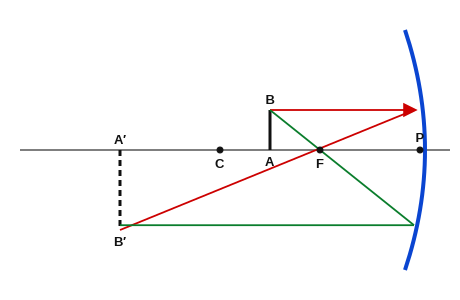
If an object is placed between the centre of curvature (C) and the focus (F) of a concave mirror, what type of image will be formed?
यदि किसी वस्तु को अवतल दर्पण के वक्रता केंद्र (C) और फोकस (F) के बीच रखा जाए, तो किस प्रकार का प्रतिबिंब बनेगा?
  1. ADiminished, real, and invertedछोटा, वास्तविक और उल्टा
  2. BHighly enlarged and virtualअत्यधिक बड़ा और आभासी
  3. CSame size, real, and uprightसमान आकार का, वास्तविक और सीधा
  4. DEnlarged, real, and invertedबड़ा, वास्तविक और उल्टा
Show answer

Concept: For an object between C and F of a concave mirror, the image forms beyond C.

  1. Ray parallel to the axis reflects through F; ray through F reflects parallel to the axis.
  2. The reflected rays actually meet beyond C, below the axis → image is real and inverted.
  3. The image distance is more than the object distance → image is enlarged.

Short trick: Object and image swap: object beyond C ↔ image between F and C. So object between C and F → image beyond C, enlarged, real, inverted.

Answer: (D) Enlarged, real, and inverted

अवधारणा: अवतल दर्पण के C और F के बीच रखी वस्तु का प्रतिबिंब C से परे बनता है।

  1. अक्ष के समांतर किरण परावर्तन के बाद F से गुज़रती है; F से जाने वाली किरण परावर्तन के बाद अक्ष के समांतर हो जाती है।
  2. परावर्तित किरणें वास्तव में C से परे अक्ष के नीचे मिलती हैं → प्रतिबिंब वास्तविक और उल्टा।
  3. प्रतिबिंब की दूरी वस्तु की दूरी से अधिक → प्रतिबिंब बड़ा।

शॉर्ट ट्रिक: वस्तु और प्रतिबिंब की अदला-बदली: वस्तु C से परे ↔ प्रतिबिंब F और C के बीच। अतः वस्तु C और F के बीच → प्रतिबिंब C से परे, बड़ा, वास्तविक, उल्टा।

उत्तर: (D) बड़ा, वास्तविक और उल्टा

RRB ALP CBT 1General ScienceImage formation by concave mirrorRRB ALP CBT 1 2025 · 16 Feb Shift 1 →
Q668.
A ball is dropped from a height and falls freely for 2 seconds. Its average speed during this time is: (Consider: acceleration due to gravity =10 m/s2)
एक गेंद को किसी ऊँचाई से गिराया जाता है और वह 2 सेकंड तक मुक्त रूप से गिरती है। इस दौरान उसकी औसत चाल कितनी है? (गुरुत्वीय त्वरण = 10 m/s2 मानें)
  1. A20 m/s
  2. B10 m/s
  3. C5 m/s
  4. D15 m/s
Show answer

Concept: Average speed = total distance ÷ total time; in uniform acceleration from rest it equals (u + v)/2.

  1. Distance in 2 s: s=12gt2=12×10×22=20 m.
  2. Average speed = 20 ÷ 2 = 10 m/s.
  3. Check: v = gt = 20 m/s; (0 + 20)/2 = 10 m/s ✓.

Short trick: From rest, average speed = gt2 = 10 × 2 ÷ 2 = 10 m/s.

Answer: (B) 10 m/s

अवधारणा: औसत चाल = कुल दूरी ÷ कुल समय; विरामावस्था से एकसमान त्वरण में यह (u + v)/2 के बराबर होती है।

  1. 2 s में दूरी: s=12gt2=12×10×22=20 m।
  2. औसत चाल = 20 ÷ 2 = 10 m/s।
  3. जाँच: v = gt = 20 m/s; (0 + 20)/2 = 10 m/s ✓।

शॉर्ट ट्रिक: विराम से, औसत चाल = gt2 = 10 × 2 ÷ 2 = 10 m/s।

उत्तर: (B) 10 m/s

RRB ALP CBT 1General ScienceFree fall – average speedRRB ALP CBT 1 2025 · 16 Feb Shift 1 →
Q669.
When a living plant cell loses water through osmosis, what happens to the cell contents?
जब एक जीवित पादप कोशिका परासरण द्वारा जल खोती है, तो कोशिका की सामग्री का क्या होता है?
  1. AThey remain unchangedवे अपरिवर्तित रहती हैं
  2. BThey dissolveवे घुल जाती हैं
  3. CThey swell and burstवे फूलकर फट जाती हैं
  4. DThey contract and move away from the cell wallवे सिकुड़कर कोशिका भित्ति से दूर हट जाती हैं
Show answer

Concept: In a hypertonic solution a plant cell loses water by osmosis – this is plasmolysis.

  1. Water moves out of the vacuole and cytoplasm to the more concentrated outside solution.
  2. The protoplast shrinks, but the rigid cell wall keeps its shape.
  3. So the cell contents contract and pull away from the cell wall.

Short trick: Plasmo-LYSIS = protoplasm 'lets go' of the wall; swelling and bursting happens only to animal cells (no wall) in water.

Answer: (D) They contract and move away from the cell wall

अवधारणा: अतिपरासारी (hypertonic) विलयन में पादप कोशिका परासरण द्वारा जल खोती है – इसे जीवद्रव्यकुंचन कहते हैं।

  1. जल रिक्तिका और कोशिकाद्रव्य से बाहर अधिक सांद्र विलयन की ओर जाता है।
  2. जीवद्रव्य सिकुड़ जाता है, पर कठोर कोशिका भित्ति अपना आकार बनाए रखती है।
  3. अतः कोशिका की सामग्री सिकुड़कर कोशिका भित्ति से दूर हट जाती है।

शॉर्ट ट्रिक: जीवद्रव्य 'कुंचन' = सिकुड़ना; फूलकर फटना केवल जल में रखी जंतु कोशिका (भित्ति रहित) में होता है।

उत्तर: (D) वे सिकुड़कर कोशिका भित्ति से दूर हट जाती हैं

RRB ALP CBT 1General SciencePlasmolysisRRB ALP CBT 1 2025 · 16 Feb Shift 1 →
Q670.
The gravitational potential energy of an object depends on what?
किसी वस्तु की गुरुत्वीय स्थितिज ऊर्जा किस पर निर्भर करती है?
  1. AIts acceleration onlyकेवल उसके त्वरण पर
  2. BIts velocity and massउसके वेग और द्रव्यमान पर
  3. CIts speed onlyकेवल उसकी चाल पर
  4. DIts mass and heightउसके द्रव्यमान और ऊँचाई पर
Show answer

Concept: Gravitational PE near the earth: Ep=mgh.

  1. m = mass of the object, h = height above the reference level, g = constant (≈ 9.8 m/s²).
  2. PE does not depend on velocity, speed or acceleration of the object (those affect kinetic energy, 12mv2).
  3. So it depends on mass and height.

Short trick: Potential = Position: 'P for Position' → height; Kinetic = Kinetic motion → speed.

Answer: (D) Its mass and height

अवधारणा: पृथ्वी के निकट गुरुत्वीय स्थितिज ऊर्जा: Ep=mgh।

  1. m = वस्तु का द्रव्यमान, h = संदर्भ तल से ऊँचाई, g = नियतांक (≈ 9.8 m/s²)।
  2. स्थितिज ऊर्जा वस्तु के वेग, चाल या त्वरण पर निर्भर नहीं करती (ये गतिज ऊर्जा 12mv2 को प्रभावित करते हैं)।
  3. अतः यह द्रव्यमान और ऊँचाई पर निर्भर करती है।

शॉर्ट ट्रिक: स्थितिज = स्थिति (ऊँचाई); गतिज = गति (चाल)।

उत्तर: (D) उसके द्रव्यमान और ऊँचाई पर

RRB ALP CBT 1General ScienceGravitational potential energyRRB ALP CBT 1 2025 · 16 Feb Shift 1 →
Q671.
Match the columns.
Epithelial TissueLocation
ICuboidal EpitheliumA.Lining of intestine
IIColumnar EpitheliumB.Skin
IIISquamous EpitheliumC.Lining of kidney tubules
स्तंभों का मिलान करें।
उपकला ऊतकस्थान
Iघनाकार उपकलाA.आंत का अस्तर
IIस्तंभाकार उपकलाB.त्वचा
IIIशल्की उपकलाC.वृक्क नलिकाओं का अस्तर
  1. AI-A; II-B; III-C
  2. BI-A; II-C; III-B
  3. CI-C; II-A; III-B
  4. DI-B; II-C; III-A
Show answer

Concept: Shape of epithelial cells matches their job.

  1. Cuboidal epithelium – cube-shaped cells that absorb/secrete: lining of kidney tubules (and salivary-gland ducts) → I-C.
  2. Columnar epithelium – tall cells for absorption: lining of the intestine → II-A.
  3. Squamous epithelium – flat, thin cells; stratified squamous forms the skin → III-B.

Short trick: C-K-C: Cuboidal = Kidney; Columnar = Canal (intestine); Squamous = Skin (both start with S).

Answer: (C) I-C; II-A; III-B

अवधारणा: उपकला कोशिकाओं की आकृति उनके कार्य के अनुसार होती है।

  1. घनाकार उपकला – घन जैसी कोशिकाएँ जो अवशोषण/स्राव करती हैं: वृक्क नलिकाओं (और लार ग्रंथि की वाहिनियों) का अस्तर → I-C।
  2. स्तंभाकार उपकला – लंबी कोशिकाएँ जो अवशोषण करती हैं: आंत का अस्तर → II-A।
  3. शल्की उपकला – चपटी, पतली कोशिकाएँ; स्तरित शल्की उपकला से त्वचा बनती है → III-B।

शॉर्ट ट्रिक: याद रखें: घनाकार = गुर्दा (वृक्क); स्तंभाकार = आंत; शल्की = त्वचा (Squamous = Skin)।

उत्तर: (C) I-C; II-A; III-B

RRB ALP CBT 1General ScienceEpithelial tissues and locationRRB ALP CBT 1 2025 · 16 Feb Shift 1 →
Q672.
To neutralise excess acidity in the stomach, one can take:
पेट में अतिरिक्त अम्लता को उदासीन करने के लिए, कोई क्या ले सकता है?
  1. ALemon juiceनींबू का रस
  2. BAntacids like Mg(OH)₂Mg(OH)₂ जैसे प्रतिअम्ल (एंटासिड)
  3. CHCl solutionHCl विलयन
  4. DVinegarसिरका
Show answer

Concept: Excess HCl in the stomach is neutralised by a mild base (antacid).

  1. Milk of magnesia, Mg(OH)₂, is a mild base.
  2. Mg(OH)₂ + 2HCl → MgCl₂ + 2H₂O (neutralisation).
  3. Lemon juice, HCl and vinegar are acids – they would increase acidity.

Short trick: Acid trouble → take a base: 'Milk of Magnesia' = Mg(OH)₂. Eliminate all sour options.

Answer: (B) Antacids like Mg(OH)₂

अवधारणा: पेट में अतिरिक्त HCl को एक दुर्बल क्षार (प्रतिअम्ल) से उदासीन किया जाता है।

  1. मिल्क ऑफ़ मैग्नीशिया, Mg(OH)₂, एक दुर्बल क्षार है।
  2. Mg(OH)₂ + 2HCl → MgCl₂ + 2H₂O (उदासीनीकरण)।
  3. नींबू का रस, HCl और सिरका अम्ल हैं – ये अम्लता बढ़ाएँगे।

शॉर्ट ट्रिक: अम्ल की समस्या → क्षार लें: 'मिल्क ऑफ़ मैग्नीशिया' = Mg(OH)₂। सभी खट्टे विकल्प हटाएँ।

उत्तर: (B) Mg(OH)₂ जैसे प्रतिअम्ल (एंटासिड)

RRB ALP CBT 1General ScienceAcids, bases – antacidsRRB ALP CBT 1 2025 · 16 Feb Shift 1 →
Q673.
Which of the following observations supports that matter is made of small particles?
निम्नलिखित में से कौन-सा प्रेक्षण इस बात का समर्थन करता है कि द्रव्य छोटे-छोटे कणों से बना है?
  1. AOil floats above the surface after gentle stirring.धीरे से हिलाने के बाद तेल सतह के ऊपर तैरता है।
  2. BChalk powder remains visible even after mixing.मिलाने के बाद भी चॉक का चूर्ण दिखाई देता रहता है।
  3. CSugar dissolves in water without change in level.चीनी जल में घुल जाती है और जल-स्तर में कोई परिवर्तन नहीं होता।
  4. DSand settles at the bottom when mixed with water.जल में मिलाने पर रेत तली में बैठ जाती है।
Show answer

Concept: Matter is made of tiny particles with spaces between them.

  1. When sugar dissolves, its particles spread into the spaces between water particles.
  2. Hence the water level does not rise noticeably – evidence of small particles and inter-particle spaces.
  3. Oil floating, chalk staying visible and sand settling show insolubility/density, not particle nature.

Short trick: 'Disappears but level stays' = particles hide in the gaps – the classic NCERT Class 9 activity.

Answer: (C) Sugar dissolves in water without change in level.

अवधारणा: द्रव्य छोटे-छोटे कणों से बना है जिनके बीच रिक्त स्थान होते हैं।

  1. चीनी घुलने पर उसके कण जल के कणों के बीच के रिक्त स्थानों में फैल जाते हैं।
  2. इसलिए जल-स्तर में उल्लेखनीय वृद्धि नहीं होती – यह छोटे कणों और कणों के बीच रिक्त स्थान का प्रमाण है।
  3. तेल का तैरना, चॉक का दिखना और रेत का बैठना अविलेयता/घनत्व दर्शाते हैं, कणीय प्रकृति नहीं।

शॉर्ट ट्रिक: 'घुल गई पर स्तर वही' = कण रिक्त स्थानों में छिप गए – NCERT कक्षा 9 की प्रसिद्ध गतिविधि।

उत्तर: (C) चीनी जल में घुल जाती है और जल-स्तर में कोई परिवर्तन नहीं होता।

RRB ALP CBT 1General ScienceParticulate nature of matterRRB ALP CBT 1 2025 · 16 Feb Shift 1 →
Q674.
In which location was Exercise Cyclone 2025 conducted with Egypt in February?
फरवरी में मिस्र के साथ अभ्यास साइक्लोन 2025 किस स्थान पर आयोजित किया गया था?
  1. AJodhpur Desert Grounds, Rajasthanजोधपुर डेज़र्ट ग्राउंड्स, राजस्थान
  2. BMahajan Field Firing Range, Rajasthanमहाजन फील्ड फायरिंग रेंज, राजस्थान
  3. CDeesa Range, Gujaratडीसा रेंज, गुजरात
  4. DBabina Field, Uttar Pradeshबबीना फील्ड, उत्तर प्रदेश
Show answer

Concept: Exercise Cyclone is the joint special-forces exercise of India and Egypt.

  1. The 3rd edition, Exercise Cyclone 2025, was held from 10 to 23 February 2025.
  2. Venue: Mahajan Field Firing Range, Rajasthan (desert and semi-desert terrain).
  3. Focus: special-forces skills, counter-terror operations and interoperability.

Short trick: Cyclone from Egypt's desert to India's desert – Mahajan (Bikaner region), the same range used for many joint drills.

Answer: (B) Mahajan Field Firing Range, Rajasthan

अवधारणा: अभ्यास साइक्लोन भारत और मिस्र का संयुक्त विशेष बल अभ्यास है।

  1. तीसरा संस्करण, अभ्यास साइक्लोन 2025, 10 से 23 फरवरी 2025 तक आयोजित हुआ।
  2. स्थान: महाजन फील्ड फायरिंग रेंज, राजस्थान (रेगिस्तानी और अर्ध-रेगिस्तानी क्षेत्र)।
  3. उद्देश्य: विशेष बल कौशल, आतंकवाद-रोधी अभियान और अंतर-संचालनीयता।

शॉर्ट ट्रिक: मिस्र के रेगिस्तान से भारत के रेगिस्तान तक 'साइक्लोन' – महाजन (बीकानेर क्षेत्र), जहाँ अनेक संयुक्त अभ्यास होते हैं।

उत्तर: (B) महाजन फील्ड फायरिंग रेंज, राजस्थान

RRB ALP CBT 1General AwarenessDefence exercises 2025RRB ALP CBT 1 2025 · 16 Feb Shift 1 →
Q675.
How many members are elected to the Public Accounts Committee from Rajya Sabha?
लोक लेखा समिति में राज्य सभा से कितने सदस्य चुने जाते हैं?
  1. A15
  2. B7
  3. C22
  4. D5
Show answer

Concept: The Public Accounts Committee (PAC) has 22 members.

  1. 15 members are elected from Lok Sabha and 7 from Rajya Sabha (by proportional representation, single transferable vote).
  2. Term: one year; the Chairman is appointed by the Lok Sabha Speaker (by convention from the opposition).
  3. PAC examines the audit reports of the CAG on government spending.

Short trick: PAC = 15 + 7 = 22 (Estimates Committee = 30, all from Lok Sabha).

Answer: (B) 7

अवधारणा: लोक लेखा समिति (PAC) में 22 सदस्य होते हैं।

  1. 15 सदस्य लोक सभा से और 7 सदस्य राज्य सभा से (आनुपातिक प्रतिनिधित्व, एकल संक्रमणीय मत द्वारा) चुने जाते हैं।
  2. कार्यकाल: एक वर्ष; अध्यक्ष की नियुक्ति लोक सभा अध्यक्ष करते हैं (परंपरा से विपक्ष से)।
  3. PAC सरकारी व्यय पर CAG की लेखापरीक्षा रिपोर्टों की जाँच करती है।

शॉर्ट ट्रिक: PAC = 15 + 7 = 22 (प्राक्कलन समिति = 30, सभी लोक सभा से)।

उत्तर: (B) 7

RRB ALP CBT 1General AwarenessParliamentary committees – PACRRB ALP CBT 1 2025 · 16 Feb Shift 1 →
Q676.
Shubh marks an article 40% above its cost price. He allows a single discount of d% on the marked price and still makes a profit of 10% on the cost price. Find the discount d%.
शुभ एक वस्तु पर उसके क्रय मूल्य से 40% अधिक मूल्य अंकित करता है। वह अंकित मूल्य पर d% की एकल छूट देता है और फिर भी क्रय मूल्य पर 10% का लाभ कमाता है। छूट d% ज्ञात कीजिए।
  1. A23%
  2. B2127%
  3. C2137%
  4. D22%
Show answer

Concept: SP = MP × (1 − d%) and SP = CP × (1 + profit%).

  1. Let CP = 100 → MP = 140, SP = 110.
  2. Discount = 140 − 110 = 30.
  3. d=30140×100=1507=2137%

Short trick: d%=Markup−Profit100+Markup×100=40−10140×100

Answer: (C) 2137%

अवधारणा: विक्रय मूल्य = अंकित मूल्य × (1 − d%) तथा विक्रय मूल्य = क्रय मूल्य × (1 + लाभ%)।

  1. माना क्रय मूल्य = 100 → अंकित मूल्य = 140, विक्रय मूल्य = 110.
  2. छूट = 140 − 110 = 30.
  3. d=30140×100=1507=2137%

शॉर्ट ट्रिक: d%=40−10100+40×100 (मार्कअप − लाभ) ÷ (100 + मार्कअप)।

उत्तर: (C) 2137%

RRB ALP CBT 1MathematicsProfit and loss – marked price and discountRRB ALP CBT 1 2025 · 13 Feb Shift 1 →
Q677.
A shopkeeper fixes the marked price of an item 20% above its cost price. What percentage of discount should he offer to gain 2%?
एक दुकानदार किसी वस्तु का अंकित मूल्य उसके क्रय मूल्य से 20% अधिक निर्धारित करता है। 2% लाभ प्राप्त करने के लिए उसे कितने प्रतिशत छूट देनी चाहिए?
  1. A12%
  2. B15%
  3. C18%
  4. D17%
Show answer

Concept: Required SP = CP × (1 + gain%); discount is taken on MP.

  1. Let CP = 100 → MP = 120.
  2. Required SP = 102.
  3. Discount = 120 − 102 = 18 → 18120×100=15%

Short trick: 20−2120×100=15%

Answer: (B) 15%

अवधारणा: आवश्यक विक्रय मूल्य = क्रय मूल्य × (1 + लाभ%); छूट अंकित मूल्य पर होती है।

  1. माना क्रय मूल्य = 100 → अंकित मूल्य = 120.
  2. आवश्यक विक्रय मूल्य = 102.
  3. छूट = 120 − 102 = 18 → 18120×100=15%

शॉर्ट ट्रिक: 20−2120×100=15%

उत्तर: (B) 15%

RRB ALP CBT 1MathematicsProfit and loss – discount for desired gainRRB ALP CBT 1 2025 · 13 Feb Shift 1 →
Q678.
If the interest earned during the 2nd year on a certain sum is ₹3072, and the rate of interest is 20% per annum compounded annually, then the sum is:
यदि किसी निश्चित राशि पर दूसरे वर्ष के दौरान अर्जित ब्याज ₹3072 है, और ब्याज की दर 20% वार्षिक चक्रवृद्धि है, तो राशि कितनी है?
  1. A₹12965
  2. B₹12800
  3. C₹13545
  4. D₹12055
Show answer

Concept: Interest of the 2nd year = interest of the 1st year + interest on that interest = P⋅r(1+r).

  1. 1st-year interest =30721.2=2560
  2. P=25600.20=12800

Short trick: P=30720.2×1.2=30720.24=12800

Answer: (B) ₹12800

अवधारणा: दूसरे वर्ष का ब्याज = पहले वर्ष का ब्याज + उस ब्याज पर ब्याज = P⋅r(1+r)।

  1. पहले वर्ष का ब्याज =30721.2=2560
  2. P=25600.20=12800

शॉर्ट ट्रिक: P=30720.2×1.2=30720.24=12800

उत्तर: (B) ₹12800

RRB ALP CBT 1MathematicsCompound interest – interest of 2nd yearRRB ALP CBT 1 2025 · 13 Feb Shift 1 →
Q679.
What sum (in ₹) will earn an interest of ₹480 in 2 years at 10% simple interest per year?
कौन-सी राशि (₹ में) 10% वार्षिक साधारण ब्याज की दर से 2 वर्षों में ₹480 का ब्याज अर्जित करेगी?
  1. A2600
  2. B2550
  3. C2200
  4. D2400
Show answer

Concept: SI=P×R×T100

  1. 480=P×10×2100=P5
  2. P=480×5=2400

Short trick: Total rate = 10% × 2 = 20% → 20% of P = 480 → P = 480 × 5 = 2400.

Answer: (D) 2400

अवधारणा: SI=P×R×T100

  1. 480=P×10×2100=P5
  2. P=480×5=2400

शॉर्ट ट्रिक: कुल दर = 10% × 2 = 20% → P का 20% = 480 → P = 2400.

उत्तर: (D) 2400

RRB ALP CBT 1MathematicsSimple interest – principalRRB ALP CBT 1 2025 · 13 Feb Shift 1 →
Q680.
During a sale, 50% of the goods are sold at a 49% profit, 32% of the remaining goods are sold at a 45% profit and the still remaining goods are sold at a loss of 15%. If there is an overall profit of x%, then what is the value of x?
एक सेल के दौरान, 50% माल 49% लाभ पर बेचा जाता है, शेष माल का 32% भाग 45% लाभ पर बेचा जाता है और बचा हुआ माल 15% हानि पर बेचा जाता है। यदि कुल लाभ x% है, तो x का मान क्या है?
  1. A28.1%
  2. B26.6%
  3. C25%
  4. D27%
Show answer

Concept: Overall profit % = weighted average of the individual profit % (weights = share of goods).

  1. Shares: 50%, 32% of remaining 50% = 16%, rest = 34%.
  2. Overall = 0.50 × 49 + 0.16 × 45 − 0.34 × 15
  3. = 24.5 + 7.2 − 5.1 = 26.6%

Short trick: Take 100 units of cost 1 each: profit = 24.5 + 7.2 − 5.1 = 26.6 on 100 → 26.6%.

Answer: (B) 26.6%

अवधारणा: कुल लाभ % = अलग-अलग लाभ % का भारित औसत (भार = माल का हिस्सा)।

  1. हिस्से: 50%, शेष 50% का 32% = 16%, बाकी = 34%.
  2. कुल = 0.50 × 49 + 0.16 × 45 − 0.34 × 15
  3. = 24.5 + 7.2 − 5.1 = 26.6%

शॉर्ट ट्रिक: ₹1 प्रति इकाई की 100 इकाइयाँ लें: लाभ = 24.5 + 7.2 − 5.1 = 26.6 → 26.6%.

उत्तर: (B) 26.6%

RRB ALP CBT 1MathematicsProfit and loss – weighted overall profitRRB ALP CBT 1 2025 · 13 Feb Shift 1 →